

Adaptive Cell
A futuristic vision of the future
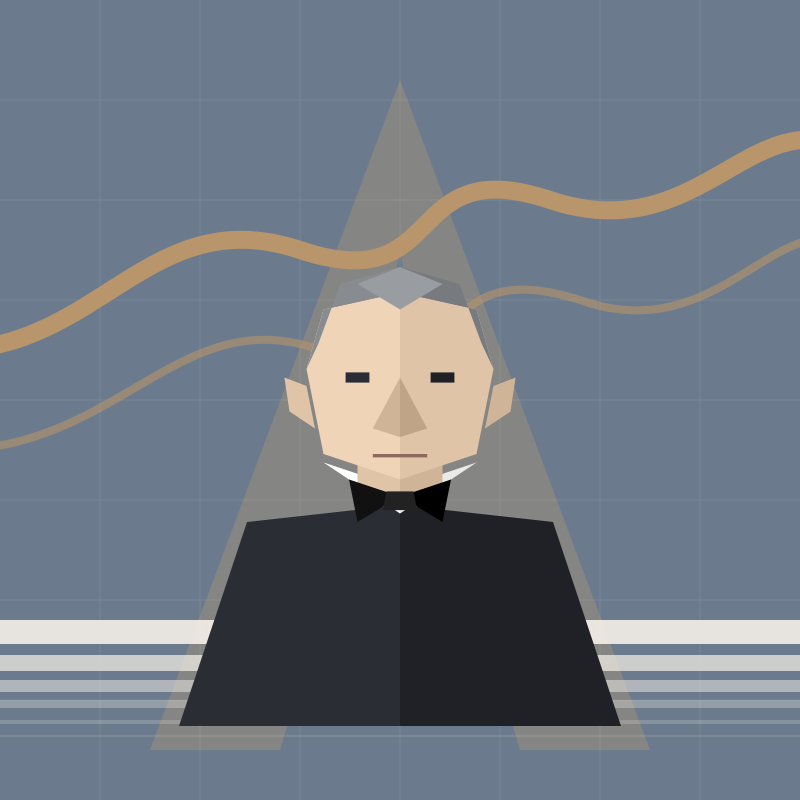
During the pandemic, our habits have changed dramatically. Working from home, opens new horizons for a completely different lifestyle. Learning new technology, and work have become possible even from other parts of the world. Our home addresses are replaced by email addresses and similar messaging services. How will the trend of virtual life redefine housing, will traditional houses continue to fulfill their functions?
Despite the changing human’s lifestyle, their basic needs remain the same. In order to function properly, every person needs food ,drink and material resources. Moreover, it should be remembered that man is a social being and contact with others is also essential to achieve a state of well-being . Taking all these aspects into consideration, it is important to look into how to provide people with adequate living conditions to lead a nomadic lifestyle. In response to the presented problem, we created the idea of mobile unit, providing the possibility of leading a nomadic lifestyle. Such a form of living would respond to the process of globalization, providing shelter to people in all parts of the world. Moreover, the housing unit would not generate limitations. Instead of connecting a person to one place, it would give a spontaneous character to life.
The futuristic of the capsule would be in adaptation to the environment. The architectural concept combines the idea of a home as a shelter and a workplace. It is important the residential capsule meets the needs of users of all ages and levels of physical function. Capsule is a shelter to one person - a nomad, but also will be able to create larger living structures with other capsule users. The user of the mobile unit will feel belonging to one interior, while traveling around the globe
The movement of the capsule will be possible by using futuristic solutions in such a way that they constitute the self-sufficiency of the capsule. There will be no need to use additional sources of movement to bring the user to a different place on Earth. The capsule will be able to move both in the air, on land and in water, and the special materials will ensure the durability and tightness in various condition
The ability of the capsule to adapt is the greatest asset. Inspired by nature the capsule will adapt in an environmentally friendly way to various climatic conditions. The use of artificial intelligence will be reflected not only in adaptation to the environment, but also in response to the user's needs. The interior will be able to adapt to people and make them a friendly living and working space.
The leading inspiration in the design process, were issues related to the field of biomimicry. Both the form, function and mechanisms allowing for mobility and adaptation found their inspiration in this field, allowing us to design a futuristic and ecological capsule.
In the search for shape and functional layout, the idea of a plant cell turned out to be helpful. Both the shape and the distributed functions were designed based on its visual scheme. The main living capsule is located in the center, appropriately covered by successive shells. Each of these, represents a completely different function, dividing the living capsule into individual layers. The inner layer, will be a frame with an intelligent optimization function. Inspired by the ability of bones and trees to do this, the capsule will be able to adapt and respond to humans. The shell will also assist in maintaining a center of gravity, adding or subtracting material in such a way as to give the capsule stability in a particular position. What's more, the surface of this shell will contain algae, the pulp of which will be used to supply the cell with energy. Flexibility and strength is provided by a layer of material that combines the properties of spider web and chitin. Due to this coating, the capsule has the ability to interconnect into larger habitable structures, providing the opportunity to create communities of capsule users. To enable the cell to adapt to its environment, a coating was designed with the intelligent function of adjusting its structure, texture and color. With this shell, the cell will be able to adapt to environments with varying climatic conditions without any functional changes. Furthermore, this layer will be able to regulate light by intelligently adjusting the size of the holes and its transparency in relation to the light intensity.

Popular Articles
Popular articles from the community


LT2A and OPEN Architectes Thread a Brick and Glass High School Through a Wooded Belgian Campus
In Braine-l'Alleud, a 3,000 m² wing for Collège Cardinal Mercier pairs pale brick with a glazed colonnade, deferring to a small chapel and a dense wood.

FCC Arquitectura Expands a Portuguese Granite House with a Board-Marked Concrete Wing
In Portugal, JV House pairs a cleaned-up whitewashed and granite dwelling with a timber-shuttered concrete extension, courtyards and a garden pool.

Juan García Correa, John González and Claudia Rueda Sink a Circular Amphitheater into a Manizales Engineering Building
On the La Nubia campus in Manizales, Colombia, the S1 Building folds labs and offices into a hillside of ramped lawns that double as a campus route.


The Amber Palace Opera: A Geological Fiction Surfaces on Tallinn's Baltic Waterfront
Pierre Brillard reimagines a Baltic legend as a public landscape, opera house, and waterfront promenade rooted in Tallinn's coastal identity.

Similar Reads
You might also enjoy these articles

The Rhythm of Seasons
A Farmers' Market Connecting Nature and the City

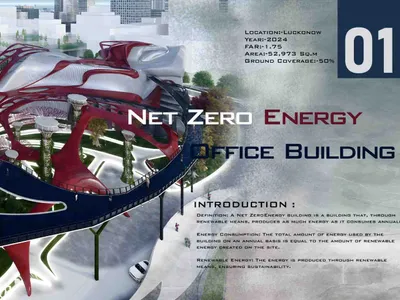
More Than a Building-Designing a Living System
More Than a Building-Designing a Living System
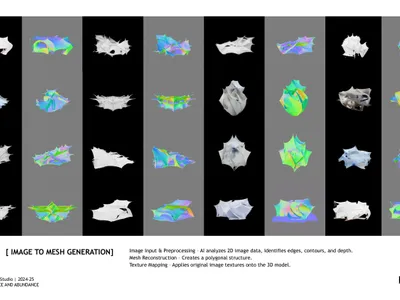
Base Beyond
DESERT COMPOUND ARID: TOURISM OF ABSENCE AND ABUNDANCE


Comments (0)
Please login or sign up to add comments
No comments yet. Be the first to comment!