

Adorn House by Bhutha Earthen Architecture Studio: A Sustainable Home Rooted in Tradition and Warmth
Adorn House blends traditional craftsmanship, sustainable materials, and modern comfort, creating a warm, eco-friendly family home in Coimbatore, India.


A Serene Family Home in Coimbatore
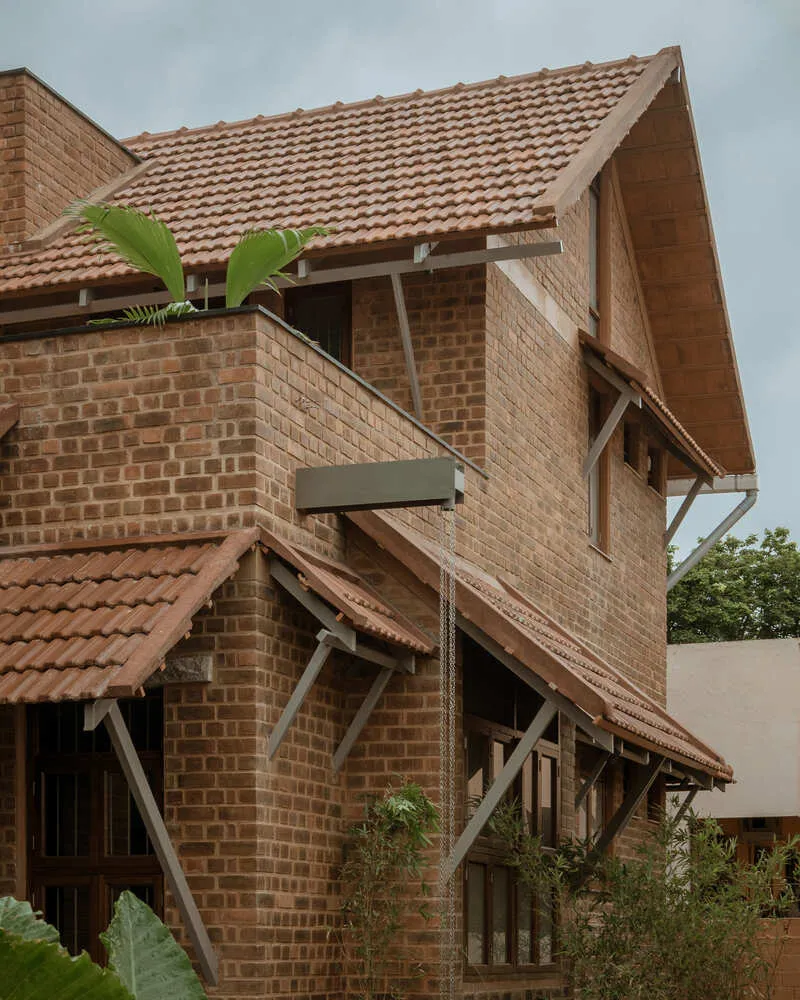
Located in the tranquil neighborhood of Selvapuram, Coimbatore, Adorn House by Bhutha Earthen Architecture Studio is a heartfelt expression of sustainable living and cultural heritage. Designed for a family of four, the 1548-square-foot residence sits between cozy family dwellings and vast green fields, creating a soothing balance between urban life and nature. The scent of fresh air and the gentle rustling of trees shape a calming atmosphere that defines the essence of this home.
A Vision of Sustainability and Belonging
Homeowners Vijayanadh, an IT professional, and Mahalakshmi, a homemaker, approached Bhutha Earthen Architecture Studio with a clear vision — to create a home that reflects their values of simplicity, health, and environmental consciousness. Deeply passionate about sustainability, the couple opted for traditional South Indian building techniques such as Madras terrace roofing, lime mortar, and lime plastering.
Their goal extended beyond personal comfort; they envisioned a legacy home — one that preserves local craftsmanship and encourages their children to grow up in an environment that celebrates tradition, culture, and ecological balance. Inspired by Mahalakshmi’s childhood memories of an ancestral home, Adorn House becomes both a sanctuary and a statement on contemporary vernacular architecture.
Blending Tradition with Contemporary Comfort
The Entrance: A Threshold of Warmth
The residence opens with a traditional entrance porch, featuring a Thinnai framed by exposed brick pillars, natural stone boulders, and a “zero-gravity” wooden seater — a thoughtful blend of heritage and everyday comfort. This space acts as both a transition and a pause, offering a serene spot for evening relaxation and social connection.
Spatial Layout and Natural Flow
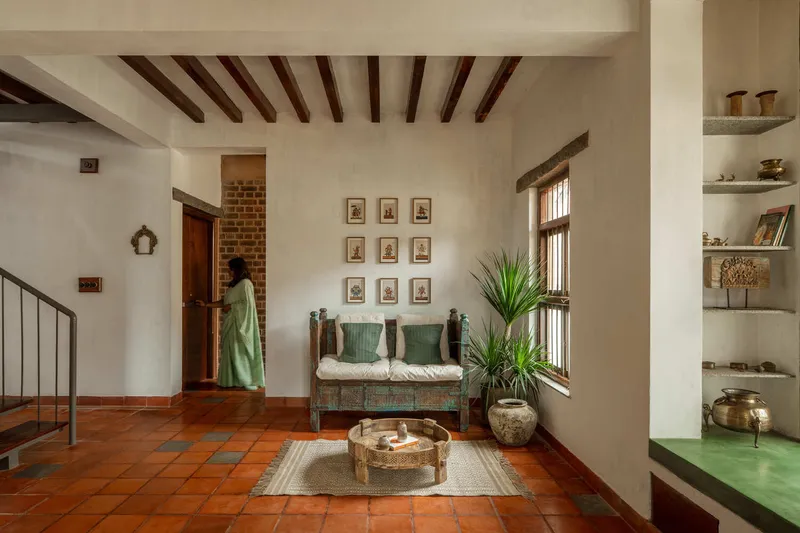
The ground floor accommodates a welcoming living area, a minimalist kitchen, a powder room, a utility, and the master bedroom. The first floor houses the children’s bedroom, a flexible multipurpose room, and an open terrace that extends the living experience into the outdoors — ideal for yoga sessions, stargazing, or intimate family dinners.
The rectilinear site shape inspired a design strategy that maximizes both indoor and outdoor usability while maintaining spatial harmony and environmental sensitivity.
Materials and Craftsmanship: The Language of the Earth
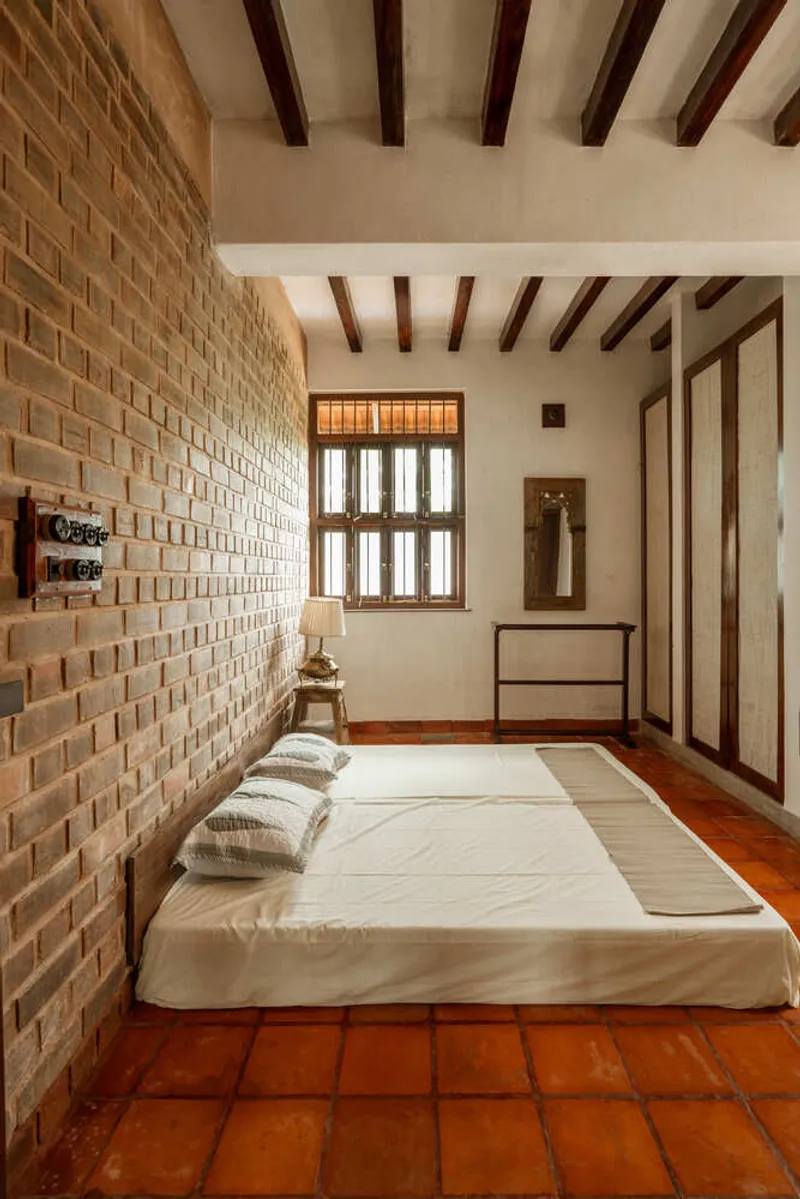
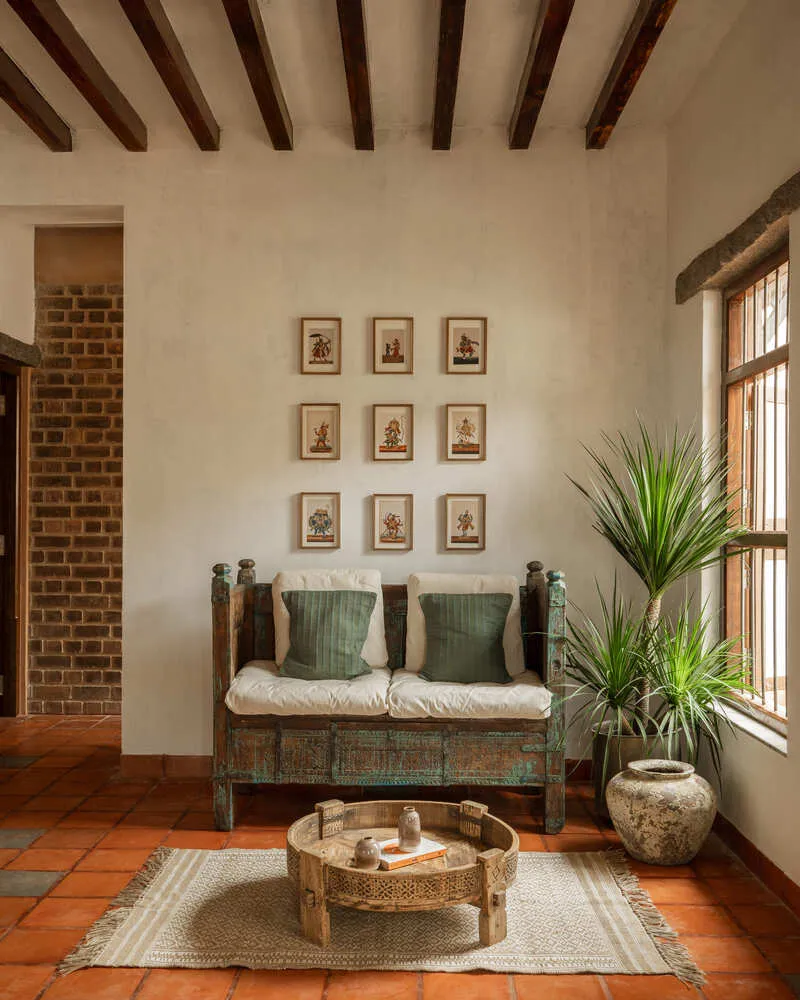
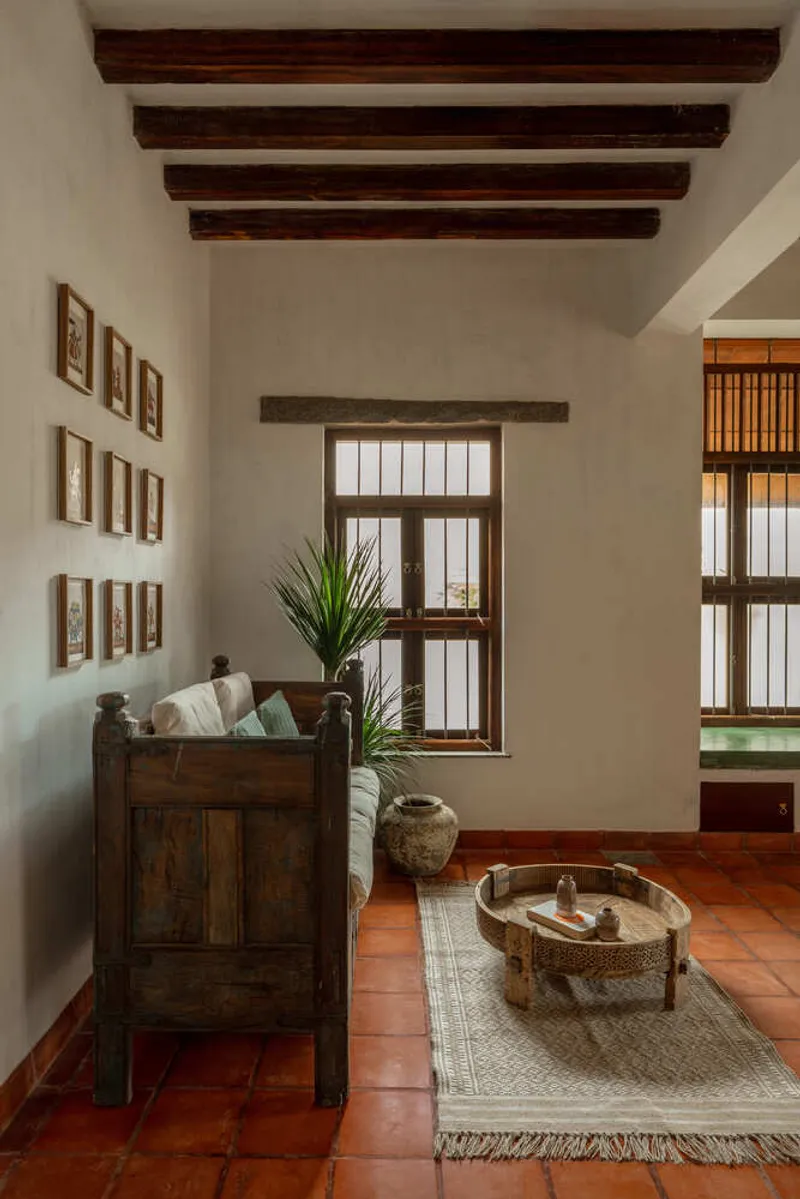
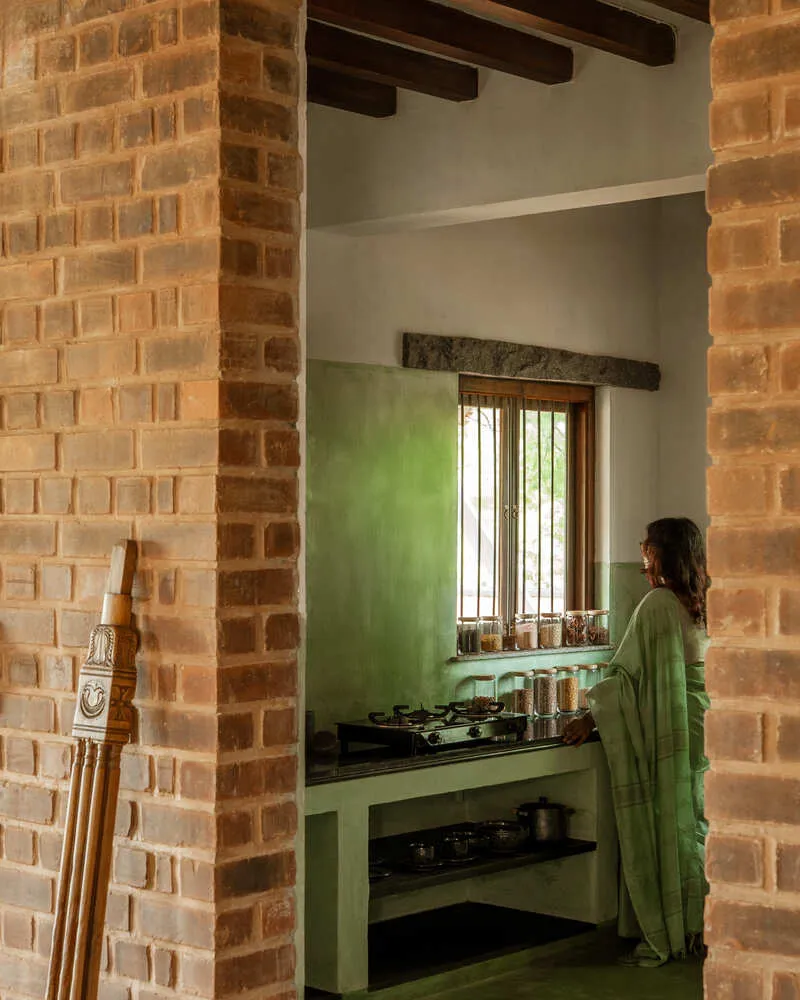
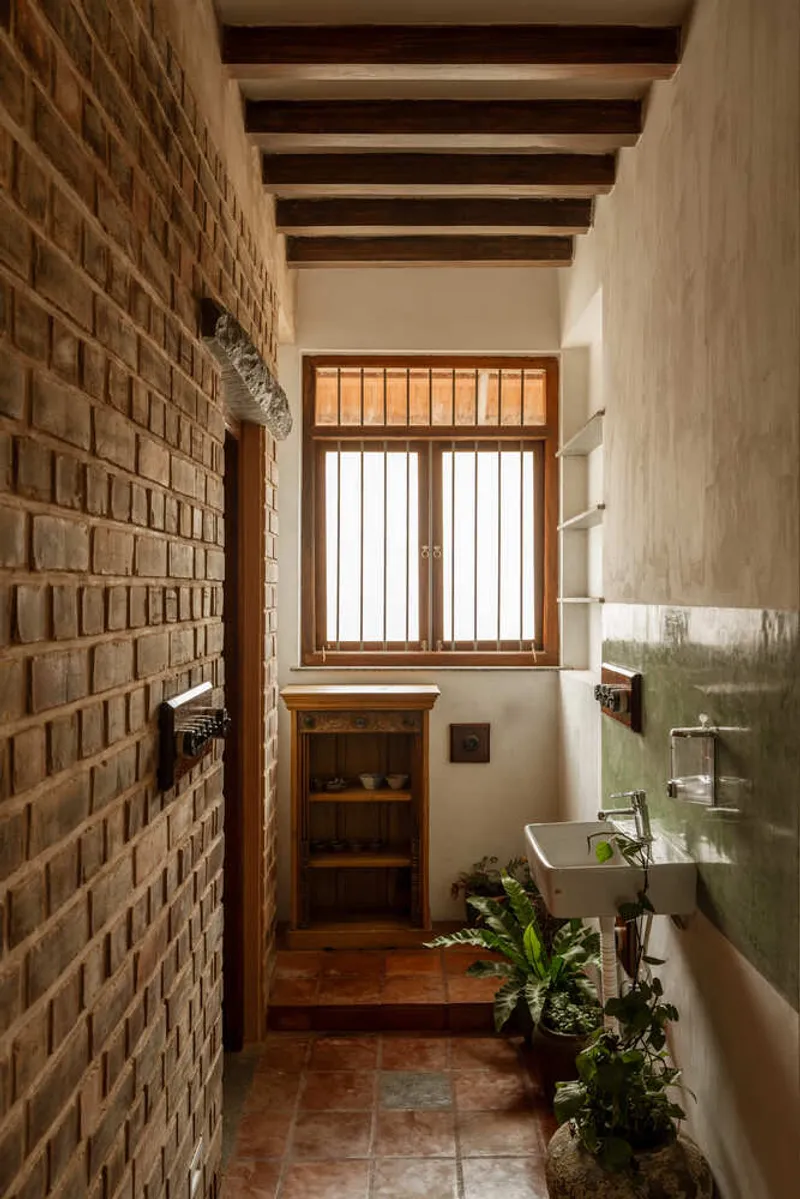
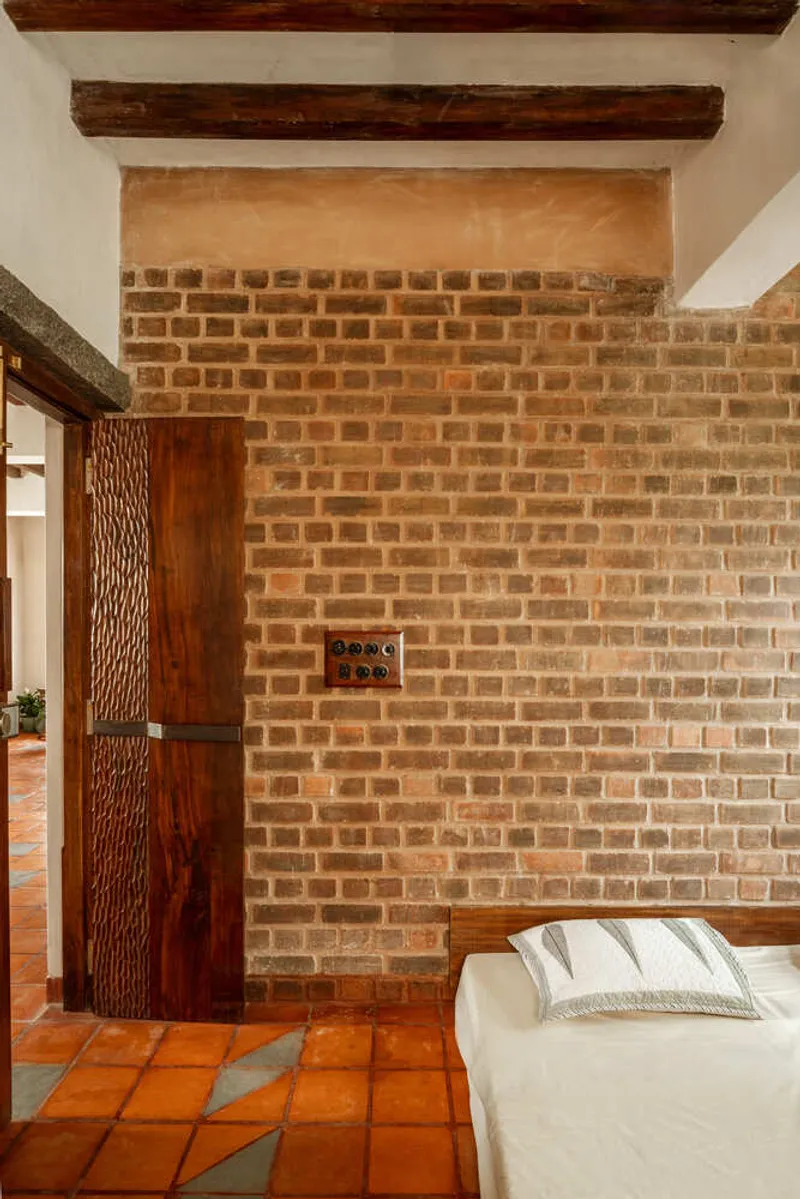
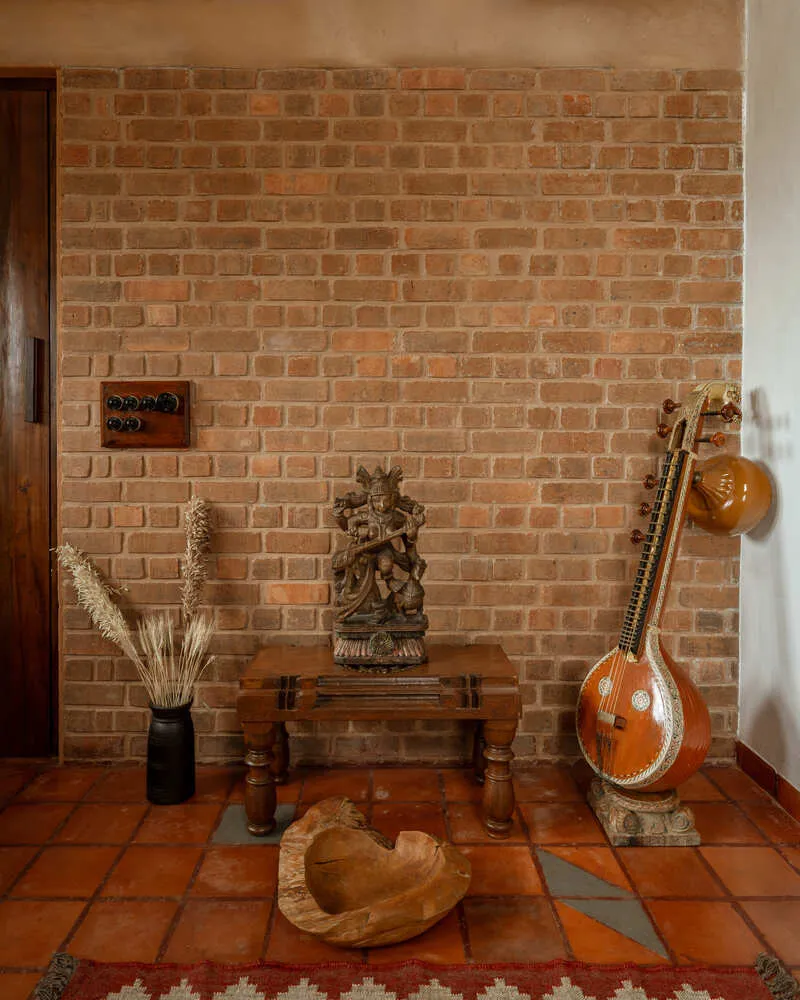
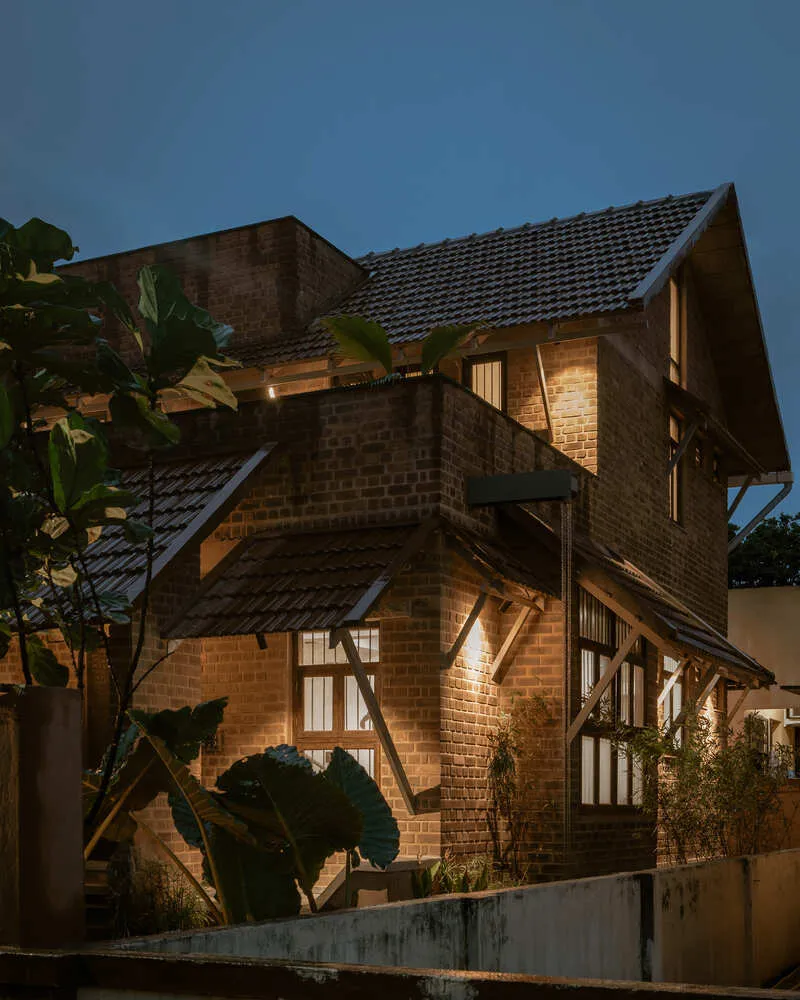
The material palette celebrates natural textures and tactile warmth. Exposed brick walls merge seamlessly with stone lintels, wooden detailing, and metal brackets, anchored by stone plinths for resilience against moisture and termites.
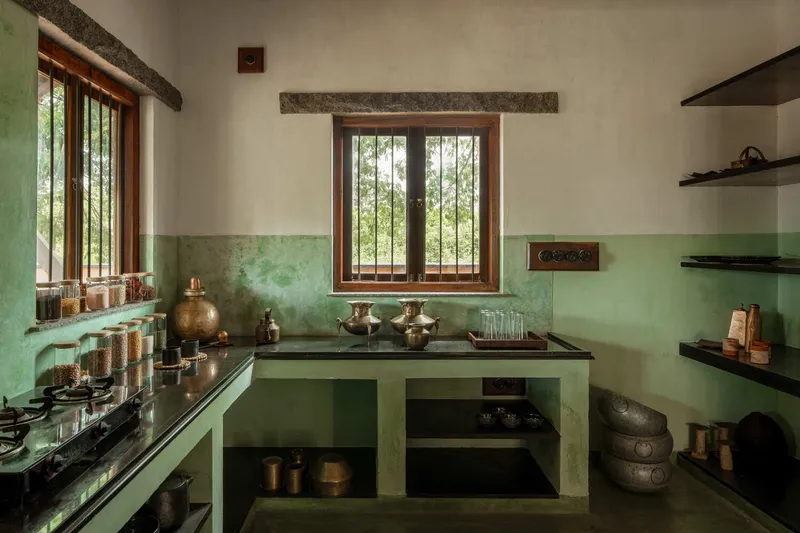
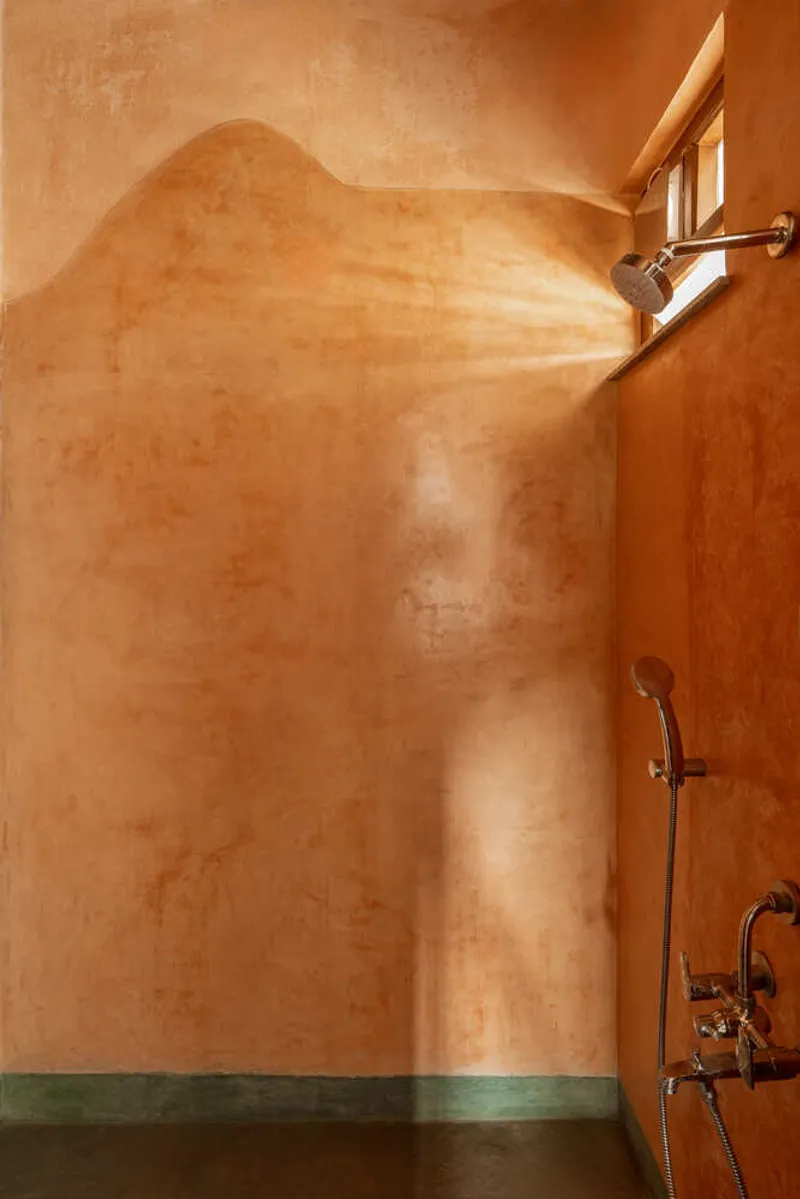
Terracotta tiles adorn the floors, while wet areas feature glossy lime finishes that reflect light and freshness. Touches of green oxide flooring and Kota stone enhance the sensory experience, creating a grounded connection between materiality and comfort.
Interiors: Comfort, Connection, and Craft
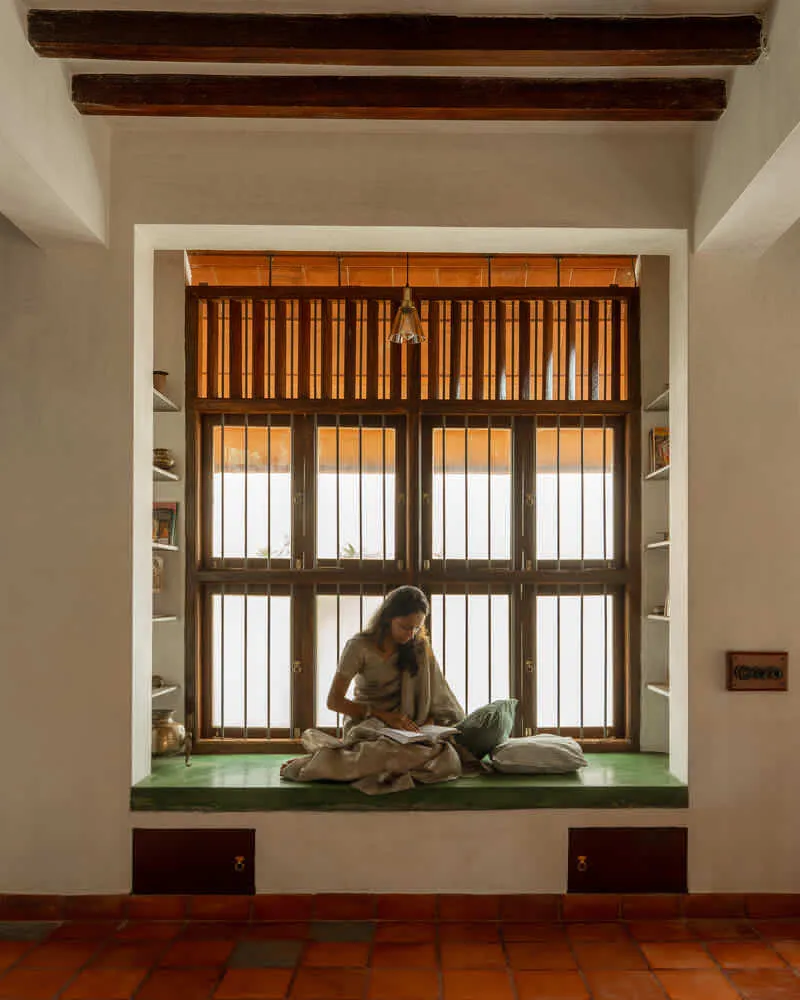
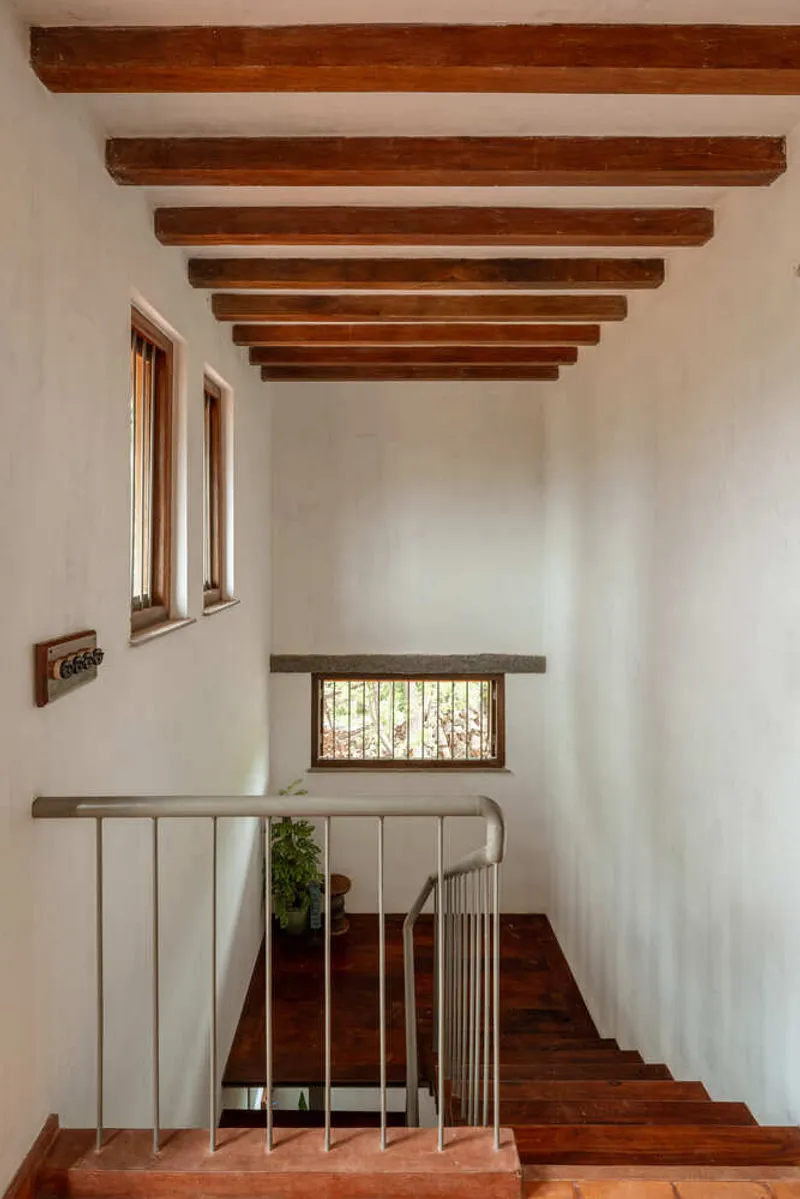
The living room visually connects to the kitchen and staircase, creating an open and cohesive environment. A striking feature is the bay window, designed with a green oxide seater and wooden storage beneath — a contemplative corner that opens to the lush outdoors.
The kitchen embodies functionality and tradition, with custom storage for traditional utensils, a natural fridge, and open shelving finished in lime plaster for a bright, breathable ambience.
Bedrooms remain airy and intimate, highlighted by exposed brick feature walls that bring warmth and authenticity to the interior atmosphere.
A Multipurpose Space for Everyday Living
Upstairs, the multipurpose room is designed to evolve with the family’s needs — from music practice to remote work or study. Large windows frame the terrace and allow ample daylight to permeate, reinforcing the home’s connection to nature.
A Celebration of Indian Craft and Detail
Every detail in Adorn House showcases Indian Sal wood craftsmanship — from ripple-inspired door carvings to finely crafted window joinery that balances light, privacy, and ventilation. These thoughtful gestures echo the architectural philosophy of Bhutha Earthen Architecture Studio, where simplicity, tradition, and sustainability coexist seamlessly.
In every corner, Adorn House reveals the architects’ deep respect for material honesty, craftsmanship, and family-centered design. The home doesn’t just shelter its inhabitants — it celebrates a way of life that is sustainable, warm, and deeply rooted in cultural continuity.



Popular Articles
Popular articles from the community


The Amber Palace Opera: A Geological Fiction Surfaces on Tallinn's Baltic Waterfront
Pierre Brillard reimagines a Baltic legend as a public landscape, opera house, and waterfront promenade rooted in Tallinn's coastal identity.

Opera by the Sea Estonia: Three Shells Dissolving Architecture into Tallinn's Coastline
A winning opera house proposal replaces monumental form with interconnected shells that blur the boundary between building, park and Baltic Sea.

Faces of the Soviet Avant-Garde: Turning Moscow's Street Names into an Open-Air Museum
A network of sculptural installations across a Moscow residential district transforms forgotten architect names into spatial encounters with cultural memor

Singing Woman: Contemporary Architecture Inspired by Estonia’s Voice and the Sea
Singing Woman turns Estonia’s song culture into flowing opera house architecture, blending public life, landscape, sea, and national memory.

Similar Reads
You might also enjoy these articles


Hodi-Mandai Geram
Project Function: Preservation and revitalization of the Intangible heritage and socio-spatial identity of the Hodi by Housing, Cultural Memory Center, Sacred Grove, landscape, local tourism economy


Olio Towers: A Mid-Rise for Performers That Fuses Housing, Rehearsal, and Stage
Located blocks from Houston's Theater District, this modular tower stacks living units around a central performance atrium.

Oasis: Modular Green Housing Carved into Dhaka's Urban Fabric
A shortlisted Plugin Housing entry reclaims unauthorized settlements in Dhaka with stepped concrete volumes, green roofs, and ventilation-driven design.

Black Hole: A Floating Megastructure for the Post-Physical Era
Emiliano Mazzarotto envisions a spherical, self-scaling arena where e-sports, digital hotels, and holographic stadiums replace traditional public space.

Explore Abode Competitions
Discover active competitions in this discipline

Challenge to reimagine the Iron Throne

Photograph architecture without architects

Illustrate the lost glory of Angkor Wat - Render Challenge

Design challenge to reuse E-waste
Comments (0)
Please login or sign up to add comments
No comments yet. Be the first to comment!