
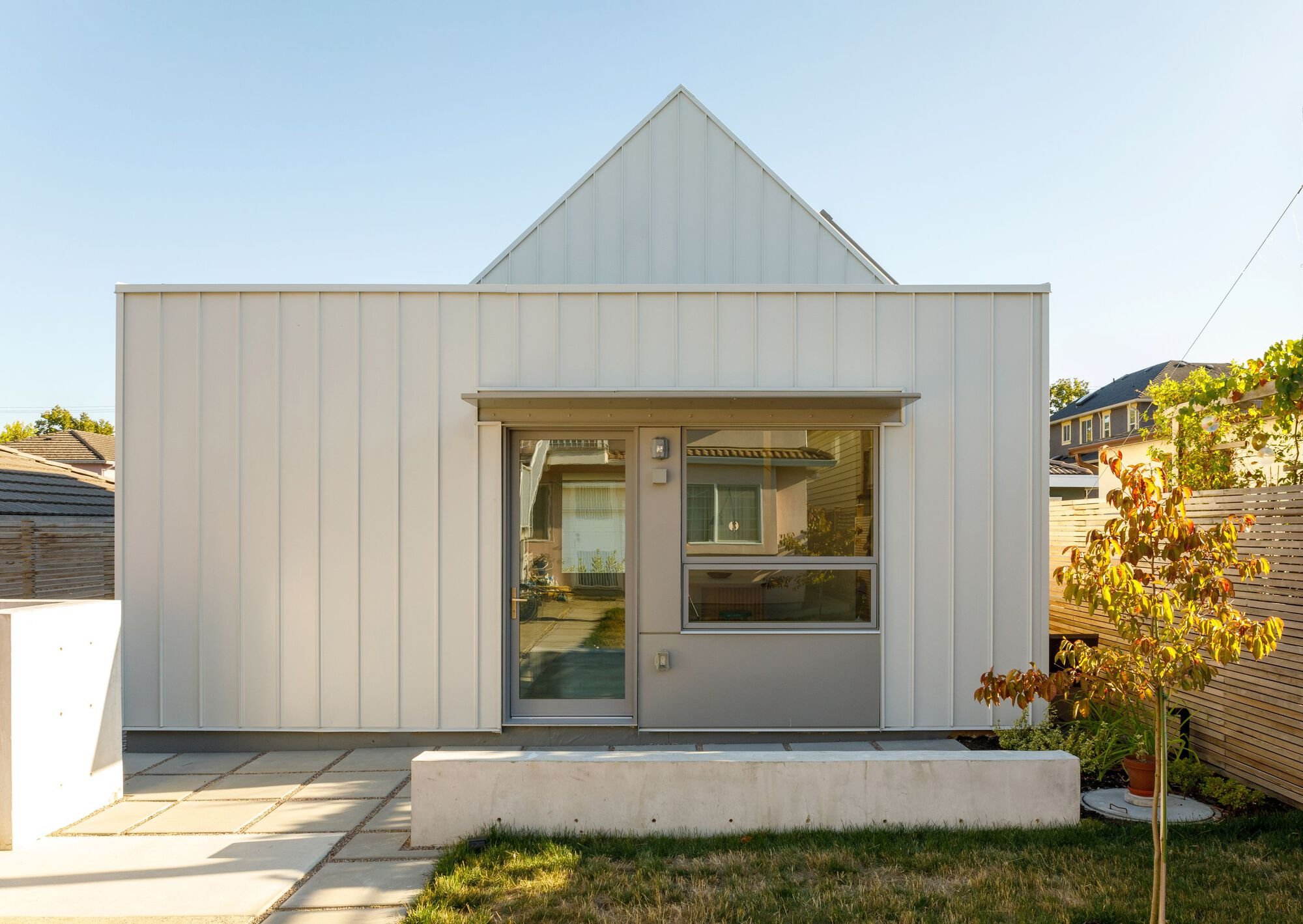
Anzio Laneway House by Imu Chan Architecture
A minimalist laneway house in Vancouver, shaped as a white monolith with sectional living and a telescope-like skylight framing sky and mountains.

Perched on a steep hillside in Vancouver’s Renfrew Heights neighborhood, Anzio Laneway House is a compact residential project that transforms severe spatial constraints into an experience of openness, contemplation, and precision. Designed by Imu Chan Architecture and completed in 2023, the 700-square-foot dwelling reimagines the typology of the laneway house as a minimalist observatory—an introspective retreat oriented toward sky, landscape, and light.
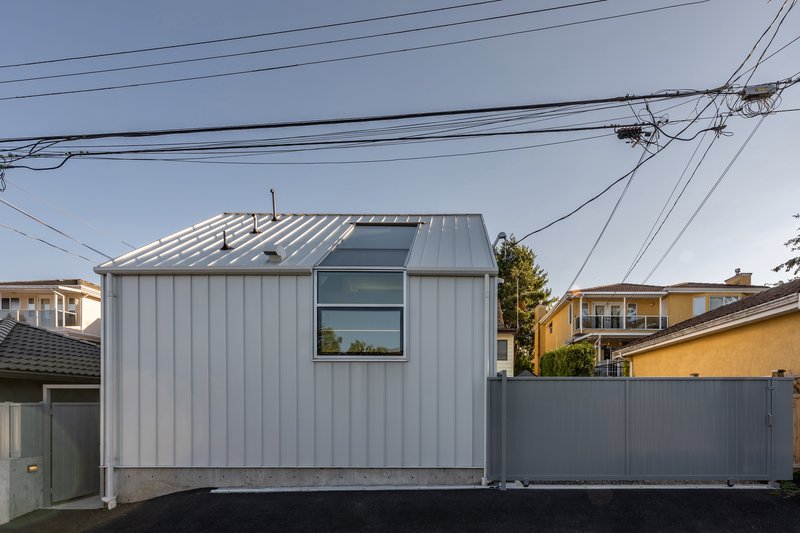
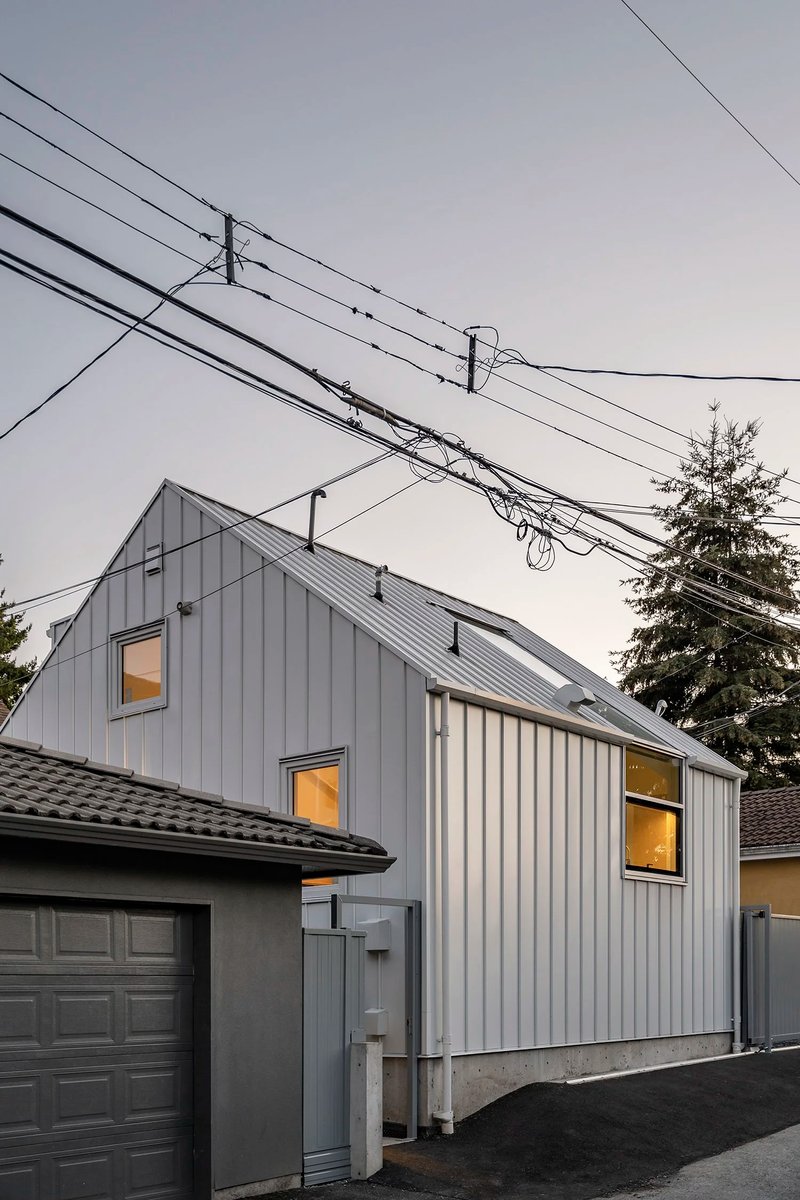
Defined by a stark white exterior and an almost industrial austerity, the house presents itself as a monolithic object amid neighboring stucco dwellings. Yet behind this restrained façade lies a carefully choreographed interior that reveals domestic warmth through movement, light, and adaptive design.
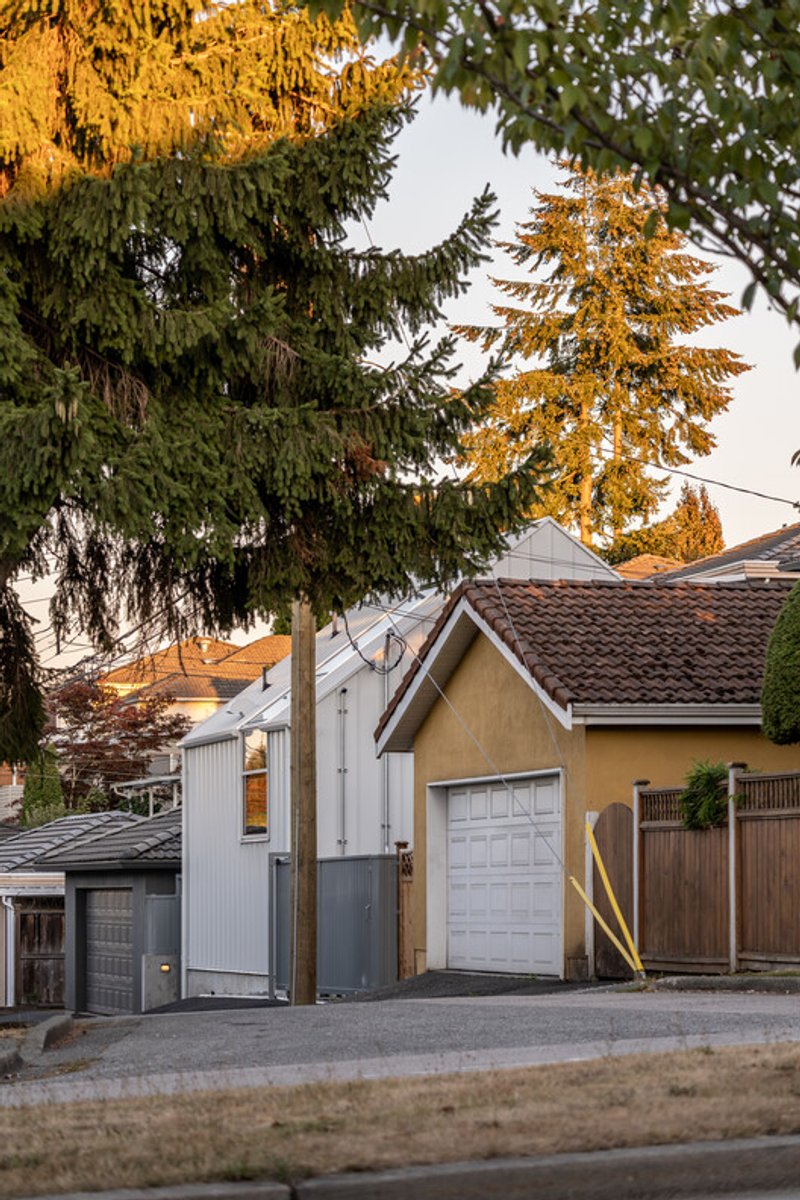
A Monolith on the Hillside
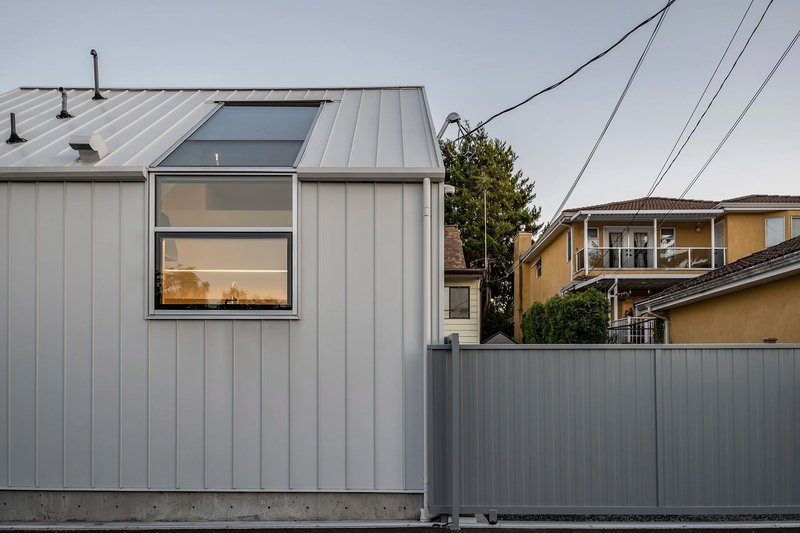
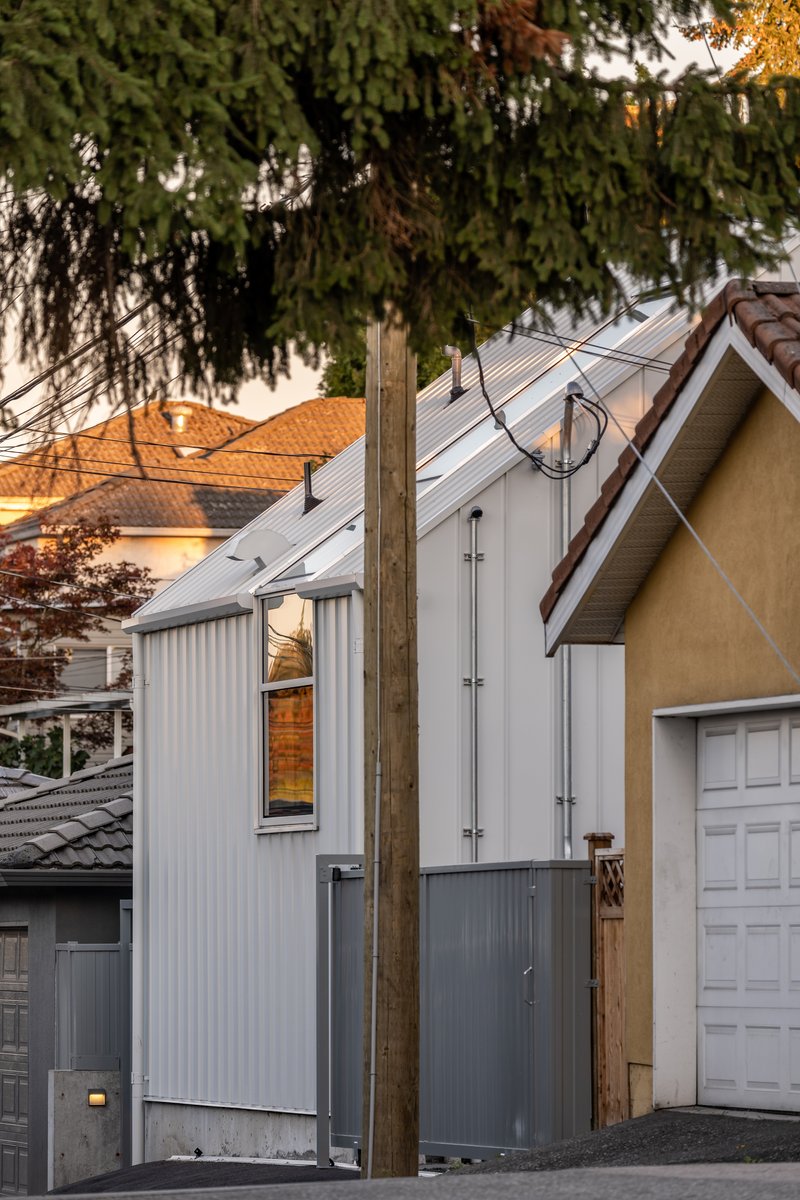
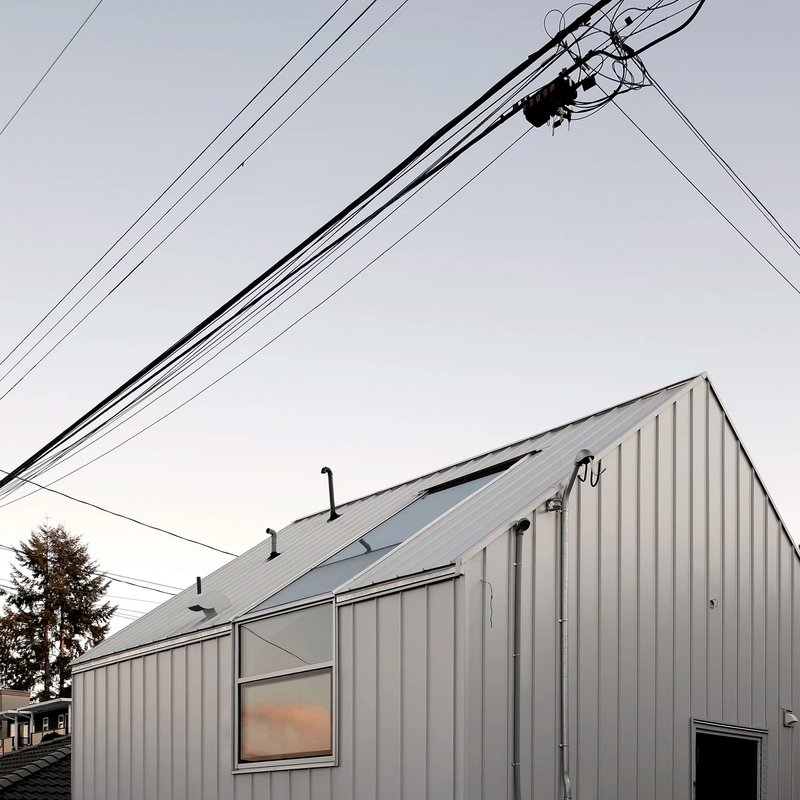
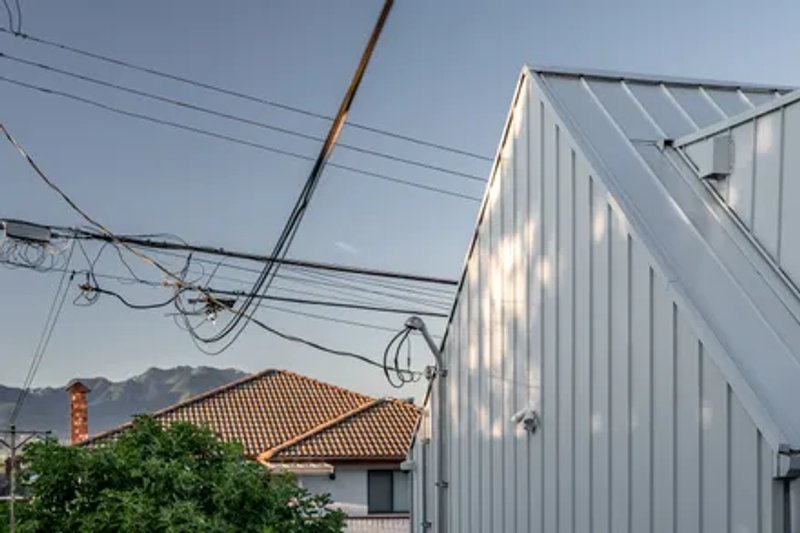
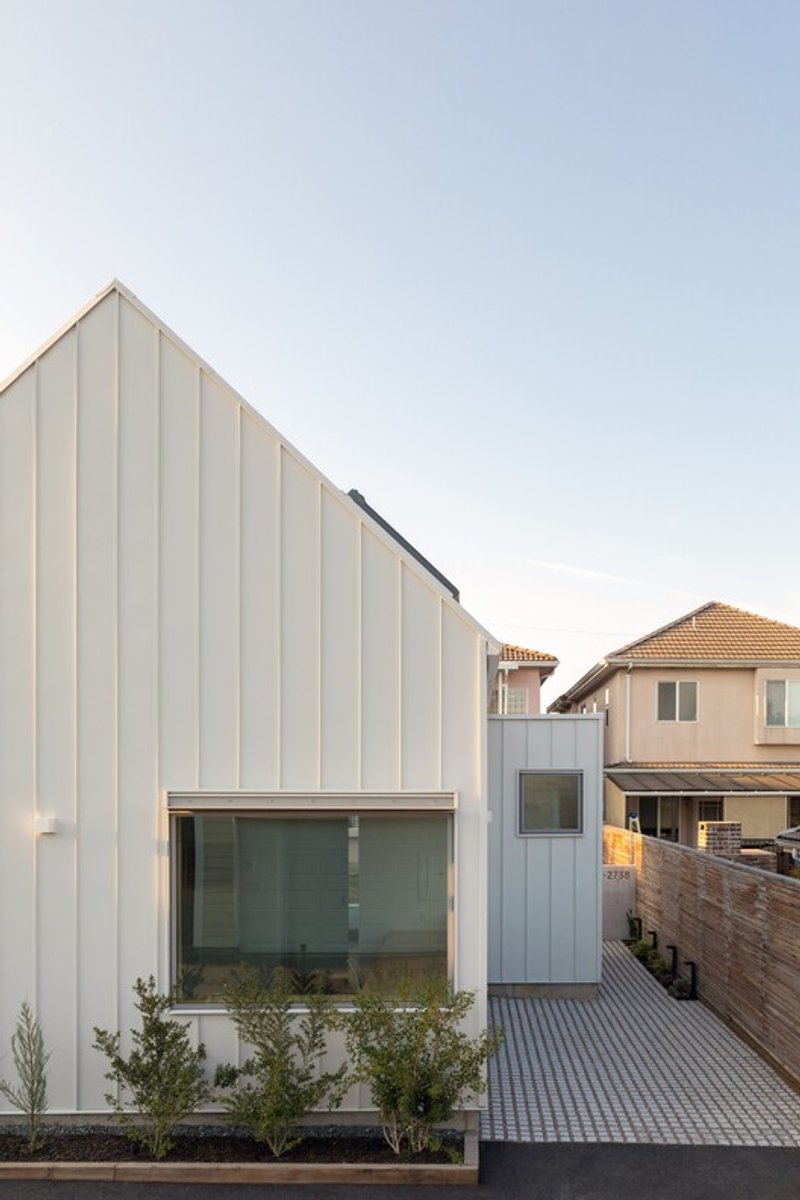
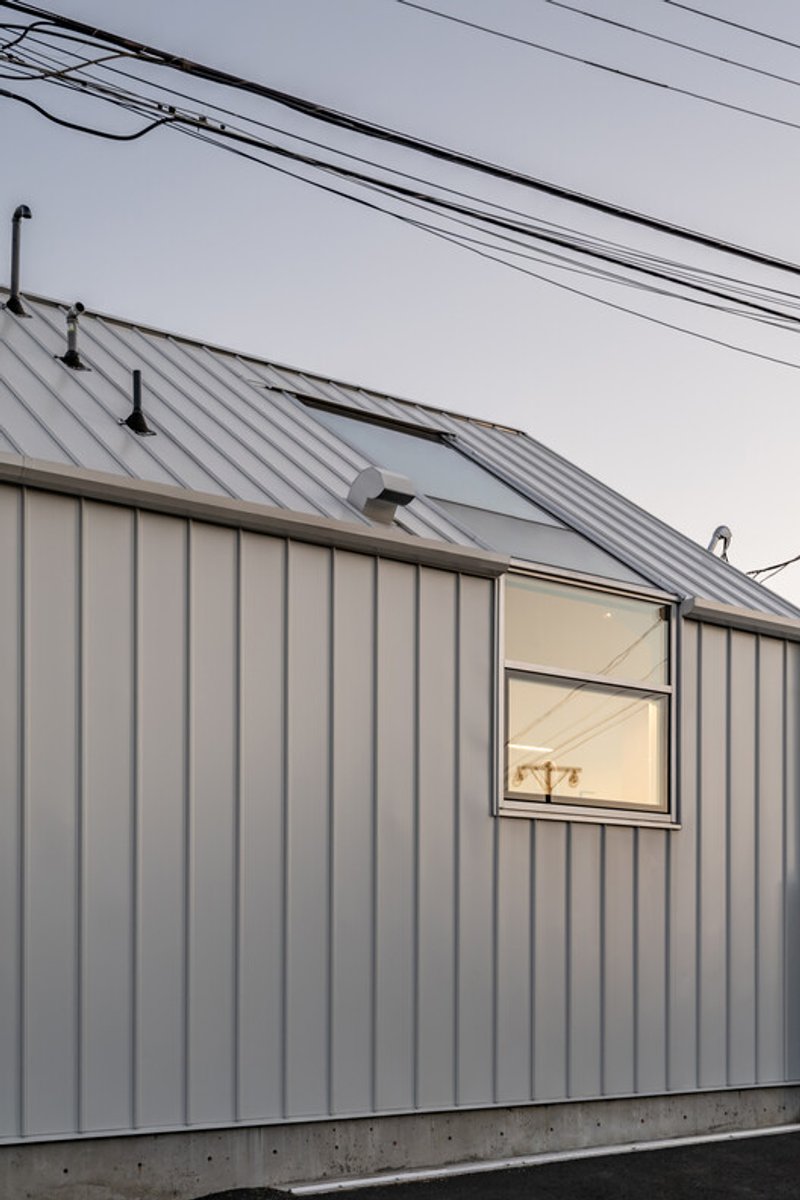
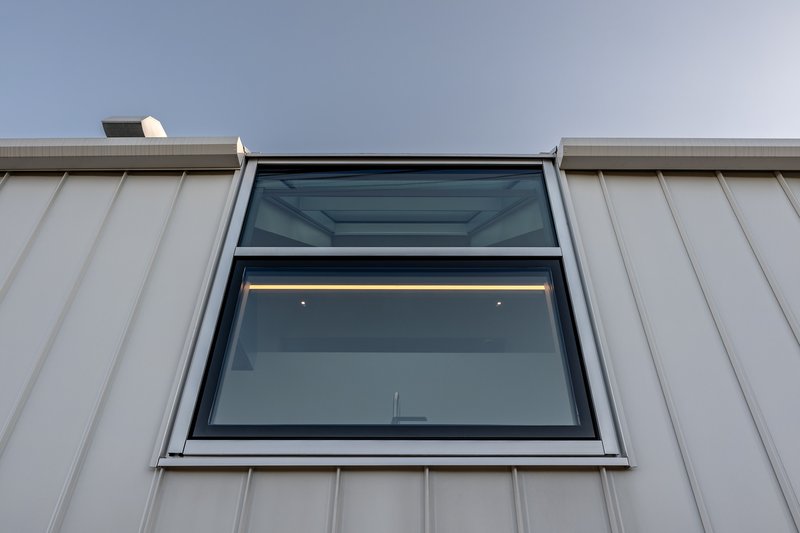
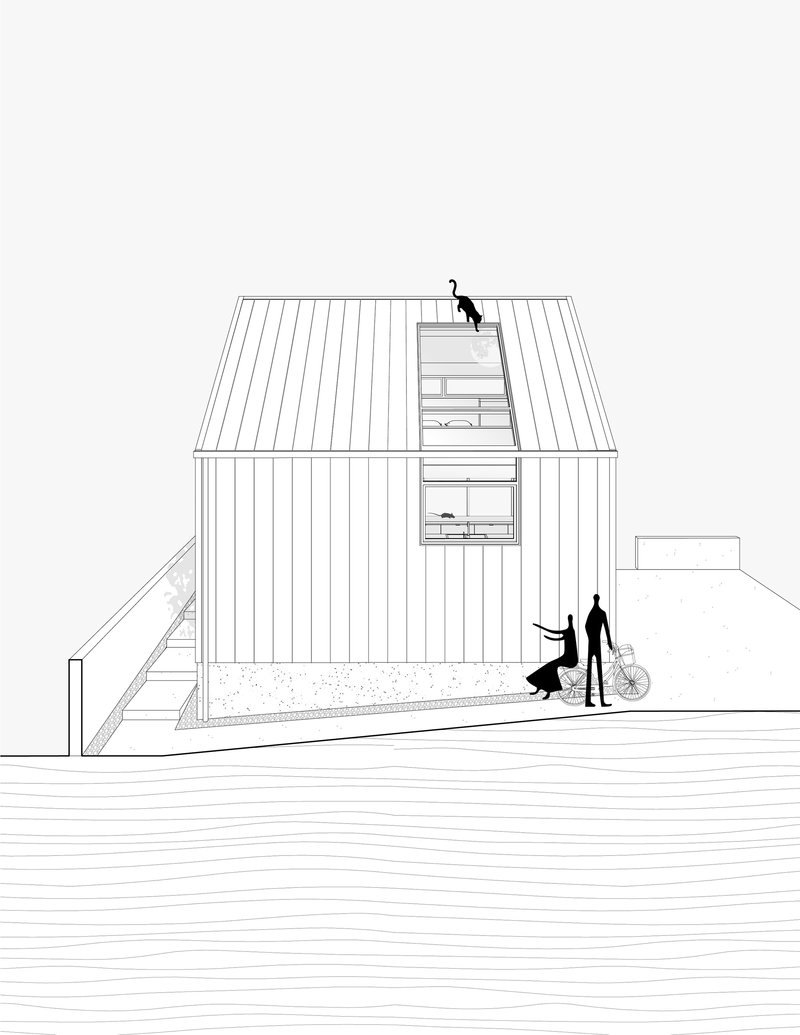
Seen from the laneway, Anzio House appears as a simple gabled volume rendered in monochrome white. Its utilitarian exterior is deliberately understated, emphasizing clarity of form over ornament. A distinctive folded window at the eave stretches toward the roof ridge, creating a continuous glazed surface that blurs the boundary between wall and roof.
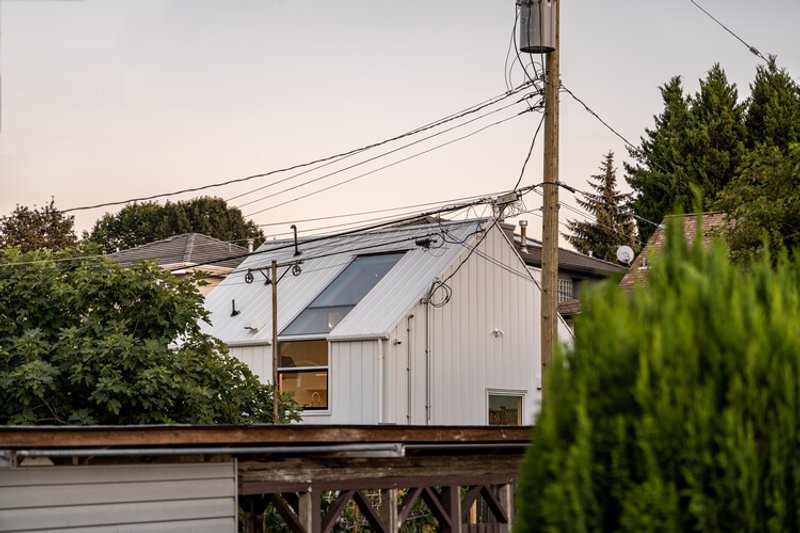
This expansive glazing behaves like a chromatic device, absorbing and reflecting the shifting colors of the sky. By day, it mirrors clouds and blue horizons; by dusk, it captures sunset tones and urban glow. In doing so, the house becomes visually responsive to its environment, despite its minimalist envelope.
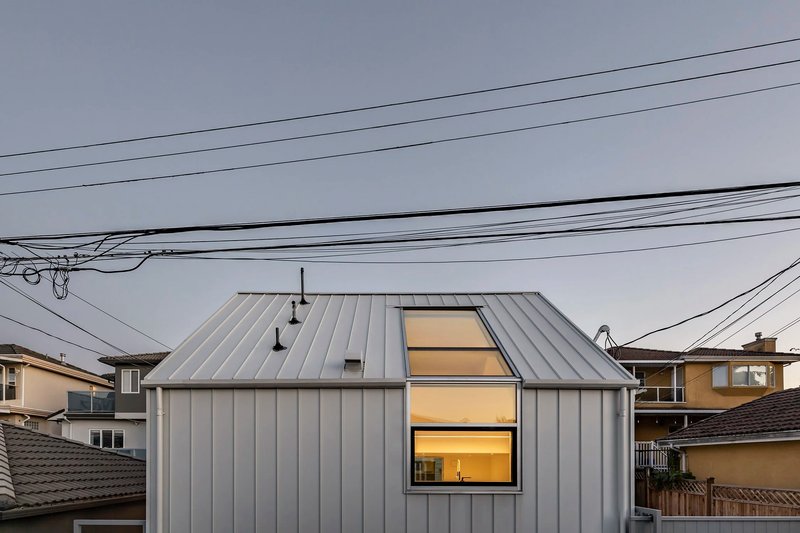
Positioned high on the slope, the building assumes the character of an observatory. It overlooks the laneway and frames distant views of Vancouver’s North Shore mountains, reinforcing its outward-looking yet introspective identity.
Arrival and Spatial Compression
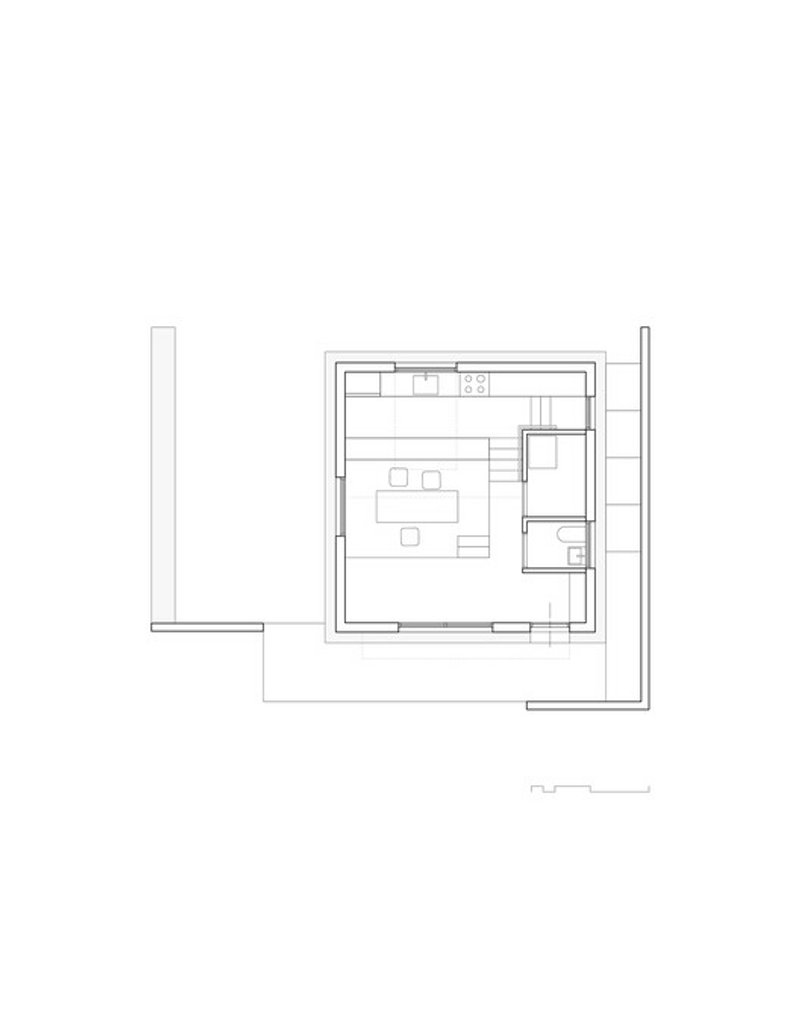
Access to the house is deliberately compressed. From a modest gate, a narrow uphill passage leads to a small entry patio tucked behind the main volume. This restrained approach heightens the sense of transition, preparing occupants for the spatial unfolding within.
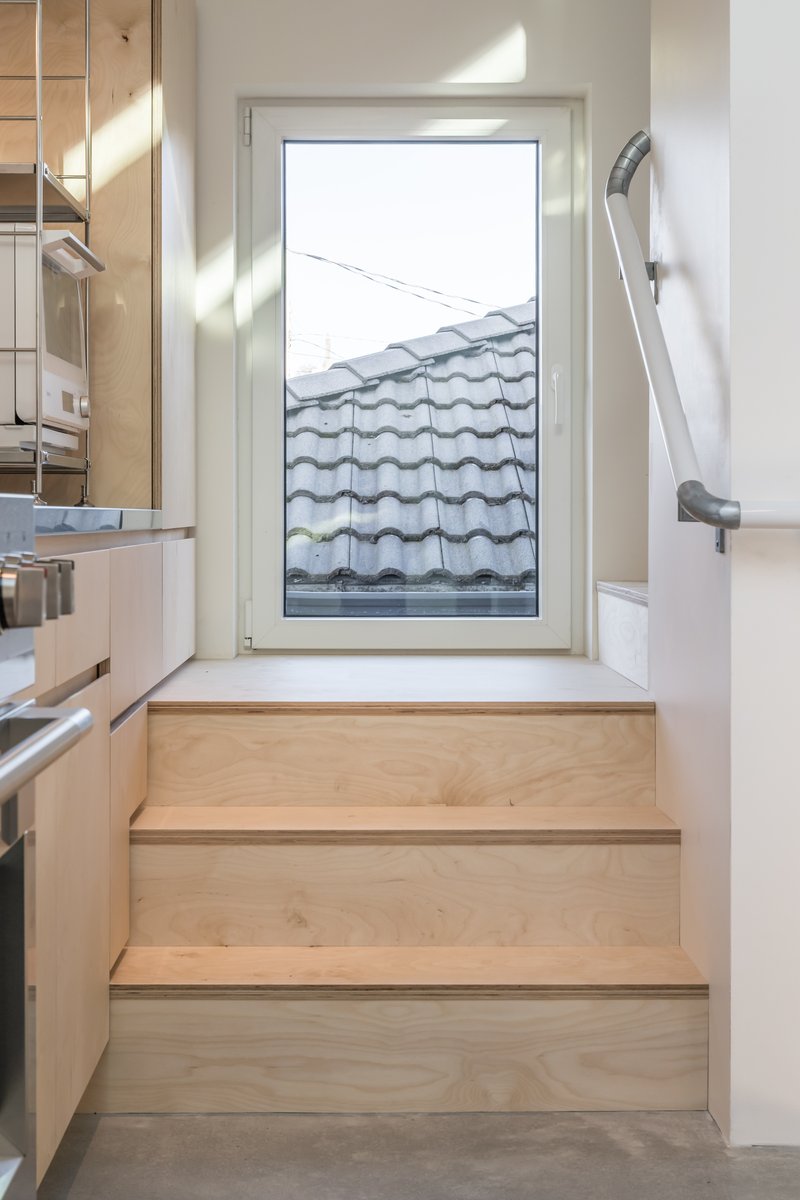
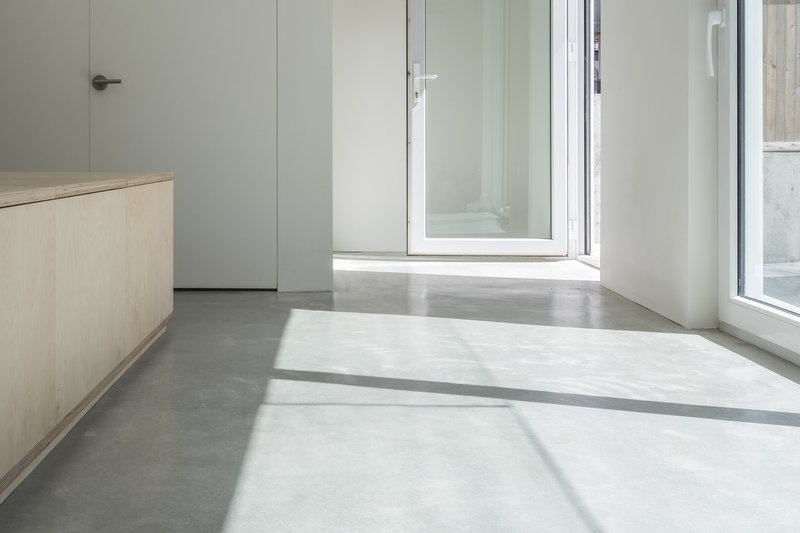
Upon entry, visitors encounter an interior that initially mirrors the stoic exterior. Exposed concrete floors, pale walls, and minimal detailing create an atmosphere of restraint. Rather than immediate comfort, the house offers quiet neutrality—allowing domestic qualities to emerge gradually.
This sequencing reflects a broader architectural strategy: compression followed by release, containment followed by expansion.
Living Without Furniture
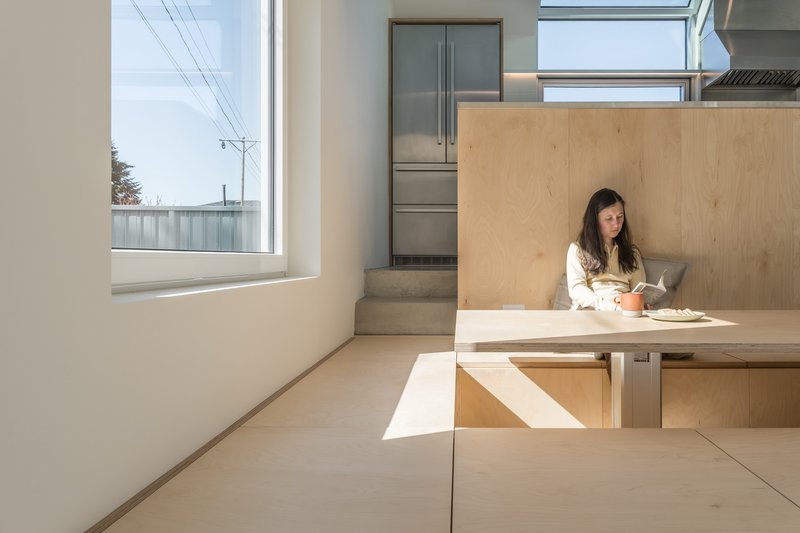
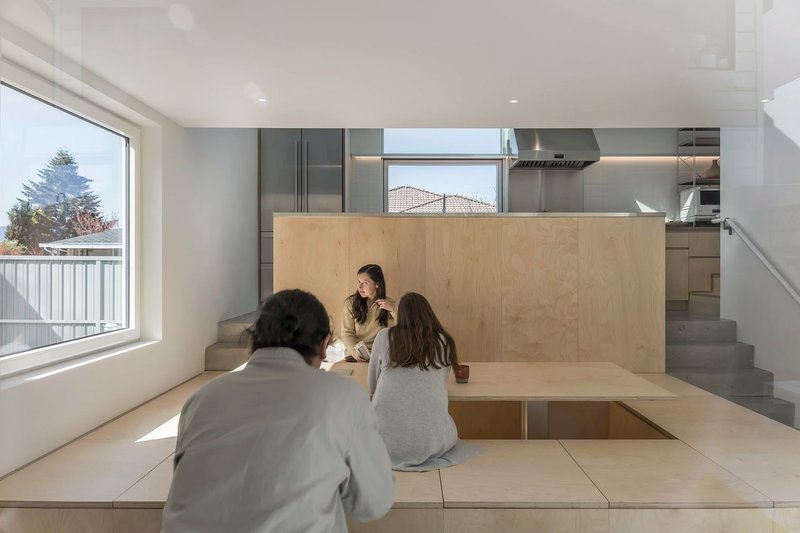
One of the project’s most radical gestures is its rejection of conventional furniture. Instead of sofas, chairs, and cabinets, the living space is defined by a multifunctional seating platform that integrates storage beneath.
Part of this platform can rise or retract using pneumatic legs, transforming the space at the push of a button. Soft cushions replace fixed upholstery, allowing residents to reconfigure seating according to mood and activity. This adaptive system reduces clutter and reinforces spatial clarity.
By eliminating freestanding furniture, the architects create a continuous interior landscape rather than a collection of objects. Living becomes an act of inhabiting architecture itself.
A Sectional Landscape
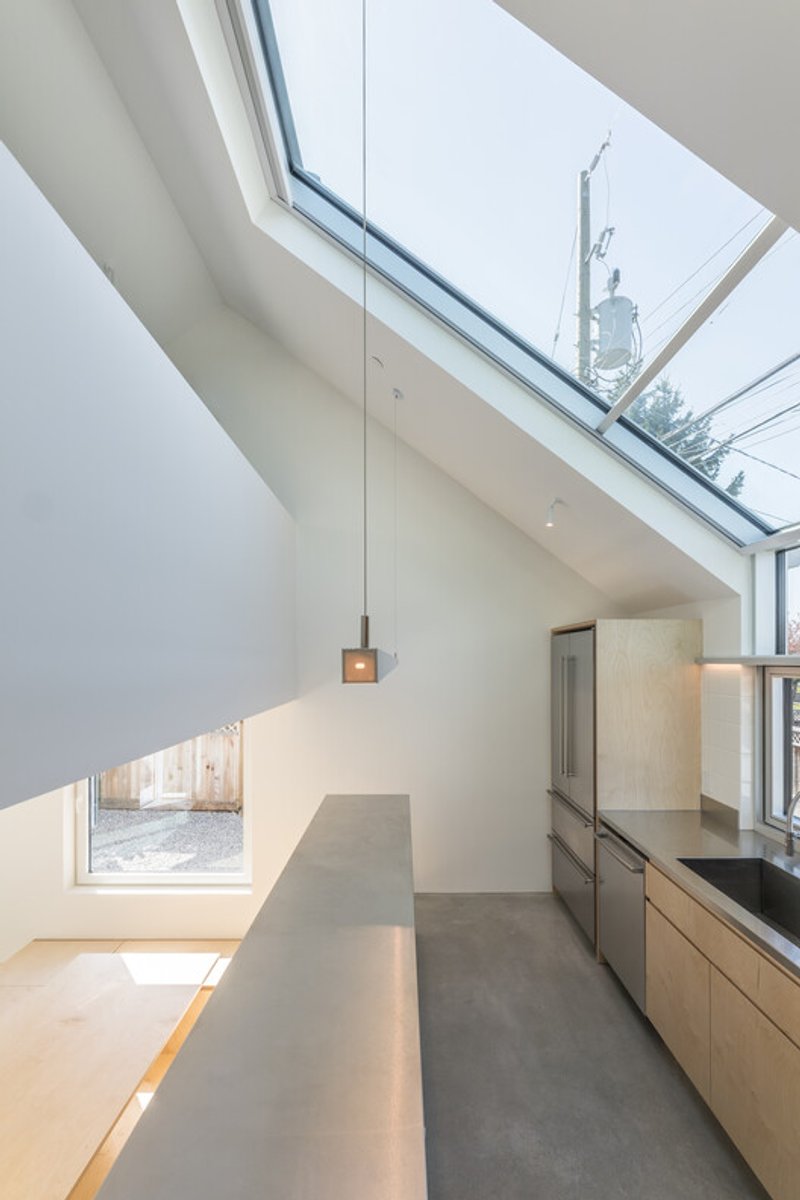
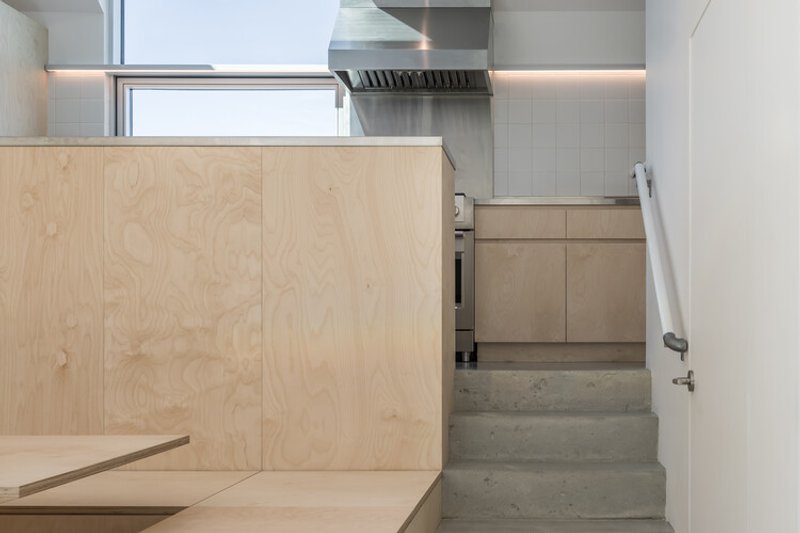
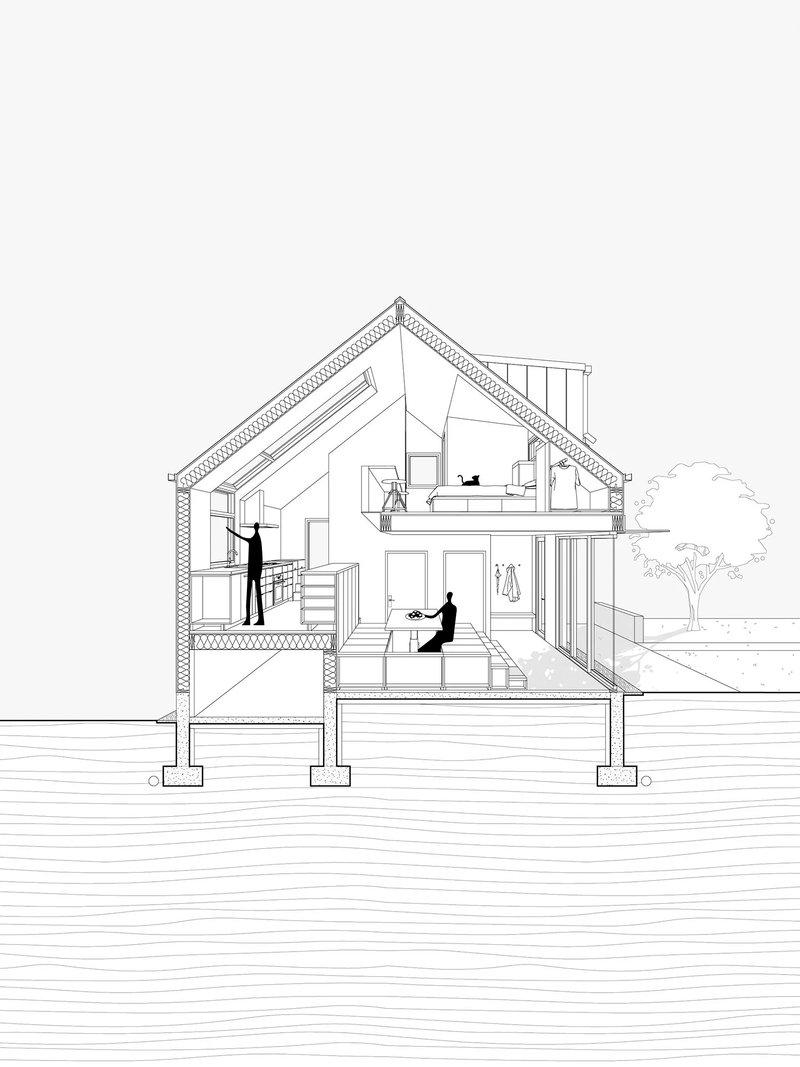
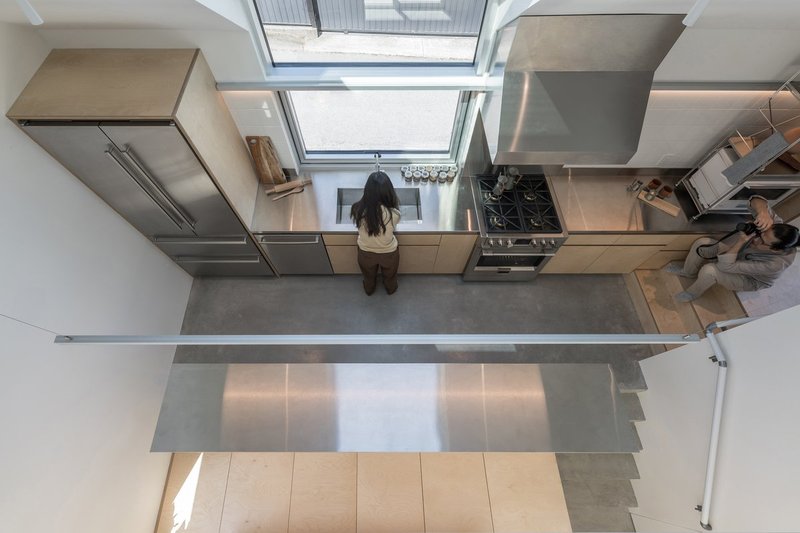
The interior is organized vertically rather than horizontally. From the concrete ground plane, a series of stepped platforms rises toward the kitchen and sleeping loft, creating a sectional sequence that maximizes spatial efficiency.
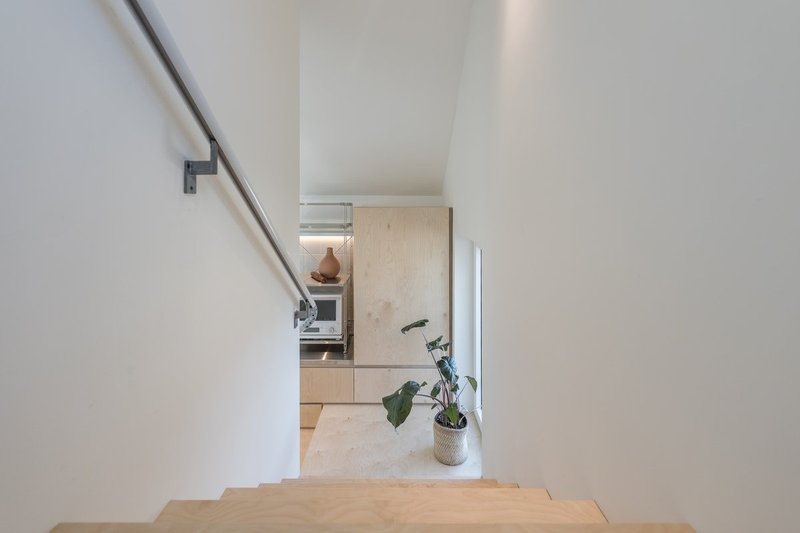
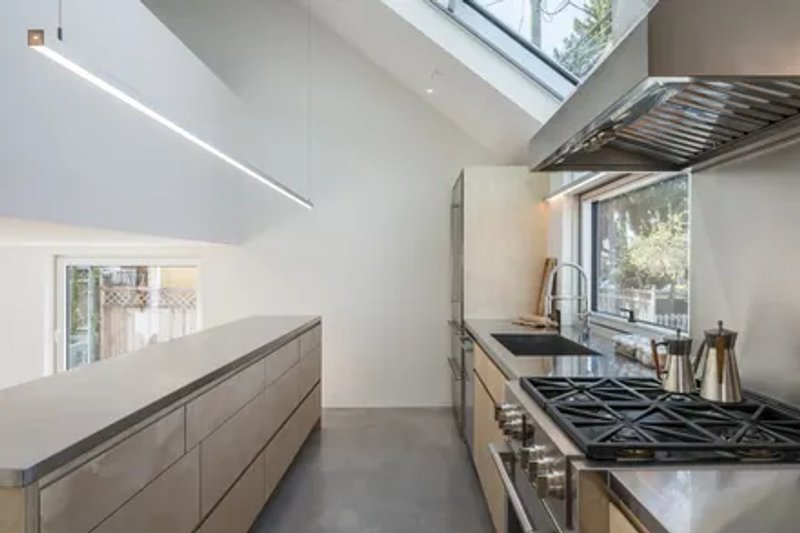
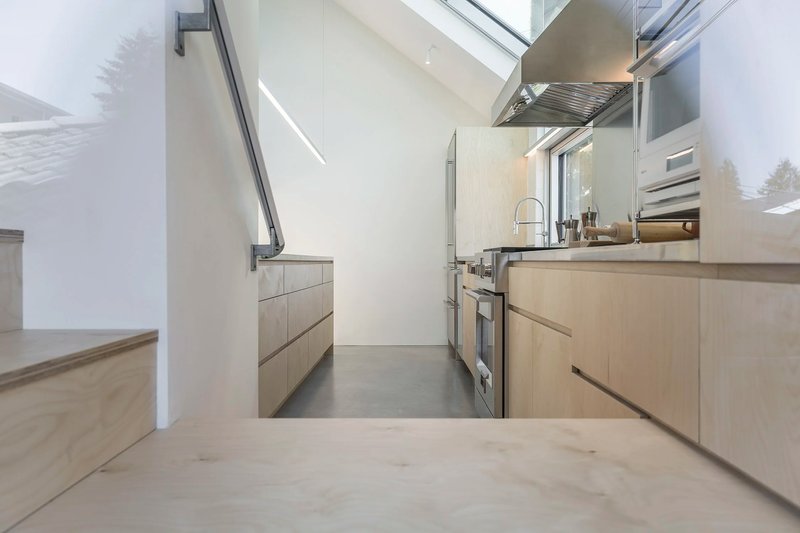
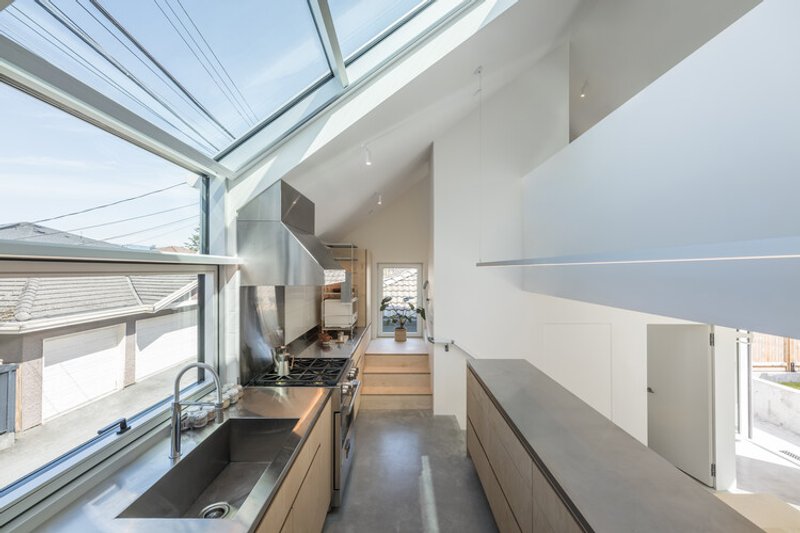
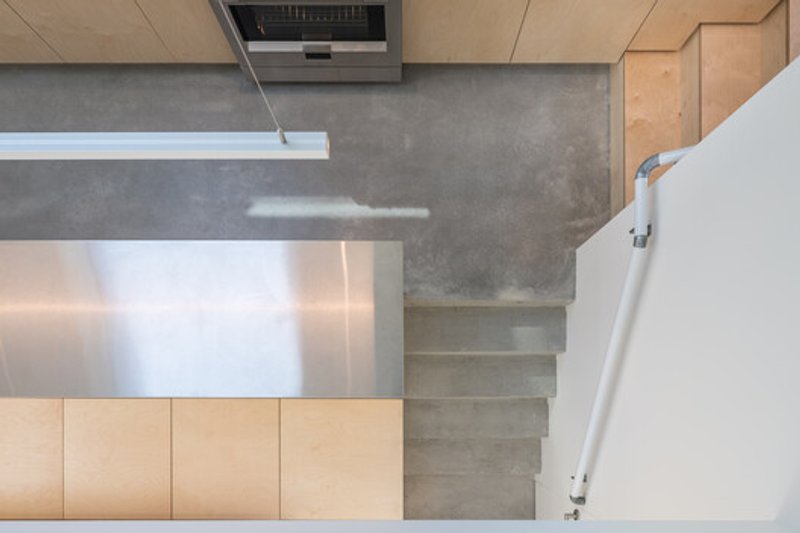
The living platform ascends into the kitchen zone, which is anchored by a stainless-steel countertop. From here, occupants realize that they have climbed nearly a full level above the laneway—an elevation that enhances privacy and view quality.
At one end of the kitchen, a compact stair rises to the sleeping loft above, completing the vertical journey. This sectional organization transforms 70 square meters into a layered spatial experience, making the house feel far larger than its footprint suggests.
The Roof as Telescope
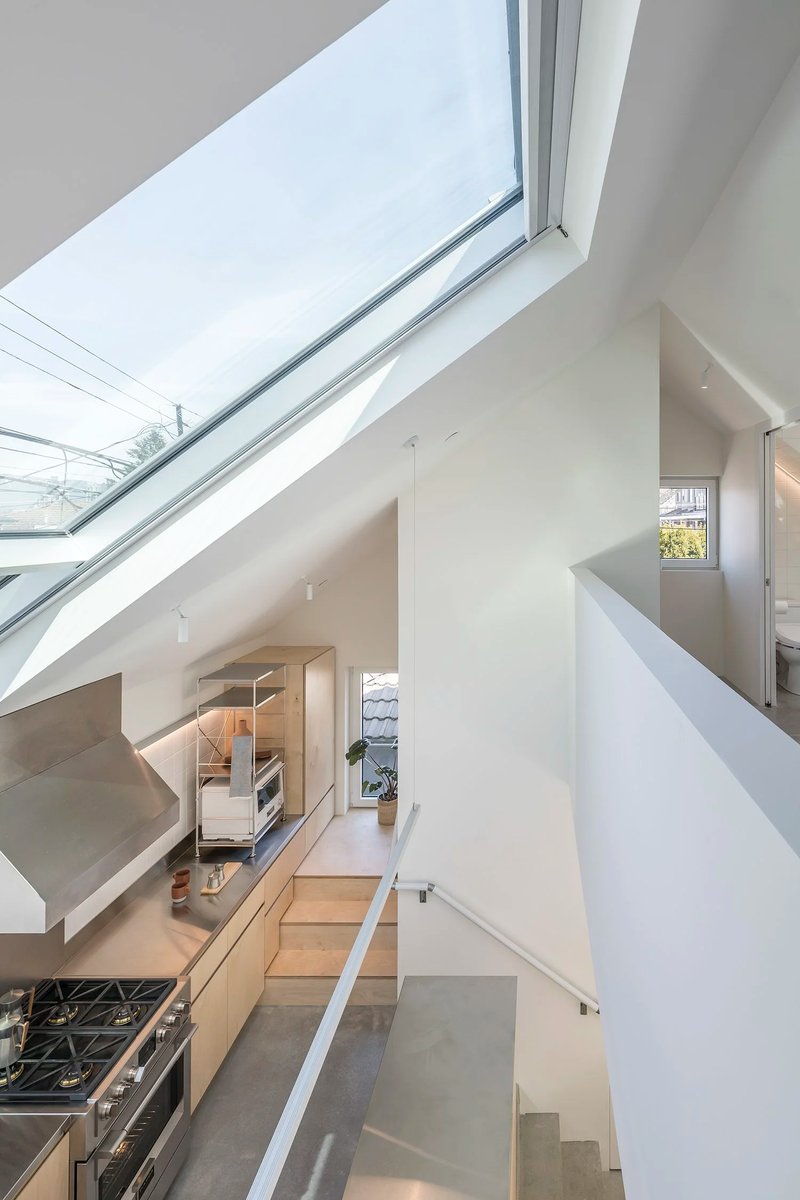
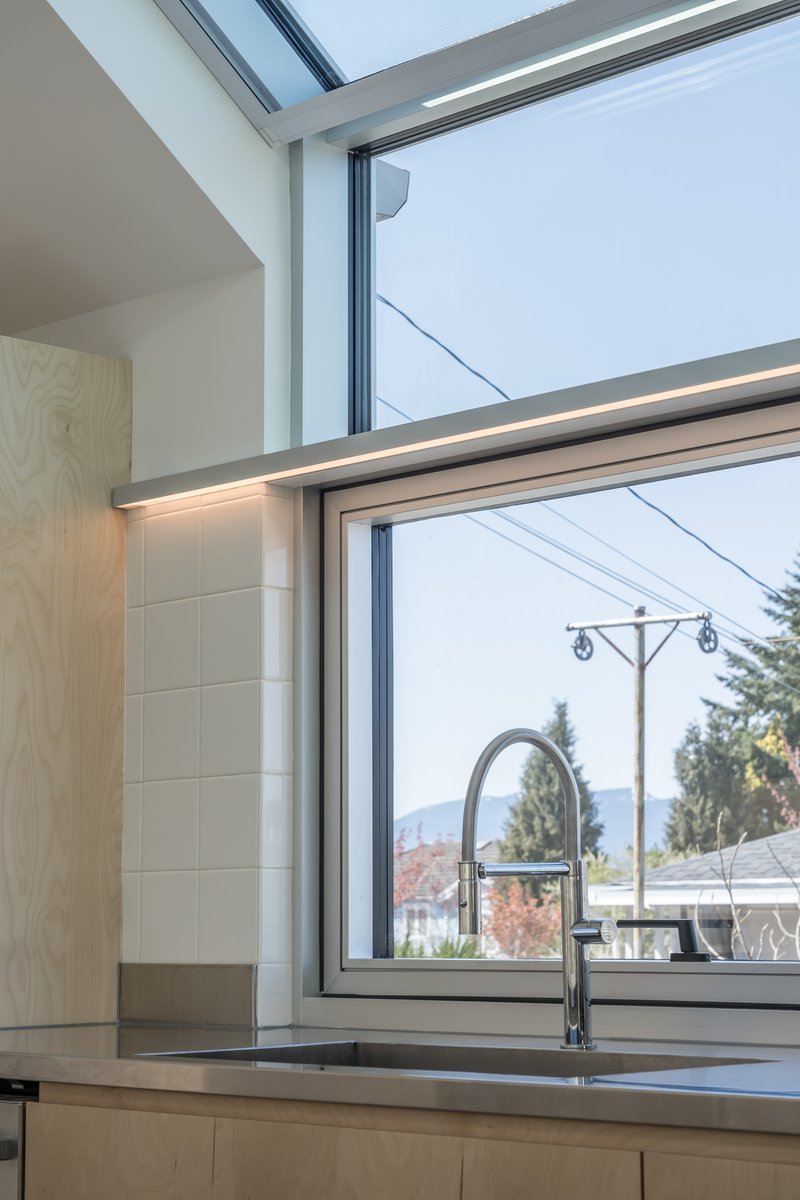
The project’s defining element is its expansive window-cum-skylight, which extends from façade to roof ridge. This continuous glazed surface dominates both exterior and interior perception.
From inside, it gives the impression that the roof is parting like wings, opening the house to the sky. Light pours deep into the interior, dissolving spatial boundaries and reducing the sense of enclosure.
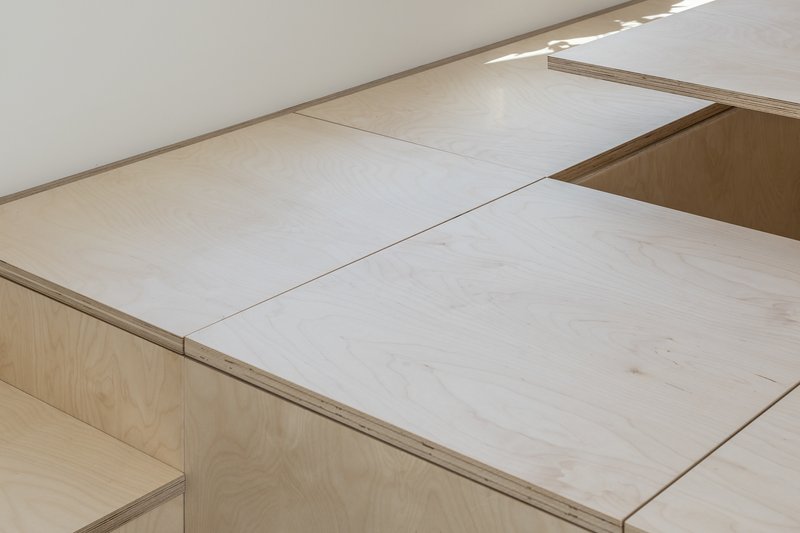
Functioning metaphorically as a telescope, the window draws the gaze beyond the immediate laneway toward distant mountain ranges. It reframes everyday urban living as a contemplative encounter with landscape and atmosphere.
The glazing system is reportedly capable of pneumatic operation, potentially allowing portions to open and reveal a direct slice of sky. This speculative quality enhances the building’s sense of wonder and experimentation.
Material Restraint and Precision
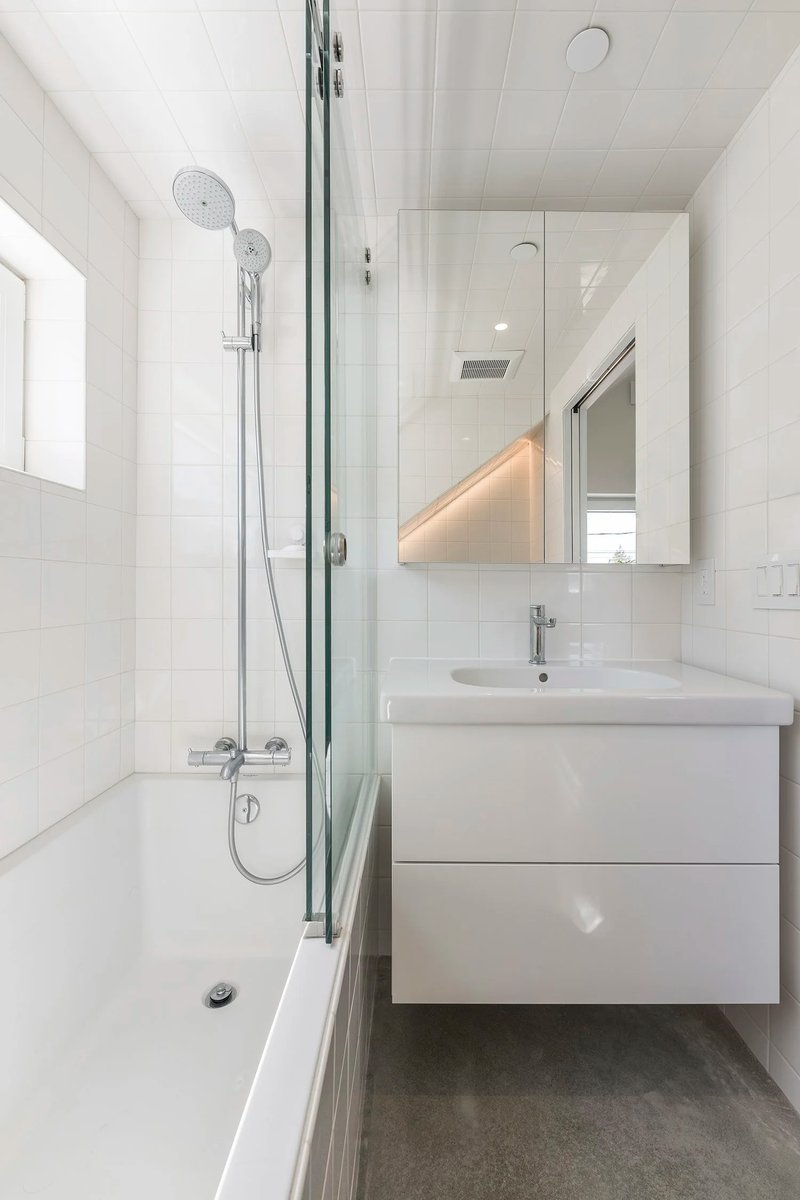
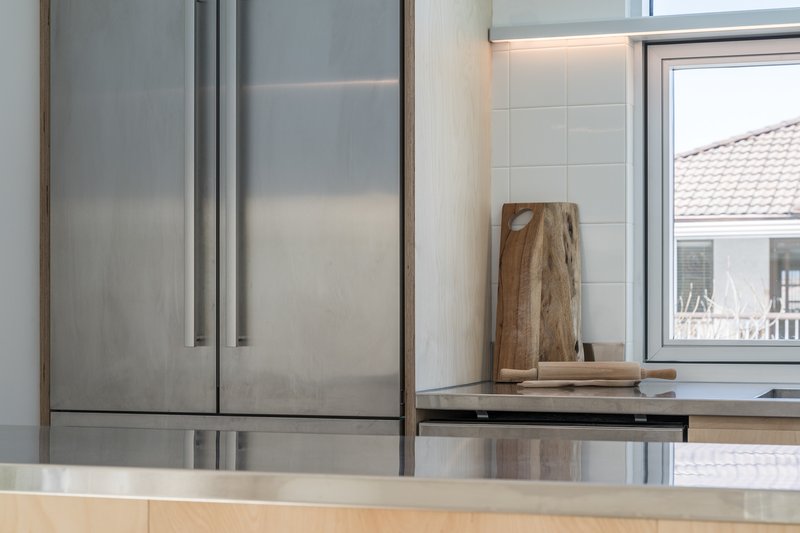
Material choices throughout the house are deliberately limited. Exposed concrete provides thermal mass and visual grounding, while pale timber elements introduce warmth and tactility. Stainless steel in the kitchen reinforces the project’s industrial undertone.
Windows and doors by manufacturers such as Schüco and Euroline ensure high performance and slim profiles, maintaining visual continuity. Custom concrete and glazing details further emphasize craftsmanship and technical rigor.
This restrained palette allows light and proportion to become the primary expressive tools.
Minimalism as Lifestyle
Anzio Laneway House is not merely a formal exercise in minimalism; it proposes a specific way of living. By removing excess furniture, maximizing built-in functionality, and prioritizing visual connection to nature, the project encourages mindful inhabitation.
Storage is concealed, circulation is efficient, and every element serves multiple purposes. The house supports a lifestyle oriented toward simplicity, adaptability, and reflection—qualities increasingly relevant in dense urban contexts.
Rethinking the Laneway Typology
Laneway houses in Vancouver are typically pragmatic infill structures designed to maximize rental yield. Anzio House challenges this norm by treating the typology as an opportunity for architectural experimentation.
Rather than mimicking suburban domesticity at a smaller scale, Imu Chan Architecture reimagines the laneway dwelling as a micro-architecture of experience—focused on section, light, and perception.
In doing so, the project demonstrates how small urban housing can achieve conceptual depth and spatial generosity without increasing footprint or cost.
All the Photographs are works of Lucas Inacio Photography




Popular Articles
Popular articles from the community

Atelier Macri Concept Store Interior Design by CASE-REAL
Atelier Macri store features a "ko" counter, walnut wood details, cork displays, blending retail, gallery, and seamless customer experiences.
Gads Hill Early Learning Center by JGMA: Adaptive Reuse Shaping Community-Focused Educational Architecture
Adaptive reuse transforms fragmented structure into vibrant early learning center with playful façade, natural light, and community-focused sustainable design.


Split House: A Compact Urban Home Blending Privacy, Light, and Flexible Living in Japan
Compact Japanese home featuring DOMA space, flexible café potential, passive lighting, privacy zoning, and sustainable urban living design.

Similar Reads
You might also enjoy these articles


The Ken Roberts Memorial Delineation Competition (Krob)
As the most senior architectural drawing competition currently in operation anywhere in the world, it draws hundreds of entries each year, awarding the very best submissions in a series of medium-based categories.

Waterfront Redevelopment and Urban Revitalization in Mumbai: Forging a New Dawn for Darukhana
A transformative waterfront redevelopment project reimagining Darukhana’s shipbreaking heritage into an inclusive urban future.

OUT-OF-MAP: A Call for Postcards on Feminist Narratives of Public Space
Rhizoma Design and Research Lab invites artists, designers, architects, researchers, and students to reflect on how feminist perspectives can reshape public space. Selected works will be exhibited in Barcelona, October 2026. Submissions open until 15 April 2026.


Documentation Work on Buddhist Wooden Temple
Architectural syncretism and cultural hybridity: A comparative study of the Buddhist temples in Chattogram Hill tracks


Explore Architecture Competitions
Discover active competitions in this discipline




The International Standard for Design Portfolios


The Global Benchmark for Architecture Dissertation Awards


The Global Benchmark for Graduation Excellence


Challenge to reimagine the Iron Throne
Comments (0)
Please login or sign up to add comments
No comments yet. Be the first to comment!