

ArtQuake: Reimagining the Workplace Through a Child's Eyes
An architectural exploration of playfulness, topography, and dynamic forms.


Playful Office Reimagined
The modern workplace is often characterized by sterile environments and rigid structures. But what if we approached office design with the boundless imagination and playful spirit of a child? This is the driving force behind ArtQuake, an architectural project that reimagines the office as a vibrant, engaging, and stimulating environment.
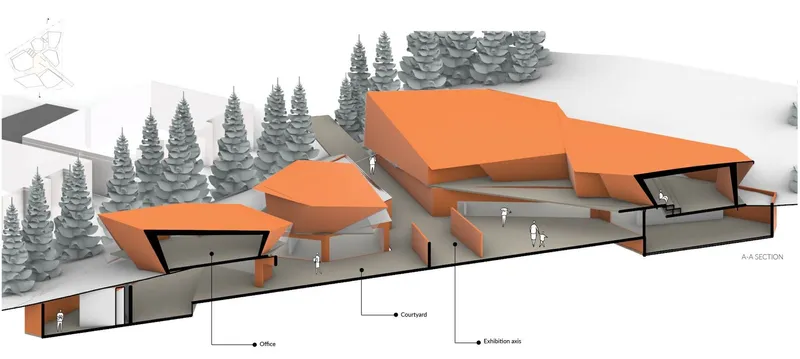
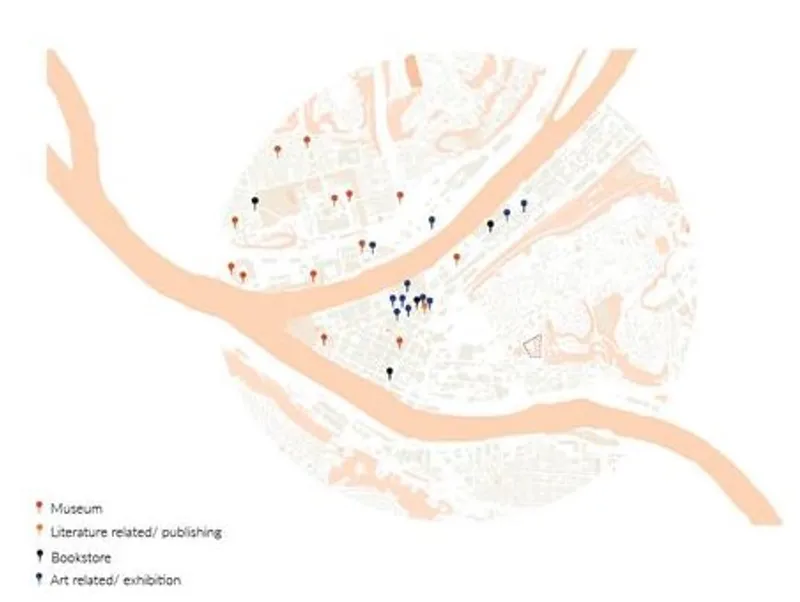
Shortlisted entry in the Child's Perspective competition, ArtQuake is the brainchild of architect Özge Akkoyunlu. This unique office space in Pittsburgh, Pennsylvania, seeks to revitalize the city's rich literary and artistic heritage, which has been somewhat overshadowed by its industrial identity. By seamlessly integrating the site's topography and embracing playful design elements inspired by a child's perception of work as play, ArtQuake offers a refreshing departure from conventional office design.
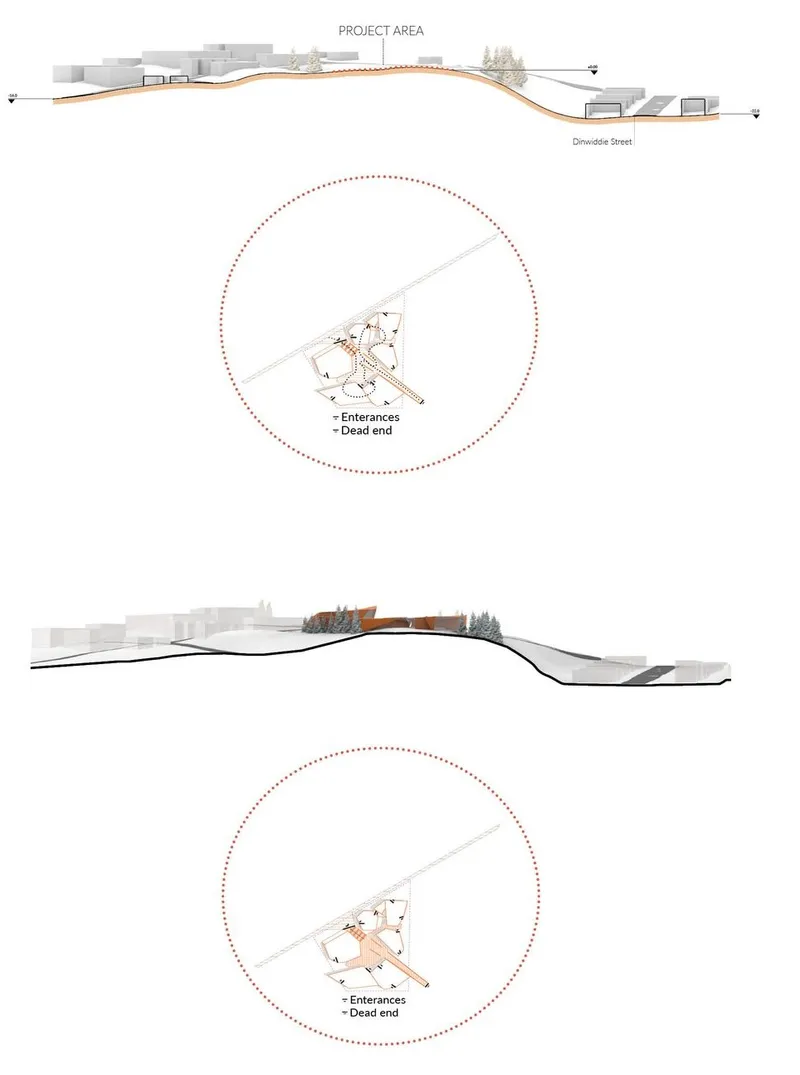
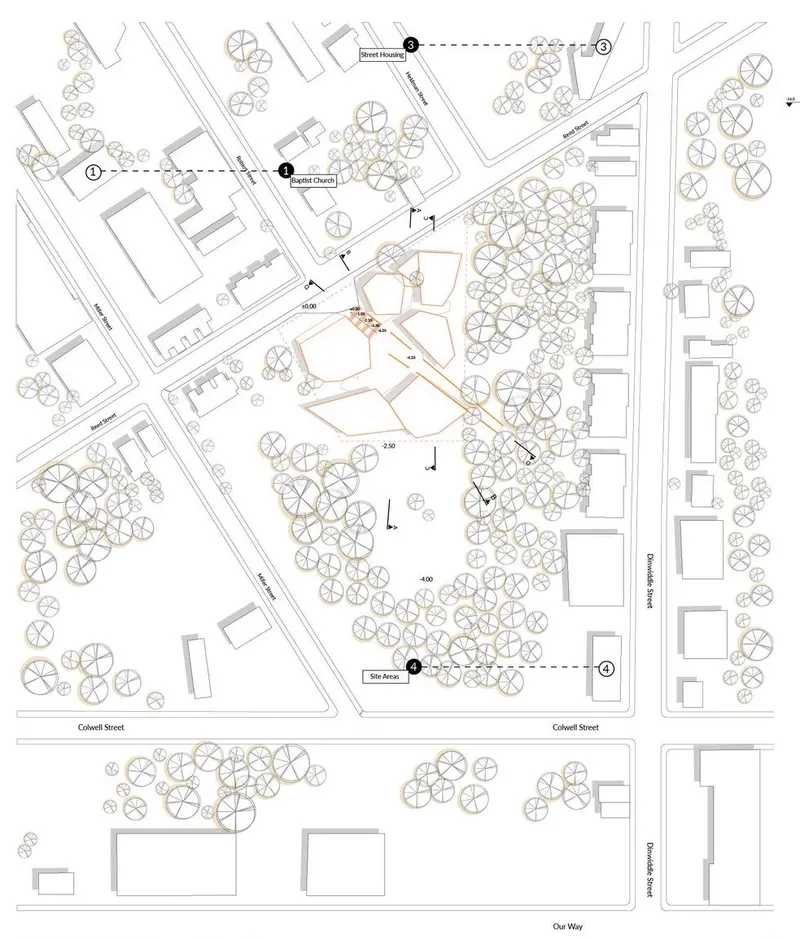
The project is situated on a sloped site along Dinwiddie Street, bordered by Colwell Street and Miller Streets. A main road and a secondary road provide direct access, while the site also enjoys proximity to a wooded area. This context informed the design's focus on incorporating green spaces and utilizing the natural terrain.
The design concept revolves around the idea of "wall" as a core element. Walls, while often seen as barriers, are essential for various art forms, providing surfaces for display, performance, and interaction. In ArtQuake, walls are reimagined as dynamic, sculptural elements that define spaces and guide movement.
Spatial Organization
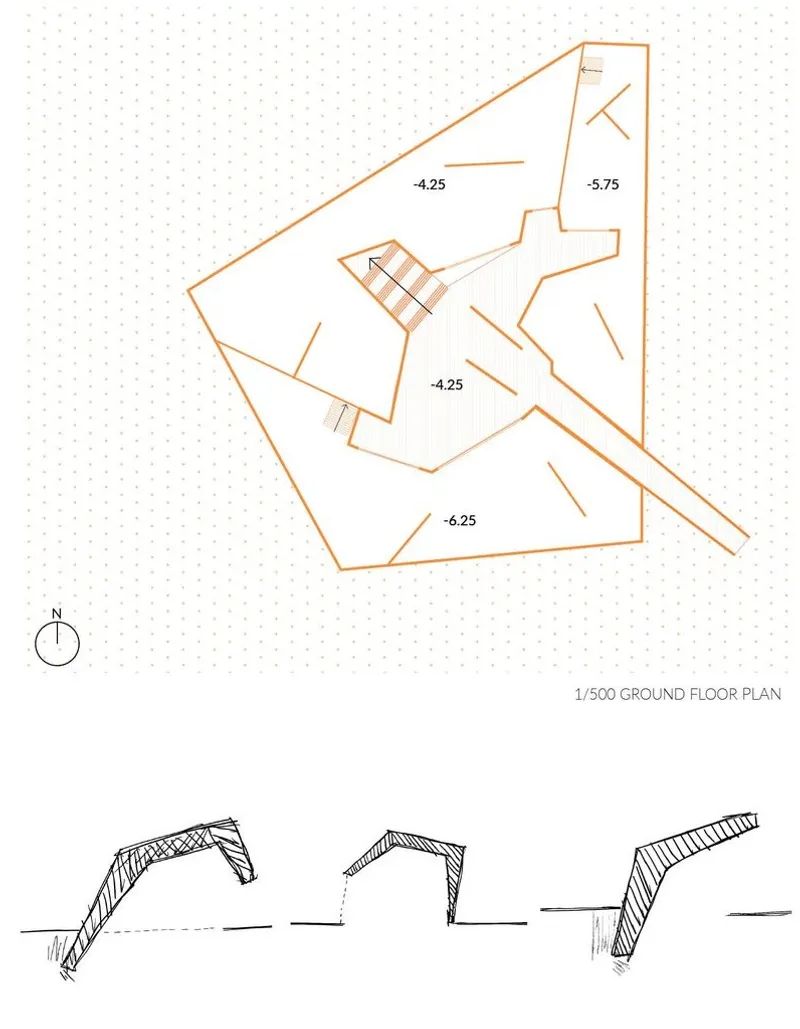
Inspired by a child's desire for open, flexible spaces and a connection to nature, ArtQuake features a series of interconnected volumes that adapt to the sloping topography. The building is fragmented into distinct zones, creating a sense of discovery and encouraging exploration.
Dynamic Volumes: The office spaces are housed within angular, orange volumes that appear to emerge from the landscape. Some volumes are embedded in the slope, while others are elevated, creating a dynamic interplay of solid and void.
The Rift: A central "rift" cuts through the topography, creating a pathway that connects different levels and serves as a focal point for circulation. This rift allows natural light to penetrate the lower levels, while also framing views of the surrounding landscape.
Playful Rooftops: The roofs of the volumes are integrated with the topography, forming sloping surfaces that invite playful interaction. Children can slide, climb, and explore these rooftop landscapes, blurring the lines between work and play.
Courtyard and Exhibition Axis: A central courtyard acts as a gathering space and provides a visual connection between different parts of the office. An "exhibition axis" runs through the building, creating a dedicated space for displaying art and showcasing creative work.
Design Features
Integration with Topography: The building's design embraces the existing slope, with floor levels stepping down to follow the natural terrain. This creates a dynamic spatial experience and maximizes views of the surroundings.
Level Differences: The varying floor levels create unique spatial relationships and allow for visual connections between different areas. This also facilitates the integration of natural light into the lower levels.
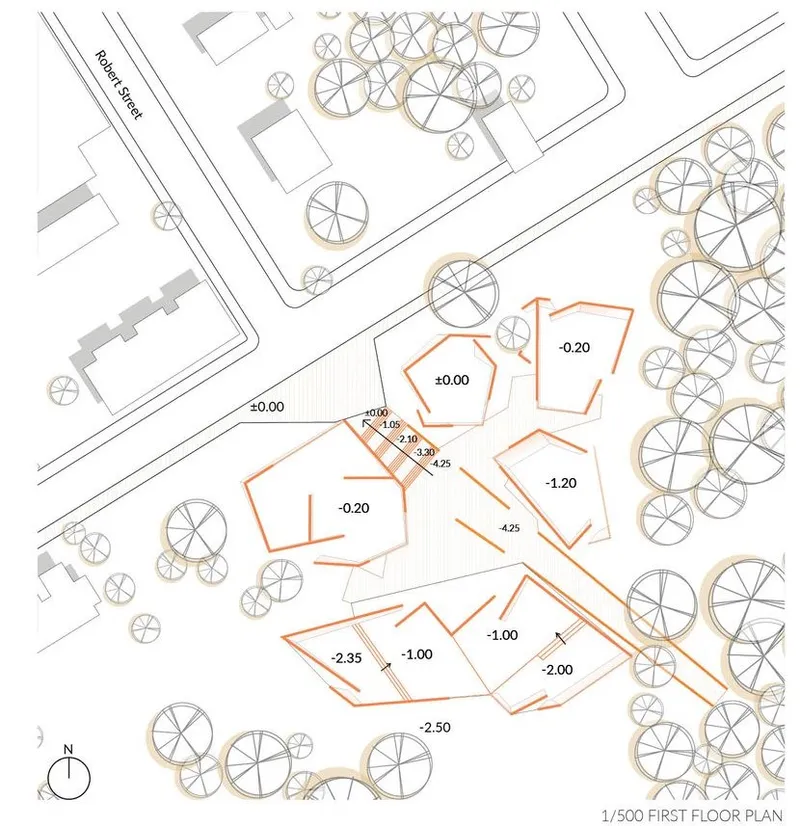
Dynamic Circulation: Movement through the building is designed to be fluid and engaging, with pathways winding through the volumes and across the sloping terrain.
Indoor-Outdoor Connection: Large windows and open spaces blur the boundaries between inside and outside, bringing natural light and views into the workspaces. The rooftop terraces further enhance this connection to nature.

A Child's Perspective
ArtQuake challenges traditional notions of office design by prioritizing the needs and perspectives of children. The design encourages creativity, exploration, and a sense of wonder, transforming the workplace into an environment that fosters both productivity and playfulness.
By embracing a child's perspective, ArtQuake offers a compelling vision for the future of workplace design—one that is human-centered, adaptable, and deeply connected to its surroundings.
This expanded article incorporates the key elements from the provided images and text, providing a comprehensive overview of the ArtQuake project. It highlights the architectural design, spatial organization, and unique features while emphasizing the child-centric approach that sets this project apart.


Popular Articles
Popular articles from the community


The Amber Palace Opera: A Geological Fiction Surfaces on Tallinn's Baltic Waterfront
Pierre Brillard reimagines a Baltic legend as a public landscape, opera house, and waterfront promenade rooted in Tallinn's coastal identity.

Temporary Home for Dogs: A Reversed Zoo Rethinks Animal Shelter Architecture
In Bucharest, a sinuous corridor and freed landscape flip the logic of containment, designing a shelter that works to make itself unnecessary.

Tsunami Convergenics: Turning Catastrophic Ocean Forces into Underwater Housing Infrastructure
A speculative underwater settlement off the coast of Onagawa, Japan, treats tsunamis and typhoons as energy sources rather than threats.

Faces of the Soviet Avant-Garde: Turning Moscow's Street Names into an Open-Air Museum
A network of sculptural installations across a Moscow residential district transforms forgotten architect names into spatial encounters with cultural memor

Similar Reads
You might also enjoy these articles

Shakur's House: Exposed Brick as an Interior Organiser in a 168 m² Mashhad Residence
Brick moves indoors in this Mashhad residence, where masonry walls, glass partitions and teal planes sequence a compact home without closing it off.

Day and Night Park: A Time-Based Urban Newsstand in Beijing
A temporary urban newsstand in Beijing blending travel, light, and reading through poetic colors, compact form, and community-focused design.

Modernist Patio Renovation in El Masnou, Barcelona by Oliver Segura Arquitectura + Cebrià Arquitectura
Modernist patio renovation blending tradition and innovation with a movable pool, leveled floors, and Catalan materials in El Masnou.

Alto Residencial Coop: Cooperative Housing Development in Santiago de Compostela by Carbajo Barrios Arquitectos
A linear cooperative housing complex blending white volumes and perforated metal façades, enhancing community living, natural light, privacy, and urban integration.

Explore Interactive Art Competitions
Discover active competitions in this discipline

Challenge to visualize a collision of the future and past

Challenge to visualize future spaces of waste

Challenge to visualize slums of 2080

Challenge to illustrate the ruins of Petra
Comments (0)
Please login or sign up to add comments
No comments yet. Be the first to comment!