

Ashari Architects Disguises a Shiraz Apartment Building as the Mountain Behind It
A brick residential tower in the hills of Shiraz uses color, pattern, and deep planted balconies to dissolve into the landscape behind it.


Shiraz sits in a valley ringed by the Zagros foothills, and the upper neighborhoods of the city press directly against bare, sun-bleached slopes. At that interface, Ashari Architects placed Koohsar Residential Apartment: a six-story brick tower whose palette, massing, and planted terraces are calibrated to make the building read less as a foreground object and more as a textured extension of the hillside rising behind it. Completed in 2022, the 1,300 m² project holds eight units across six residential floors, organized as two-unit levels at the lower floors and single three-bedroom units above.
What makes Koohsar genuinely interesting is the specificity of its camouflage strategy. The architects did not simply choose a neutral earth tone. They sourced Azarakhsh brick in a hue matched to the distant mountain, then organized the facade pattern to suggest an upward sweep, pulling the eye from the building's base toward the rocky ridge behind it. Deep, rounded balcony boxes double as sun-control devices on the south face and as frames for trailing greenery, so the building accumulates a vegetal layer that blurs its silhouette season by season. The result is an apartment block that tries, quite literally, to disappear.
A Facade Tuned to the Hillside
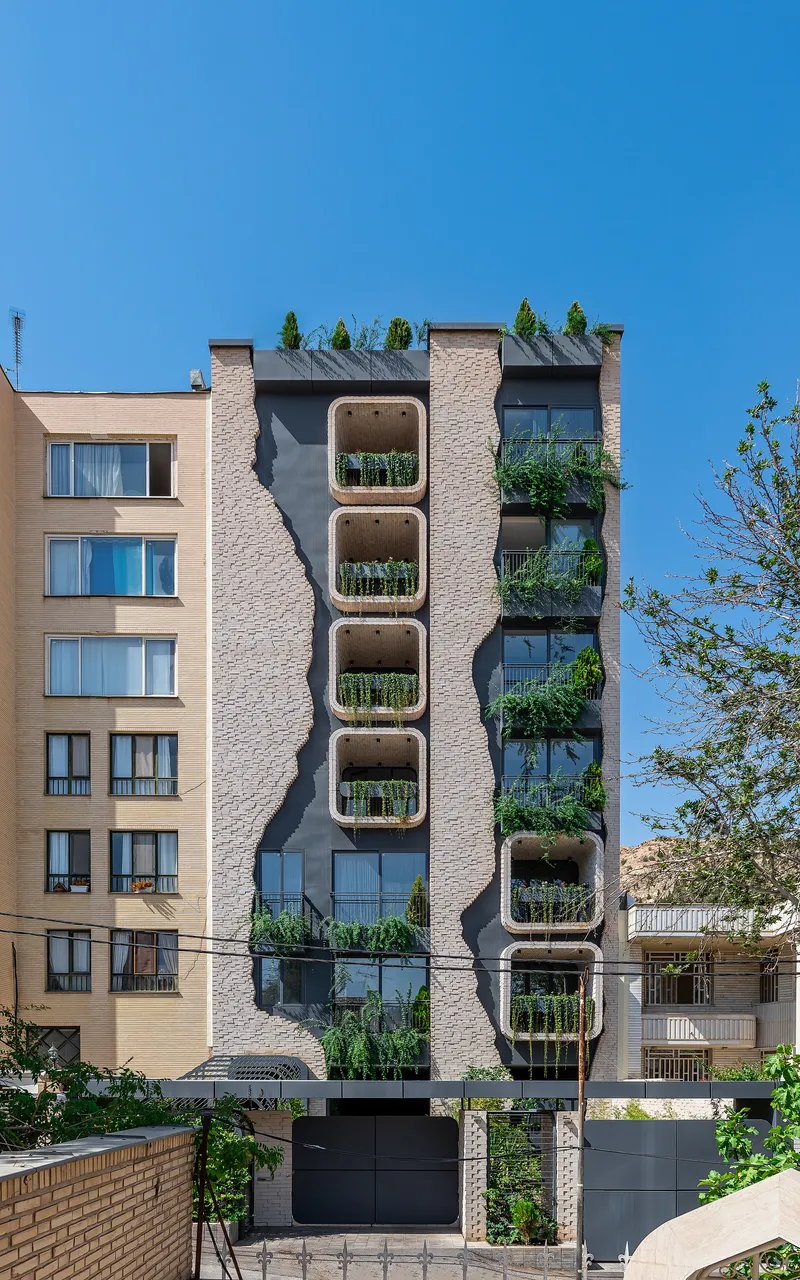
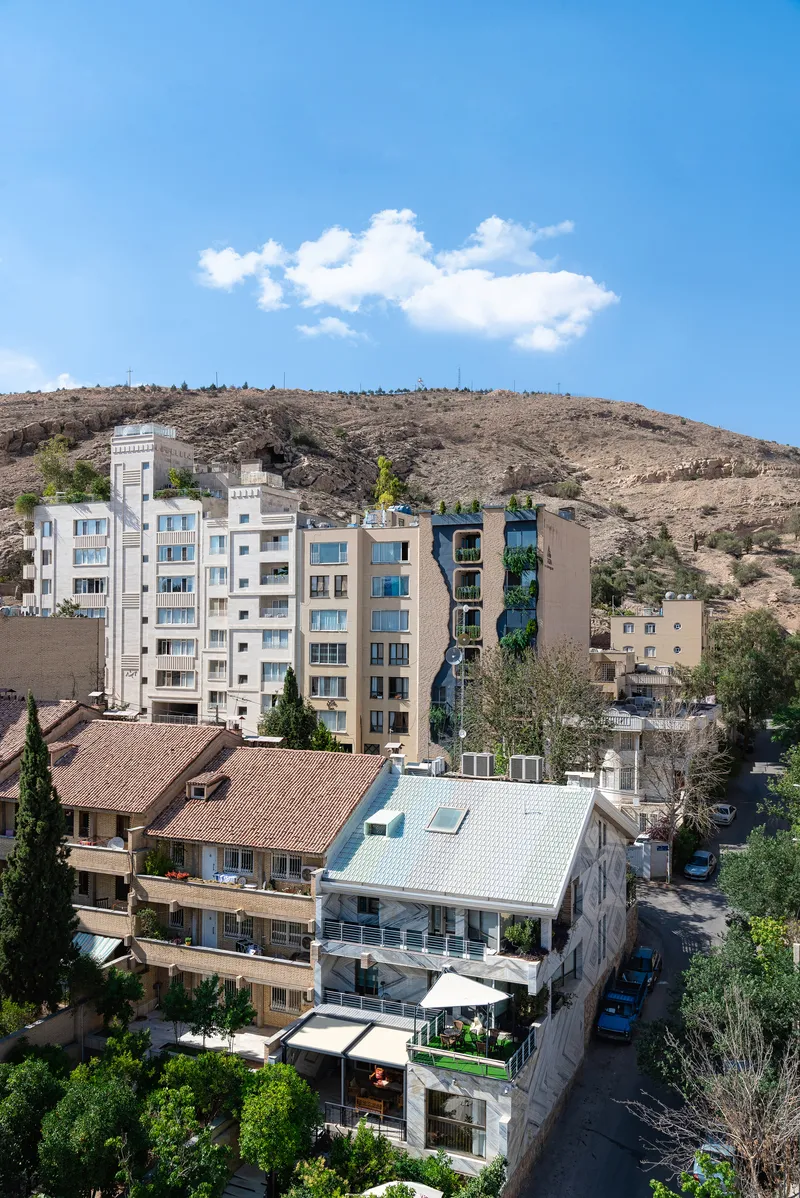
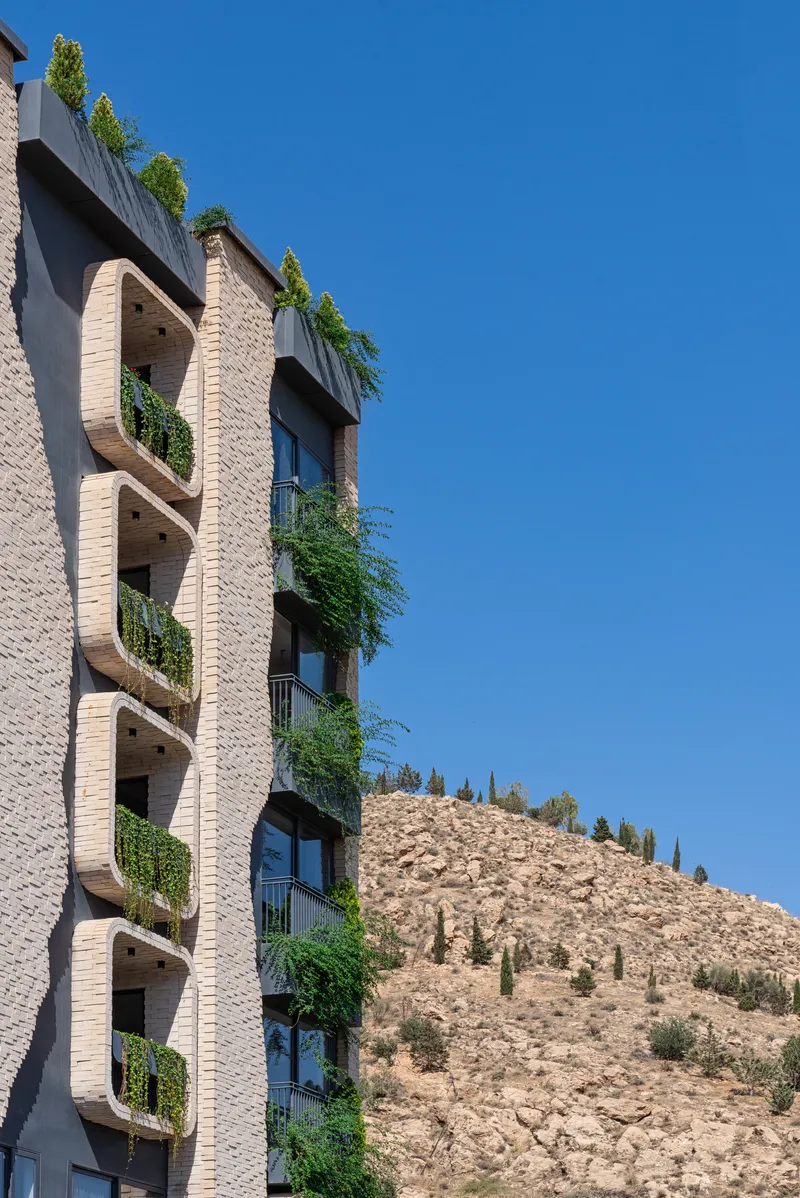
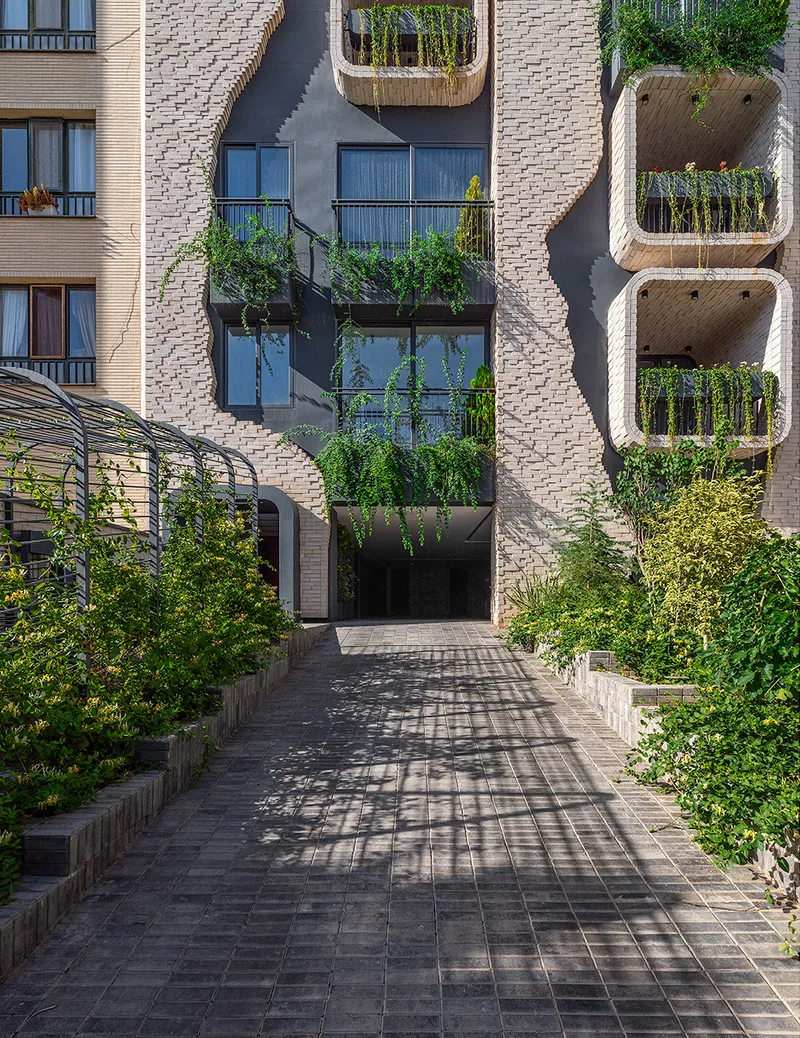
Seen from the street, the tower stacks a vertical rhythm of rounded-corner openings against a continuous skin of pale brick. The color match with the barren hillside is uncanny in direct sun: the building nearly merges with the slope, separated only by the rooftop silhouettes of neighboring houses. The brick coursing shifts subtly floor to floor, simulating a bottom-to-top movement that reinforces the visual drift toward the mountain.
Trailing plants on the balcony railings introduce a counter-rhythm. Where the brick is hard-edged and mineral, the greenery softens boundaries and adds depth, creating the impression that the hillside's scrubby vegetation has simply climbed onto the facade. This is not an afterthought. The architects positioned planting troughs at every level specifically because ground-level landscape was constrained by road and sidewalk conditions.
Deep Boxes and the Control of Southern Light
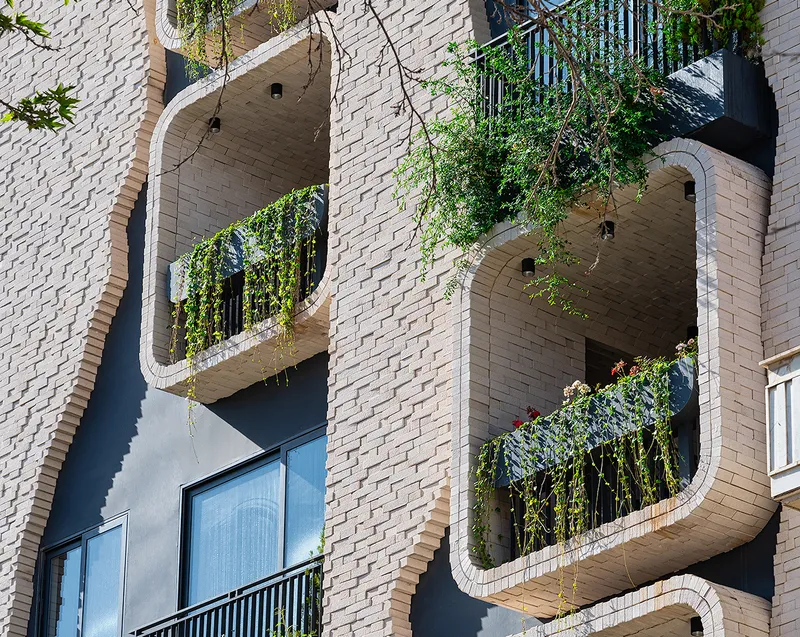
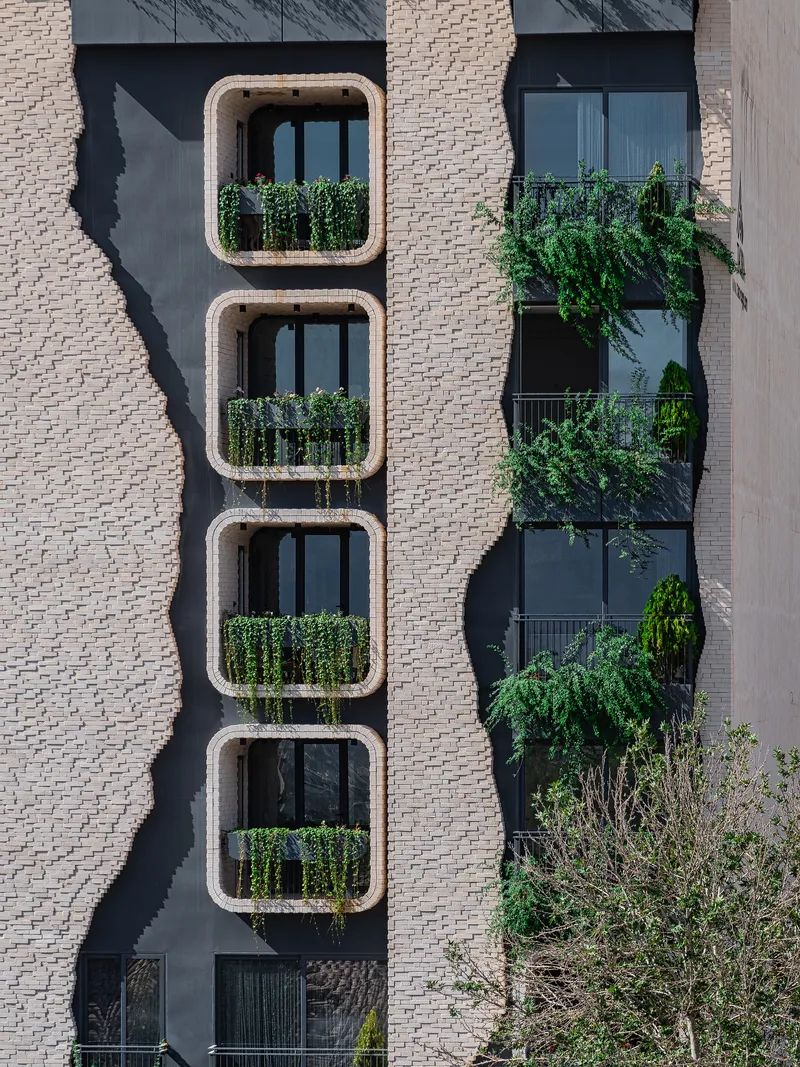
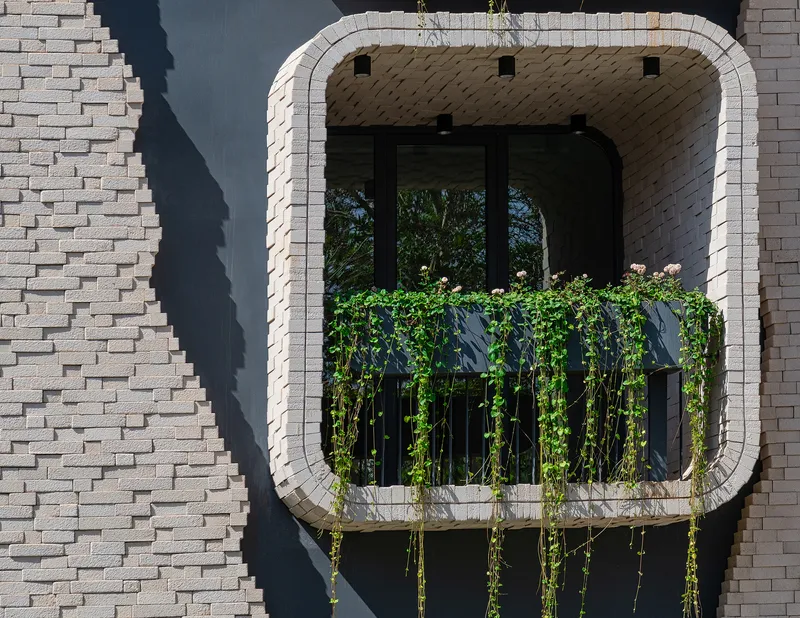
Shiraz is hot and bright. With the building connected to its neighbors on three sides, the south facade is the primary solar exposure, and the architects treated it accordingly. The balcony enclosures are not shallow ledges but deep, volumetric boxes that project outward and recess inward, creating self-shading that reduces direct solar gain without sacrificing views. The enlarged proportions of each box give the facade a sculptural weight that reads clearly from the street.
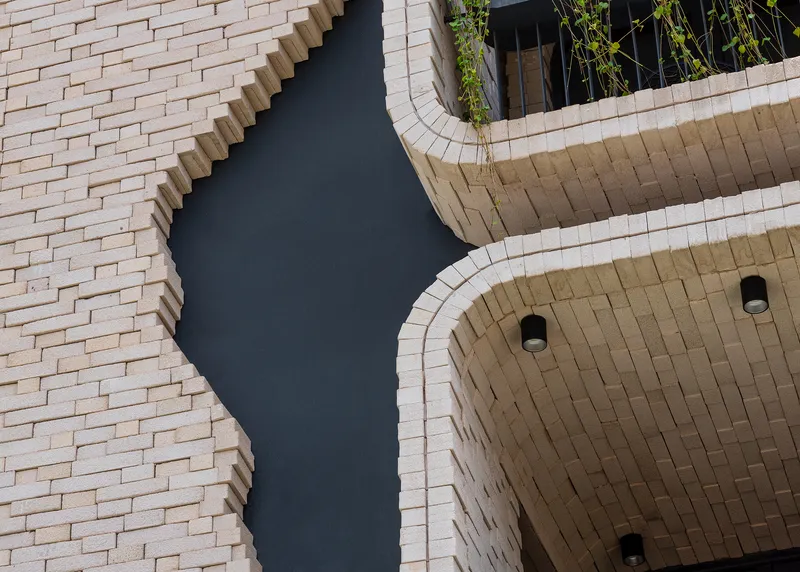
Each balcony becomes a room in its own right: a vaulted brick ceiling overhead, pebble drainage beds underfoot, and an open face toward the city below. The depth is generous enough for a table and chairs, making these spaces functional outdoor rooms rather than decorative appendages.
Brick Vaults and Thresholds
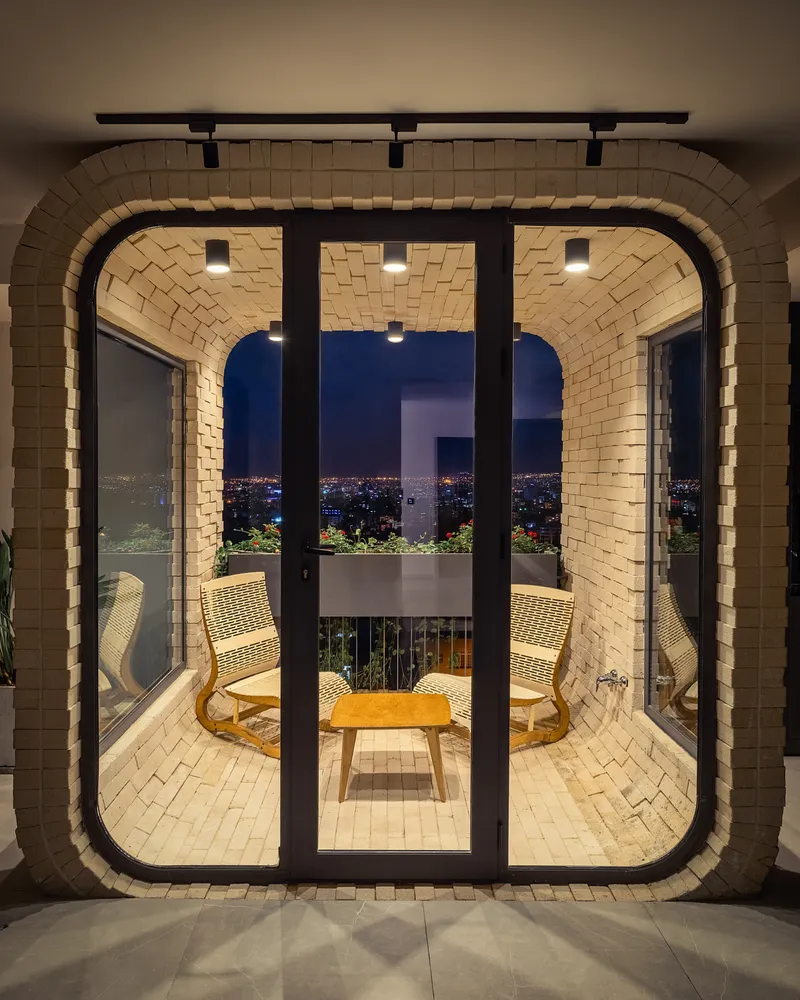
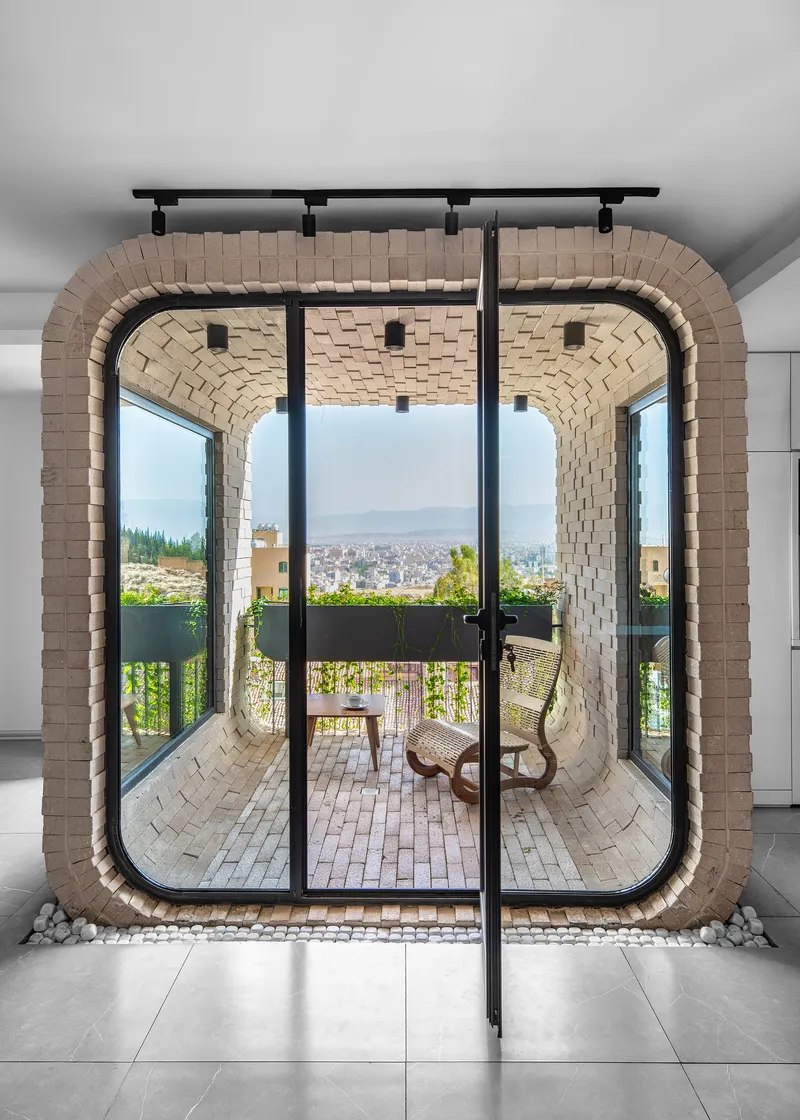
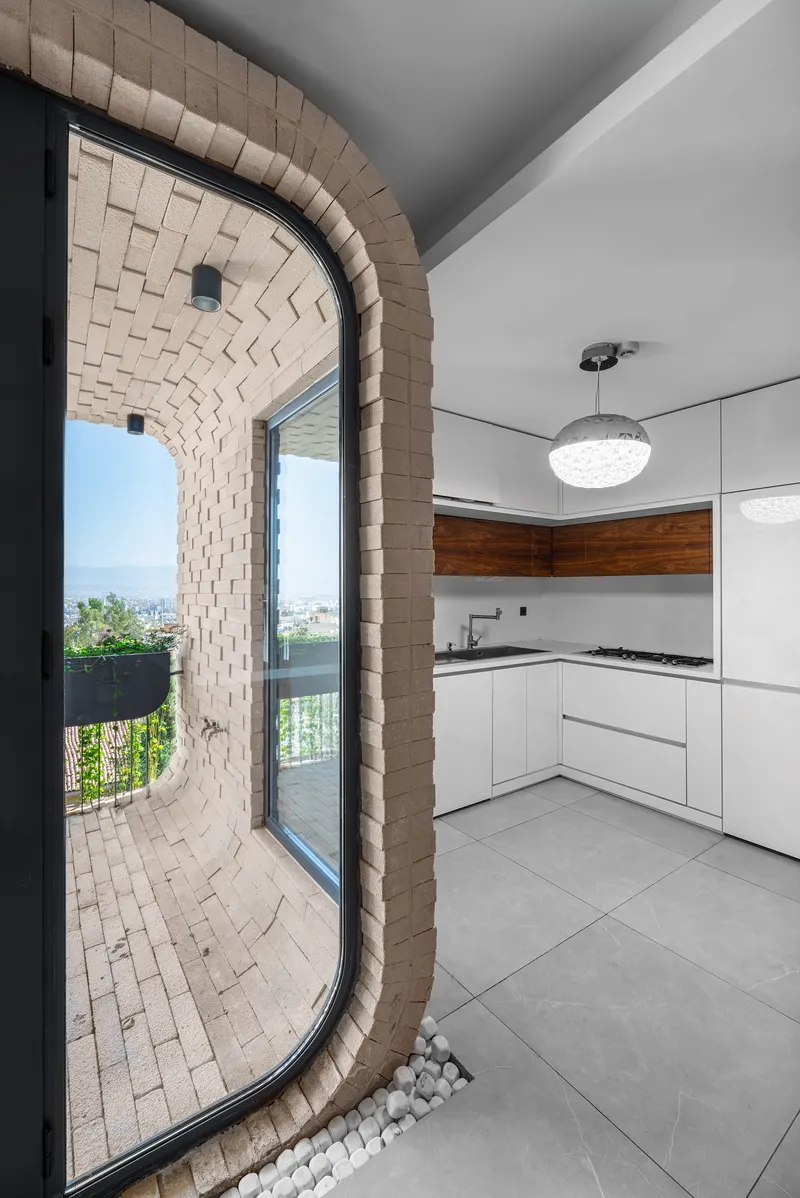
The most compelling interior moments happen at the transition from inside to out. Black-framed glass doors open onto vaulted brick loggia spaces that frame panoramic views of the city at dusk. The vault is a quietly powerful move: it lends each balcony a sense of permanence and shelter that a flat soffit would not, and it connects the project to the arched masonry traditions of Iranian residential architecture without copying any specific precedent.
The kitchen-to-balcony threshold in the smaller units is particularly well resolved. A curved brick archway frames the opening, and the transition from tiled floor to pebble bed is immediate, compressing the passage from domestic interior to planted terrace into a single step.
Entries and Ground Plane
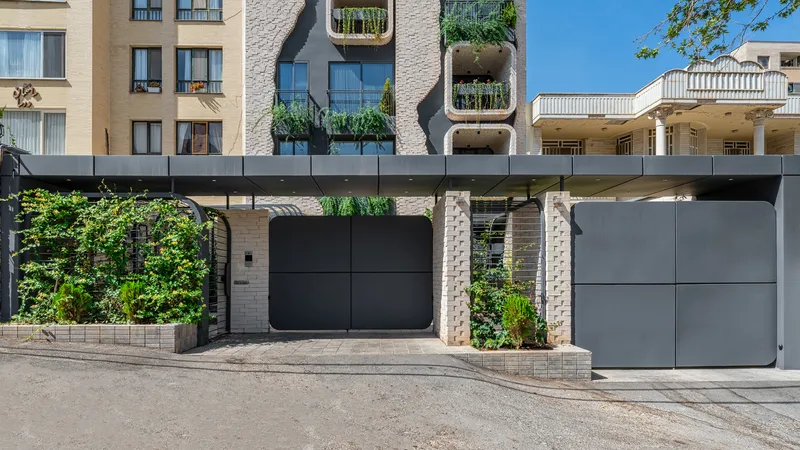
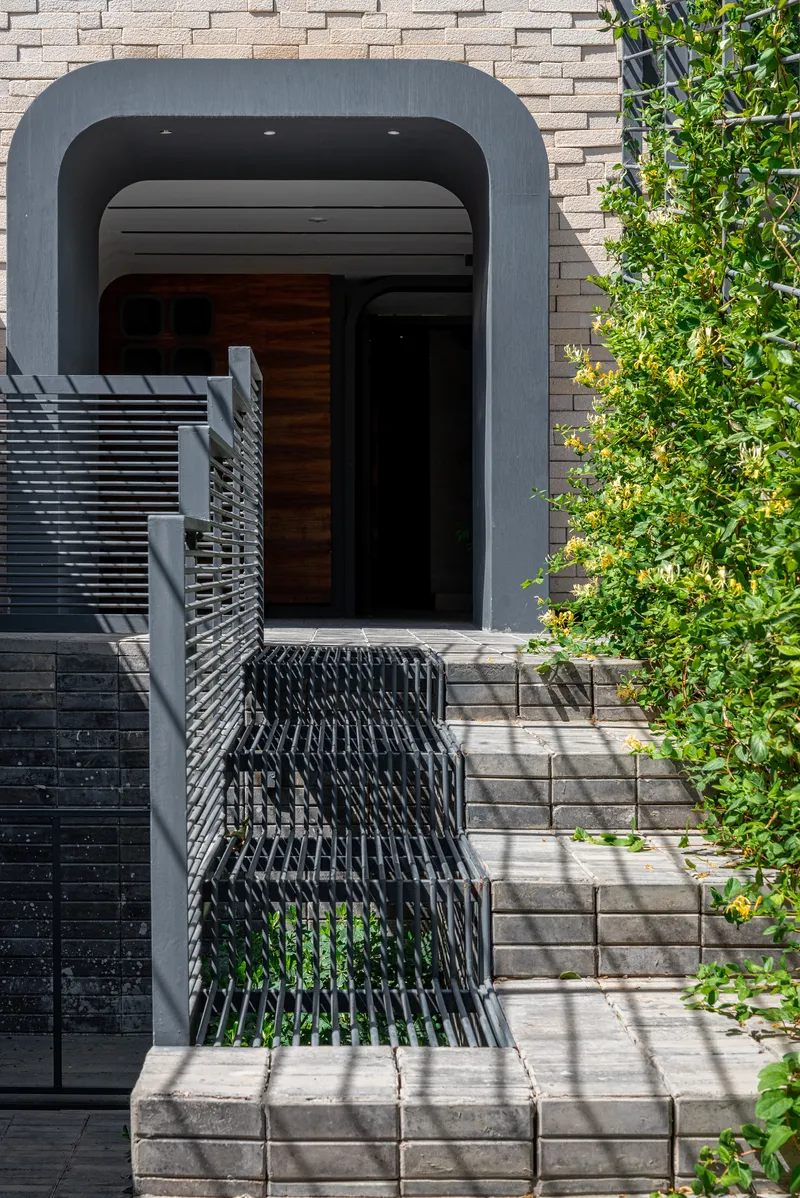
The ground level had to negotiate a sloped site with limited setback from the road. The entrance is handled through a dark metal gate set between textured brick piers, and a metal walkway bridge spans the gap between street level and the building's lobby floor. The effect is almost fortified: the base is closed and mineral, in contrast to the increasingly planted and porous upper floors.
A paved courtyard on one side provides a gentler approach, with a pathway leading toward the facade and its stacked greenery. This is one of the few spots where the building reveals itself at close range, and the vertical accumulation of rounded openings and trailing vines has real visual impact when seen from below.
Interior Materiality
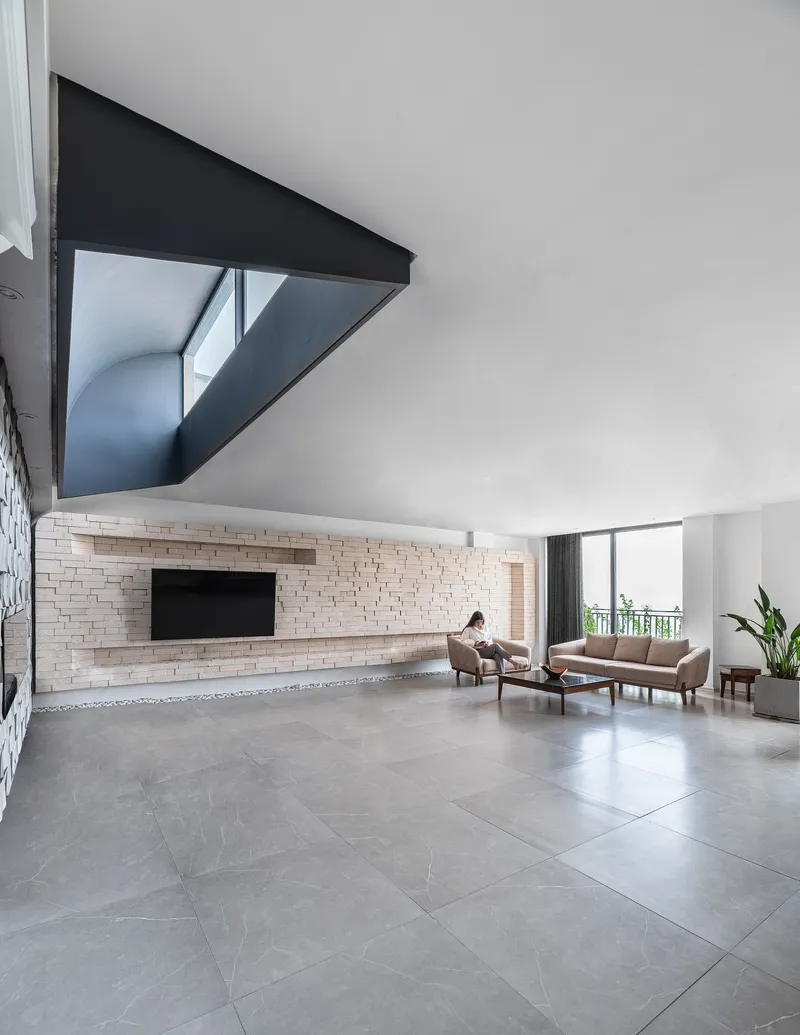
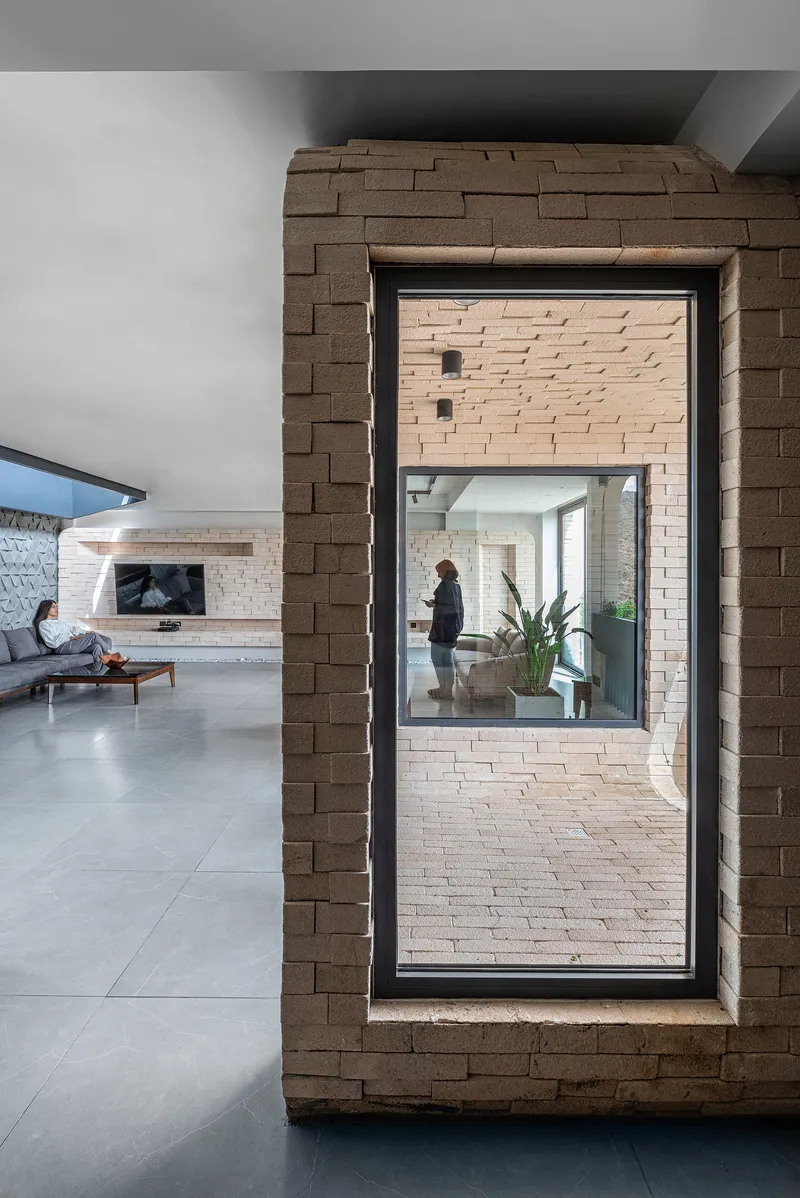
Inside the three-bedroom units, the brick vocabulary continues as an accent wall rather than a total envelope. A double-height living room features a textured brick surface with a triangular mezzanine opening framed in black steel, introducing an angular geometry that contrasts with the rounded balcony forms outside. The detail is restrained: the brick does the work, and the steel provides crisp edges.
Curved brick soffits at the balcony ceilings are visible from within the apartments, connecting interior and exterior through a shared tectonic language. The recessed downlights set into these curves are discreet, keeping the focus on the masonry texture rather than on fixtures.
Balcony Details Up Close
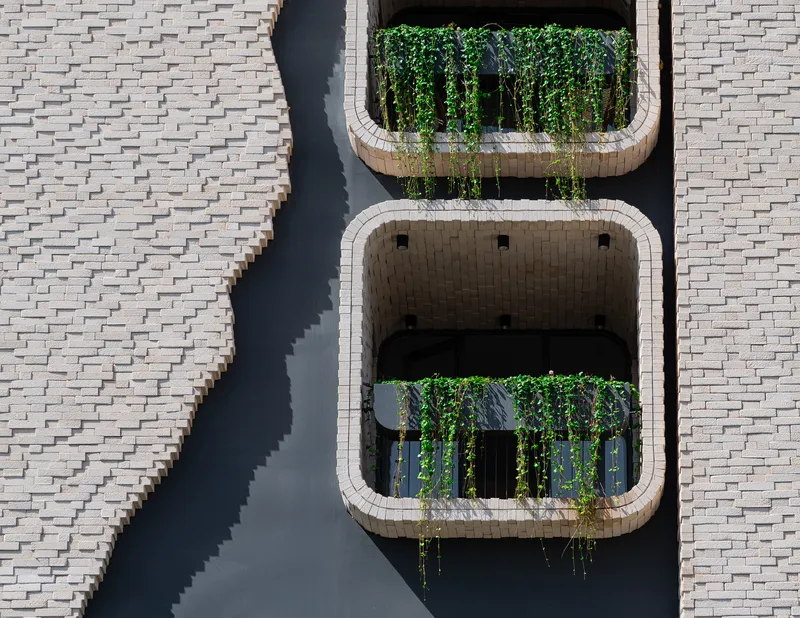
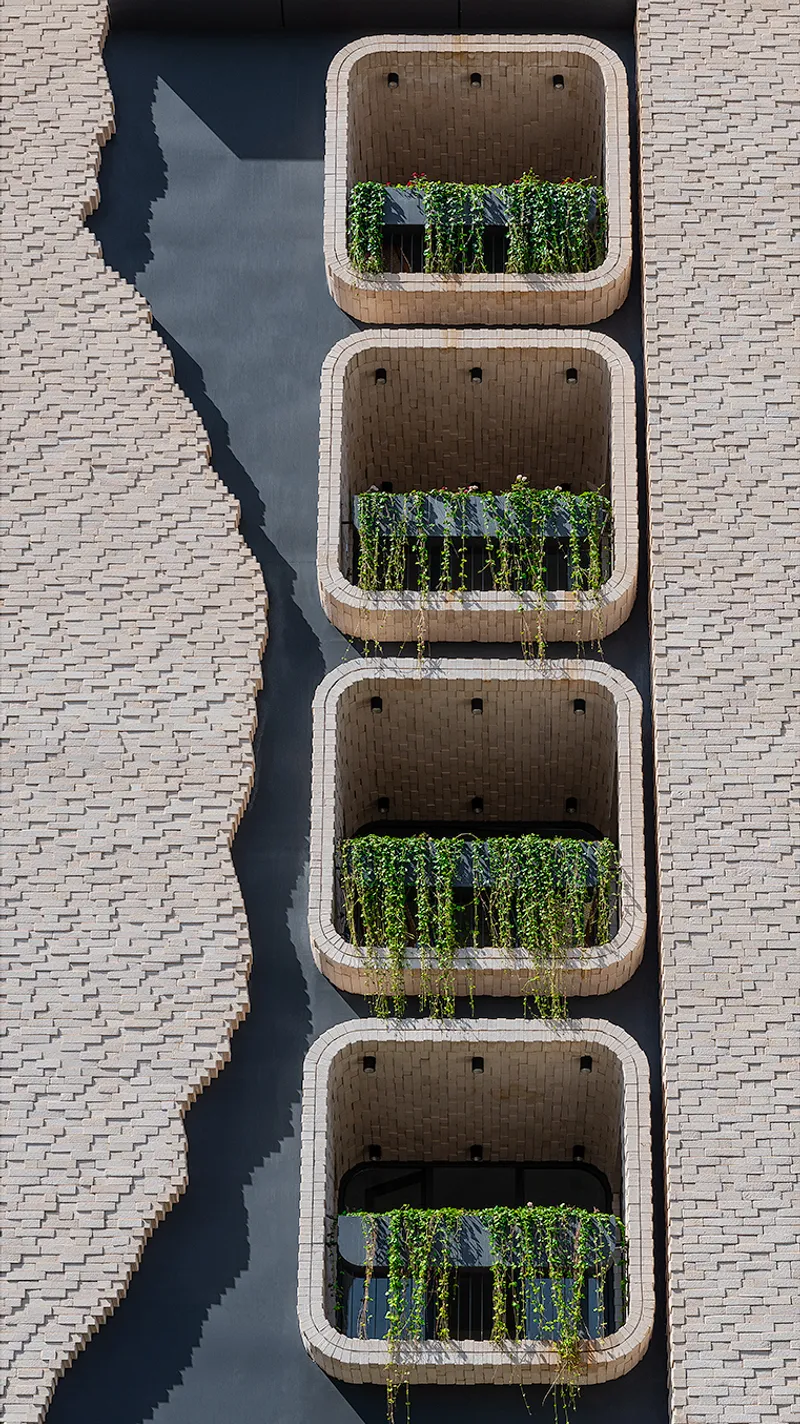
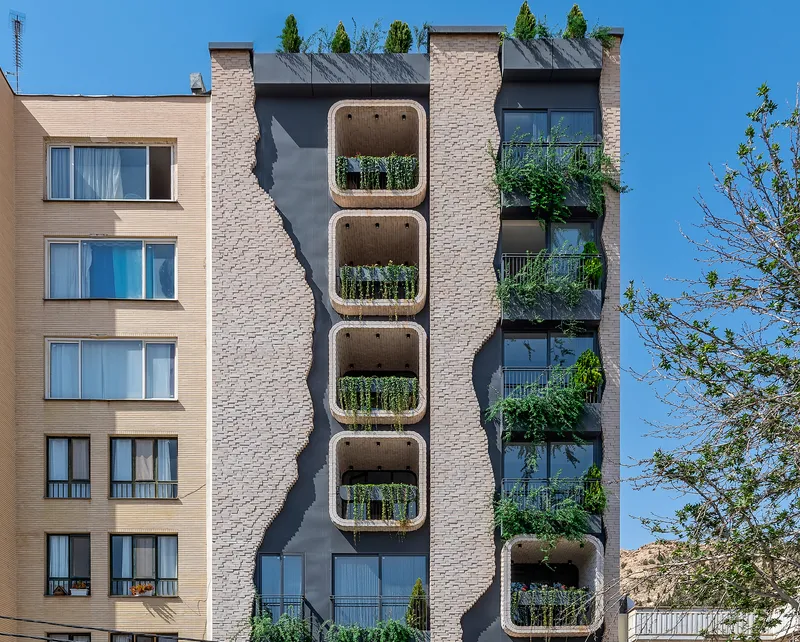
An overhead perspective reveals how the stacked balconies function as a sectional garden. Each level holds its own planting scheme, and the trailing vines from upper floors begin to overlap with the foliage below, creating a continuous green curtain that thickens over time. The black metal railings recede visually, keeping the emphasis on brick and vegetation.
The rounded-corner geometry of the openings is consistent from basement to roof, giving the facade a repetitive cadence that feels calm rather than monotonous. Slight variations in planting density and vine maturity at each level introduce the kind of asymmetry that only time can produce.
Plans and Drawings
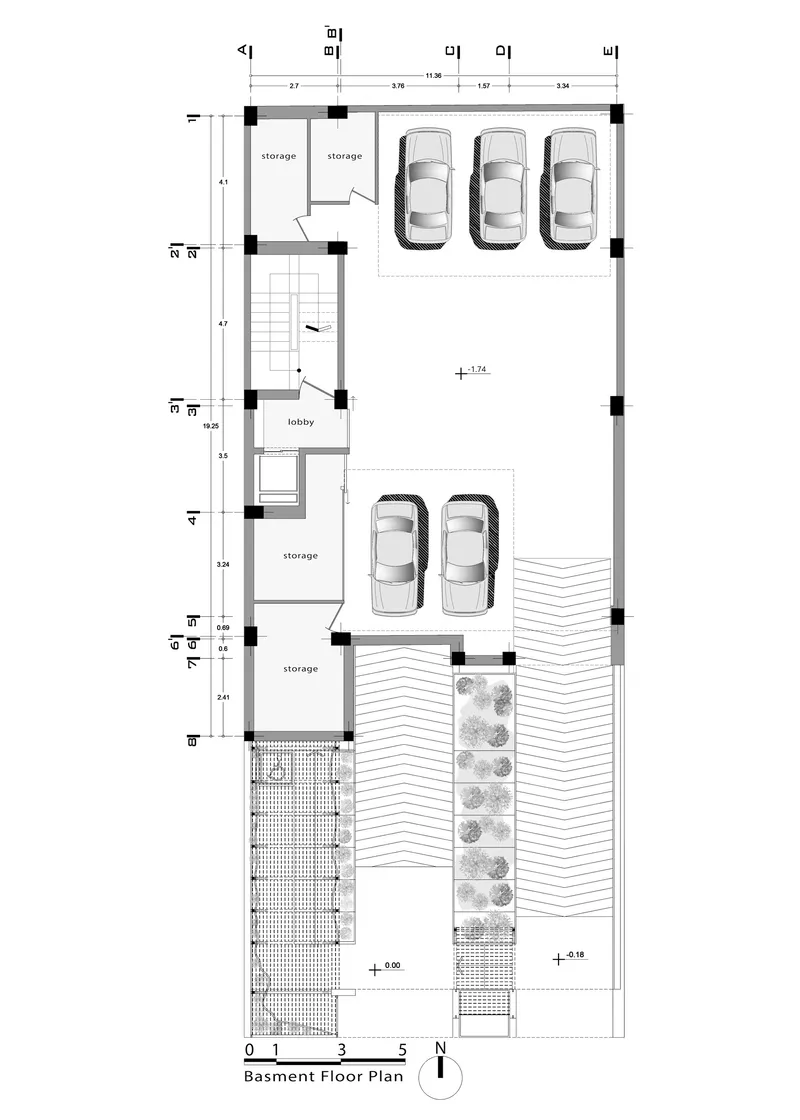
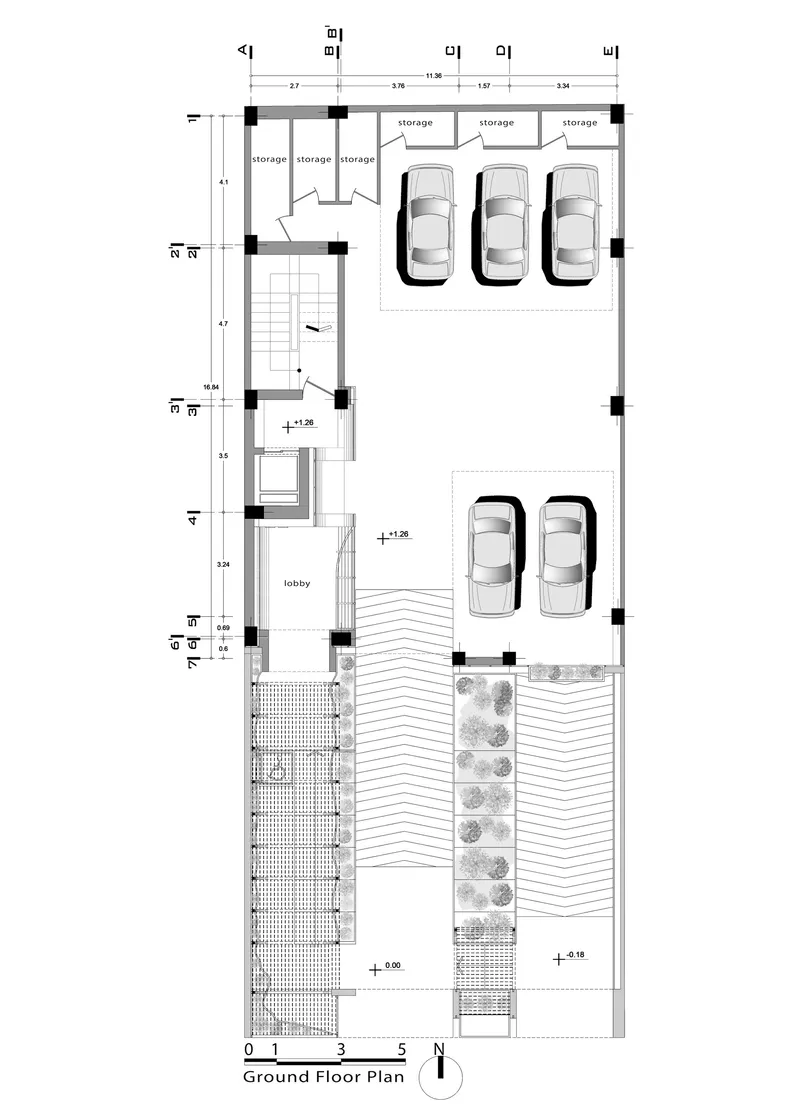
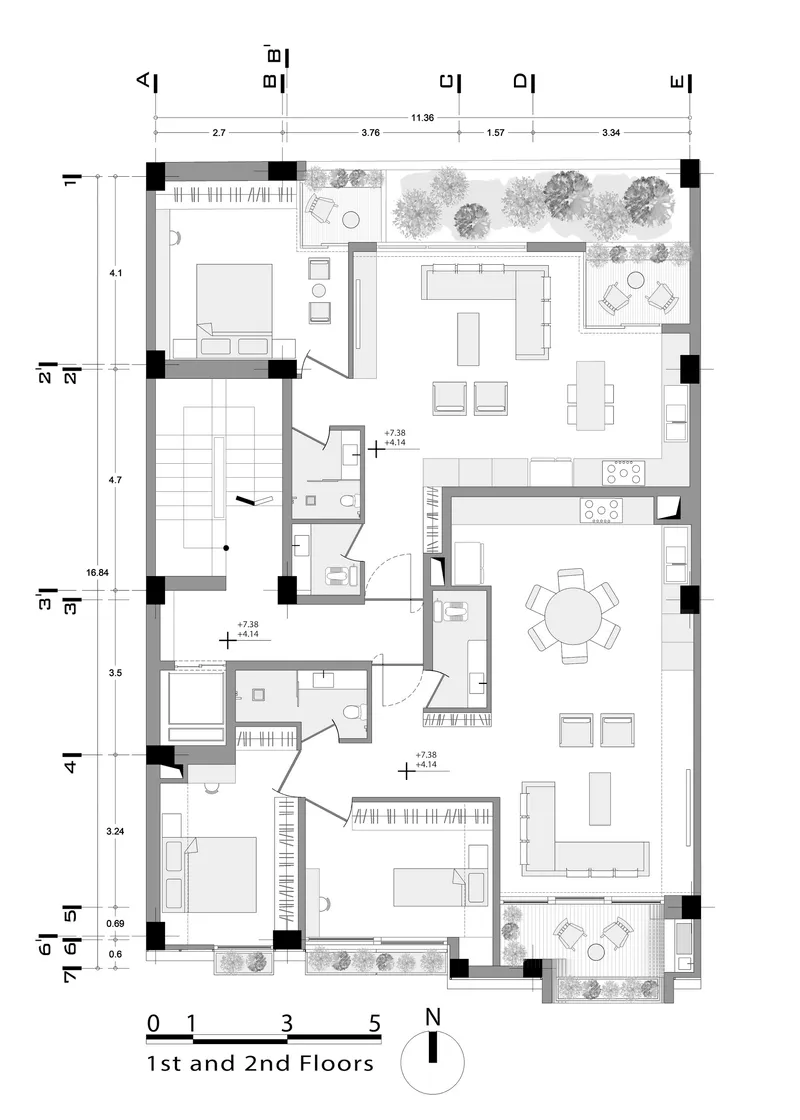
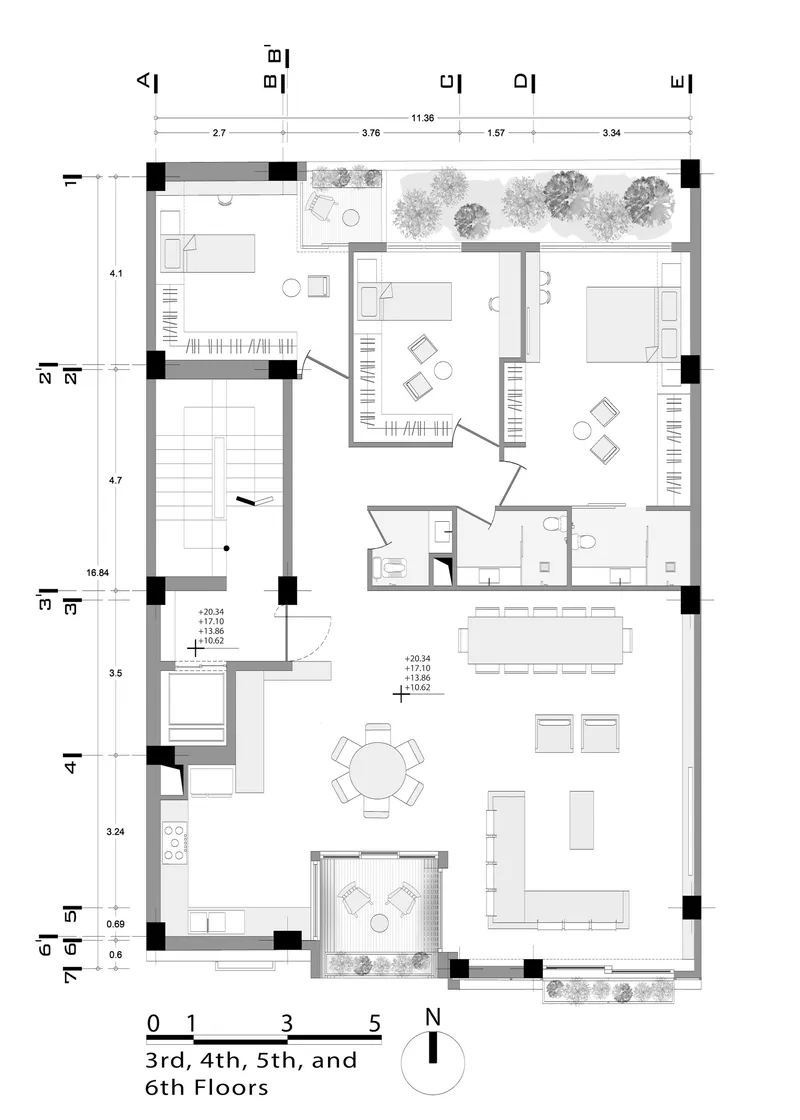
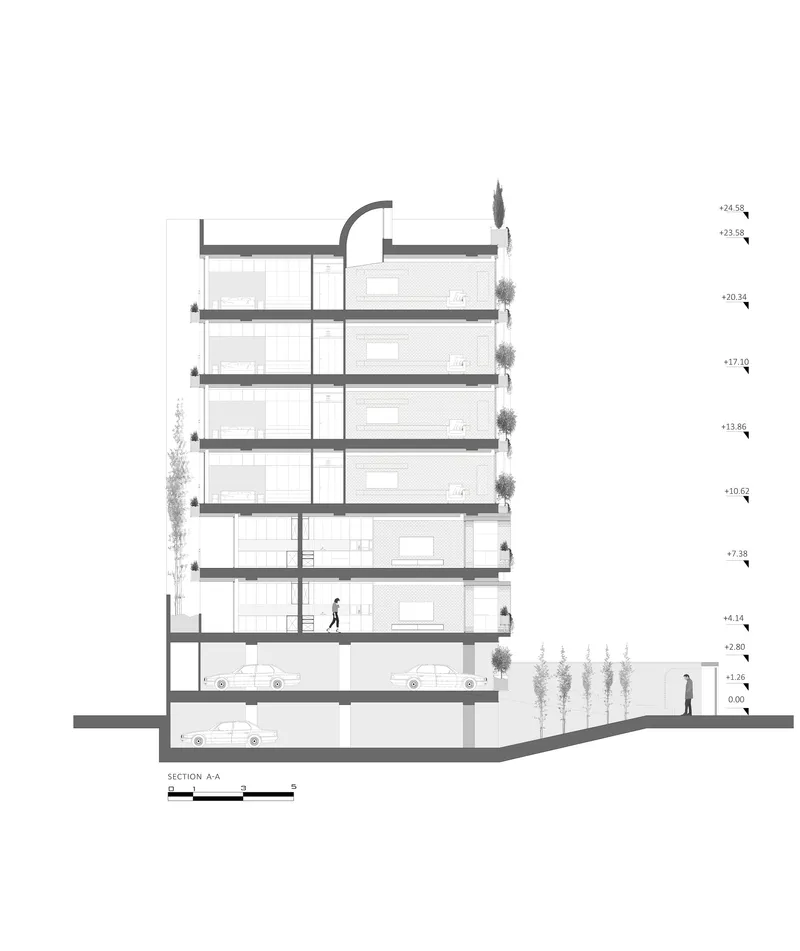
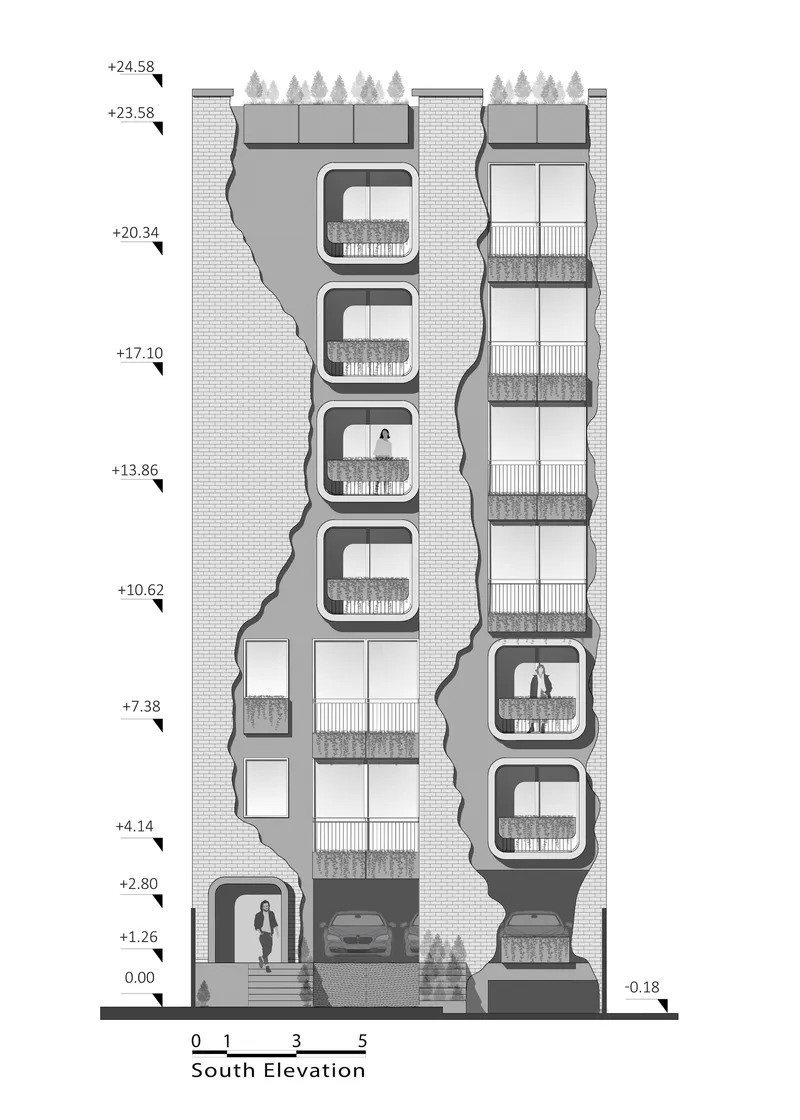
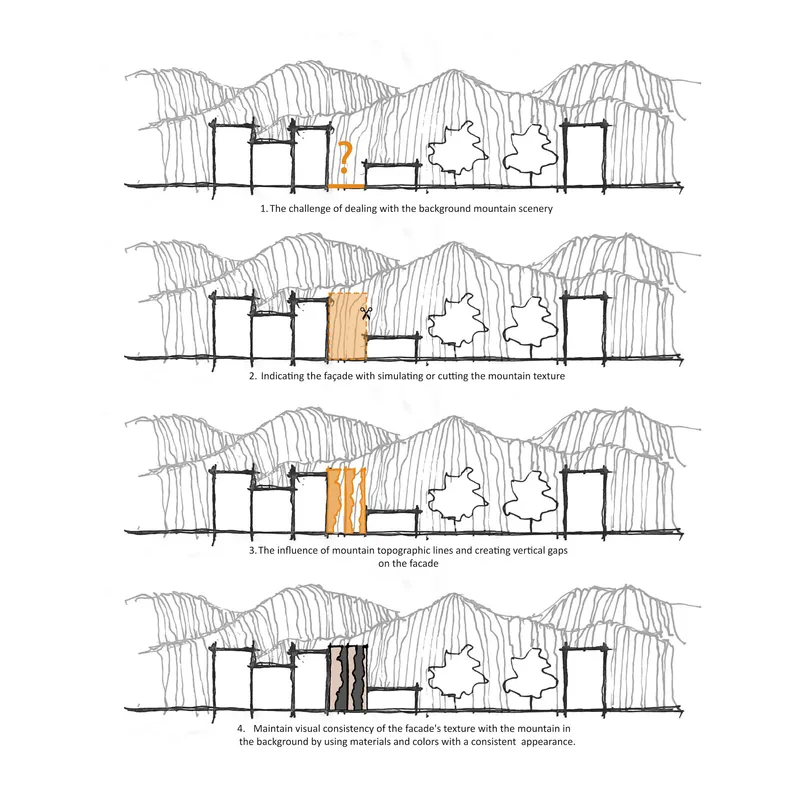
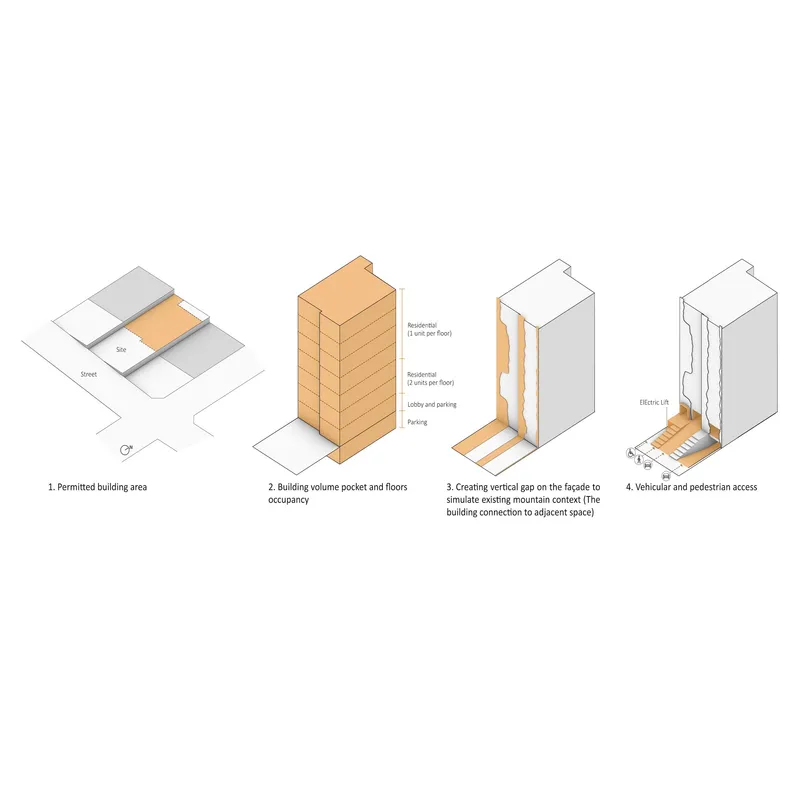
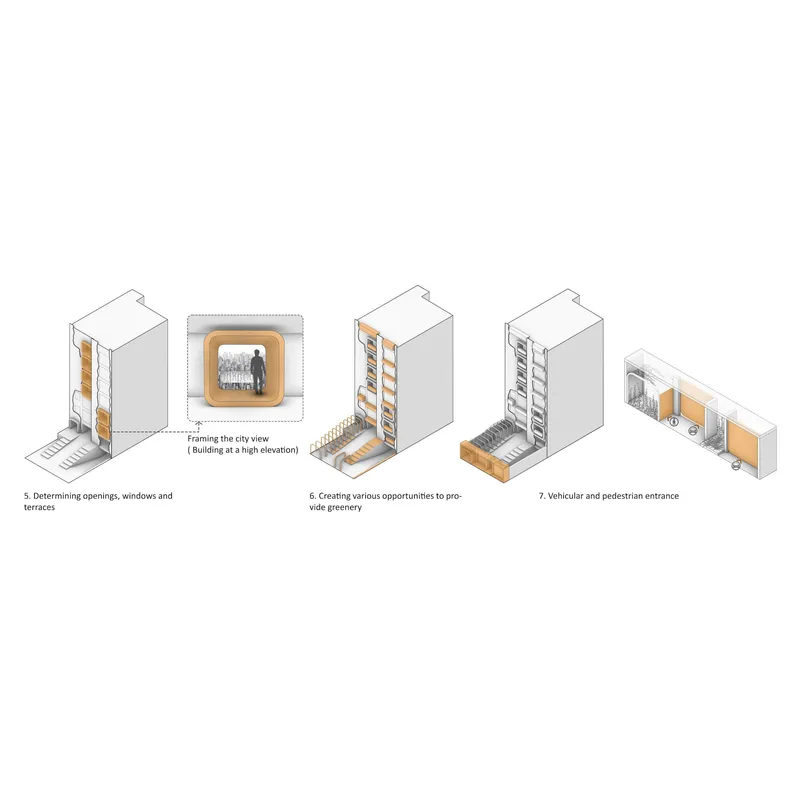
The plans reveal a compact footprint organized around a central stair and elevator core, with basement parking for five vehicles and storage rooms below grade. The lower residential floors each hold two units, while the upper floors open up into single three-bedroom apartments with generous terrace gardens along the northern edge. The section drawing confirms the building's six residential levels above the parking basement, with mature trees drawn at both flanks to indicate the intended landscape integration.
The conceptual section sketches are worth studying. They show the design team iterating on facade profiles that echo the mountain's topography, testing how the building's outline could rhyme with the ridgeline behind it. The axonometric diagrams break down massing, program distribution, and the vertical gaps between balcony volumes that allow light and air to penetrate the facade. These drawings make explicit what the photographs only suggest: that the relationship between building and mountain was the generative idea, not a post-rationalization.
Why This Project Matters
Residential buildings in hillside cities face a recurring dilemma: they need density, but density tends to obliterate the landscape that made the location desirable in the first place. Koohsar does not solve that problem entirely, but it takes the relationship between building and terrain seriously at every scale, from the brick color selected to match the mountain's hue to the deep balcony boxes that frame panoramic views while shading interiors. The planted terraces are not cosmetic green-washing; they are a deliberate substitution for ground-level landscape that the site could not provide.
The project also demonstrates that contextual design in Iran does not have to default to historicist ornament. Ashari Architects used brick vaults and arched openings, but they abstracted these elements into a contemporary compositional logic governed by environmental performance and visual integration with the hillside. It is a building that earns its quietness, and one that will only improve as the plants grow in.
Koohsar Residential Apartment by Ashari Architects. Shiraz, Iran. 1,300 m². Completed 2022. Photography by Khatereh Eshghi.
About the Studio
Share Your Own Work on uni.xyz
If projects like this are the kind of work you want to make, uni.xyz is a place to publish your own, find collaborators, and enter design competitions.


Popular Articles
Popular articles from the community


Temporary Home for Dogs: A Reversed Zoo Rethinks Animal Shelter Architecture
In Bucharest, a sinuous corridor and freed landscape flip the logic of containment, designing a shelter that works to make itself unnecessary.
Cloaked Colonization: A Mobile Underwater Habitat That Moves Like a Fish
Micah Abaya's shortlisted EHC Pacific entry reimagines ocean settlement as a dispersed network of self-sustaining architectural organisms.
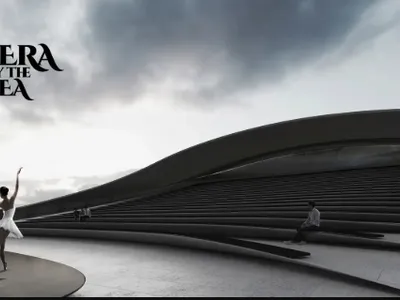
Opera by the Sea Estonia: Three Shells Dissolving Architecture into Tallinn's Coastline
A winning opera house proposal replaces monumental form with interconnected shells that blur the boundary between building, park and Baltic Sea.
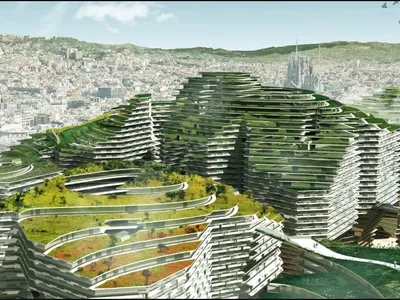
Manzana Morphosis: Stretching Barcelona's Grid into a Living Landscape for 2050
A radical reworking of the Eixample manzana turns density into a tool for generous public space, vertical ecology, and environmental performance.

Similar Reads
You might also enjoy these articles

Pixel Gardens: One Repeated Module Stacked Into a Terraced Social Housing Tower for Famagusta
Salem Bader's shortlisted housing tower builds a vertical neighbourhood from one repeated module, offsetting units to carve terraces, light and air.

Bao Huynh Watercolor Atelier: A Serene Art Retreat in Hội An
Bao Huynh Watercolor Atelier in Hội An blends multifunctional art spaces, sustainable design, local materials, and family-friendly living in a serene environment.

Atelier Macri Concept Store Interior Design by CASE-REAL
Atelier Macri store features a "ko" counter, walnut wood details, cork displays, blending retail, gallery, and seamless customer experiences.

Manuel Vargas Izquierdo Stadium and High-Performance Sports Center: Architectural Excellence in Jalpa de Méndez
The Manuel Vargas Izquierdo Stadium blends sustainable design, inclusive sports facilities, and cultural-inspired architecture, revitalizing Jalpa de Méndez’s public spaces.

Explore Residential Complex Competitions
Discover active competitions in this discipline

Challenge to reimagine the Iron Throne

Photograph architecture without architects

Illustrate the lost glory of Angkor Wat - Render Challenge

Design challenge to reuse E-waste
Comments (0)
Please login or sign up to add comments
No comments yet. Be the first to comment!