
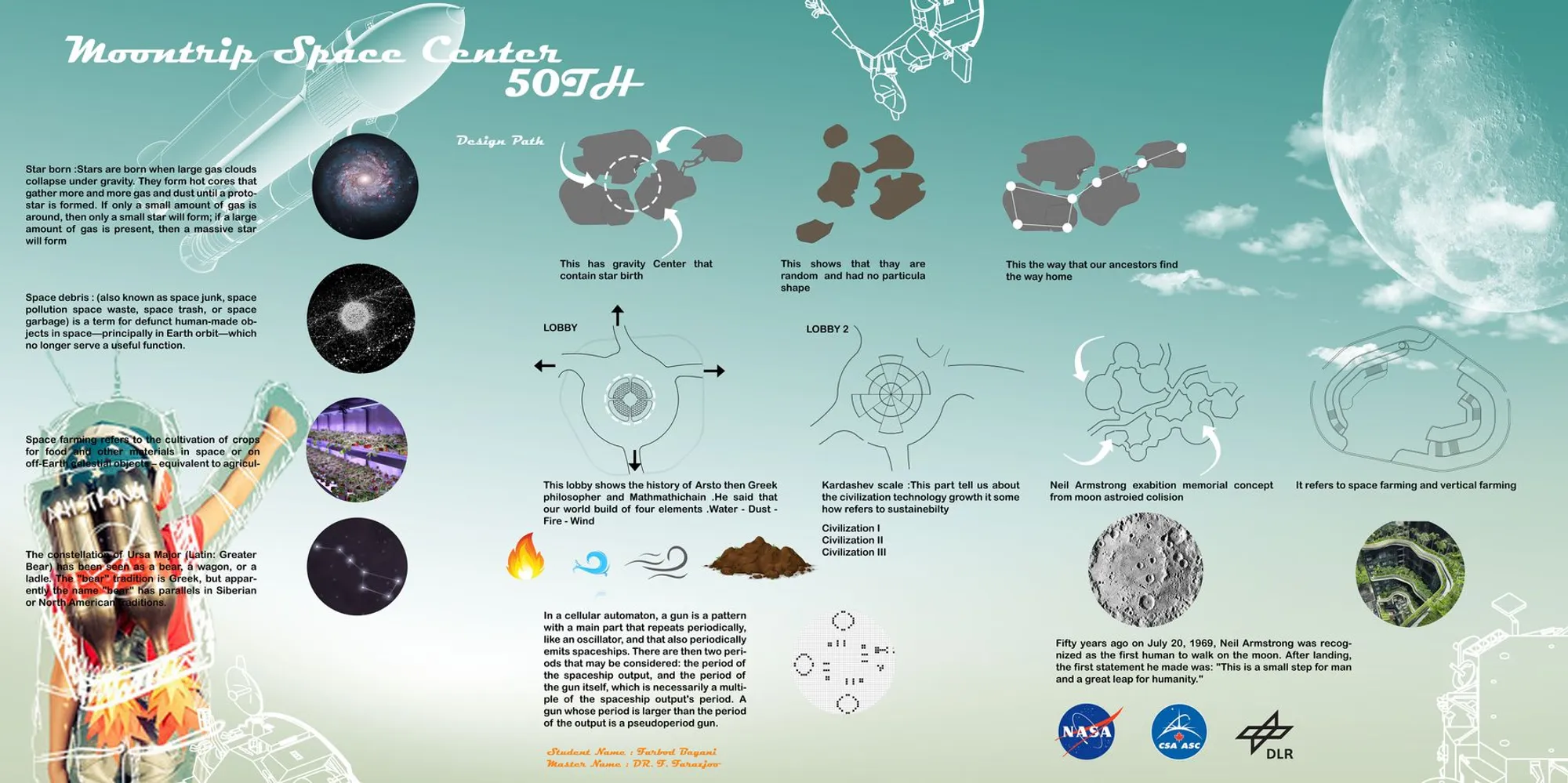
Astronauts Training Center: Where Space Architecture Meets the Anacostia River
A Washington, D.C. proposal that fuses astronaut training simulations, vertical farming, and celestial forms along the Anacostia waterfront.


What would a building look like if it had to prepare human bodies and minds for life beyond Earth while still belonging to a neighborhood in southeast Washington, D.C.? The Astronauts Training Center sits with that tension and leans into it: asteroid-shaped structures and domed habitats share a master plan with vertical farms and green terraces, all sited along the Anacostia River within view of the Frederick Douglass Memorial Bridge. The result is less a conventional campus and more an architectural prototype for how terrestrial infrastructure might absorb interplanetary ambitions.
Designed by Farbod Bayani for the Moontrip Competition, the project proposes a multi-program training facility that houses dormitories modeled on space habitat modules, a mission control center based on real NASA MCCs, pool simulation tanks for zero-gravity training, and a public exhibition zone conceived as a hybrid between science museum and World Expo pavilion. The site near Anacostia Park, D.C. Sail, and the aquatic gardens gives this highly technical program an environmental and cultural anchor.
A Riverfront Campus Calibrated to Wind, Sun, and Lunar Visibility
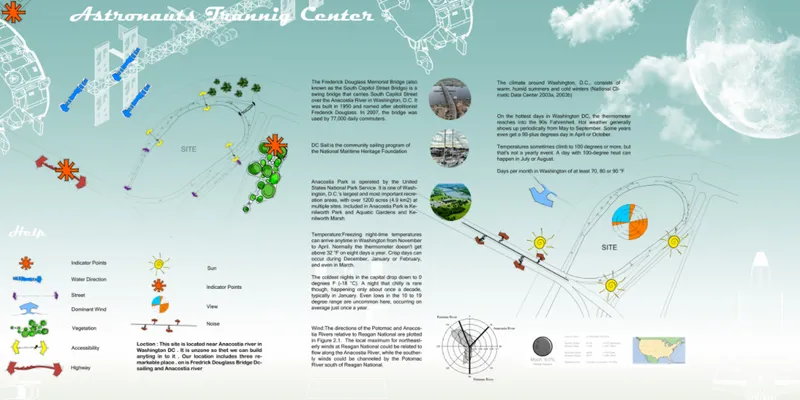
The site plan reveals how carefully Bayani reads the Anacostia context. Building clusters are oriented in response to wind direction off the Potomac River, street noise levels, sun exposure across D.C.'s humid summers and freezing winters, and pedestrian accessibility. Environmental diagrams and legend icons map average temperatures and seasonal variations, feeding directly into the building's climate resilience strategies. One quietly compelling detail: the analysis tracks lunar visibility from the site, an elegant link between the local sky and the building's cosmic program.
Pathways connect discrete program zones: dormitories, vertical farming units, the exhibition wing, and simulation facilities. The master plan reads as a small district rather than a single building, distributing the center's functions across clusters that recall modular habitat planning for off-Earth settlements. Solar panels, recycled water systems, and green terraces are integrated throughout, grounding the futuristic ambition in tangible sustainable performance.
Hexagonal Geometries and the Language of Space Habitation
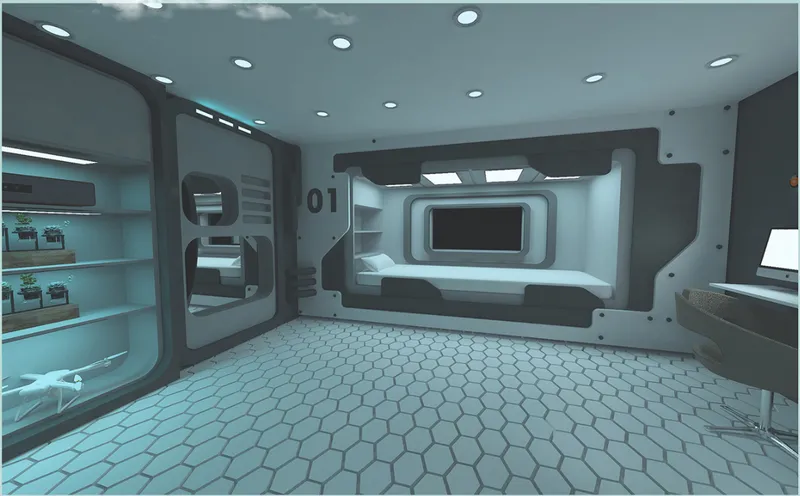
Step inside and the architectural language shifts decisively. An interior corridor lined with hexagonal floor tiles, recessed ceiling lighting, and built-in display shelving establishes a material vocabulary that carries through the public spaces. The hexagonal motif is not decorative whimsy; it references the tessellated geometries used in spacecraft shielding and habitat engineering, where efficient load distribution matters. Display shelving along the corridor suggests a continuous thread of exhibition content, so that even circulation becomes educational.
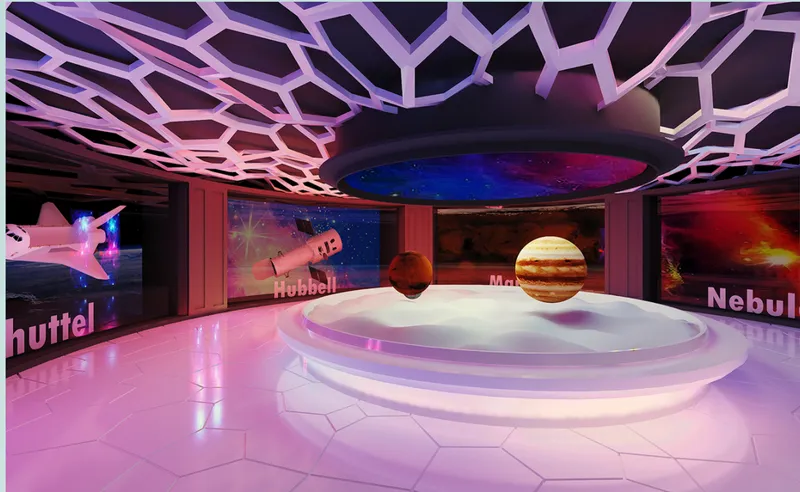
The exhibition hall amplifies these cues to dramatic effect. A hexagonal patterned ceiling spans over a circular platform where suspended planetary models hang under purple lighting. The space functions as the center's public interface, offering curated experiences around space missions, artifacts, and futuristic design. The theatrical lighting and scale recall immersive museum installations, but here they serve a specific programmatic purpose: orienting visitors and trainees within an interplanetary narrative before they enter the more rigorous simulation zones.
From Mineral Specimens to Orbital Panoramas
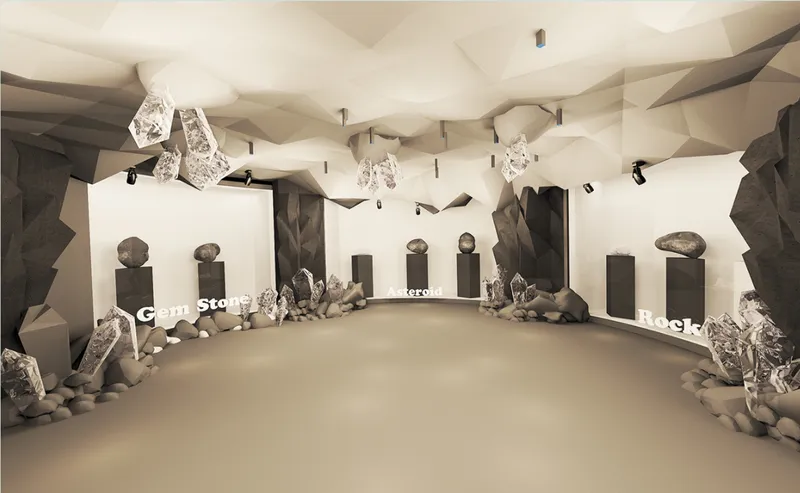
A gallery space with faceted ceiling planes and pendant lighting displays mineral specimens on pedestals along both walls. The room works as a geological primer, connecting terrestrial rock science with the material reality of asteroid mining and lunar surface exploration. The faceted ceiling overhead subtly echoes the crystalline structures on display below, collapsing the boundary between exhibit and enclosure. It is the kind of thoughtful spatial decision that elevates a display room into an argument about architecture's ability to teach through form.
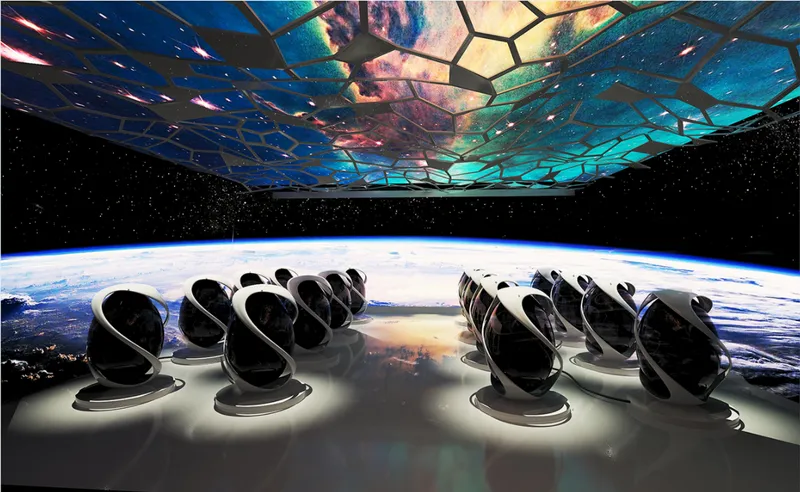
The emotional centerpiece of the project is the observation chamber: curved seating pods face a panoramic window framing a simulated view of Earth from orbit. The room channels the "overview effect" that astronauts describe, the cognitive shift triggered by seeing Earth from space. As a training tool, it prepares future spacefarers for the psychological dimensions of their mission. As architecture, it collapses the distance between a building on the Anacostia riverbank and the orbital perspective it is designed to cultivate.
Training Protocols Embedded in Architecture
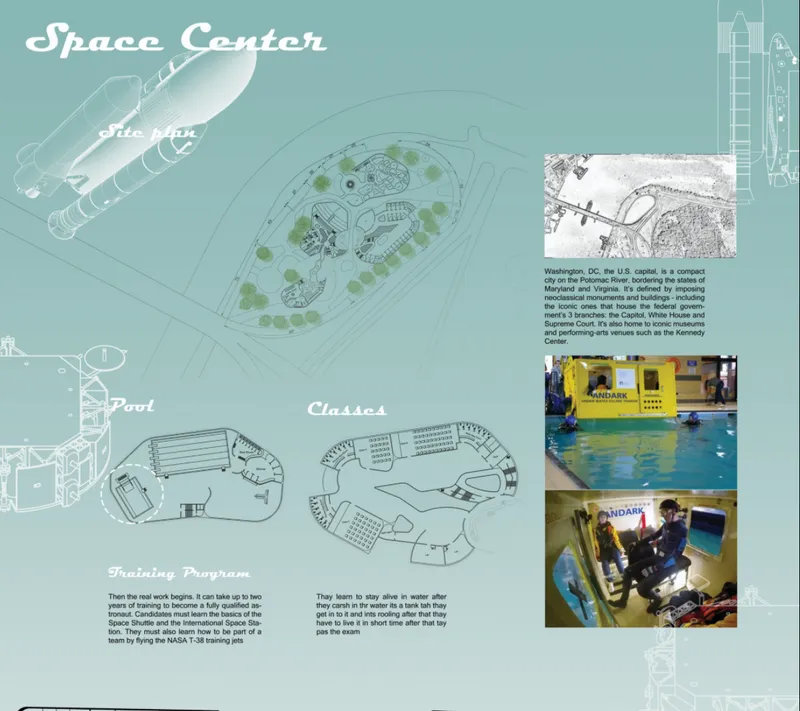
The presentation board assembles the full scope of the proposal: site plan, floor plan drawings, training pool photographs, and descriptive text panels. The training program itself mirrors rigorous NASA protocols. Large aquatic tanks simulate zero-gravity conditions for underwater survival practice, gear handling, and spacecraft entry and exit techniques. Modular classroom spaces combine digital interaction with real-world mission scenarios. Flight readiness training, including preparation on NASA T-38 jets, addresses the physical and psychological demands of space missions. Each of these programs has a corresponding architectural space, and the board makes clear how tightly program and form are integrated.
The dormitories, inspired by sci-fi references from Star Wars and Interstellar, simulate life in confined modular environments. Vertical farming units operate as closed-loop food production systems that mirror off-Earth self-sufficiency requirements. The mission control center replicates ground-based operations during spacecraft missions, enabling team-based monitoring and decision-making training. Sustainability is not an afterthought but a design driver: eco-conscious materials, solar energy, and recycled water systems emphasize that space technology and environmental ethics are not competing priorities but complementary ones.
Why This Project Matters
The Astronauts Training Center does something that most speculative space architecture avoids: it picks a real site with real constraints and asks what happens when interplanetary ambition meets zoning, climate data, and neighborhood context. By grounding the project along the Anacostia River, Bayani forces a productive confrontation between the poetics of space habitation and the pragmatics of building in Washington, D.C. The result feels neither naively utopian nor boringly conventional.
What resonates most is the project's insistence that space architecture is not purely about the destination. The hexagonal corridors, the observation chamber, the vertical farms, and the zero-gravity pools all argue that the way we train for space should reshape the way we build on Earth. Architecture here is not a container for a program; it is the program, teaching through material, form, and spatial sequence. For a competition entry, the depth of programmatic thinking and environmental analysis suggests a designer who understands that the most compelling visions of the future are the ones that take the present seriously.
View the Full Project
About the Designers
Designer: Farbod Bayani
Enter a Design Competition on uni.xyz
uni.xyz runs architecture and design competitions year-round that reward proposals with spatial conviction and real site intelligence.
Project credits: Moontrip Competition by Farbod Bayani.



Popular Articles
Popular articles from the community


Co-life: Sustainable Architecture for Age-Friendly Community Living
Co-life reimagines sustainable architecture for seniors through courtyards, rammed earth, shared gardens, and spaces designed for belonging.
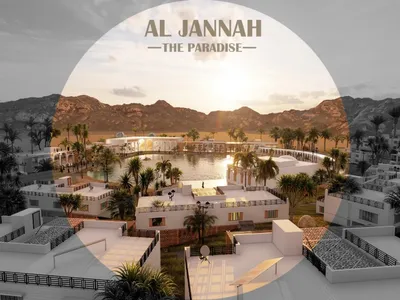
AL-JANNAH: Sustainable Architecture and Permaculture for Afghan Widows
AL-JANNAH uses sustainable architecture and permaculture to create resilient oasis of housing, learning, work and renewal for Afghan widows.

The Earth Pod: 3D Printed Homes for Resilient Refugee Communities
The Earth Pod reimagines refugee housing through 3D printed homes made from clay, combining resilience, self-sufficiency, and rapid shelter.

Riyadh For All: Intergenerational Urban Design for Active Aging in Rabat
Riyadh For All reimagines urban design in Rabat with intergenerational co-living, adaptive courtyards, and Moroccan cultural exchange today.

Similar Reads
You might also enjoy these articles

Day and Night Park: A Time-Based Urban Newsstand in Beijing
A temporary urban newsstand in Beijing blending travel, light, and reading through poetic colors, compact form, and community-focused design.

Modernist Patio Renovation in El Masnou, Barcelona by Oliver Segura Arquitectura + Cebrià Arquitectura
Modernist patio renovation blending tradition and innovation with a movable pool, leveled floors, and Catalan materials in El Masnou.

Alto Residencial Coop: Cooperative Housing Development in Santiago de Compostela by Carbajo Barrios Arquitectos
A linear cooperative housing complex blending white volumes and perforated metal façades, enhancing community living, natural light, privacy, and urban integration.
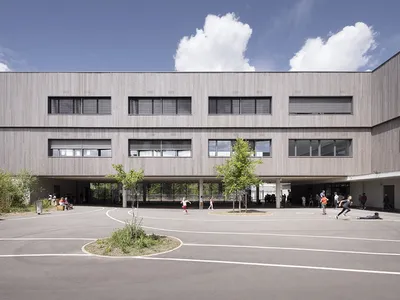
Vil Genis School by BPA ARCHITECTURE – Massy, France
Vil Genis School in Massy, France, features sustainable design, south-facing classrooms, community integration, accessible spaces, and modern educational architecture.


Explore Space Construction Competitions
Discover active competitions in this discipline



Challenge to design public laboratory


Challenge to reimagine the Iron Throne


Photograph architecture without architects


Illustrate the lost glory of Angkor Wat - Render Challenge
Comments (0)
Please login or sign up to add comments
No comments yet. Be the first to comment!