

Awaji Factory by OHArchitecture – Innovative Industrial Design with Pleated Facade
Awaji Factory by OHArchitecture features a pleated steel facade, column-free truss structure, and dynamic design reflecting industrial innovation in Japan.


Located on Awajishima Island in Japan, Awaji Factory is a cutting-edge industrial facility designed by OH Architecture. Spanning 1,206 m² and completed in 2019, the factory was built for an agitator manufacturing company that relocated its head office and factory to Awaji Island in anticipation of future growth spanning the next 300 years. Within three years of its initial development, the need for expansion arose due to an unexpected surge in orders for large-scale equipment, leading to the creation of additional assembly plants.
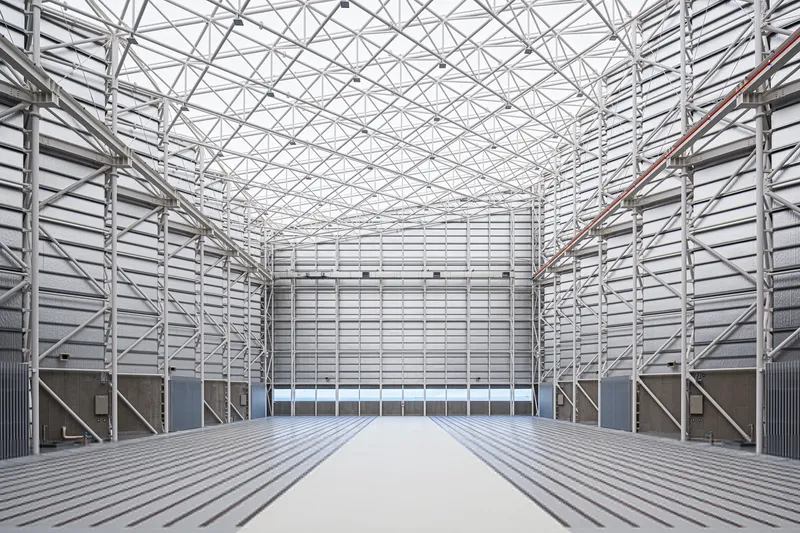
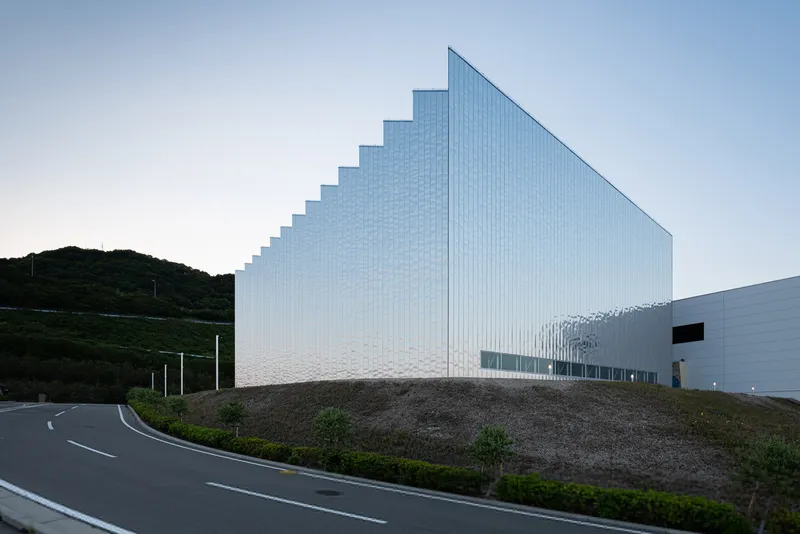
Design Concept – “Proliferation and Pleats”
The factory's architecture is defined by its dynamic pleated facade, symbolizing growth and adaptability. Instead of a conventional extension, the design reflects an organic multiplication, exuding energy and vitality. The building interacts harmoniously with its environment, constantly shifting its visual character based on natural light and surrounding landscapes.
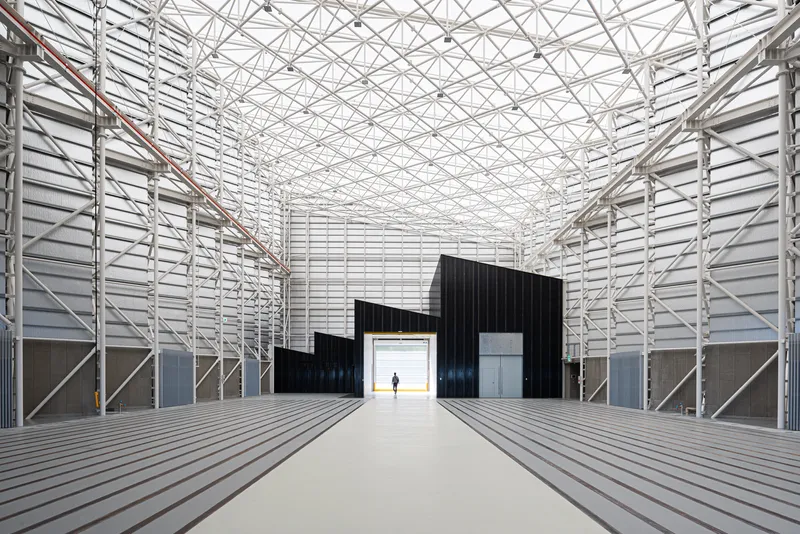
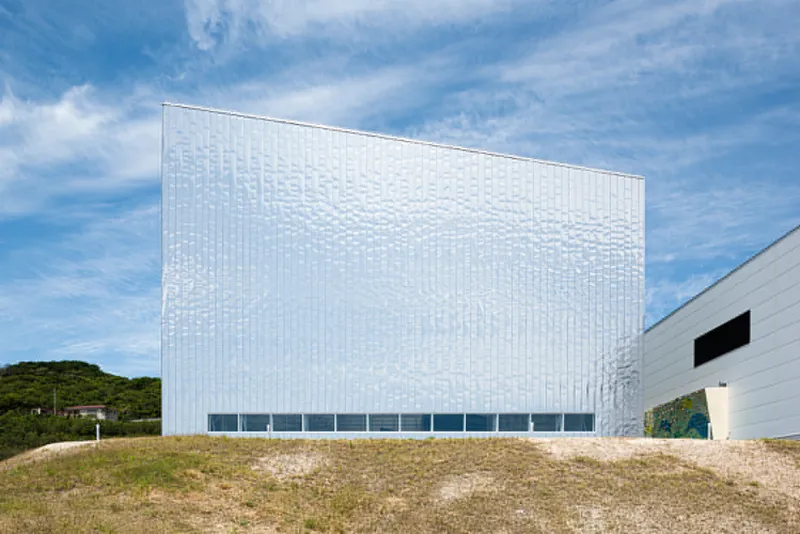
Structural Innovation
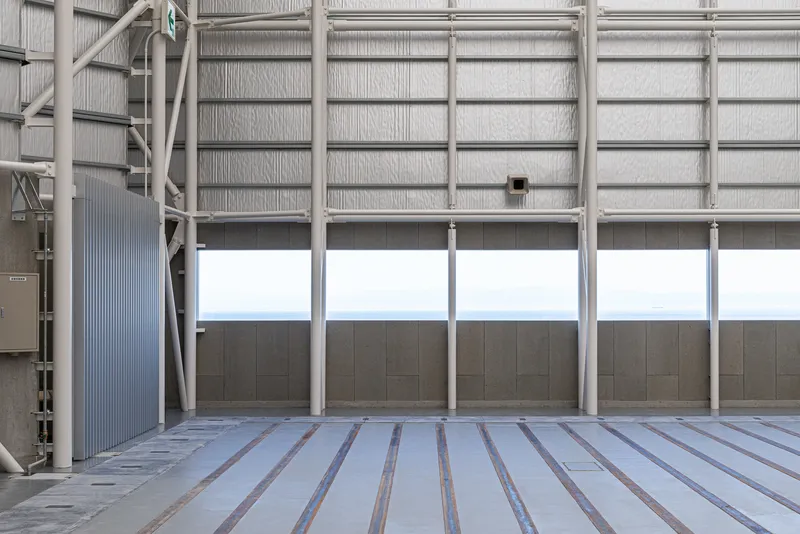
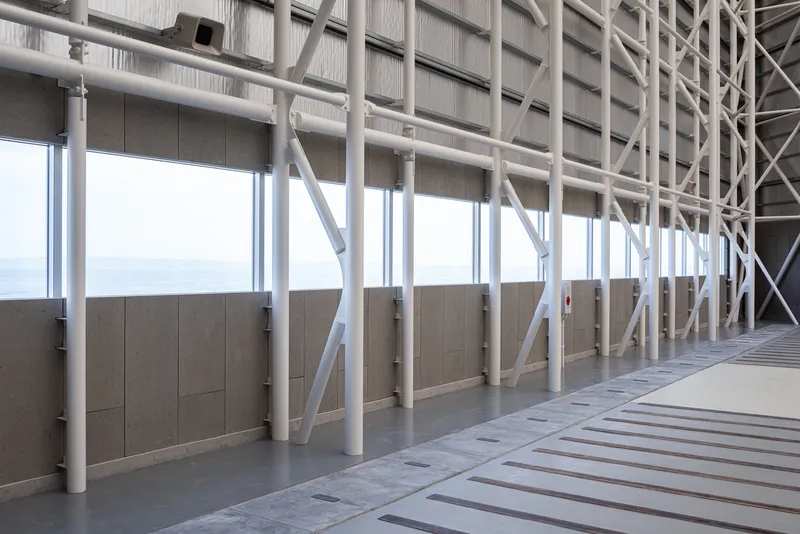
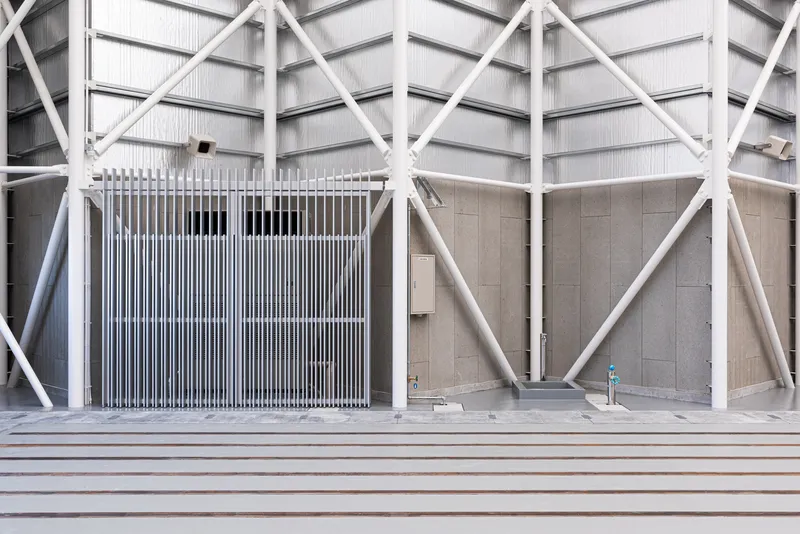
To achieve a spacious, column-free interior ideal for large-scale industrial processes, OH Architecture developed a unique cross-beam truss system rotated at a 45-degree angle. This structural innovation, inspired by membrane frameworks often used in tent warehouses, allows for a 48m x 27m x 20m high columnless space. The zigzag pleats not only reinforce the structure but also ensure quick construction, enabling completion in less than six months.
Materiality and Facade
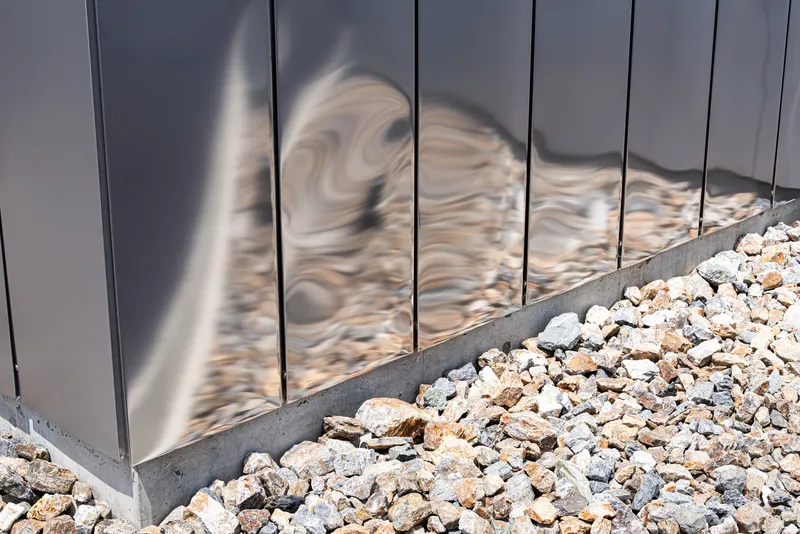
The exterior features alternating panels of SUS445 stainless steel and Galvalume, creating a rhythmic facade that reflects the changing scenery like a living organism's skin. This pleated design blurs the boundary between industrial functionality and architectural artistry, embodying the company’s forward-looking corporate identity.
Sustainability and Efficiency
The pleated structure naturally optimizes spatial efficiency, reduces construction material waste, and minimizes overall project timelines. Its design seamlessly integrates with the surrounding environment, while the industrial-grade materials ensure durability and longevity.
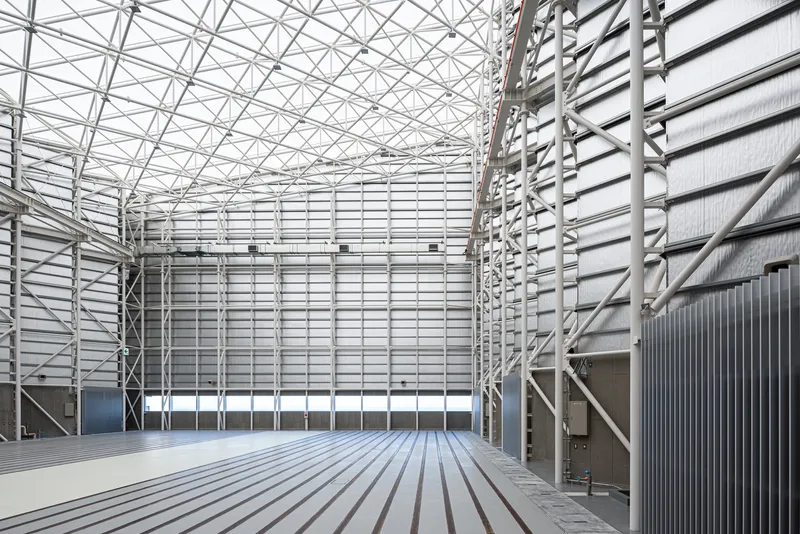
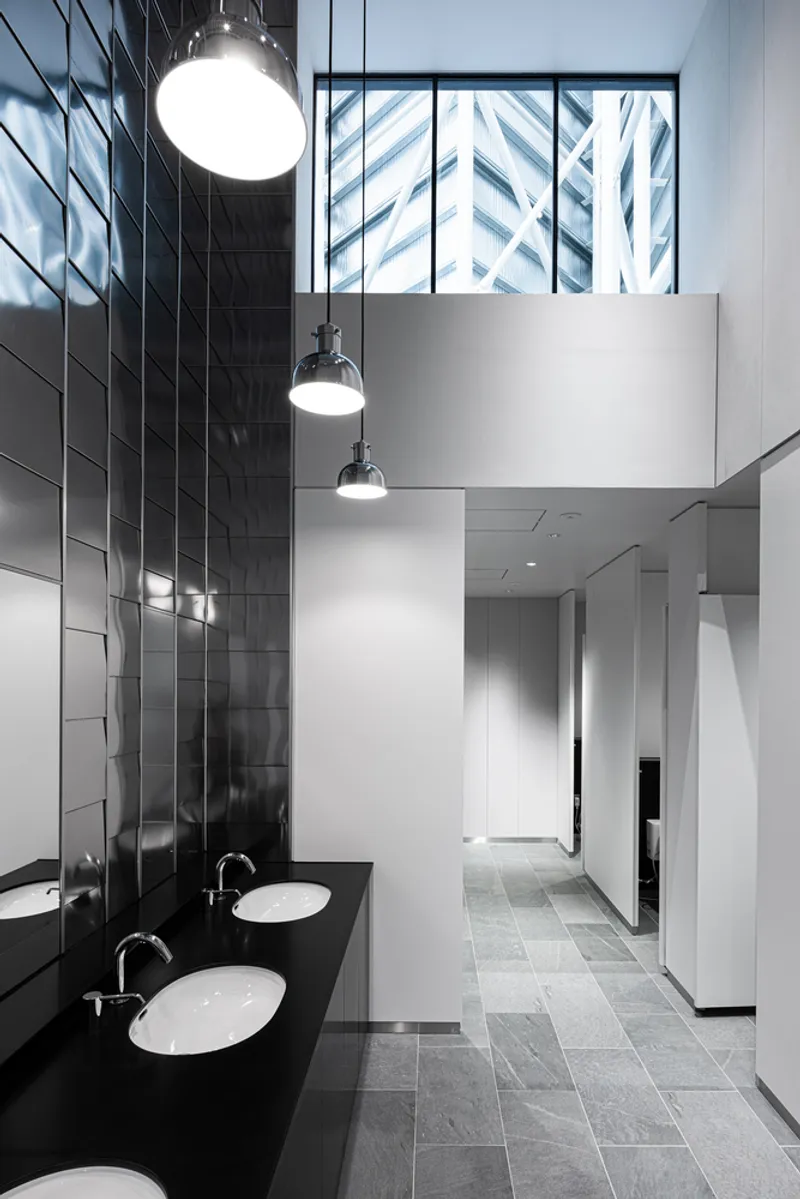
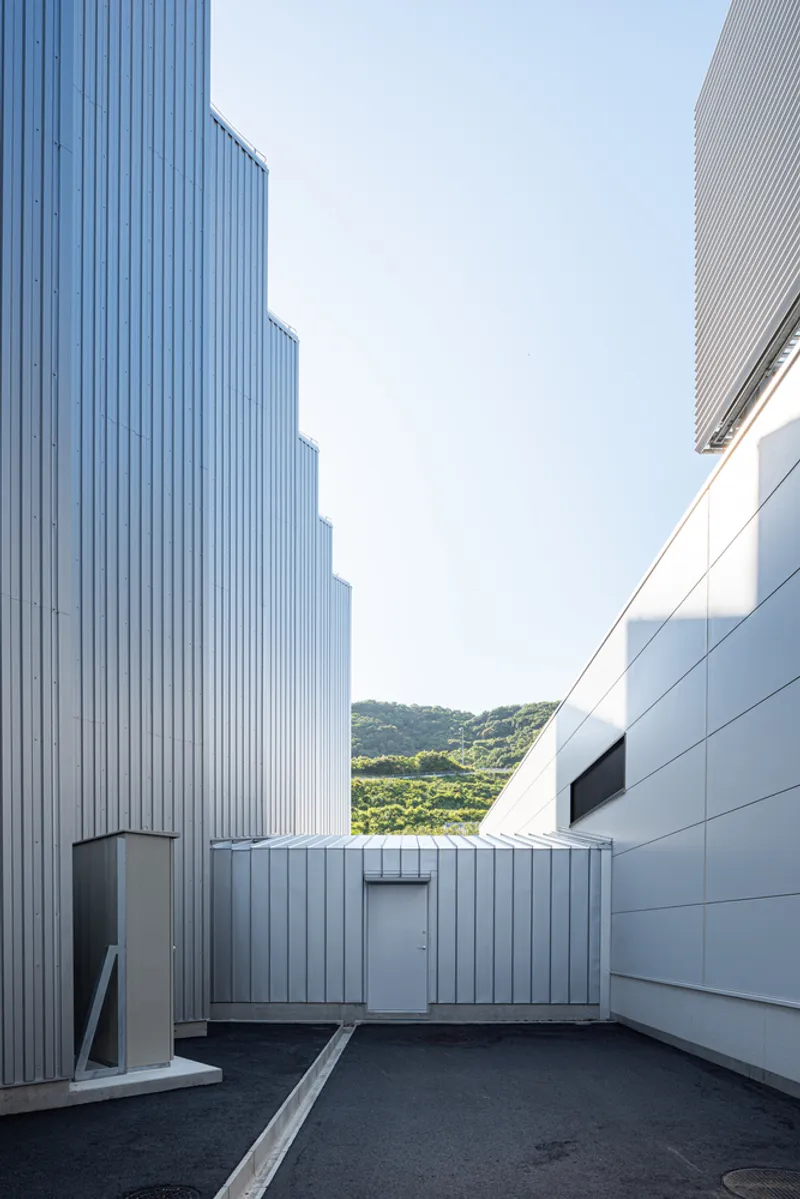
All Photographs are works of Atsushi Shiotani


Popular Articles
Popular articles from the community


David Ortega Stacks a Two-Story Mexico City Penthouse Around a Steel Stair and a Pergola-Shaded Roof Terrace
In Colonia Roma, a 300 m² penthouse uses oak joinery, a planted steel stair and a slatted roof pergola to make a new-build apartment feel like a house.

Cube Design Draws an Ecological Corridor Between Two Shenzhen Hills with the Nankai Building
Beside Shenzhen's container docks, the Nankai Building pairs stacked balconies with a climbing green screen to connect two hillsides across its height.

GROUP A Strips a 1969 Rotterdam Harbor Headquarters to Its Frame and Wraps It in Timber Louvers
In Rotterdam's M4H harbor district, Ferro Offices reuses a 1969 frame, adds one timber storey and reaches BREEAM-NL Outstanding.

Architekt Andreas Gruber Scatters 23 Dark Timber Chalets Across a South Tyrolean Forest Edge
In Molini di Tures, Amonti Chalets breaks a resort into a hamlet of gabled timber houses, with parking, storage and services pushed into the slope.

Similar Reads
You might also enjoy these articles


Hodi-Mandai Geram
Project Function: Preservation and revitalization of the Intangible heritage and socio-spatial identity of the Hodi by Housing, Cultural Memory Center, Sacred Grove, landscape, local tourism economy


Olio Towers: A Mid-Rise for Performers That Fuses Housing, Rehearsal, and Stage
Located blocks from Houston's Theater District, this modular tower stacks living units around a central performance atrium.

Oasis: Modular Green Housing Carved into Dhaka's Urban Fabric
A shortlisted Plugin Housing entry reclaims unauthorized settlements in Dhaka with stepped concrete volumes, green roofs, and ventilation-driven design.

Black Hole: A Floating Megastructure for the Post-Physical Era
Emiliano Mazzarotto envisions a spherical, self-scaling arena where e-sports, digital hotels, and holographic stadiums replace traditional public space.

Explore Industrial Design Competitions
Discover active competitions in this discipline

Challenge to reimagine the Iron Throne

Photograph architecture without architects

Illustrate the lost glory of Angkor Wat - Render Challenge

Design challenge to reuse E-waste
Comments (0)
Please login or sign up to add comments
No comments yet. Be the first to comment!