
BaleBio Pavilion by Cave Urban – A Regenerative Landmark for Bali’s Coastal Communities
A regenerative bamboo pavilion in Bali that reinterprets the Bale Banjar, showcasing carbon-negative construction, local craftsmanship, and circular material innovation.


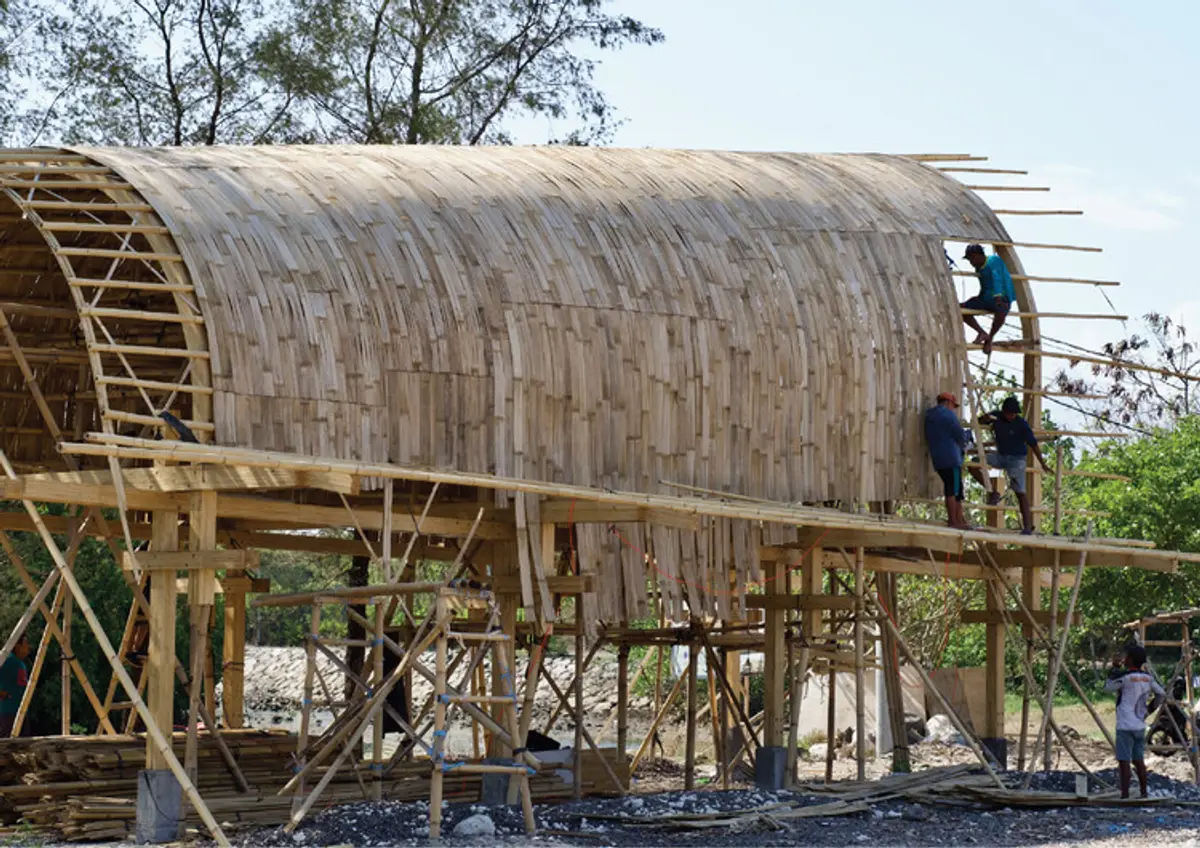
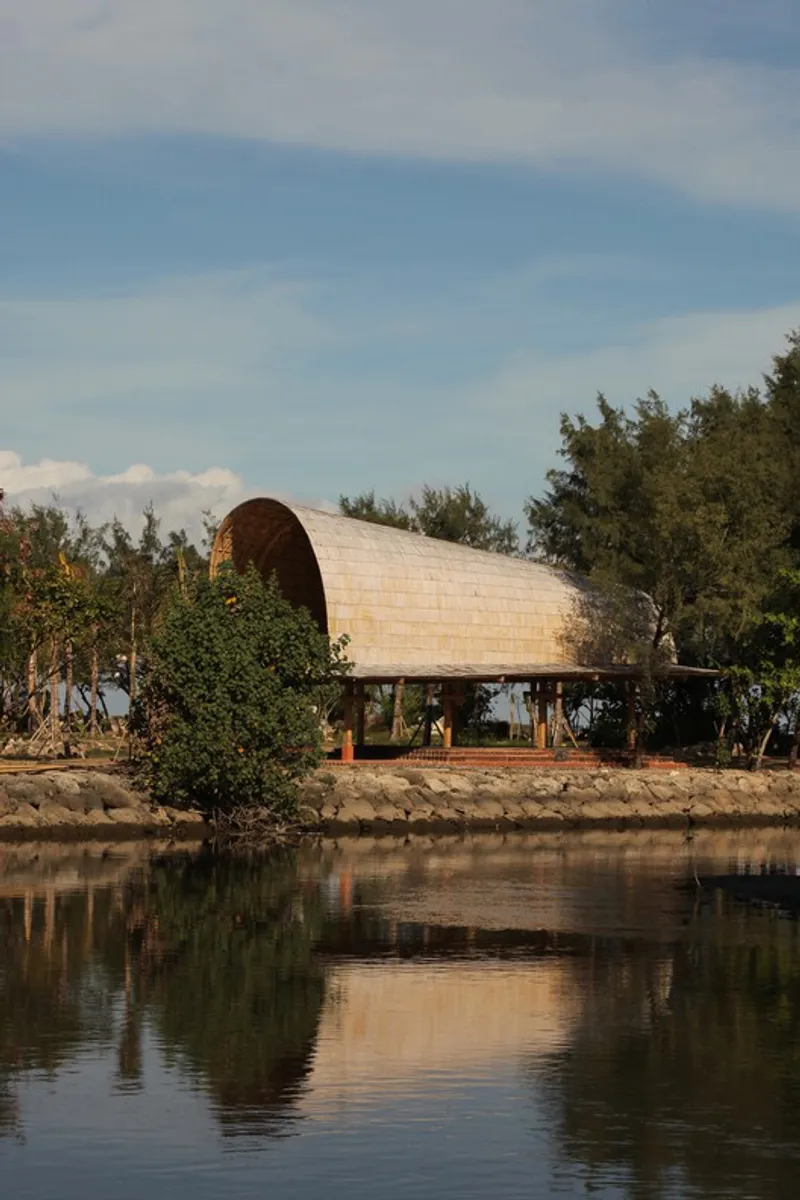
The BaleBio Pavilion by Cave Urban reimagines the Bale Banjar—the communal, open-sided meeting hall that forms the social heart of every Balinese village. Located on Mertasari Beach in Sanur, the project transforms a deeply rooted cultural typology into a regenerative, carbon-negative architectural prototype, merging traditional craftsmanship with contemporary bio-based engineering. More than a pavilion, BaleBio stands as a living demonstration of how vernacular wisdom, collaborative design, and material innovation can shape a resilient built future in Indonesia.
Reinterpreting the Bale Banjar for a Regenerative Era
Led by architect Jed Long, Cave Urban sought to retain the openness, elevated form, and gathering spirit of the Bale Banjar while introducing a prefabricated bamboo system capable of rapid, low-impact assembly. The pavilion forms part of Bauhaus Earth’s ReBuilt Project, a global initiative exploring pathways toward a regenerative built environment in Berlin, Bhutan, South Africa, and Bali.
This collaboration questioned how bio-based innovation flourishing in Bali’s tourism sector could meaningfully migrate into urban construction and community infrastructure. BaleBio becomes a bridge between these worlds—an architectural catalyst connecting research, local expertise, and future-ready building methods.
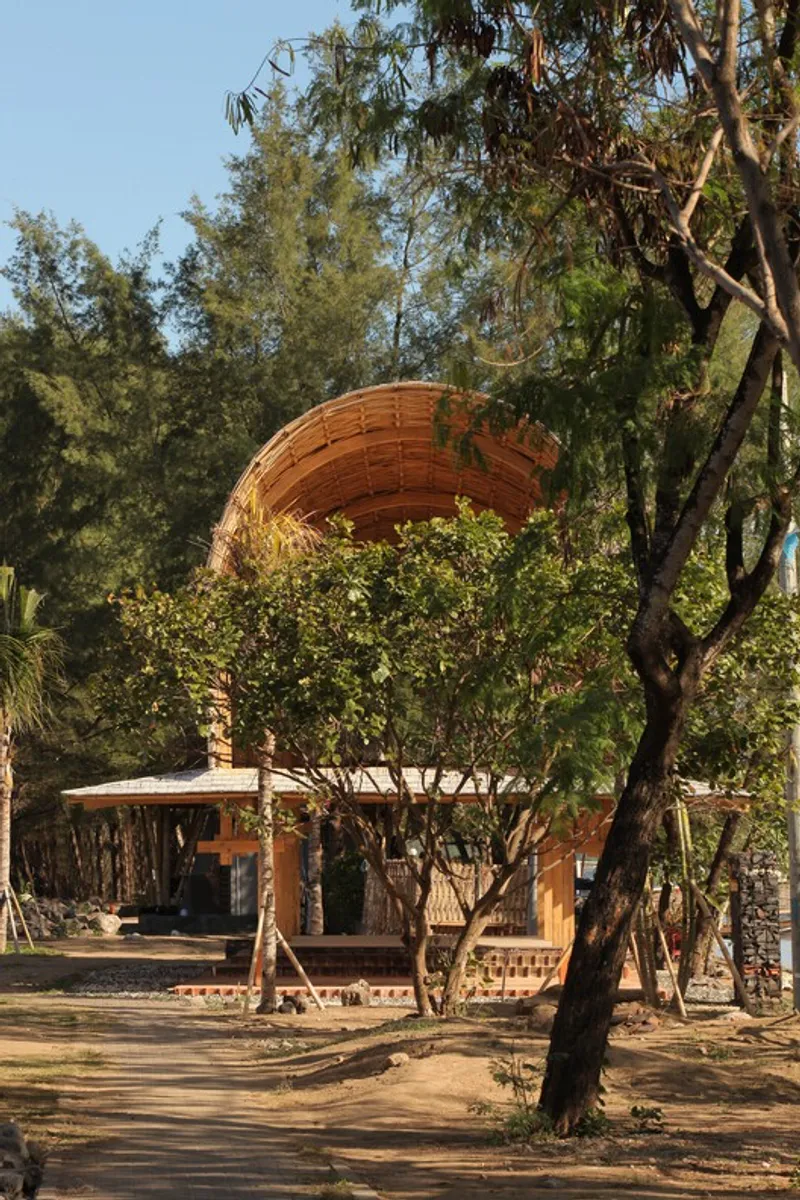
Architecture & Structure – Laminated Bamboo Vaults on a Stone Podium
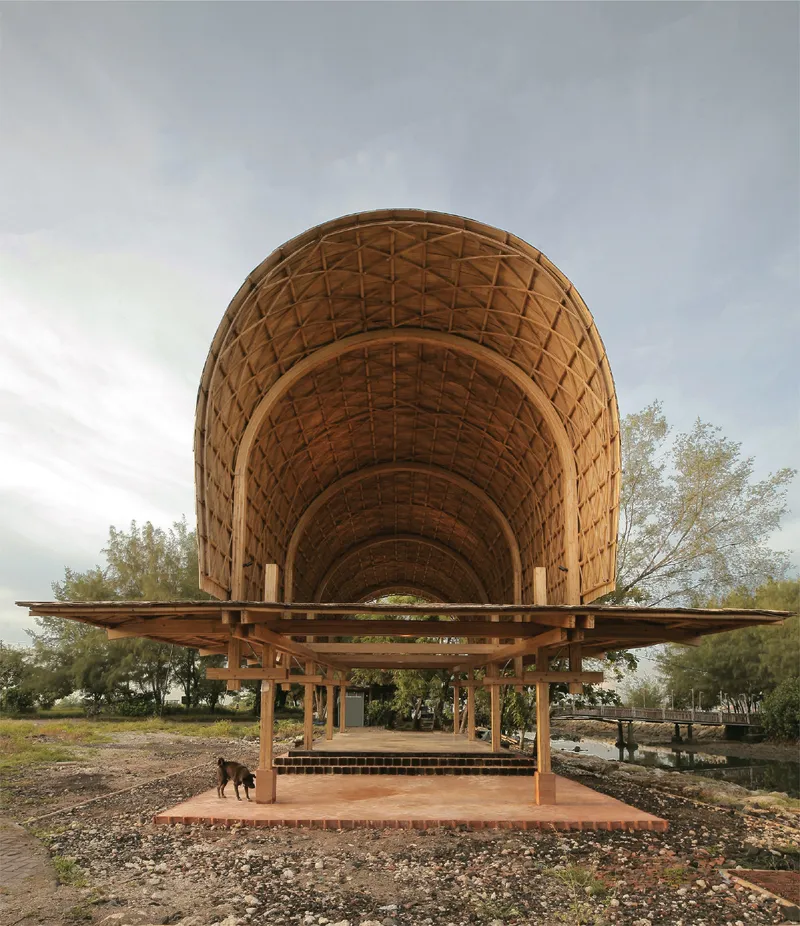
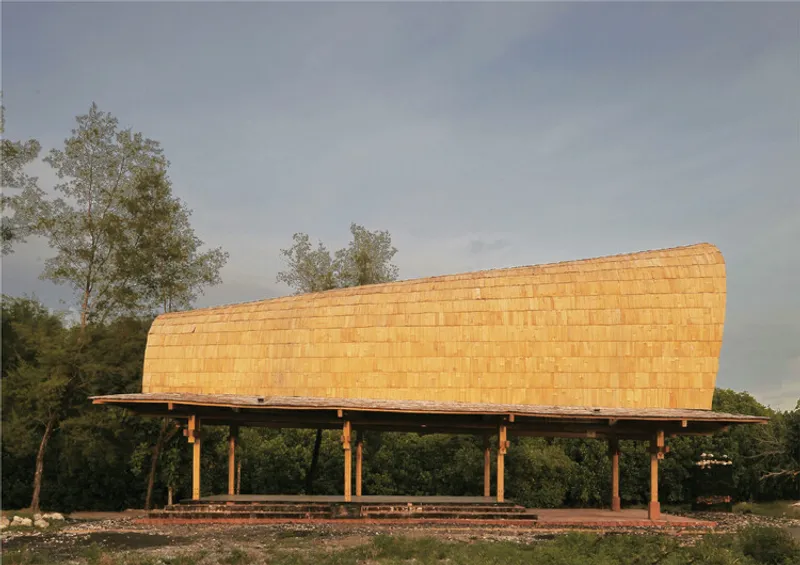
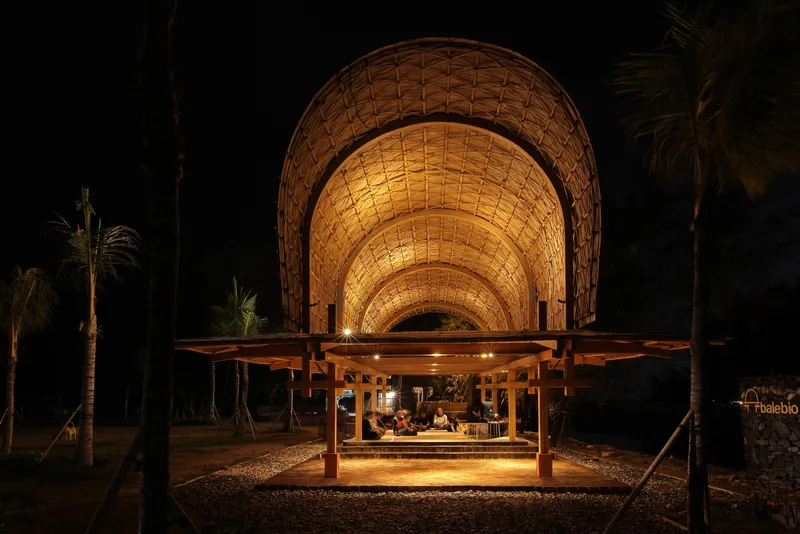
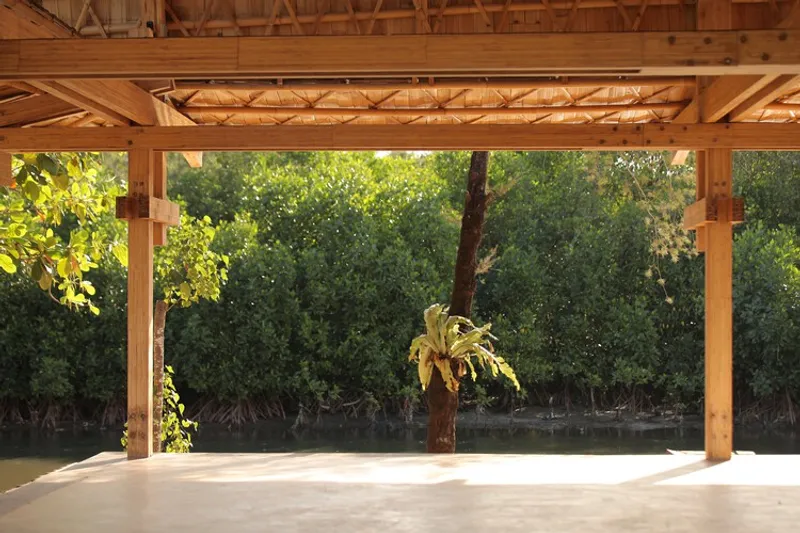
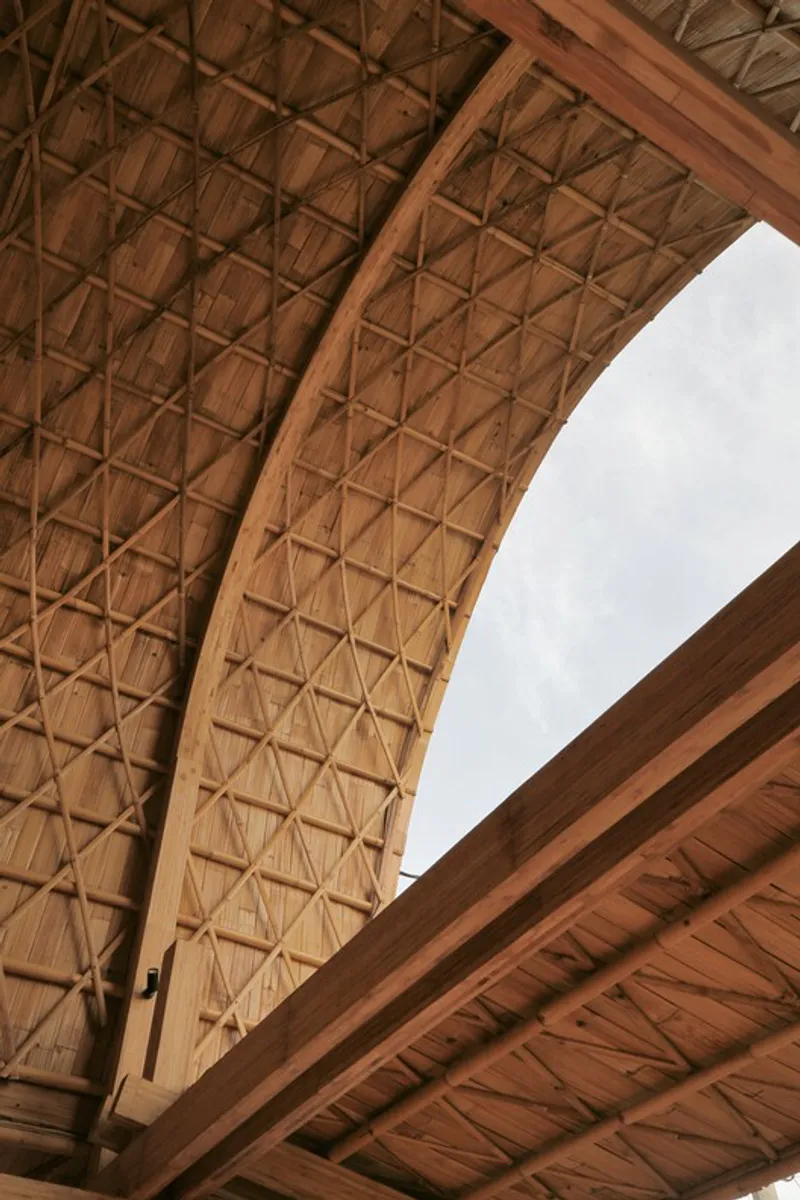
The pavilion’s form is defined by three sweeping laminated-bamboo vaults, each spanning four meters and rising 8.5 meters above a recycled stone plinth. These arched profiles reference both the Bale Banjar and the Lumbung, the traditional rice barn, blending inland agrarian and coastal boatbuilding vernaculars into a single fluid architecture.
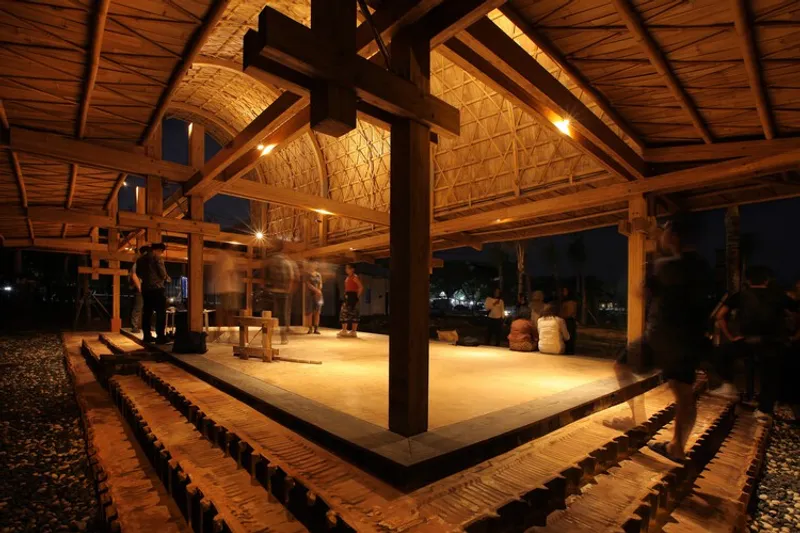
Key structural features include:
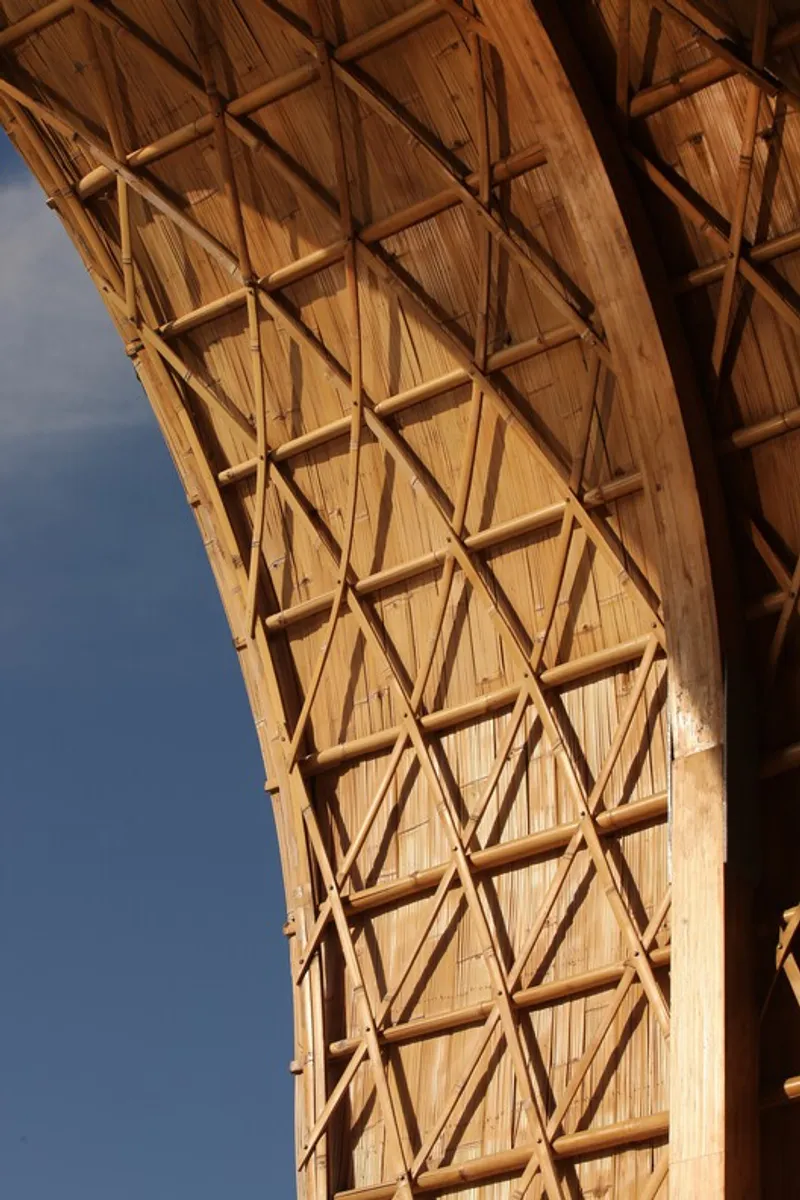
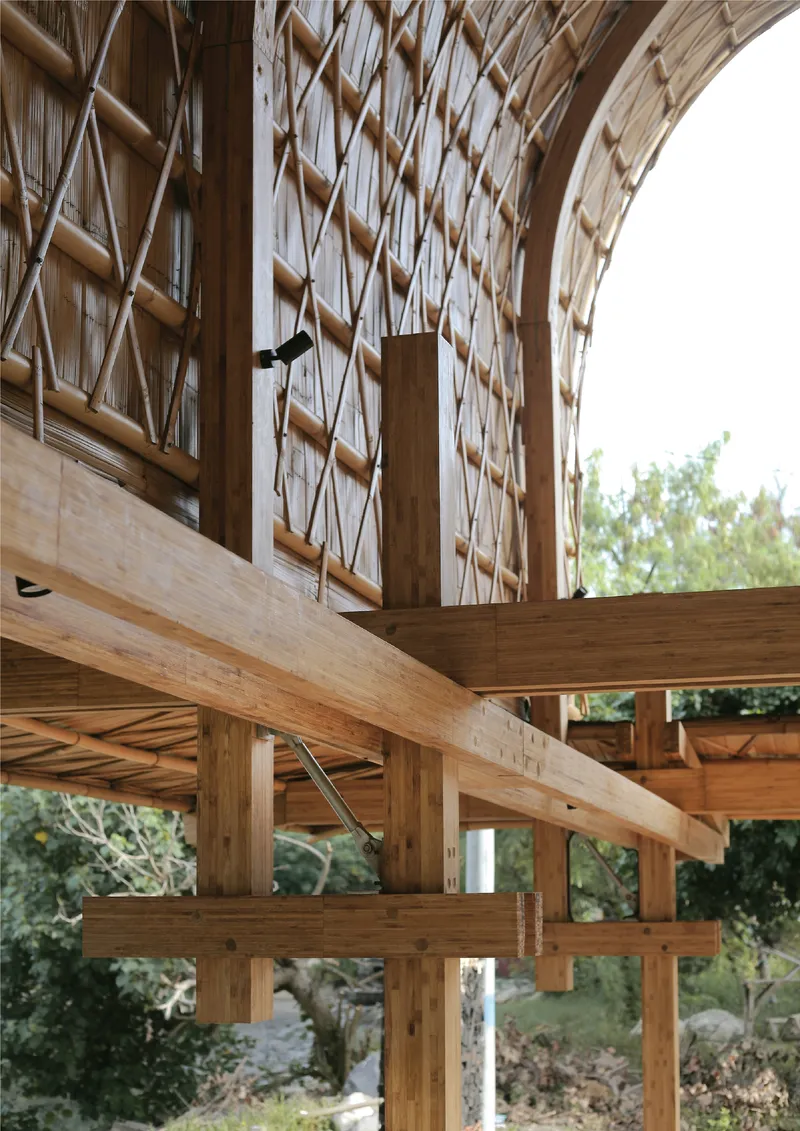
- Prefabricated, bolted laminated-bamboo members for rapid assembly
- Raised podium built from recycled temple-stone offcuts
- Open, elevated floor plan maintaining the generosity of communal Balinese spaces
- Arched roof geometry optimized for airflow, shading, and tropical endurance
The pavilion becomes a lightweight yet robust system—engineered with mass-timber logic but sourced entirely from Indonesian bio-based materials.
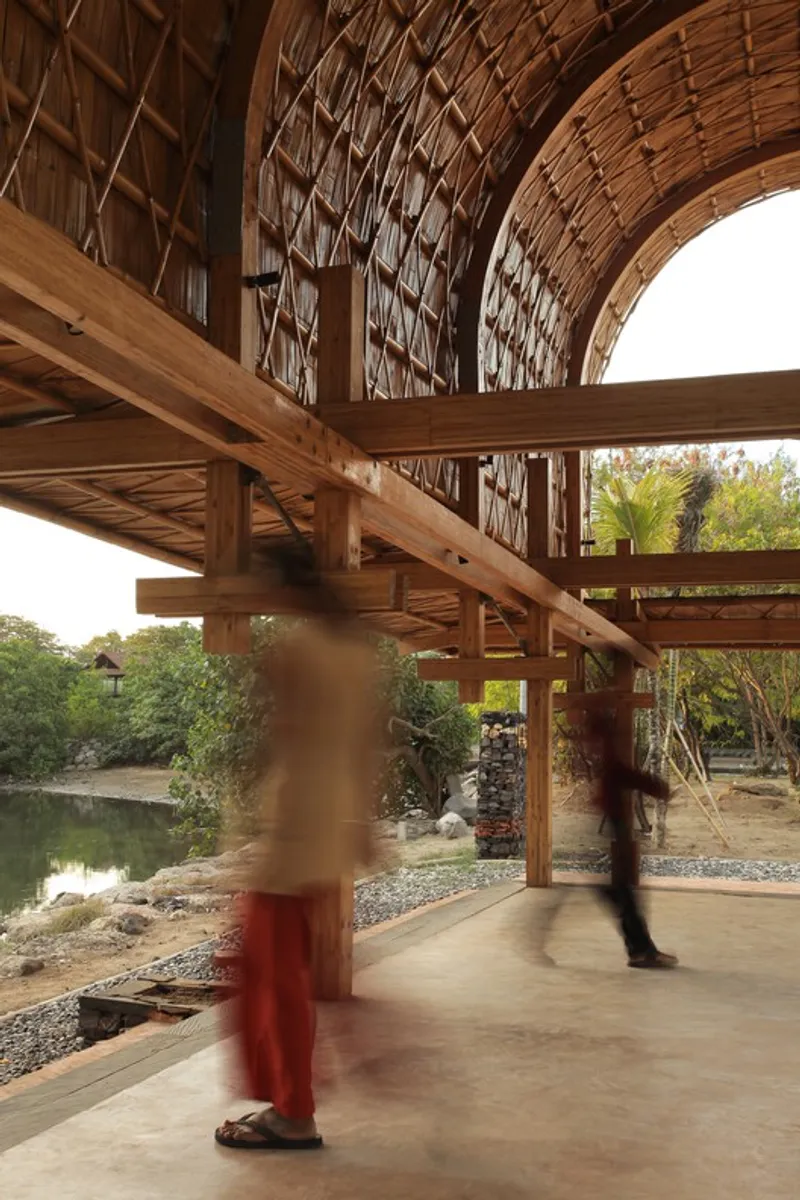

Material Ecology – Circularity Rooted in Indonesian Craft
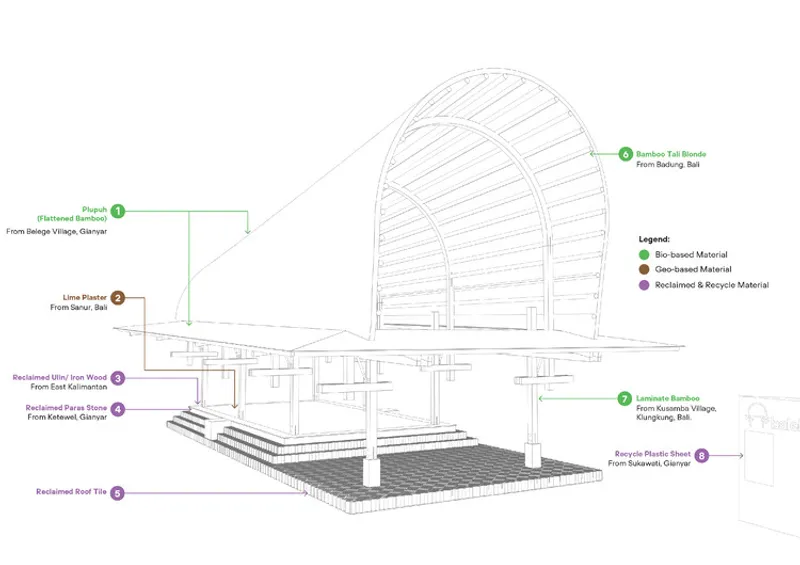
BaleBio’s material palette is a complete expression of local circularity, combining engineered precision with centuries-old craftsmanship:
- Laminated Bamboo (Dendrocalamus asper) — grown in Flores, fabricated in Bali
- Paras Stone — recycled temple-carving offcuts used in gabion walls
- Plupuh (flattened bamboo) — hand-split traditional panels for roofing
- Reclaimed Ulin Ironwood — salvaged from old Kalimantan houses & bridges
- Clay Tiles & Lime Plaster — breathable, cooling finishes
- Recycled Plastic Sheets — repurposed into durable signage
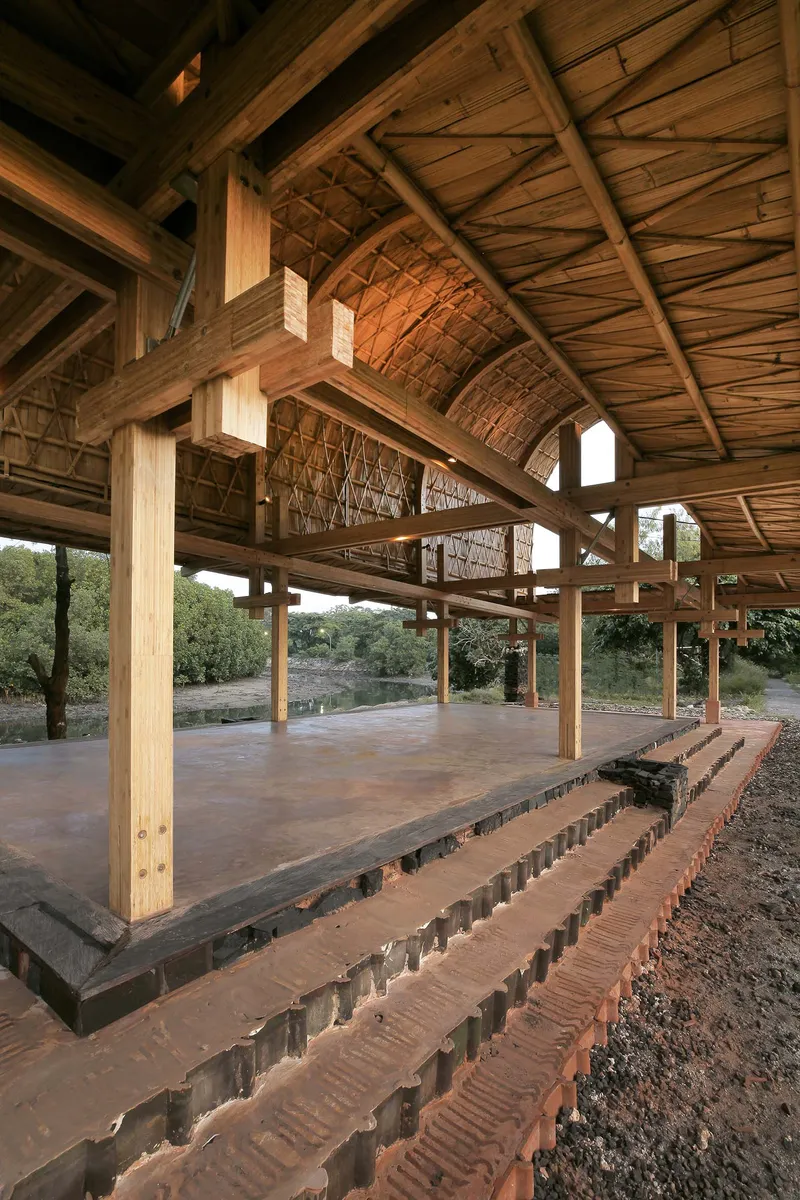

Together, these materials create a regenerative assembly that continues to store carbon throughout its lifetime. The ground-level construction uses only geo-based materials, reinforcing the pavilion’s environmental stewardship.
Community, Ritual, and Collective Making
The project was built through a broad collaboration involving Cave Urban, Bauhaus Earth, Bamboo Village Trust, Atelier One, Eco Mantra, Kota Kita, Indobamboo, and students from the University of Warmadewa, alongside Balinese craftspeople.
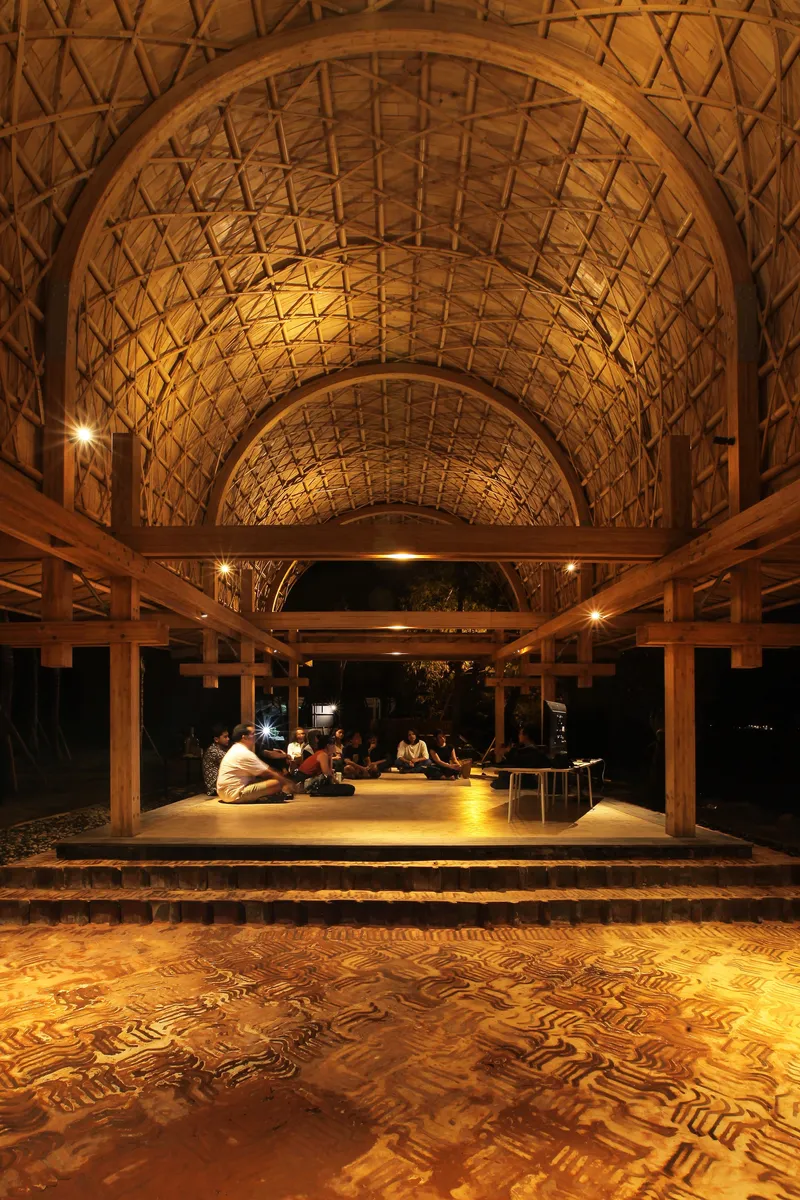
Construction became both a training ground and cultural process:
- Local teams learned laminated-bamboo assembly techniques
- The project began and ended with Meruak blessing rituals
- Prefabricated elements enabled rapid assembly with minimal impact
These collective efforts strengthened knowledge transfer and reinforced the pavilion's role as an evolving community asset.
Carbon-Negative Impact & Regenerative Future
A Life Cycle Assessment by Eco Mantra shows that BaleBio reduces its Stage A carbon footprint by 110% compared to conventional construction—equivalent to avoiding more than 53 tonnes of CO₂, or planting over 2,400 trees. As a designed-for-disassembly structure, it can be relocated or reused, extending the circularity of its materials.

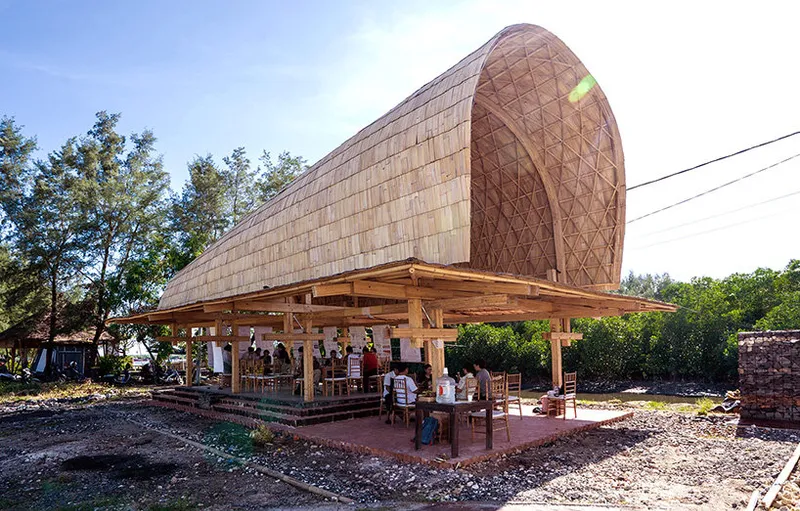
Since its completion, BaleBio has hosted workshops, community gatherings, and dialogue sessions on regenerative design, serving as both prototype and educational platform. Its success demonstrates the viability of bio-based, climate-positive construction for Indonesia’s future.
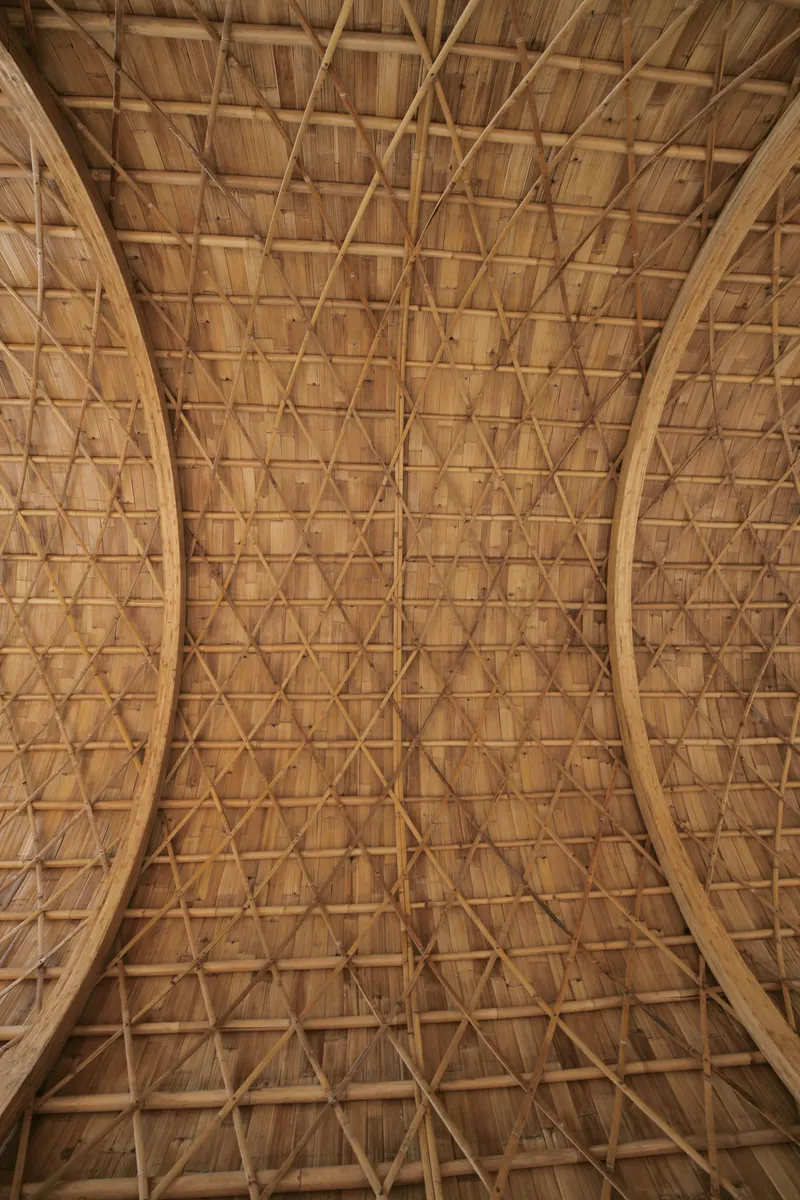
All the Photographs are works of Bas Princen


Popular Articles
Popular articles from the community


Singing Woman: Contemporary Architecture Inspired by Estonia’s Voice and the Sea
Singing Woman turns Estonia’s song culture into flowing opera house architecture, blending public life, landscape, sea, and national memory.

Opera on the Sea: Driftwood Logic Shapes a Timber Opera House on Estonia's Coast
Trevor Orgill's opera house translates the entangled drift of floating timber into a civic building where wood, water, and music converge.

Cloaked Colonization: A Mobile Underwater Habitat That Moves Like a Fish
Micah Abaya's shortlisted EHC Pacific entry reimagines ocean settlement as a dispersed network of self-sustaining architectural organisms.

The Amber Palace Opera: A Geological Fiction Surfaces on Tallinn's Baltic Waterfront
Pierre Brillard reimagines a Baltic legend as a public landscape, opera house, and waterfront promenade rooted in Tallinn's coastal identity.

Similar Reads
You might also enjoy these articles


Hodi-Mandai Geram
Project Function: Preservation and revitalization of the Intangible heritage and socio-spatial identity of the Hodi by Housing, Cultural Memory Center, Sacred Grove, landscape, local tourism economy


Olio Towers: A Mid-Rise for Performers That Fuses Housing, Rehearsal, and Stage
Located blocks from Houston's Theater District, this modular tower stacks living units around a central performance atrium.

Oasis: Modular Green Housing Carved into Dhaka's Urban Fabric
A shortlisted Plugin Housing entry reclaims unauthorized settlements in Dhaka with stepped concrete volumes, green roofs, and ventilation-driven design.

Black Hole: A Floating Megastructure for the Post-Physical Era
Emiliano Mazzarotto envisions a spherical, self-scaling arena where e-sports, digital hotels, and holographic stadiums replace traditional public space.

Explore Bamboo Construction Competitions
Discover active competitions in this discipline

Challenge to reimagine the Iron Throne

Photograph architecture without architects

Illustrate the lost glory of Angkor Wat - Render Challenge

Bring back Drive In's
Comments (0)
Please login or sign up to add comments
No comments yet. Be the first to comment!