

Bangjja Yugi Museum by Studio Heech: A Poetic Expression of Rammed Earth Museum Architecture
A tactile museum honoring Korean bronzeware through poetic rammed earth architecture that bridges traditional craft and contemporary design.


The Bangjja Yugi Museum, located in Mungyeong-si, South Korea, is a remarkable example of rammed earth museum architecture that bridges the past and the present through tactile materiality and respectful architectural layering. Designed by Studio Heech under the direction of architect Heechan Park, this 1,148 m² renovation project honors the life and craft of Bongju Lee—a master of Korea’s traditional bronzeware, Bangjja Yugi—by integrating architectural form with artisanal philosophy.
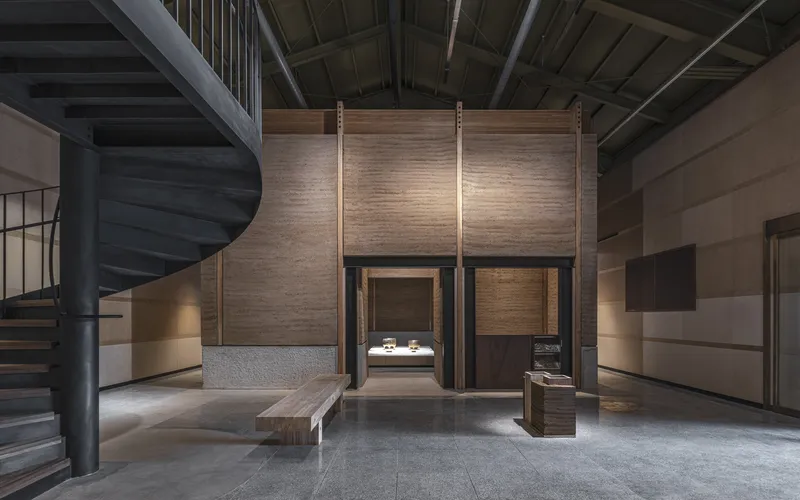
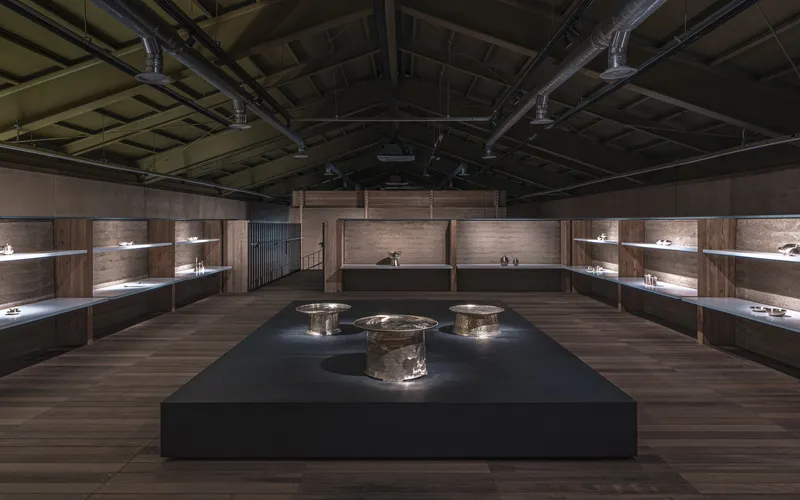
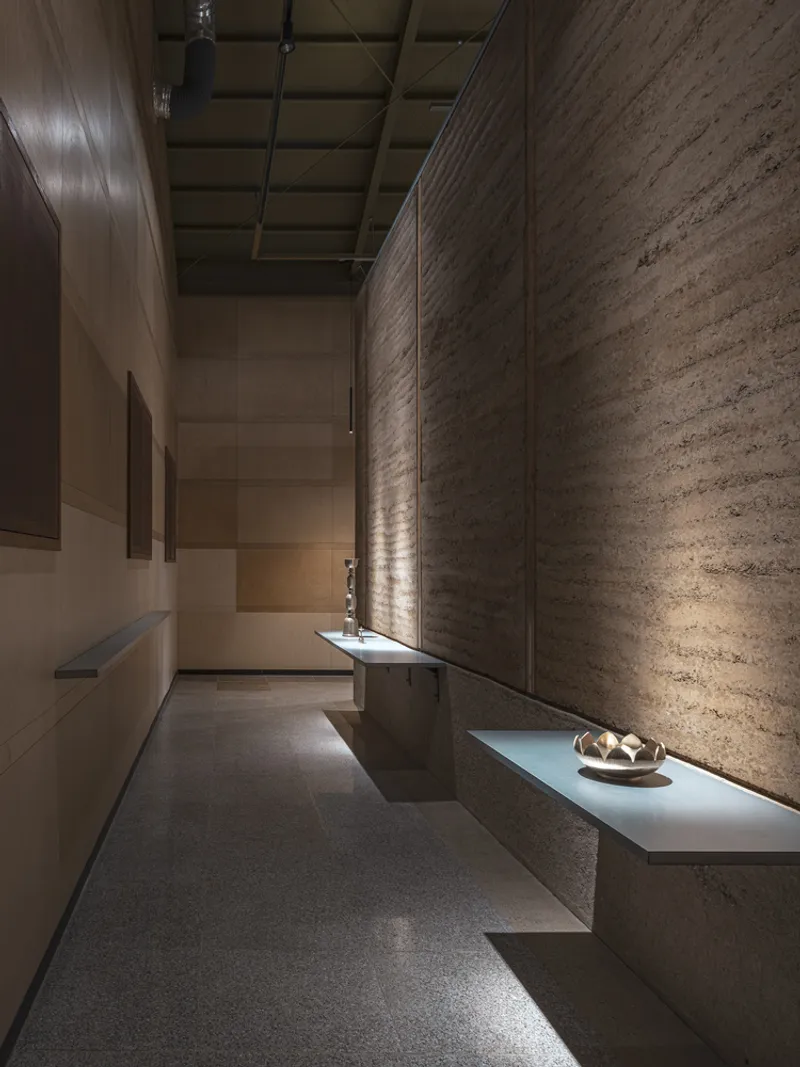
A Dialogue Between Old and New
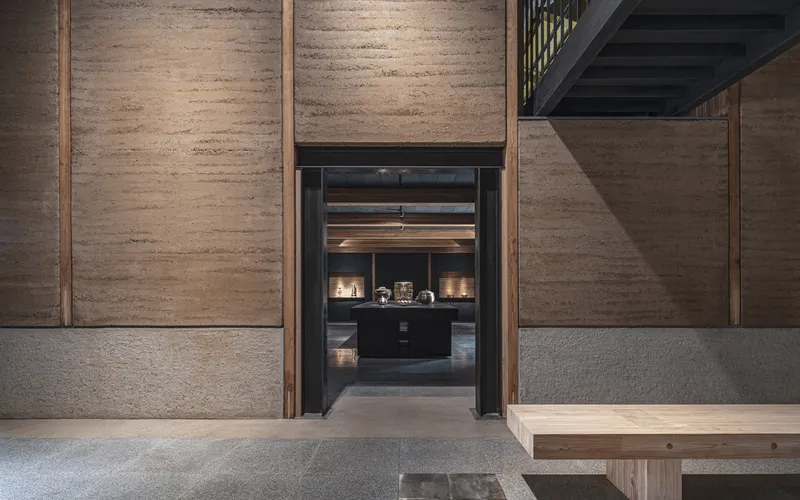
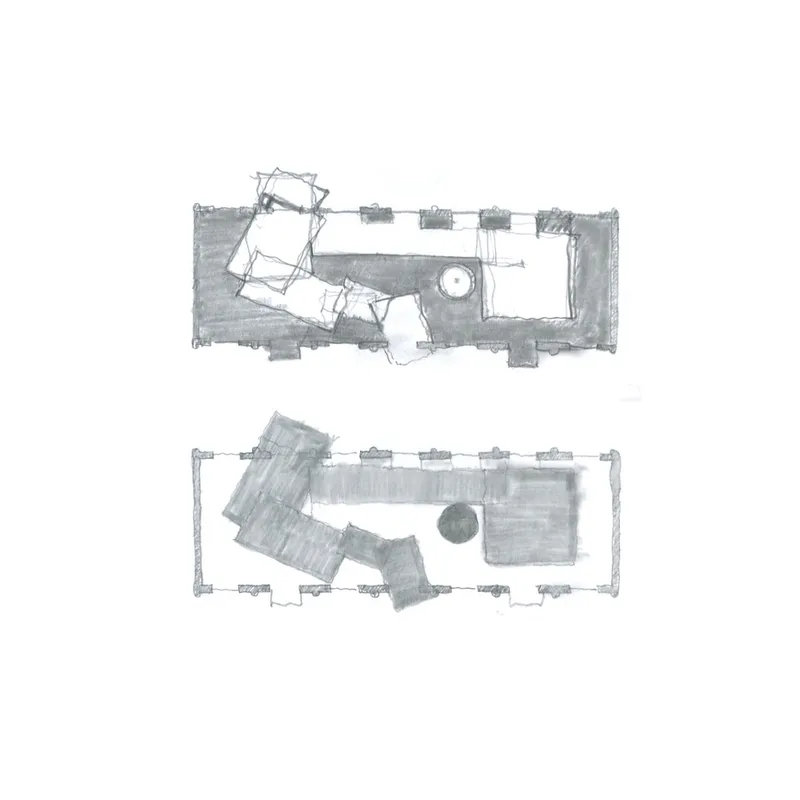
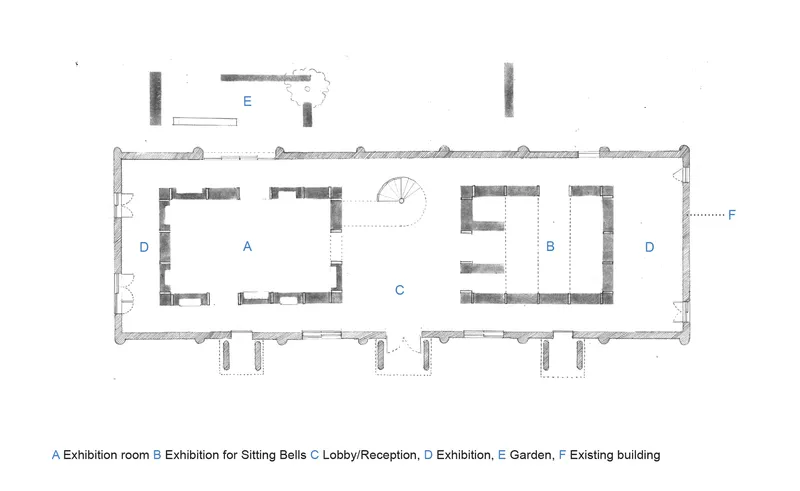
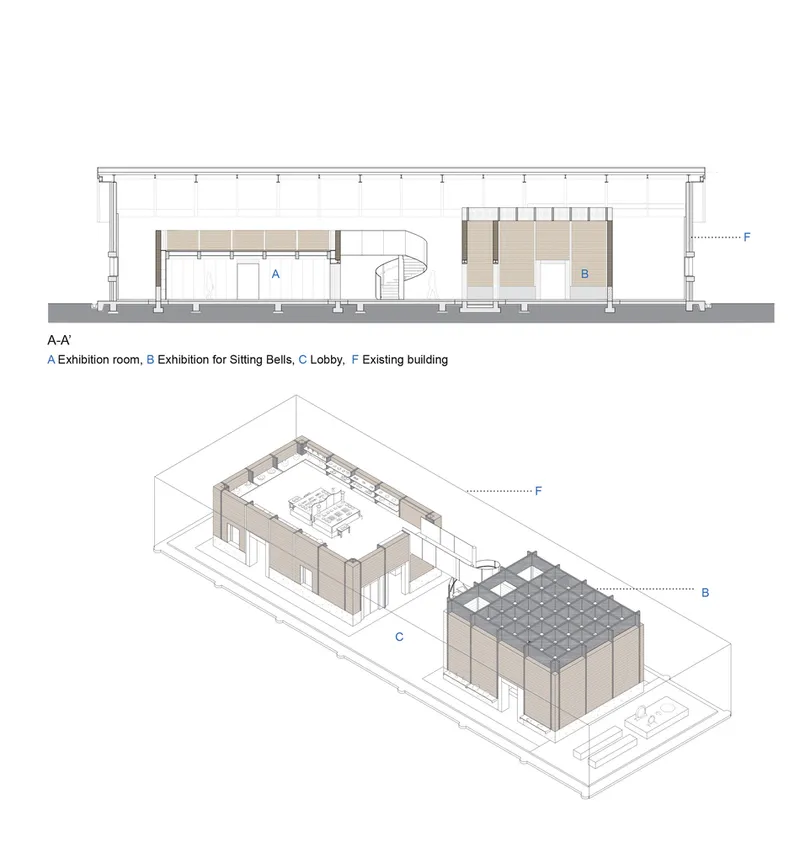
The design approach is rooted in the architectural concept of “buildings within a building.” Instead of demolishing the existing steel-concrete structure—originally disguised with faux-Hanok features mimicking traditional Korean houses—Studio Heech retained the outer shell. Within this, two new rammed earth volumes and a steel staircase were inserted, forming an interior landscape that engages visitors in a layered spatial experience. The juxtaposition of material honesty and historical imitation becomes central to the museum’s narrative, inviting reflection on both architecture and craft.

Rammed Earth as a Metaphor for Craftsmanship
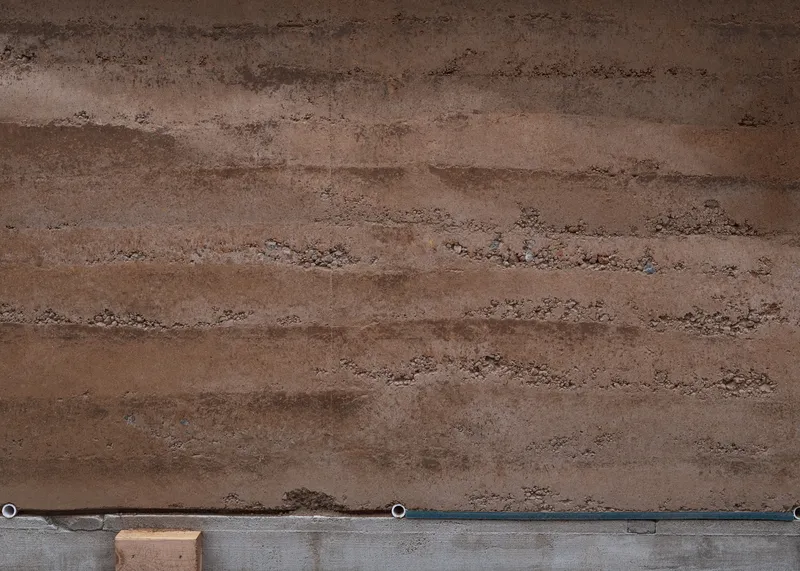
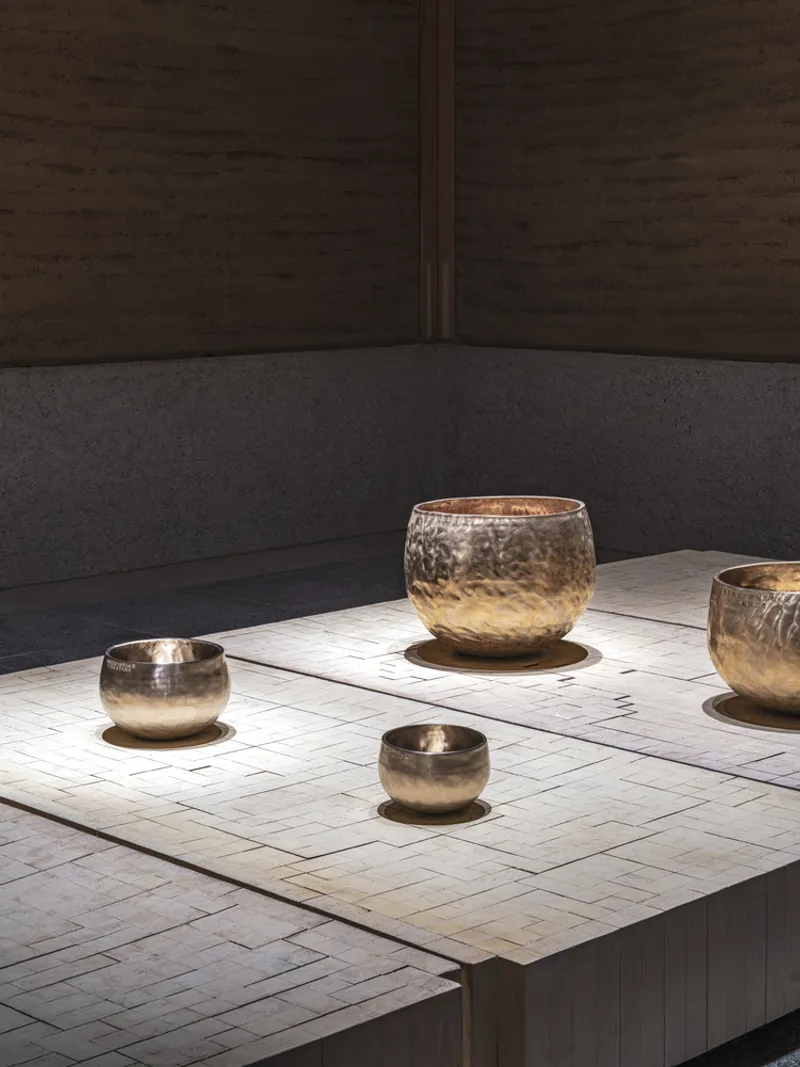
The use of rammed earth construction resonates deeply with the museum’s subject. Just as Bongju Lee’s bronzeware is shaped through the repeated act of hammering, the rammed earth walls are formed by compacting soil layer by layer—a process that mirrors the physical and symbolic beating of metal until it gleams like gold. The architectural process itself becomes an homage to the artisanal method, underscoring a shared philosophy of patience, repetition, and material truth.
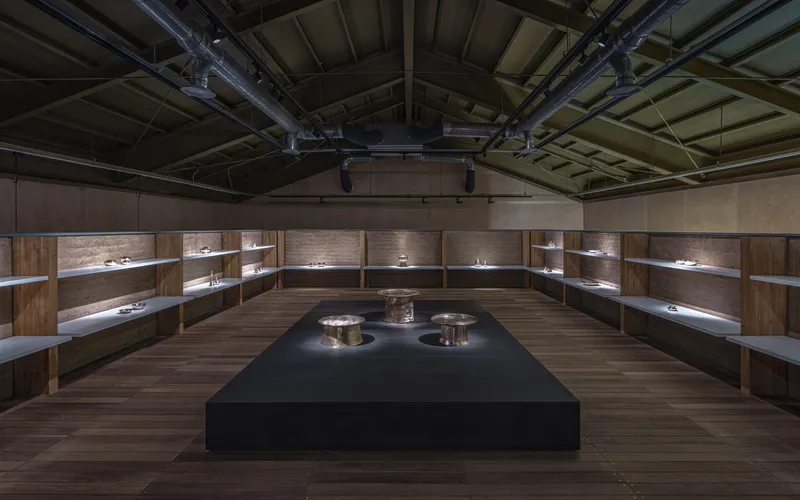

Structural Innovation Rooted in Tradition
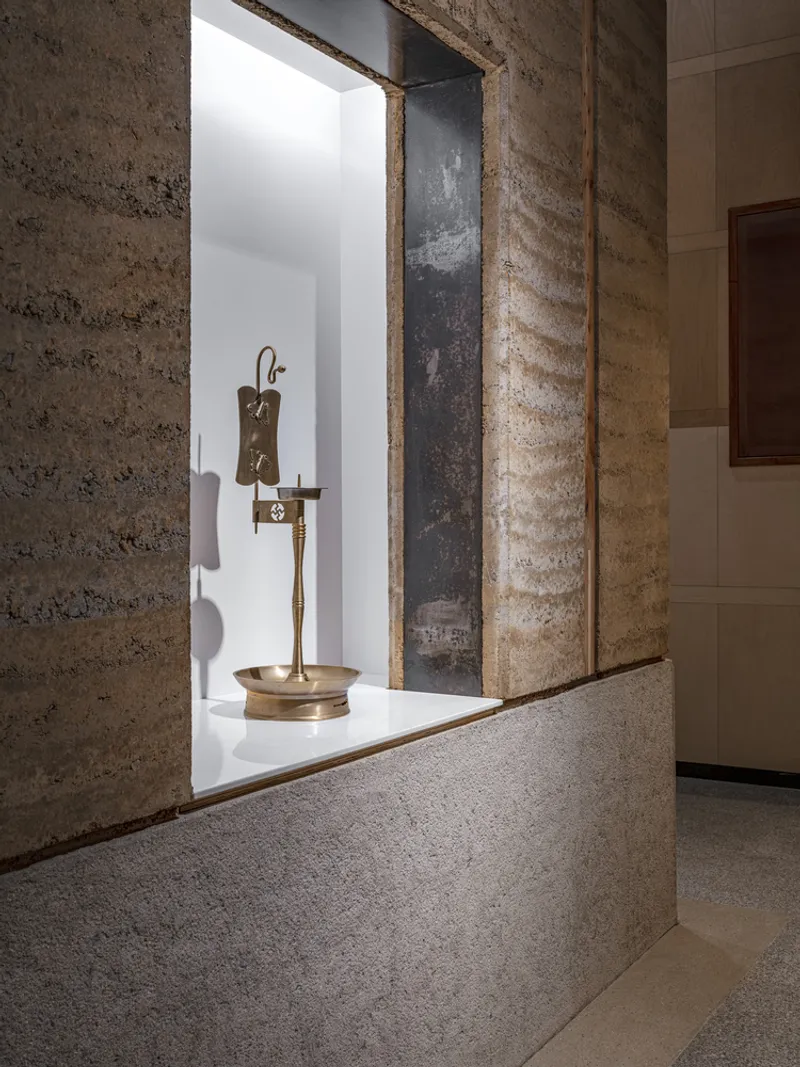
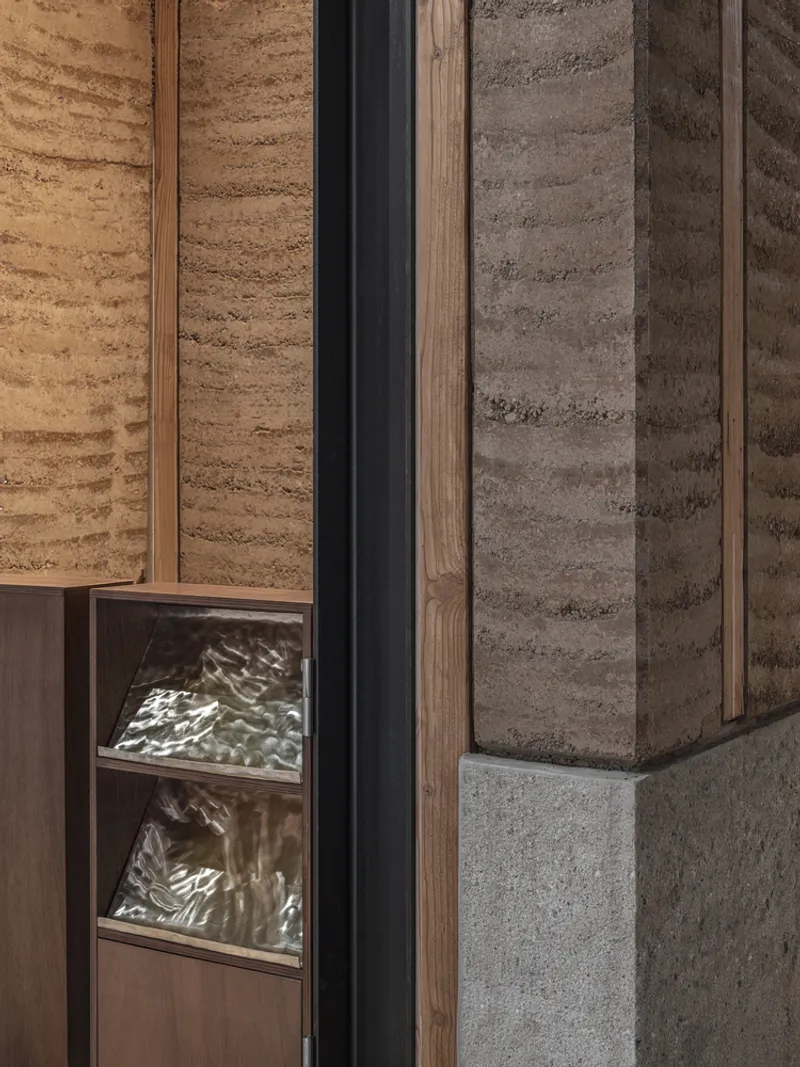
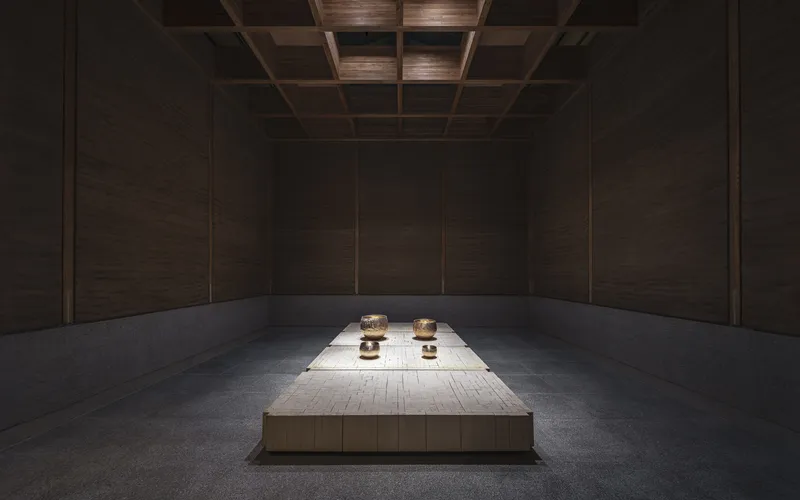
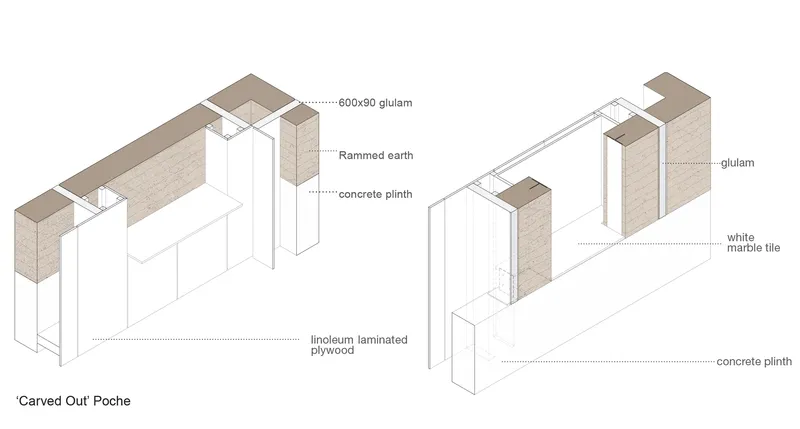
The inserted volumes are constructed with a timber frame made of structural laminated wood (Gluelam), which also acts as formwork for the earth ramming. The walls are thick, tactile, and earthy, emphasizing a return to primitive local materials such as soil, wood, and iron. The floor, ceiling, and interior fittings reflect the same minimal intervention approach, allowing raw textures to dominate while reinforcing a subdued yet powerful spatial character.
Spatial Curation and Material Narrative
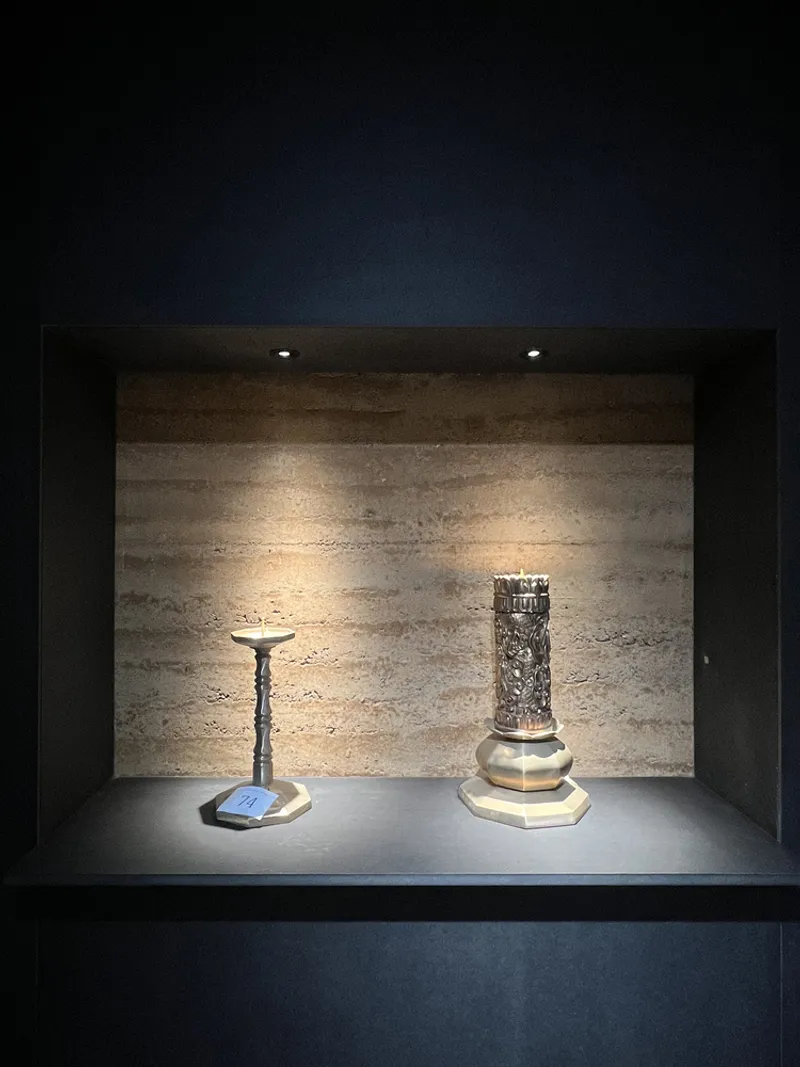
Each rammed earth chamber hosts a different typology of Bongju Lee’s bronzeware, from sacred ritual objects to musical instruments and daily-use ware. The journey through the museum is not linear; rather, it is one of encounter and reflection. Visitors are drawn into an interplay between the original structure and the new insertions, where curated openings create surprising moments of light, shadow, and connection with the exterior garden.
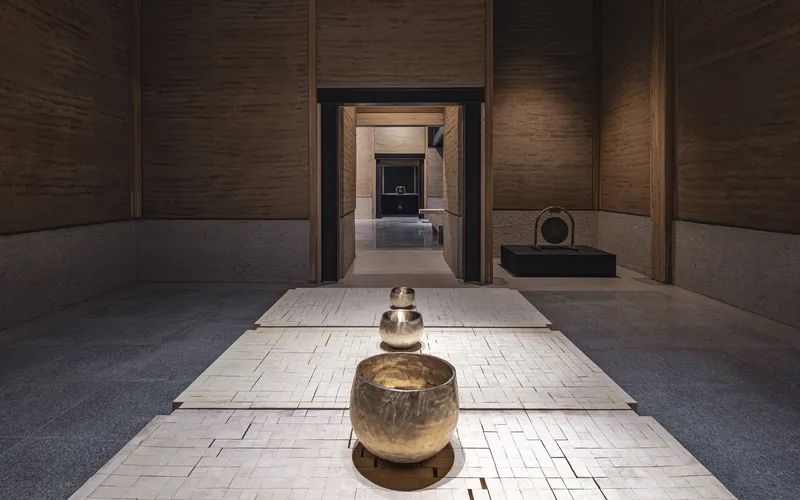

Wooden shutters filter daylight through the original windows, enhancing the contemplative atmosphere within. The building blurs the boundary between the real and the represented, the authentic and the fabricated—challenging visitors to think about how tradition is preserved, altered, or staged in contemporary architecture.
Sustainable Reuse and Contextual Integration
Rather than replacing the existing building, Studio Heech’s intervention promotes sustainable adaptive reuse. Wherever possible, the original materials—flooring, wall finishes, window elements—were retained or reused, reducing the environmental impact and preserving a tangible link to the building’s history. The new architecture doesn’t erase the past; instead, it embraces it, offering a platform where both old and new coexist in productive tension.

The project also opens up the building to its natural surroundings. Carefully designed openings connect the museum interior to an exterior garden, establishing a visual and emotional continuity between man-made and natural environments. This subtle integration enhances the building’s meditative qualities, reinforcing its role as both cultural repository and sensory space.
A Timeless Model for Rammed Earth Museum Architecture
The Bangjja Yugi Museum sets a powerful precedent for future rammed earth museum architecture. It proves that meaningful cultural spaces need not rely on grand gestures or elaborate technologies. Instead, Studio Heech’s design foregrounds material authenticity, artisanal process, and architectural restraint, creating an environment where memory, craft, and space converge in poetic harmony.
By aligning architectural practice with the values of the artisan it commemorates, the museum becomes more than a vessel for display—it is itself an object of contemplation, shaped by hands, time, and earth.
All Photographs are works of Jang Mi


Popular Articles
Popular articles from the community


The Amber Palace Opera: A Geological Fiction Surfaces on Tallinn's Baltic Waterfront
Pierre Brillard reimagines a Baltic legend as a public landscape, opera house, and waterfront promenade rooted in Tallinn's coastal identity.

Aquadapt: An Underwater Habitat That Rewrites Its Rooms by the Hour
Curved modules ring the seabed while one shell shifts from breakfast room to cinema, farm and football pitch as residents' needs change.


graciastudio Turns a Viewless Tijuana Lot Inward Around a Courtyard of Concrete, Timber and Trees
In Tijuana, Jorge Gracia's GA2 House stacks a timber-clad private floor over exposed concrete and replaces a missing view with a planted interior patio.

Cube Design Draws an Ecological Corridor Between Two Shenzhen Hills with the Nankai Building
Beside Shenzhen's container docks, the Nankai Building pairs stacked balconies with a climbing green screen to connect two hillsides across its height.

Similar Reads
You might also enjoy these articles

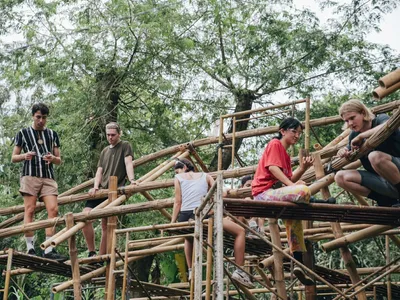
Bamboo Housing Challenge 2026: Design Affordable, Sustainable Homes Using Bamboo
An international design competition by Bamboo U and IBUKU inviting architects and designers to reimagine affordable housing using bamboo — with the winning design built full-scale in Bali.
Computational Design & Education: Beegraphy Design Awards Introduces 7th Category (Featuring Jiyun's Innovative Approach)
Dive into Beegraphy’s 7th Design Awards category, where computational design meets education to create immersive, interactive learning tools, inspired by Jiyun’s work.
From Parametric Lighting to Urban Furniture: Join the 2nd Workshop in Beegraphy’s Computational Design Series
Dive into Cutting-Edge Design Techniques and Practical Applications with Industry Experts

Last Call: Unleash Your Architectural Genius in SHAK's Kindergarten Design Competition
Urgent call for architects to join SHAK's kindergarten design competition before the looming deadline

Explore Rammed Earth Competitions
Discover active competitions in this discipline

Challenge to reimagine the Iron Throne

Photograph architecture without architects

Illustrate the lost glory of Angkor Wat - Render Challenge

Design challenge to reuse E-waste
Comments (0)
Please login or sign up to add comments
No comments yet. Be the first to comment!