
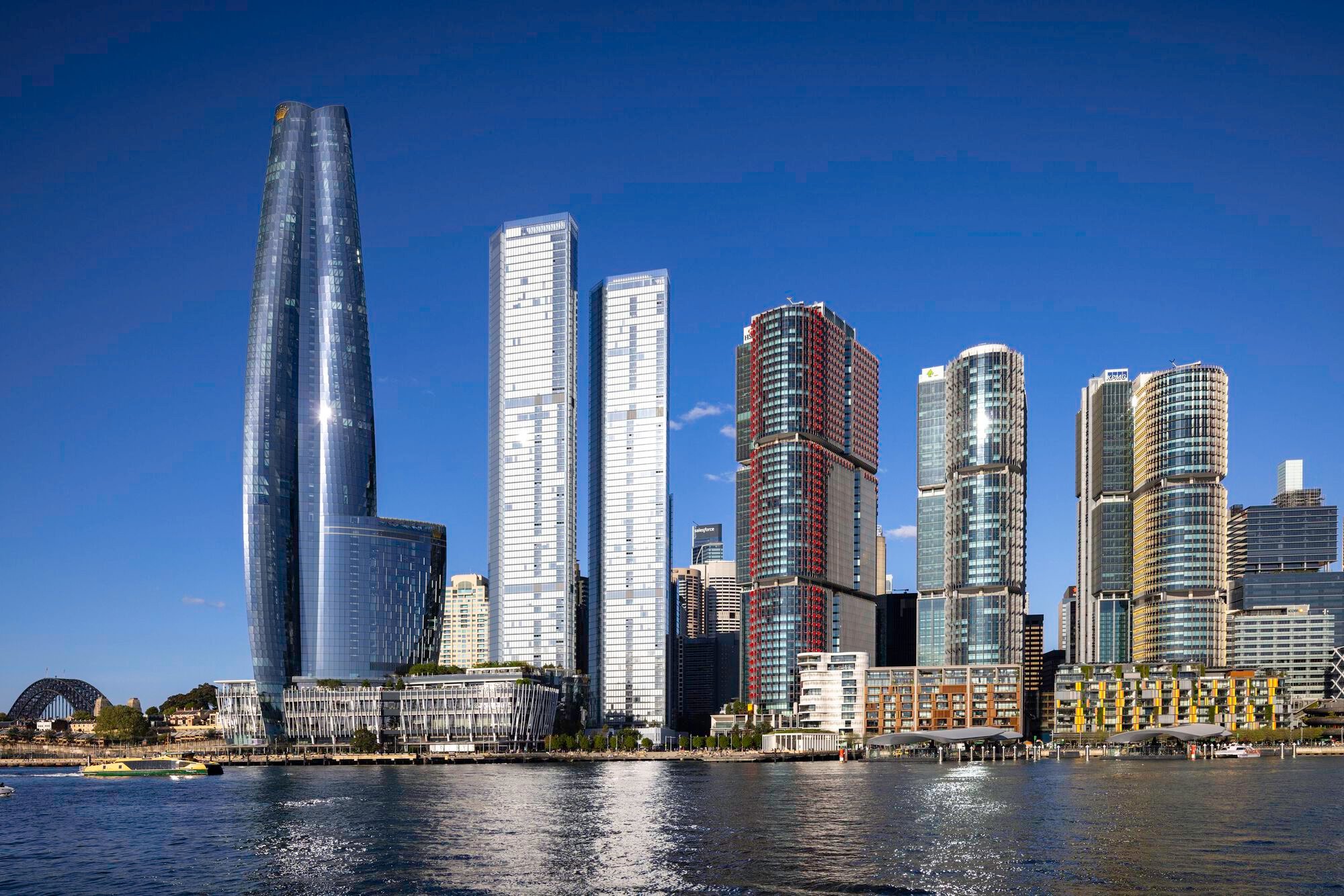
Barangaroo South Masterplan by RSHP
A transformative waterfront masterplan in Sydney, converting a former container port into a carbon-neutral, mixed-use precinct centred on public space.

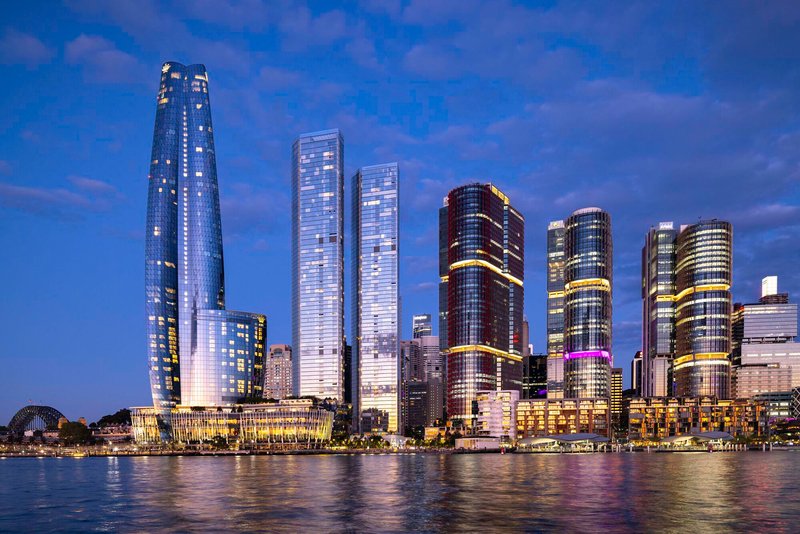
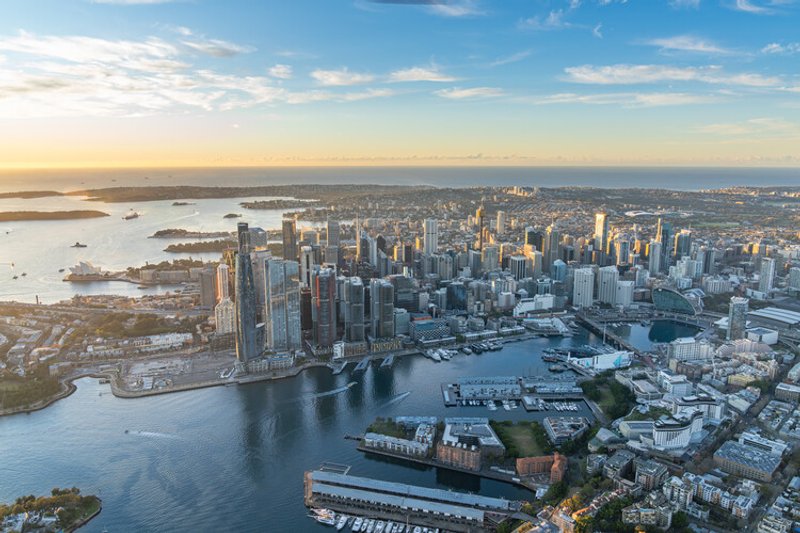
Completed in 2025, the Barangaroo South Masterplan, designed by RSHP, marks one of the most significant urban transformations in contemporary Australian history. What was once a disused container port at the north-western edge of Sydney’s Central Business District has been reimagined as a vibrant, inclusive, carbon-neutral waterfront precinct, one that reconnects the city with its harbour and redefines the role of public space in large-scale urban development.
Reclaiming Sydney’s Harbour Edge Through Public Space, Sustainability, and Urban Vision
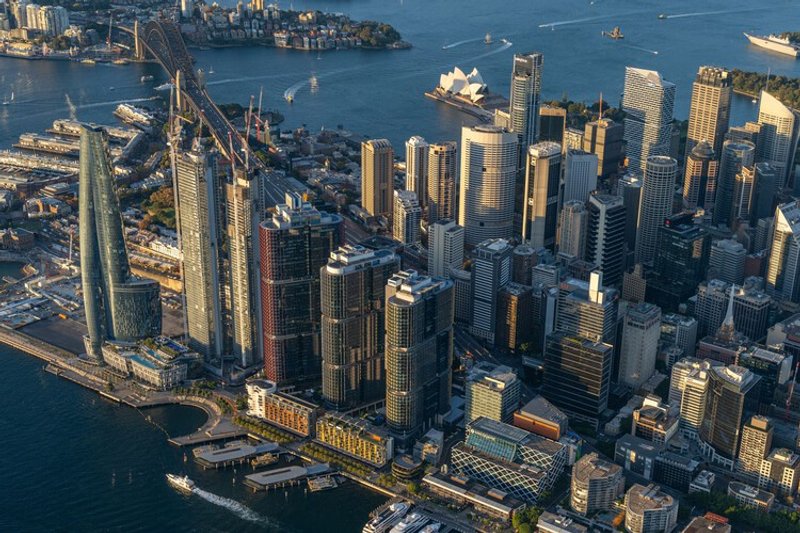
Covering part of the broader 22-hectare Barangaroo precinct, Barangaroo South functions as both an extension of the CBD and a destination in its own right. Through a careful balance of density, landscape, infrastructure, and sustainability, RSHP’s masterplan demonstrates how cities can reclaim former industrial land and transform it into places that are civic, humane, and enduring.
From Industrial Back Door to Civic Front Door
For decades, Sydney’s western harbour edge functioned as a working port, physically and symbolically turning its back on the city. The Barangaroo project set out to reverse this condition. RSHP, working with Lendlease, won the international design competition with a proposal that sought not only to redevelop the site, but to give the waterfront back to the public.
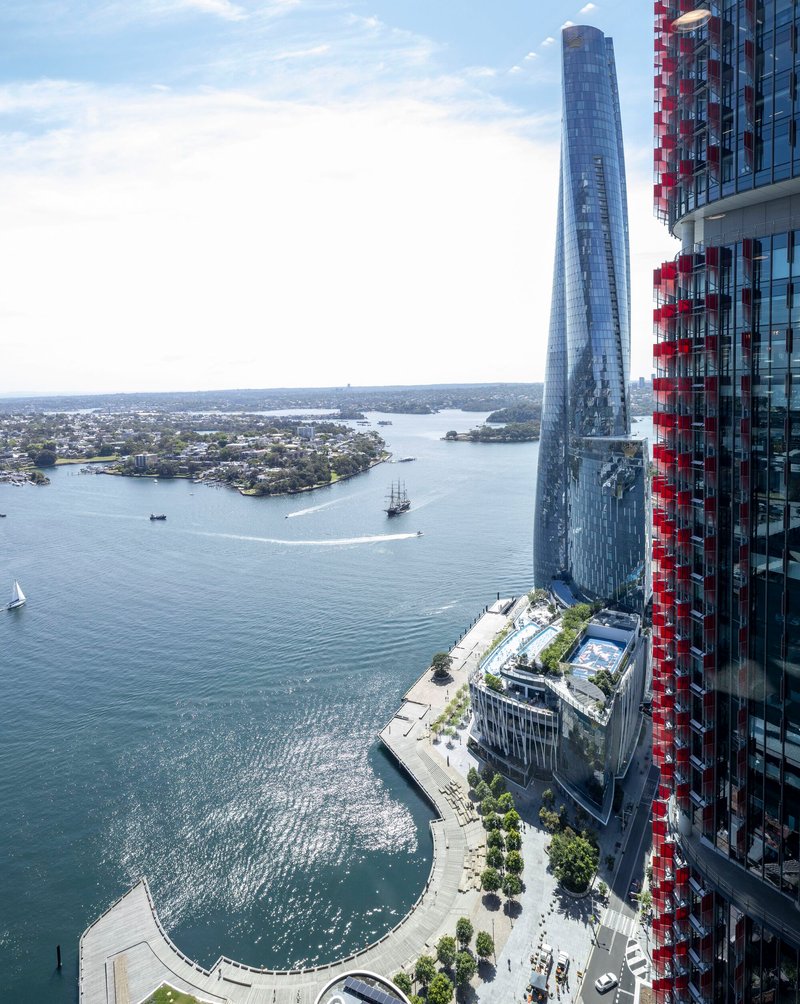
As Ivan Harbour, Senior Design Director at RSHP, describes, the ambition was radical: to transform Sydney’s “back door” into a new front door. This vision required rethinking how density, infrastructure, and public life could coexist on one of the city’s most prominent sites.
A Three-Part Urban Structure
The overall Barangaroo masterplan is organized into three distinct yet interconnected precincts, each playing a complementary role within the wider urban vision:
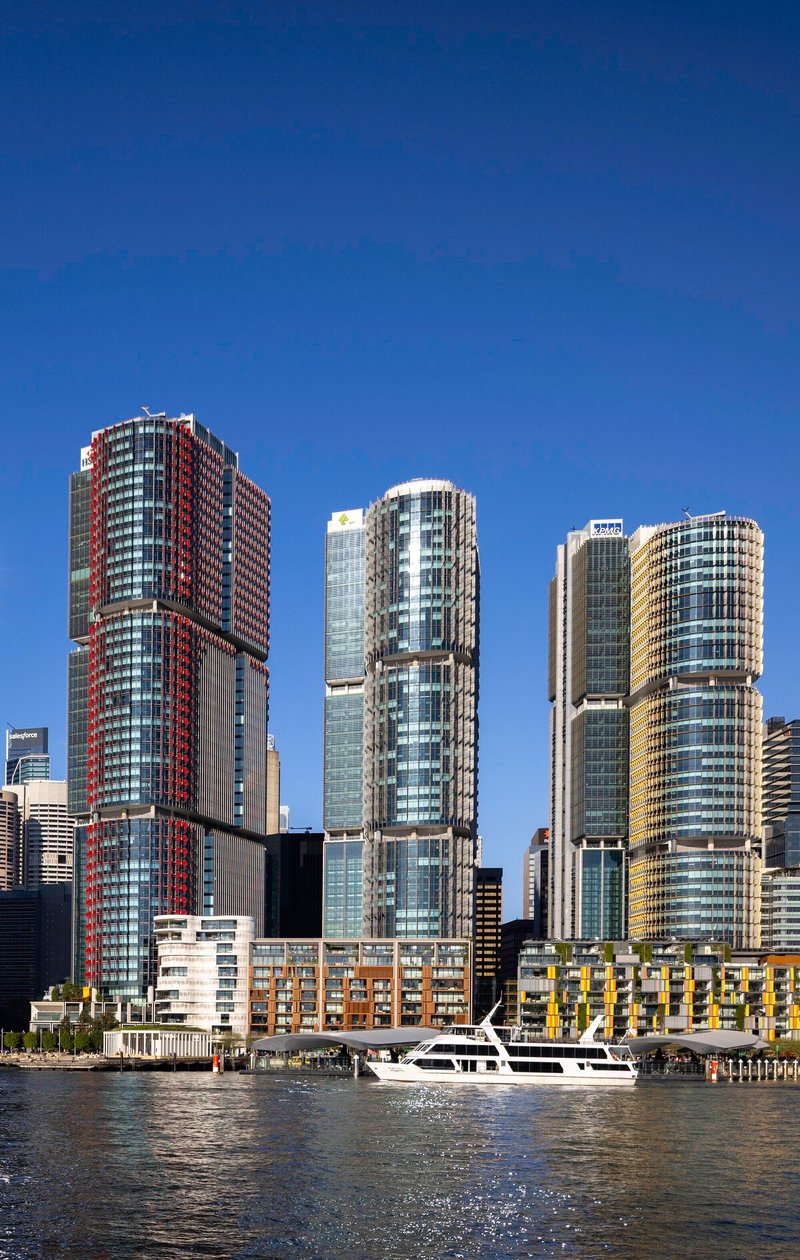
- Barangaroo South – a high-density mixed-use precinct extending the CBD, housing commercial towers, residential buildings, retail, and major public spaces
- Barangaroo Reserve – a naturalistic reconstruction of the historic northern headland, shaped as a civic landscape for all
- Barangaroo Central – a lower-density residential neighbourhood that bridges north and south while overlooking a major harbour-side park
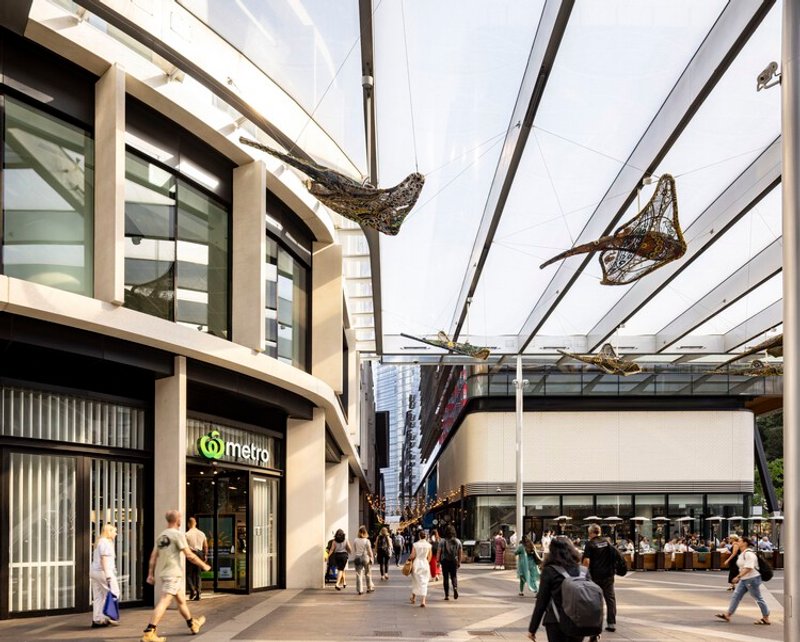
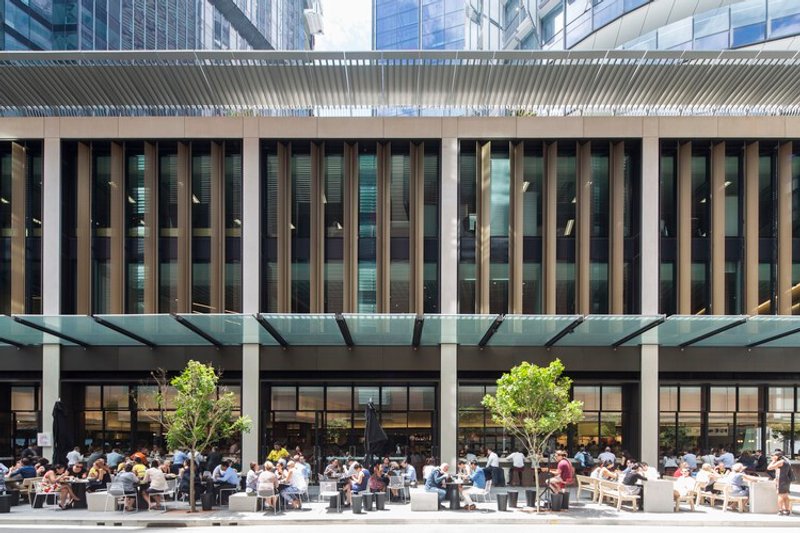
Barangaroo South sits at the heart of this structure, generating the economic engine that funded the extensive public realm across the entire precinct.
International Towers Sydney: Density with Public Benefit
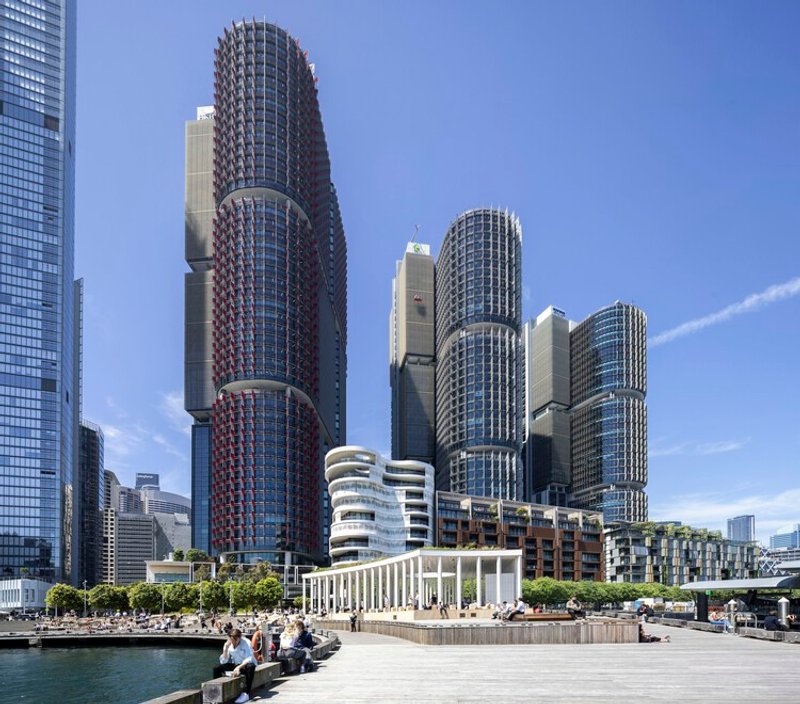
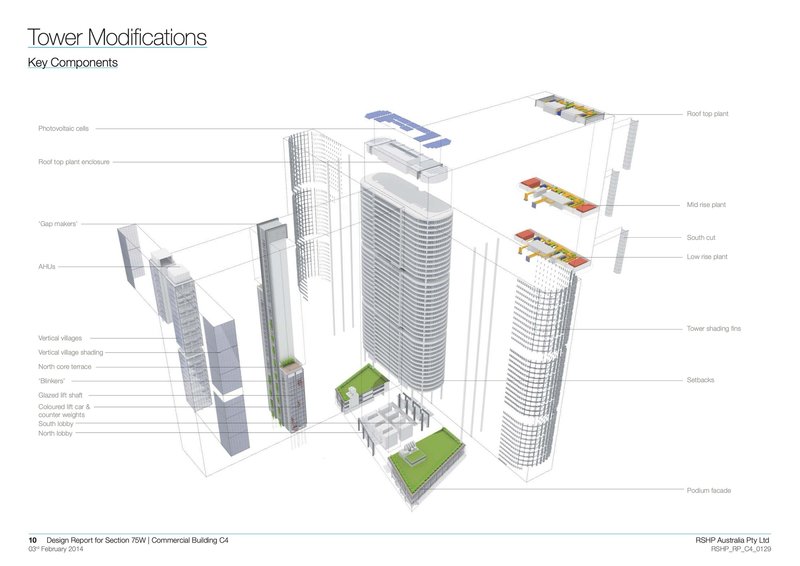
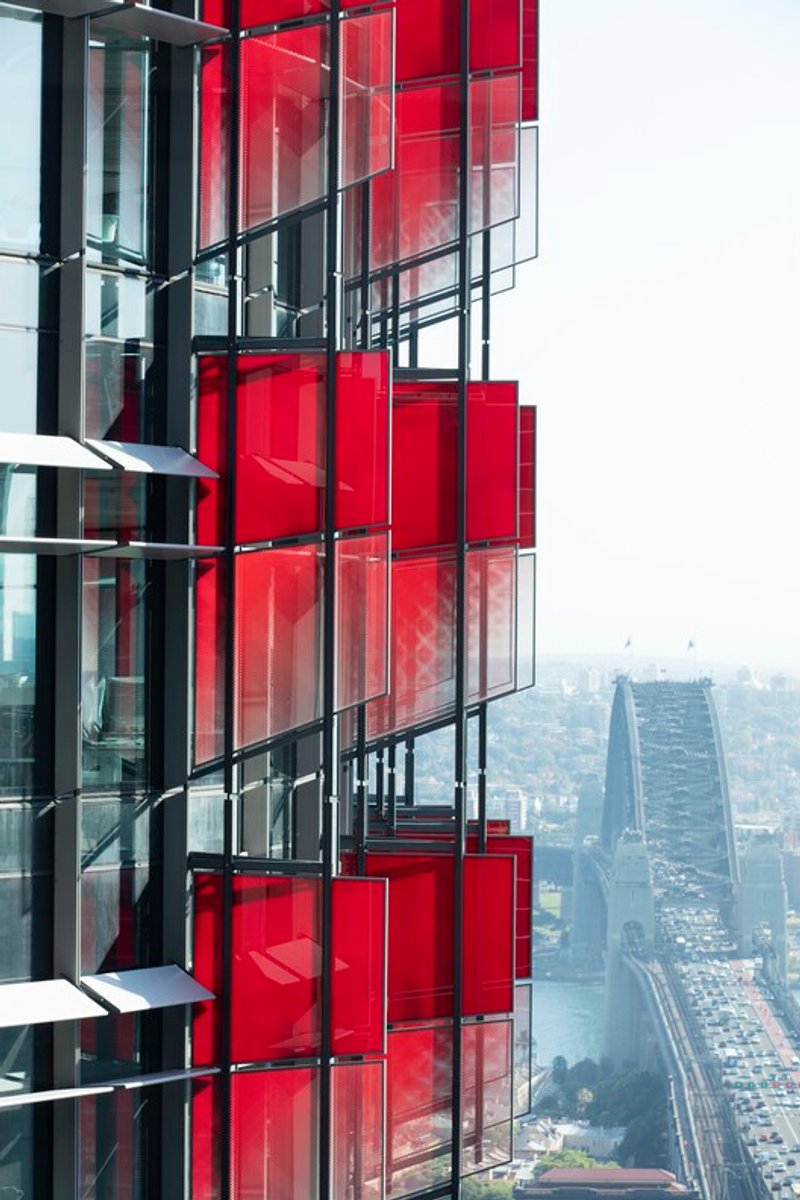
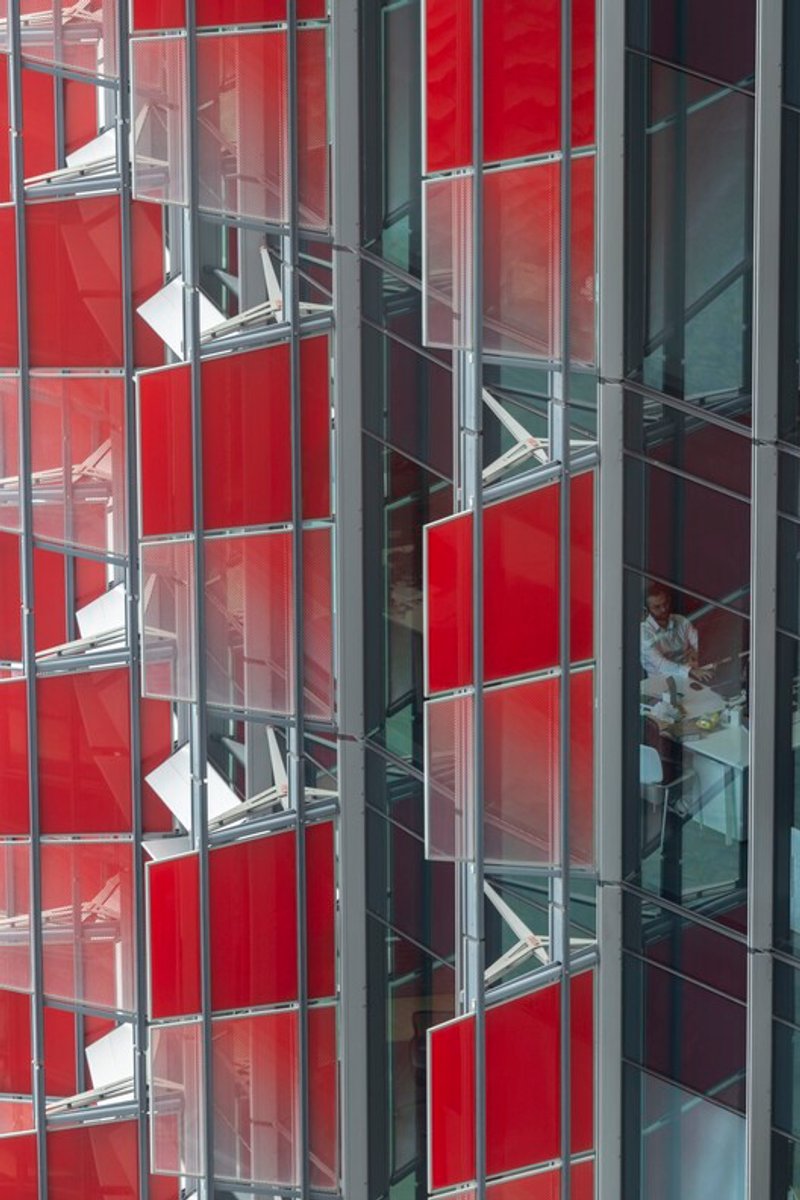
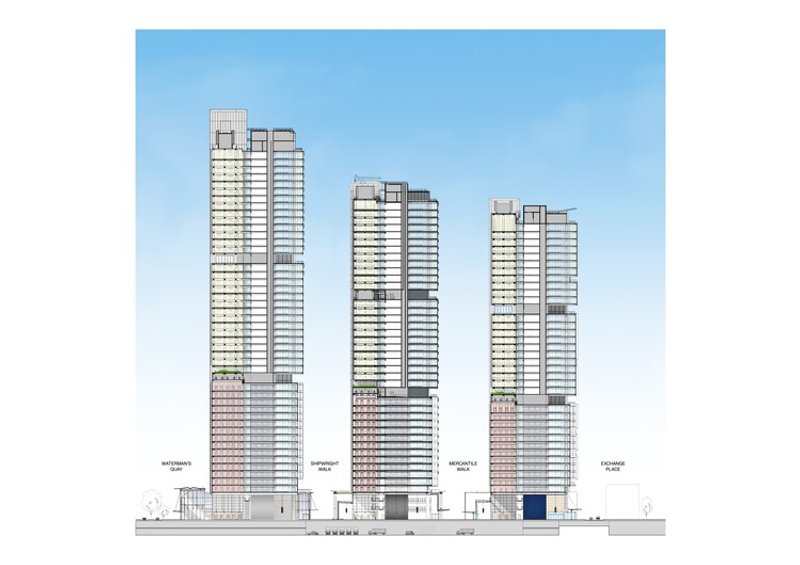
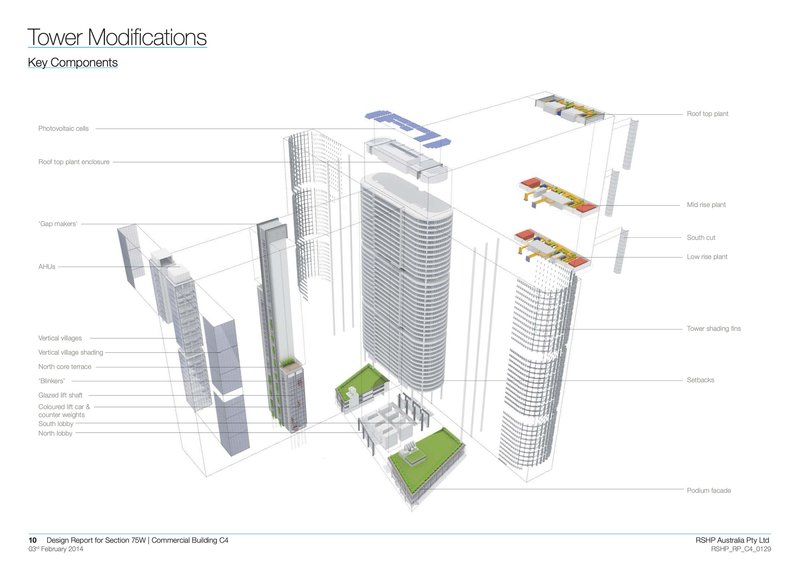
At the core of Barangaroo South are the International Towers Sydney (completed in 2017), three “sibling” commercial towers that adopt the scale and intensity of the CBD while redefining how tall buildings meet the ground.
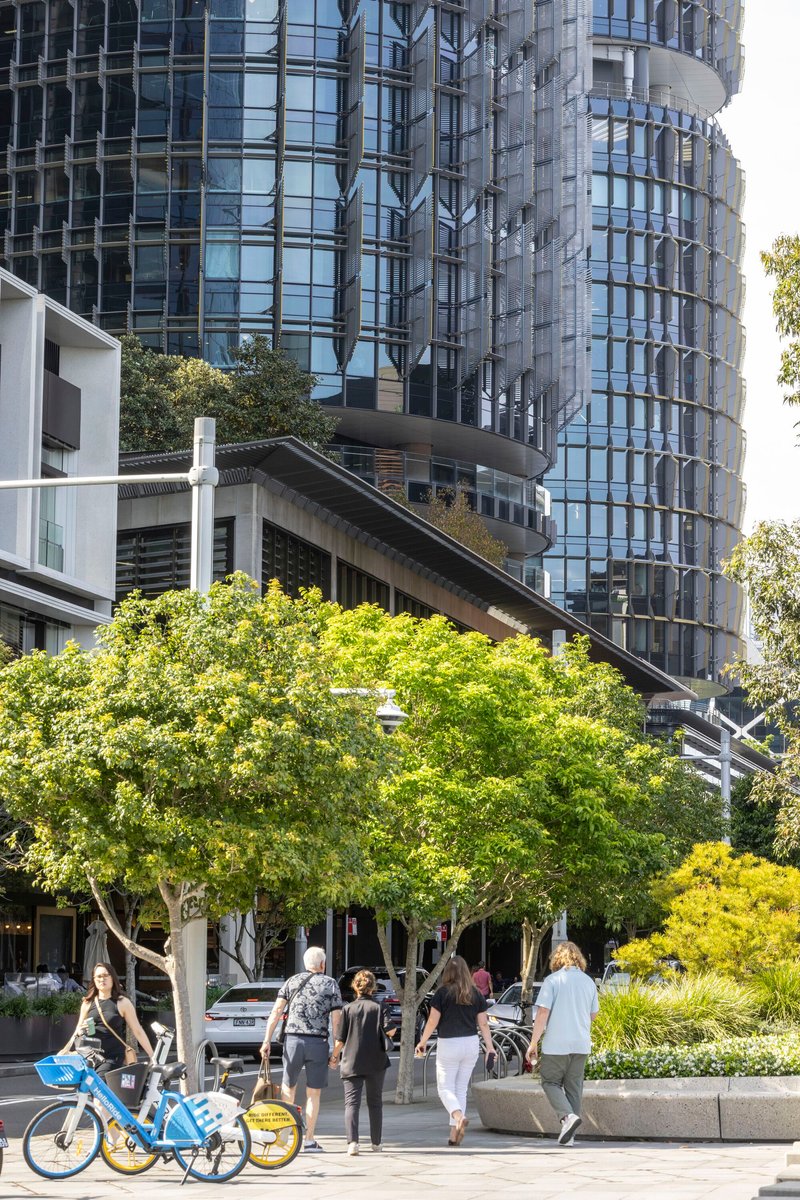
The towers are arranged on a fan-shaped grid radiating from the precinct’s key transport connection, Wynyard Station. This configuration achieves multiple objectives:
- It opens views westward, democratizing access to harbour outlooks
- It reduces visual bulk and shadowing
- It frees up space at ground level for generous, fully accessible public areas
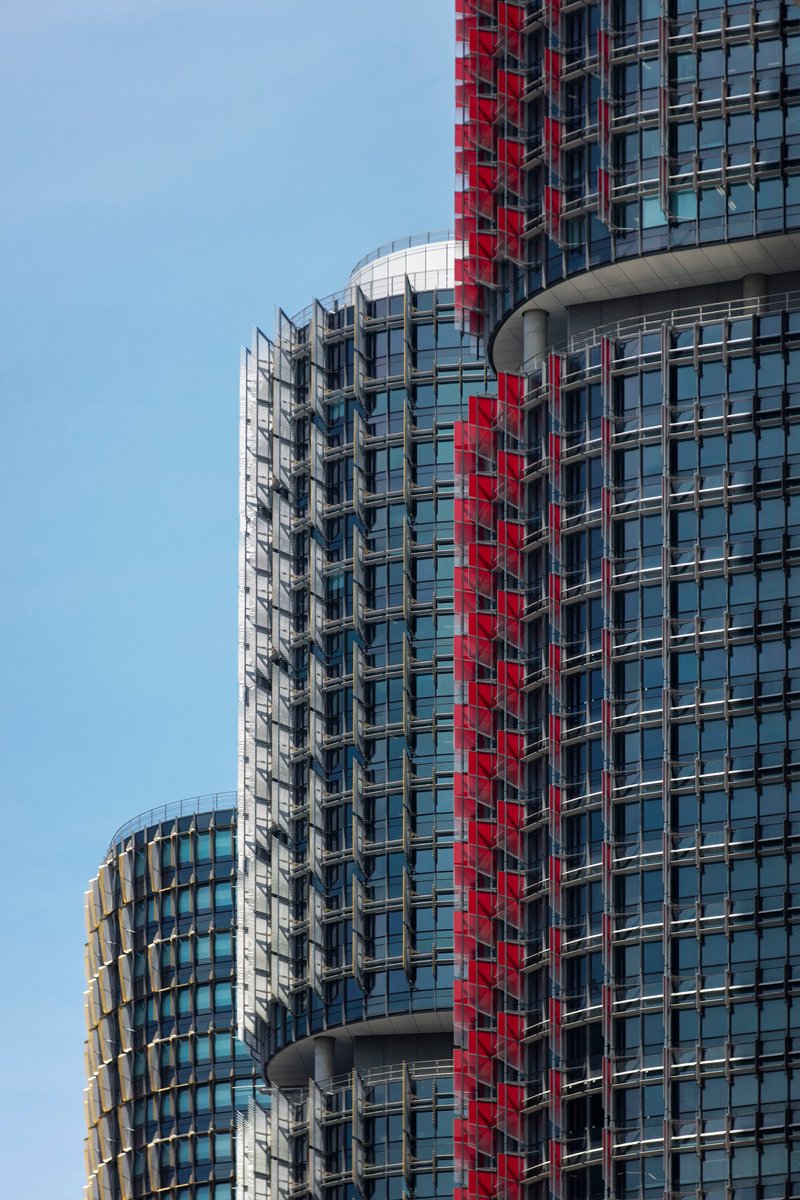
Rather than forming a wall of buildings along the water, the towers step back to create a porous, pedestrian-friendly waterfront, prioritising people over objects.
Public Space as the Masterplan’s True Core
More than two-thirds of the land area within Barangaroo South is dedicated to public and recreational space, a remarkable achievement for a project of this density. These spaces are not residual; they are the defining feature of the masterplan.
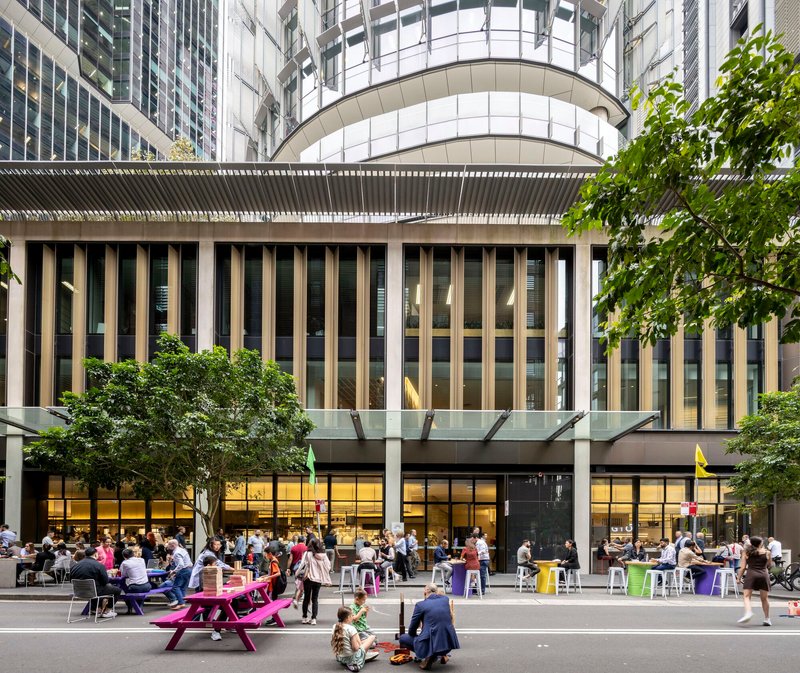
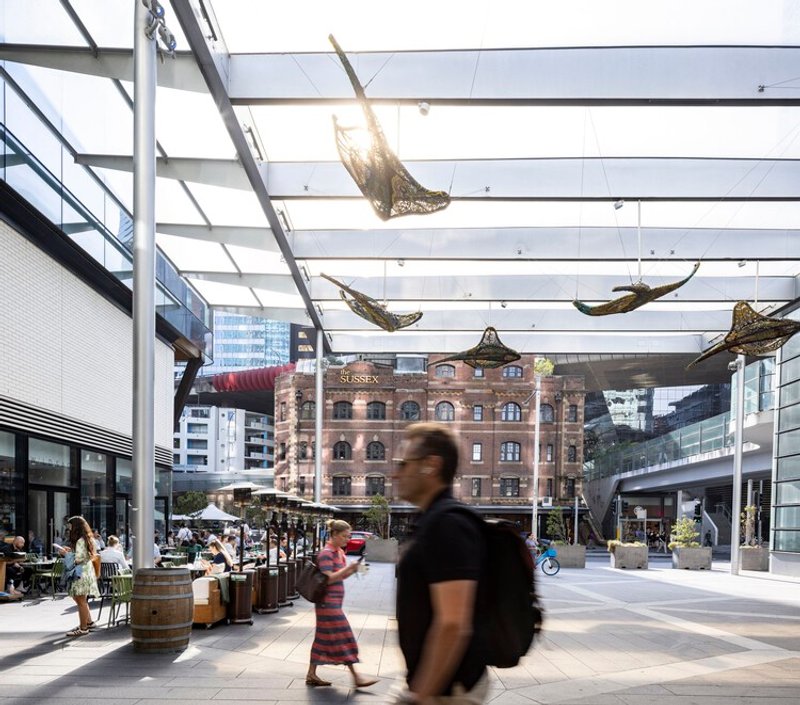
Key public spaces include:
- Wulugul Walk (2021) – a continuous waterfront promenade that stitches together previously fragmented shoreline
- Hickson Park (2020) – a one-hectare green retreat offering shade, play, and respite within the urban environment
- Watermans Cove (2025) – an amphitheatre-style boardwalk stepping down to the harbour, enabling direct engagement with the water
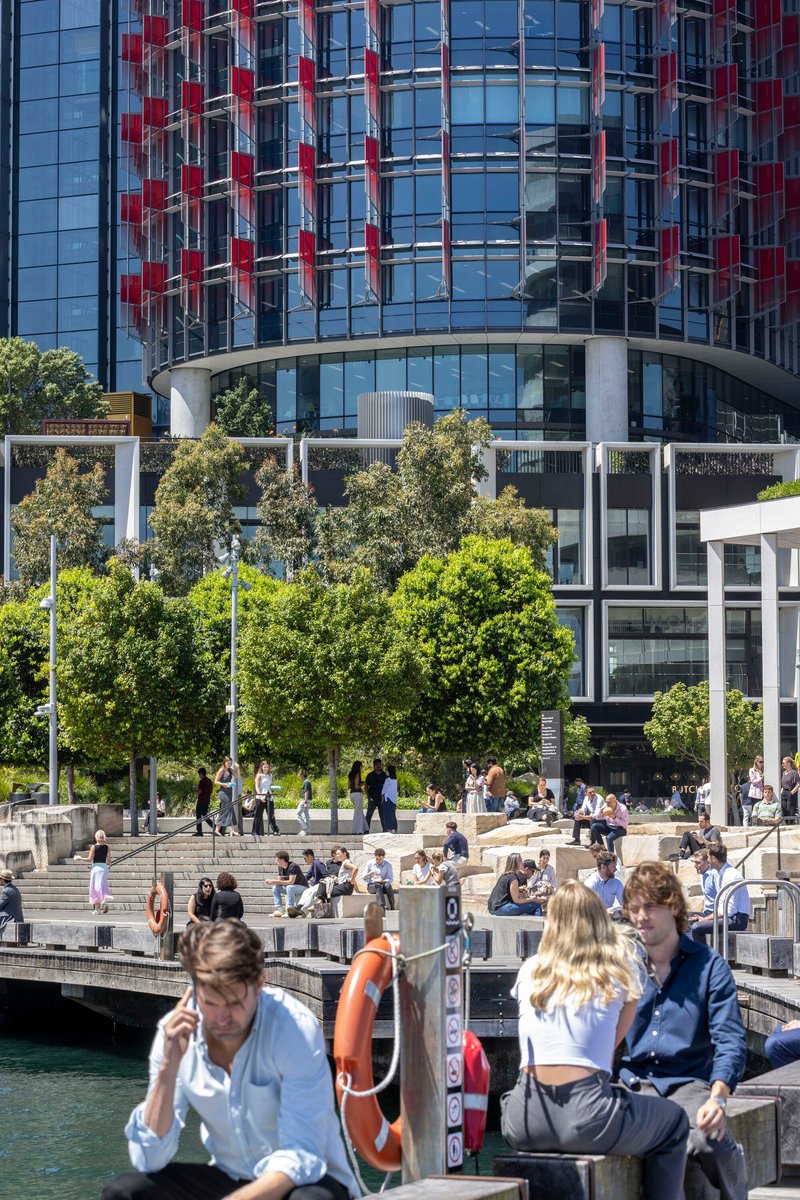
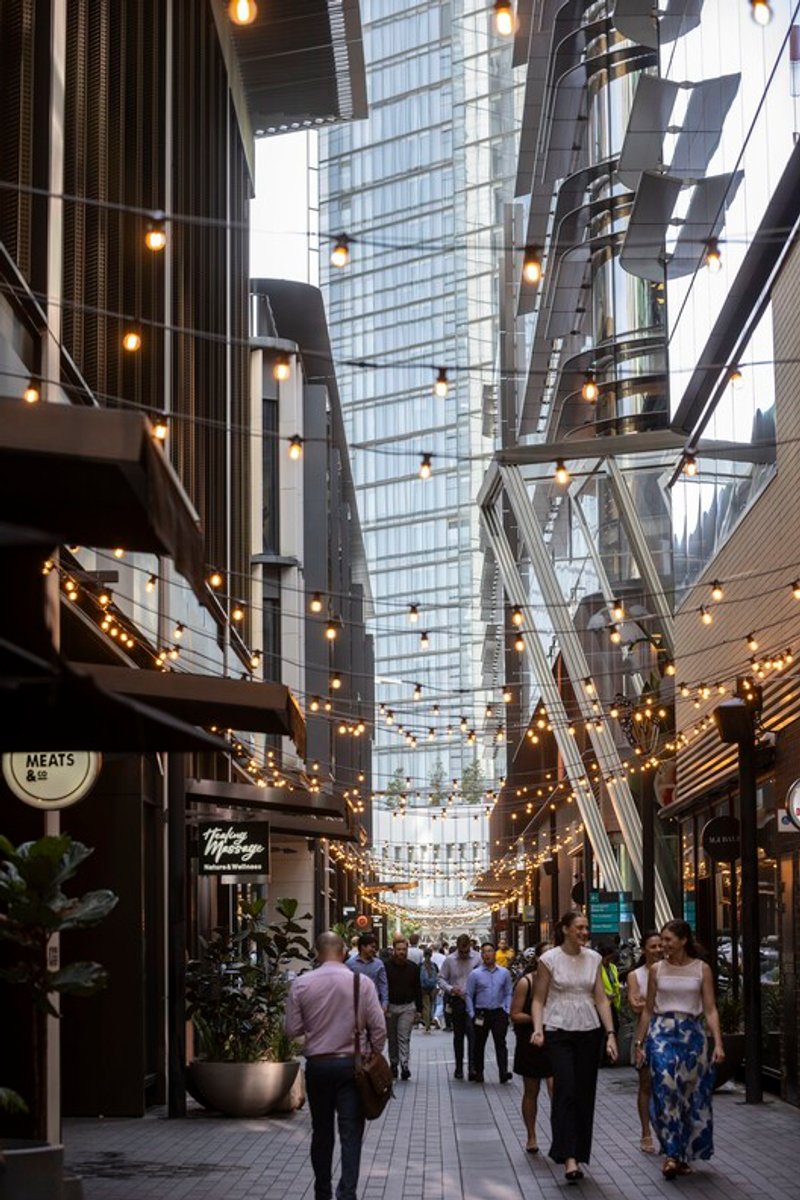
Together, these spaces transform the harbour edge into a place of everyday use: where people walk, gather, pause, and celebrate the city’s maritime identity.
Reconnecting the City Through Infrastructure
Barangaroo South is as much an infrastructure project as it is an architectural one. The masterplan reconnects the precinct to the wider city through an integrated network of pedestrian, public transport, and ferry connections.
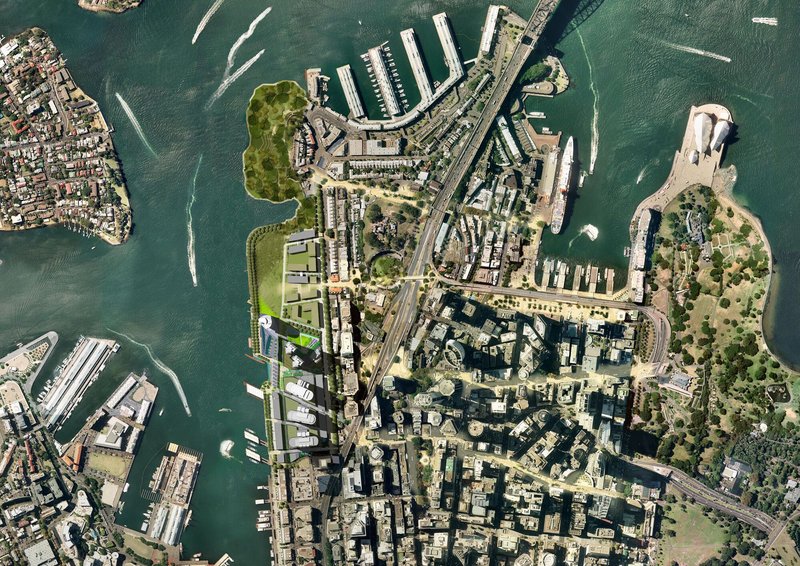
Key interventions include:
- Wynyard Walk and Sussex Street Bridge (2016), extending Wynyard Station directly into Barangaroo
- Barangaroo Ferry Wharf (2017), reintroducing water-based transport to the site
- Sydney Metro Barangaroo Station (2024) at Barangaroo Central, anchoring the precinct within the metropolitan transit network
These links ensure Barangaroo is not an isolated enclave, but a seamless continuation of Sydney’s urban fabric.
Completing Sydney’s Continuous Waterfront
A major ambition of the project was to reimagine the shoreline as part of a continuous 14-kilometre waterside walk, stretching from Anzac Bridge in the west to the Royal Botanic Gardens in the east.
Barangaroo South plays a critical role in this citywide vision, offering moments of intimacy and openness along the promenade. The design deliberately brings people closer to the water: through steps, terraces, and edges, creating a sequence of spatial experiences that celebrate Sydney’s harbour as a shared civic asset.
Sustainability at a Precinct Scale
Barangaroo South is internationally recognised as a benchmark for sustainable urban development. In 2019, it became Australia’s first carbon-neutral precinct, and remains one of the most environmentally ambitious mixed-use developments in the world.
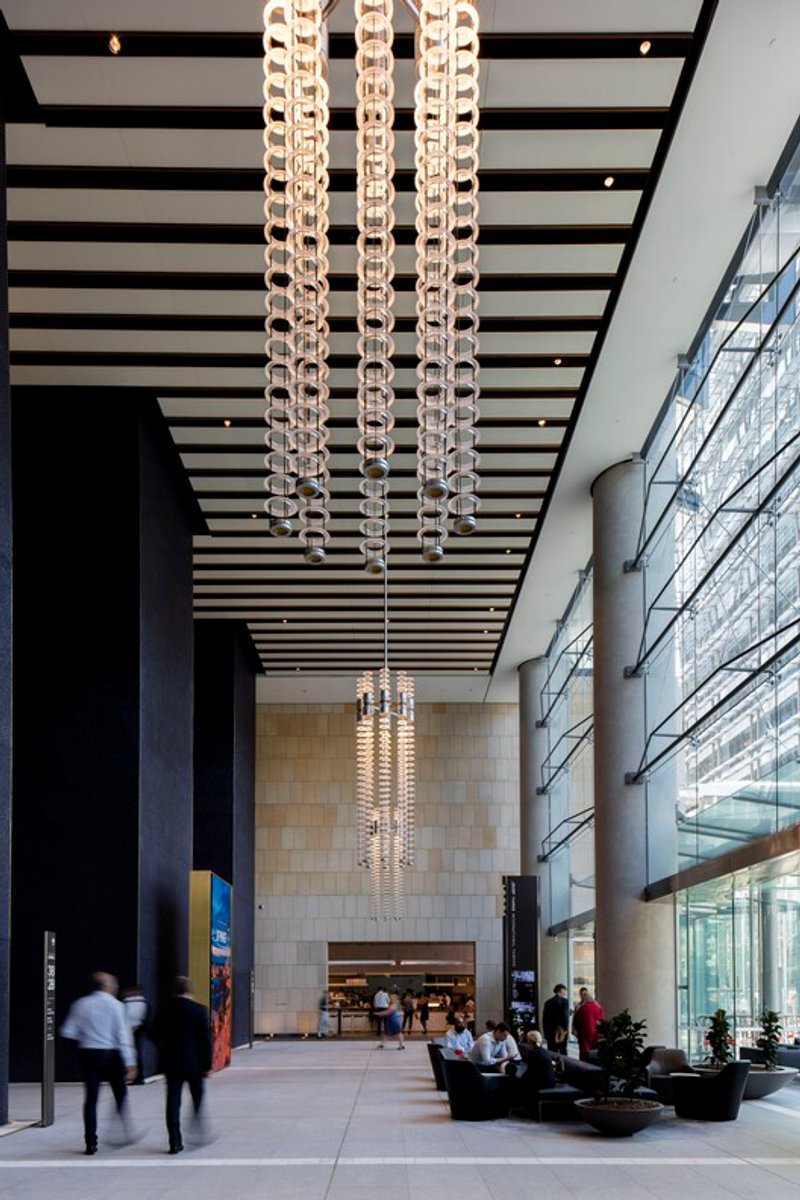
Key sustainability achievements include:
- Participation in the Clinton Climate Initiative’s Climate Positive Development Program
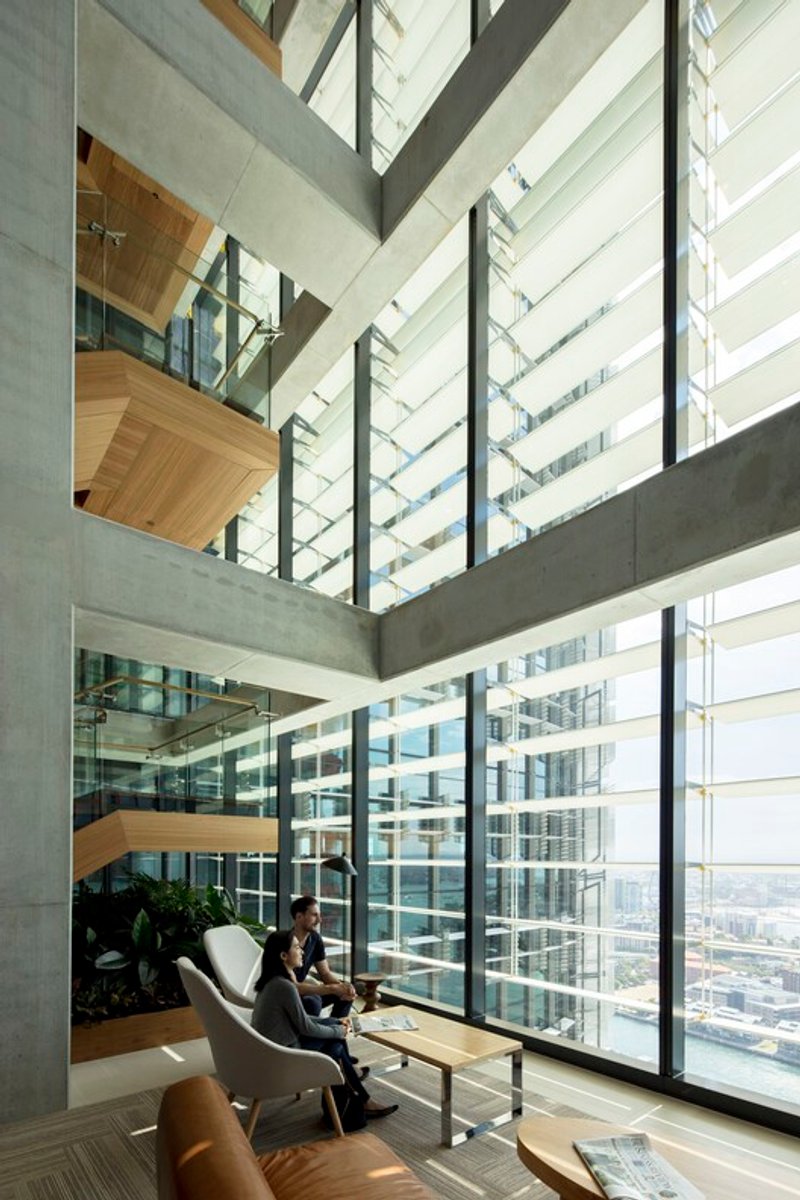
- Platinum WELL Certification across the precinct and International Towers, supporting health and wellbeing
- 6 Star Green Star ratings for all commercial towers—the highest sustainability standard in Australia
- Strong emphasis on walking, cycling, and public transport
Sustainability here is not treated as a technical add-on, but as an organising principle shaping density, mobility, landscape, and public life.
Spaces Between Buildings as Urban Catalyst
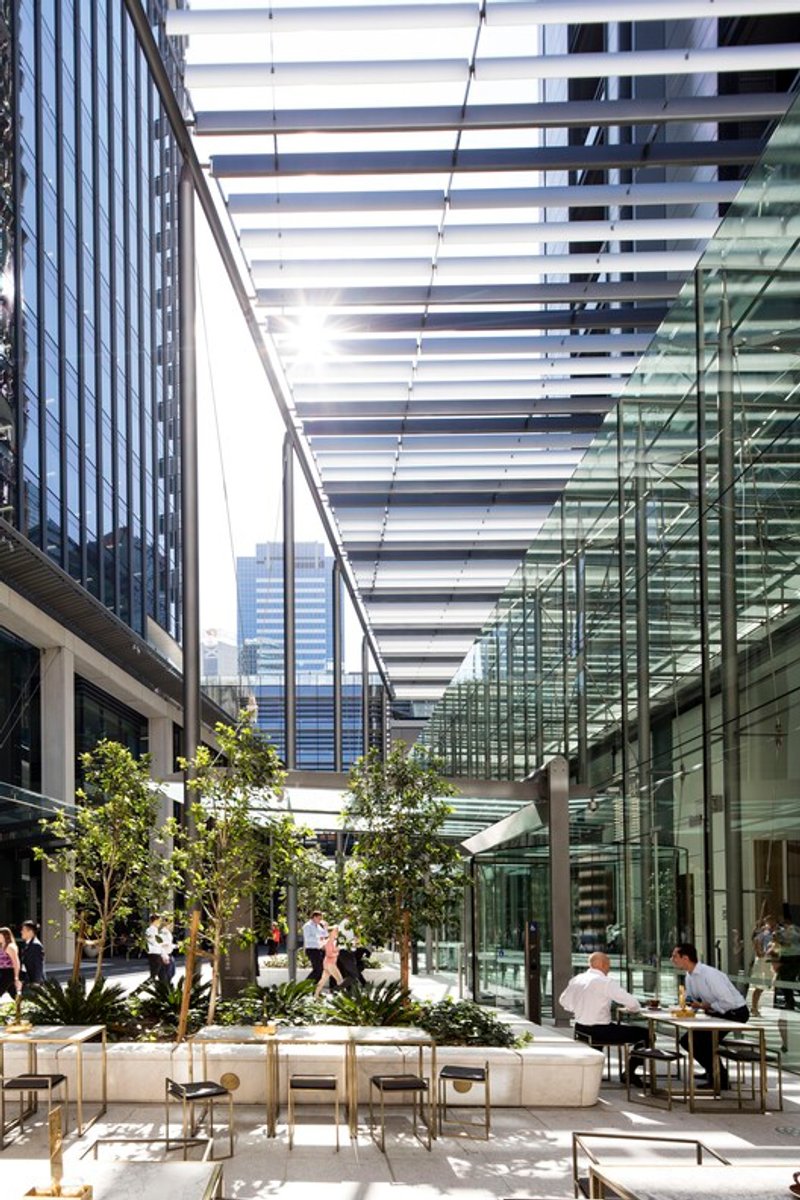
Rather than focusing solely on iconic forms, RSHP emphasised the importance of the spaces between buildings. These interstitial areas: streets, plazas, parks, and waterfront edges, are where Barangaroo truly comes alive.
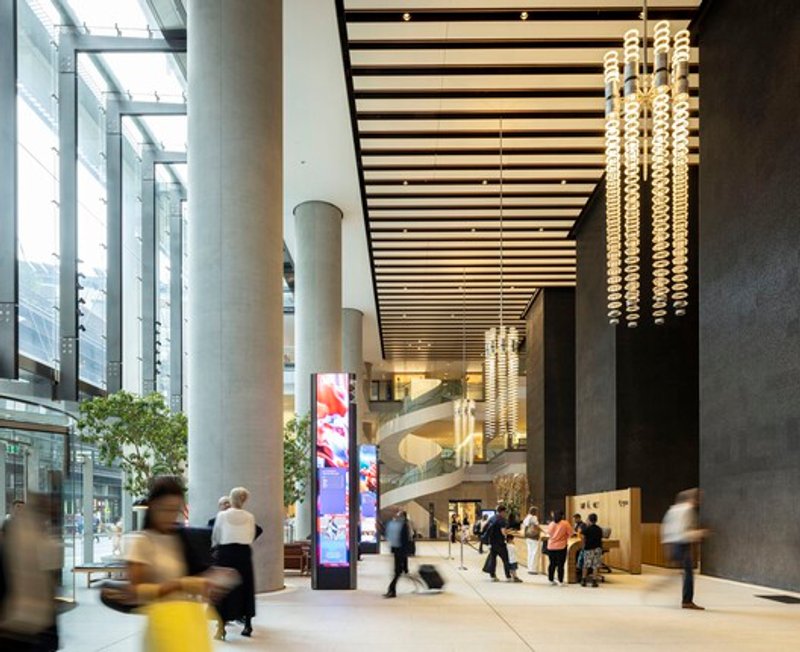
As Andrew Partridge of RSHP notes, it is these spaces that enable people to meet, move, and connect with the water. The masterplan’s success lies in its ability to choreograph everyday life at multiple scales, from large civic gatherings to quiet moments of reflection along the harbour.
A Living, Evolving Part of Sydney
More than a decade after the completion of its first phase, Barangaroo South has become a fully integrated part of Sydney’s daily life. It is used by office workers, residents, tourists, and locals alike, active seven days a week, across seasons and times of day.
For RSHP Australia Managing Director Avtar Lotay, the project demonstrates what can be achieved when design prioritises public space, sustainability, and belonging. Barangaroo is not static; it continues to evolve alongside the people who inhabit it.
Acknowledgement of Country
The project acknowledges Gadi Country and the Gadigal people, along with their kin: the Wangal, Bidjigal, Cabrogal, and Cammeraygal: whose lands, sea, and sky this place belongs to. Barangaroo’s reconnection to the harbour is inseparable from this deeper cultural and historical context.
A New Model for Waterfront Cities
Ultimately, the Barangaroo South Masterplan stands as a global exemplar of waterfront regeneration. It proves that density and public generosity are not opposites, and that large-scale development can deliver lasting civic value when guided by a clear urban vision.
By turning industrial land into a place of openness, movement, and connection, RSHP has helped redefine Sydney’s relationship with its harbour, creating not just a precinct, but a new piece of city.
All the Photographs are works of Ethan Rohloff




Popular Articles
Popular articles from the community



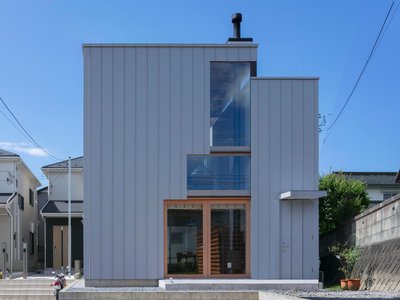
Split House: A Compact Urban Home Blending Privacy, Light, and Flexible Living in Japan
Compact Japanese home featuring DOMA space, flexible café potential, passive lighting, privacy zoning, and sustainable urban living design.

Free Architecture Competitions You Can Enter Right Now
No entry fees, real prizes. Here are the best free architecture competitions open for submissions in 2026.
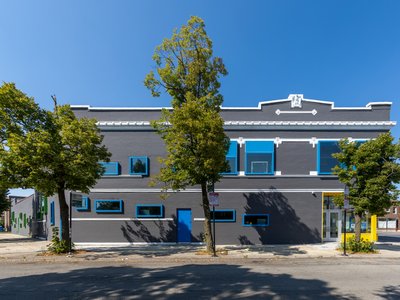
Gads Hill Early Learning Center by JGMA: Adaptive Reuse Shaping Community-Focused Educational Architecture
Adaptive reuse transforms fragmented structure into vibrant early learning center with playful façade, natural light, and community-focused sustainable design.


Similar Reads
You might also enjoy these articles


The Ken Roberts Memorial Delineation Competition (Krob)
As the most senior architectural drawing competition currently in operation anywhere in the world, it draws hundreds of entries each year, awarding the very best submissions in a series of medium-based categories.

Waterfront Redevelopment and Urban Revitalization in Mumbai: Forging a New Dawn for Darukhana
A transformative waterfront redevelopment project reimagining Darukhana’s shipbreaking heritage into an inclusive urban future.

OUT-OF-MAP: A Call for Postcards on Feminist Narratives of Public Space
Rhizoma Design and Research Lab invites artists, designers, architects, researchers, and students to reflect on how feminist perspectives can reshape public space. Selected works will be exhibited in Barcelona, October 2026. Submissions open until 15 April 2026.

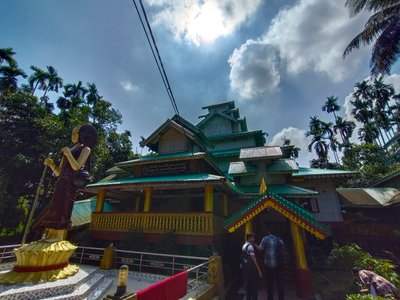
Documentation Work on Buddhist Wooden Temple
Architectural syncretism and cultural hybridity: A comparative study of the Buddhist temples in Chattogram Hill tracks

Explore Architecture Competitions
Discover active competitions in this discipline




The International Standard for Design Portfolios


The Global Benchmark for Architecture Dissertation Awards


The Global Benchmark for Graduation Excellence

Challenge to design locus for the upliftment of human rights
Comments (0)
Please login or sign up to add comments
No comments yet. Be the first to comment!