
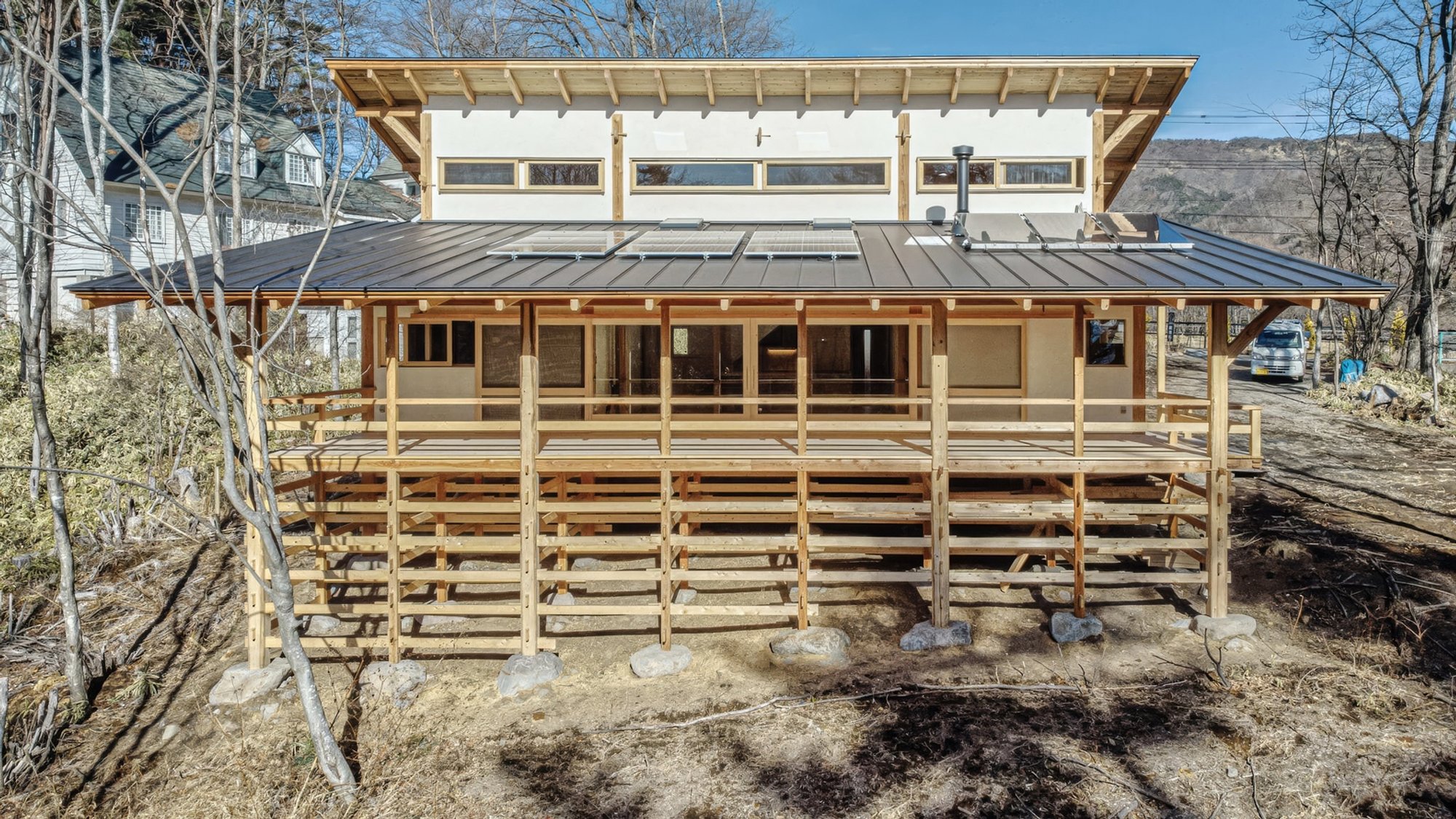
Barefoot Living at the Foot of Mount Yatsugatake: Suashi no Ie House
A regenerative Japanese house in Hokuto blends barefoot living, traditional craftsmanship, natural materials, and sustainable systems in harmony with nature.

Nestled at the foot of Mount Yatsugatake in Hokuto, Japan, Suashi no Ie House by Sobokuya Inc. is a contemporary interpretation of traditional Japanese architecture rooted in ecological responsibility and sensory living. Completed in 2024, this 150-square-meter residence embodies an eco-regenerative philosophy shaped directly by the homeowner’s lifestyle and a deep respect for natural processes.
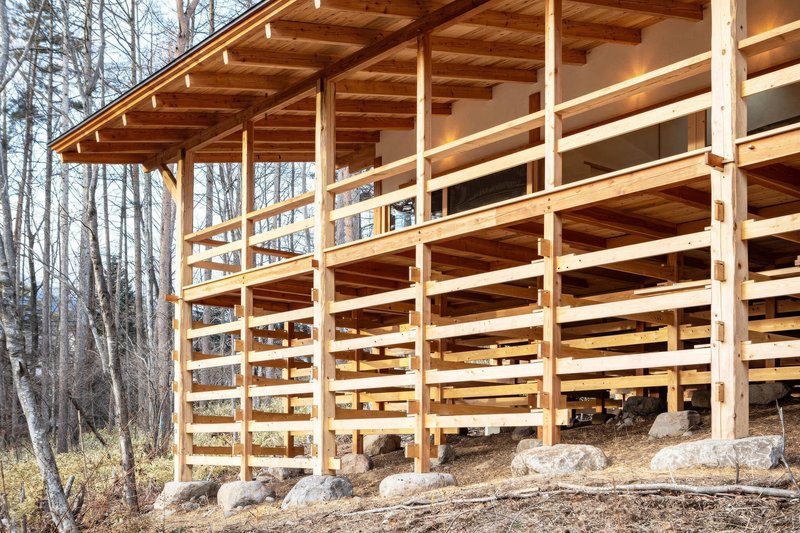
The name Suashi no Ie, meaning “Barefoot House,” reflects a way of life centered on direct physical connection with the earth. This concept guided every architectural decision, particularly the selection of materials that feel natural and comfortable underfoot while aging gracefully over time. The house is designed not merely as a shelter, but as a living system that evolves alongside its inhabitants and surrounding environment.
Drawing inspiration from the historic Kiyomizu-Dera Temple in Kyoto, the house is elevated on a raised foundation to protect against ground moisture and encourage continuous air circulation. Traditional kakezukuri and nuki construction techniques—methods historically used to stabilize buildings on steep or uneven terrain—have been carefully adapted to respond to the site’s natural topography. Large natural stones form the base of the foundation, beneath which charred wooden piles are driven into the soil, contributing to long-term soil health and structural resilience. Each wooden pillar is individually shaped to align with the irregular stones, showcasing the precision and sensitivity of Japanese carpentry craftsmanship.
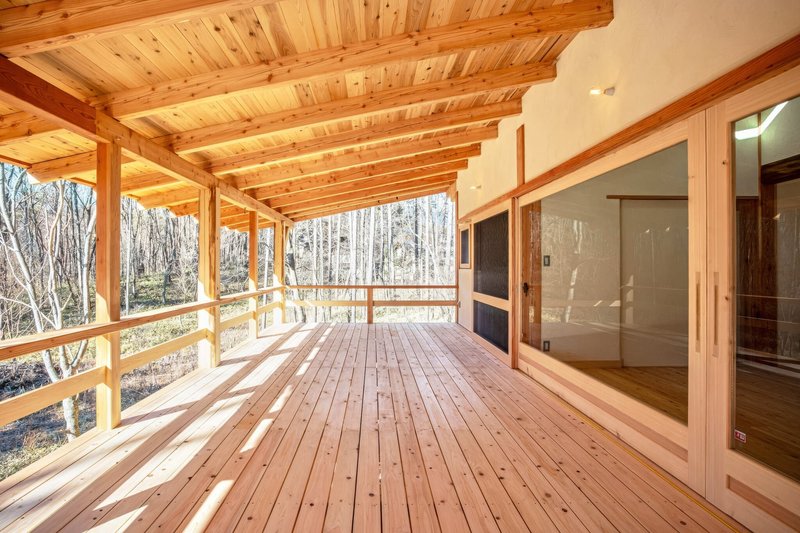
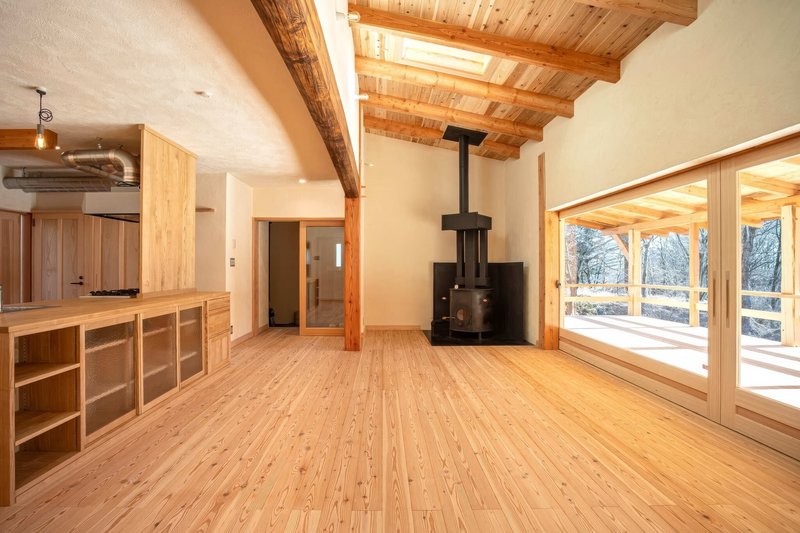
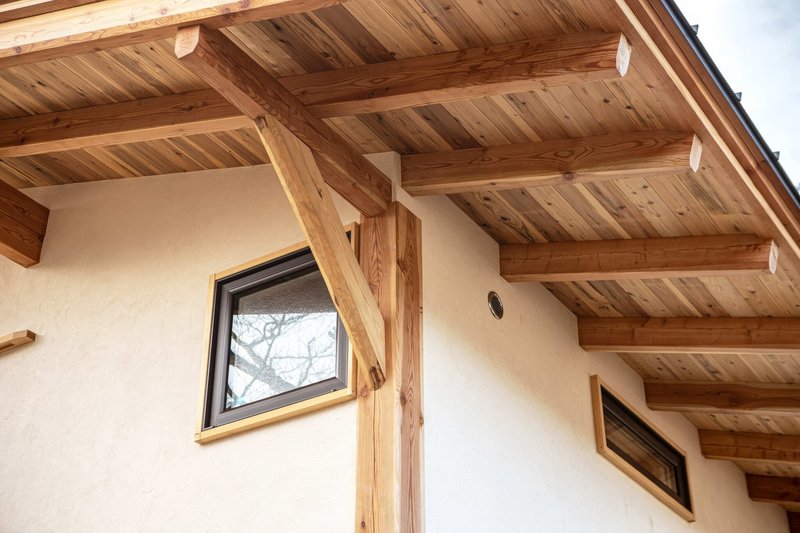
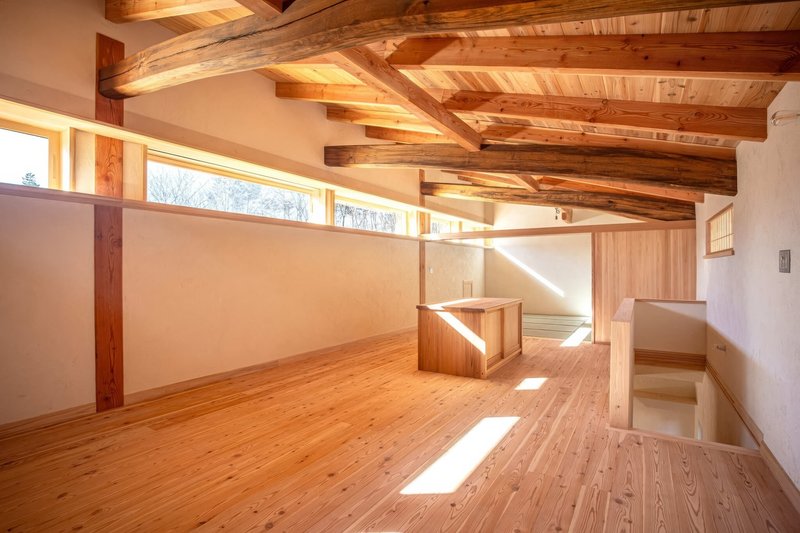
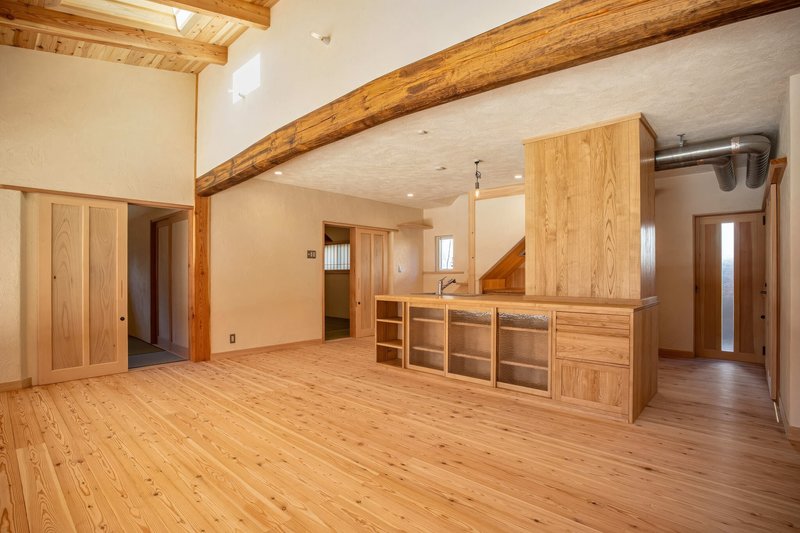
Local Yatsugatake pine is used extensively throughout the structure, particularly for the exposed beams that define the interior spatial rhythm. Sobokuya’s original wooden fittings and joinery details reinforce the project’s commitment to artisanal construction. These elements not only express structural honesty but also enhance the tactile quality of the interior environment.
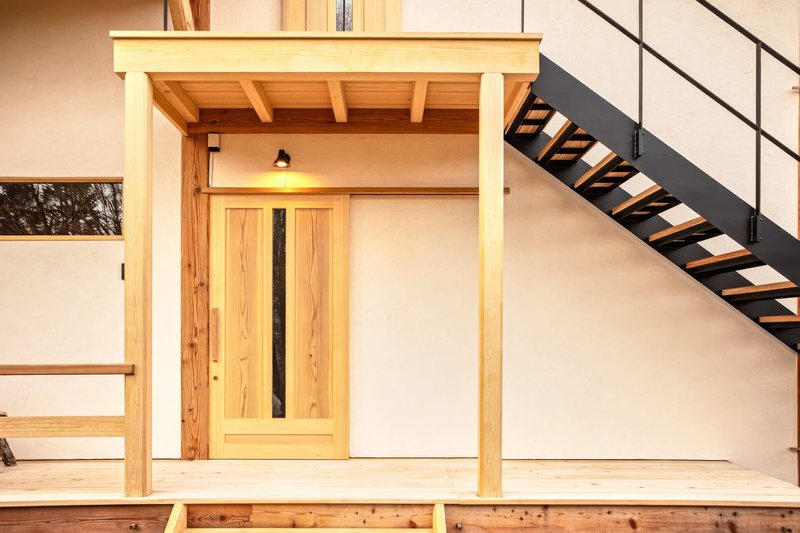
Sustainability is integral to the home’s performance. Solar water heaters, a wood boiler, and a custom-designed wood stove work together to create an efficient, low-impact energy system that supports the home’s regenerative ethos. These systems minimize reliance on external energy sources while maintaining thermal comfort throughout the seasons.
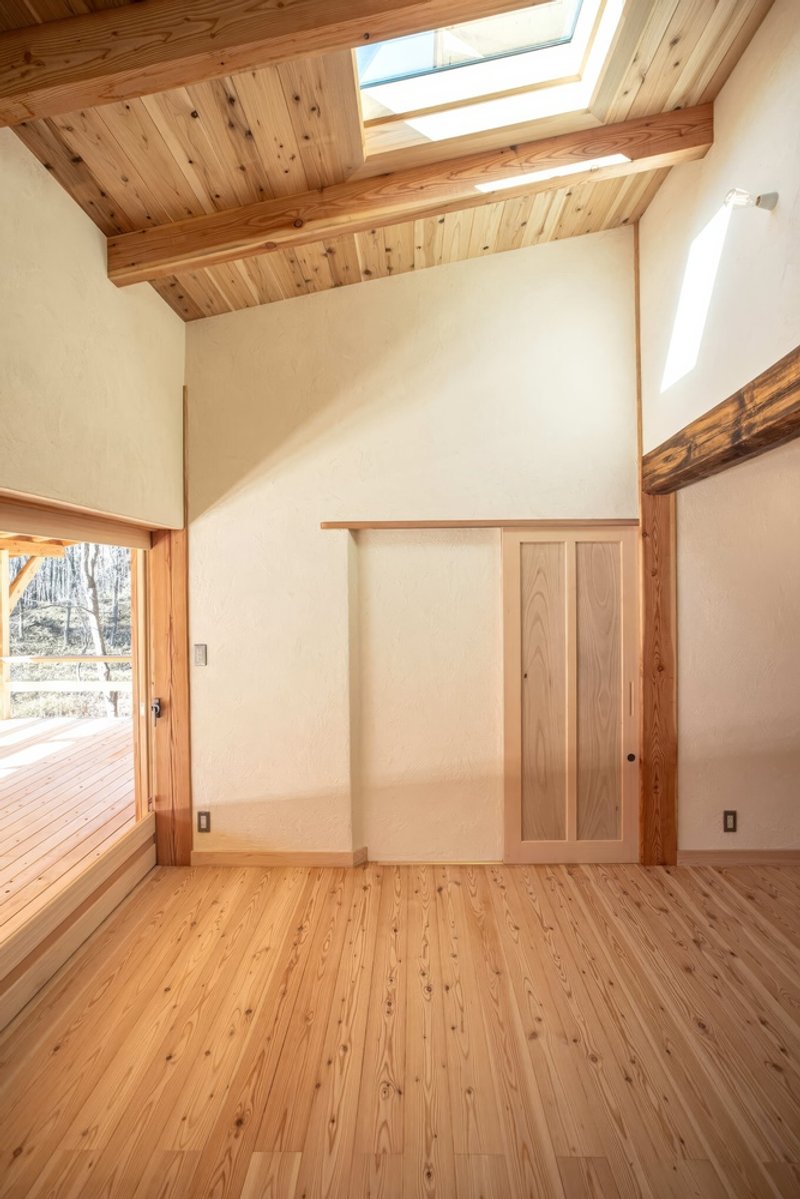
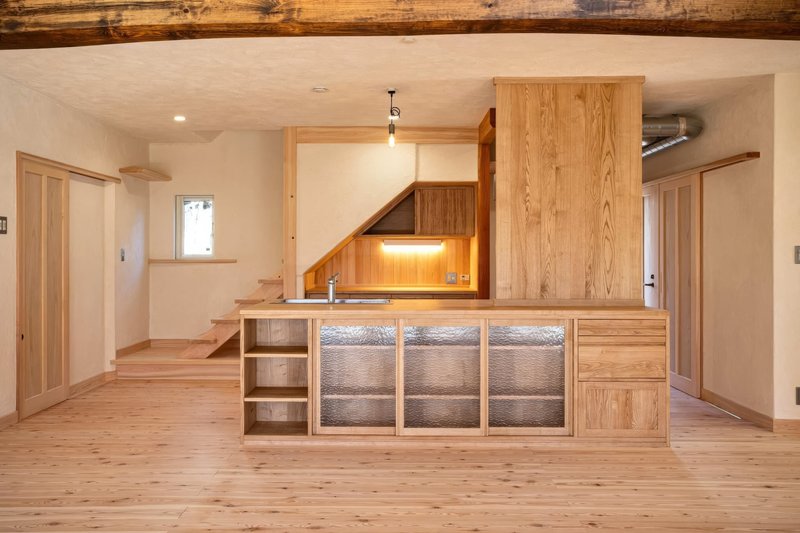
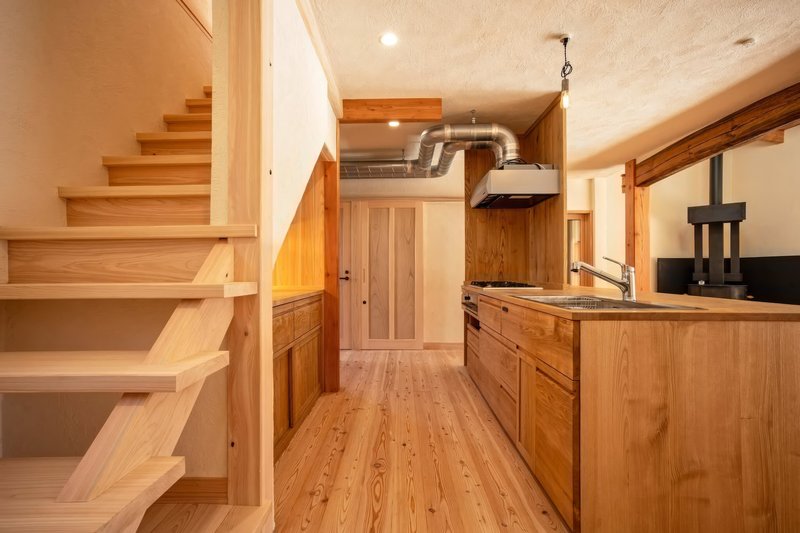
Inside, the spatial layout promotes openness and fluidity. The living room and kitchen merge into a single, airy volume, encouraging shared daily activities and social interaction. Solid chestnut wood cabinetry anchors the kitchen, celebrating natural textures and craftsmanship while allowing the material to develop character over time. Custom-built storage units are seamlessly integrated into the architecture, balancing functional needs with visual clarity.
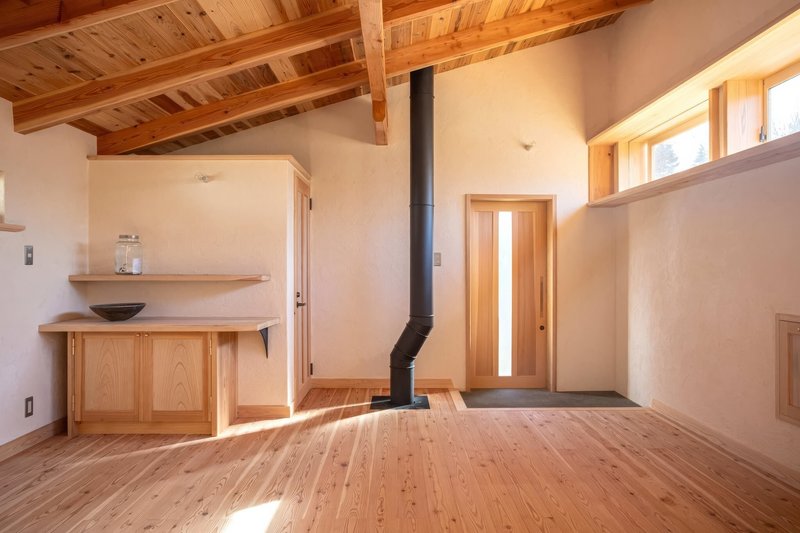
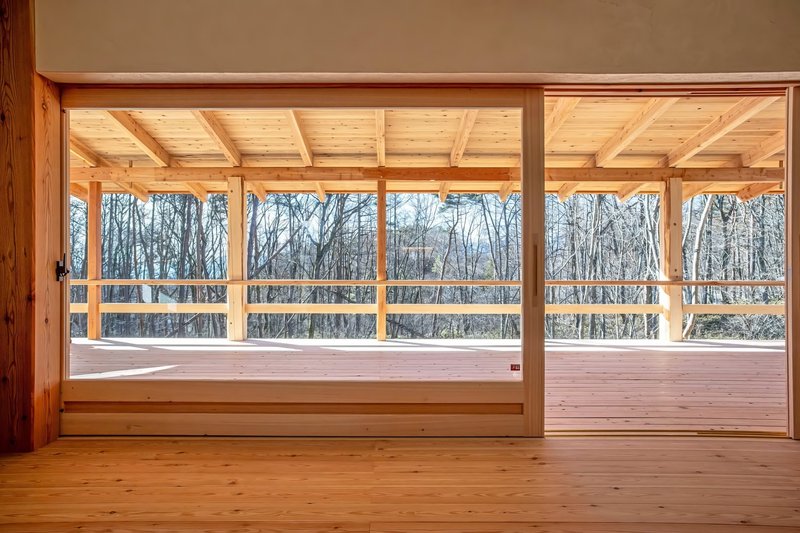
Large wooden sliding doors frame views aligned with the surrounding treetops, creating a sensation of inhabiting a treehouse suspended within the forest landscape. An expansive open deck extends the living space outdoors, reinforcing the relationship between interior and exterior. Skylights and carefully positioned narrow windows introduce soft, natural light deep into the home, enhancing warmth while maintaining privacy and thermal efficiency.
The exterior expression of Suashi no Ie balances tradition and modernity. Lime plaster walls give the house a bright, refined appearance, while exposed wooden ceiling beams reference vernacular Japanese construction. Over time, both materials are intended to weather naturally, reinforcing the project’s philosophy of aging in harmony with its environment.




Popular Articles
Popular articles from the community

Free Architecture Competitions You Can Enter Right Now
No entry fees, real prizes. Here are the best free architecture competitions open for submissions in 2026.



Solar Steam: A Climate-Responsive Architecture That Redefines the Monument
A climate-responsive memorial architecture that transforms heat, decay, and time into a living system reflecting humanity’s ecological impact.
Gads Hill Early Learning Center by JGMA: Adaptive Reuse Shaping Community-Focused Educational Architecture
Adaptive reuse transforms fragmented structure into vibrant early learning center with playful façade, natural light, and community-focused sustainable design.

Similar Reads
You might also enjoy these articles


The Ken Roberts Memorial Delineation Competition (Krob)
As the most senior architectural drawing competition currently in operation anywhere in the world, it draws hundreds of entries each year, awarding the very best submissions in a series of medium-based categories.

Waterfront Redevelopment and Urban Revitalization in Mumbai: Forging a New Dawn for Darukhana
A transformative waterfront redevelopment project reimagining Darukhana’s shipbreaking heritage into an inclusive urban future.

OUT-OF-MAP: A Call for Postcards on Feminist Narratives of Public Space
Rhizoma Design and Research Lab invites artists, designers, architects, researchers, and students to reflect on how feminist perspectives can reshape public space. Selected works will be exhibited in Barcelona, October 2026. Submissions open until 15 April 2026.

Documentation Work on Buddhist Wooden Temple
Architectural syncretism and cultural hybridity: A comparative study of the Buddhist temples in Chattogram Hill tracks


Explore Architecture Competitions
Discover active competitions in this discipline




The International Standard for Design Portfolios


The Global Benchmark for Architecture Dissertation Awards


The Global Benchmark for Graduation Excellence


Challenge to reimagine the Iron Throne
Comments (0)
Please login or sign up to add comments
No comments yet. Be the first to comment!