

Belén Ilarri Studio Restores a Medieval Castle on a Valencian Hilltop with Rammed Earth and Restraint
A Cultural Heritage Site in Spain's Chera-Sot de Chera Natural Park receives careful intervention that reads the ruin rather than rewriting it.


Ruins tend to attract two kinds of architects: those who want to complete what time destroyed and those willing to simply slow the destruction down. At Chera Castle, a fortification perched on a limestone outcrop in Valencia's Chera-Sot de Chera Natural Park, Belén Ilarri Studio has landed closer to the second camp, producing a restoration that privileges legibility over spectacle. Completed in 2025, the project consolidates crumbling towers and curtain walls designated as a Cultural Heritage Site while threading in new circulation and structural support that visitors can identify at a glance.
What makes this intervention worth studying is the disciplined material logic. Rather than defaulting to exposed concrete or corten steel, the studio chose rammed earth as its primary new material, a decision that aligns chromatically with the existing masonry while remaining unmistakable as a contemporary addition. The horizontal formwork lines and embedded beam pockets of the new work offer a clear visual grammar, distinct from the irregular rubble courses of the medieval walls. It is restoration as conversation, not ventriloquism.
Reading the Ruin from the Valley Floor

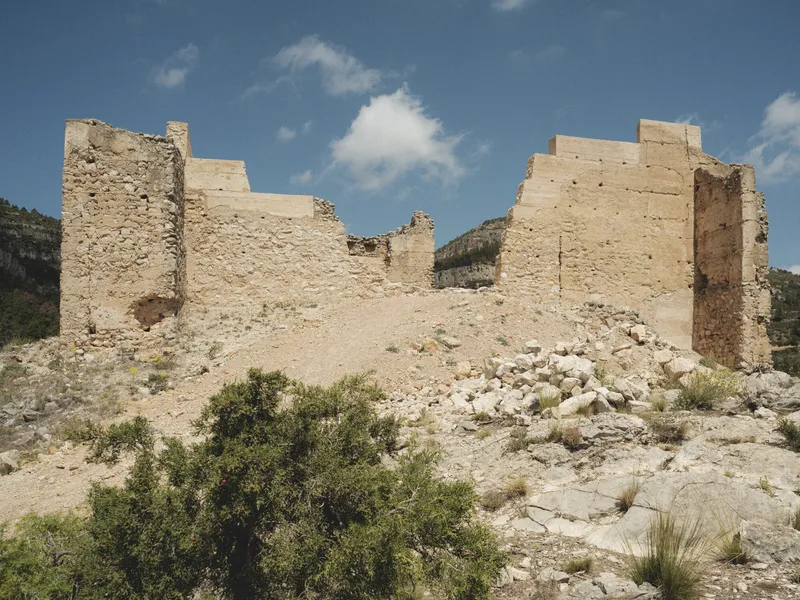
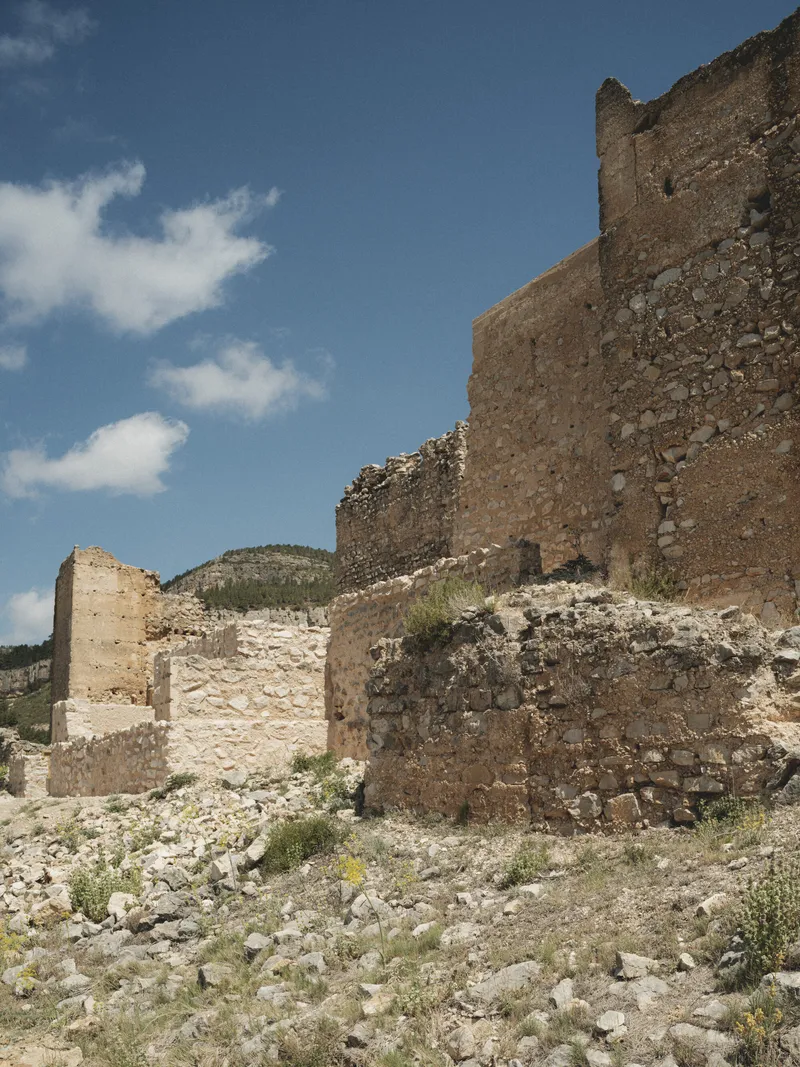
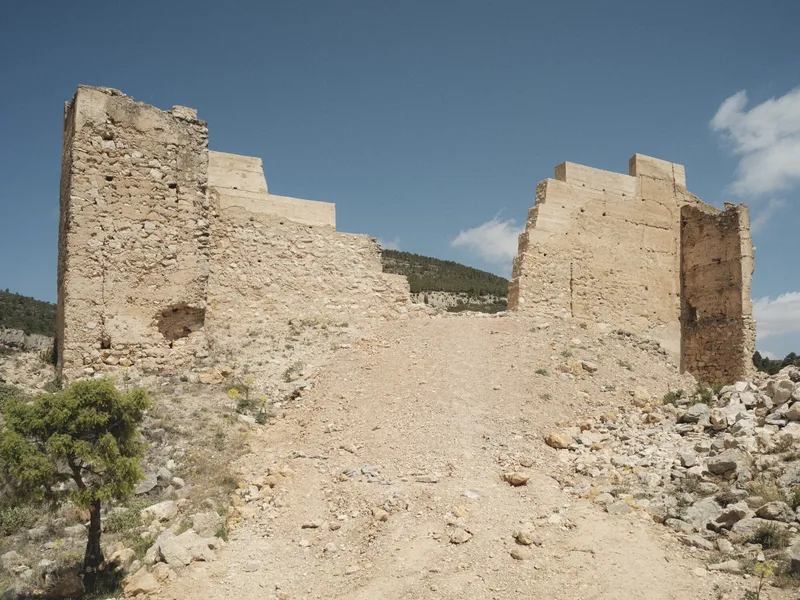
From a distance, Chera Castle registers as a constellation of stone fragments scattered across a bare hillside. Towers at different heights, curtain walls reduced to stumps, rubble fields colonized by wild grasses: the silhouette is more geological than architectural. The studio's approach respects this reading. No element has been rebuilt to full height or given a roofline it lost centuries ago. The castle remains emphatically a ruin, and the landscape remains its dominant frame.
Seen from the valley, the new rammed earth additions are nearly invisible, blending with the ochre and grey tones of exposed limestone. The intervention only declares itself as you climb closer and begin to distinguish the horizontal striations of compacted earth from the haphazard courses of medieval stone. That calibration of distance and discovery is one of the project's quiet achievements.
Old Stone, New Earth
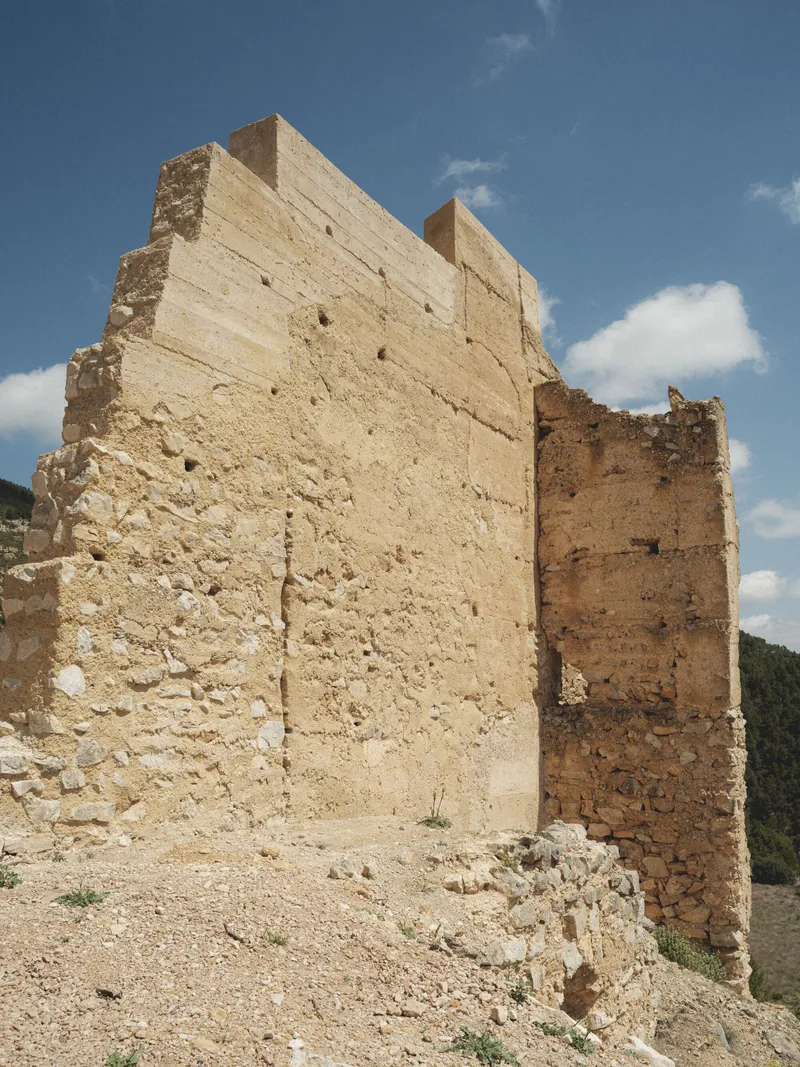
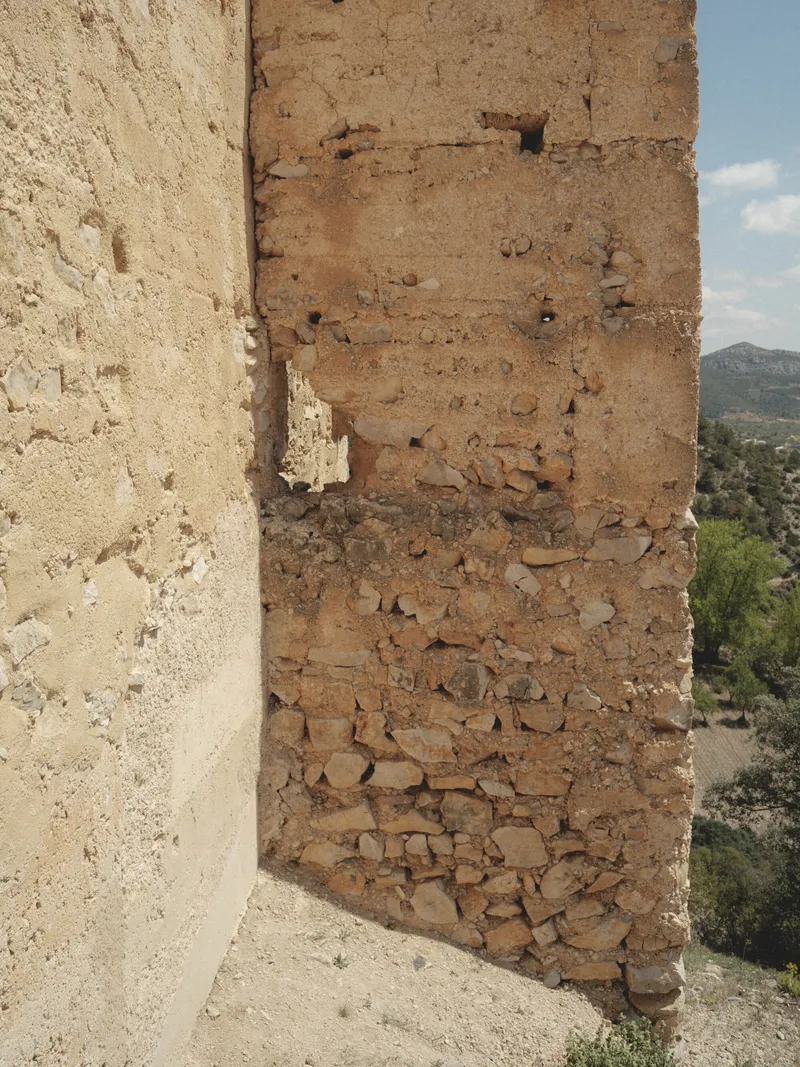

The material strategy deserves close attention. Rammed earth walls step up alongside and sometimes into the medieval masonry, stabilizing collapsing sections without attempting to mimic them. The formwork holes left by timber ties punctuate the surface at regular intervals, a deliberate residue of the construction process that doubles as ornament. These punctuations echo the beam pockets already present in the surviving towers, creating a visual kinship between the 13th century and the 21st.
Up close, the layered sections of rammed earth read almost like a geological cross-section, each lift a slightly different shade depending on moisture content at the time of compaction. Where new earth meets old stone, the joint is frank. No mortar blurs the boundary. The two materials simply press against each other, letting the eye distinguish intent from inheritance.
Circulation as Architecture
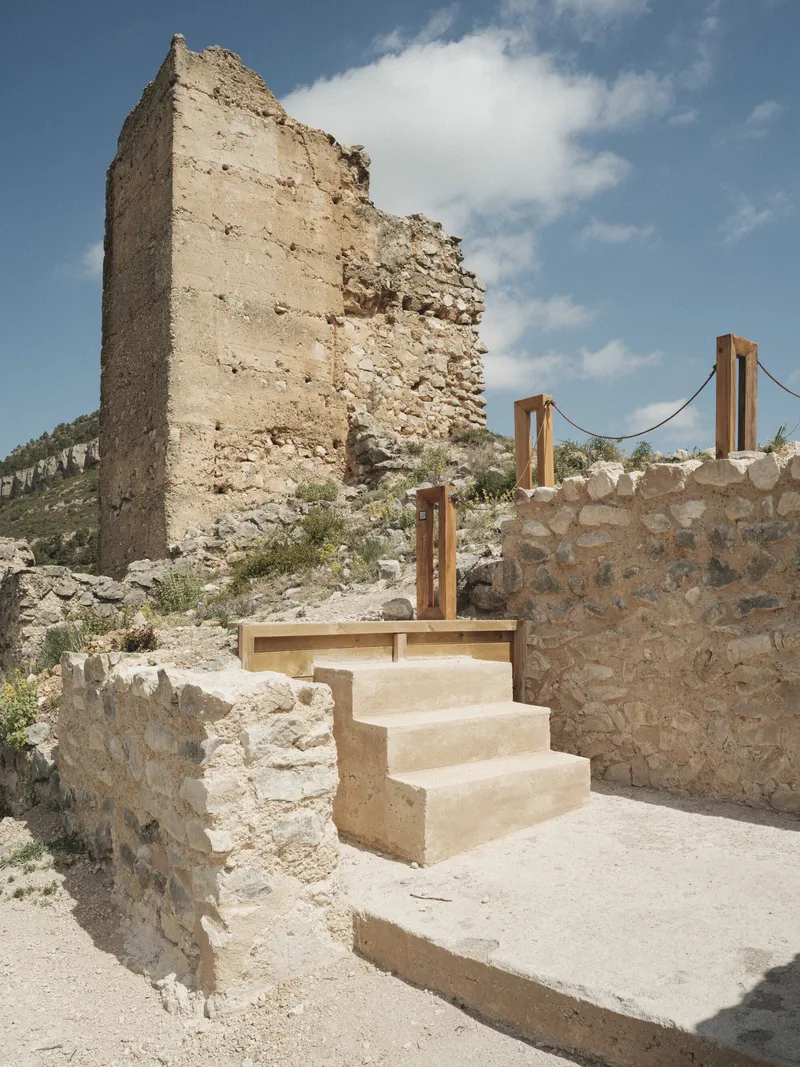

Because the castle is now a public heritage site rather than a military installation, visitor movement is the primary programmatic concern. Belén Ilarri Studio addresses this with a network of new paths and stairs that navigate the site's steep terrain without imposing a single heroic gesture. A limestone staircase inserted between a reconstructed wall and a standing ruin fragment is fitted with a timber handrail, practical and legible. Elsewhere, gravel paths flanked by stepped rammed earth walls guide visitors uphill in a sequence that unfolds the ruin gradually.
The cut stone steps set into excavated earth beside a timber retaining edge are particularly effective. They feel archaeological, as if the act of digging to stabilize the site also produced the means of ascent. Movement and excavation become the same operation.
Towers and Fragments
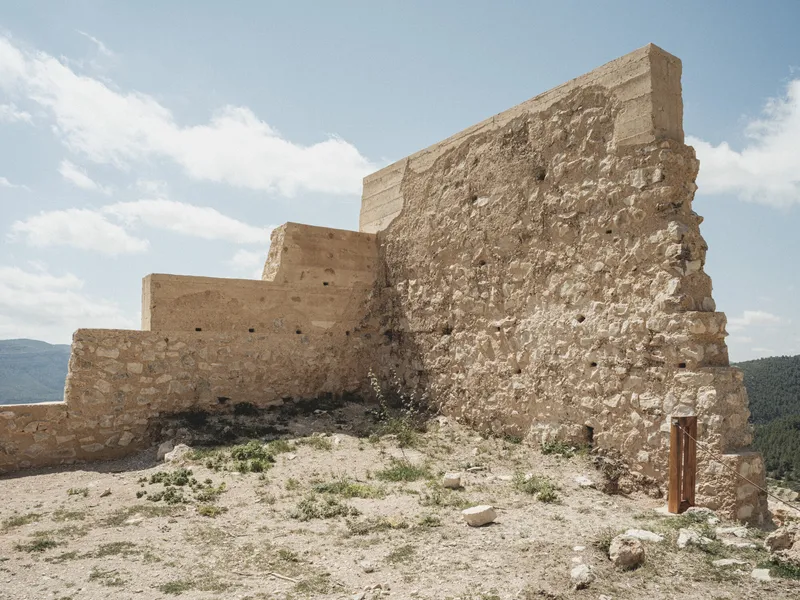
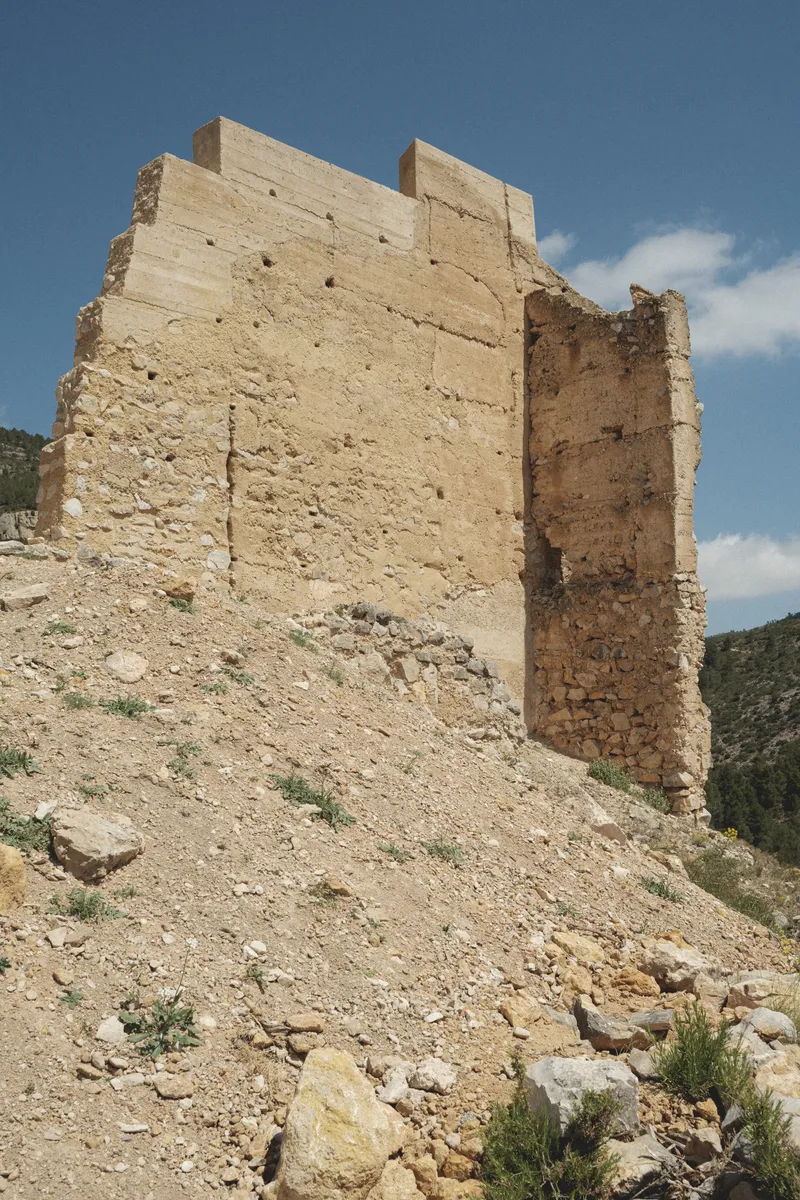
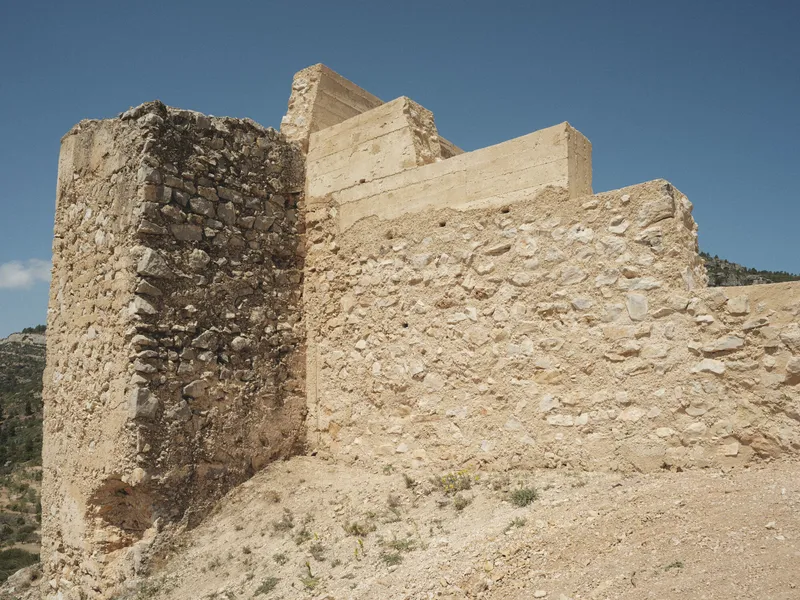
Several towers survive to varying heights, and the studio has treated each one differently according to its structural condition. The cylindrical tower visible from the south retains most of its coursed masonry and required only repointing and stabilization. Other towers, reduced to corner fragments, received new rammed earth infills at their bases, preventing further collapse while leaving the jagged upper profiles untouched.
The reconstructed tower corner stepping down the slope is one of the most striking moments. Its layered masonry bands, mixing salvaged and new stone, create a stratigraphy you can read like a timeline. Beam pockets on the interior face mark former floor levels, giving visitors a tangible sense of the building's lost volume without actually reconstructing it.
Interior Voids and Framed Landscape

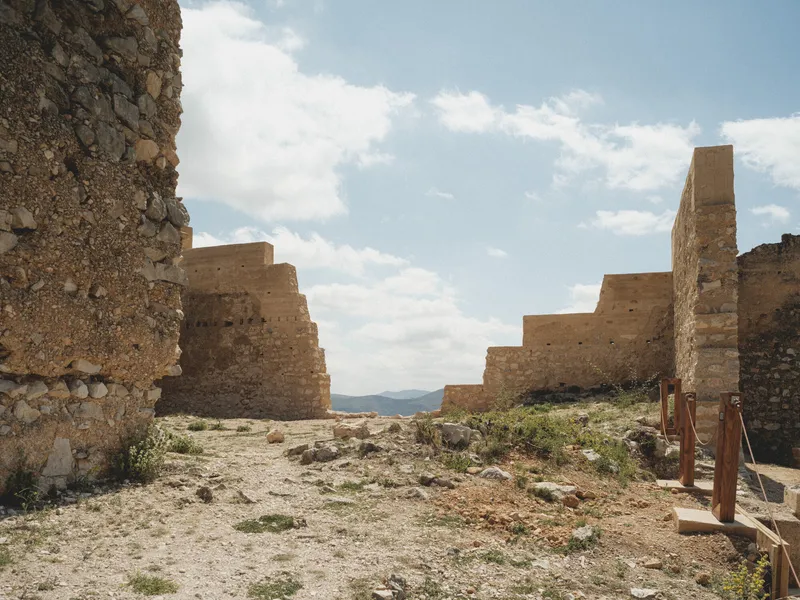
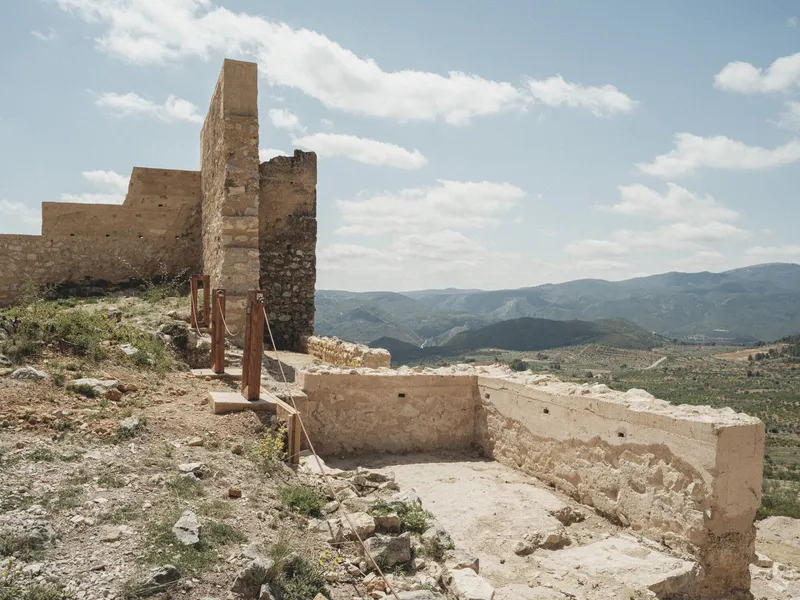
With roofs and floors long gone, the castle's interior spaces are now open courtyards defined by wall fragments. Belén Ilarri Studio has resisted the temptation to enclose any of them. The result is a series of outdoor rooms whose primary content is framed sky and distant mountain ranges. Standing inside the main courtyard, you look through deteriorating masonry openings toward rolling valleys, a sequence of views that the original builders surely calculated for defensive surveillance but that now functions as pure landscape theatre.
Wooden safety barriers at parapet edges serve a pragmatic role without pretending to be invisible. The timber is left unfinished, and the detailing is minimal: posts, a single rail, rope where needed. The interventions acknowledge danger without aestheticizing it.
Thresholds and Detail
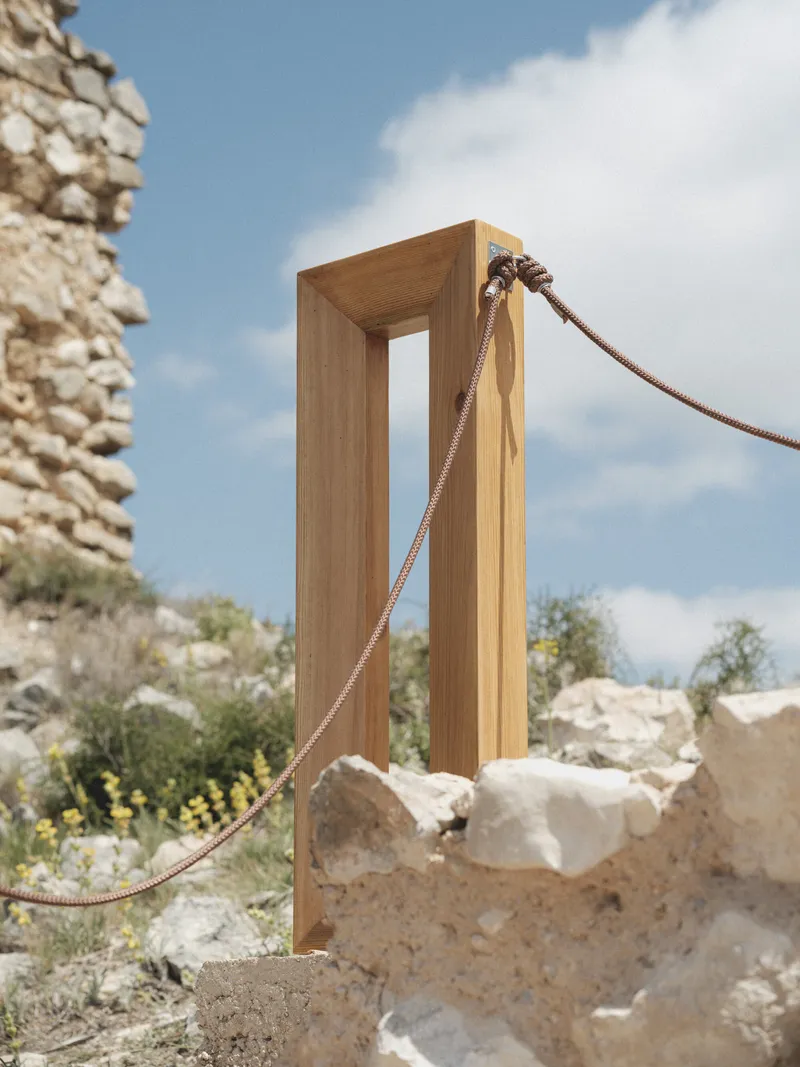
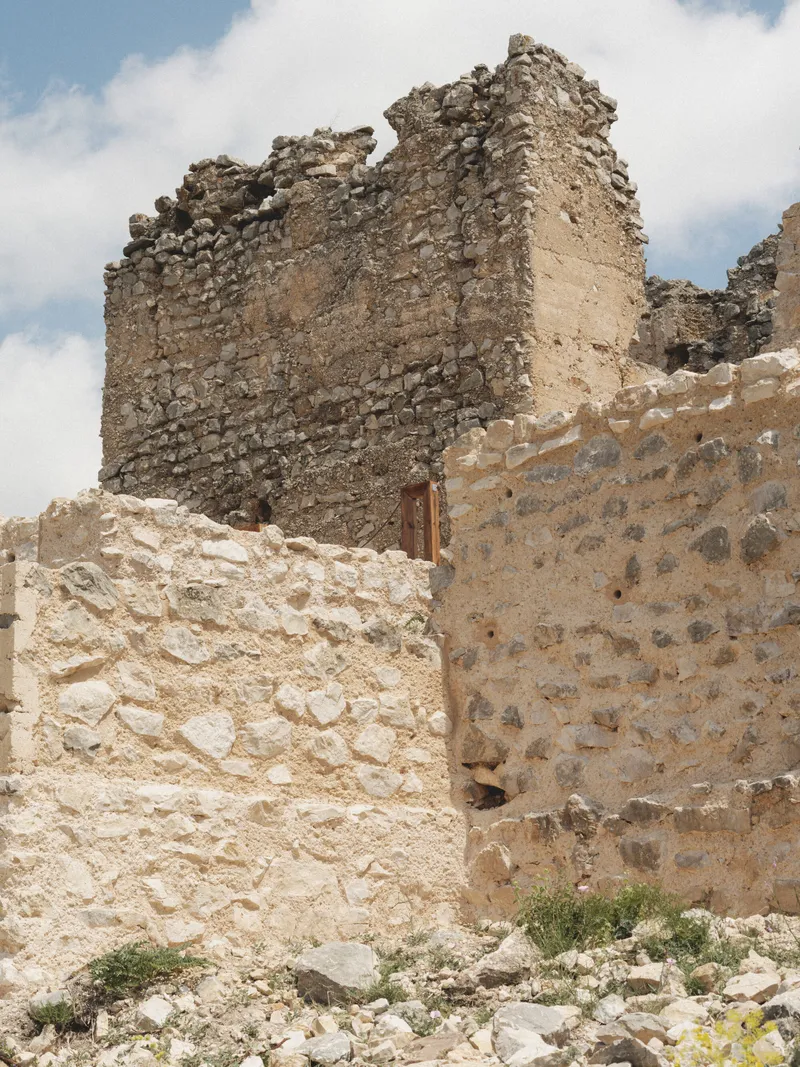
Doorways and openings receive careful attention. A small wooden door set into a crumbling wall marks a transition between stabilized and unstabilized zones, its modest scale contrasting with the massive masonry around it. Elsewhere, a timber portal frame with a rope barrier signals an area accessible only to researchers, a simple device that communicates restriction without permanent closure.
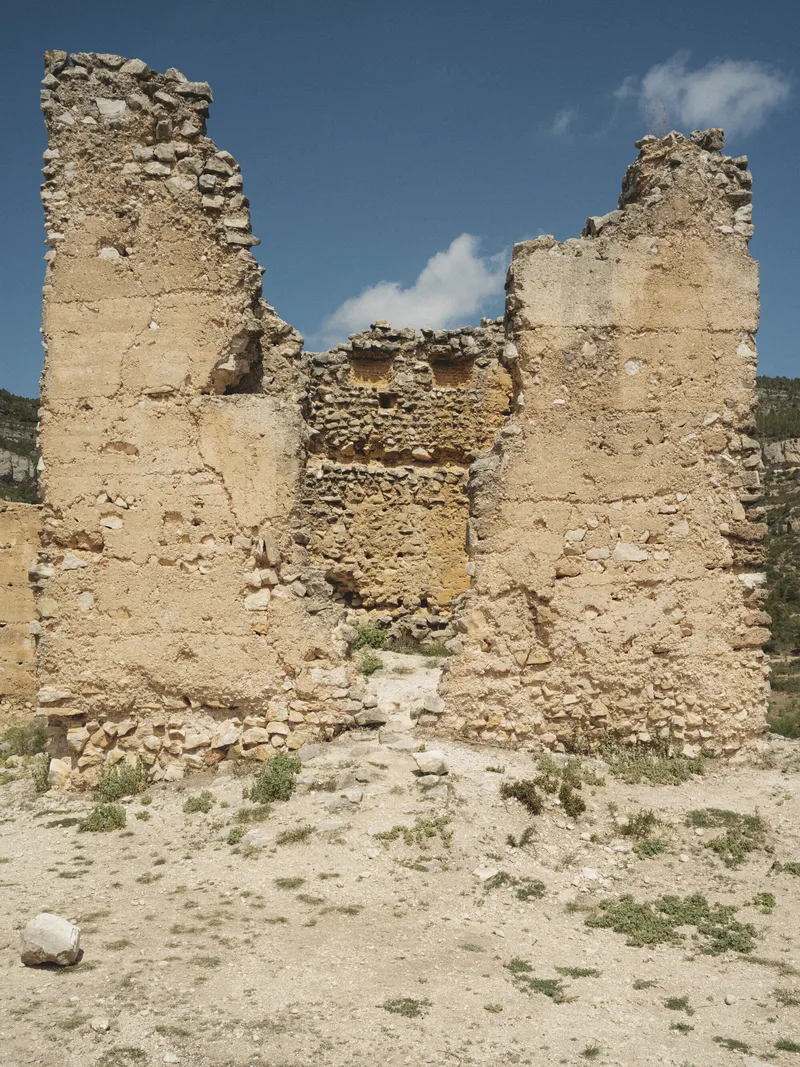
The ruined facade showing exposed rubble core between two standing walls is left deliberately unrepaired. It operates as a didactic section cut, teaching visitors how medieval walls were built: dressed stone faces packed around a loose rubble and lime mortar interior. Preservation here is not about making things look whole but about making construction processes visible.
Plans and Drawings
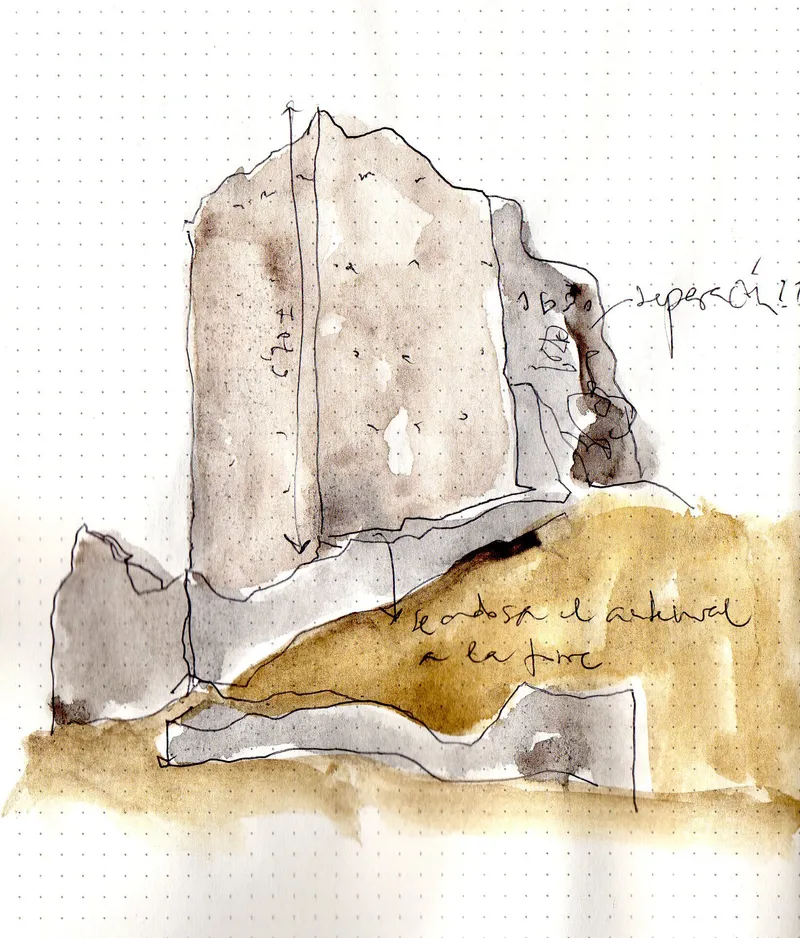
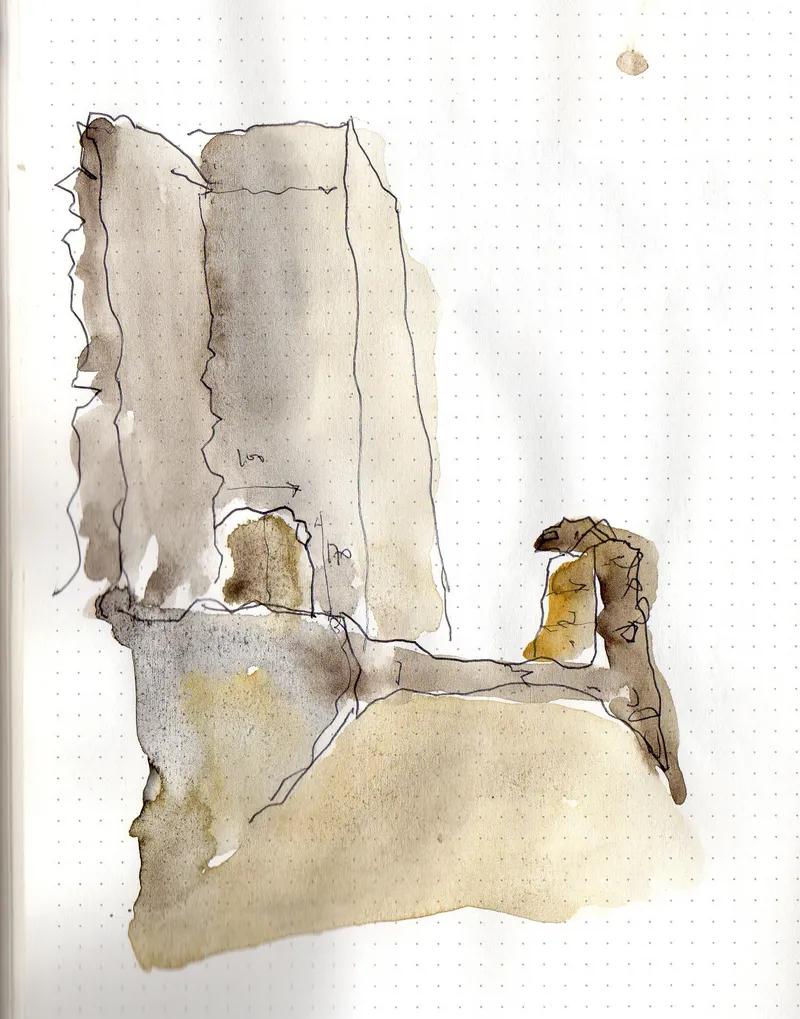
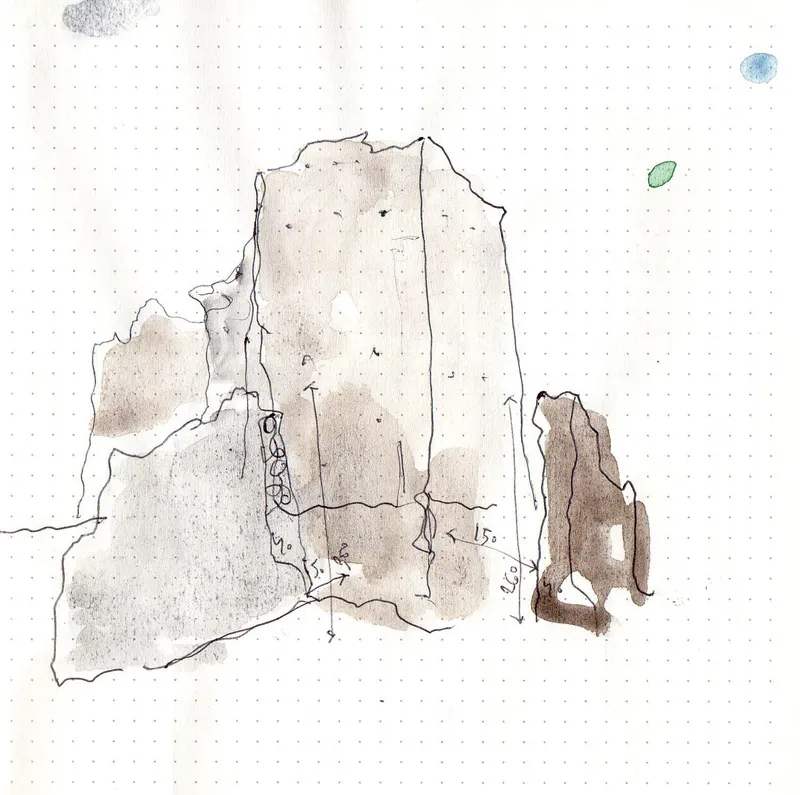
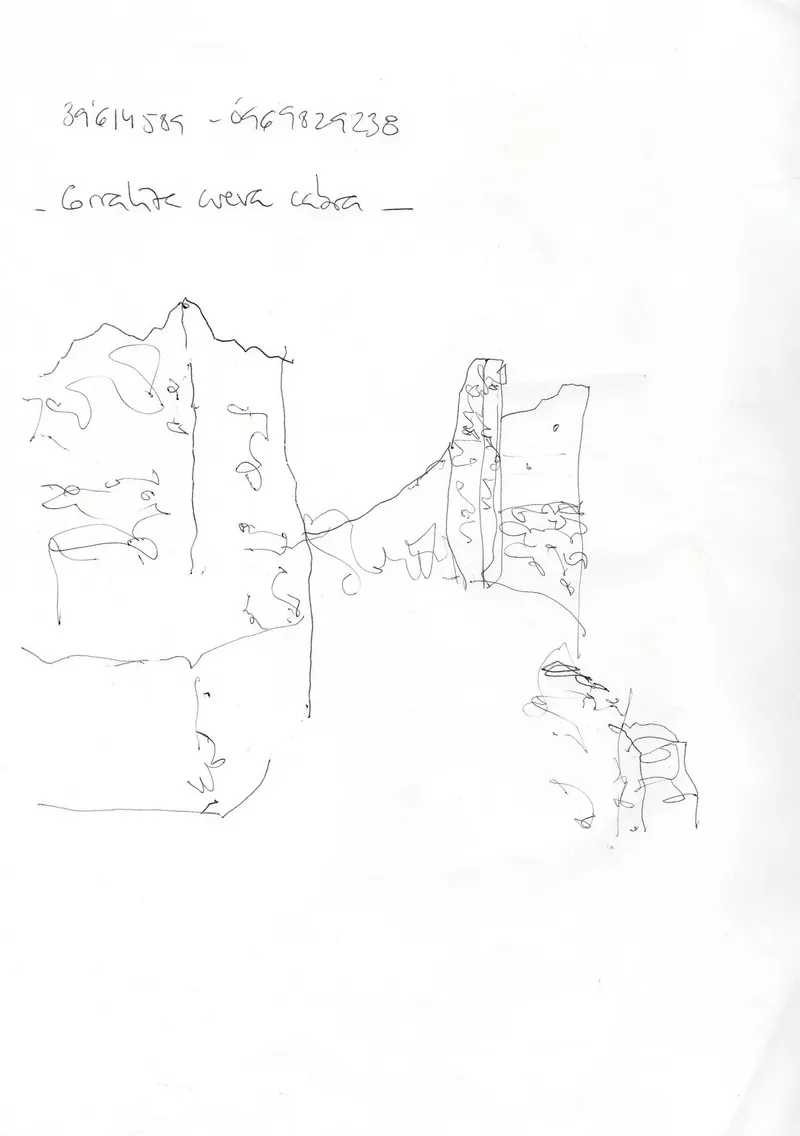
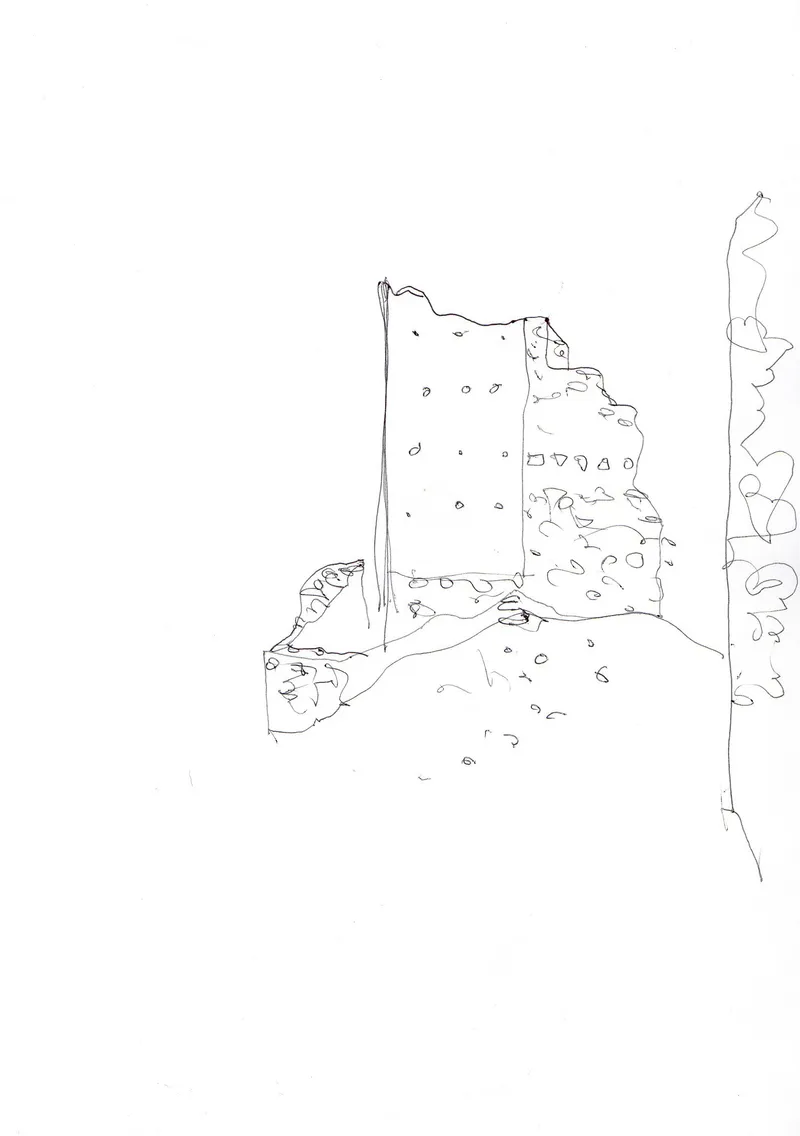
The studio's watercolor sketches are worth pausing on. They combine dimensional annotations with atmospheric washes, documenting each tower fragment and wall section not as abstract geometry but as a material fact shaped by erosion, vegetation, and gravity. The line drawings complement these with cleaner volumetric analysis, mapping how individual ruins relate to one another across the hillside. Together they suggest a design process rooted in observation rather than imposition, where the first act of restoration was simply to draw what remained with accuracy and care.
Why This Project Matters
Heritage restoration in Spain often oscillates between heavy-handed reconstruction and museological paralysis. Chera Castle offers a third path. By choosing rammed earth, a material that shares DNA with the original construction yet announces its newness through formal regularity, the project demonstrates that contemporary intervention can be both honest and sympathetic. No visitor will confuse old for new, yet neither material feels foreign to the site.
More broadly, the project is a reminder that ruins are not problems to solve. They are spatial conditions with their own authority. Belén Ilarri Studio has shown what it looks like to work alongside that authority: stabilizing where collapse threatens, guiding circulation where visitors need it, and stepping back everywhere else. In a discipline increasingly drawn to dramatic contrast between old and new, this kind of quiet intelligence deserves attention.
Chera Castle, Chera, Spain. Completed 2025. Architecture by Belén Ilarri Studio. Photography by David Zarzoso.
About the Studio
Share Your Own Work on uni.xyz
If projects like this are the kind of work you want to make, uni.xyz is a place to publish your own, find collaborators, and enter design competitions.


Popular Articles
Popular articles from the community


Architekt Andreas Gruber Scatters 23 Dark Timber Chalets Across a South Tyrolean Forest Edge
In Molini di Tures, Amonti Chalets breaks a resort into a hamlet of gabled timber houses, with parking, storage and services pushed into the slope.

Cube Design Draws an Ecological Corridor Between Two Shenzhen Hills with the Nankai Building
Beside Shenzhen's container docks, the Nankai Building pairs stacked balconies with a climbing green screen to connect two hillsides across its height.

U.GA Architects Wraps an Oval Rooftop Pool in Curved Board-Formed Concrete on Busan's Jeollidan-gil
In Busan's Jeonpo-dong, a 454 m² mixed-use block stacks a neighborhood facility, guest rooms and an oval rooftop pool inside spiraling concrete walls.

GROUP A Strips a 1969 Rotterdam Harbor Headquarters to Its Frame and Wraps It in Timber Louvers
In Rotterdam's M4H harbor district, Ferro Offices reuses a 1969 frame, adds one timber storey and reaches BREEAM-NL Outstanding.

Similar Reads
You might also enjoy these articles


LAVA Architecten Gives Vocational Education a Sawtooth-Roofed Face on a Mechelen School Campus
In Mechelen, Belgium, a 2,053 m² STEM school on a 6×6 m grid turns workshops and classrooms into rooms that can be rearranged as teaching changes.

KEMA Studio Turns a Derelict Marvila Attic into a 60 m² Lighthouse Apartment Above Lisbon
In Lisbon's Marvila district, a rebuilt roof, four skylights and two plywood volumes turn an unlivable attic into a bright home facing the Tagus.

Pixel Gardens: One Repeated Module Stacked Into a Terraced Social Housing Tower for Famagusta
Salem Bader's shortlisted housing tower builds a vertical neighbourhood from one repeated module, offsetting units to carve terraces, light and air.

Bao Huynh Watercolor Atelier: A Serene Art Retreat in Hội An
Bao Huynh Watercolor Atelier in Hội An blends multifunctional art spaces, sustainable design, local materials, and family-friendly living in a serene environment.


Comments (0)
Please login or sign up to add comments
No comments yet. Be the first to comment!