
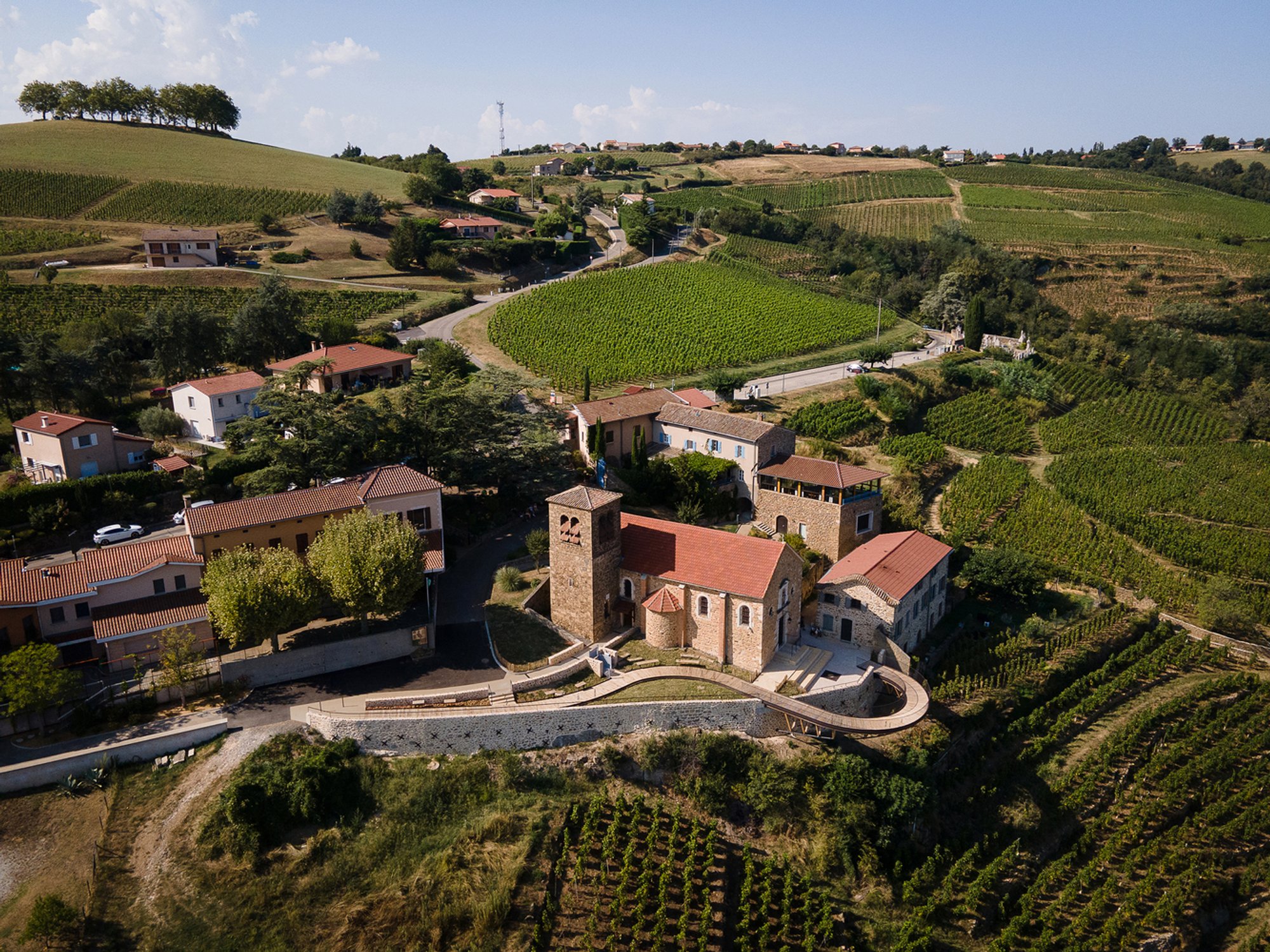
Belvedere Wine-Growing Hillsides of Condrieu by Collection Architectes: A Landscape and Architectural Masterpiece
Belvedere Wine-Growing Hillsides of Condrieu offers an immersive promenade, blending contemporary architecture, vineyards, panoramic Rhône Valley views, and cultural heritage seamlessly.

Nestled at the gateway to the Pilat Regional Natural Park, the village of Tupin-et-Semons in France is renowned for its terraced vineyards, producing prestigious appellations such as Condrieu and Côte-Rôtie. Overlooking the Rhône Valley, the rolling market garden plains, and the distant Alps, the site offers a breathtaking panoramic experience. Recognizing the village’s unique geographical and cultural value, Vienne Condrieu Agglomération commissioned its first belvedere, forming the foundation of a future network aimed at boosting regional tourism.
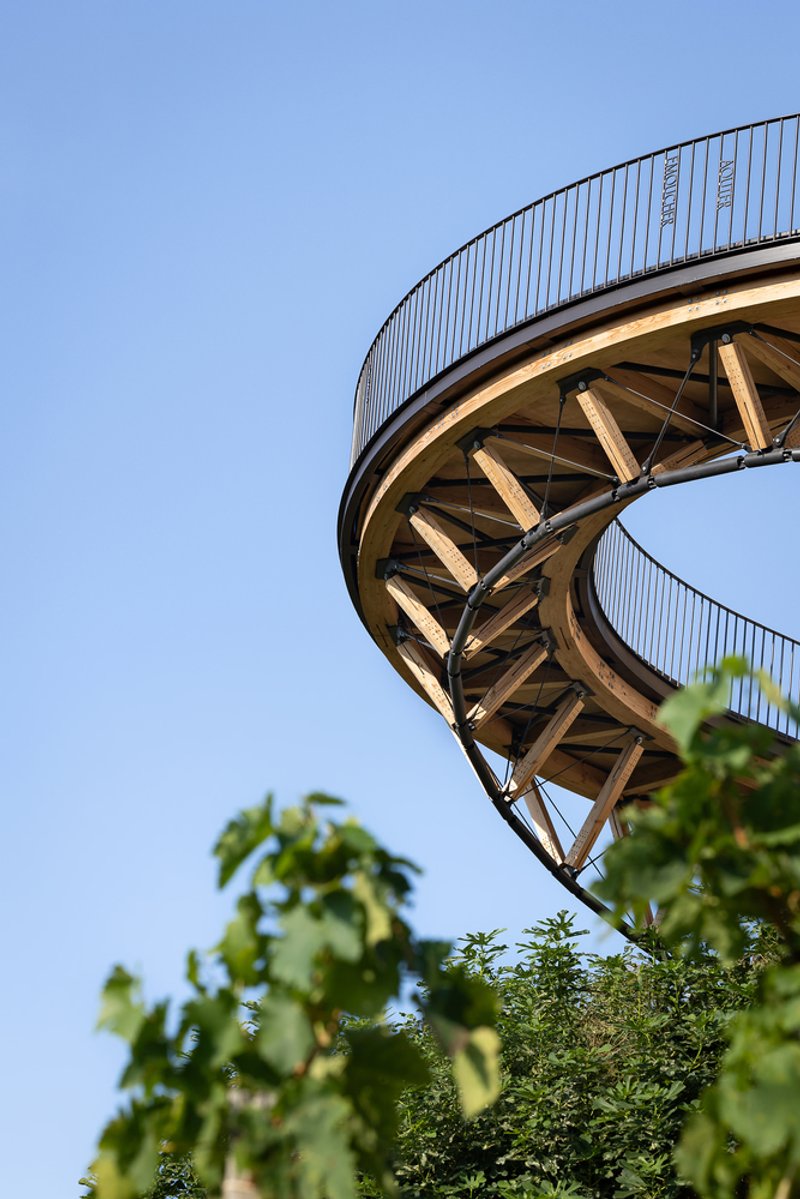
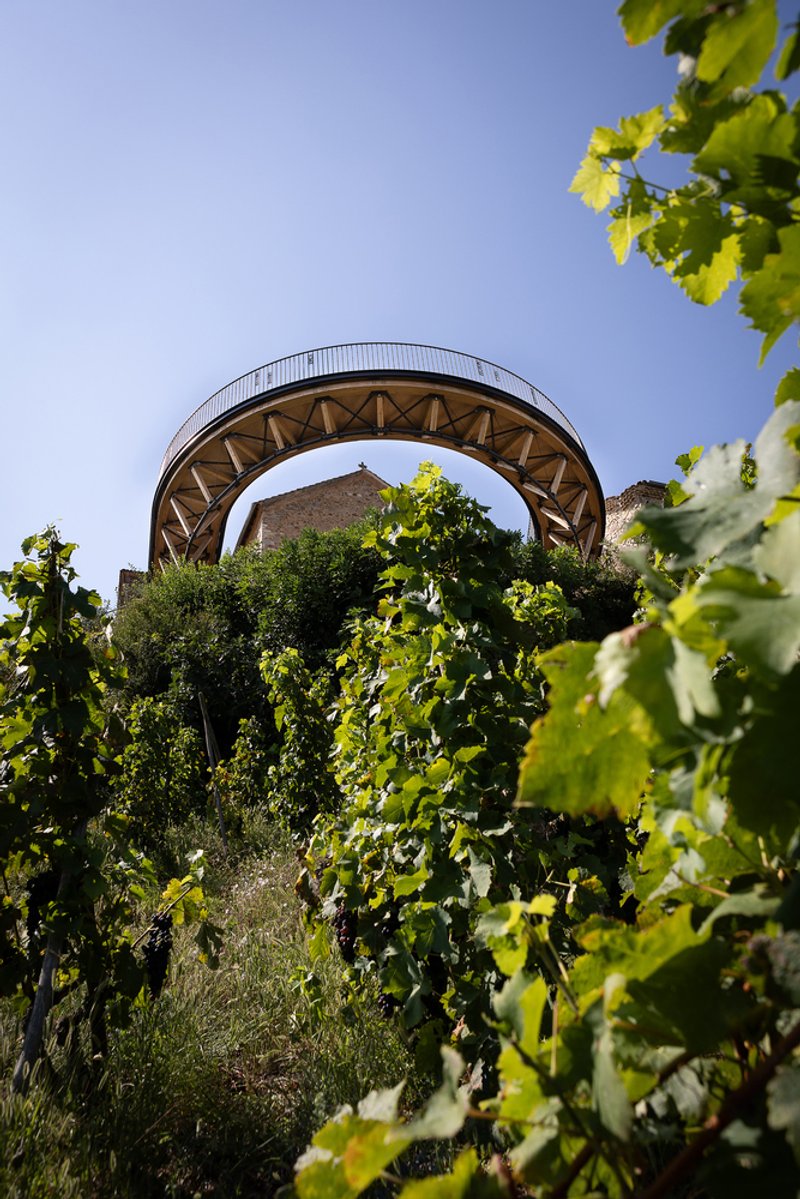
Designed by Collection Architectes, the Belvedere Wine-Growing Hillsides of Condrieu embodies the vision of creating an iconic cultural and tourism destination, blending seamlessly with the landscape while offering a spectacular experiential journey.
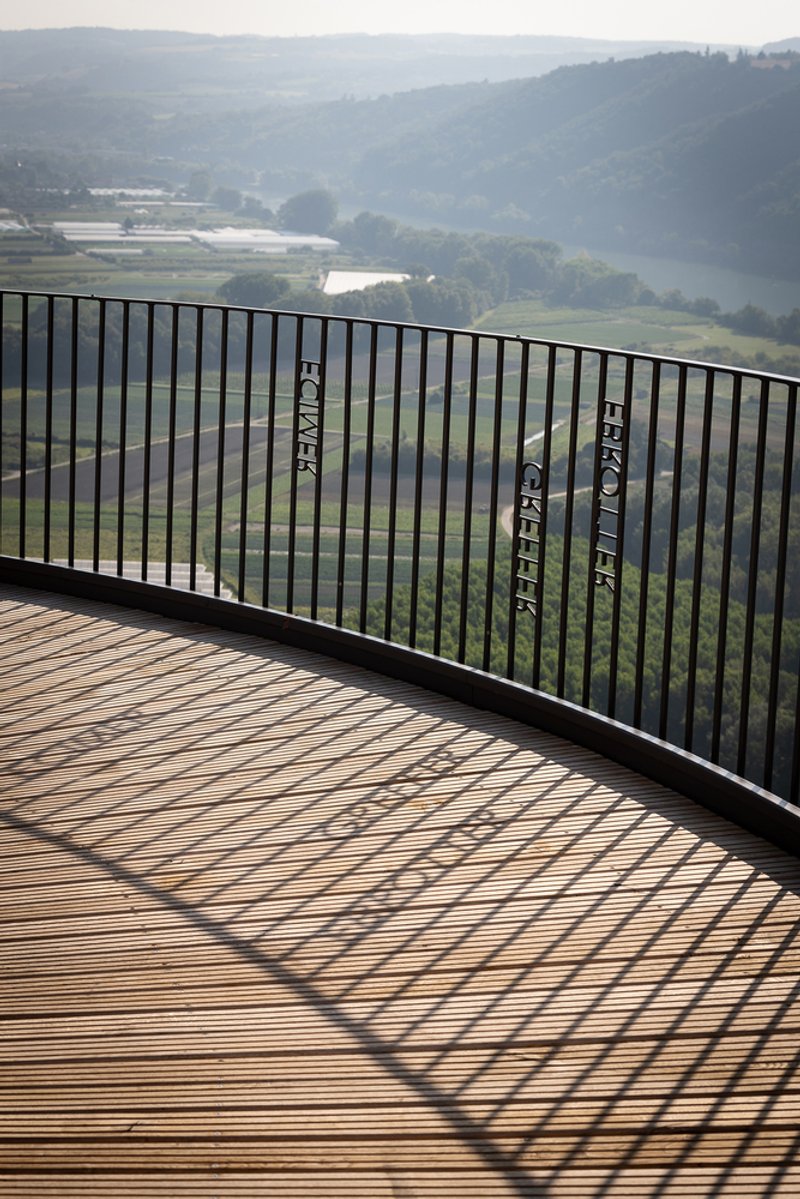
Integrating Heritage, Landscape, and Architecture
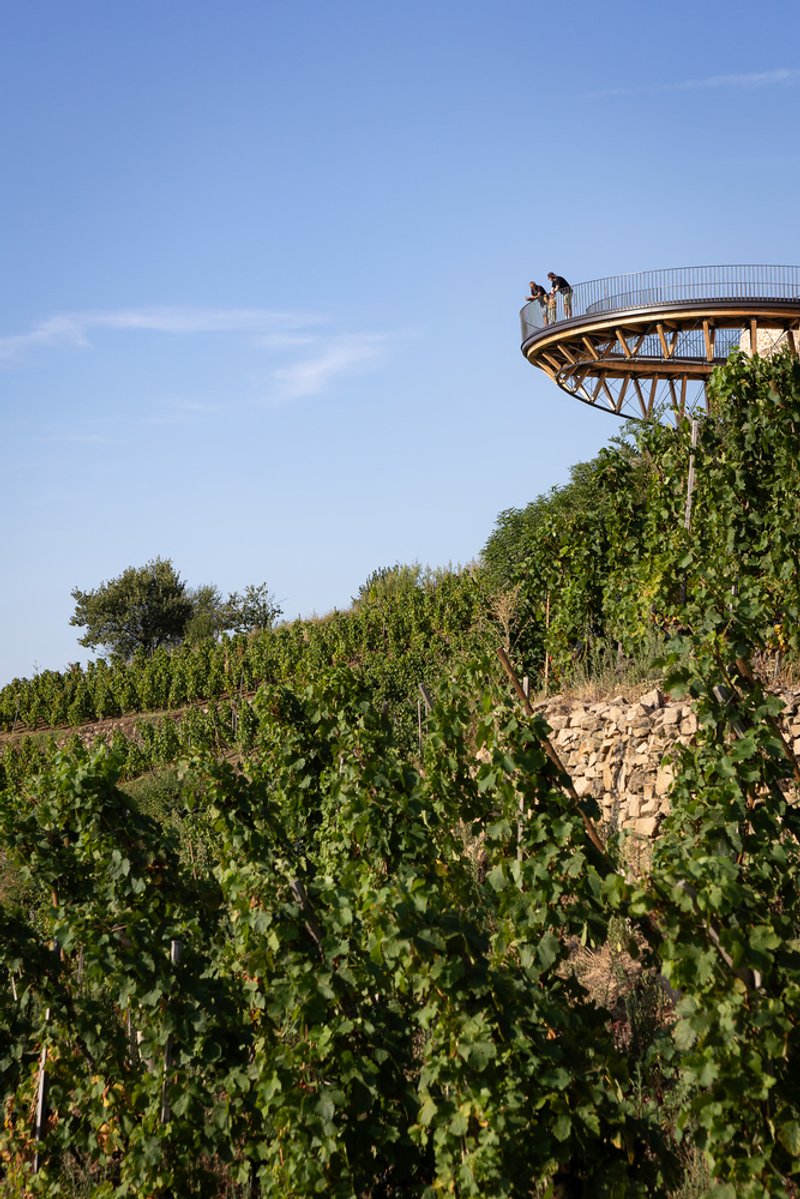
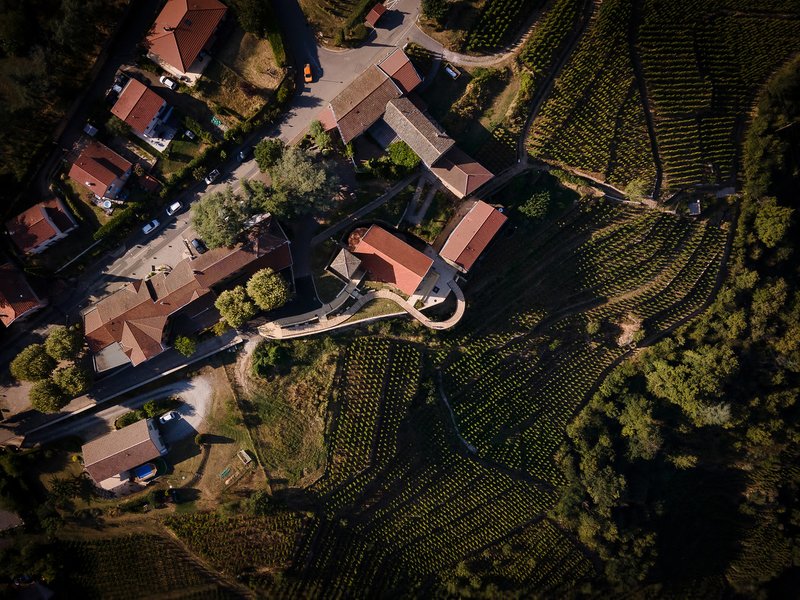
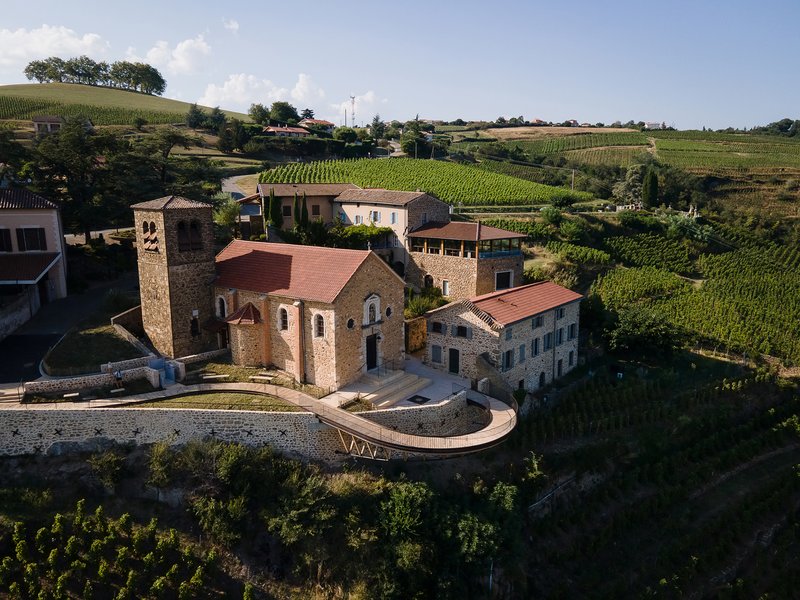
Rather than imposing an isolated architectural object, the Belvedere was conceived as a natural extension of the village and hillside. Positioned along the existing retaining wall, the structure complements the village’s historic silhouette, connecting built heritage with the surrounding vineyards and forests.
Lead architect Julien Giammarchi emphasizes that the Belvedere is “a line within the landscape,” a subtle gesture that preserves the integrity of Tupin-et-Semons while creating a striking and immersive architectural experience.
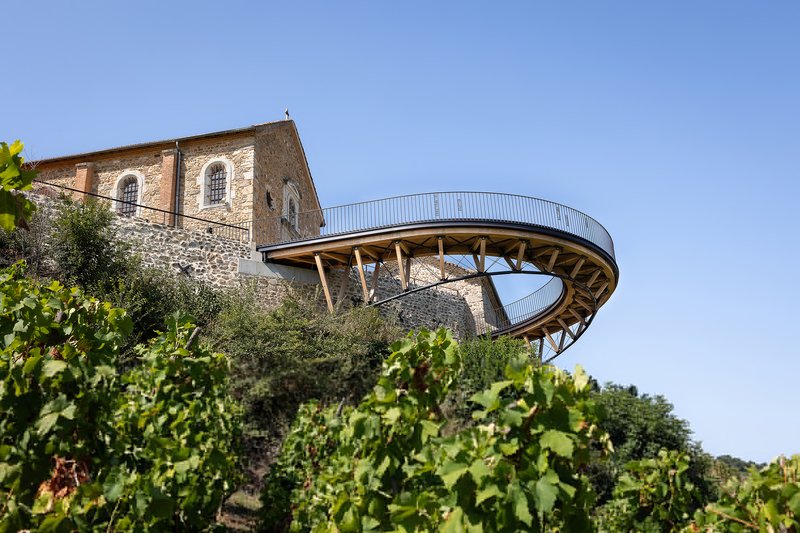
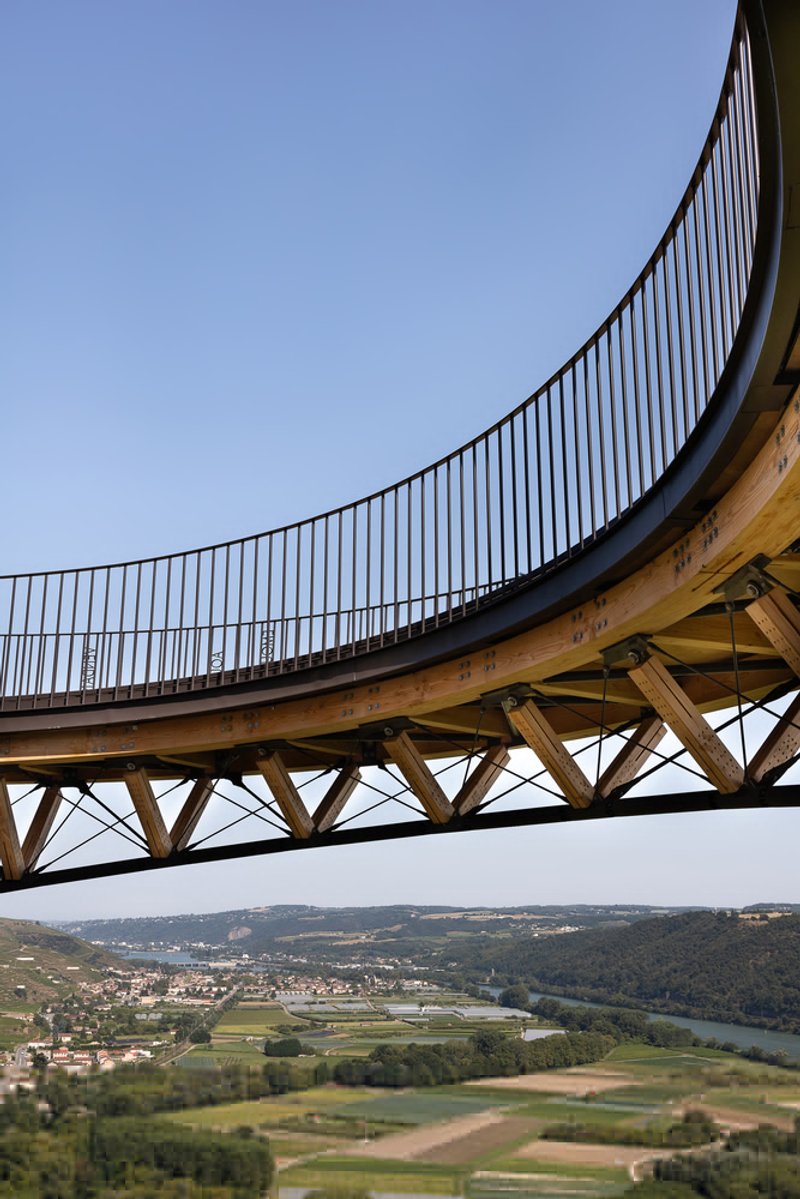
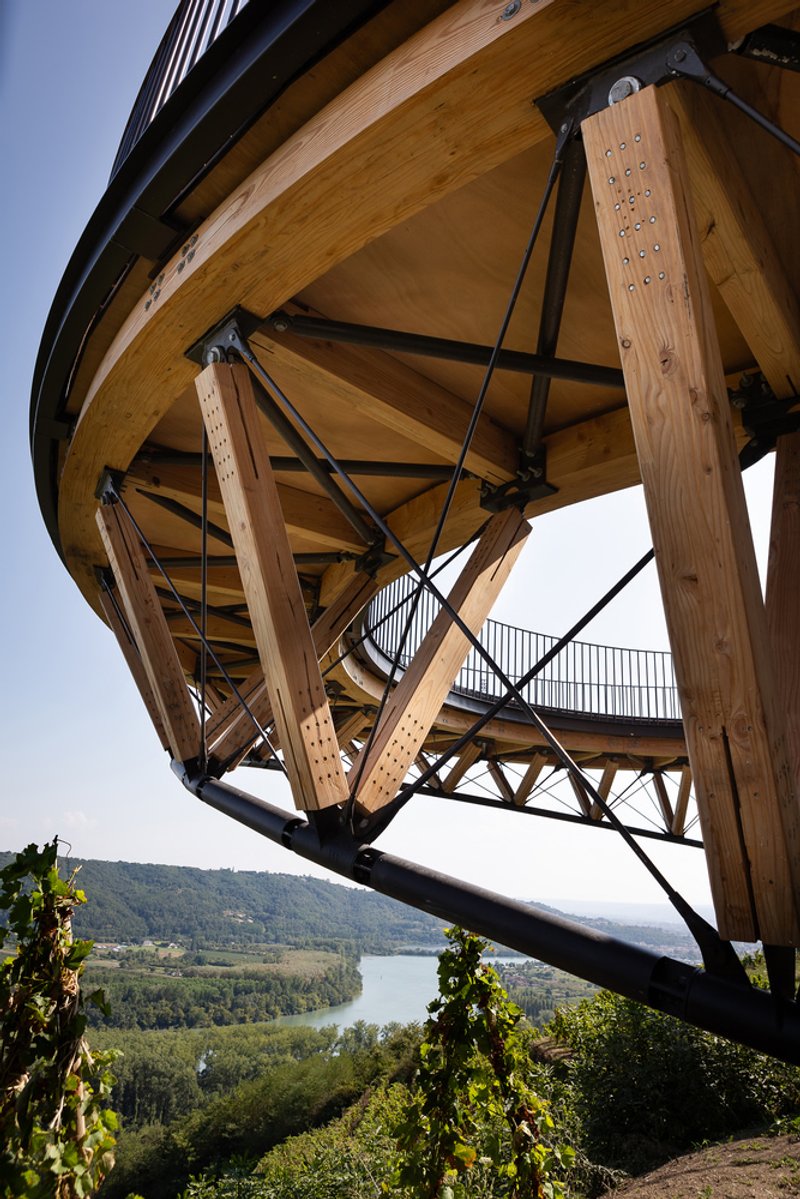
A Unique Promenade Through the Vineyards
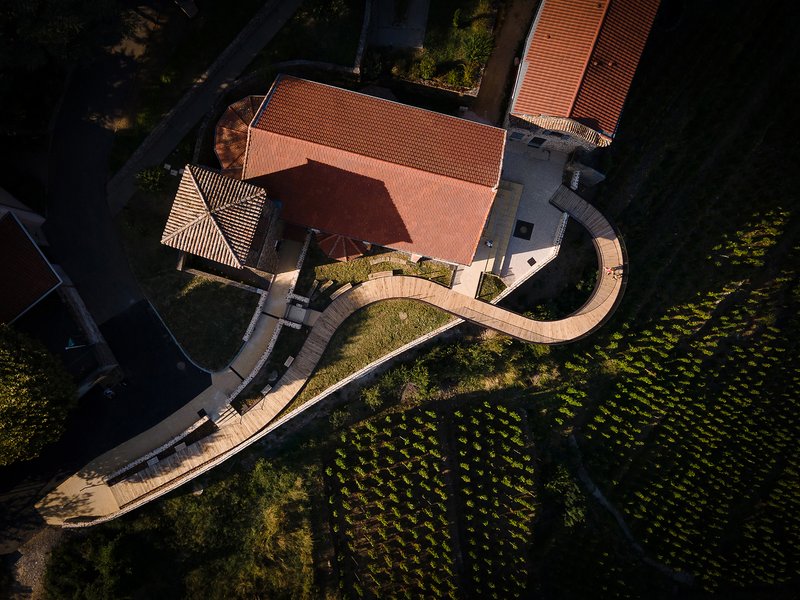
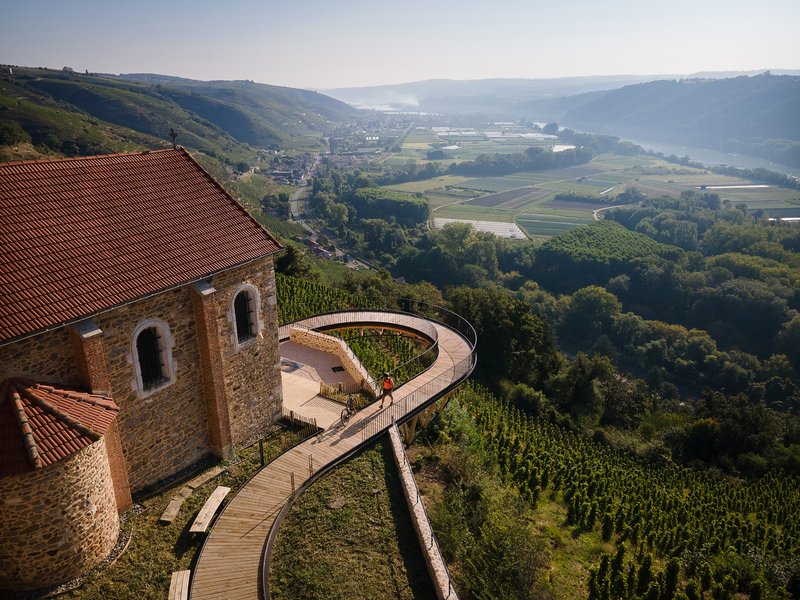
The Belvedere is more than a lookout point—it is a dynamic pedestrian journey inspired by the gentle curves of the hills. Visitors approaching from the southern path are guided by a warm wooden ribbon, leading them first across the village’s mineral foundation, where the first panoramic views of the Rhône unfold.
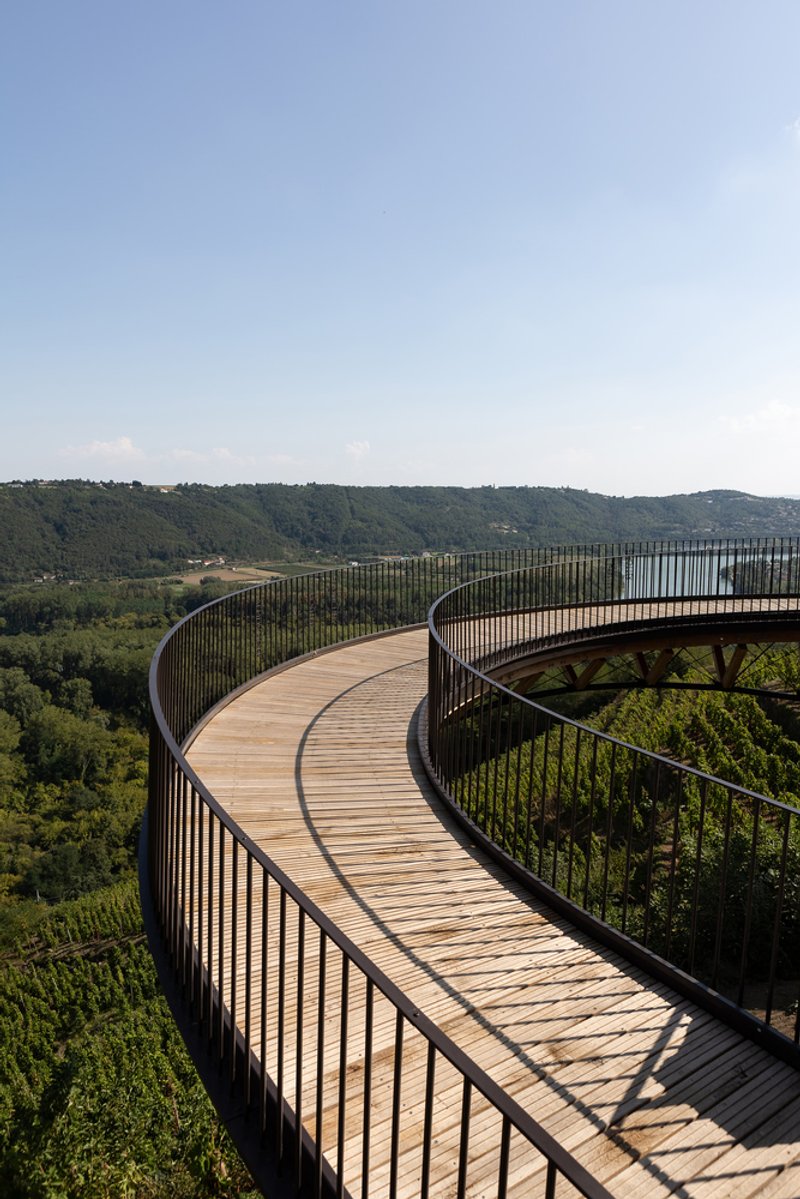
The path then transitions into the Belvedere garden, an immersive green corridor echoing the colors, textures, and scents of the vineyards. The promenade reaches a more intimate area near the village church, ideal for contemplation or a break. At the edge of the garden, the experience becomes truly spectacular as the Belvedere projects visitors into the panoramic landscape, creating a breathtaking “step into the void” sensation above the vineyards. The pathway then gently returns to the central square by the church, reinforcing the site’s social and communal role.
This thoughtful circulation ensures the Belvedere is accessible for all, including persons with reduced mobility (PMR), while preserving the sense of discovery and surprise at every turn.
Architectural Design and Materials
The Belvedere structure combines reinforced concrete, wood, and metal for durability, elegance, and harmony with nature:
1. Concrete Frame: Anchored into the bedrock downstream and supported by micropiles upstream, the concrete abutment secures the cantilevered structure while aligning with the existing retaining wall.
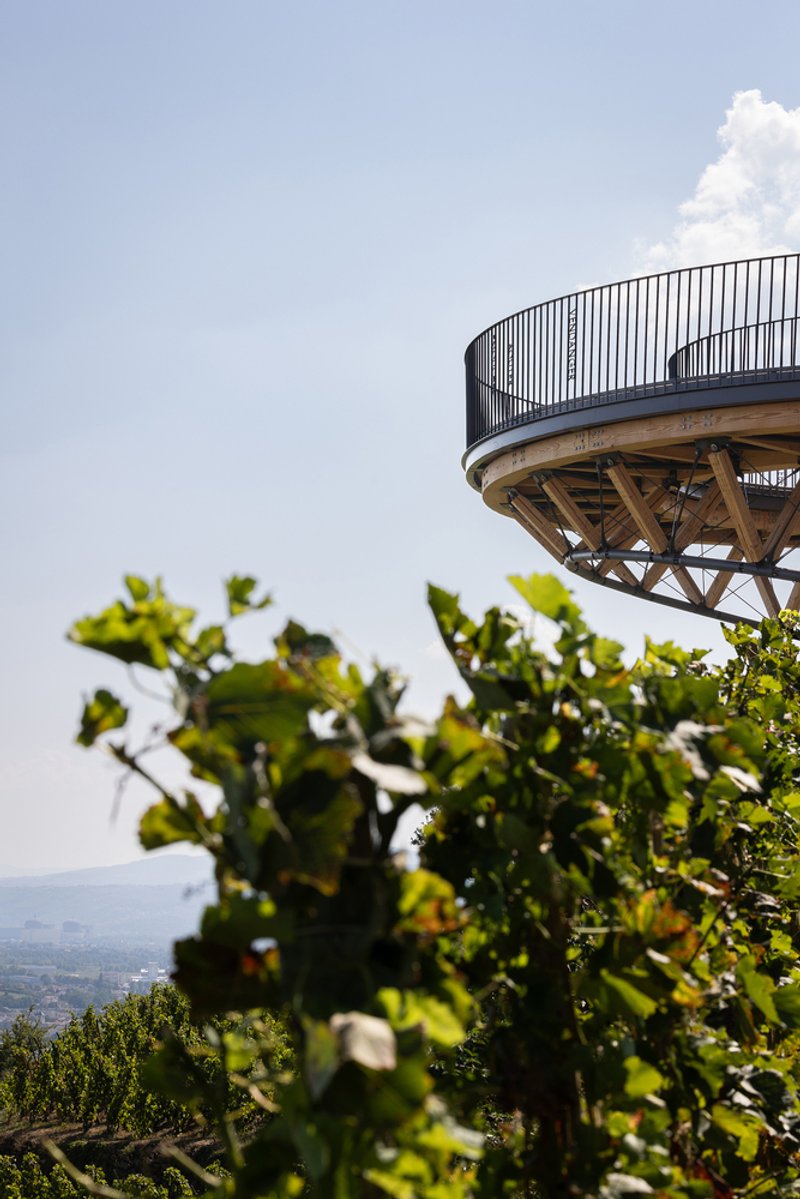
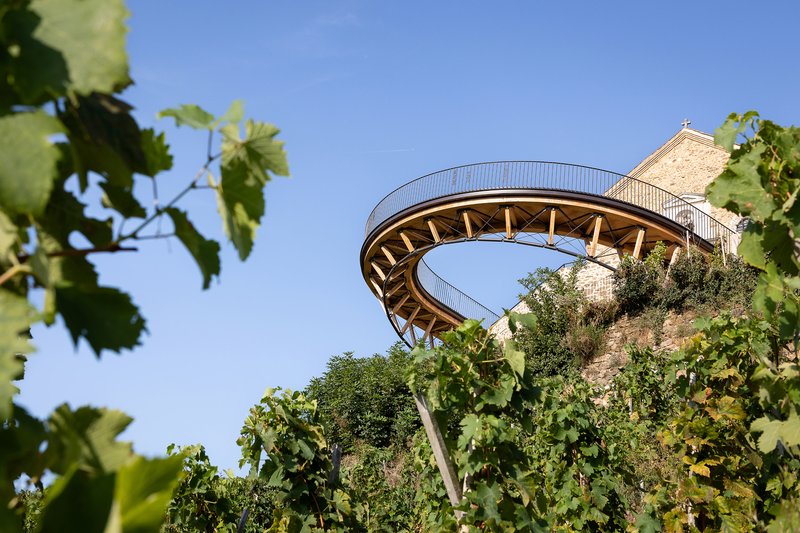
2. Wooden and Metal Frame: The cantilevered crossing is constructed with sapwood-free Douglas fir beams, tensioned with metal supports for stability. Two curved, glued-laminated beams (200x220 mm) are triangulated with solid Douglas fir struts and metal braces, forming a torsion-resistant framework. The deck is topped with 38-mm-thick CTB-X panels to ensure water-tightness, while trapezoidal joists distribute loads across the structure.
This design not only emphasizes structural integrity but also enhances the visual lightness of the Belvedere, allowing visitors to feel suspended between the village and vineyards.
A Landmark Experience
The Belvedere Wine-Growing Hillsides of Condrieu demonstrates how contemporary architecture can enhance rather than dominate the landscape. With a single, elegant line, the project:
- Creates a unique landscape promenade for immersive exploration.
- Offers a spectacular viewing experience of the Rhône Valley and vineyards.
- Preserves and highlights the village’s historic silhouette.
- Provides a versatile structure for events, tourism, and leisure.
- Facilitates efficient circulation for visitors of all abilities.
- Weaves a connection between heritage, nature, and contemporary architecture.
By merging architectural innovation, landscape integration, and cultural identity, the Belvedere sets a benchmark for tourism-driven architecture in the Rhône Valley and beyond.
All photographs are works of Sophie Rodriguez




Popular Articles
Popular articles from the community

Split House: A Compact Urban Home Blending Privacy, Light, and Flexible Living in Japan
Compact Japanese home featuring DOMA space, flexible café potential, passive lighting, privacy zoning, and sustainable urban living design.

Free Architecture Competitions You Can Enter Right Now
No entry fees, real prizes. Here are the best free architecture competitions open for submissions in 2026.
Alton Cliff House: A Harmonious Retreat by f2a Architecture in Lake Country, Canada
Alton Cliff House blends corten steel, prefabrication, and sustainable design, creating a luxurious, energy-efficient retreat perched on Canadian cliffs.

Solar Steam: A Climate-Responsive Architecture That Redefines the Monument
A climate-responsive memorial architecture that transforms heat, decay, and time into a living system reflecting humanity’s ecological impact.


Similar Reads
You might also enjoy these articles


The Ken Roberts Memorial Delineation Competition (Krob)
As the most senior architectural drawing competition currently in operation anywhere in the world, it draws hundreds of entries each year, awarding the very best submissions in a series of medium-based categories.
Waterfront Redevelopment and Urban Revitalization in Mumbai: Forging a New Dawn for Darukhana
A transformative waterfront redevelopment project reimagining Darukhana’s shipbreaking heritage into an inclusive urban future.

OUT-OF-MAP: A Call for Postcards on Feminist Narratives of Public Space
Rhizoma Design and Research Lab invites artists, designers, architects, researchers, and students to reflect on how feminist perspectives can reshape public space. Selected works will be exhibited in Barcelona, October 2026. Submissions open until 15 April 2026.

Documentation Work on Buddhist Wooden Temple
Architectural syncretism and cultural hybridity: A comparative study of the Buddhist temples in Chattogram Hill tracks


Explore Architecture Competitions
Discover active competitions in this discipline




The International Standard for Design Portfolios


The Global Benchmark for Architecture Dissertation Awards


The Global Benchmark for Graduation Excellence


Challenge to reimagine the Iron Throne
Comments (0)
Please login or sign up to add comments
No comments yet. Be the first to comment!