

Bent Architecture Grows a Garden Pavilion from the Back of a Melbourne Period Home
In Victoria, Australia, an arbour-like timber addition dissolves the line between living room and garden across 227 square metres.


Most rear additions to heritage cottages follow a familiar script: knock down the lean-to, bolt on an open-plan box, and hope the garden compensates for the loss of character. Bent Architecture's Annexe II House in Victoria, Australia, rewrites that script by refusing to treat the garden as backdrop. Instead, the new living spaces are conceived as a garden pavilion, an angled timber arbour that invites climbing plants, filtered light, and a sense of immersion rather than observation.
The project's real provocation is its orientation strategy. The existing period home sat on a lot that stretched east to west, with the rear facing away from optimal sun. Rather than accept that condition, the addition pivots the living spaces toward the north, opening them up through floor-to-ceiling sliding glass while simultaneously turning its back on a two-storey neighbour that had created an overlooking problem. It is a plan driven by solar geometry and privacy, yet the result feels anything but clinical.
Keeping the Front, Rethinking the Rear
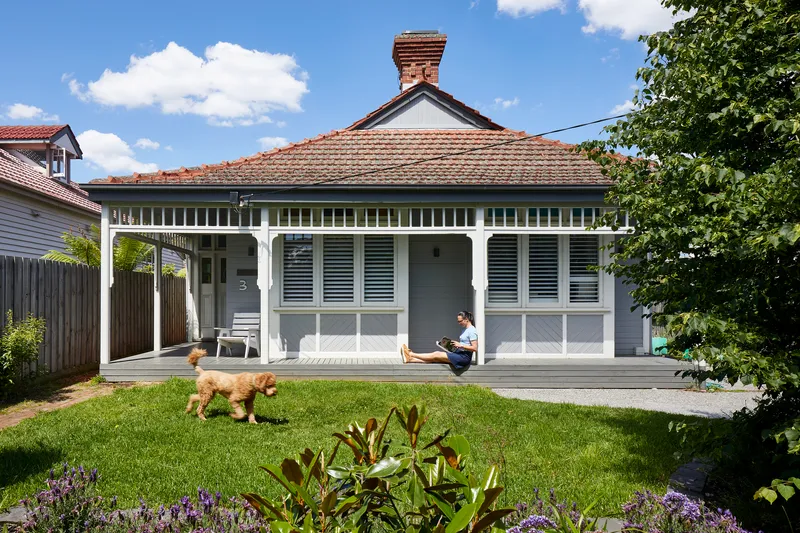
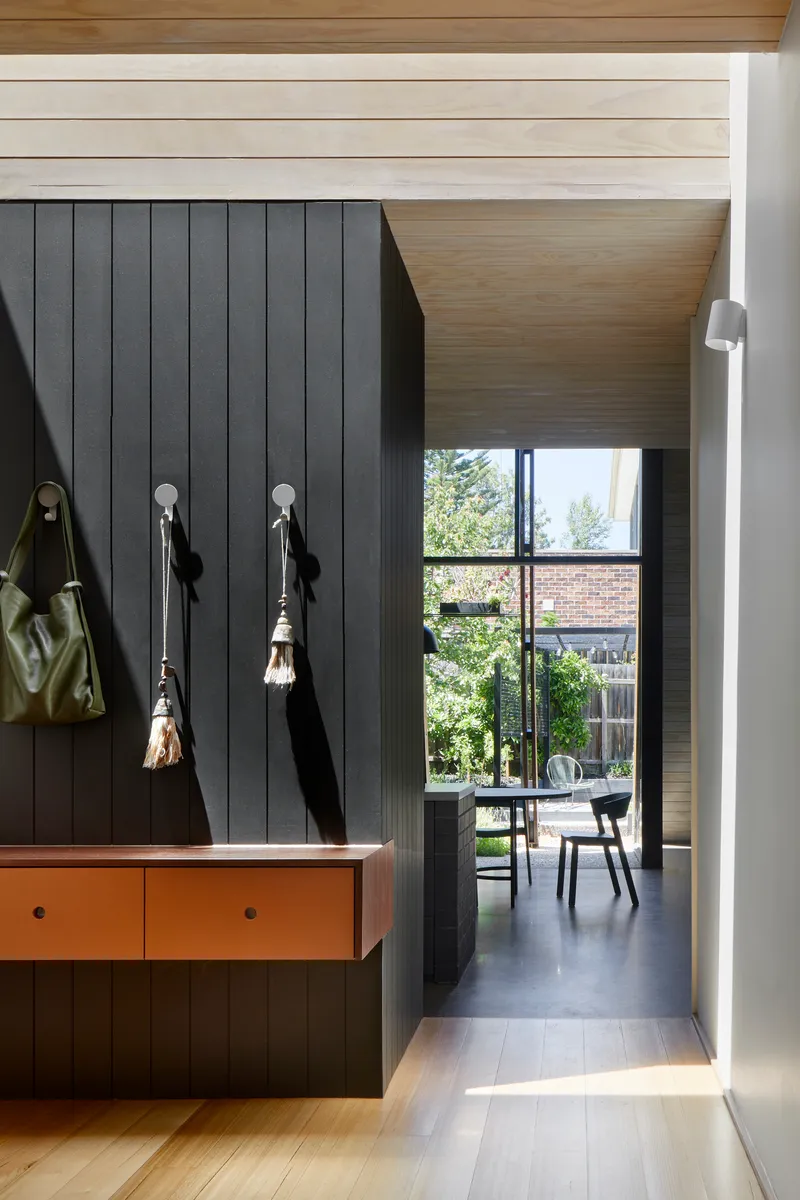
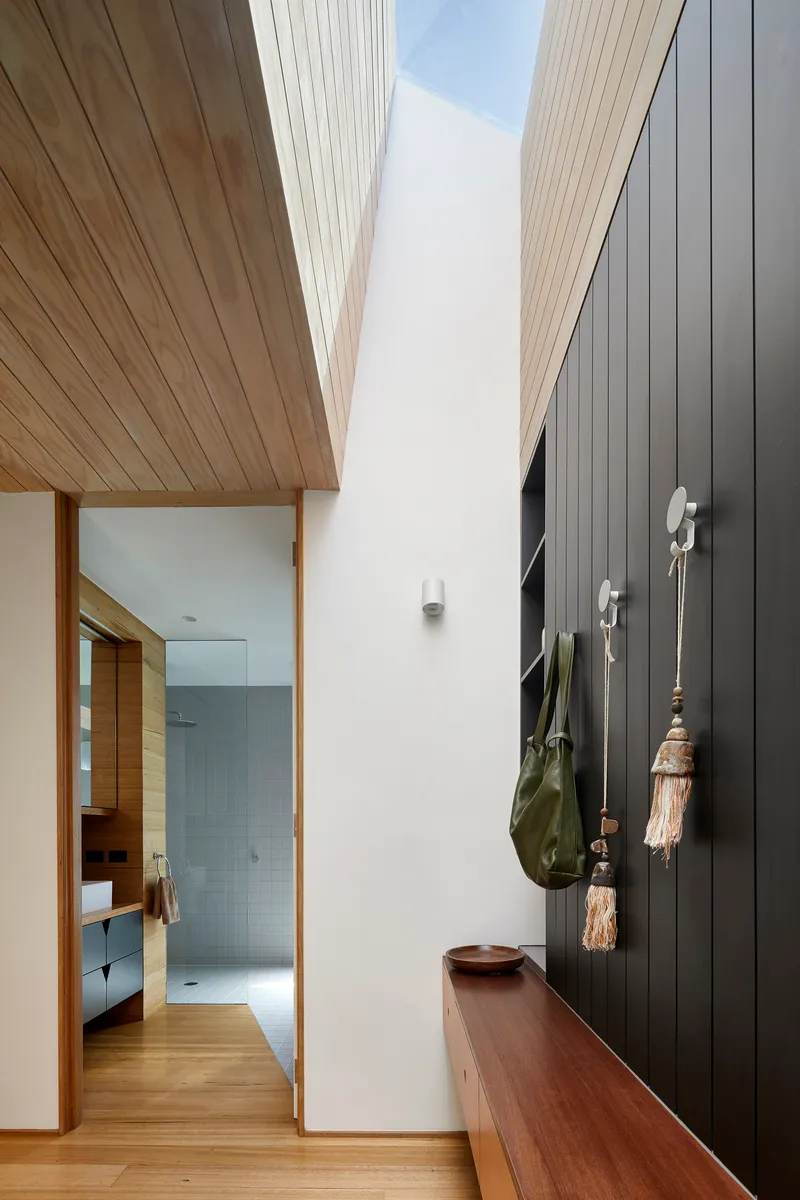
The weatherboard cottage that greets the street is left largely intact: terracotta tile roof, ornate trim, high ceilings, and the kind of generous proportions that Melbourne's inner suburbs do well. Bedrooms, bathing areas, and a separate lounge remain inside this front volume, anchoring the domestic routine in rooms that already work. The hallway that connects old to new acts as a transitional spine, its charcoal-panelled wall and sloped timber ceiling compressing space just enough to make the release into the pavilion feel dramatic.
What was previously a cramped lean-to containing a kitchen, storage rooms, and a toilet has been replaced entirely. The circulation core between old and new is lit from above by a high-level window, pulling daylight into the centre of a house that would otherwise be dark at its midpoint. It is a small move with an outsized effect.
The Arbour as Architecture
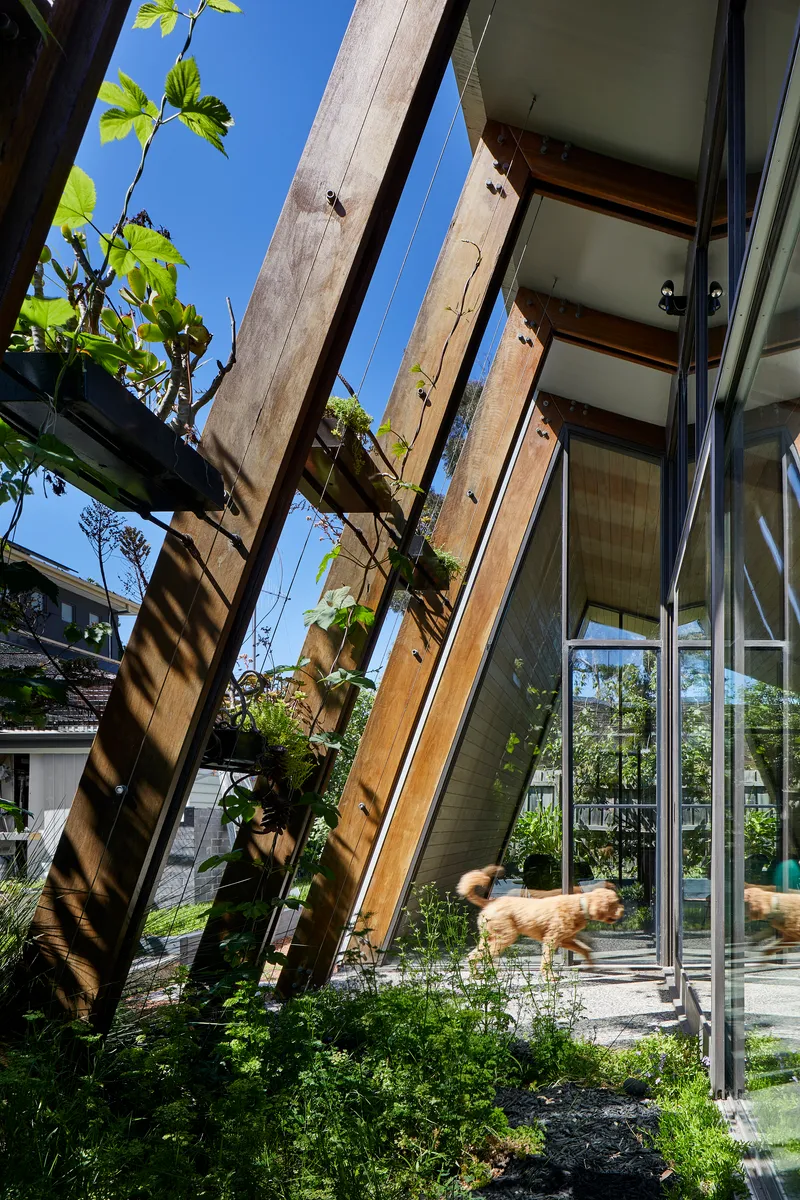
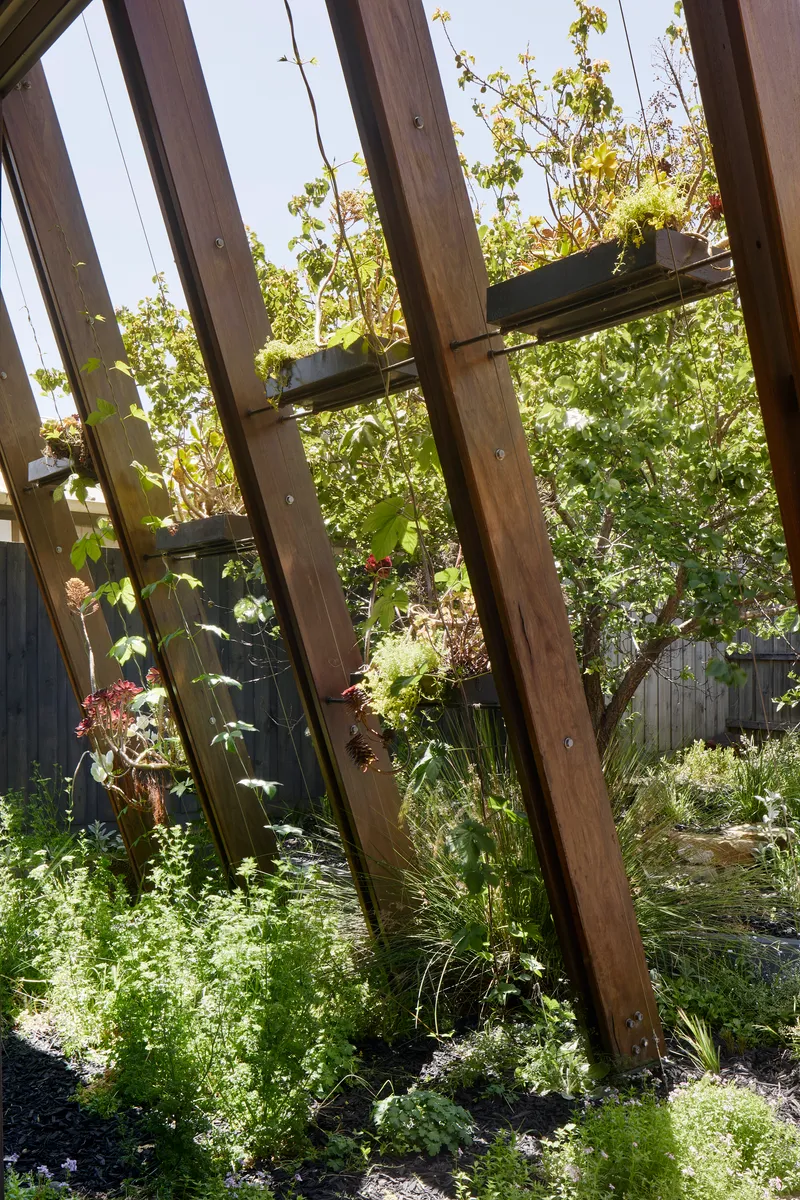
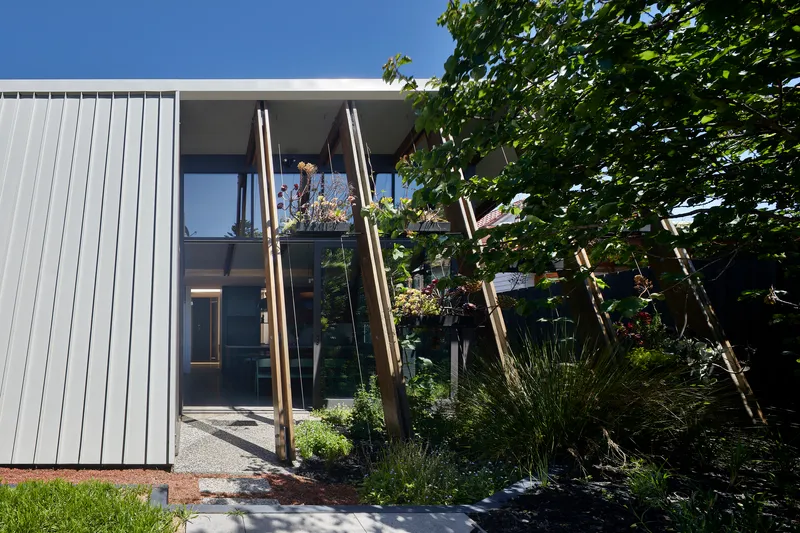
The defining gesture is the arbour structure: angled timber columns that rise from integrated planter boxes, supporting a raking ceiling and framing the garden on multiple sides. Vines and creepers are actively encouraged to grow up and over the structure, so the building's skin will change with the seasons. In a few years, the boundary between architecture and landscape will be genuinely blurred, not as metaphor but as fact.
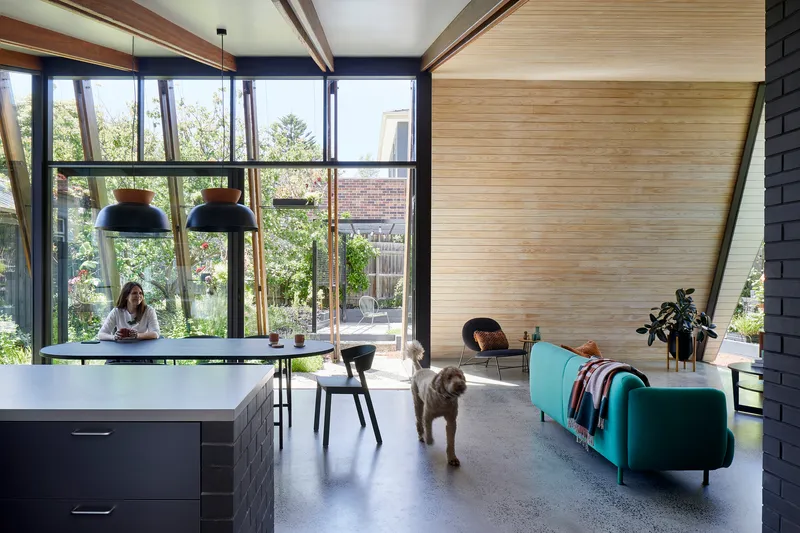
The planter boxes do double duty. They provide shade and privacy screening from the neighbouring property without resorting to fences or solid walls. It is a defence strategy disguised as horticulture, and it works because the angled armature already reads as something between a pergola and a wall. The dog running through the garden in Tatjana Plitt's photographs only reinforces the sense that this is an outdoor room first and an indoor one second.
Living Inside the Glass
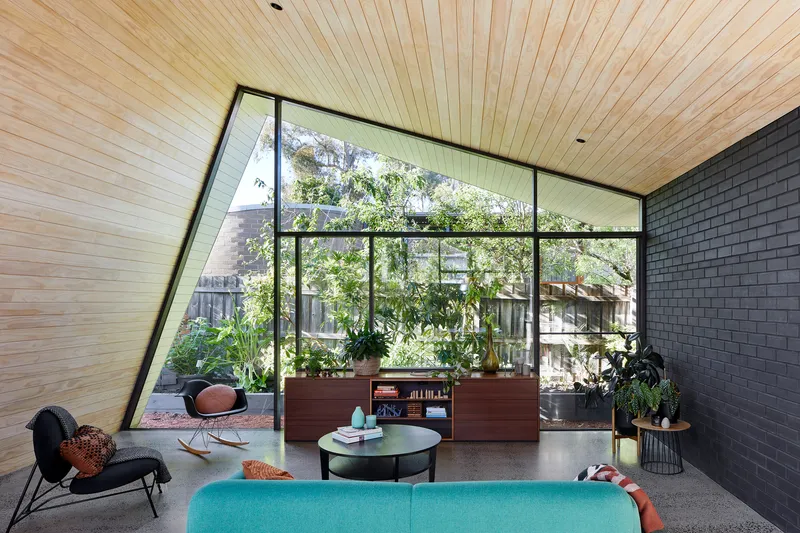
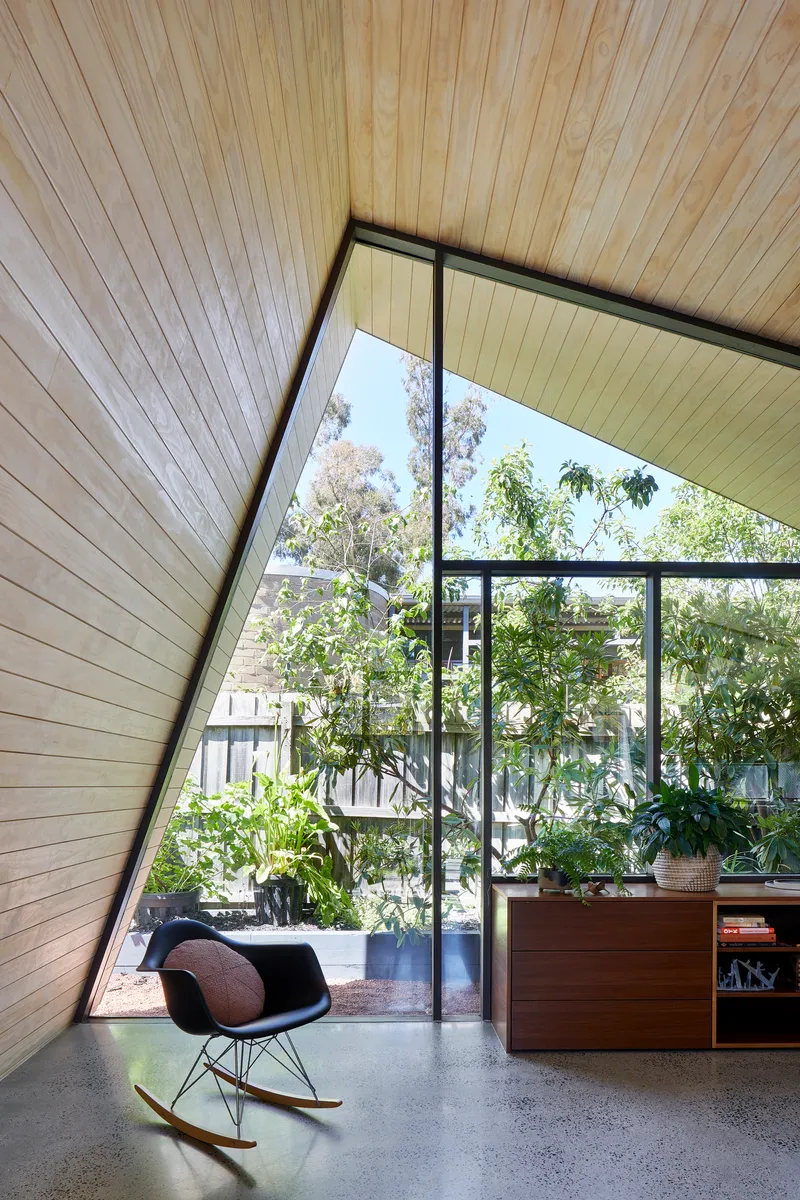
The pavilion's floor-to-ceiling glazing is not merely large windows. These are operable sliding panels that can retract to leave the living space essentially open-air. The angled timber ceiling slopes overhead, its planks following the armature of the arbour outside, so the material language is continuous whether you are inside or out. Polished concrete underfoot adds thermal mass and a cool counterpoint to all the warm timber above.
Sitting in the rocking chair at the glazed corner, you are simultaneously in a room and in the garden. The steel-framed glazing holds a planted courtyard at arm's length, while the raking ceiling draws the eye upward and outward. It is a pavilion in the truest sense: shelter that refuses to separate you from the air around it.
Kitchen and Dining Under the Beams
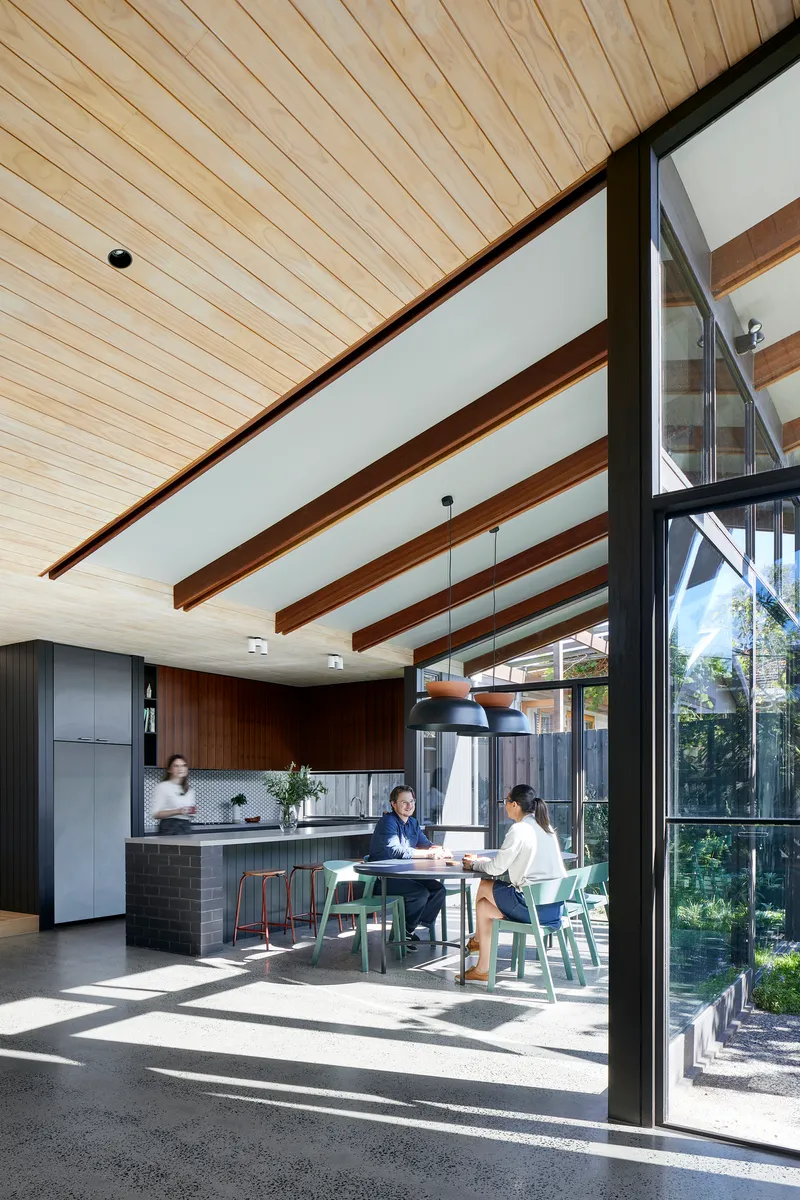
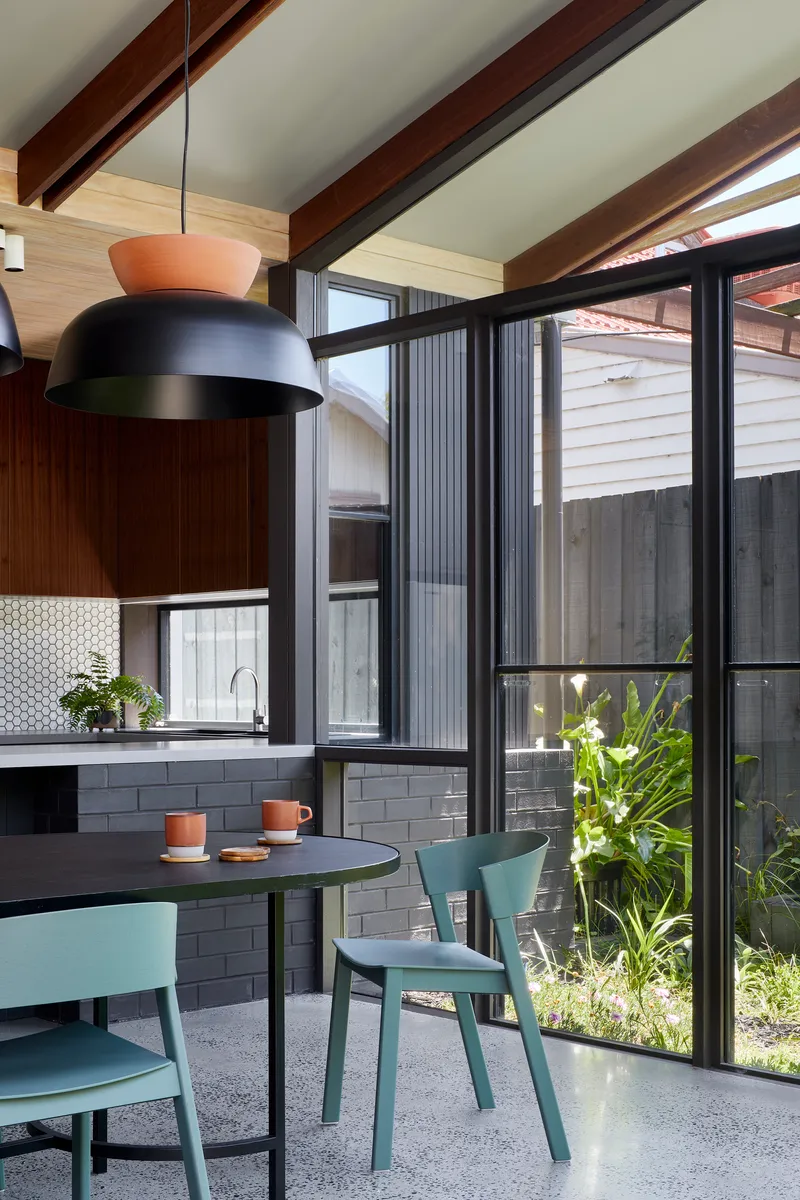
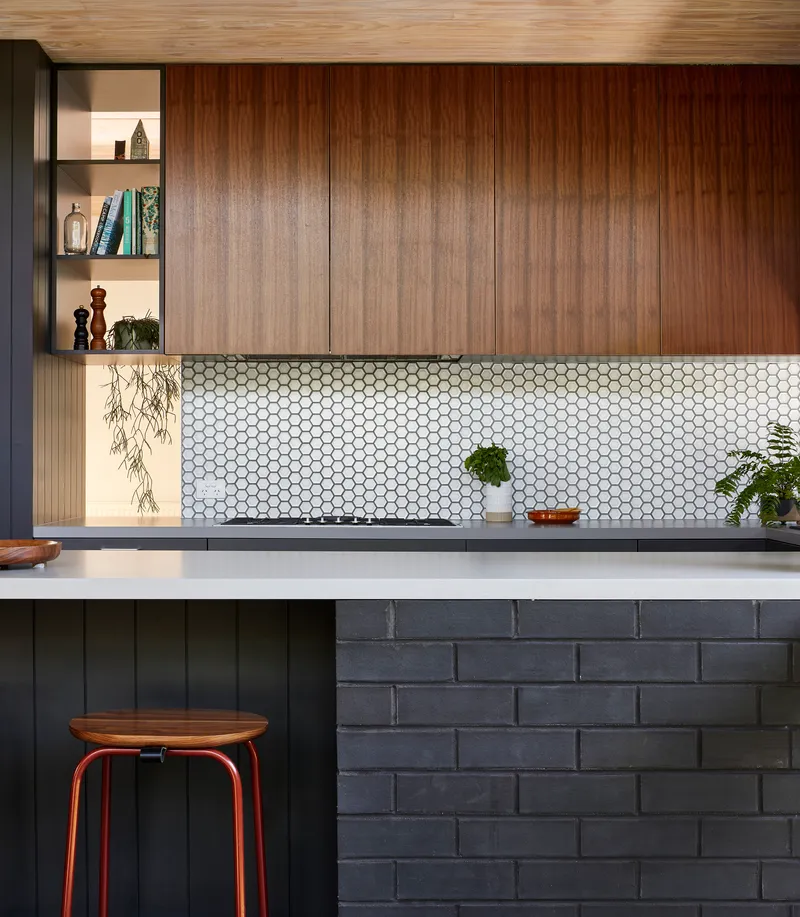
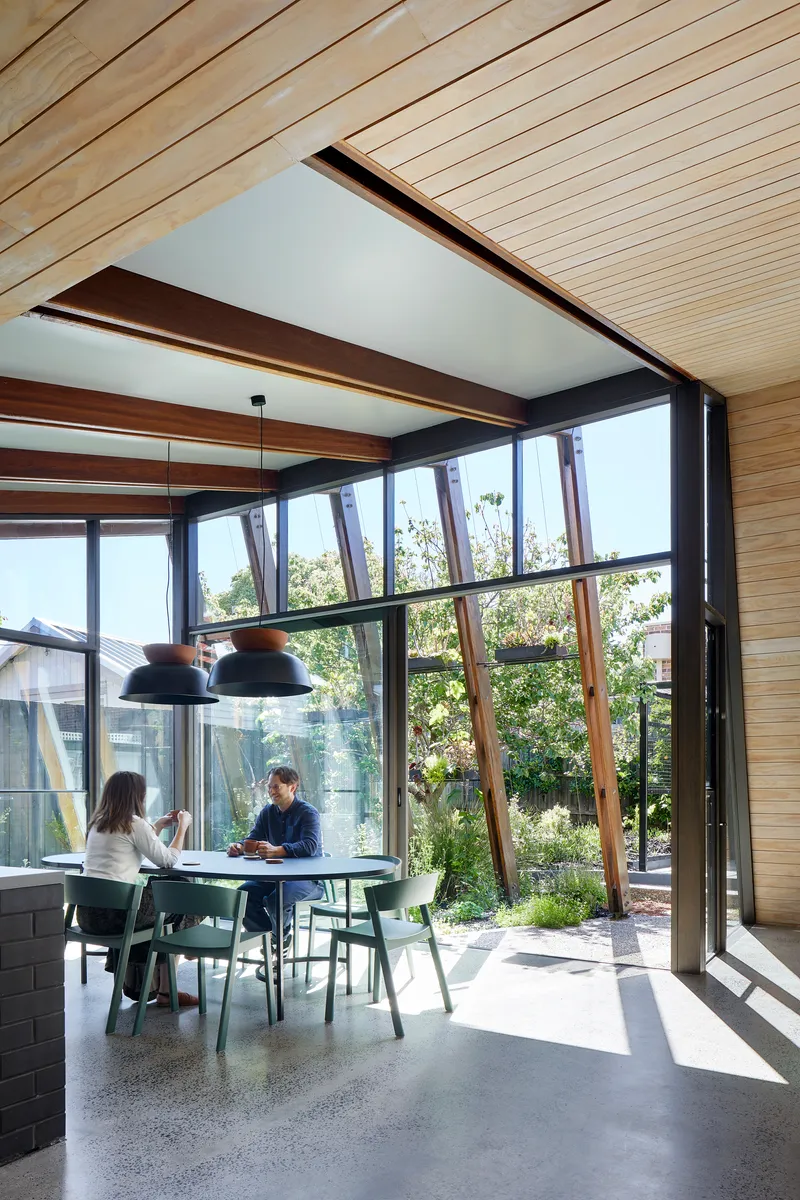
The open-plan kitchen and dining area is tucked beneath the exposed timber beams, with the angled structure creating a dynamic ceiling plane that lifts toward the garden. White hexagonal mosaic tile on the backsplash and timber cabinetry keep the palette restrained, allowing the views through the glazing to do the visual heavy lifting. The dining table sits at the threshold between inside and outside, framed on one side by timber columns and on the other by planted beds.
What makes this space effective is its restraint. The materials are limited to timber, concrete, glass, and white surfaces. There is no feature wall competing for attention, no statement lighting fighting the daylight. The room's character comes entirely from the structural rhythm of the arbour and the ever-changing quality of light filtering through it.
Exterior Presence and the Corrugated Skin
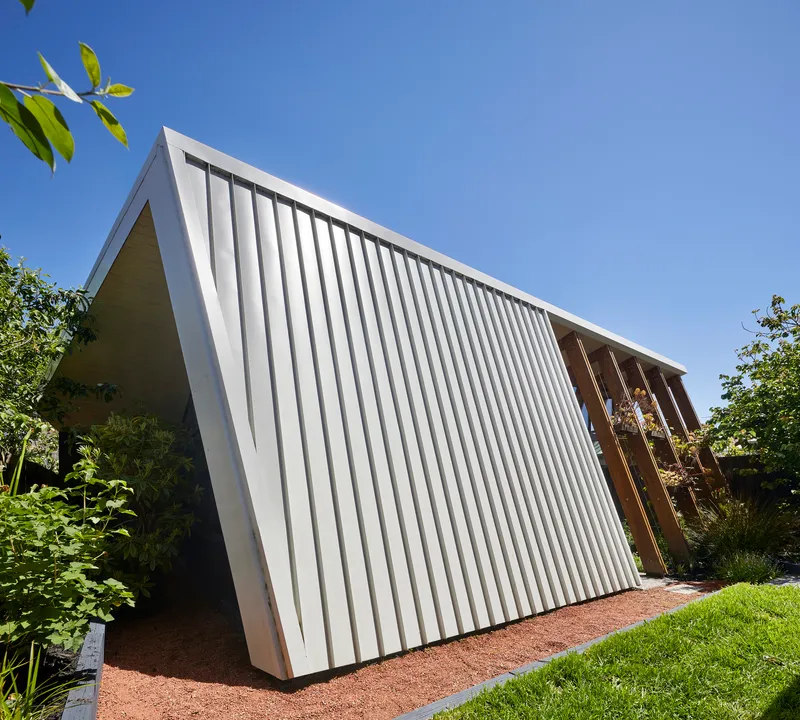

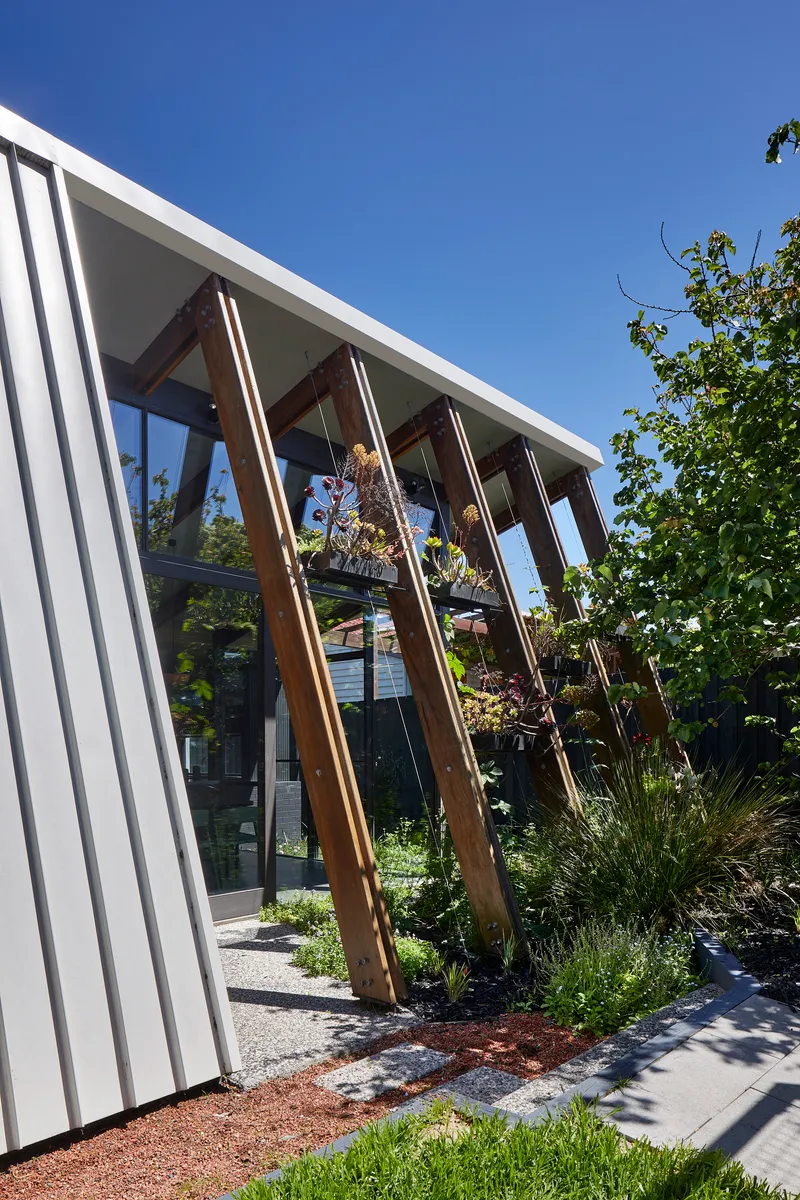
From certain angles, the addition reads as a white corrugated metal volume with a sharp triangular profile, a deliberate contrast to the cottage's decorative Victorian language. The corrugated cladding is industrial and flat, almost warehouse-like, and that bluntness gives the timber arbour something to push against. The interplay between the solid, opaque metal skin and the transparent, vine-wrapped structure is what gives the project its tension.
The steel-framed glazing visible from the courtyard side reveals the planted garden beyond, layering depth into what could have been a simple wall. Grasses and timber pergola elements create a middle ground between the house and the sky. Against the clean blue of a Melbourne day, the composition reads as both precise and organic.
Interior Details and Material Transitions
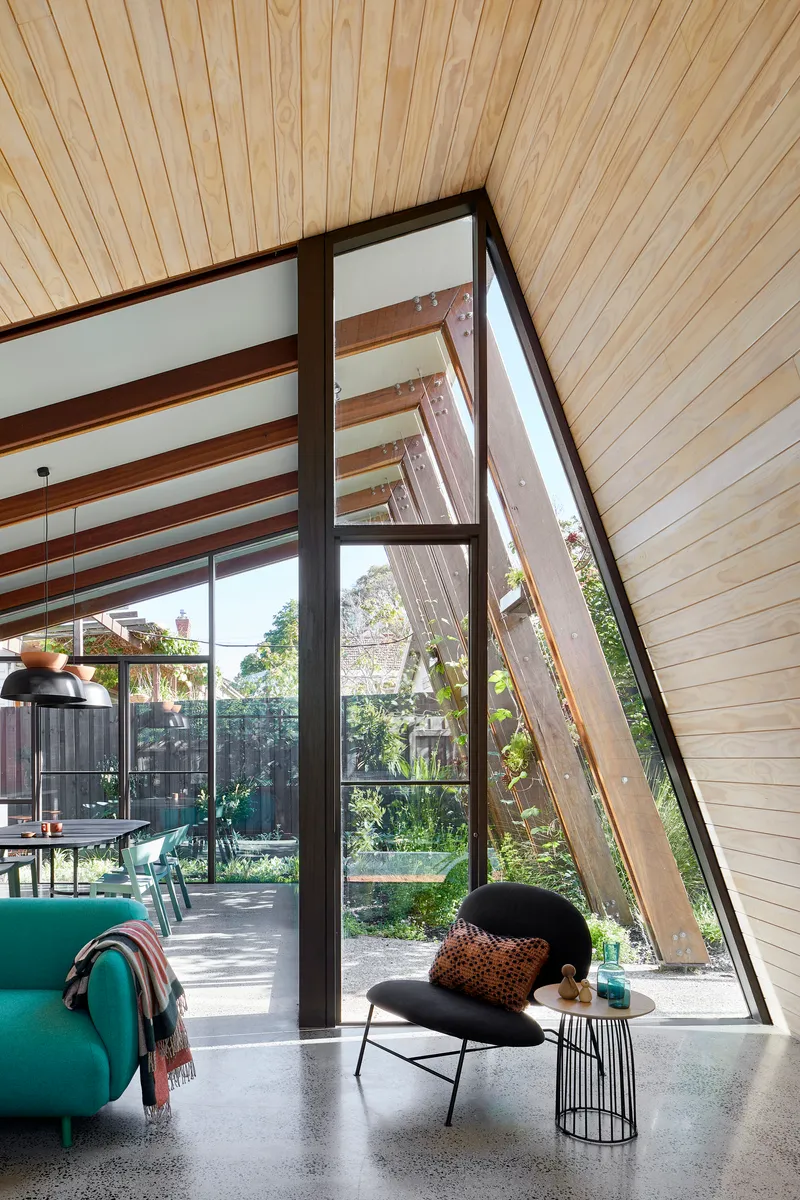
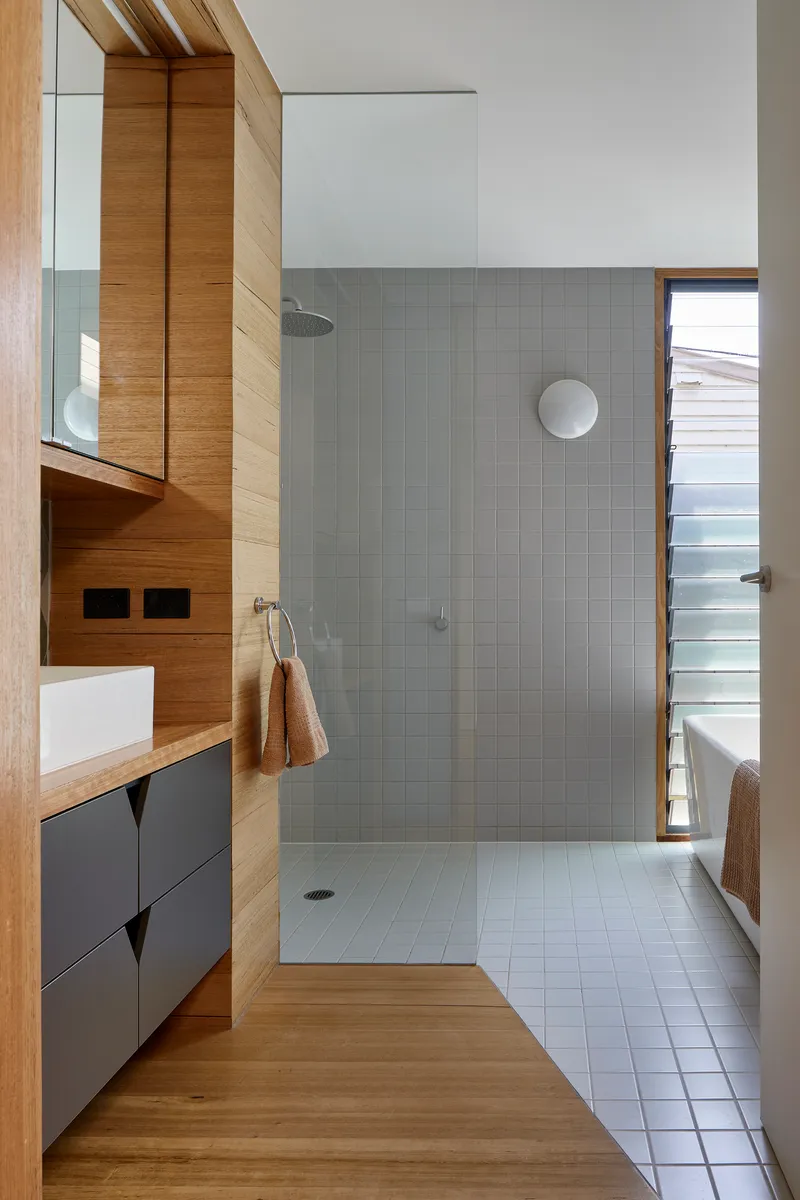
Throughout the addition, the material palette remains tight. The polished concrete floor runs continuously from living room to dining area, anchoring the plan in a single ground plane. Timber-lined walls in the living area add warmth without ornament, and the bathroom, compact and functional, uses grey tile and timber vanity cabinetry to maintain the same restrained language. A narrow glazed door in the bathroom connects to the exterior, a small luxury that keeps the garden present even in the most private room.
The slanted timber ceiling panels that converge above the hallway are worth noting. They compress and direct movement, creating a sense of anticipation as you move from the heritage front toward the light-filled rear. The geometry is not arbitrary; it follows the angle of the arbour structure, so the ceiling becomes an interior echo of the outdoor armature.
Plans and Drawings
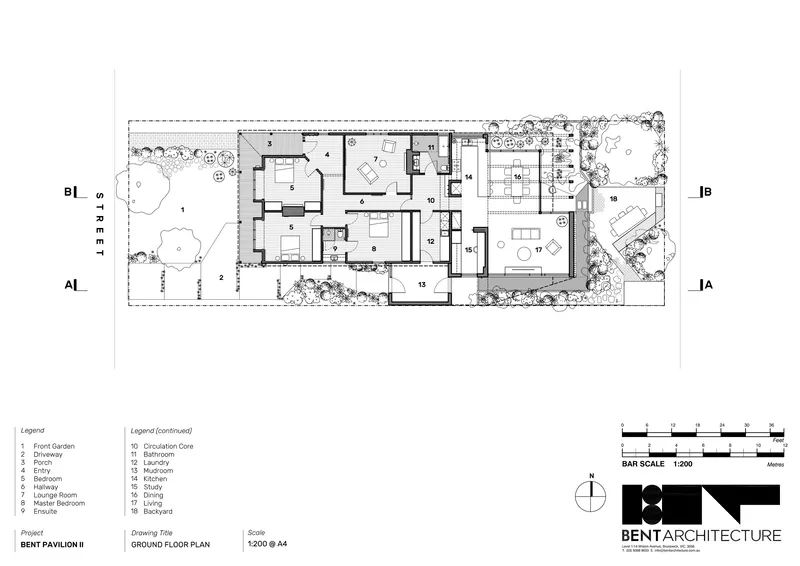
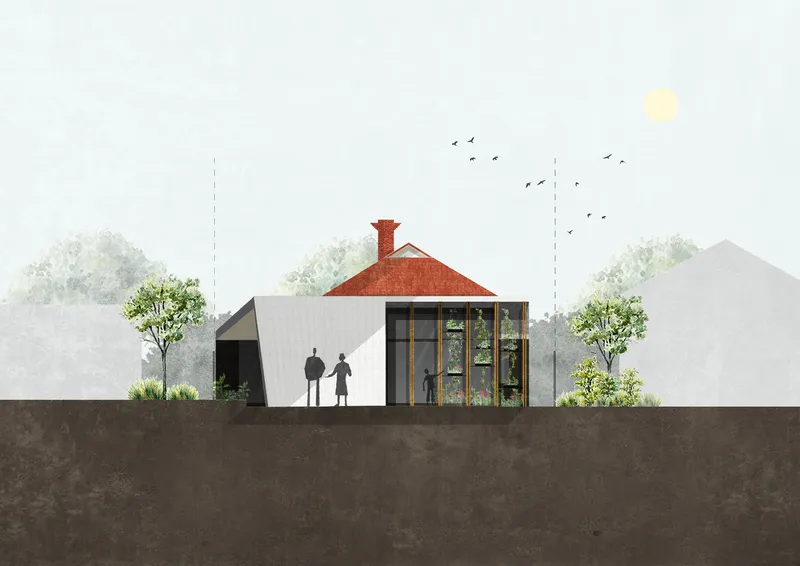
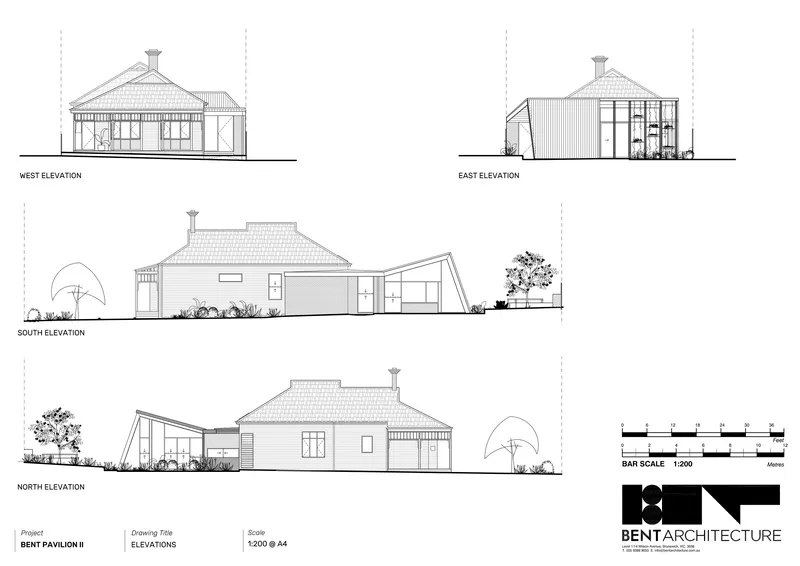
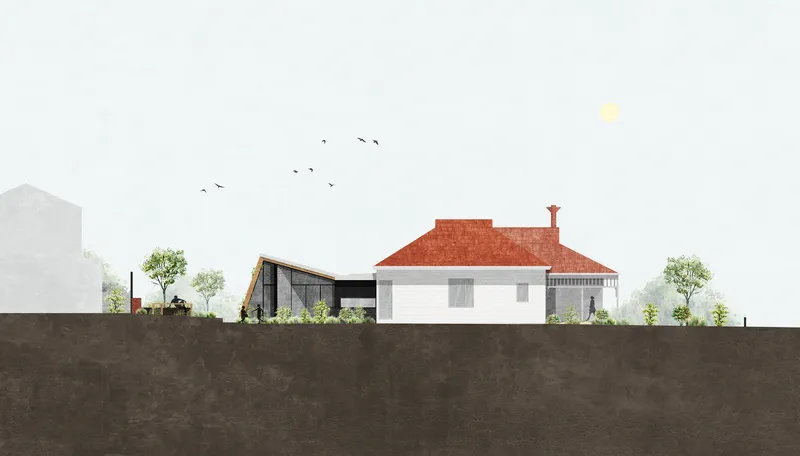
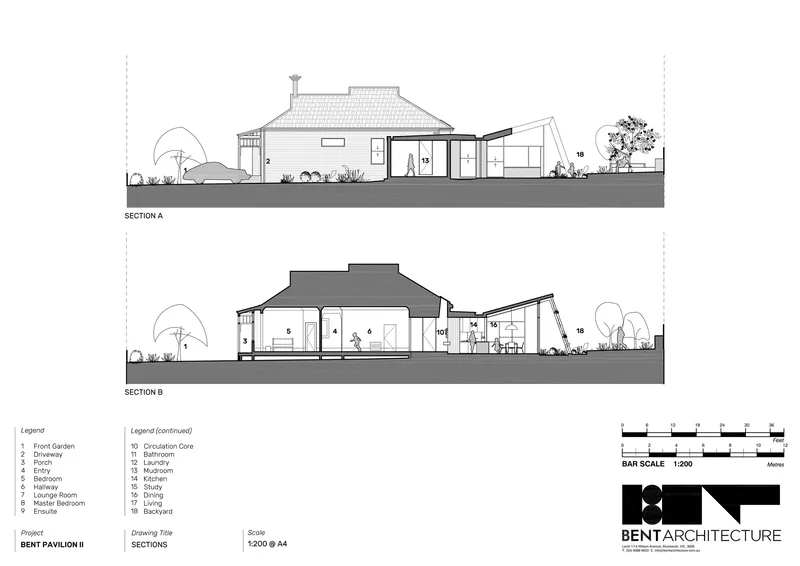

The ground floor plan reveals the logic clearly: a rectangular layout with the heritage volume at front, a central circulation core, and the pavilion addition opening onto surrounding garden areas. The sections are where the project comes alive on paper. The red-tiled roof of the original cottage steps down into glazed extensions that hug the ground, with the arbour structure reaching outward like fingers into the landscape. The elevation drawings show how the addition is almost invisible from the street, tucked behind the existing roofline and chimney.
One section drawing is particularly revealing: it depicts two residential volumes with pitched roofs connected by glazed passages, scattered trees filling the gaps. The flying birds overhead are a charming detail, but the real story is the deliberate modesty of the addition's profile. It never competes with the cottage for height or presence. It simply extends the house into the garden at a low, horizontal register.
Why This Project Matters
Annexe II House matters because it reframes the familiar Melbourne rear addition as something more than an exercise in open-plan maximization. By treating the new living spaces as a pavilion within a garden rather than a room that looks at one, Bent Architecture arrives at a fundamentally different relationship between dwelling and landscape. The arbour structure, with its integrated planters and climbing vines, means the building will continue to evolve long after the architects have left. That temporal dimension is rare in residential work.
The project also demonstrates that privacy and solar access, two of the most pragmatic concerns in dense suburban sites, can be addressed through architecture that feels generous rather than defensive. Turning away from a neighbouring building does not have to mean turning inward. Here, it means turning toward the sun and the garden, which is a far more optimistic proposition. For anyone working on heritage additions in tight urban lots, Annexe II is a case study in how to let the garden do the work that walls usually do.
BENT Annexe II House by Bent Architecture, Victoria, Australia. 227 m², completed 2020. Photography by Tatjana Plitt.
About the Studio
Share Your Own Work on uni.xyz
If projects like this are the kind of work you want to make, uni.xyz is a place to publish your own, find collaborators, and enter design competitions.


Popular Articles
Popular articles from the community


Singing Woman: Contemporary Architecture Inspired by Estonia’s Voice and the Sea
Singing Woman turns Estonia’s song culture into flowing opera house architecture, blending public life, landscape, sea, and national memory.
Faces of the Soviet Avant-Garde: Turning Moscow's Street Names into an Open-Air Museum
A network of sculptural installations across a Moscow residential district transforms forgotten architect names into spatial encounters with cultural memor
Opera on the Sea: Driftwood Logic Shapes a Timber Opera House on Estonia's Coast
Trevor Orgill's opera house translates the entangled drift of floating timber into a civic building where wood, water, and music converge.

Tsunami Convergenics: Turning Catastrophic Ocean Forces into Underwater Housing Infrastructure
A speculative underwater settlement off the coast of Onagawa, Japan, treats tsunamis and typhoons as energy sources rather than threats.

Similar Reads
You might also enjoy these articles

Bao Huynh Watercolor Atelier: A Serene Art Retreat in Hội An
Bao Huynh Watercolor Atelier in Hội An blends multifunctional art spaces, sustainable design, local materials, and family-friendly living in a serene environment.

Atelier Macri Concept Store Interior Design by CASE-REAL
Atelier Macri store features a "ko" counter, walnut wood details, cork displays, blending retail, gallery, and seamless customer experiences.

Manuel Vargas Izquierdo Stadium and High-Performance Sports Center: Architectural Excellence in Jalpa de Méndez
The Manuel Vargas Izquierdo Stadium blends sustainable design, inclusive sports facilities, and cultural-inspired architecture, revitalizing Jalpa de Méndez’s public spaces.

KAKR Buluh Awar Hall: Revitalizing Community and Ecology Through Bamboo Architecture
Community built bamboo hall revitalizes Buluh Awar village, empowering youth, restoring ecology, celebrating vernacular craftsmanship through sustainable architecture and culture.


Comments (0)
Please login or sign up to add comments
No comments yet. Be the first to comment!