

Birds Window
A Lakeside Transitional Landscape Design For Birds And People Coexist Harmoniously

The design is located on the west side of Lake Michigan in Chicago, south of Lake Osterman Beach. The design site is located between the commercial residential area and the lake beach, which is a transitional plot between the city and nature. The design team investigated satellite panoramic images, related planning documents, and comments on social networking platforms, and concluded the site features: 1. Ecologically, the site belongs to Lincoln Park, which used to be a landfill. The Chicago Park District has LEED certified lakefront buildings and a protected plant, dune grass, grows on the beach next to the site. In the southern part of the site, there is the famous bird-watching spot in Chicago, which connects to a series of migratory bird habitats and form an ecological corridor. Thus, the site has a good ecological foundation and has advantages in the utilization of natural resources, plant and bird protection. 2. In terms of public demand, tourists and local residents put forward the following suggestions: At present, the shower room needs to be optimized, the lake beach lacks charging space, rest facilities, and the road noise is too loud. Meanwhile, tourists and local residents have praised the catering, barrier-free facilities and lawn picnic area near the plot. Meanwhile, the design team learned that the lake beach is often used as a training camp for lifeguards to carry out relevant training. 3. In terms of topographic features, the site is higher in the north and southeast, and lower in the northeast side of the beach near the lake, with relatively rich changes in elevation, which is conducive to creating a landscape with changing lines of sight and variable space.
In view of the above site features, the design team proposed the concept of "Bird Window", centering on functional infrastructure, habitat construction and Miegakure form construction, to create a transitional landscape that serves the activities of beach tourists, urban residents and migratory birds. The site contains solar energy collection and power supply, bathing and washing, rest, bird watching, catering, science popularization and other functions, with corridors, elevation difference landscape, stacked water landscape, window frame as the space carrier, as well as rain garden, migratory bird habitat and other ecological space.
The ecological requirements of the site are mainly realized through bird-watching space and natural resource reuse space. Through consulting a large number of birds in Chicago, the design team identified 17 species of birds which may inhabit the site and their characteristics (habitat environment, food, nesting, behavior, and protection level). By planting plants that can provide birds with living conditions such as nesting, foraging, movement and avoiding natural enemies, we created different types of plant communities. At the same time, the sustainable natural habitat created by the rain garden provides a year-round habitat for birds. In order to allow residents to get along with birds harmoniously, bird watching towers, bird watching small walls, open lawns, dense forests and other Spaces are designed in the site, so that people can observe birds and their living habits closely without disturbing their normal activities.
The site refers to the form of surrounding ecological buildings, providing solar energy collection and power supply functions, and contain rainwater garden and other infrastructure to ensure the reuse of solar energy and rainwater. The public needs of the site are mainly realized through viewing space and basic service space. By referring to a large number of site network evaluations and considering the current advantages and disadvantages of the site, the design team determined the functions of shower, charging space, rest, soundproof waterscape, catering, storage and educating. The above functions are mainly integrated in the service building on the northeast of the site, while the sound insulation space is distributed on the west side adjacent to the highway. In view of topographical features, the design team integrated terrain and Miegakure concept, guided visitors' sight through aerial boardwalk, underground corridor, bird watching tower, window frame and other forms, and created a space reflecting the concept of "Hide and Reveal". Through the above design, visitors can gain inner comprehension and immersive experience in the interaction with the scene.
In the future, the site will be the most vibrant node in Lincoln Park, connecting Lake Michigan, urban life and bird habitat, and becoming the most beautiful symphony in the urban ecosystem.



Popular Articles
Popular articles from the community


Play: Fragments of Their World
Familiar architecture becomes modular playground design, creating safe spaces where displaced children can learn, connect, imagine and play.

Co-Life: Senior Housing Design That Reconnects Older Adults With the City
Co-Life reimagines senior housing design through healing gardens, shared streets, workshops, and a sustainable community across generations.

The Musturak Paradise: Senior Living Architecture for a Connected Future in Temara, Morocco
The Musturak Paradise reimagines senior living architecture in Temara via private homes, social spaces, culture, community, and shared care.

Co-life: Sustainable Architecture for Age-Friendly Community Living
Co-life reimagines sustainable architecture for seniors through courtyards, rammed earth, shared gardens, and spaces designed for belonging.


Similar Reads
You might also enjoy these articles

Day and Night Park: A Time-Based Urban Newsstand in Beijing
A temporary urban newsstand in Beijing blending travel, light, and reading through poetic colors, compact form, and community-focused design.

Modernist Patio Renovation in El Masnou, Barcelona by Oliver Segura Arquitectura + Cebrià Arquitectura
Modernist patio renovation blending tradition and innovation with a movable pool, leveled floors, and Catalan materials in El Masnou.

Alto Residencial Coop: Cooperative Housing Development in Santiago de Compostela by Carbajo Barrios Arquitectos
A linear cooperative housing complex blending white volumes and perforated metal façades, enhancing community living, natural light, privacy, and urban integration.
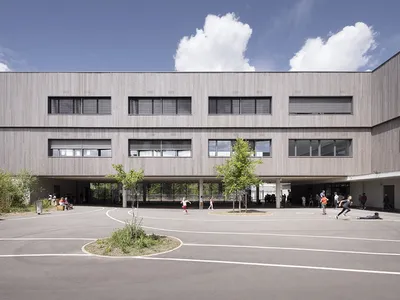
Vil Genis School by BPA ARCHITECTURE – Massy, France
Vil Genis School in Massy, France, features sustainable design, south-facing classrooms, community integration, accessible spaces, and modern educational architecture.






Comments (0)
Please login or sign up to add comments
No comments yet. Be the first to comment!