

Borová Lada Cottage by Studio Plyš
A late 19th-century Czech cottage renovated with structural precision, contemporary inserts, and deep respect for material history and rural context.


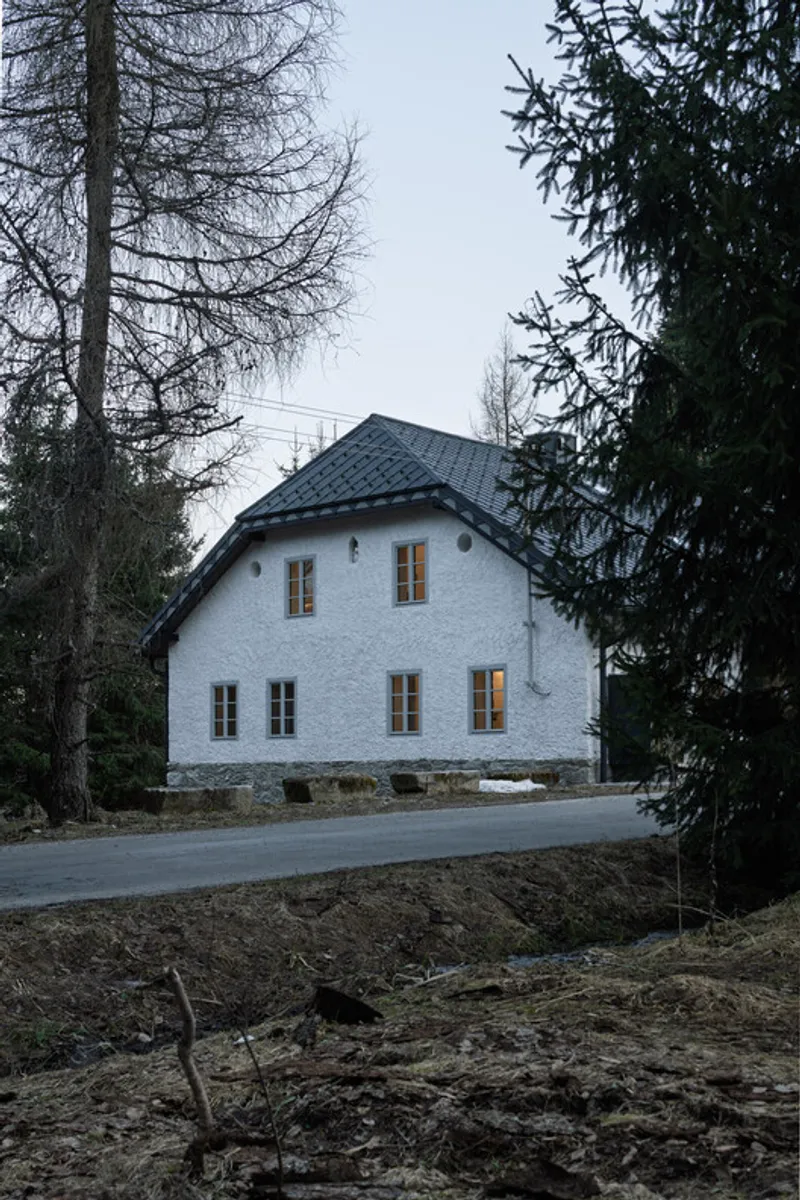
Set on the edge of Borová Lada, along a road that leads deeper into the Bohemian Forest, this late 19th-century cottage has been carefully renovated by Studio Plyš to celebrate continuity rather than rupture. The project embraces the layered history of the building, proposing a quiet and precise architectural intervention that respects the surrounding landscape while openly acknowledging the presence of the new.
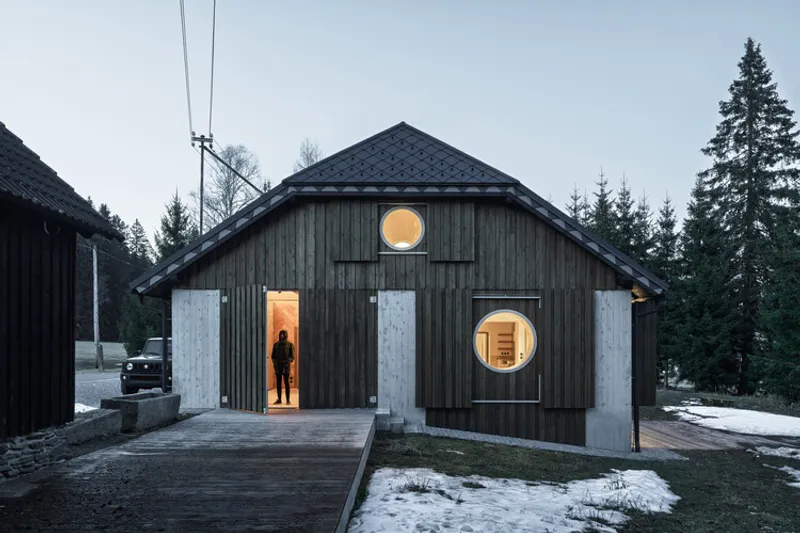
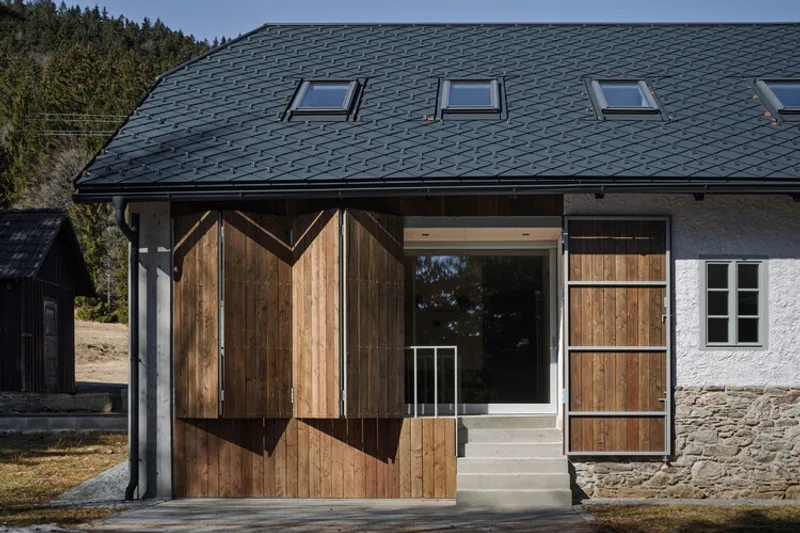
Rather than restoring the cottage to an idealized past, the renovation reveals its accumulated transformations, turning structural scars and previous missteps into defining spatial qualities.
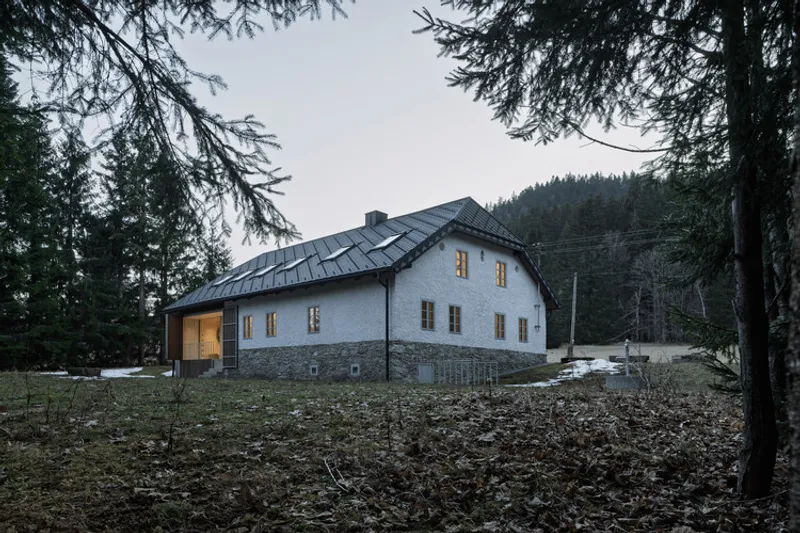
Respecting Layers of Time
The design approach is rooted in a deep respect for the cottage’s material and historical strata. Inappropriate alterations from the late 20th century—many of which had compromised the structure—were selectively removed, yet their consequences were not erased. Instead, these weaknesses became opportunities to reorganize the spatial hierarchy of the house.
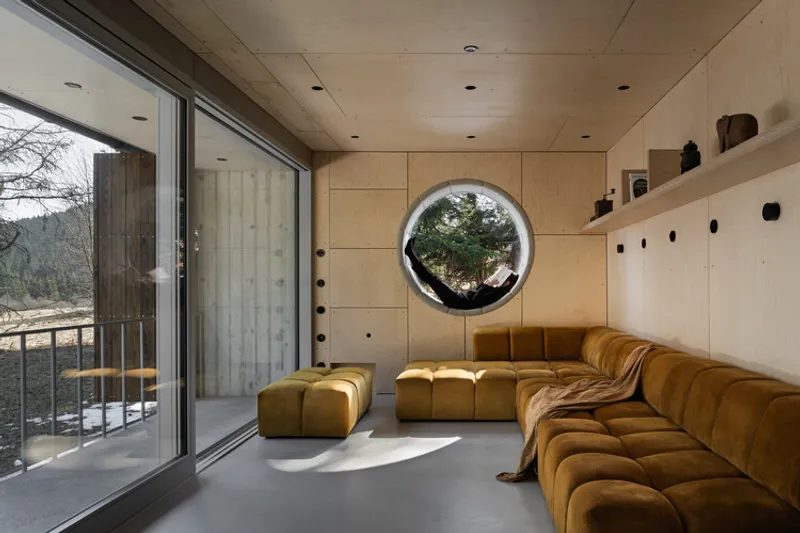

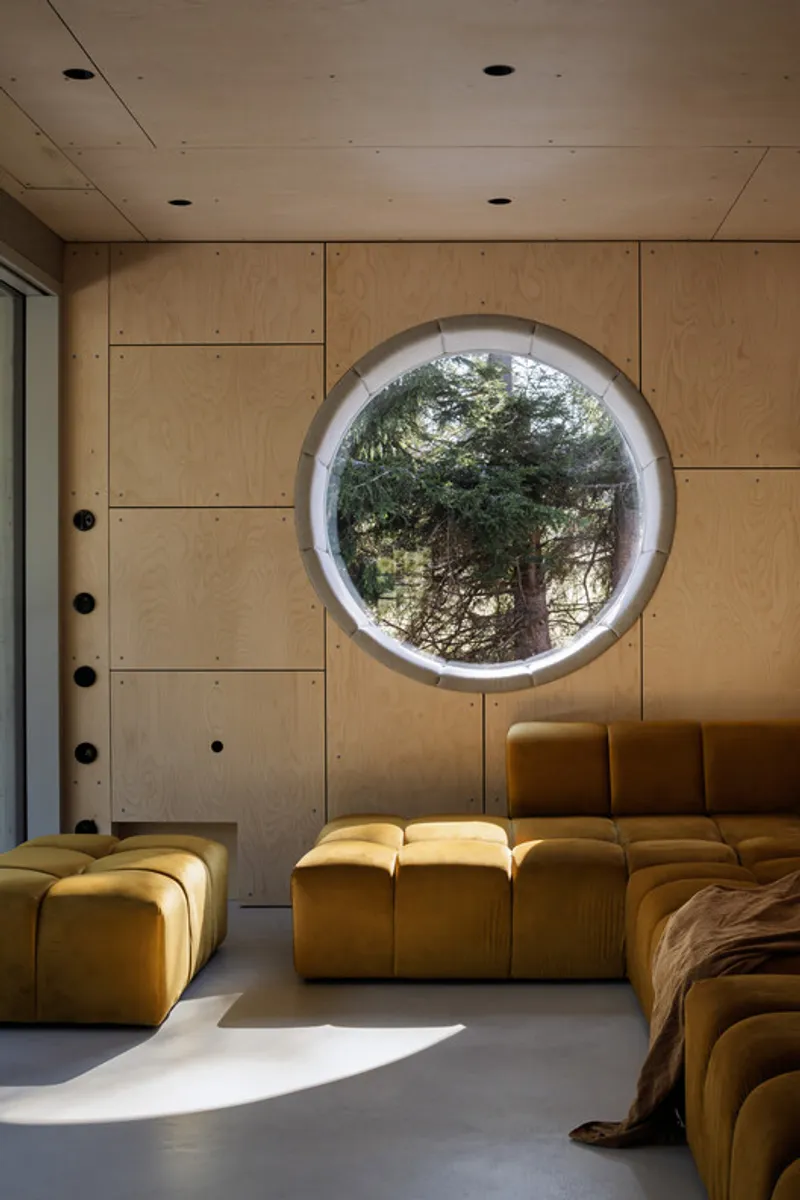
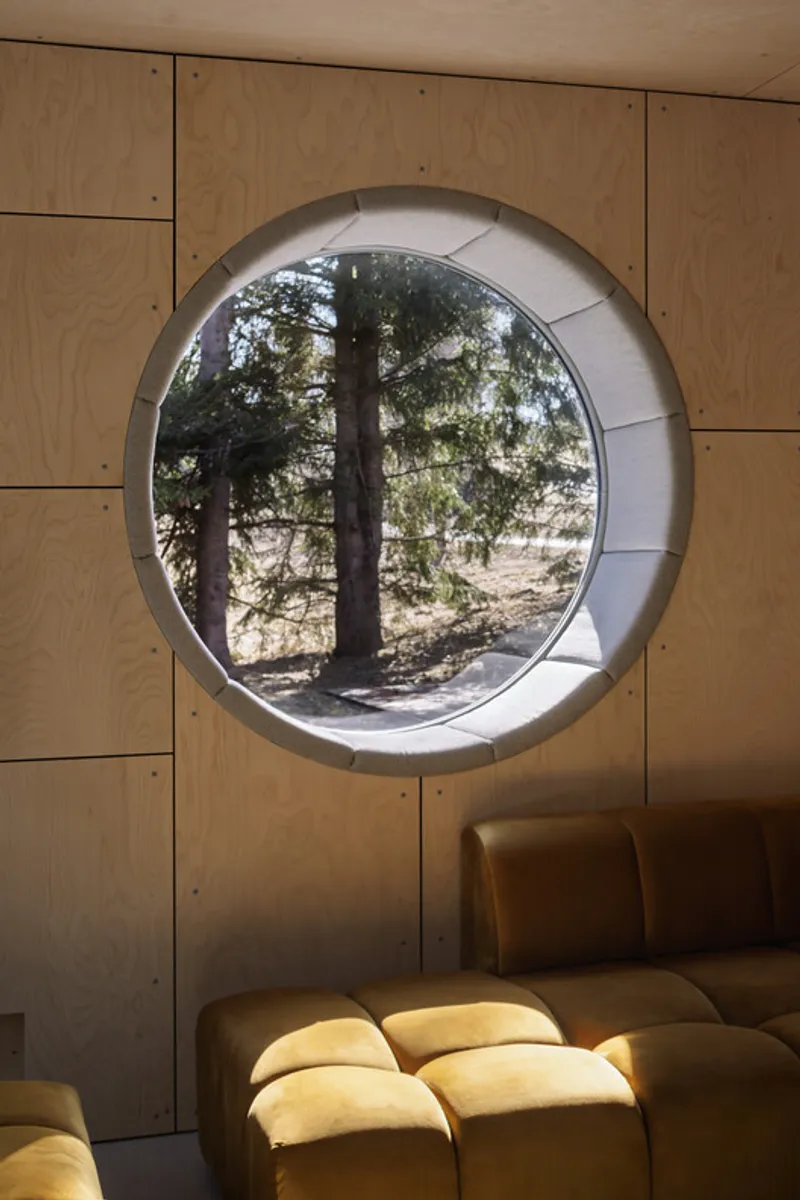
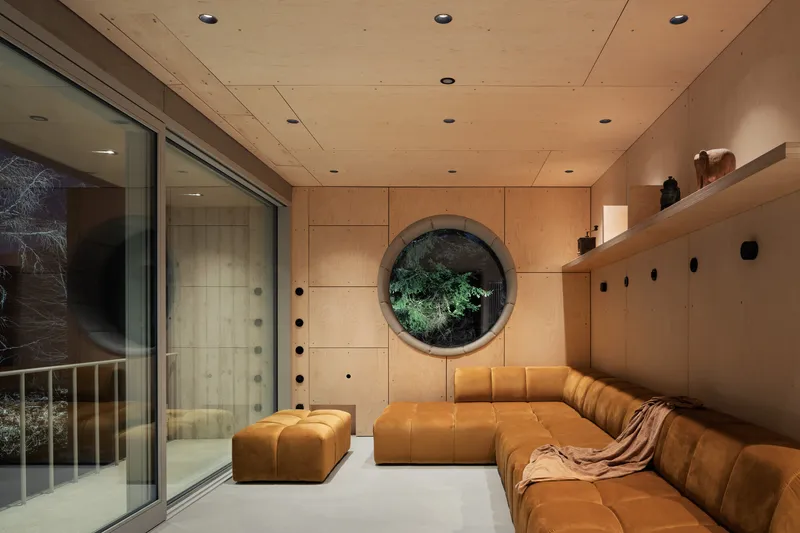
What was once the most damaged part of the structure is now the heart of the home: a generous living area that opens both toward the garden and into the kitchen, reconnecting interior life with the surrounding landscape.
A Reconfigured Rural Typology
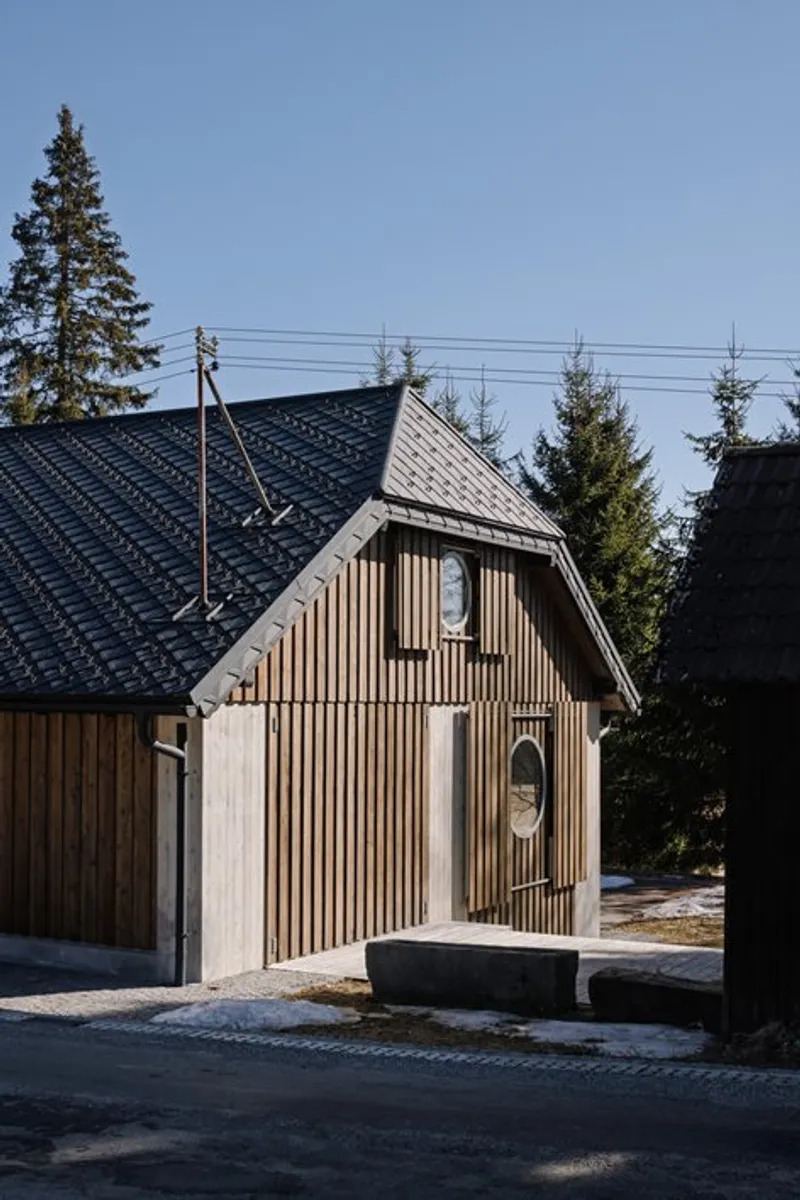
The former barn, vertically extended and structurally reinforced, now functions as a flexible intermediary space—neither fully inside nor outside. It accommodates storage, gatherings, and seasonal use, bridging warmth and cold, domesticity and landscape.
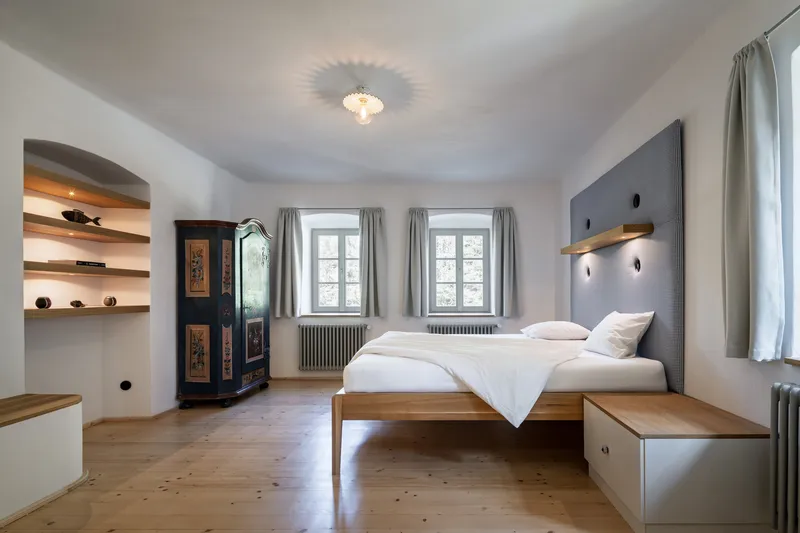
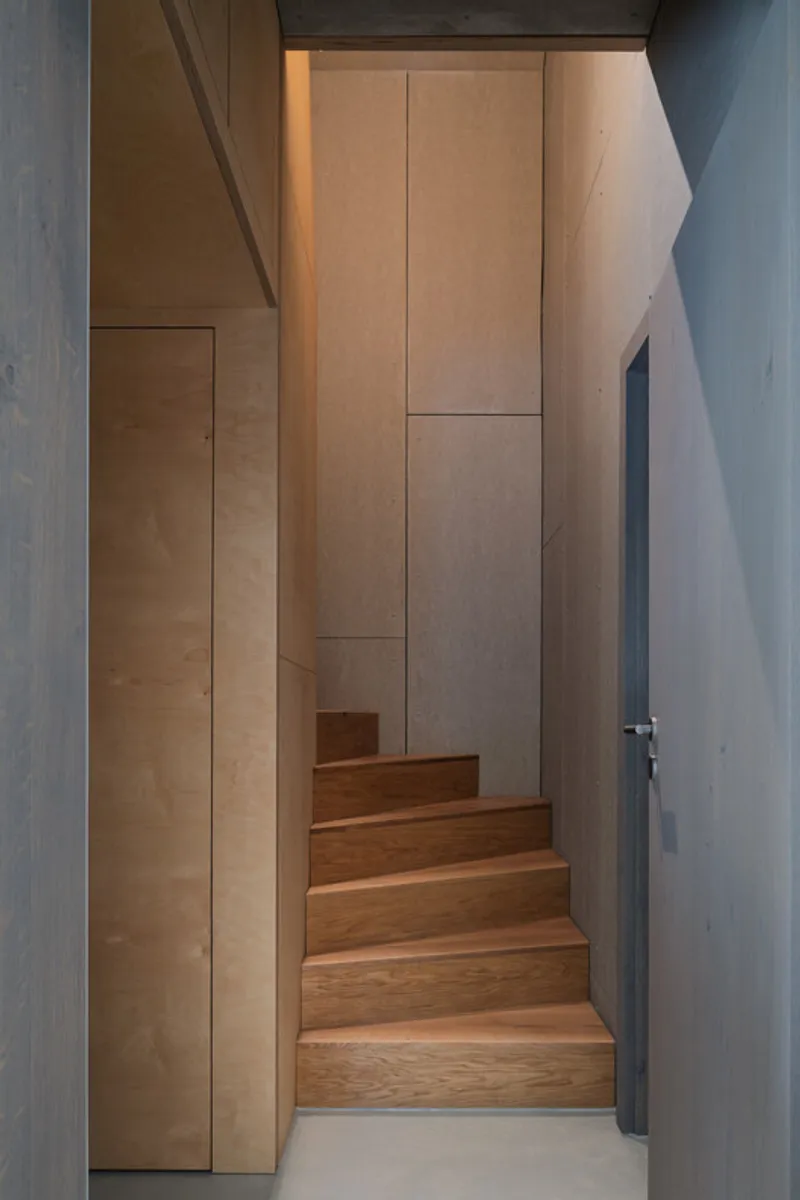
The new layout allows the cottage to function as a multigenerational house, with two residential units and shared spaces connected by a central staircase, reinforcing both independence and togetherness.
Old Silhouette, New Openings
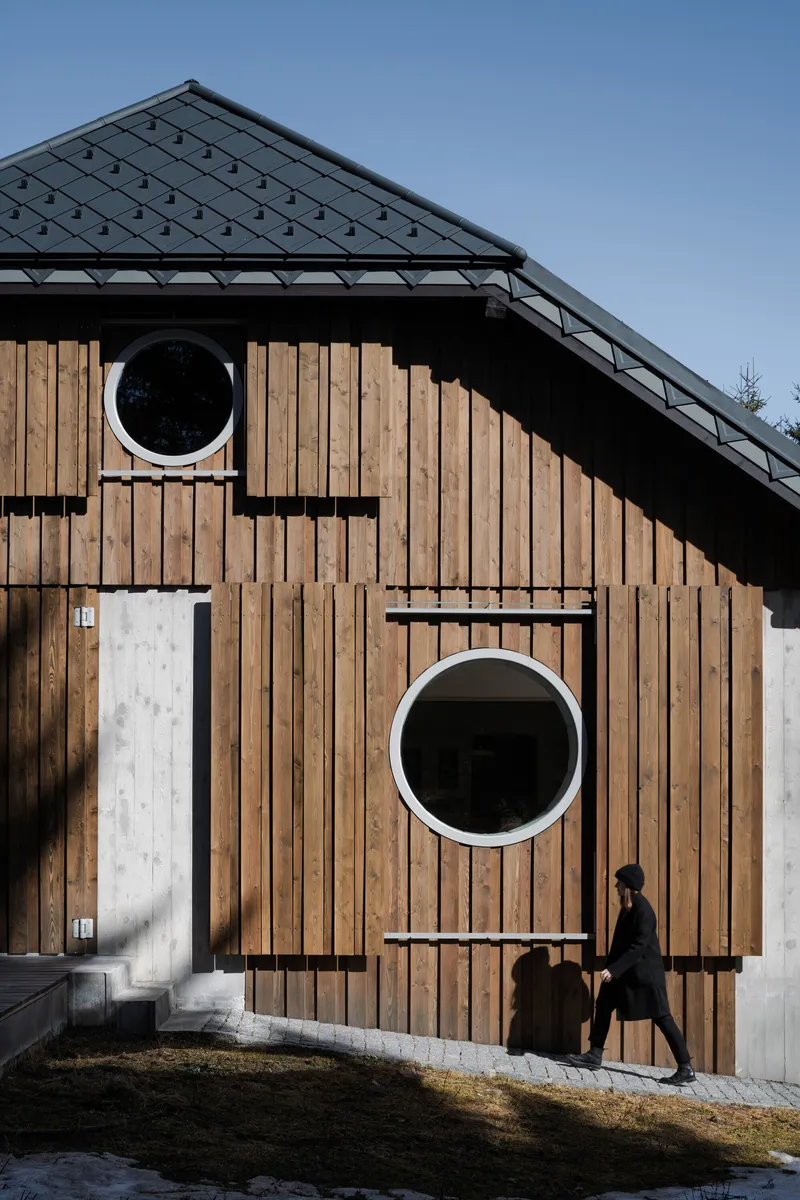
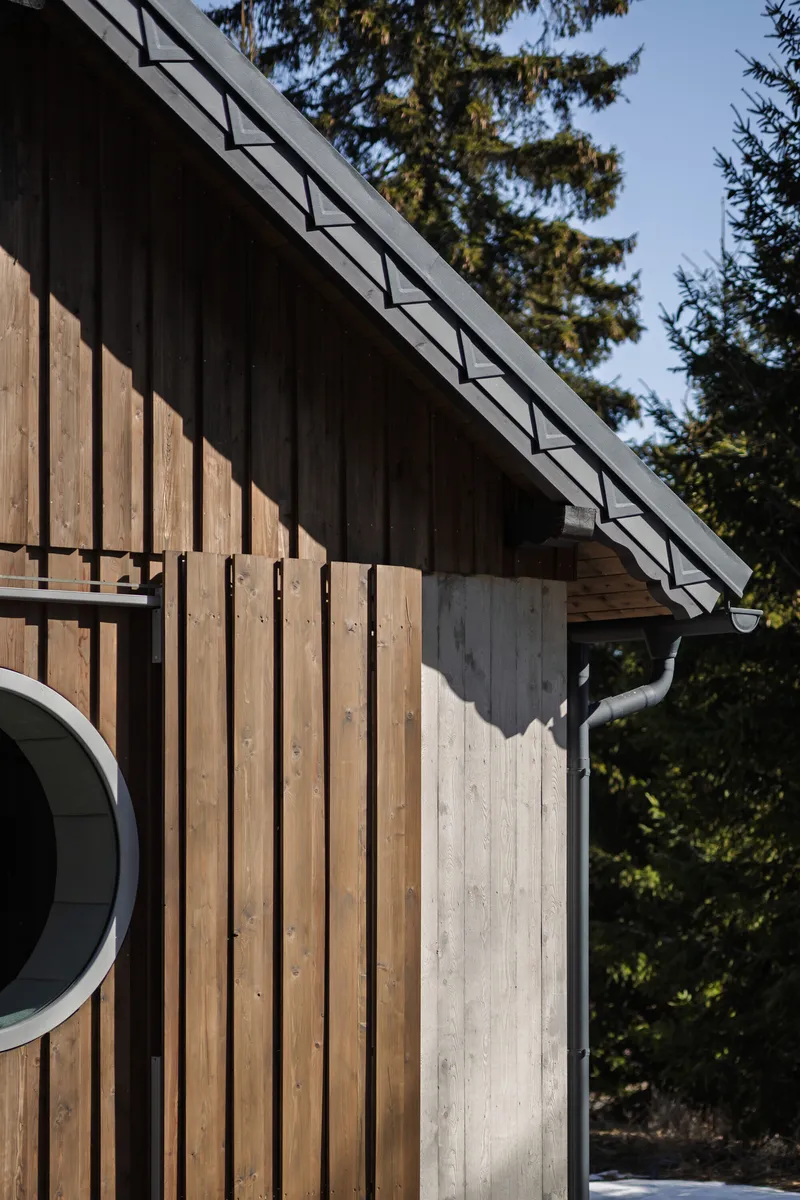
The external silhouette of the house remains unchanged, preserving its familiar presence within the village. Contemporary interventions appear through large-format glazing, which brings daylight deep into the interior and frames views of the forested surroundings.
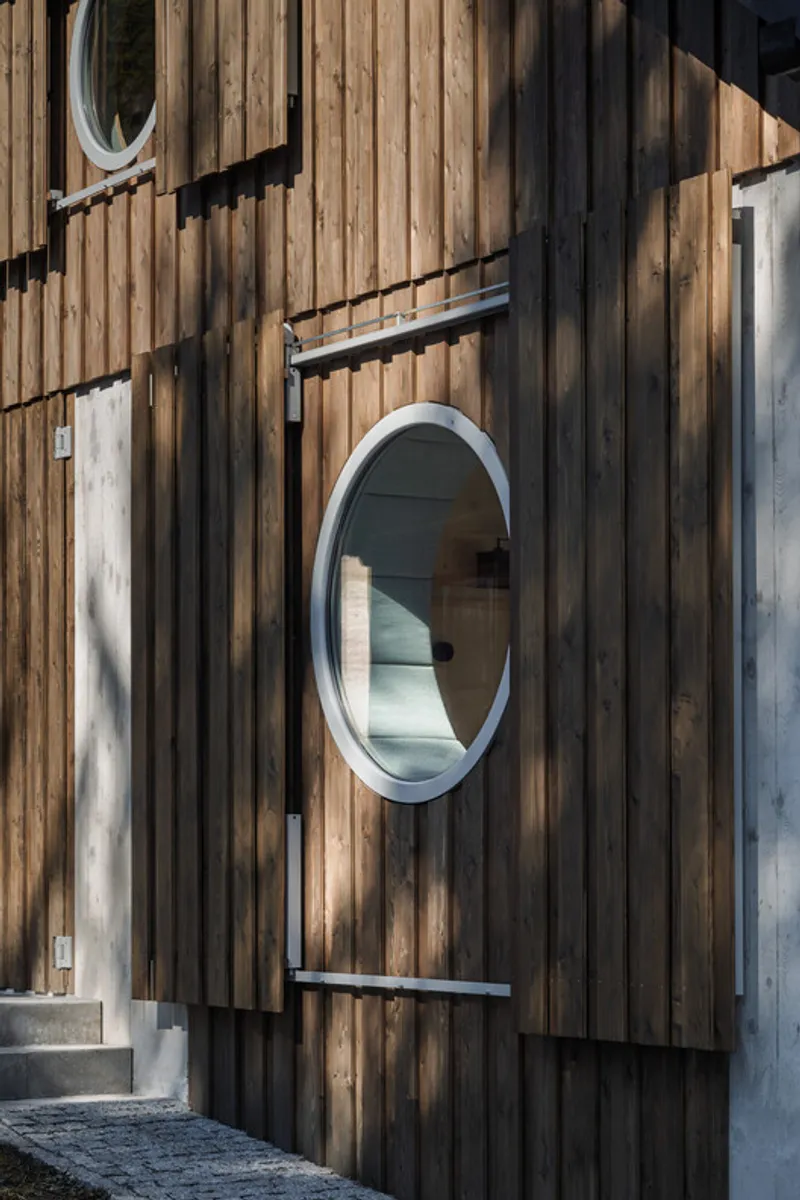
Oversized wooden shutters protect the house from harsh weather and ensure privacy when needed. Their rails remain deliberately visible, as do exposed concrete elements, making the renovation legible rather than concealed. Blending into the landscape, here, does not mean pretending nothing has changed.
Structural Reinvention from Within
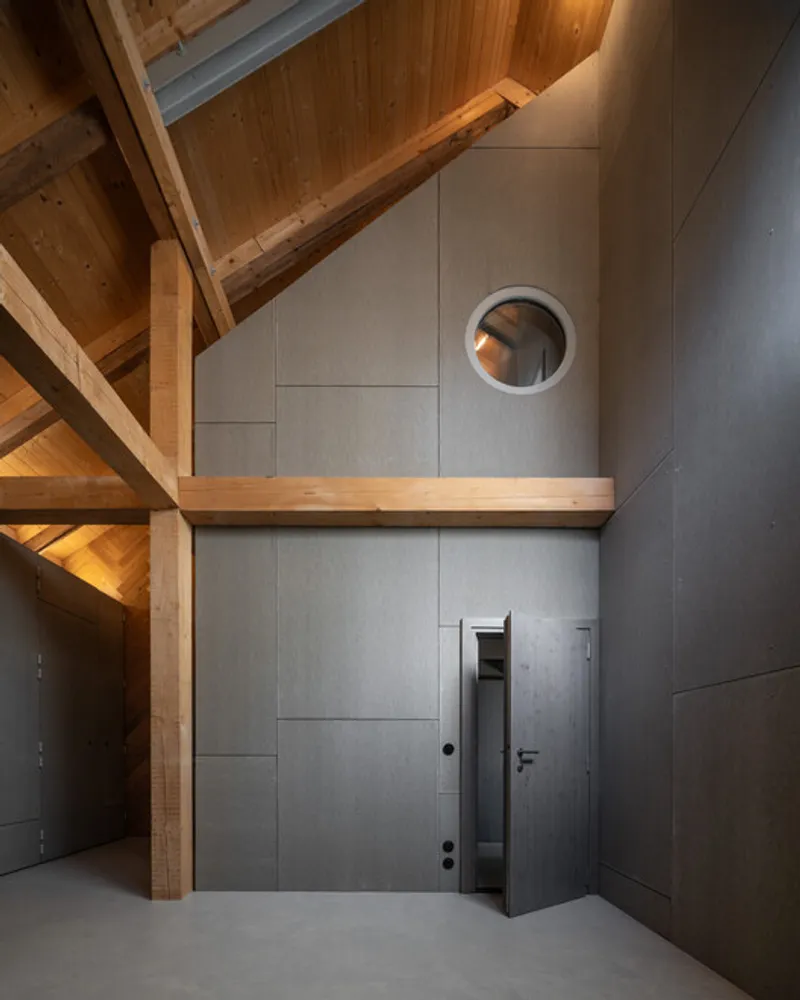
Three massive reinforced concrete columns were introduced to support the roof structure, cast together with new foundations for the barn after the failure of earlier repairs. The original roof truss was carefully salvaged: heavy concrete tiles were replaced with lightweight aluminum, and selected rafters were reinforced with exposed steel beams.
This structural strategy made it possible to insulate the roof envelope, create new living spaces beneath it, and preserve the original timber framework as an integral architectural feature.
A Contemporary Insert Within the Historic Shell
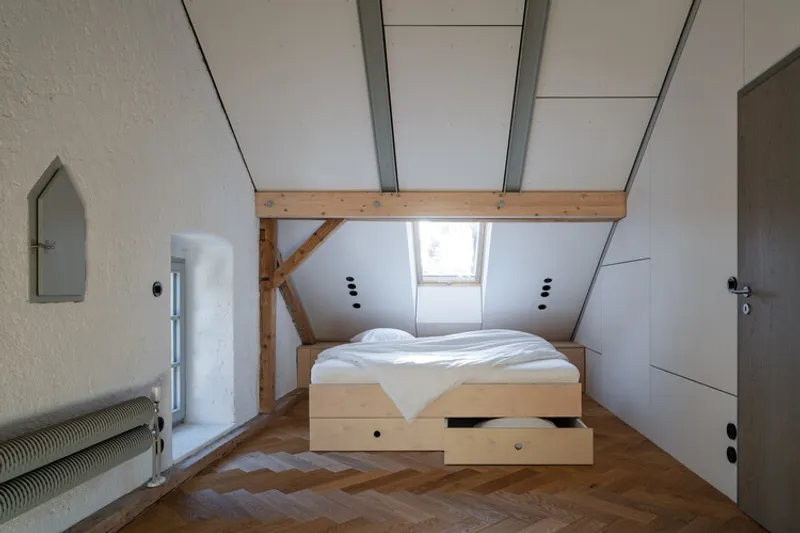
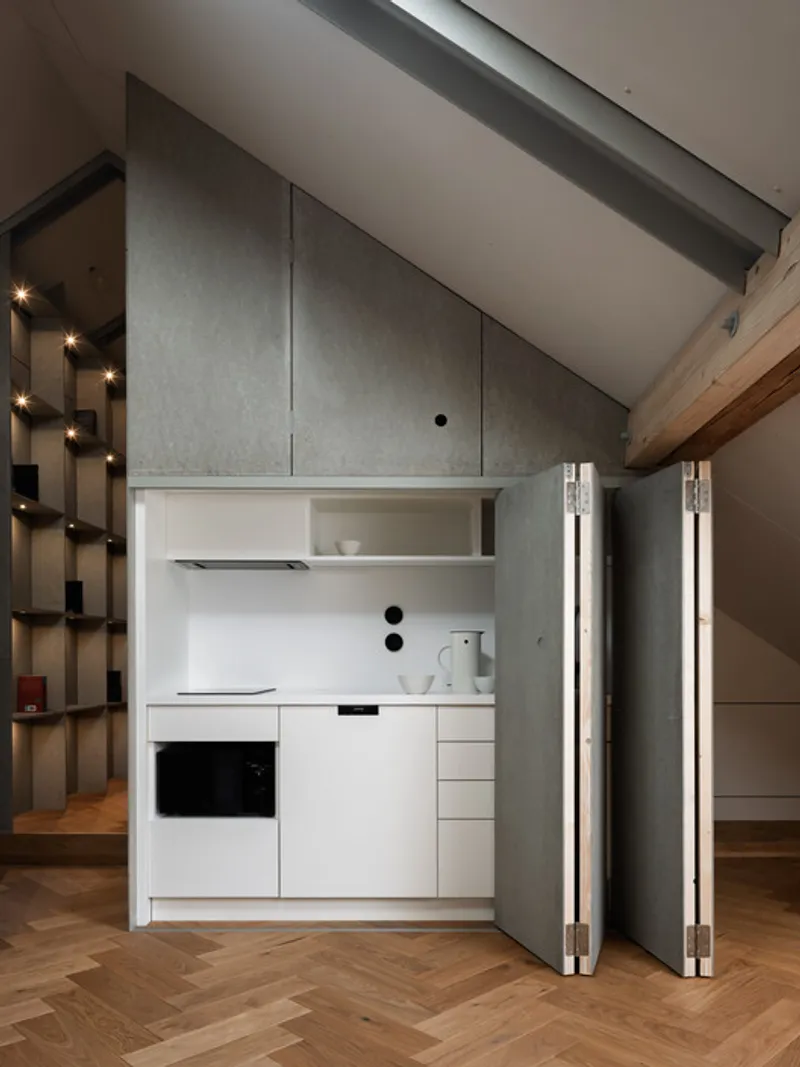
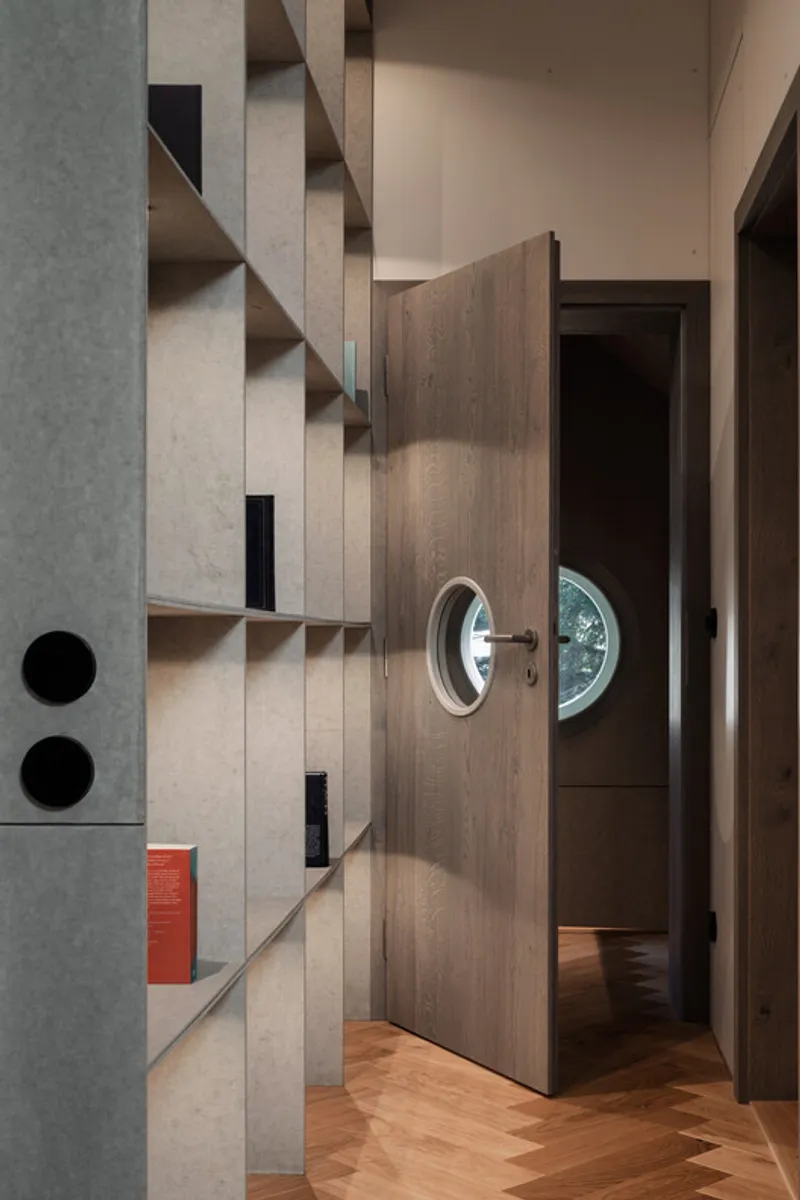
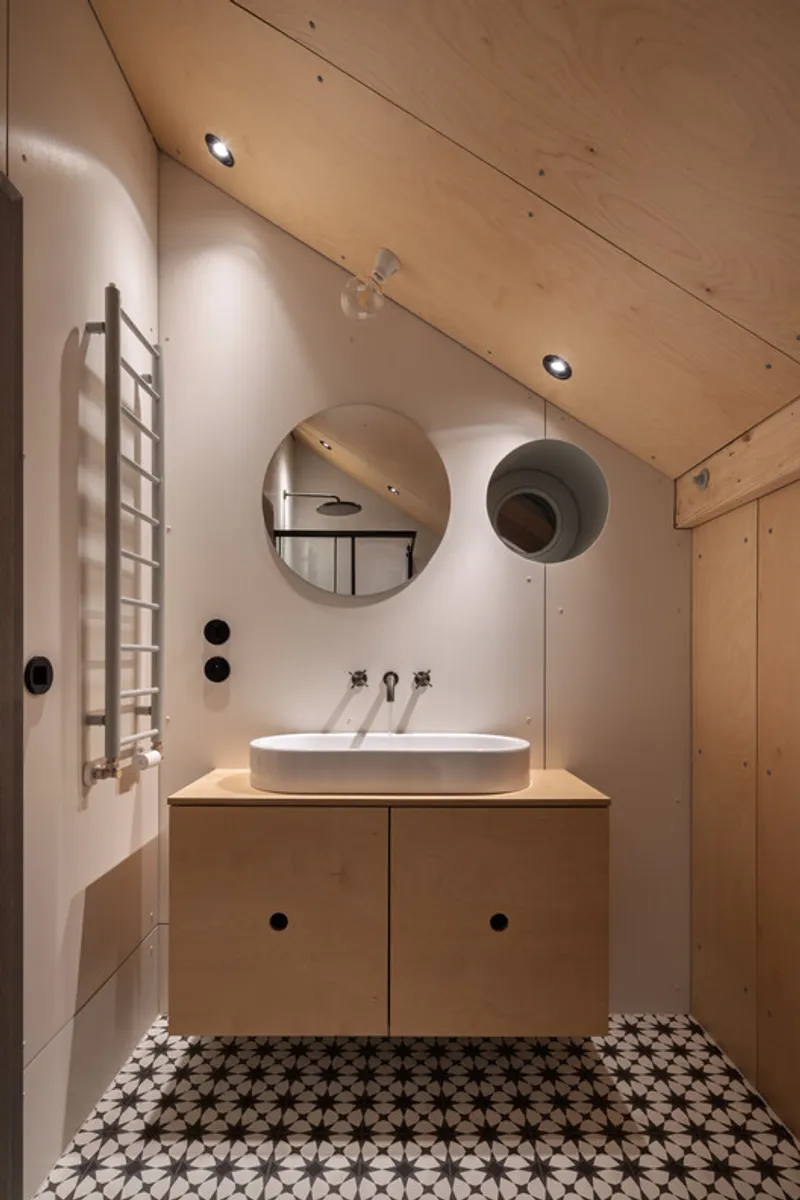
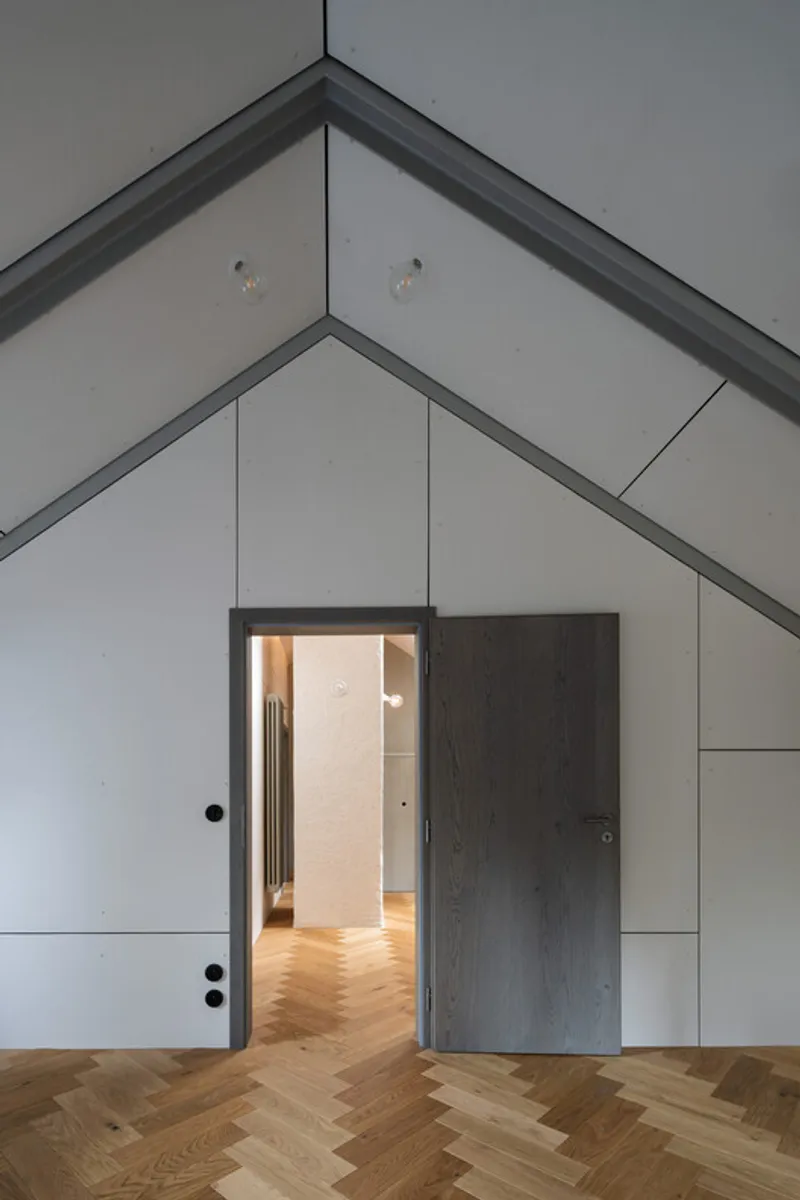
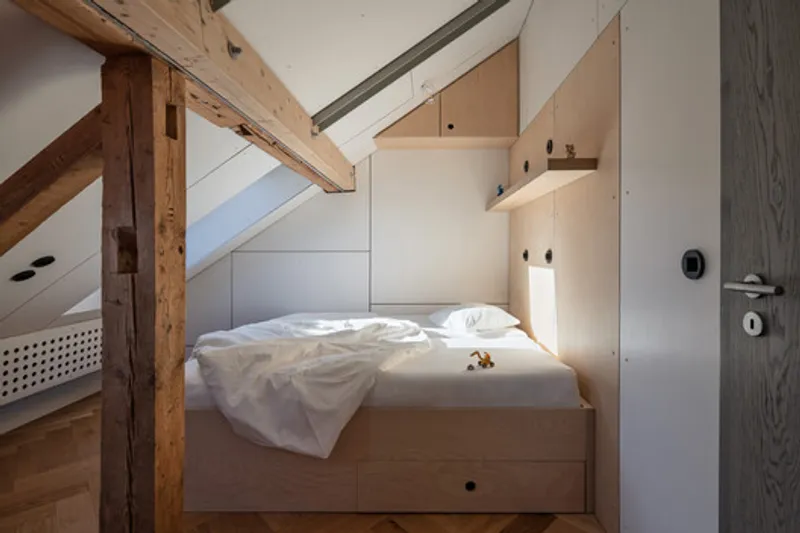
A new timber volume—quite literally screwed into the existing structure—was inserted into the attic and former stalls. Built from a lightweight wooden frame and clad in fiber-cement boards made from natural and recycled materials, the volume houses bathrooms and service spaces.
Crucially, it remains structurally and materially independent from the historic shell, preventing moisture transfer while preserving the vapor-open nature of the original construction.
Craft, Comfort, and Sustainability
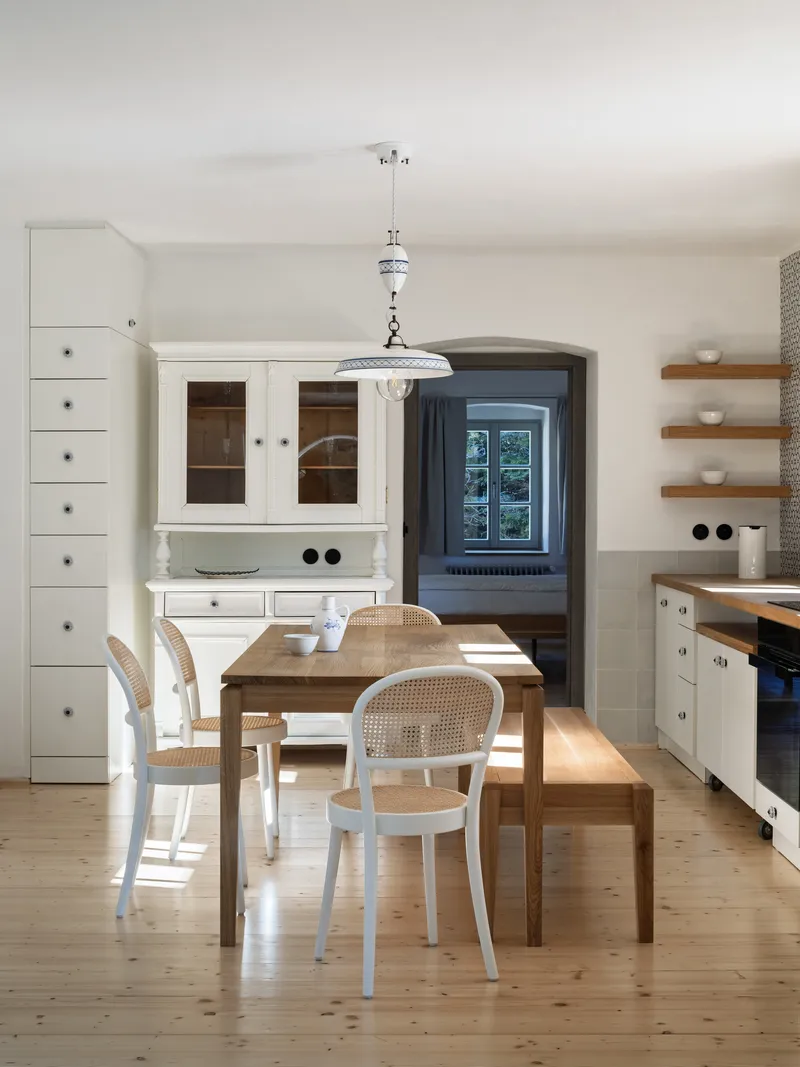
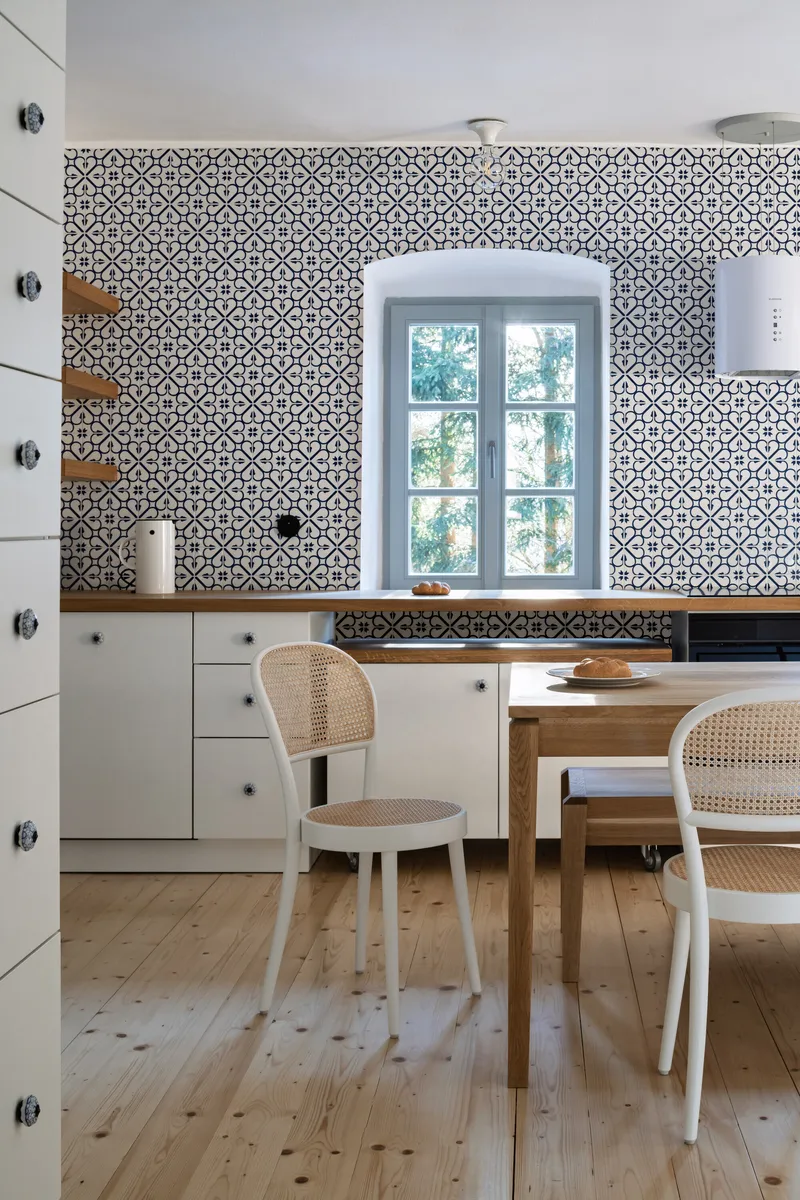
Original wooden floors and the tiled stove on the ground floor were preserved, anchoring the house in its domestic past. While the stove remains functional and cherished, everyday heating is provided by an air-to-water heat pump, integrated into a smart home system that also manages lighting and exterior shutters.
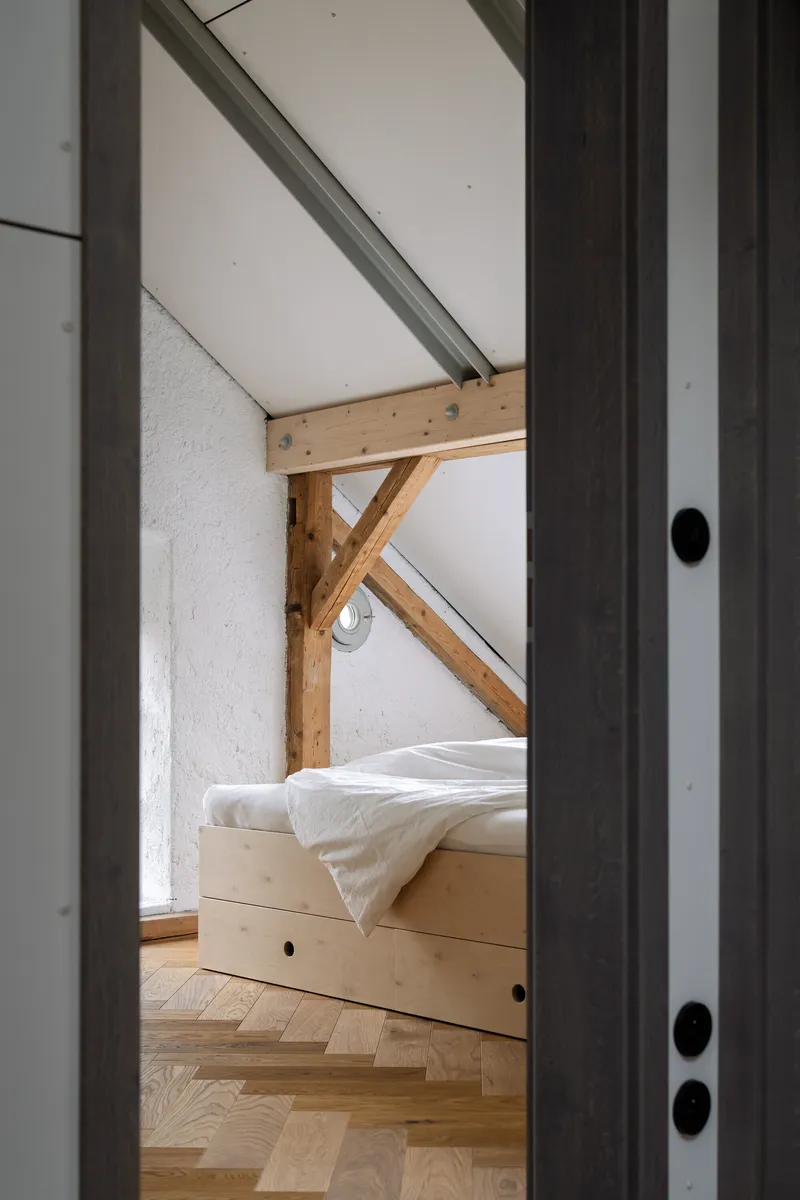
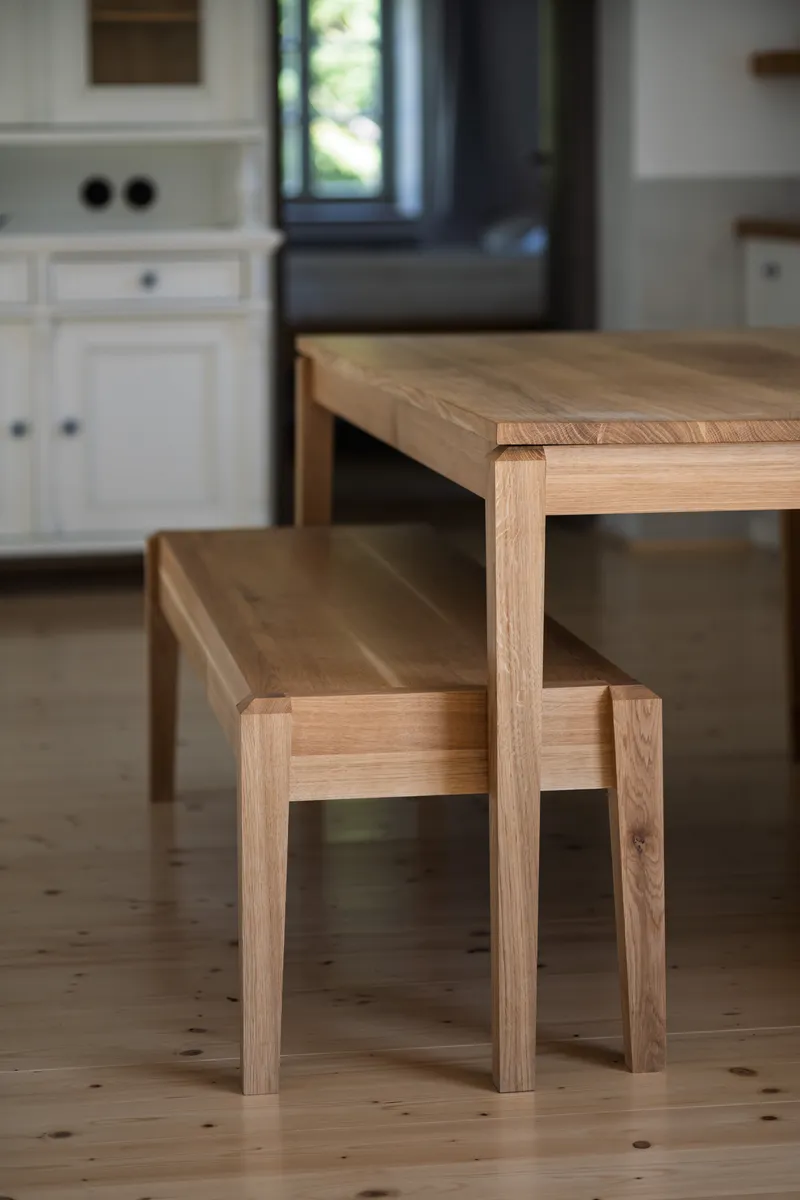
Custom-made furniture—collectively named “Bedřich”, after the carpenter’s dachshund—plays a central role in balancing old and new. Crafted from solid oak, the folding table, bed, and bench were designed specifically for the preserved rooms, combining craftsmanship with near-engineering precision.
A Quiet Tribute to Czech Cottage Culture
The project acknowledges the phenomenon of Czech vacation housing, without which many rural cottages would not have survived. Even the roof insulation detail subtly references the edge of a zmijovka, the traditional cap worn by generations of Czech cottage-goers.
Borová Lada Cottage stands as a restrained yet confident example of heritage renovation, where architectural clarity, craftsmanship, and contemporary living coexist without nostalgia or spectacle.
All the Photographs are works of Tomáš Slavík


Popular Articles
Popular articles from the community


Manzana Morphosis: Stretching Barcelona's Grid into a Living Landscape for 2050
A radical reworking of the Eixample manzana turns density into a tool for generous public space, vertical ecology, and environmental performance.

Opera by the Sea Estonia: Three Shells Dissolving Architecture into Tallinn's Coastline
A winning opera house proposal replaces monumental form with interconnected shells that blur the boundary between building, park and Baltic Sea.

Cloaked Colonization: A Mobile Underwater Habitat That Moves Like a Fish
Micah Abaya's shortlisted EHC Pacific entry reimagines ocean settlement as a dispersed network of self-sustaining architectural organisms.

Singing Woman: An Opera House That Performs Before the Curtain Rises
Ovidiu Cristian Pavel's conceptual opera house translates Estonia's choral identity into a sculpted waterfront landmark facing the Baltic Sea.

Similar Reads
You might also enjoy these articles


Hodi-Mandai Geram
Project Function: Preservation and revitalization of the Intangible heritage and socio-spatial identity of the Hodi by Housing, Cultural Memory Center, Sacred Grove, landscape, local tourism economy


Olio Towers: A Mid-Rise for Performers That Fuses Housing, Rehearsal, and Stage
Located blocks from Houston's Theater District, this modular tower stacks living units around a central performance atrium.

Oasis: Modular Green Housing Carved into Dhaka's Urban Fabric
A shortlisted Plugin Housing entry reclaims unauthorized settlements in Dhaka with stepped concrete volumes, green roofs, and ventilation-driven design.

Black Hole: A Floating Megastructure for the Post-Physical Era
Emiliano Mazzarotto envisions a spherical, self-scaling arena where e-sports, digital hotels, and holographic stadiums replace traditional public space.

Explore Czech Cubism Competitions
Discover active competitions in this discipline

Challenge to reimagine the Iron Throne

Photograph architecture without architects

Illustrate the lost glory of Angkor Wat - Render Challenge

Design challenge to reuse E-waste
Comments (0)
Please login or sign up to add comments
No comments yet. Be the first to comment!