

Buda Recypark Industrial Center – Sustainable Logistics Hub by A229 and EVR Architecten
A sustainable logistics and recycling hub combining timber construction, modular design, green infrastructure, and efficient waste management along the Brussels Canal.


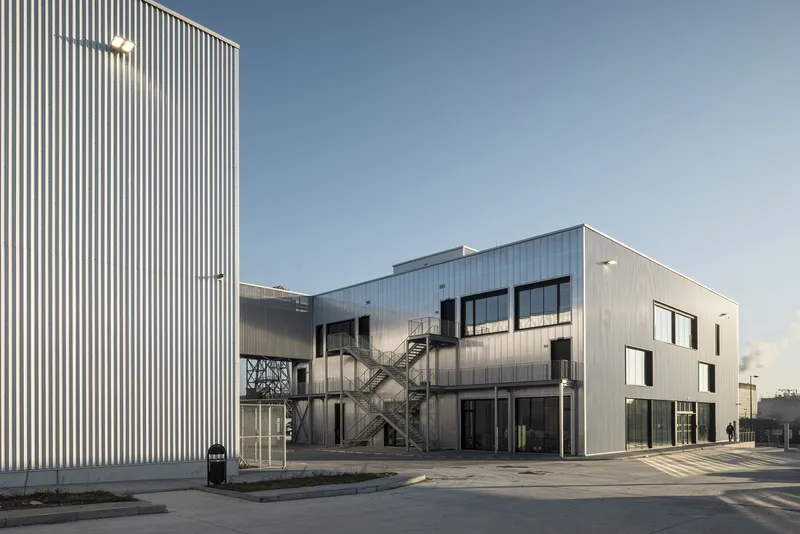
The Buda Recypark Industrial Center in Brussels stands as a pioneering model for circular construction, sustainable industrial architecture, and future-ready urban logistics. Designed by A229 and EVR Architecten, the 9,660 m² complex transforms a previously underused canal-side site near the Buda Bridge into a high-performance waste-management hub that integrates seamlessly into its urban landscape. With its emphasis on renewable materials, modular design, and energy-efficient operations, the project establishes a new benchmark for environmentally responsible public infrastructure in Belgium.
A Modern Logistics Facility Rooted in Urban Regeneration
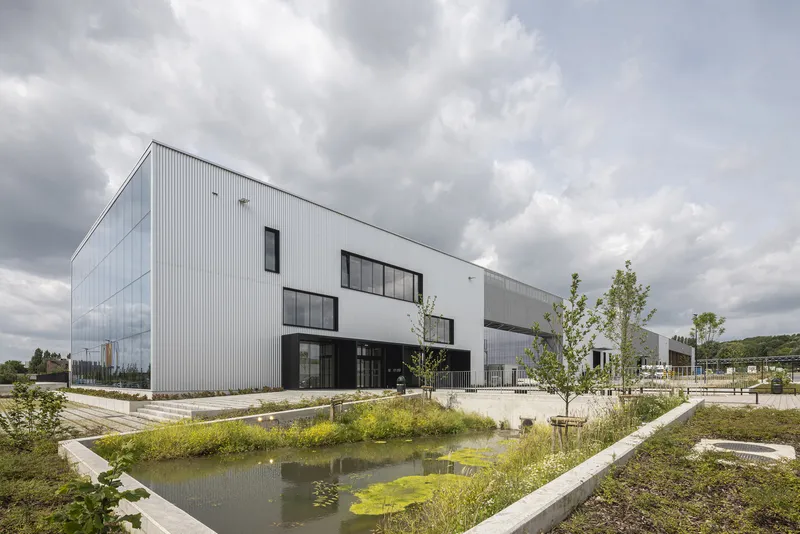
The new Brussels Propreté / Net Brussel logistics site is conceived as a functional, aesthetic, and sustainable ecosystem. Set along the Brussels Canal, the project revitalizes the industrial waterfront and creates a robust operational base for waste collection, sorting, and recycling—all while enhancing the surrounding public realm.
The masterplan organizes the site into four carefully orchestrated longitudinal strips, each serving a distinct operational role:
1. Hard Strip – Heavy Vehicle Operations
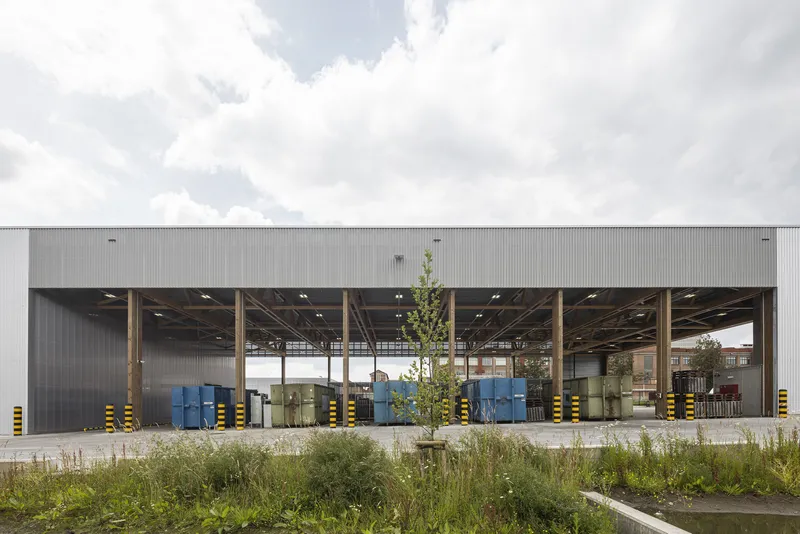
This zone accommodates all truck-related activities, including:
- Parking areas
- Washing and inspection zones
- Dedicated circulation flows for large vehicles
The layout supports efficient movement and maintenance, reducing operational downtime.
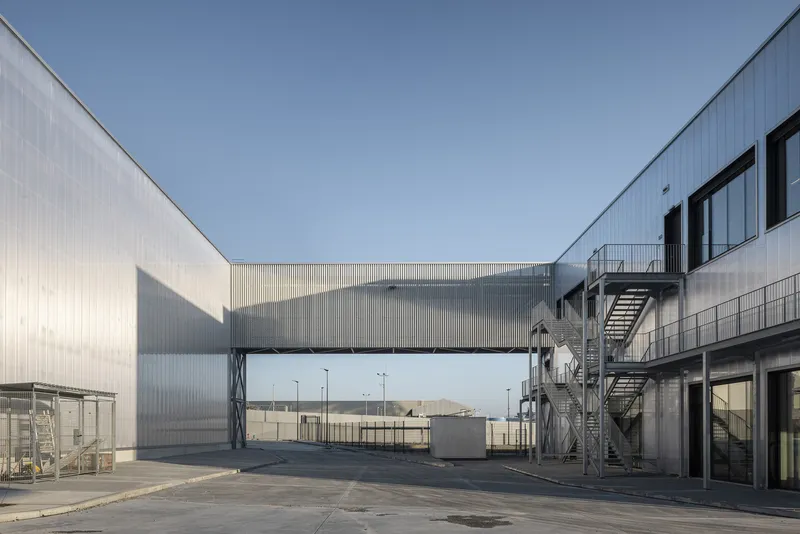
2. Building Strip – Iconic Canal-Side Volume
A singular architectural volume houses:
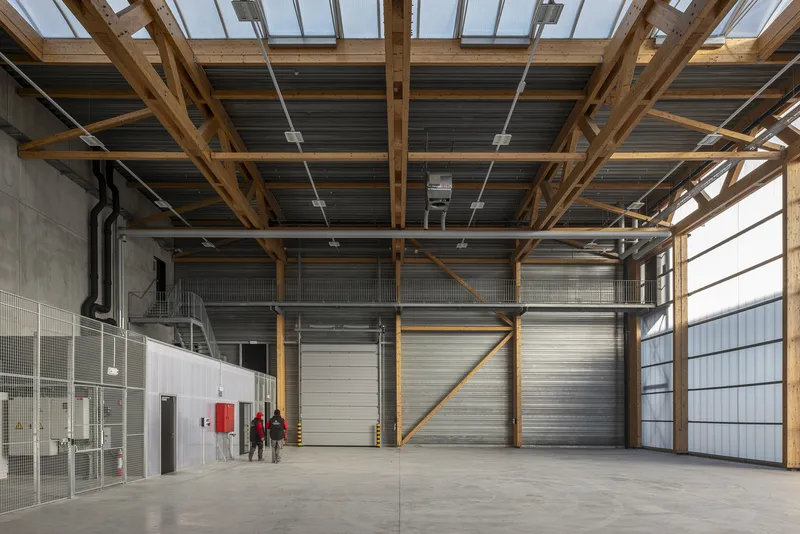
- The main logistical halls
- The central support building
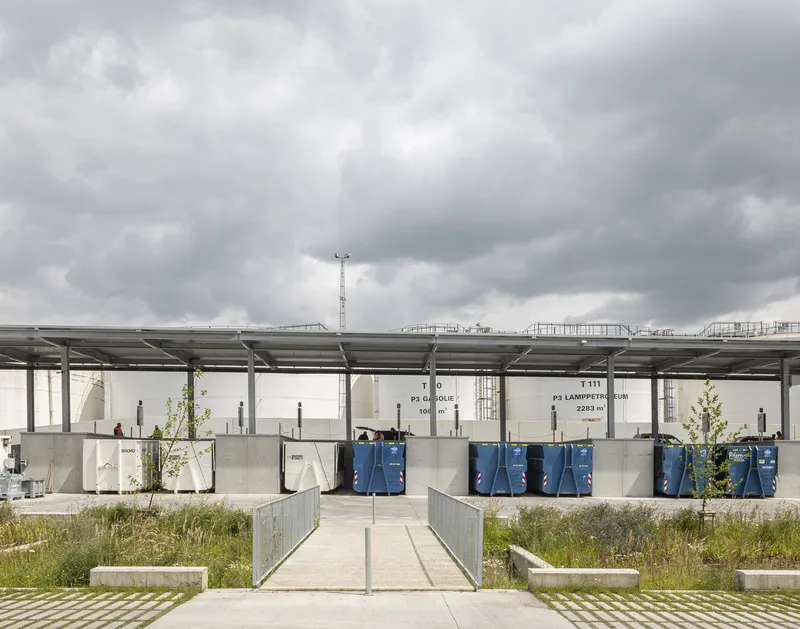
- Waste management and sorting facilities
Visible from the canal, the structure acts as a contemporary marker of Brussels’ evolving industrial identity.
3. Green Strip – Ecological Landscape Spine
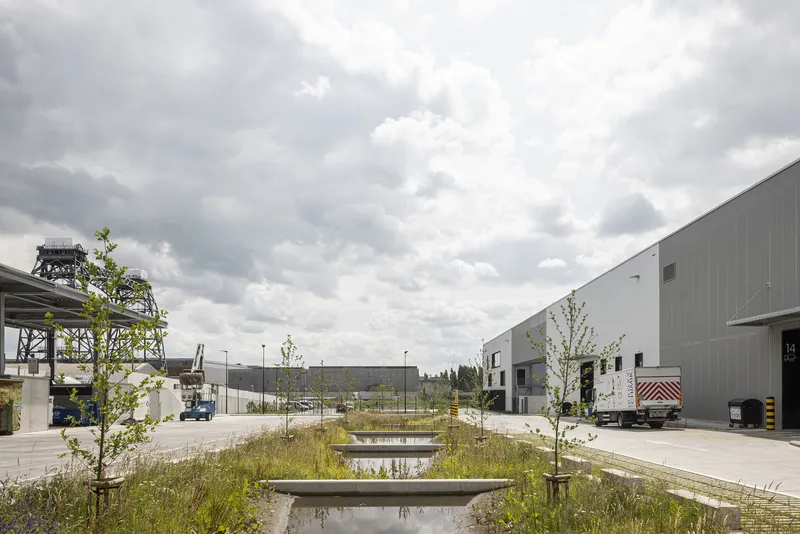
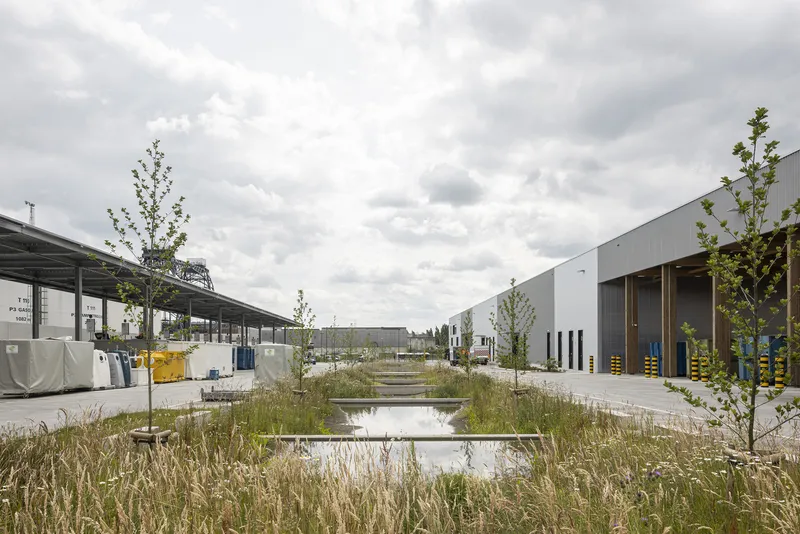
This green axis integrates:
- Water management features
- Biodiversity-supporting vegetation
- A soft landscape buffer between logistics and the city
The strip extends toward the canal, forming a public esplanade that reconnects the industrial grounds with the community.
4. Recycling Center (PAC) Strip – Publicly Accessible Hub
A dedicated, easily accessible recycling center supports:
- Safe, separated traffic flows
- Public drop-off for reusable materials
- Community engagement through recycling culture
This separation ensures operational efficiency while welcoming public participation.
Human-Centered Architecture for Staff Well-Being
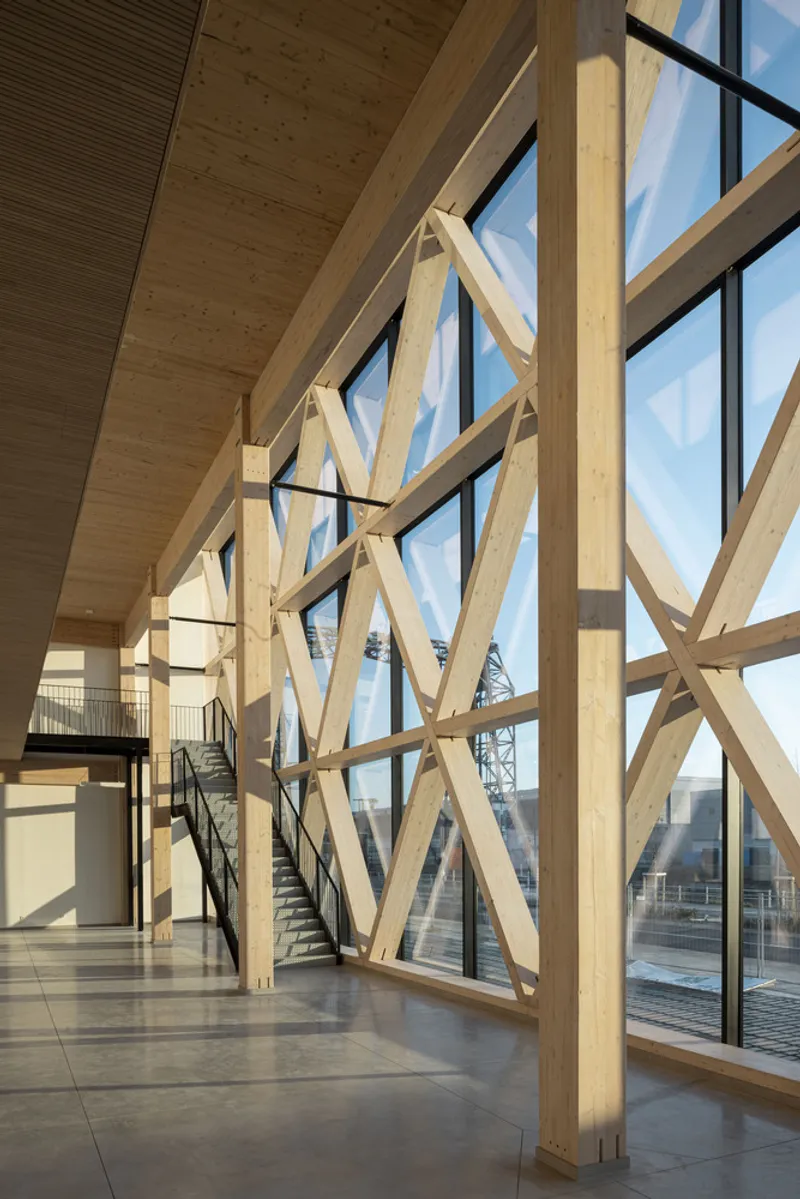
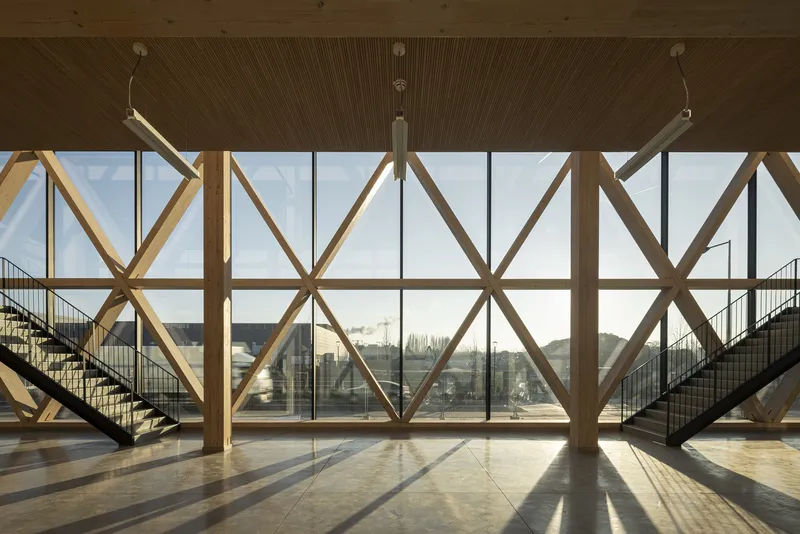
The social building includes offices, changing rooms, rest zones, and a canteen. Its interior design prioritizes:
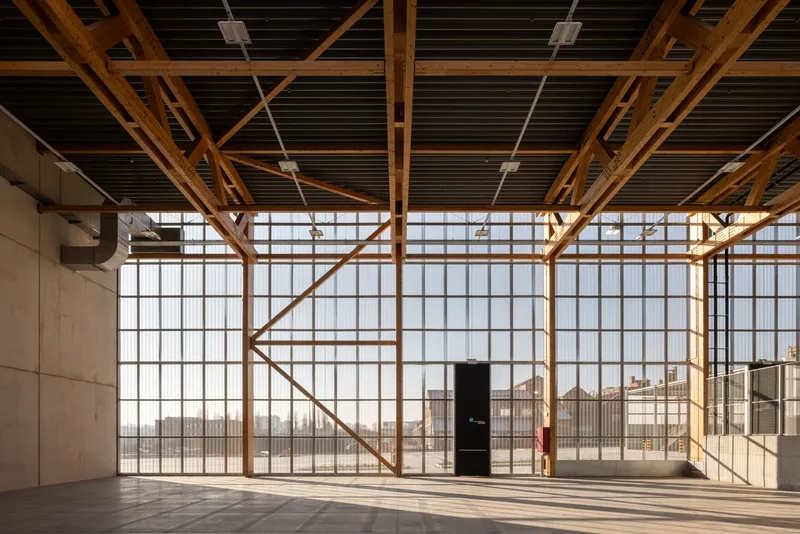
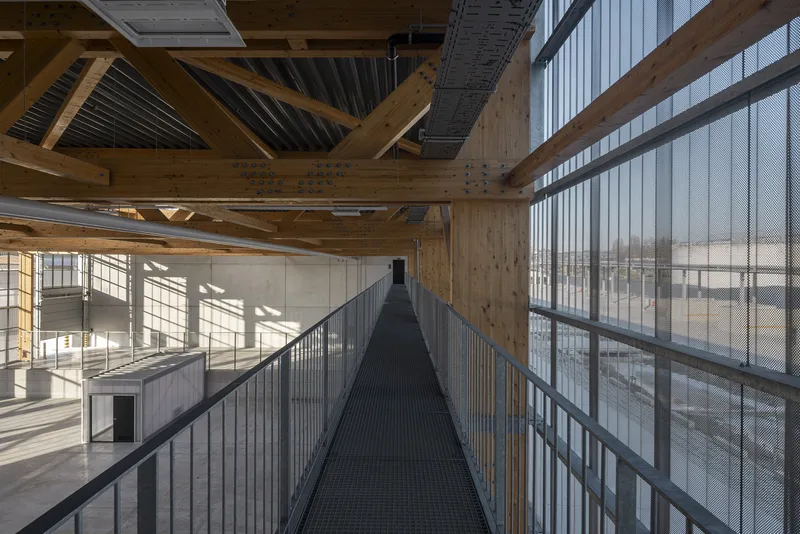
- Abundant natural daylight for better visual comfort
- Optimized acoustic and thermal performance
- Extensive use of wood, improving indoor air quality
- A warm, biophilic atmosphere to support staff health and satisfaction
The architecture moves beyond industrial utility, promoting a workplace that values comfort and wellbeing.
Circular Construction and Renewable Materials
Sustainability is embedded into every design decision. The architects prioritized:
Local, Renewable, and Modular Materials
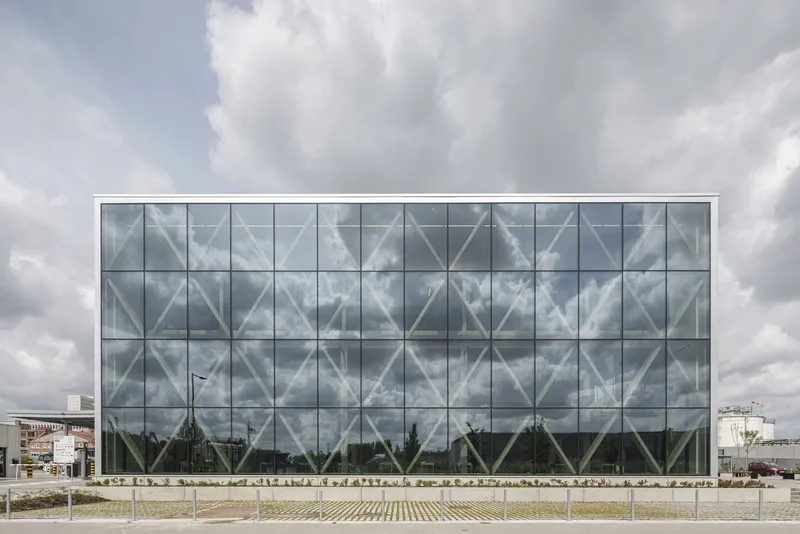
- Predominantly timber construction
- Low ecological footprint
- High flexibility through modular and adaptable systems
Dry Construction Techniques
This method reduces:
- On-site disruptions
- Waste
- Water usage
It also simplifies future dismantling and material recovery.
Circular Material Flows
- Thousands of cubic meters of earth transported by canal instead of road
- Building materials delivered by boat to reduce carbon emissions
- A demolition inventory established for future reuse
Design for Adaptability and Future Expansion
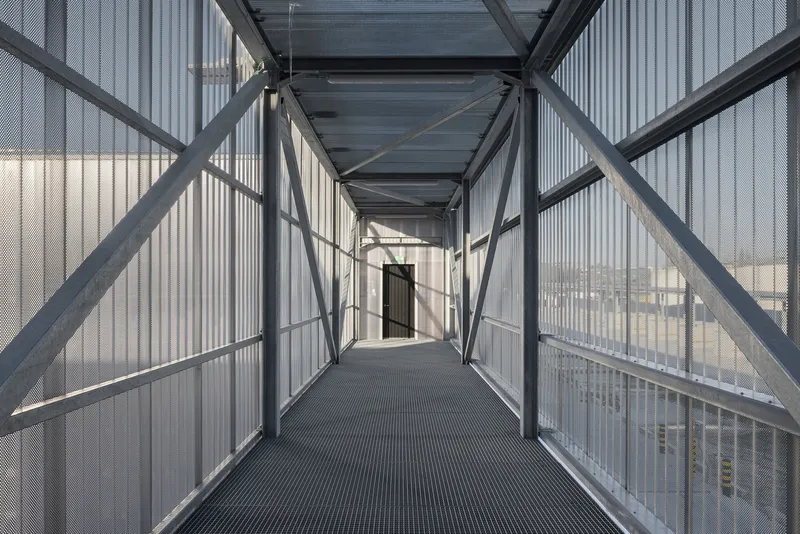
The logistics halls use standardized industrial elements that enable straightforward expansion by adding new bays. Key innovations include:
“Box-in-a-Box” Sorting Cabin
A relocatable module allowing:
- Easy reconfiguration of sorting activities
- Minimal structural intervention for future changes
Recycling and Reuse Facilities
The container park integrates areas dedicated to:
- Repairable goods
- Reusable materials
- Circular economy channels
This ensures the site actively contributes to Brussels' long-term sustainability agenda.
A Reference Model for Brussels’ Public Infrastructure
The Buda Recypark Industrial Center sets a precedent for all future construction and renovation projects undertaken by the Brussels Network Agency. Through its integration of sustainable materials, advanced logistics planning, and community-oriented spaces, it represents a forward-thinking vision for urban-industrial development.
All photographs are works of Tim Van de Velde


Popular Articles
Popular articles from the community


Cube Design Draws an Ecological Corridor Between Two Shenzhen Hills with the Nankai Building
Beside Shenzhen's container docks, the Nankai Building pairs stacked balconies with a climbing green screen to connect two hillsides across its height.

David Ortega Stacks a Two-Story Mexico City Penthouse Around a Steel Stair and a Pergola-Shaded Roof Terrace
In Colonia Roma, a 300 m² penthouse uses oak joinery, a planted steel stair and a slatted roof pergola to make a new-build apartment feel like a house.

LT2A and OPEN Architectes Thread a Brick and Glass High School Through a Wooded Belgian Campus
In Braine-l'Alleud, a 3,000 m² wing for Collège Cardinal Mercier pairs pale brick with a glazed colonnade, deferring to a small chapel and a dense wood.

longwave studio Reorganizes a 112 m² Tainan Apartment Around the Daily Routines of a Family and Two Cats
In Tainan, Taiwan, birch plywood, rust-red furniture and a freestanding plaster wall link arrival, storage, work and family life in one apartment.

Similar Reads
You might also enjoy these articles


Hodi-Mandai Geram
Project Function: Preservation and revitalization of the Intangible heritage and socio-spatial identity of the Hodi by Housing, Cultural Memory Center, Sacred Grove, landscape, local tourism economy


Olio Towers: A Mid-Rise for Performers That Fuses Housing, Rehearsal, and Stage
Located blocks from Houston's Theater District, this modular tower stacks living units around a central performance atrium.

Oasis: Modular Green Housing Carved into Dhaka's Urban Fabric
A shortlisted Plugin Housing entry reclaims unauthorized settlements in Dhaka with stepped concrete volumes, green roofs, and ventilation-driven design.

Black Hole: A Floating Megastructure for the Post-Physical Era
Emiliano Mazzarotto envisions a spherical, self-scaling arena where e-sports, digital hotels, and holographic stadiums replace traditional public space.

Explore Sustainable Design Competitions
Discover active competitions in this discipline

Challenge to reimagine the Iron Throne

Photograph architecture without architects

Illustrate the lost glory of Angkor Wat - Render Challenge

Design challenge to reuse E-waste
Comments (0)
Please login or sign up to add comments
No comments yet. Be the first to comment!