
Bunkie on the Hill Residence by Dubbeldam Architecture + Design – A Contemporary Cabin Rooted in the Muskoka Landscape
A compact contemporary cabin with split rooflines, curated forest and lake views, warm wood interiors, and sustainable design seamlessly integrated into the Muskoka hillside.

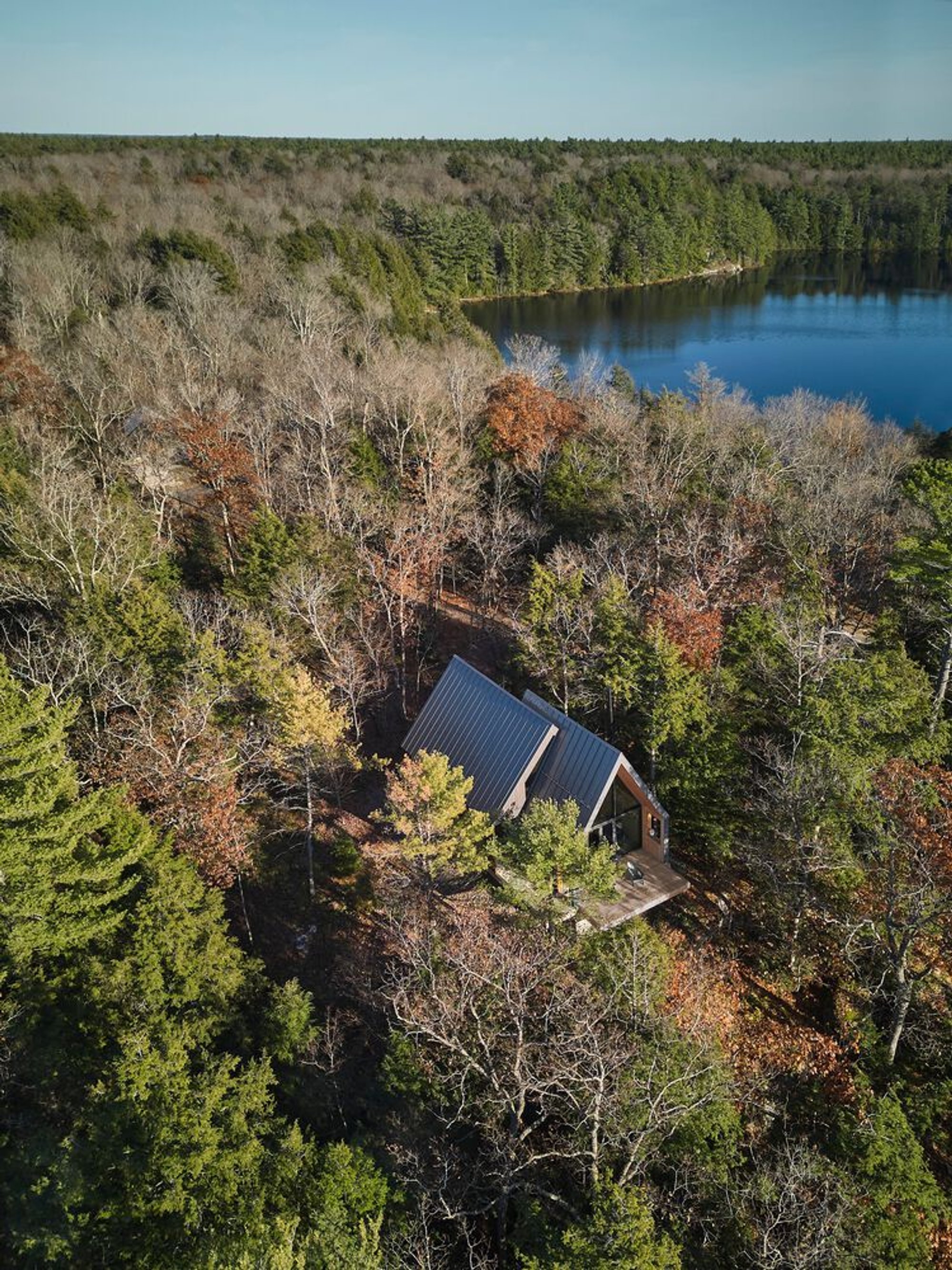
Bunkie on the Hill Residence by Dubbeldam Architecture + Design reimagines the classic cabin typology through a refined contemporary lens. Perched at the crest of a steep, forested slope in Muskoka, Canada, this compact 93 m² retreat is the smallest of several family cabins dispersed across four shared properties. Designed as a quiet refuge for a family-oriented client, the bunkie offers seclusion from the activity of the multigenerational cottages below while remaining deeply connected to the surrounding landscape.
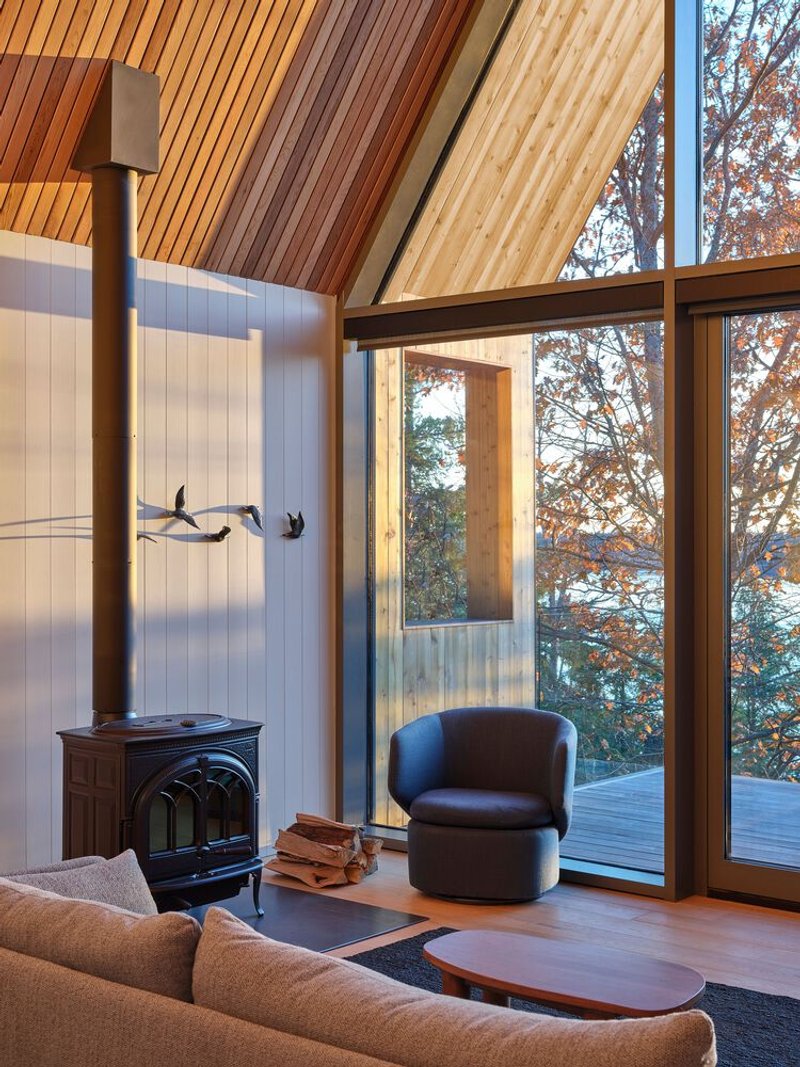
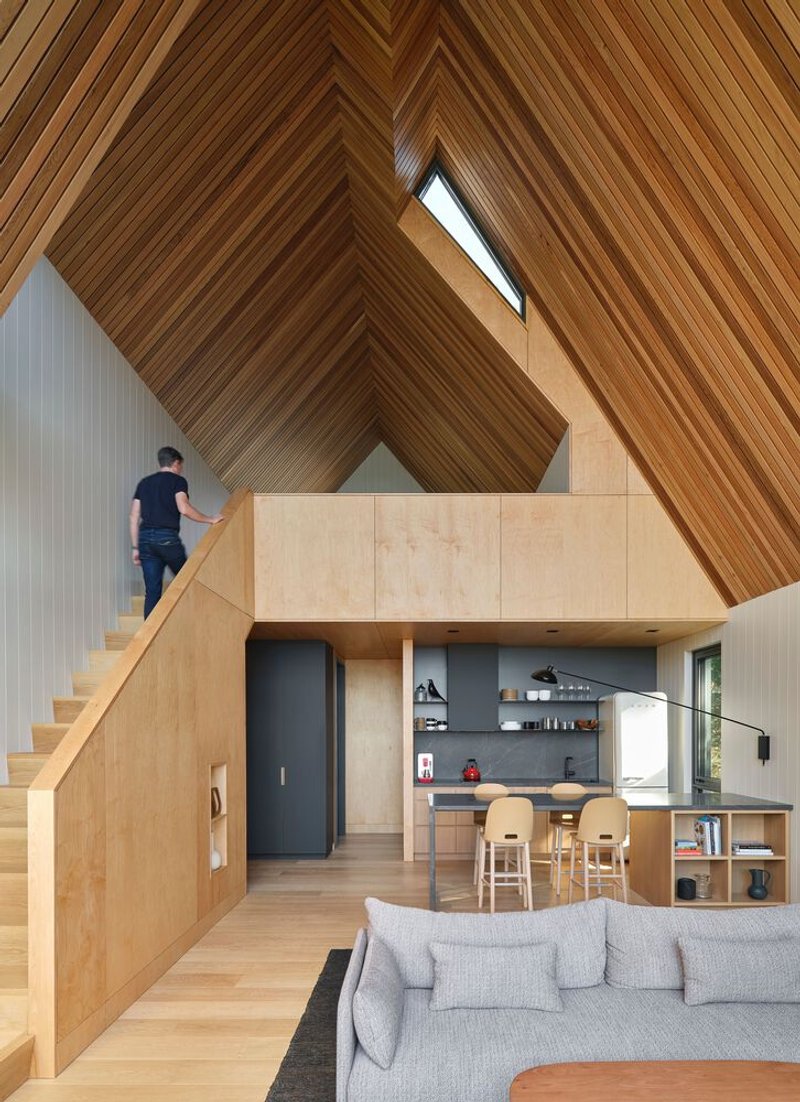
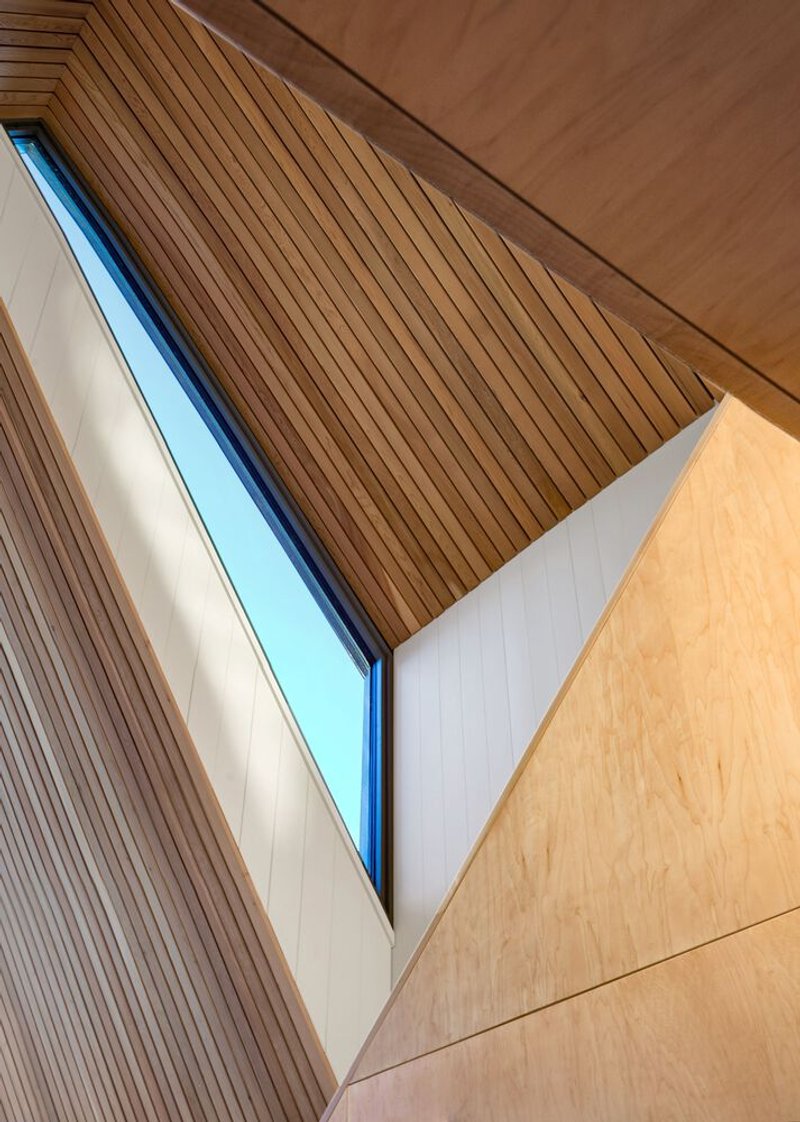
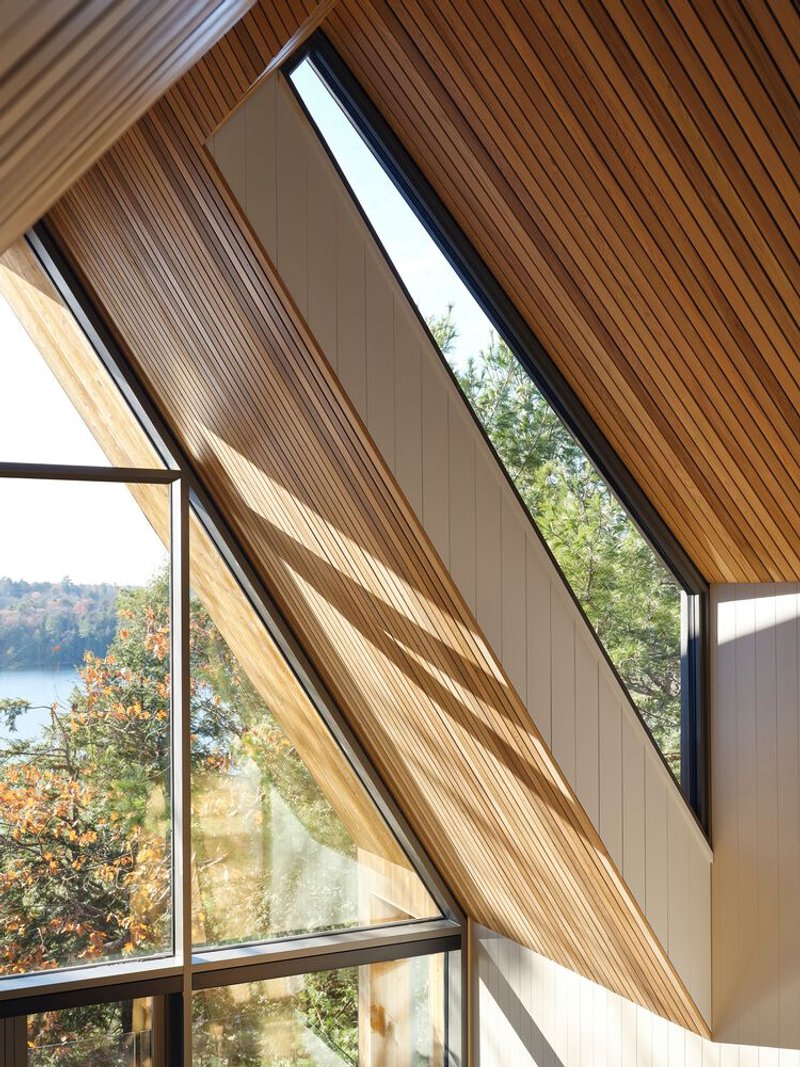
The architectural concept draws inspiration from traditional A-frame cabins, yet departs from convention through a sculptural split-roof form. Two intersecting roof volumes, reminiscent of the region’s layered rock formations, create a dynamic composition that sets the structure apart. The separation between these volumes introduces geometric window openings that frame curated views of the dense treetops and the expansive lake below. Natural light pours into the interior through these precise cuts, casting sharp shadows across angled ceilings and enhancing the dramatic spatial experience.
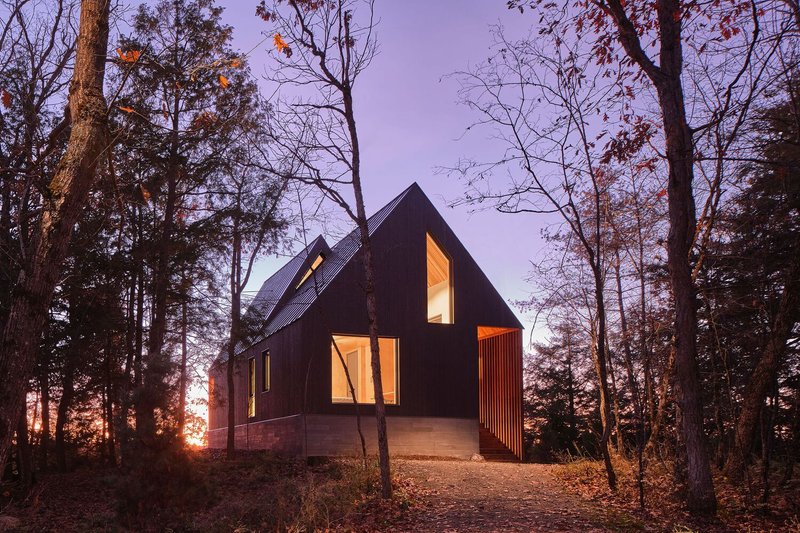
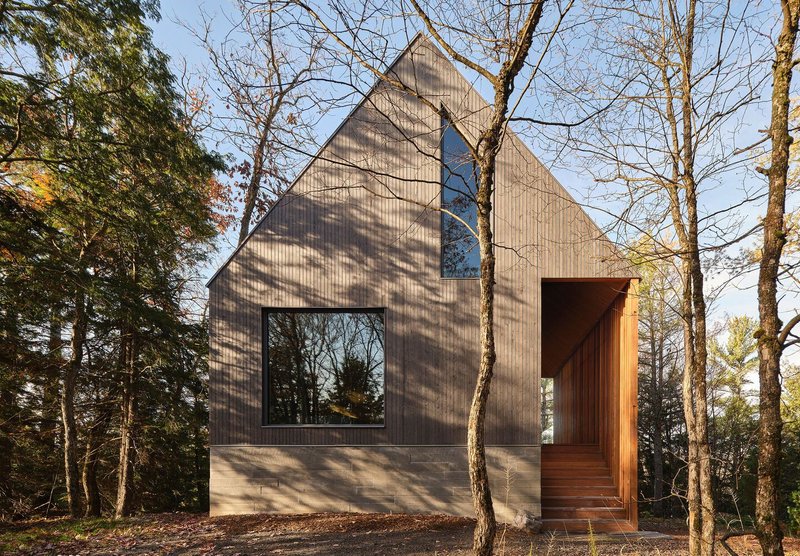
From the exterior, the contrasting elevations emphasize the cabin’s relationship with its site. A tall, slender glazed façade faces the lake, capturing uninterrupted panoramic views and inviting daylight deep into the living spaces. The opposite façade, more solid and grounded, opens to the forest with a warmer, wood-clad presence. Its west-facing entrance is carved into the volume, accessed via a walkway screened by vertical cedar slats. This screen echoes the rhythm of surrounding tree trunks and filters the shifting sunlight, creating a play of light and shadow that evolves throughout the day.
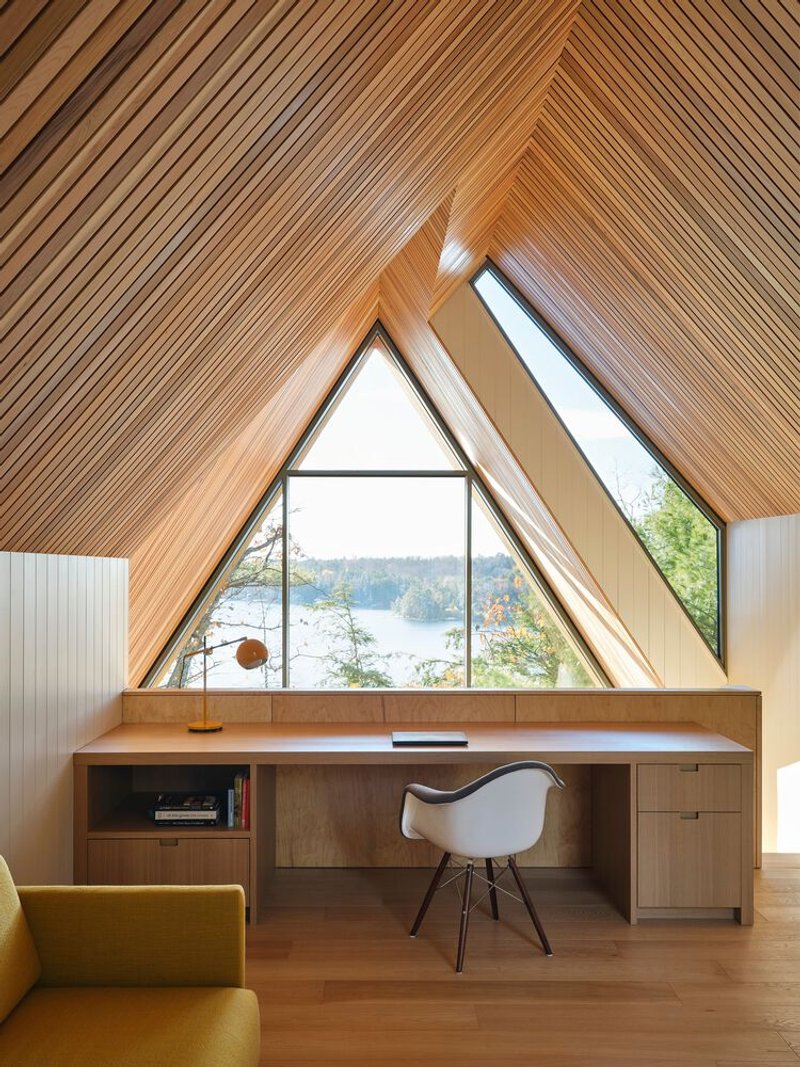
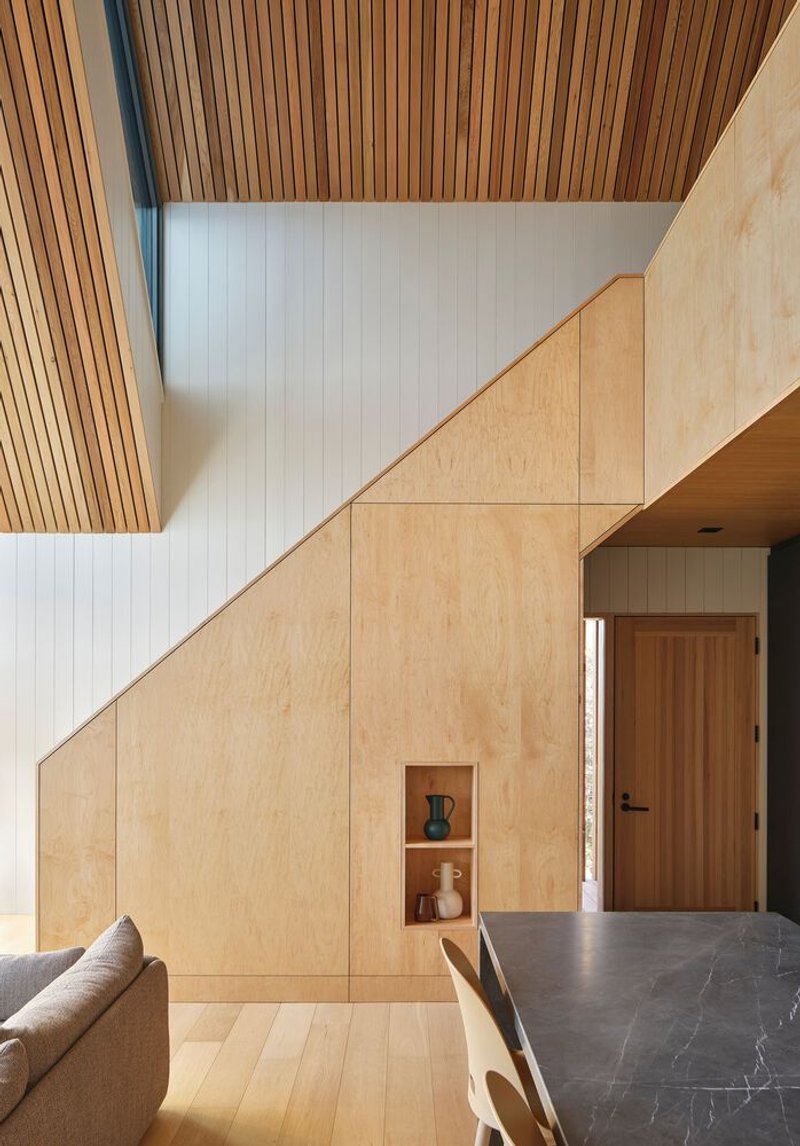
Inside, the bunkie balances spatial efficiency with an immersive connection to nature. Despite its compact footprint, the interior is thoughtfully optimized through built-in shelving, storage niches, and integrated benches. The double-height living space serves as the heart of the cabin, anchored by expansive windows that draw the eye toward the water. A loft above includes a built-in desk positioned to overlook both the living area and the sweeping lake view, while also offering additional sleeping accommodations. The bedroom at the rear opens directly to the forest through a large picture window, allowing occupants to feel enveloped by the surrounding trees.
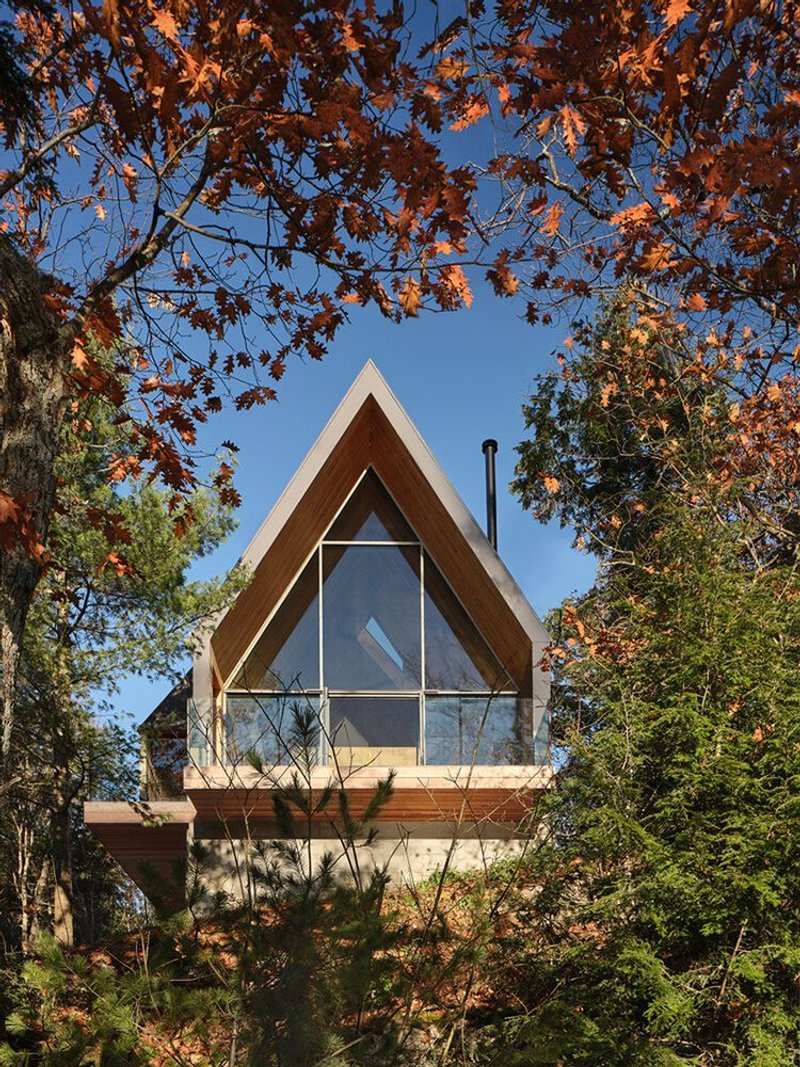
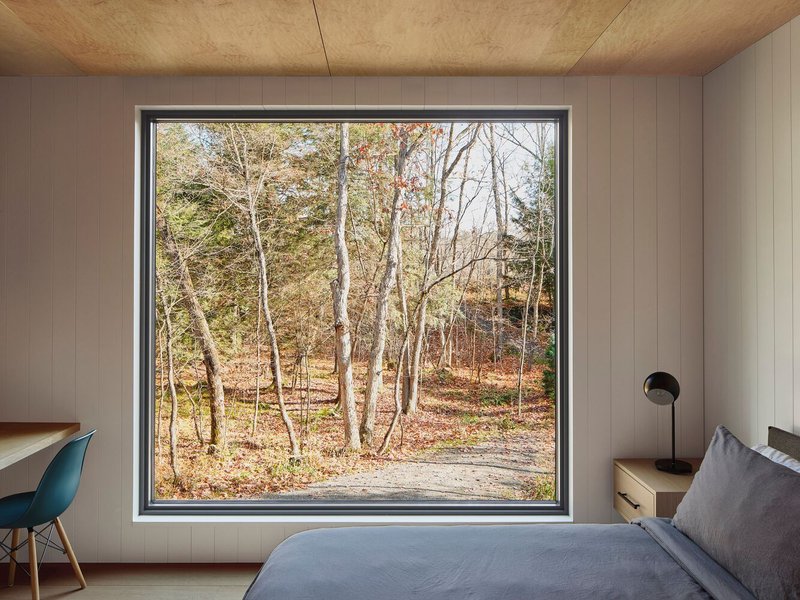
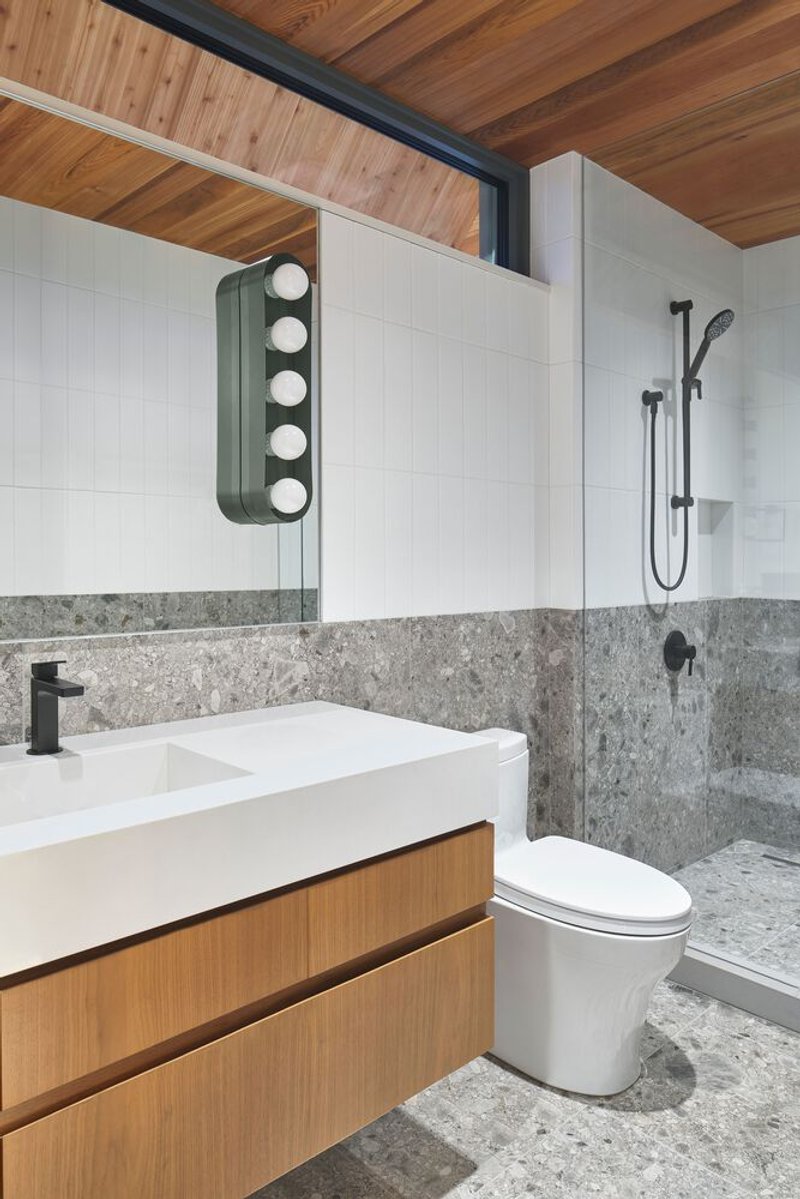
Materiality plays a central role in grounding the architecture within its environment. Exterior greyed wood siding blends into the rustic Muskoka landscape, complemented by warm cedar soffits and the cedar entrance screen. The board-formed concrete base echoes the raw texture of the site’s natural rock. Inside, oak flooring, maple plywood partitions, and Western red cedar ceiling slats create a warm, layered palette accentuated by charcoal window frames and cool stone surfaces. As Principal Heather Dubbeldam notes, the use of varied wood species helps define the distinct planes within the compact interior while reinforcing the cabin’s organic character.
Sustainability is embedded throughout the design. The thickened exterior walls achieve an R-value above 40, paired with triple-glazed windows to significantly reduce heating demands. Steel framing incorporates flitch beams to eliminate thermal bridging, emphasizing energy performance without compromising structural efficiency. The cabin sits lightly on the terrain, elevated above grade to respect the existing rock formations and avoid blasting. FSC-certified wood products, low-flow plumbing fixtures, and low-energy lighting further reduce environmental impact. Over time, the natural materials will weather gracefully, allowing the cabin to fade seamlessly back into its forested hilltop setting.
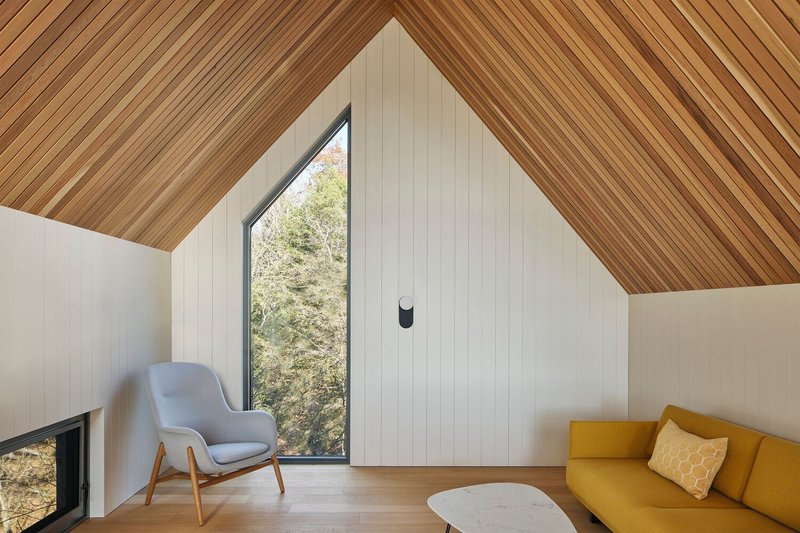
All photographs are works of Riley Snelling




Popular Articles
Popular articles from the community


Solar Steam: A Climate-Responsive Architecture That Redefines the Monument
A climate-responsive memorial architecture that transforms heat, decay, and time into a living system reflecting humanity’s ecological impact.
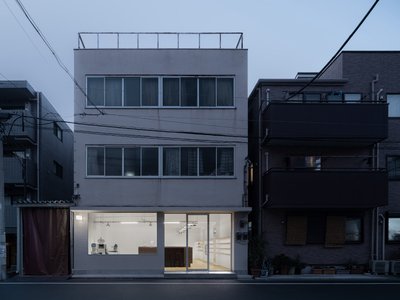
Atelier Macri Concept Store Interior Design by CASE-REAL
Atelier Macri store features a "ko" counter, walnut wood details, cork displays, blending retail, gallery, and seamless customer experiences.

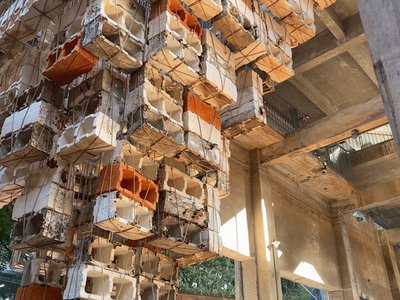
Inverted Architecture Installation by Studio Link-Arc: Exploring the Intersection of Architecture and Living Organisms
Inverted Architecture Installation by Studio Link-Arc blends mycelium, sustainability, inverted design, ecological cycles, and urban adaptive architecture in Shenzhen.


Similar Reads
You might also enjoy these articles


The Ken Roberts Memorial Delineation Competition (Krob)
As the most senior architectural drawing competition currently in operation anywhere in the world, it draws hundreds of entries each year, awarding the very best submissions in a series of medium-based categories.


Waterfront Redevelopment and Urban Revitalization in Mumbai: Forging a New Dawn for Darukhana
A transformative waterfront redevelopment project reimagining Darukhana’s shipbreaking heritage into an inclusive urban future.

OUT-OF-MAP: A Call for Postcards on Feminist Narratives of Public Space
Rhizoma Design and Research Lab invites artists, designers, architects, researchers, and students to reflect on how feminist perspectives can reshape public space. Selected works will be exhibited in Barcelona, October 2026. Submissions open until 15 April 2026.


Documentation Work on Buddhist Wooden Temple
Architectural syncretism and cultural hybridity: A comparative study of the Buddhist temples in Chattogram Hill tracks
Explore Architecture Competitions
Discover active competitions in this discipline




The International Standard for Design Portfolios


The Global Benchmark for Architecture Dissertation Awards


The Global Benchmark for Graduation Excellence


Challenge to reimagine the Iron Throne
Comments (0)
Please login or sign up to add comments
No comments yet. Be the first to comment!