
Cabane 7L Installation by Manuel Bouzas: A Timber Observatory Overlooking Villa Medici Gardens, Rome
Cabane 7L by Manuel Bouzas is a sustainable timber observatory at Villa Medici, offering panoramic garden views and cultural event spaces.


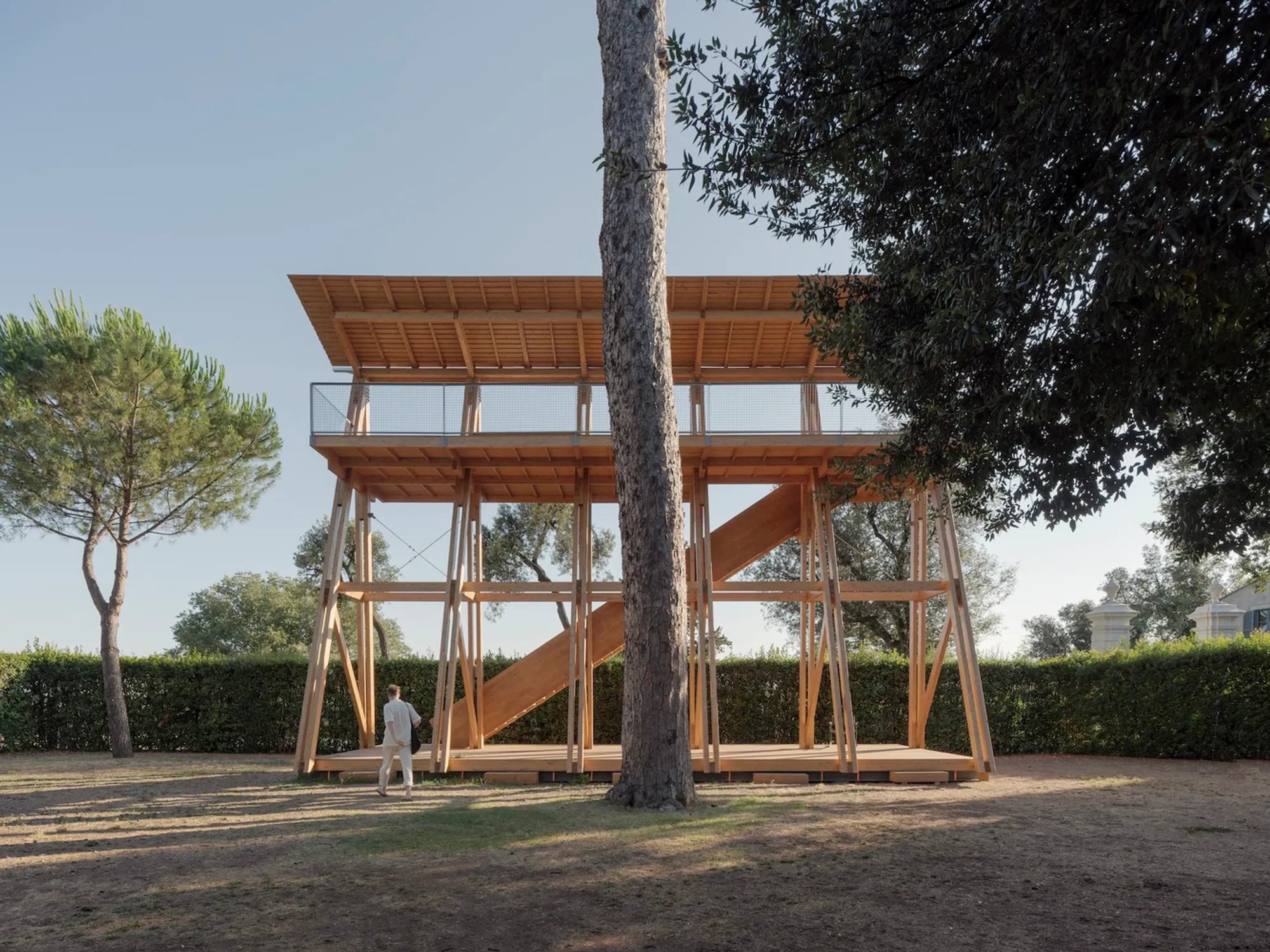
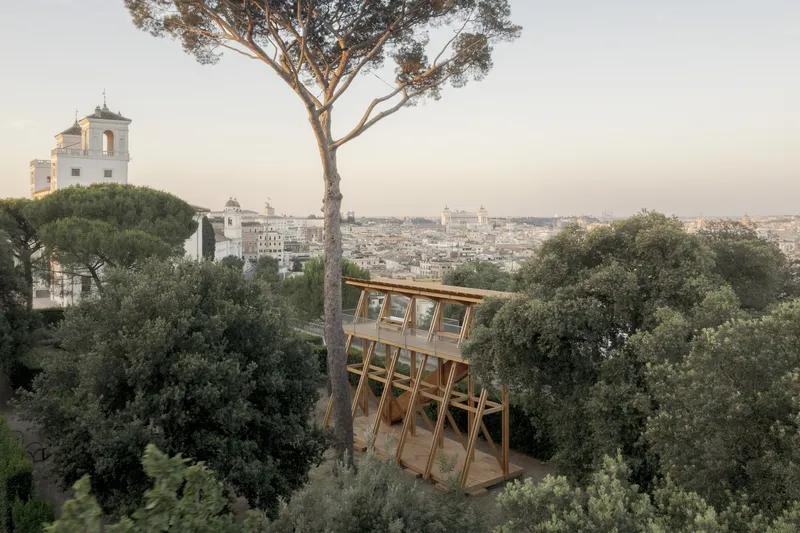
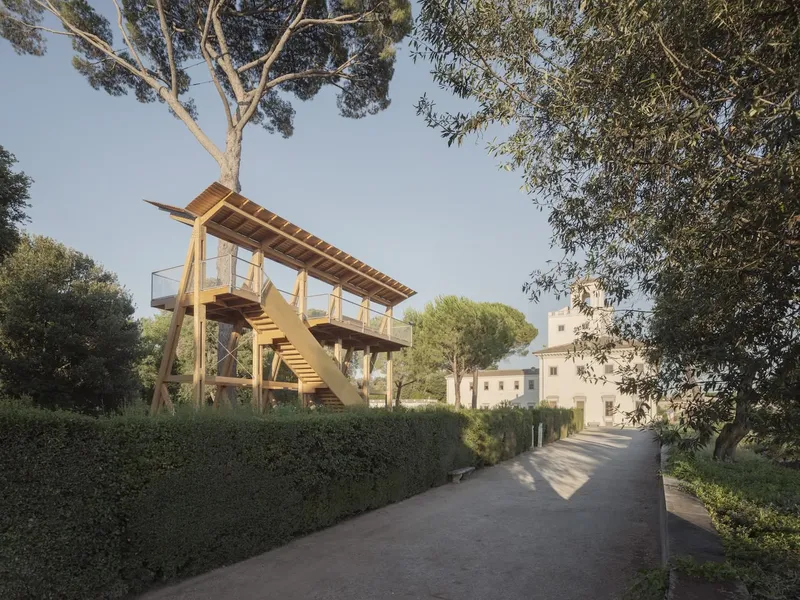
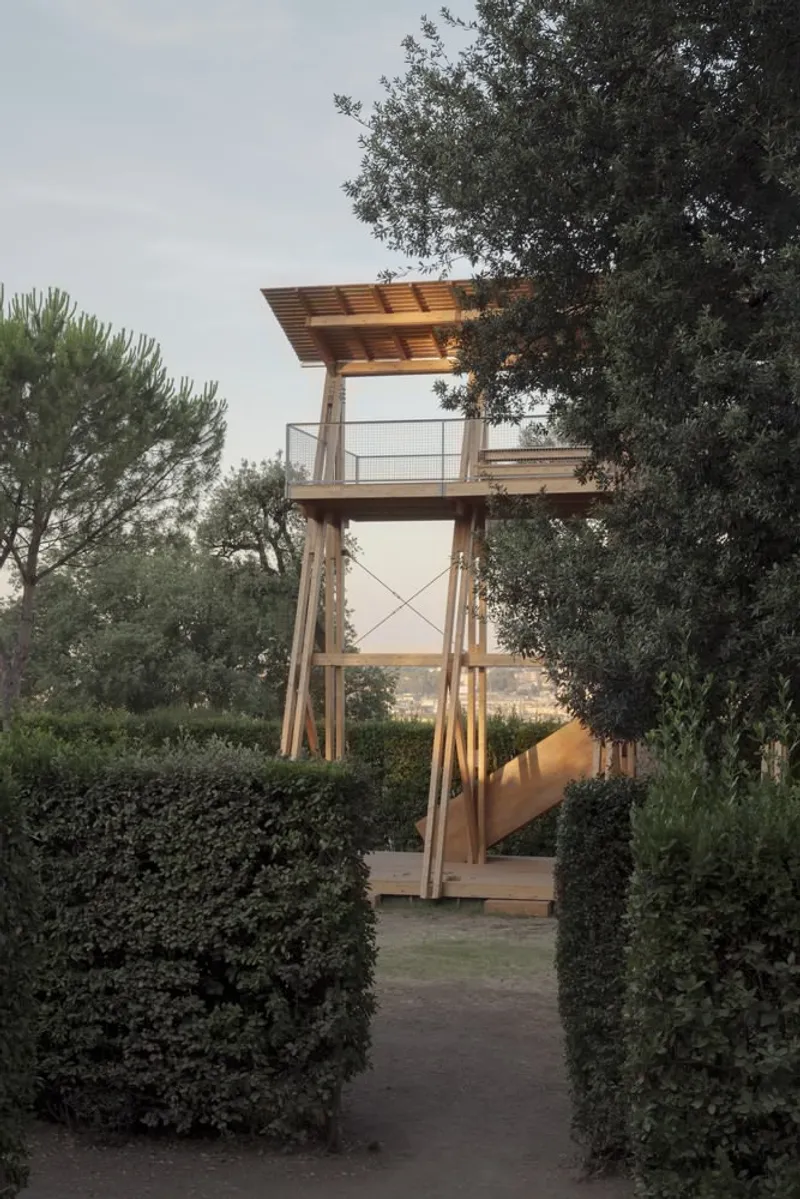
Manuel Bouzas’ Cabane 7L is a remarkable timber installation and observatory crafted for the 2024 Festival des Cabanes at Villa Medici, home of the French Academy in Rome. Perched on one of the highest points of the eternal city, this unique pavilion redefines how visitors experience the iconic Renaissance gardens, offering elevated perspectives previously unseen in Rome. The installation not only serves as a cultural platform but also celebrates the dialogue between architecture, landscape, and art.
A Contemporary Tribute to Villa Medici Gardens
The design of Cabane 7L draws inspiration from the historic topography and cultural heritage of Villa Medici. In the sixteenth century, Ferdinando I de’ Medici transformed Cardinal Ricci’s residence on the Pincian Hill into a Renaissance villa celebrated for its gardens and architectural elegance. Over centuries, generations of Romans have observed the iconic pine trees shaping the landscape of the academy’s gardens. Bouzas’ installation invites reflection: What stories have these centuries-old trees witnessed?

Innovative Timber Architecture
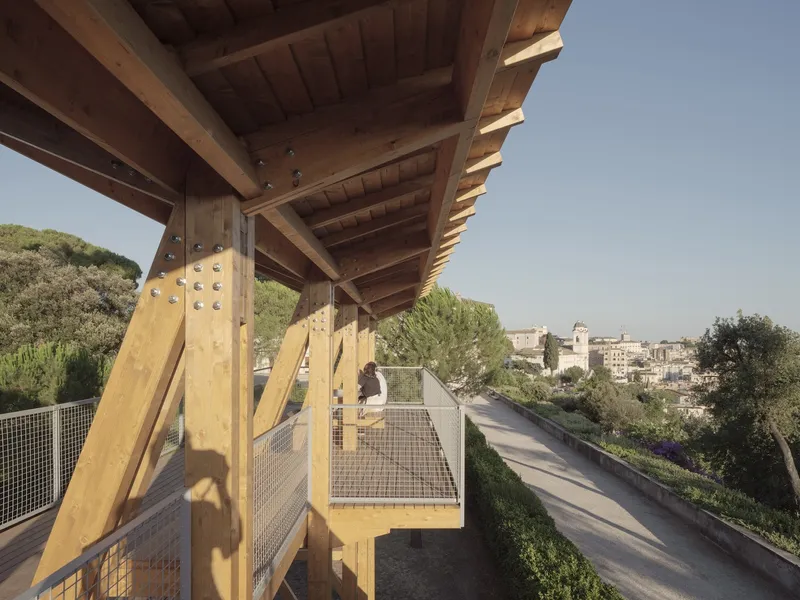
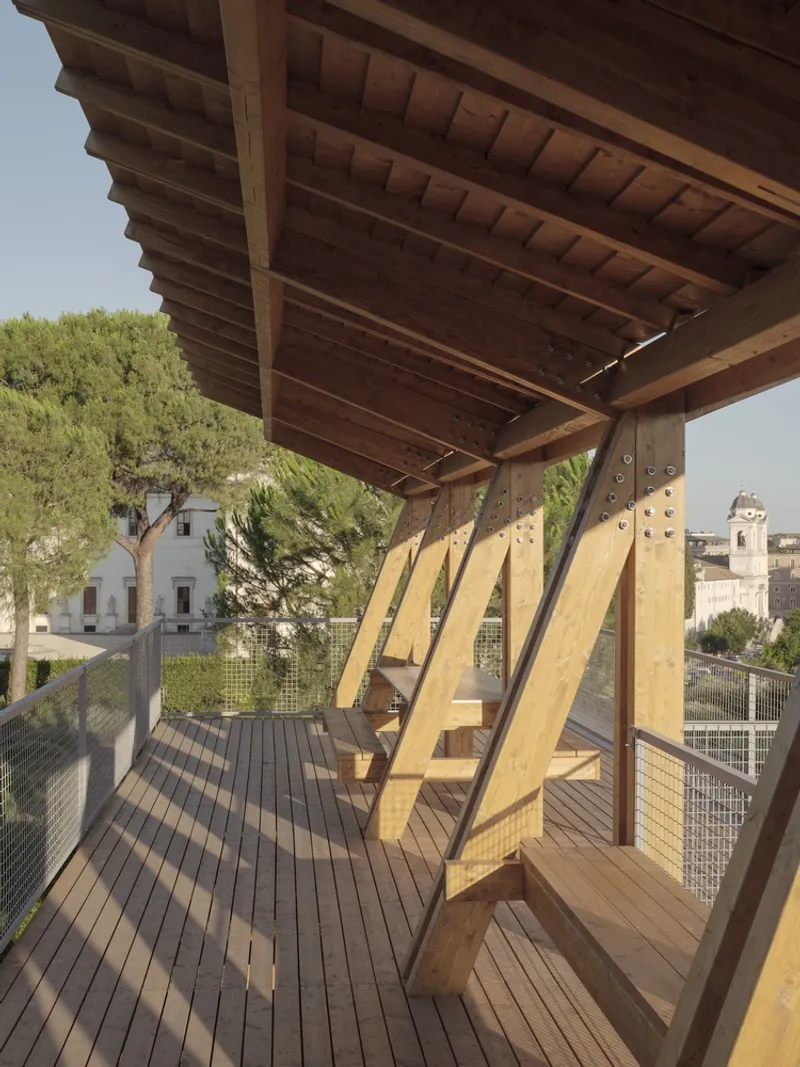
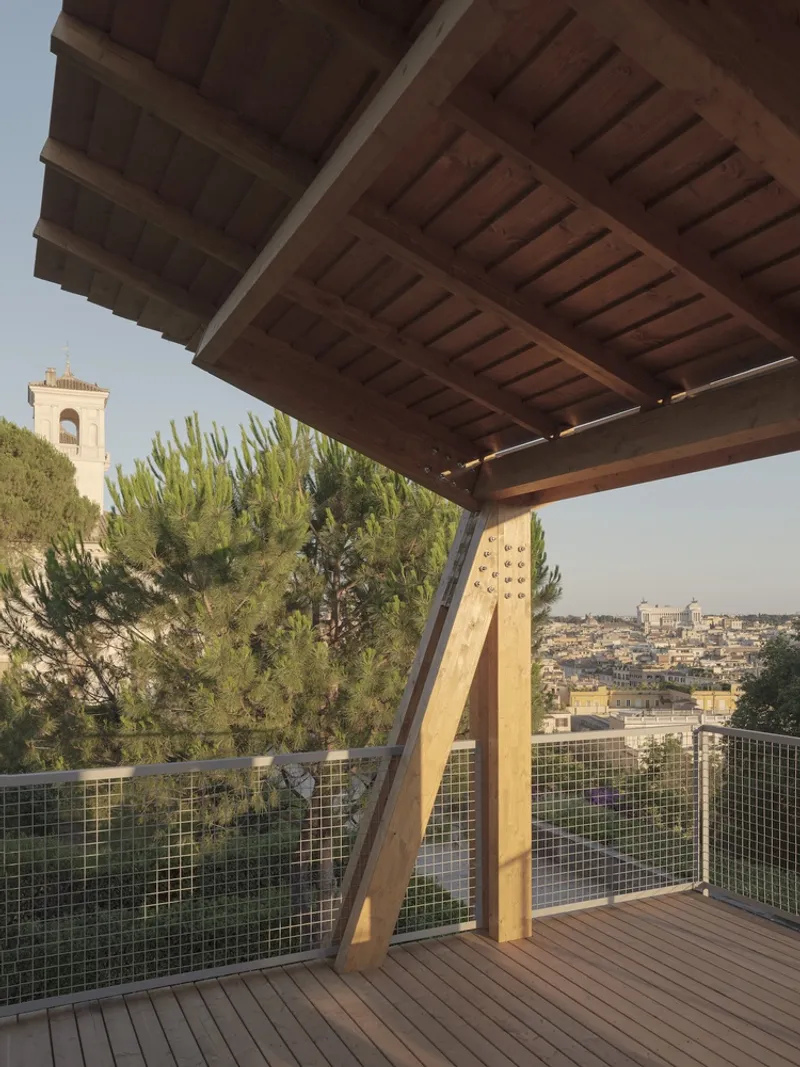
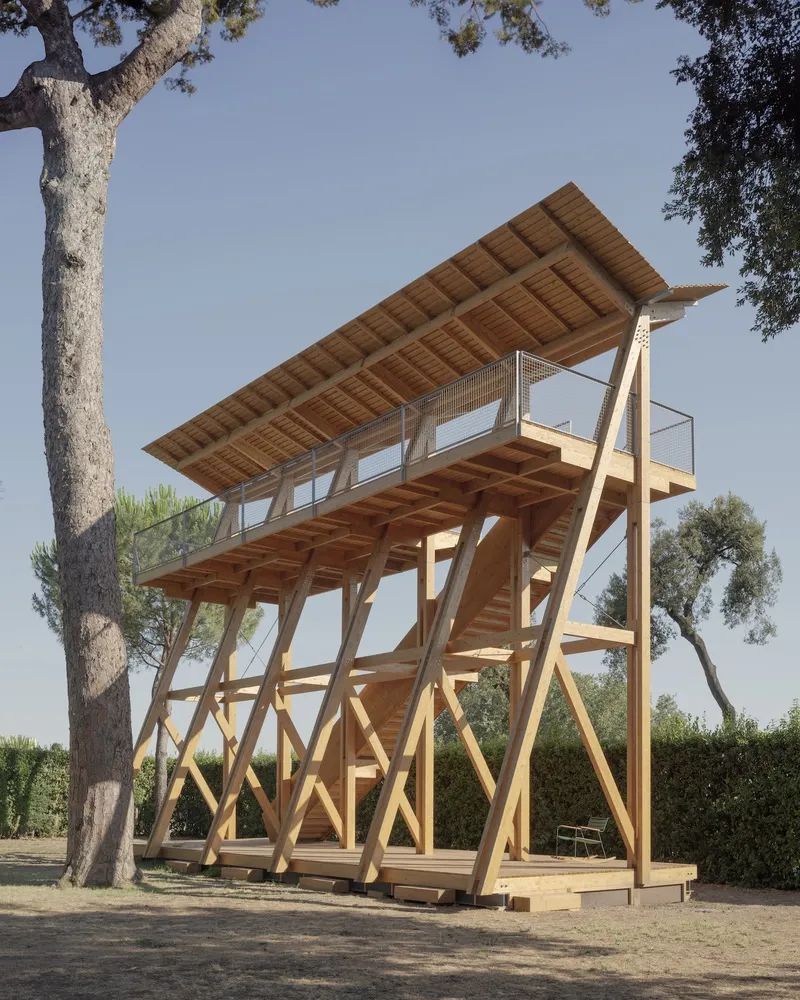
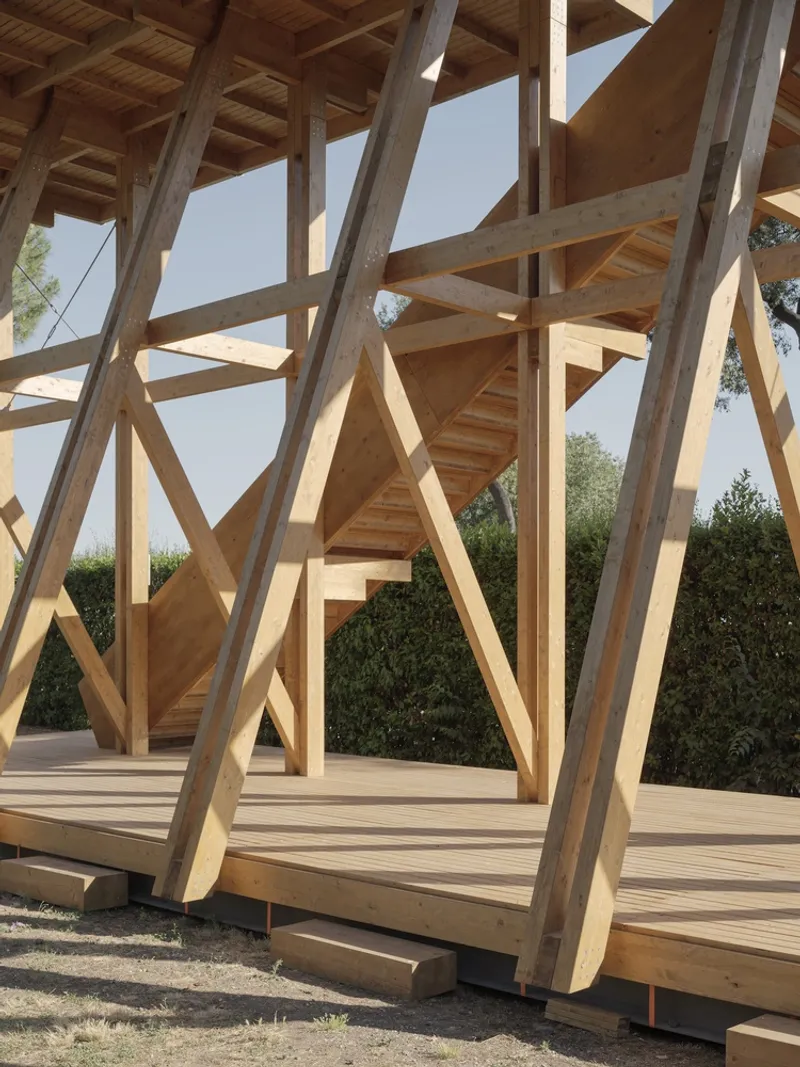
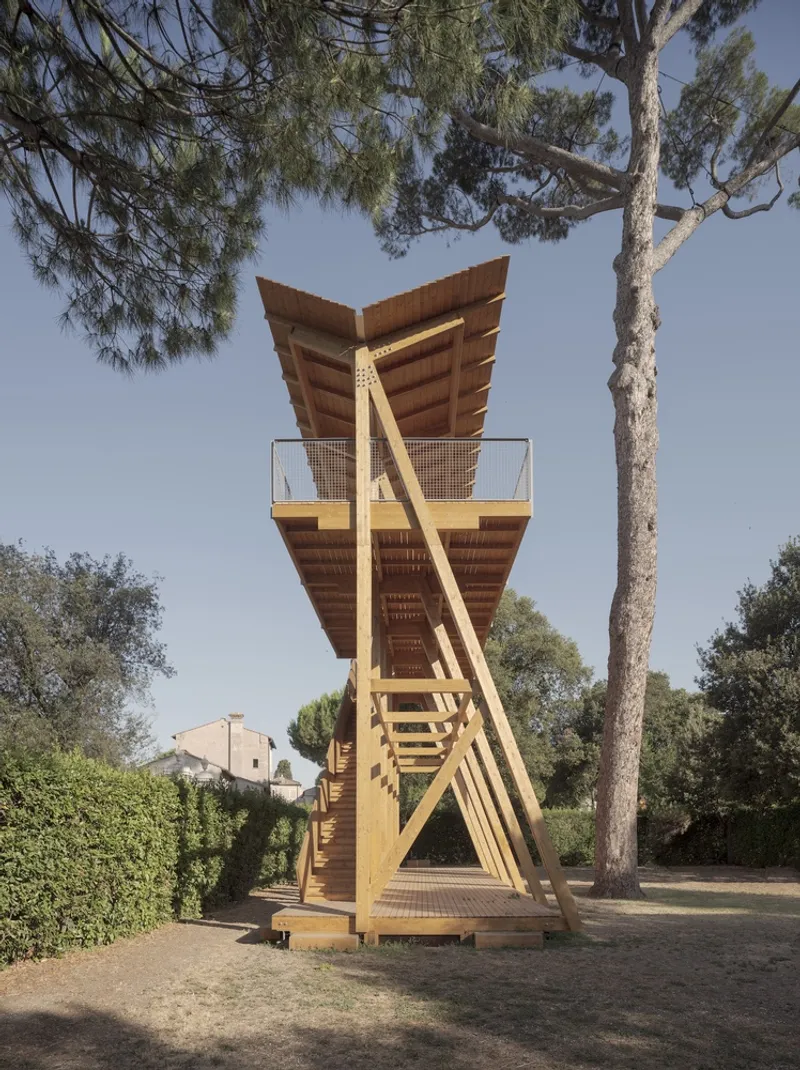
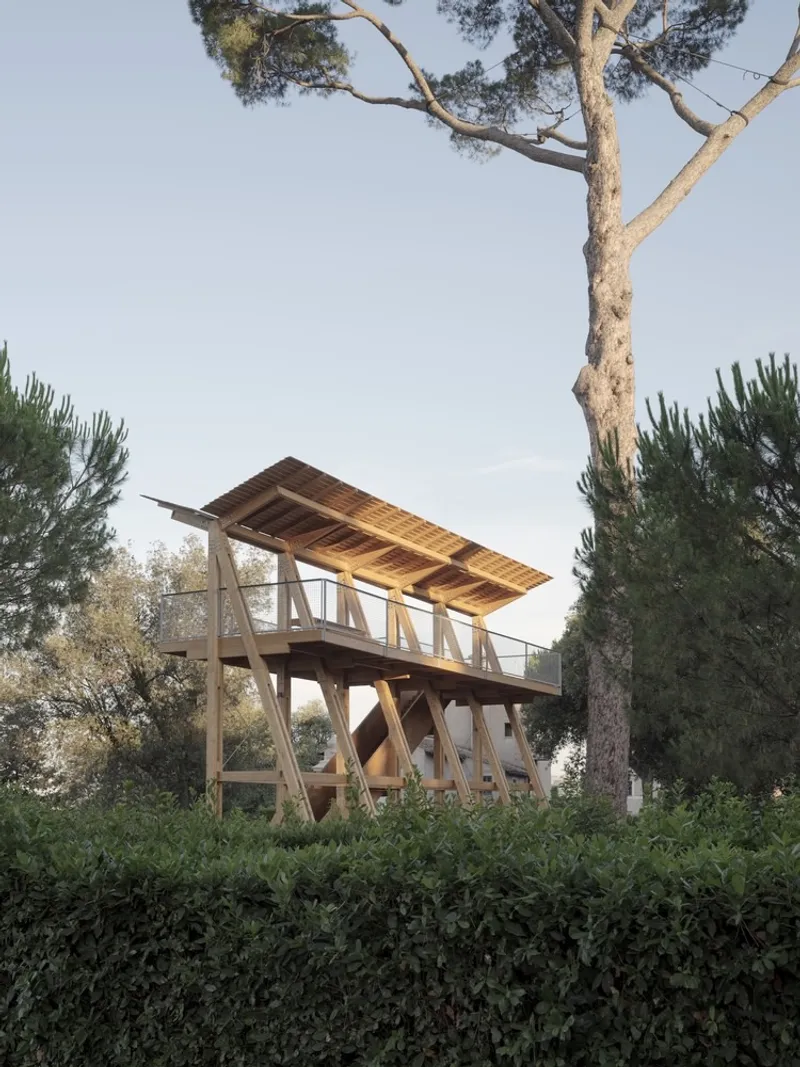
Constructed entirely from sustainable mass timber, Cabane 7L exemplifies eco-conscious design. The structure consists of six timber porticos supporting two platforms: a ground-level public space and a 7-meter-high observation deck. The lower platform hosts cultural events, performances, and public gatherings, while the upper platform provides a contemplative space with rocking chairs, benches, and a picnic table, allowing visitors to rest and enjoy panoramic views over Rome’s skyline.
The installation features a cross-laminated timber staircase diagonally bracing the structure, mirroring the steps of the historic helical staircase inside Villa Medici’s palace. At the summit, a V-shaped timber canopy shields the observatory from sun and rain while encouraging natural ventilation across the hill.

Sustainable Construction and Prefabrication
Cabane 7L highlights low-carbon construction techniques. All beams, manufactured by SIDO Madera in Spain, were industrially processed using dovetail joints, eliminating the need for steel brackets and reducing the project’s carbon footprint. The timber, shipped by boat to Rome, minimized emissions associated with traditional transport. Half of the structure’s weight represents the CO₂ captured during photosynthesis, reinforcing its environmental credentials.

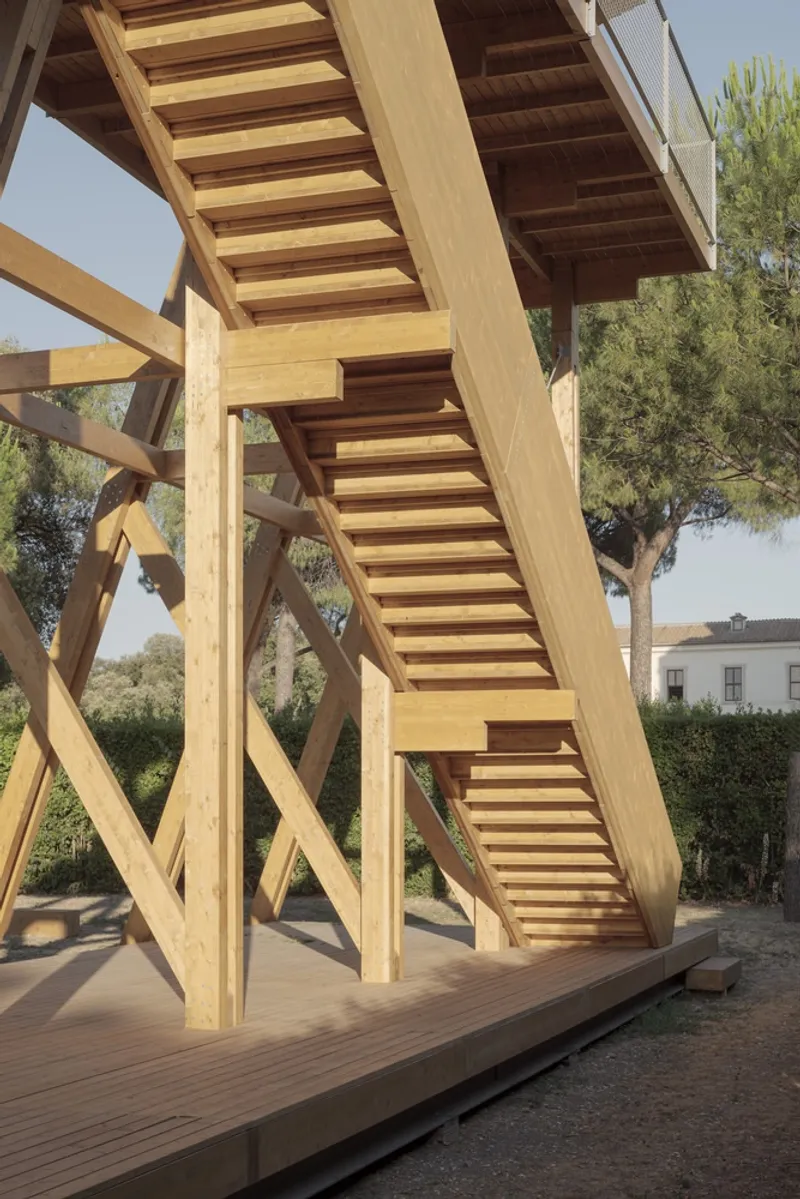
Assembly was remarkably efficient: the lightweight prefabricated beams allowed a team of one to two people to erect the structure manually in just five days. To ensure stability without permanent foundations, the ground platform incorporates 16 water storage bags of 260 liters each, providing wind resistance while preserving the landscape.
A Cultural and Experiential Hub
From May 22 to September 29, 2024, Cabane 7L hosts diverse cultural activities, including concerts, performances, and interactive dialogues with artists and architects. Collaborating with Librairie 7L and CHANEL, the installation transforms Villa Medici into a living laboratory, exploring the intersection of temporary architecture, sustainable materials, and public engagement.
Cabane 7L embodies the essence of the festival des cabanes, where six installations activate the gardens of the French Academy, turning historic landscapes into experimental spaces for architectural exploration.


Key Features:
- Material: Certified laminated fir, mass timber
- Structure: Six timber porticos, cross-laminated staircase, V-shaped canopy
- Platforms: Ground-level public area + 7m observation deck
- Construction: Prefabricated beams, manual assembly in 5 days
- Sustainability: Low-carbon timber, shipped by boat, CO₂ sequestration


Why Cabane 7L Stands Out:
Cabane 7L bridges history and contemporary design, offering an immersive Renaissance garden experience while demonstrating the potential of temporary timber architecture. It celebrates eco-conscious construction, public engagement, and a dialogue between nature, art, and urban heritage, a testament to modern sustainable design in Rome.
All photographs are works of
Luis Diaz



Popular Articles
Popular articles from the community


Conexión: Biophilic Design Reimagines High-Rise Living in Hong Kong
Conexión reimagines high-rise living in Hong Kong through biophilic design, green facades, shared spaces, daylight, water and nature within.

Hill & Cross Opera: Sculptural Opera House Architecture Shaped by Tallinn’s Landscape and Identity
Hill & Cross Opera reimagines opera house architecture in Tallinn through its sculptural hill, civic plaza, glass wave and a luminous cross.

The Musturak Paradise: Senior Living Architecture for a Connected Future in Temara, Morocco
The Musturak Paradise reimagines senior living architecture in Temara via private homes, social spaces, culture, community, and shared care.

Riyadh For All: Intergenerational Urban Design for Active Aging in Rabat
Riyadh For All reimagines urban design in Rabat with intergenerational co-living, adaptive courtyards, and Moroccan cultural exchange today.


Similar Reads
You might also enjoy these articles


FAMM Arquitectura Organizes Ten Villas Around Courtyards and Jungle in Nosara, Costa Rica
El Molino pairs two elongated volumes with deep overhangs and timber louvers to build a compact coastal community five minutes from the beach.

Oscar Niemeyer's Ibirapuera Park Pavilions Define São Paulo's Cultural Identity in Concrete and Curve
A constellation of modernist volumes set within São Paulo's most important urban park, conceived for the city's 400th anniversary in 1954.
How Henri Picq's 1889 Paris Pavilion Traveled 11,000 Kilometers to Become Santiago's Artequín Museum
A prefabricated iron and glass pavilion built for the Paris Universal Exposition found a second life as a children's art museum in Chile.

Sanjay Puri Architects Wraps a Jaipur Office Tower in Capsule-Shaped Green Buffers
A nine-level climate-responsive workplace near Jaipur Airport uses stacked planter terraces and aluminium screens to fight 40°C heat.

Explore Architecture Competitions
Discover active competitions in this discipline


Challenge to design mud housing for contemporary communities


Challenge to reimagine the Iron Throne


Photograph architecture without architects


Illustrate the lost glory of Angkor Wat - Render Challenge
Comments (0)
Please login or sign up to add comments
No comments yet. Be the first to comment!