
Casa Cabrera by Forma Arquitectura
A Mediterranean house renovation and extension in Cabrera de Mar, balancing light and warmth through material contrast and strong landscape connection.

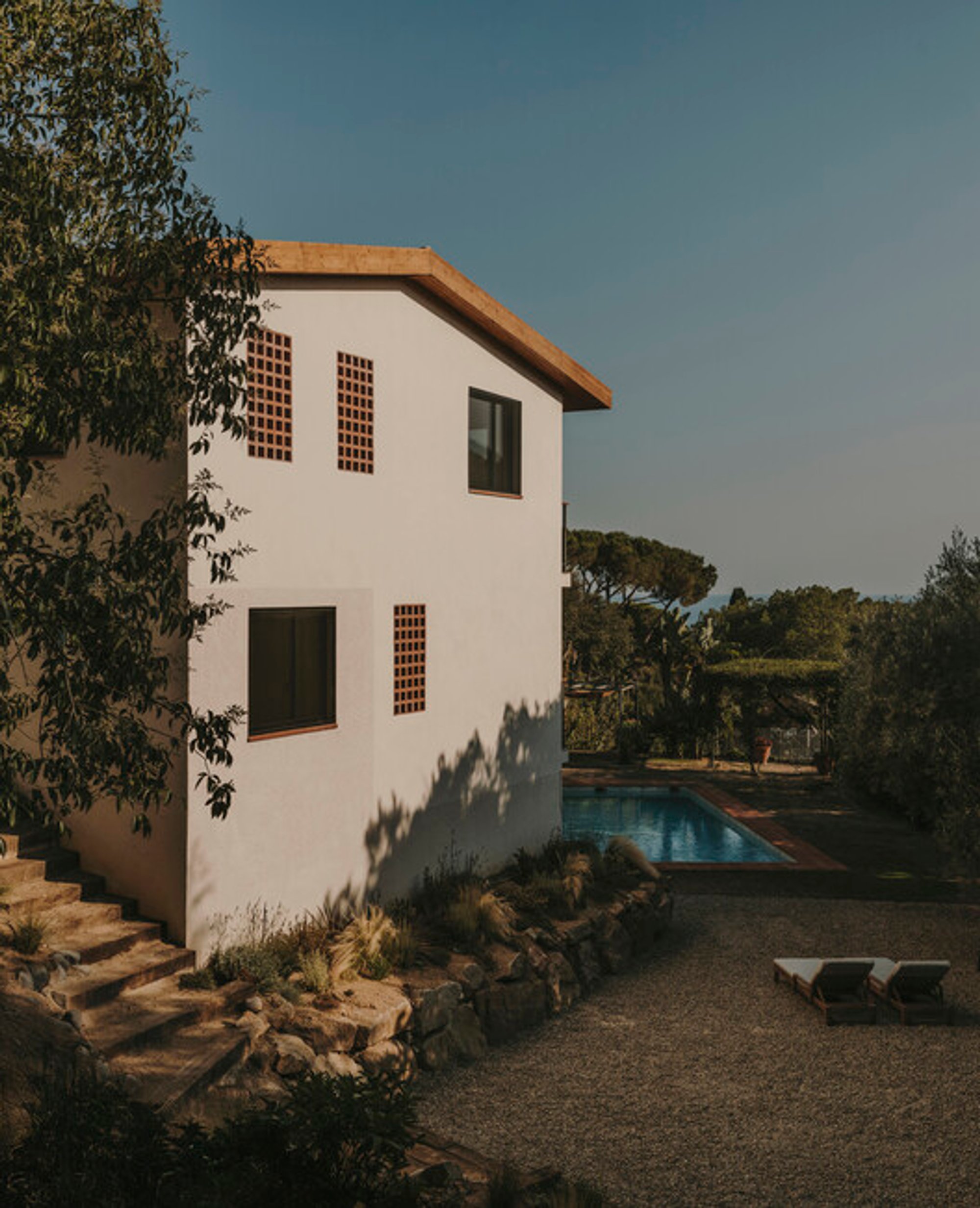
Casa Cabrera, designed by Forma Arquitectura, is a carefully articulated renovation and extension of an existing hillside home in Cabrera de Mar, Spain, completed in 2025. Overlooking the Mediterranean Sea, the project reimagines domestic life through light, material contrast, and spatial continuity—balancing openness with intimacy, and social life with retreat.
Rather than replacing the original house, the architects chose to work with what existed, transforming it through a sensitive renovation while introducing a new elevated volume that acts as a deliberate counterpoint. Together, these two architectural gestures form a home that responds deeply to landscape, family life, and time.
Building Upward Toward the Horizon
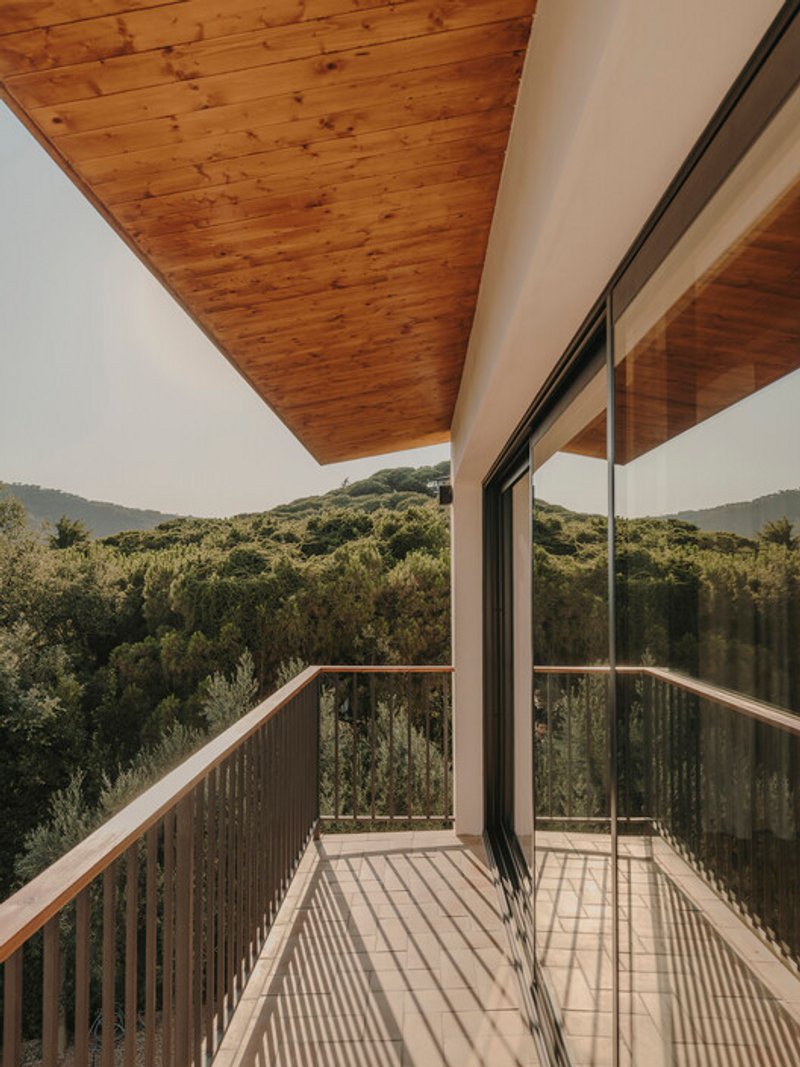
The driving ambition of the project was simple and deeply personal: the owners wished to wake up to views of the sea. This desire became the catalyst for adding a second floor, extending the house vertically to capture the expansive Mediterranean horizon while preserving the original structure’s connection to the terrain.
The result is a house composed of two complementary conditions:
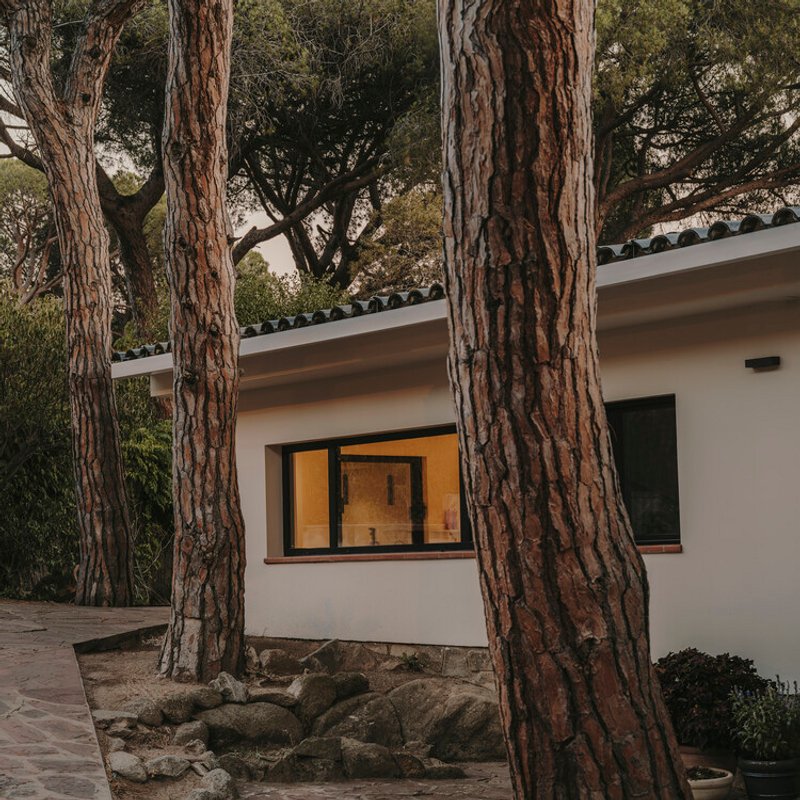
- The renovated original volume, rooted in the hillside and open to light.
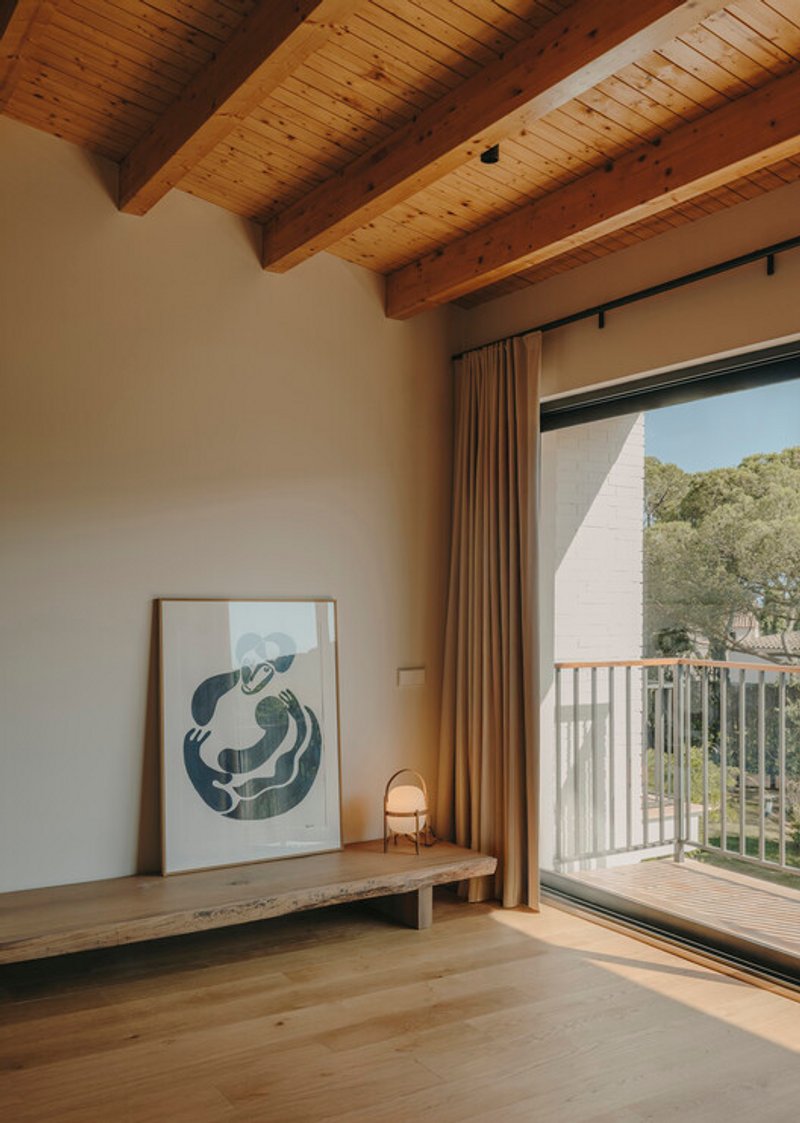
- The new extension, lifted above the ground, warmer in tone, and oriented toward distant views.
This duality allows the house to accommodate multiple rhythms of life. Designed for a family with two children and frequent long-term guests, Casa Cabrera supports work, rest, social gatherings, and solitude—without sacrificing cohesion.
Space as Continuity
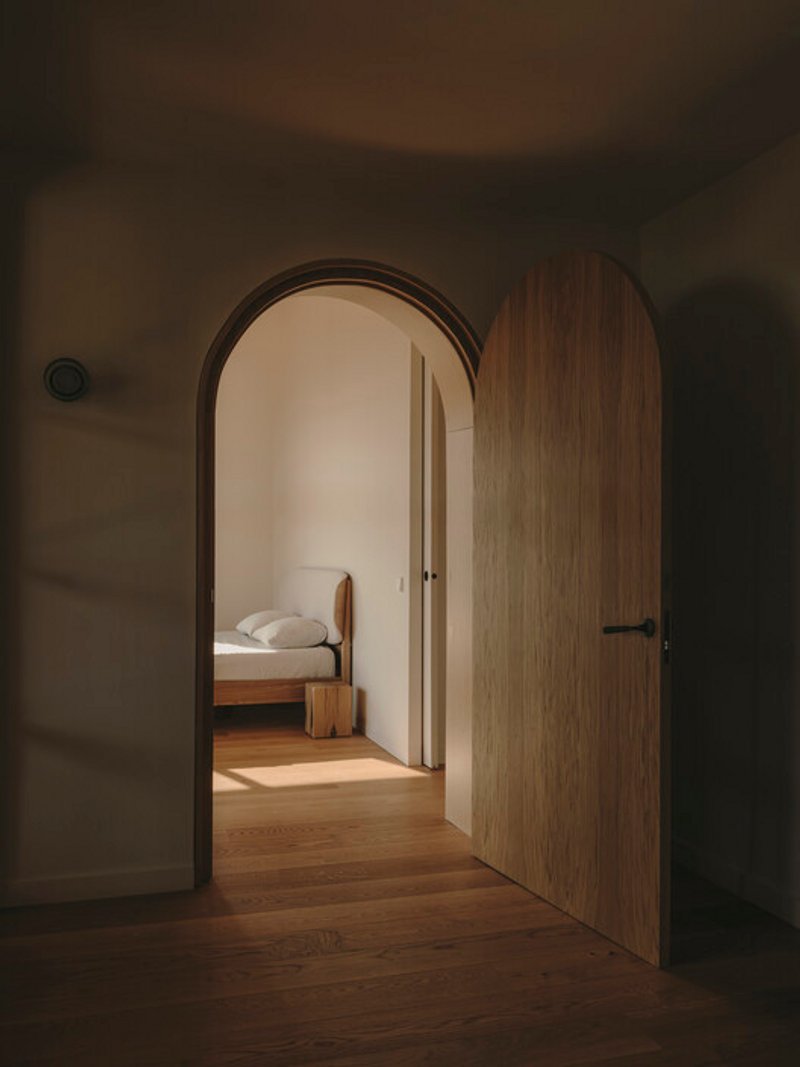
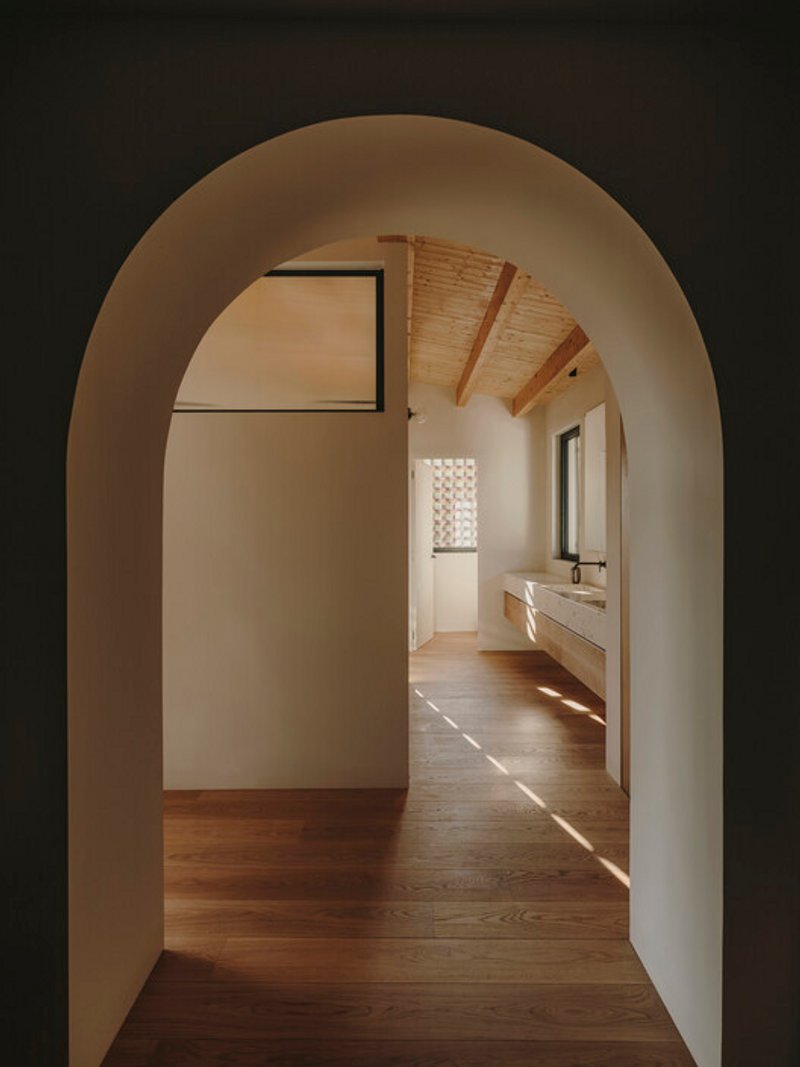
One of the defining qualities of Casa Cabrera is the generosity and adaptability of its interior spaces. While rooms maintain functional independence, they are visually and spatially connected, fostering a sense of openness and flow throughout the home.
Large openings dissolve the boundary between interior and exterior. From nearly every point within the house, the presence of the outdoors is felt—through framed views, natural light, and the constant dialogue with the surrounding landscape. The house does not merely look outward; it allows nature to permeate daily life.
The Kitchen as the Heart of the Home
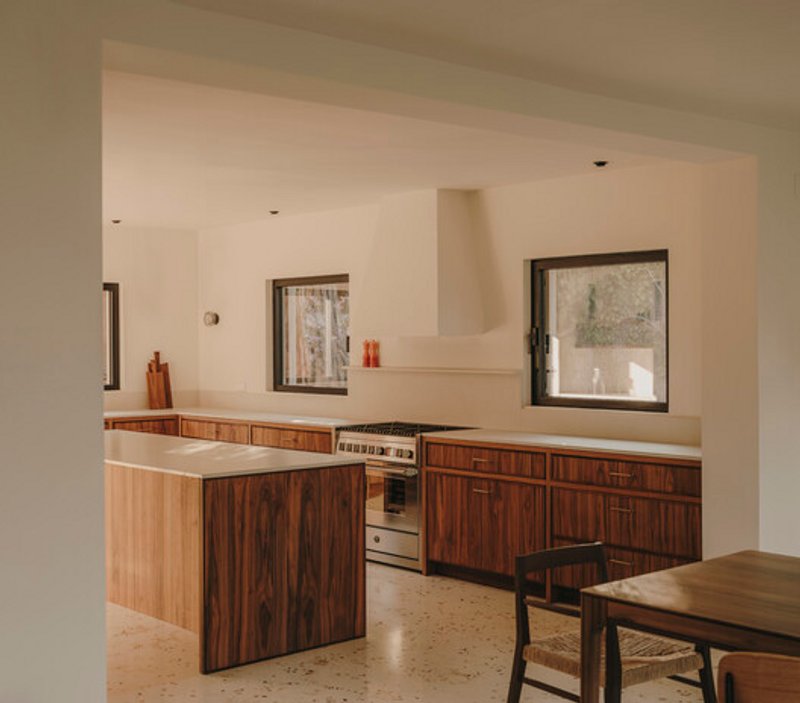
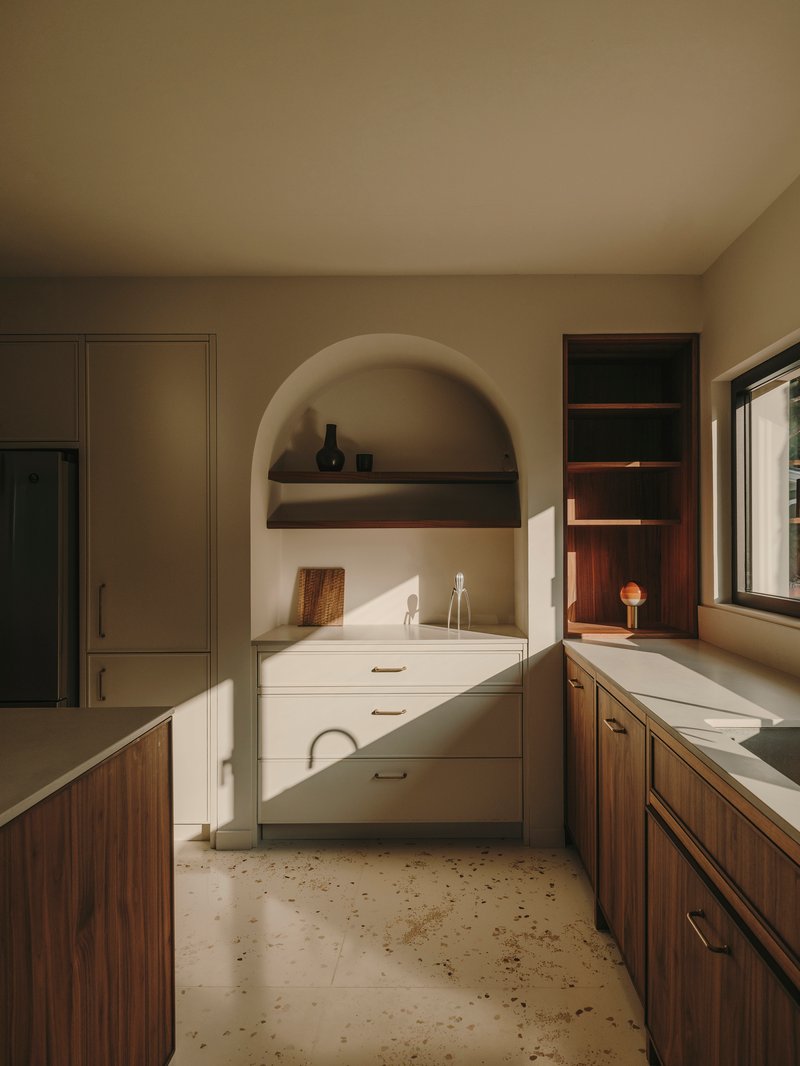
At the center of the house lies its emotional and functional core: a large walnut kitchen. More than a place for cooking, this space acts as the true gathering point of family life.
Defined by:
- A generous central island
- Expansive windows
- Noble, tactile materials
- Comfortable proportions
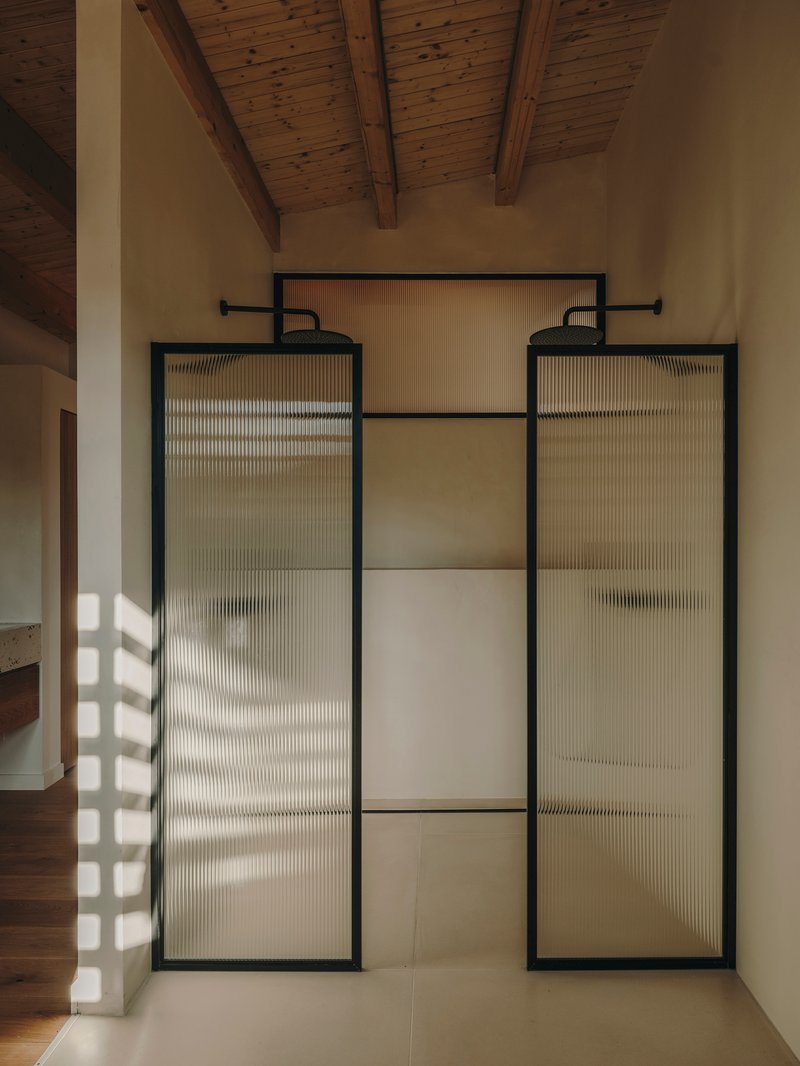
the kitchen concentrates the daily rituals of the household. It is a space of permanence and warmth, where conversations unfold, work overlaps with leisure, and the house reveals its most human scale.
Two Atmospheres, One Home
Casa Cabrera is structured around a deliberate contrast of atmospheres, reflecting both programmatic needs and architectural interventions.
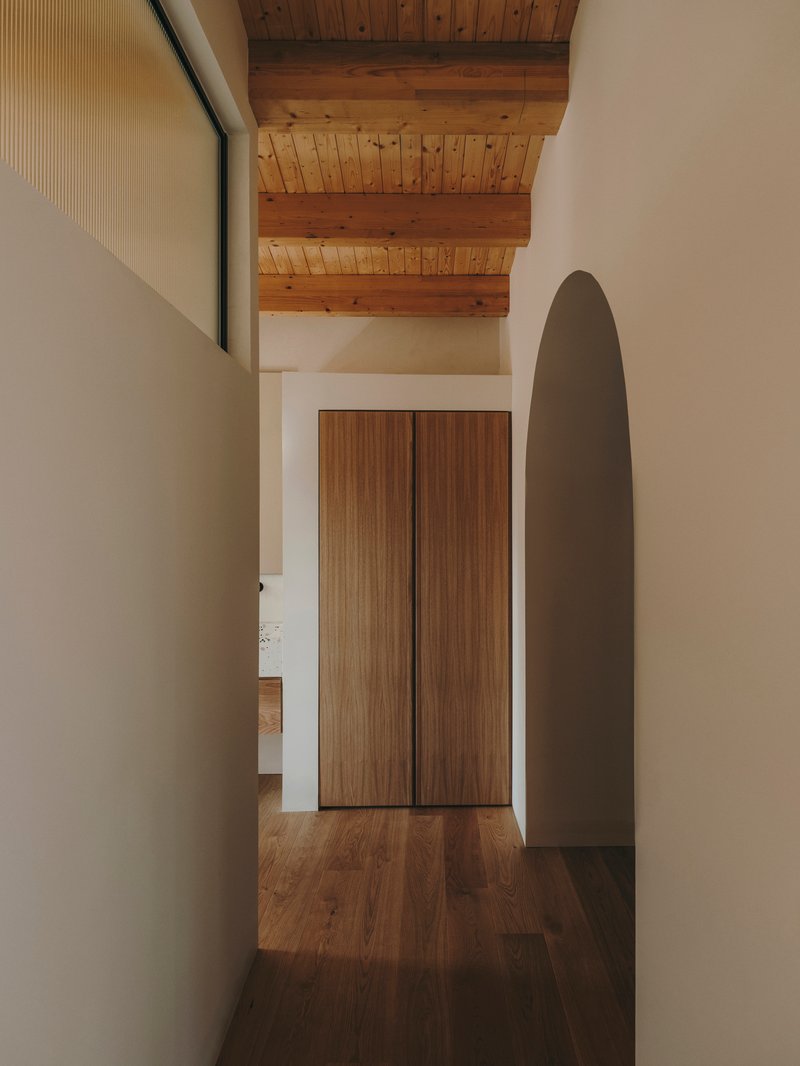
The Renovated Original House
The existing structure is characterized by:
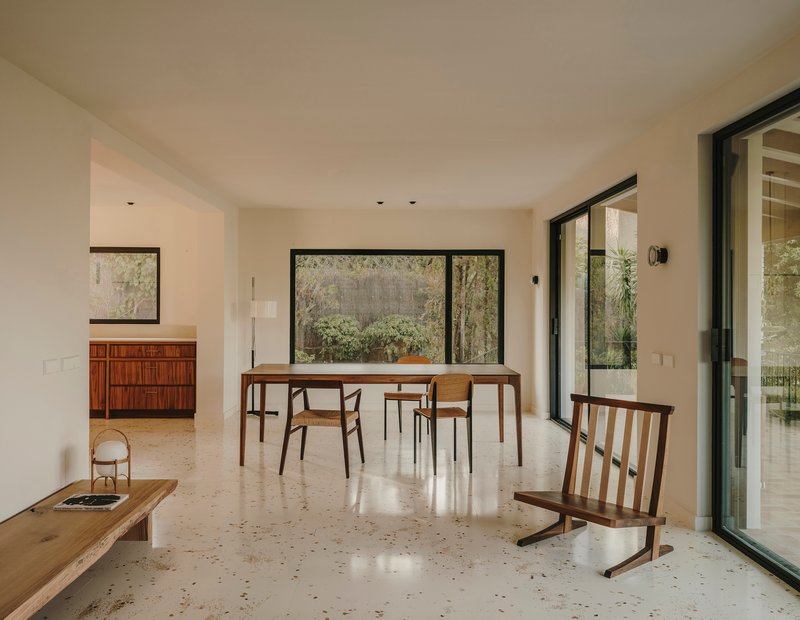
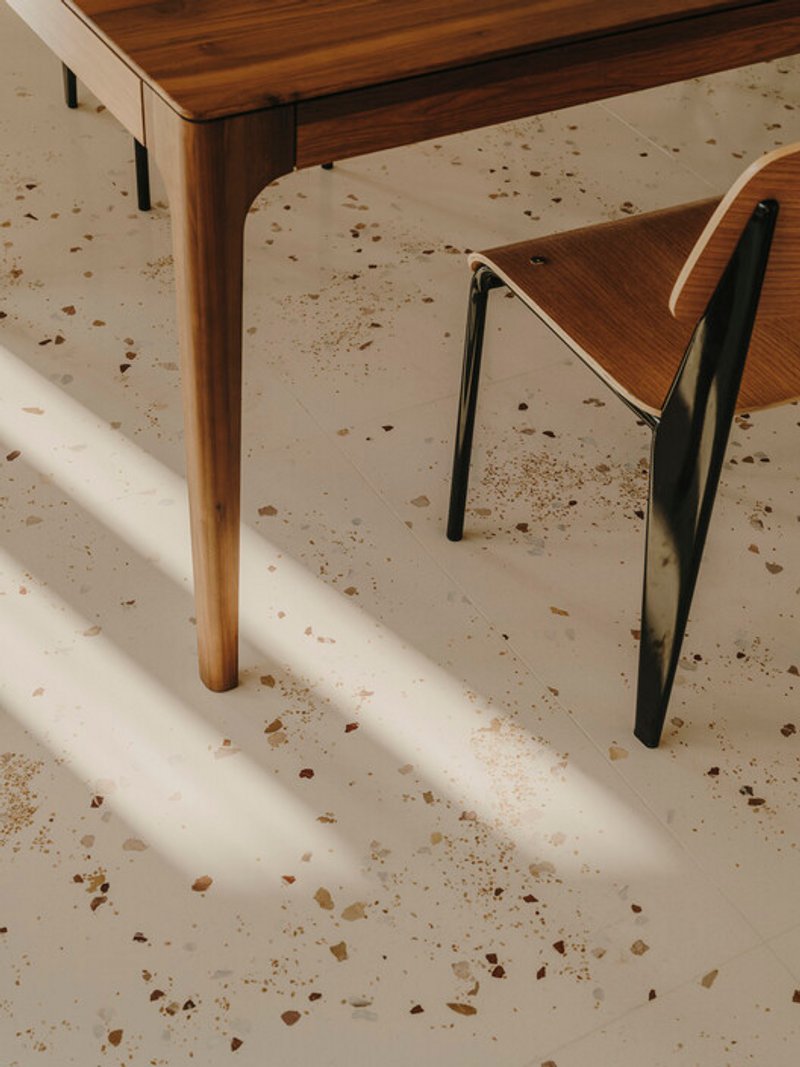
- Custom terrazzo flooring by Huguet Mallorca
- Large windows that amplify natural light
- A serene, Mediterranean palette
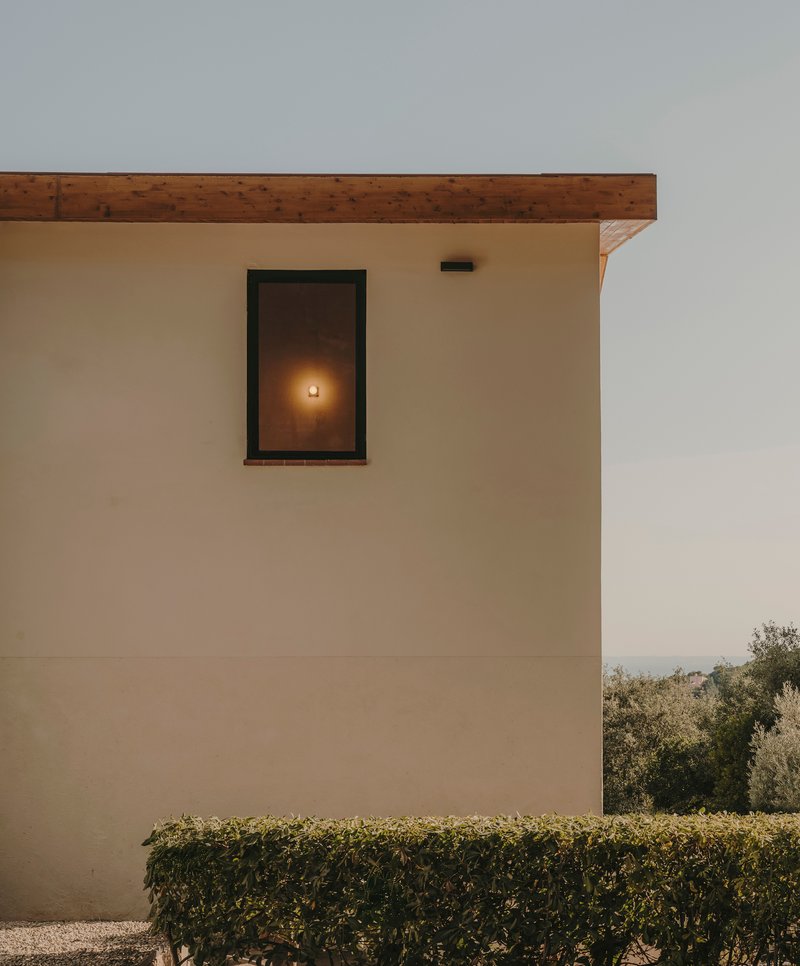
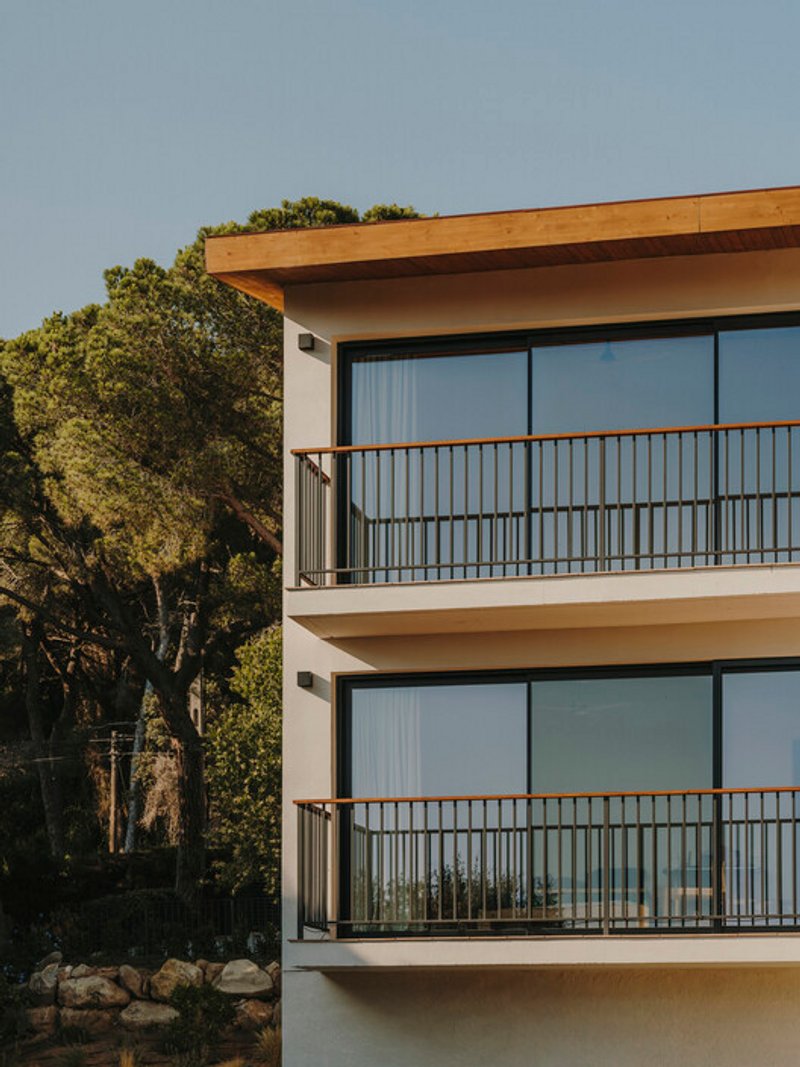
This part of the house feels open, luminous, and social—an environment shaped by clarity and brightness.
The Extension
In contrast, the new volume introduces:
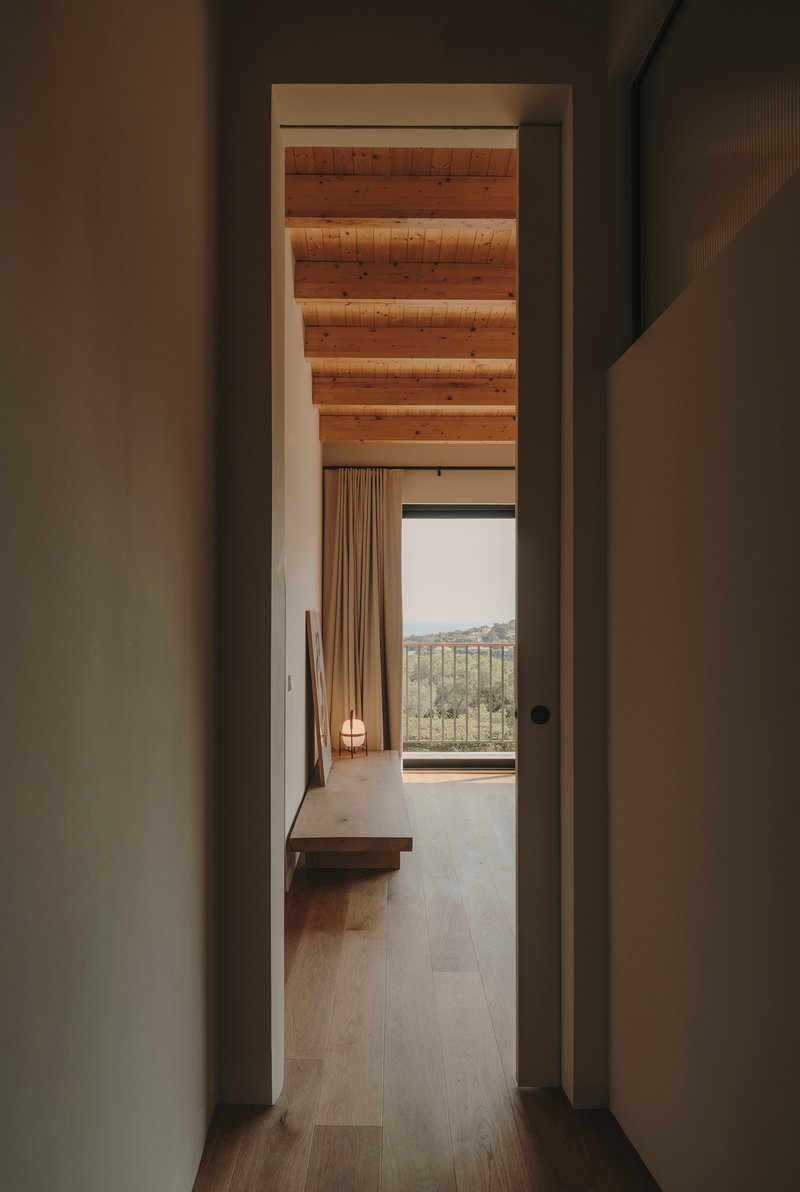
- Wood-rich interiors
- Textural depth
- Controlled light and shadow
Here, warmth replaces brightness as the dominant quality. This zone accommodates bedrooms and workspaces, offering a quieter, more introspective environment where time slows and privacy is emphasized.
Architecture as Emotional Transition
Moving between the two parts of the house becomes a sensory transition—from light to calm, from collective life to introspection. This architectural shift mirrors the inhabitants’ daily rhythms and adds emotional depth to the spatial experience.
Rather than enforcing uniformity, the house embraces difference, allowing each zone to support a distinct way of living while remaining part of a cohesive whole.
Material Restraint and Human Scale
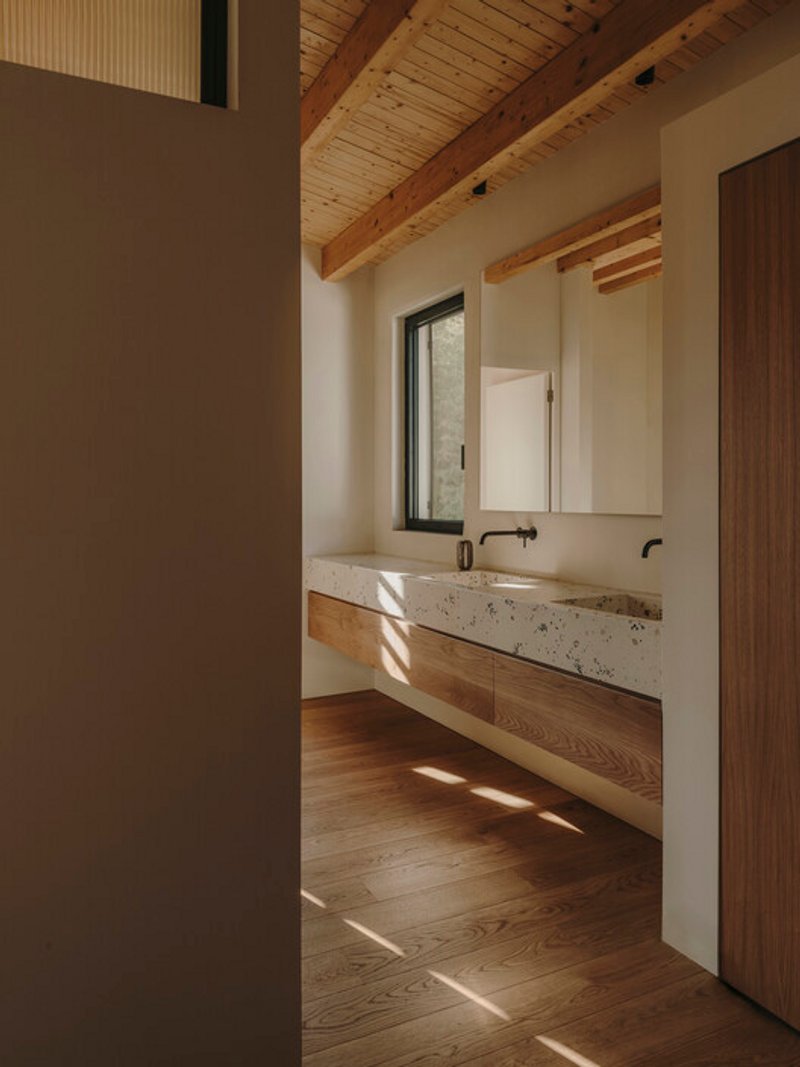
Materials are chosen not for spectacle but for longevity, tactility, and atmosphere. Wood, terrazzo, stone, and carefully crafted details contribute to a restrained palette that emphasizes comfort and authenticity.
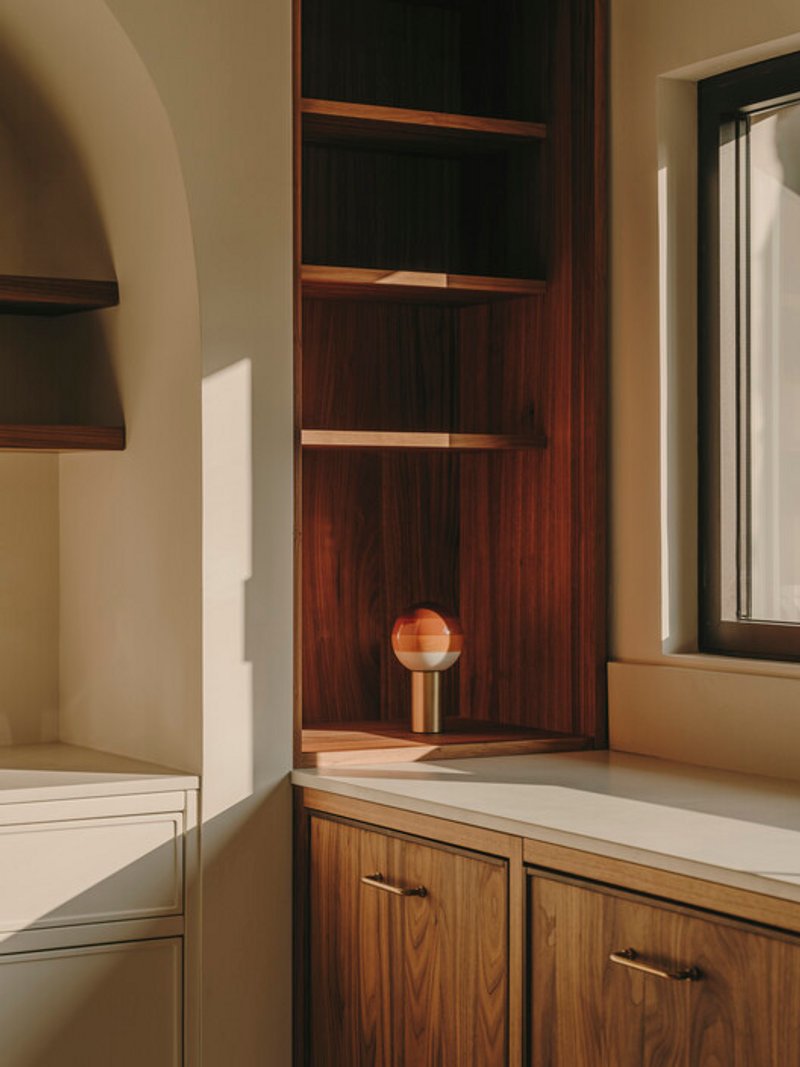
The project avoids ostentation, redefining luxury through:
- Light and space
- Connection to nature
- Material honesty
- Architectural calm
In doing so, Casa Cabrera recovers essential values of dwelling that are often overshadowed in contemporary residential design.
A Quiet Mediterranean Luxury
Ultimately, Casa Cabrera is a house shaped by lived experience rather than visual excess. It opens generously to the landscape while offering refuge and warmth within, balancing exposure and protection, sociability and solitude.
Forma Arquitectura delivers a home that does not seek attention but rewards inhabitation—a place where architecture quietly supports life, memory, and time.
All the Photographs are works of Salva Lopez



Popular Articles
Popular articles from the community

Fifth NRE Jazz Club – De Bever Architecten: Eindhoven’s Revitalized Cultural Hub
Historic gas factory transformed into Fifth NRE Jazz Club blending modern sustainability, jazz culture, dining, and heritage architecture seamlessly.
Split House: A Compact Urban Home Blending Privacy, Light, and Flexible Living in Japan
Compact Japanese home featuring DOMA space, flexible café potential, passive lighting, privacy zoning, and sustainable urban living design.


Free Architecture Competitions You Can Enter Right Now
No entry fees, real prizes. Here are the best free architecture competitions open for submissions in 2026.

Similar Reads
You might also enjoy these articles


The Ken Roberts Memorial Delineation Competition (Krob)
As the most senior architectural drawing competition currently in operation anywhere in the world, it draws hundreds of entries each year, awarding the very best submissions in a series of medium-based categories.

Waterfront Redevelopment and Urban Revitalization in Mumbai: Forging a New Dawn for Darukhana
A transformative waterfront redevelopment project reimagining Darukhana’s shipbreaking heritage into an inclusive urban future.

OUT-OF-MAP: A Call for Postcards on Feminist Narratives of Public Space
Rhizoma Design and Research Lab invites artists, designers, architects, researchers, and students to reflect on how feminist perspectives can reshape public space. Selected works will be exhibited in Barcelona, October 2026. Submissions open until 15 April 2026.

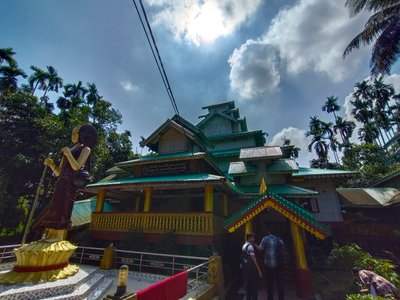
Documentation Work on Buddhist Wooden Temple
Architectural syncretism and cultural hybridity: A comparative study of the Buddhist temples in Chattogram Hill tracks
Explore Architecture Competitions
Discover active competitions in this discipline




The International Standard for Design Portfolios


The Global Benchmark for Architecture Dissertation Awards


The Global Benchmark for Graduation Excellence


Challenge to reimagine the Iron Throne
Comments (0)
Please login or sign up to add comments
No comments yet. Be the first to comment!