

Cava Arcari by David Chipperfield Architects – Transforming Ancient Quarries into a Cultural Performance Space
Cava Arcari by David Chipperfield Architects transforms ancient Vicenza stone quarries into a cultural performance space blending history, architecture, and light.


Reviving History Through Architecture
The Cava Arcari Cultural Center, designed by David Chipperfield Architects, is a striking example of adaptive reuse in architecture. Located in the heart of Zovencedo, near Vicenza, Italy, the project transforms abandoned stone quarries—once used to extract the renowned Pietra di Vicenza—into a performance and cultural venue that blends history, materiality, and modern design.
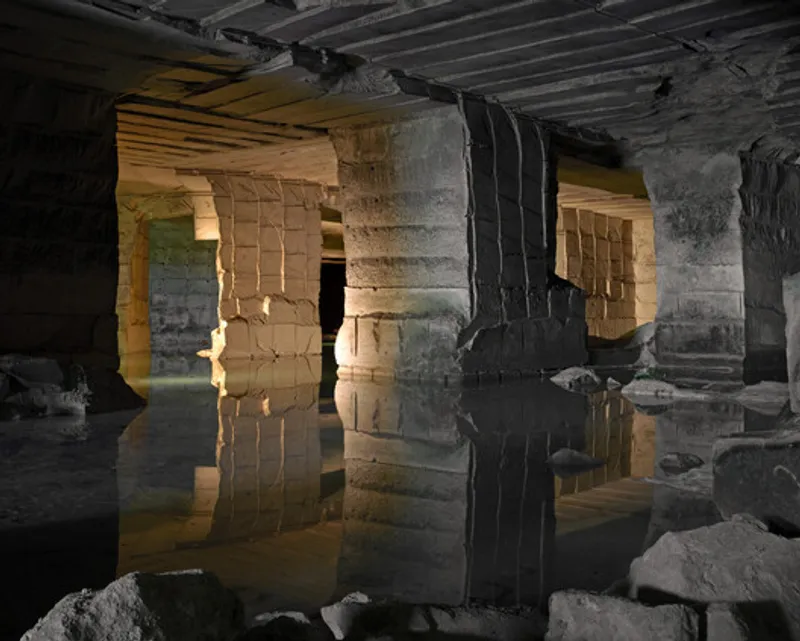
The caves were formed over six decades of quarrying, leaving behind a vast cavern supported by massive stone piers and partially filled with water. This natural yet man-made environment has become the stage for a unique architectural intervention where nature and architecture coexist seamlessly.

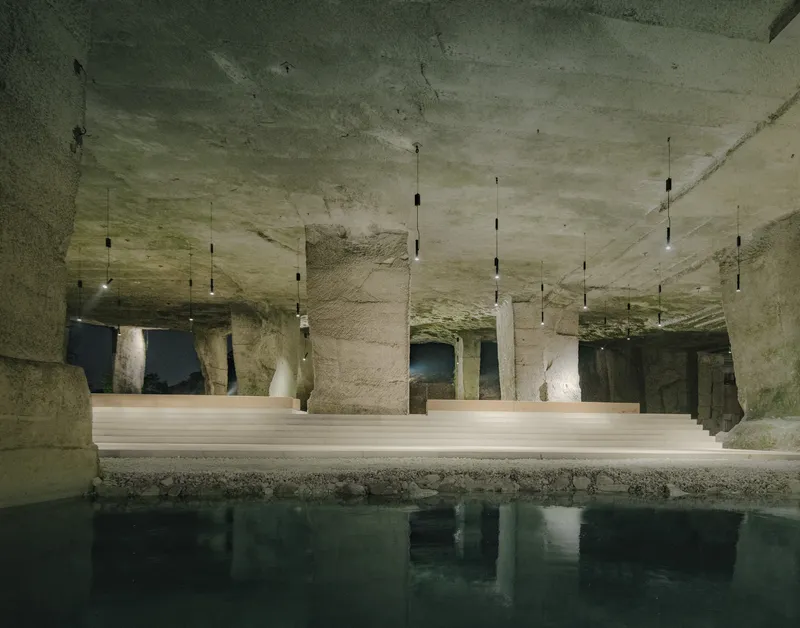
Minimal Intervention, Maximum Impact
Recognizing the extraordinary qualities of the quarry, the Morseletto family, renowned producers of traditional Venetian stone and marble, had occasionally hosted informal events in the caves. Their collaboration with David Chipperfield Architects evolved into a permanent transformation—preserving the raw power of the quarry while introducing a refined performance infrastructure.
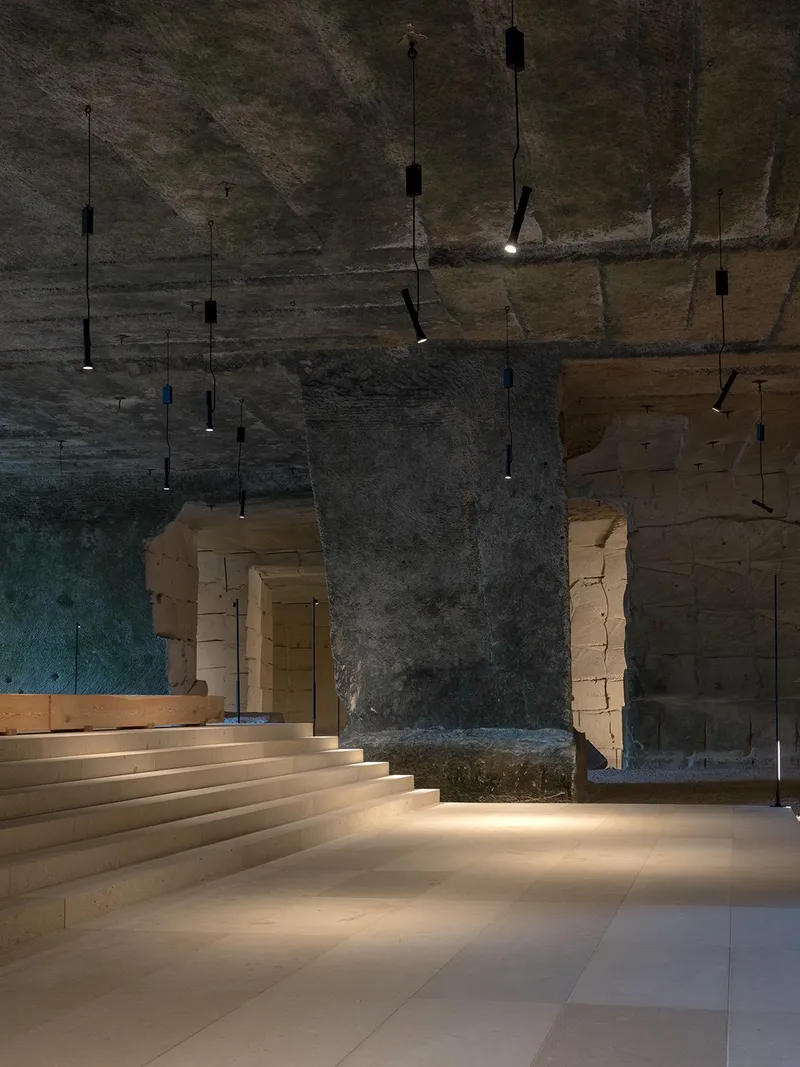
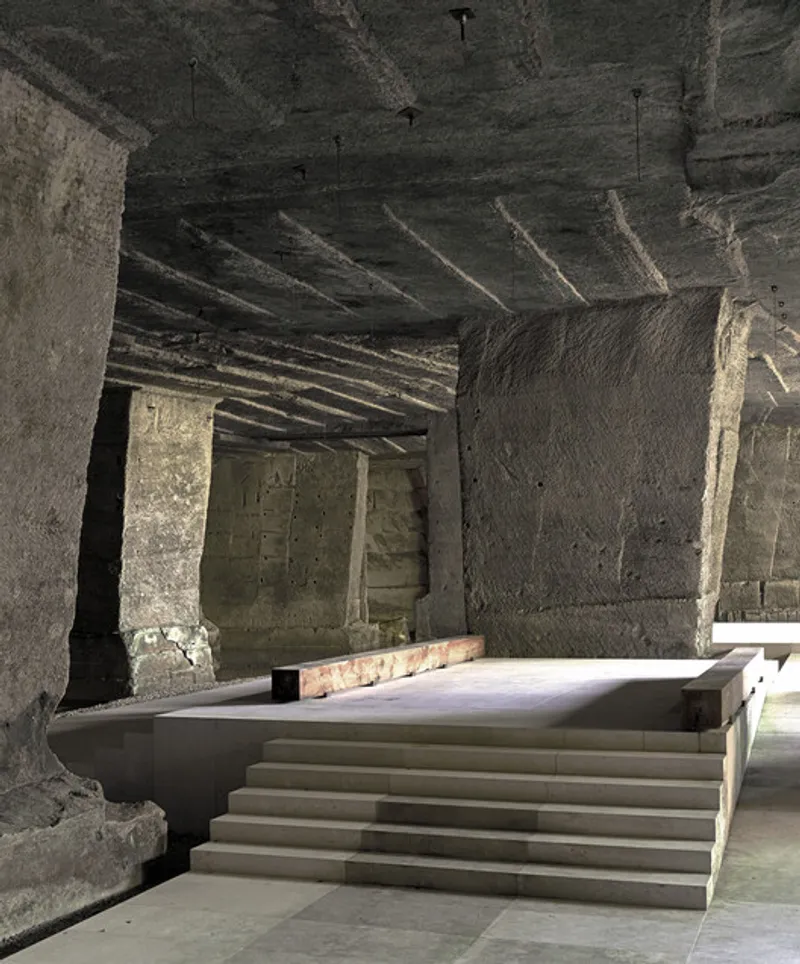
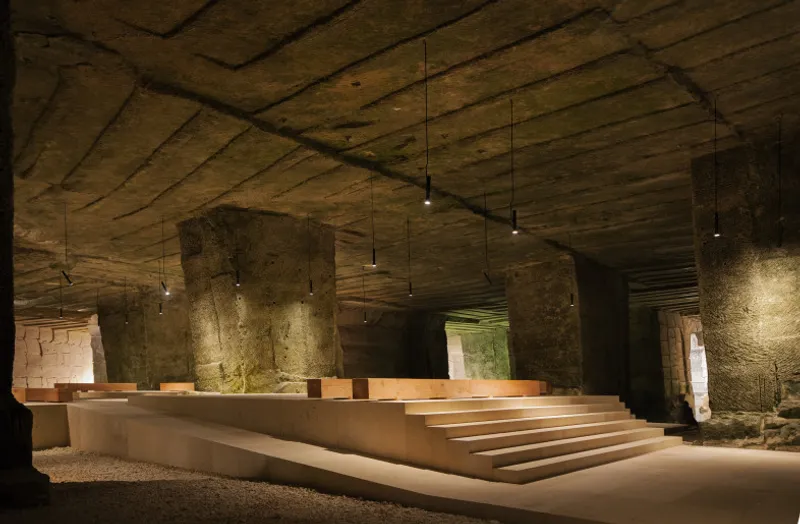
The intervention was intentionally minimal. The design reintroduces Vicenza stone into the space through platforms, steps, and ramps—elements reminiscent of Adolphe Appia’s stage sets. These platforms, known as Cavea, draw inspiration from ancient Roman theatres, establishing a dialogue between the quarry’s accidental architecture and the structured performance environment.
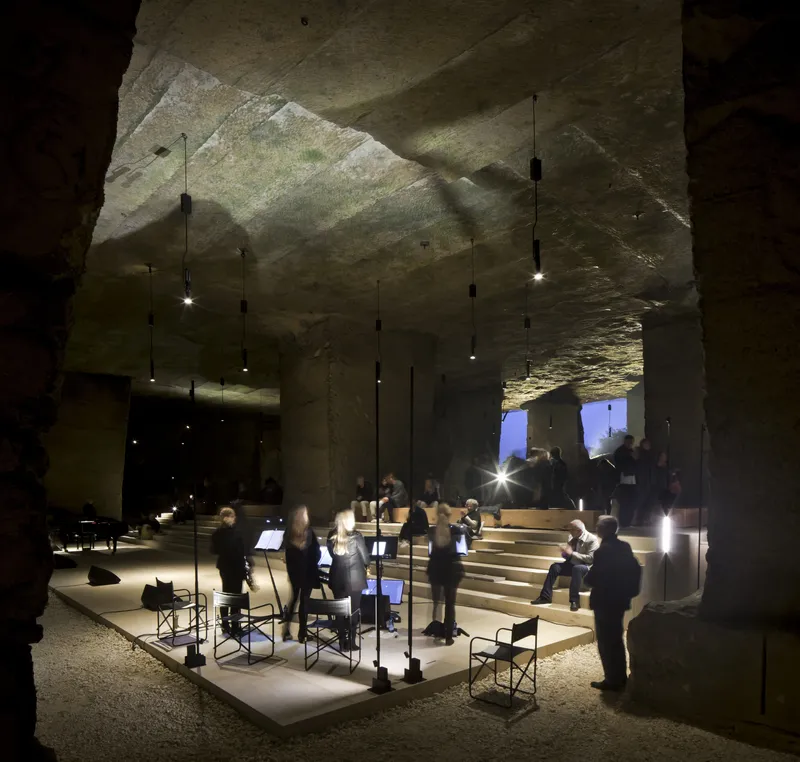
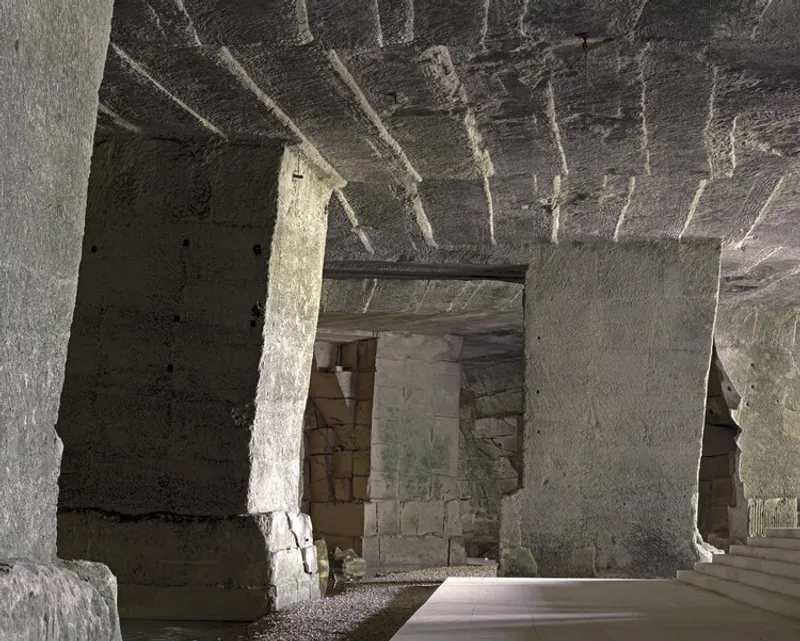
Materiality & Light
At Cava Arcari, Vicenza stone is the sole material, reinforcing the continuity between past quarrying and present construction. The approach involves both subtraction and addition, creating a fluid extension of the site’s history.
Lighting, designed by Viabizzuno, enhances the quarry’s natural drama. Subtle ambient lighting and underwater illumination transform the water-filled chambers into theatrical spectacles, emphasizing the interplay of stone, water, and light.
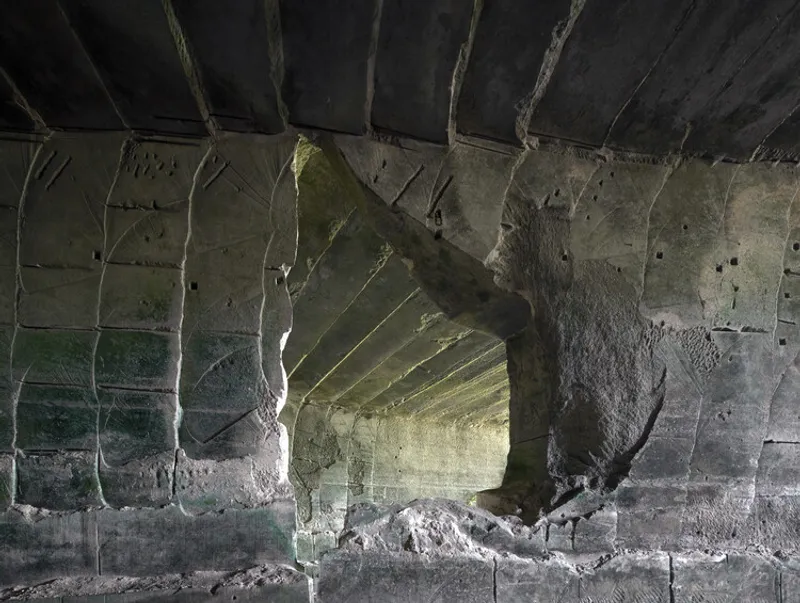
A Cultural Space Beyond Time
The result is a multifunctional performance venue that respects the site’s natural and historical essence. By merging raw geology with refined design, Cava Arcari stands as a cultural landmark that embodies the principles of sustainable architecture, site-sensitive design, and architectural minimalism.
This project is not just a performance space—it is a living monument to quarrying history, craftsmanship, and cultural heritage.
All the photographs are works of Edmund Sumner


Popular Articles
Popular articles from the community


Cube Design Draws an Ecological Corridor Between Two Shenzhen Hills with the Nankai Building
Beside Shenzhen's container docks, the Nankai Building pairs stacked balconies with a climbing green screen to connect two hillsides across its height.

Jaramillo Van Sluys Arquitectura and Urbanismo Turn a Demolished Registry Lot in Quito into an Orchard Plaza
In Quito's Centro Histórico, a 2,800 m² plaza exposes the San Agustín convent wall and redraws its lost Augustinian orchard in volcanic stone.

U.GA Architects Wraps an Oval Rooftop Pool in Curved Board-Formed Concrete on Busan's Jeollidan-gil
In Busan's Jeonpo-dong, a 454 m² mixed-use block stacks a neighborhood facility, guest rooms and an oval rooftop pool inside spiraling concrete walls.

longwave studio Reorganizes a 112 m² Tainan Apartment Around the Daily Routines of a Family and Two Cats
In Tainan, Taiwan, birch plywood, rust-red furniture and a freestanding plaster wall link arrival, storage, work and family life in one apartment.

Similar Reads
You might also enjoy these articles


Hodi-Mandai Geram
Project Function: Preservation and revitalization of the Intangible heritage and socio-spatial identity of the Hodi by Housing, Cultural Memory Center, Sacred Grove, landscape, local tourism economy


Olio Towers: A Mid-Rise for Performers That Fuses Housing, Rehearsal, and Stage
Located blocks from Houston's Theater District, this modular tower stacks living units around a central performance atrium.

Oasis: Modular Green Housing Carved into Dhaka's Urban Fabric
A shortlisted Plugin Housing entry reclaims unauthorized settlements in Dhaka with stepped concrete volumes, green roofs, and ventilation-driven design.

Black Hole: A Floating Megastructure for the Post-Physical Era
Emiliano Mazzarotto envisions a spherical, self-scaling arena where e-sports, digital hotels, and holographic stadiums replace traditional public space.

Explore Cultural Architecture Competitions
Discover active competitions in this discipline

Challenge to reimagine the Iron Throne

Photograph architecture without architects

Illustrate the lost glory of Angkor Wat - Render Challenge

Bring back Drive In's
Comments (0)
Please login or sign up to add comments
No comments yet. Be the first to comment!