

Centara Grand Lagoon Maldives by IF (Integrated Field)
Centara Grand Lagoon Maldives by IF (Integrated Field) harmonizes architecture with nature, creating serene tropical villas that celebrate light, landscape, and tranquility.


A Stage for Nature, Not Architecture
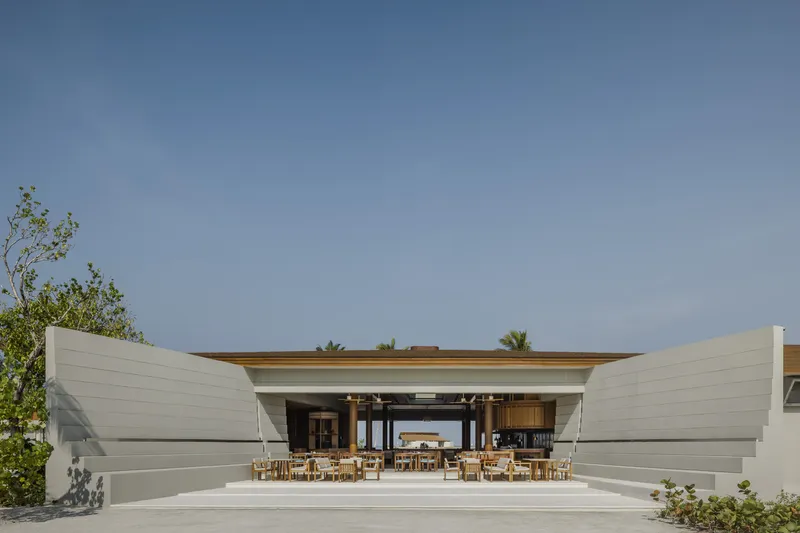
The Centara Grand Lagoon Maldives by IF (Integrated Field) redefines hospitality architecture through a design philosophy rooted in natural harmony. Rather than making a visual statement, the resort is conceived as a stage for nature—an architectural gesture that amplifies the beauty of its Maldivian island setting.
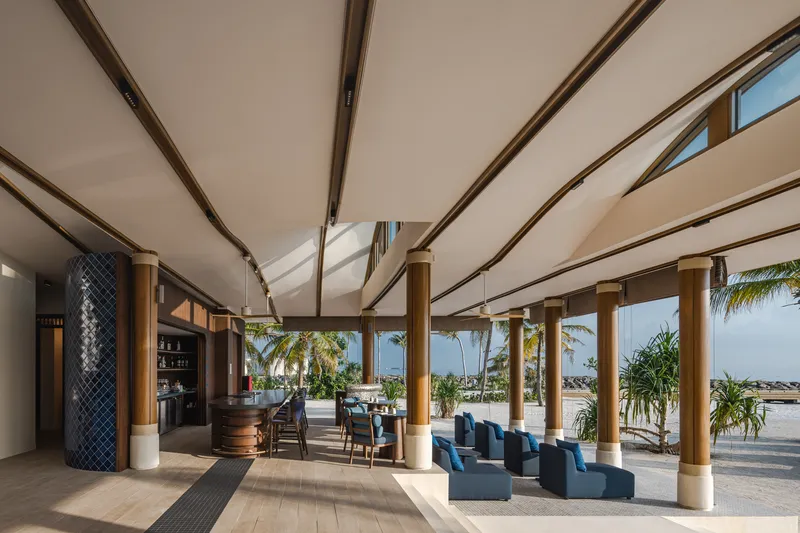
Every built form is carefully positioned to frame the ocean, sky, and palms, transforming each view into a living tableau. The architecture remains quietly restrained, allowing the island’s raw beauty to take the lead. The project’s central ethos is simple yet profound: nature is the hero.
Architecture in Dialogue with Landscape
Set within a delicate coastal ecosystem, Centara Grand Lagoon embodies eco-sensitive architecture that respects its environment. Instead of imposing on the landscape, the design seeks seamless integration, using gentle curves and organic gestures to guide the eye outward toward the horizon.
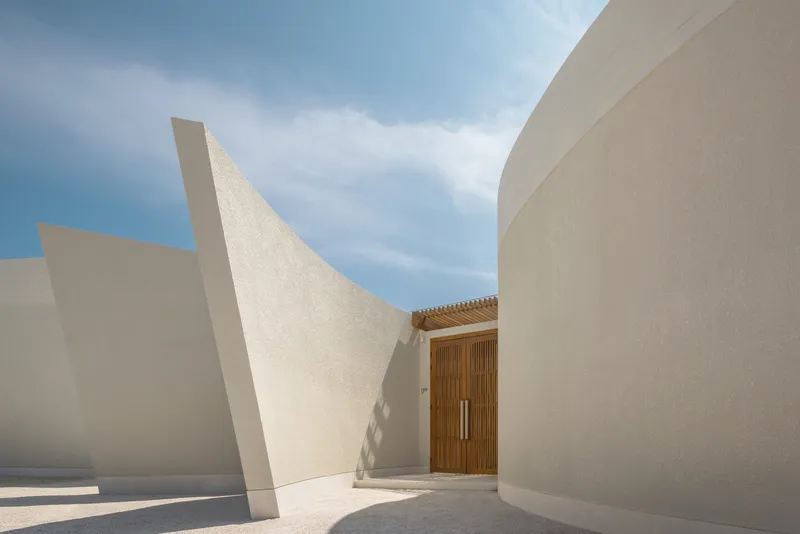
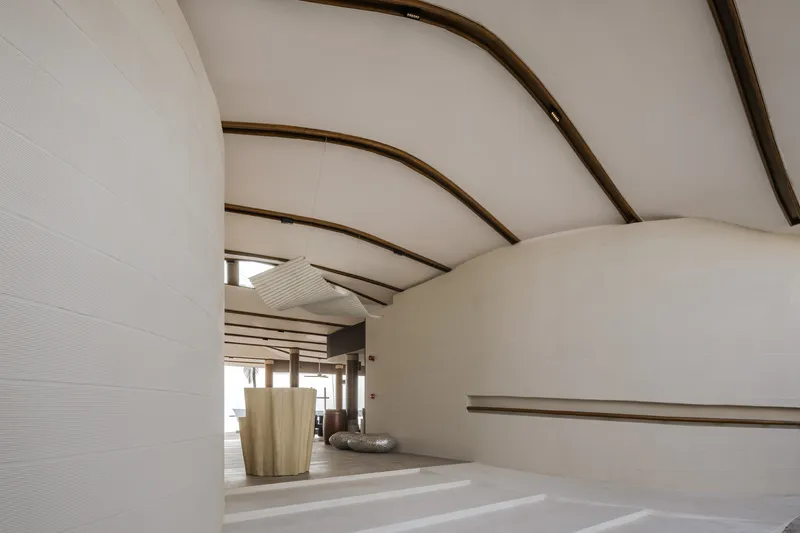
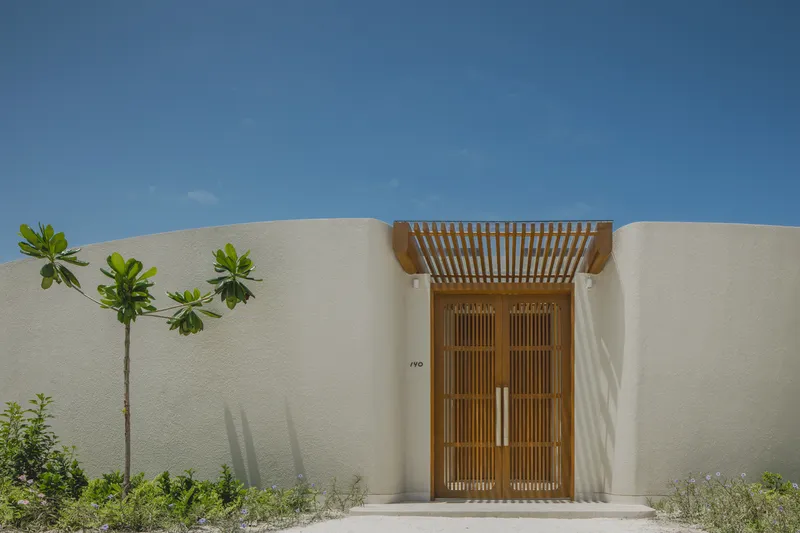
Each villa acts as a private sanctuary, shaped by softly curved privacy walls that ensure seclusion without cutting off panoramic views. The use of textured paints mirrors the tones of beach sand, creating a visual and tactile connection between built structure and natural terrain.
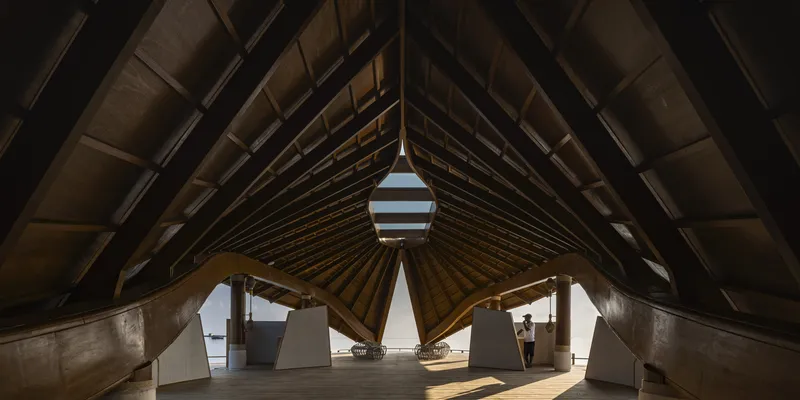
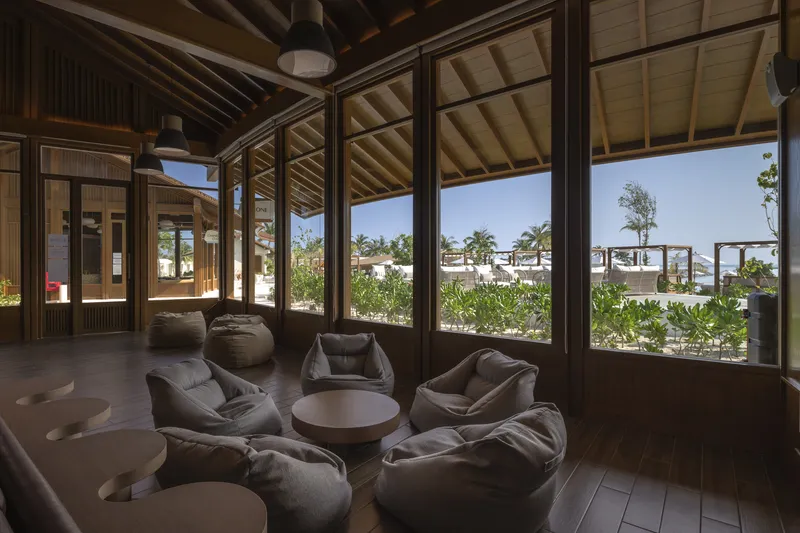
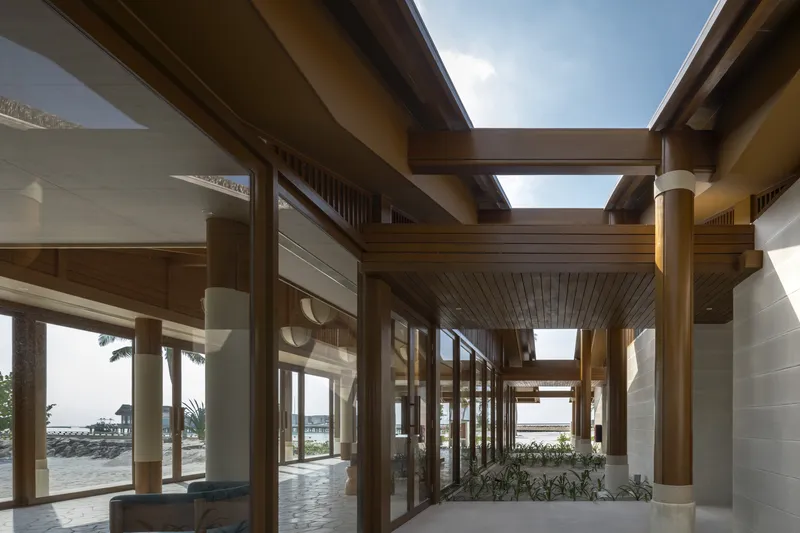
Natural light is introduced through strategically placed skylights, while timber details bring warmth, authenticity, and the relaxed tactility of tropical design.
Villas that Merge Comfort with Context
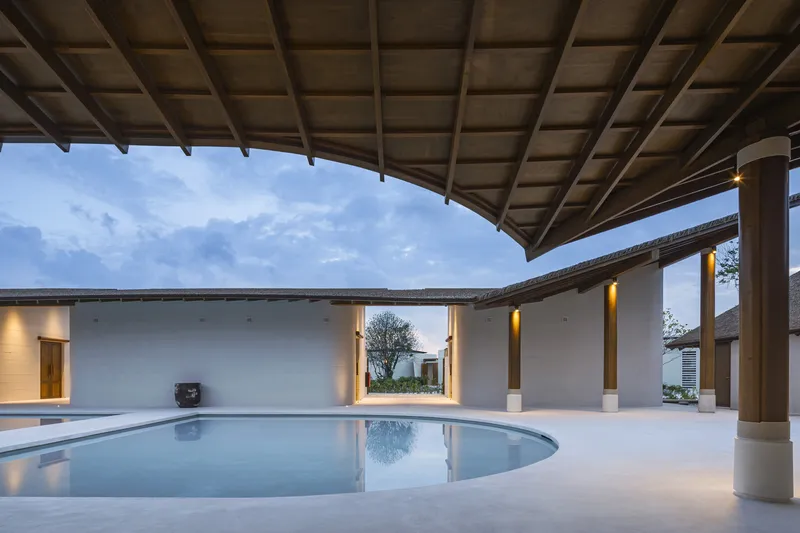
Whether poised over turquoise waters or nestled within palm groves, each villa expresses a distinct architectural rhythm. The language of soft curves, sculptural forms, and open courtyards balances intimacy and openness.
Framed pools, shaded terraces, and layered courtyards create opportunities for quiet reflection, immersion, and direct connection to the surrounding landscape. The spatial sequence encourages guests to experience the natural rhythms of light, wind, and water—each element becoming part of daily life.
Organic Gestures Across the Island
The resort’s architecture is unified through repetitive, site-responsive gestures. Rooflines taper into palm canopies, walls lean with the breeze, and windows frame natural phenomena—from sunrise hues to the tides below. Even transitional zones such as corridors, bridges, and open walkways are designed to maintain sensory continuity, ensuring the journey across the island feels immersive and interconnected.
This holistic approach transforms movement into experience—each step a curated interaction between architecture and nature.
The Disappearing Architecture of Luxury
Ultimately, Centara Grand Lagoon Maldives is defined by the way its architecture dissolves into experience. Here, luxury is not measured by scale or grandeur but by intimacy, silence, and sensory richness.
The resort captures the essence of Maldivian life—the rhythm of waves, the warmth of sunlight, the softness of salt air. It is a place where design steps back, allowing human presence and natural beauty to resonate fully. In this way, IF (Integrated Field) reimagines luxury resort architecture as a form of environmental storytelling—an architecture that listens, reflects, and disappears.
All Photographs are works of W Workspace


Popular Articles
Popular articles from the community


U.GA Architects Wraps an Oval Rooftop Pool in Curved Board-Formed Concrete on Busan's Jeollidan-gil
In Busan's Jeonpo-dong, a 454 m² mixed-use block stacks a neighborhood facility, guest rooms and an oval rooftop pool inside spiraling concrete walls.

longwave studio Reorganizes a 112 m² Tainan Apartment Around the Daily Routines of a Family and Two Cats
In Tainan, Taiwan, birch plywood, rust-red furniture and a freestanding plaster wall link arrival, storage, work and family life in one apartment.

Cube Design Draws an Ecological Corridor Between Two Shenzhen Hills with the Nankai Building
Beside Shenzhen's container docks, the Nankai Building pairs stacked balconies with a climbing green screen to connect two hillsides across its height.

Architekt Andreas Gruber Scatters 23 Dark Timber Chalets Across a South Tyrolean Forest Edge
In Molini di Tures, Amonti Chalets breaks a resort into a hamlet of gabled timber houses, with parking, storage and services pushed into the slope.

Similar Reads
You might also enjoy these articles


Hodi-Mandai Geram
Project Function: Preservation and revitalization of the Intangible heritage and socio-spatial identity of the Hodi by Housing, Cultural Memory Center, Sacred Grove, landscape, local tourism economy


Olio Towers: A Mid-Rise for Performers That Fuses Housing, Rehearsal, and Stage
Located blocks from Houston's Theater District, this modular tower stacks living units around a central performance atrium.

Oasis: Modular Green Housing Carved into Dhaka's Urban Fabric
A shortlisted Plugin Housing entry reclaims unauthorized settlements in Dhaka with stepped concrete volumes, green roofs, and ventilation-driven design.

Black Hole: A Floating Megastructure for the Post-Physical Era
Emiliano Mazzarotto envisions a spherical, self-scaling arena where e-sports, digital hotels, and holographic stadiums replace traditional public space.

Explore Hospitality Building Competitions
Discover active competitions in this discipline

Challenge to reimagine the Iron Throne

Photograph architecture without architects

Illustrate the lost glory of Angkor Wat - Render Challenge

Design challenge to reuse E-waste
Comments (0)
Please login or sign up to add comments
No comments yet. Be the first to comment!