
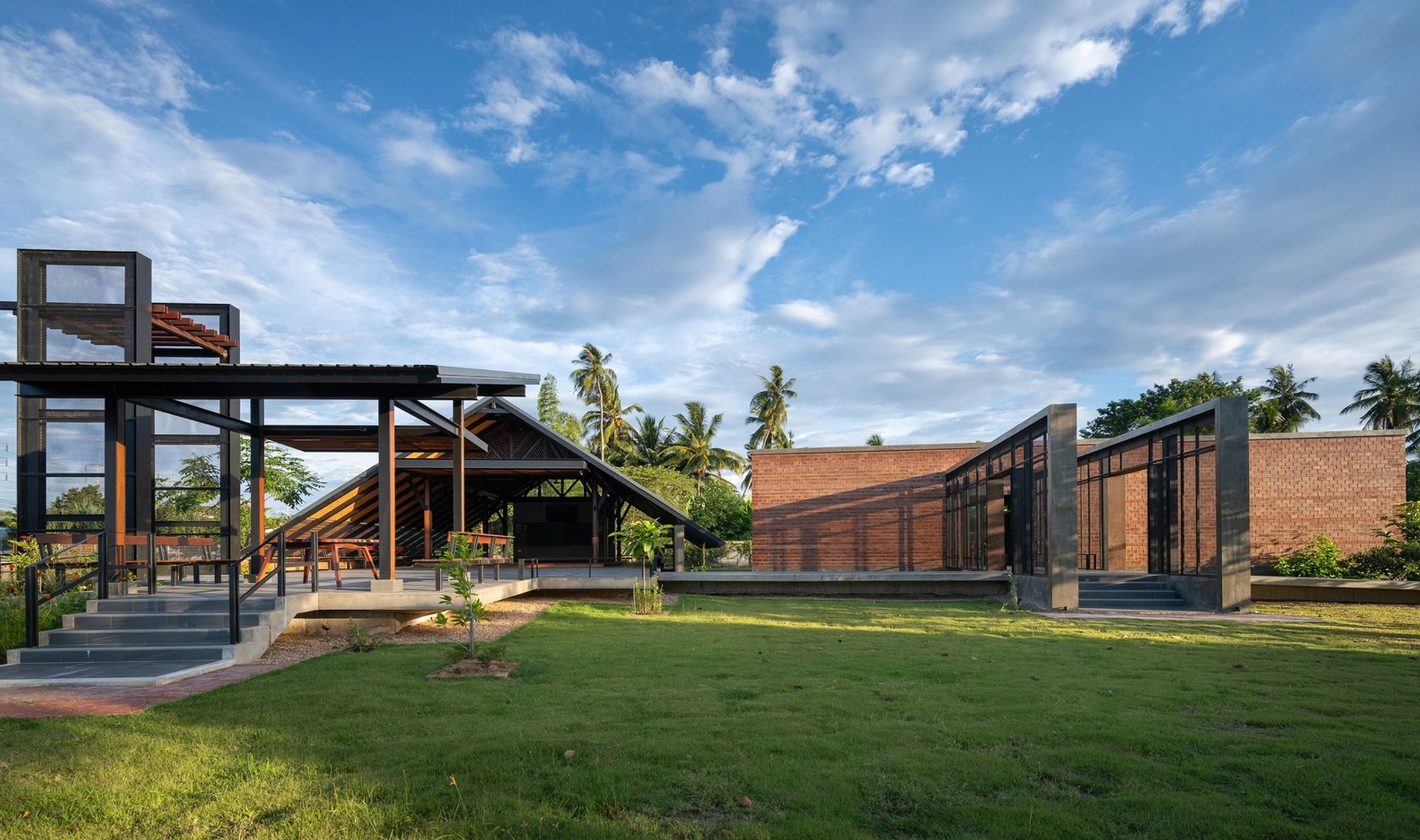
Cheewit Cheewa Home of Nature | Teerachai Leesuraplanon & Thitiphong Phoonthong
Cheewit Cheewa Home of Nature blends sustainable architecture, outdoor classrooms, and vernacular design to foster environmental learning, self-reliance, and community engagement.

Cheewit Cheewa Home of Nature, also known as The Sikhio Natural Agriculture Learning Center, is an innovative educational architecture project by Teerachai Leesuraplanon and Thitiphong Phoonthong. Conceived by Dr. Mavin Dankul, the project embodies the vision of a borderless classroom, expanding the Project Approach model of learning through immersive outdoor experiences. Its primary goal is to cultivate life skills, environmental awareness, and sustainable living practices among children and youth.
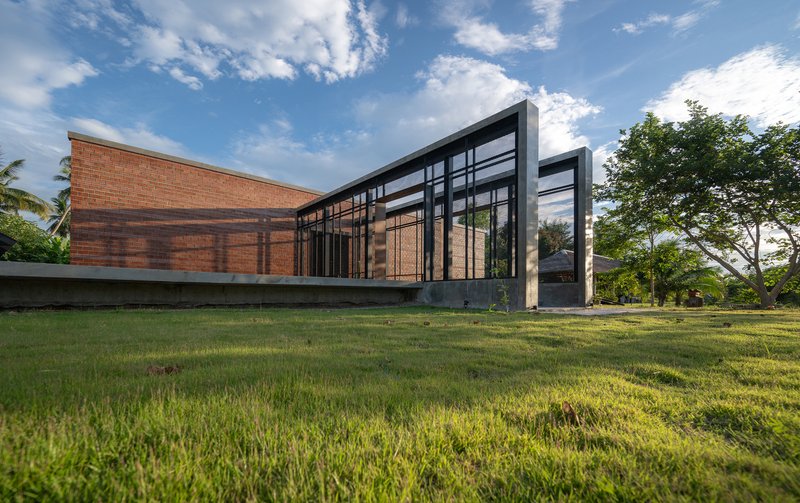
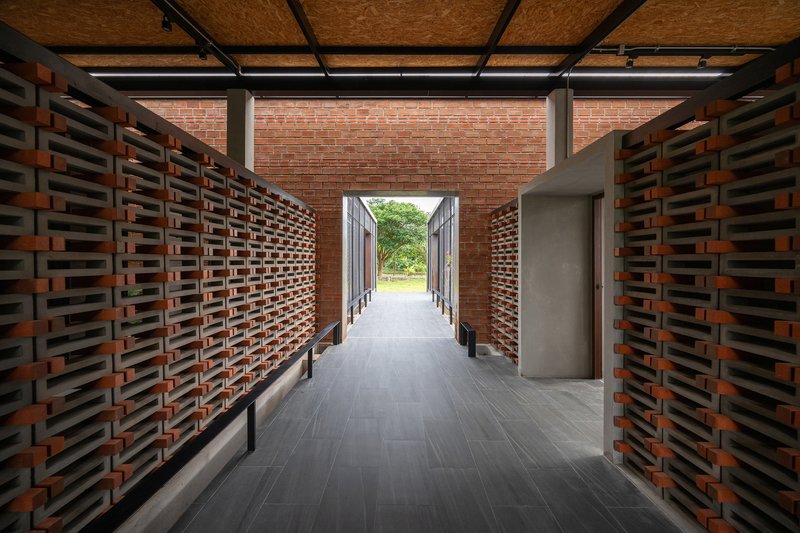
Rooted in the integrated learning philosophy “From Seed to Table,” Cheewit Cheewa combines soil restoration, water management, renewable energy, and a zero-waste system. This holistic approach encourages self-reliance and promotes Thailand’s sufficiency economy principles.
A Site Intertwined with Nature Set on former rice fields along the upper Lam Takhong Canal, the site benefits from fertile soil and abundant natural resources. The presence of a traditional rahad vid nam, a locally crafted water wheel, exemplifies indigenous self-sufficiency and continues to operate as a sustainable irrigation device. The learning center embraces this natural setting, allowing architecture and landscape to coalesce as an educational tool.
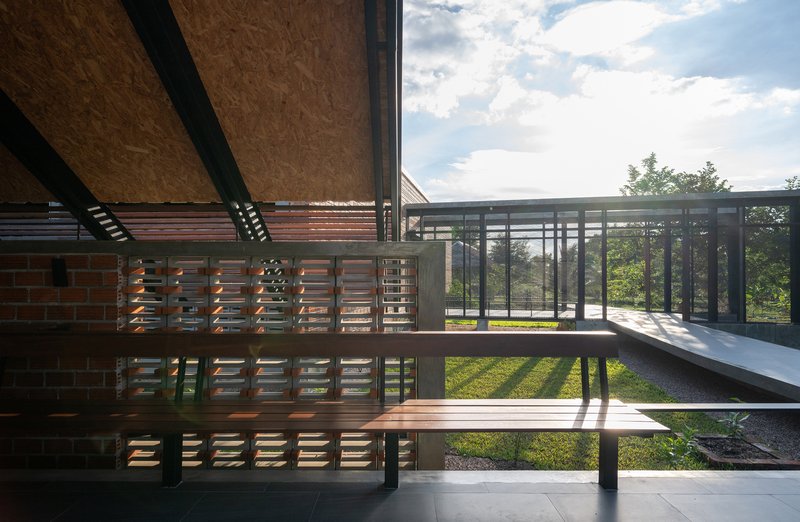
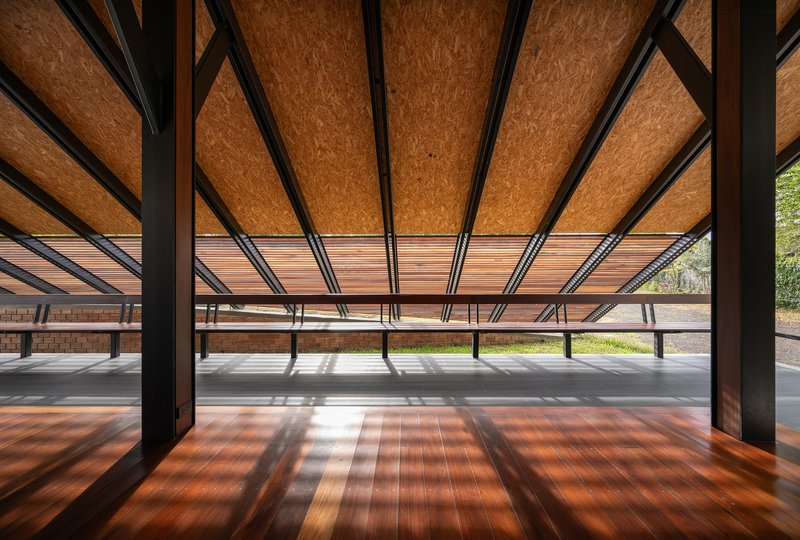
Sustainable, Low-Energy Architecture Responding to Thailand’s tropical moist climate, the design employs passive cooling strategies, reducing reliance on mechanical systems while maintaining indoor comfort. Reclaimed timber is used extensively, serving as a carbon-negative material that sequesters CO₂ and reduces the ecological impact of new construction. This commitment to sustainability reinforces the project’s environmental ethos and showcases responsible material practices.
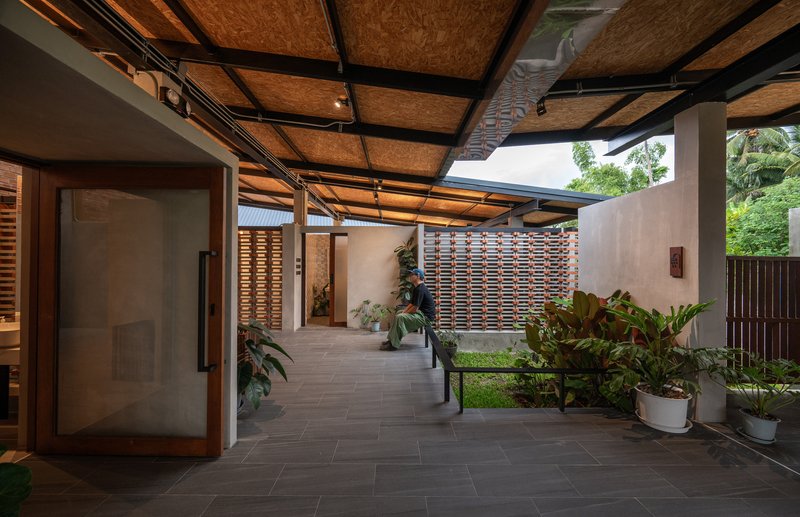
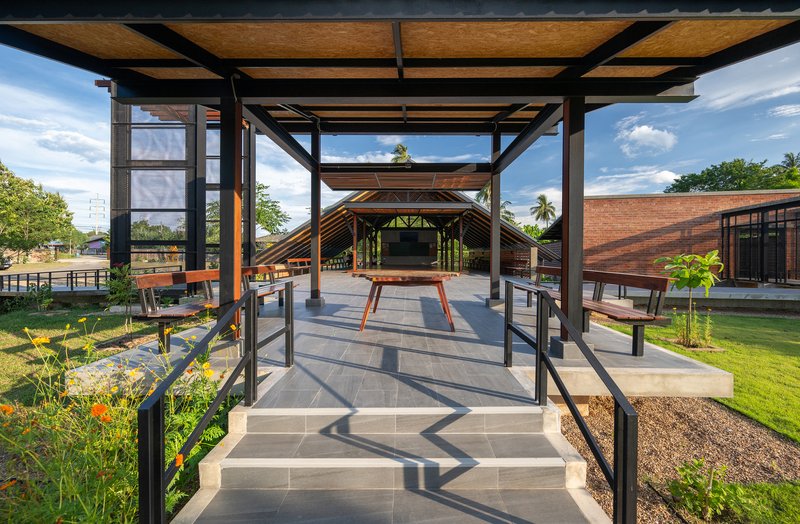
Blending Form, Space, and Materials Cheewit Cheewa harmonizes with both local culture and nature through a thoughtful interpretation of vernacular architecture:
- Form: Low-pitched gable roofs and repeated formal patterns create unity, rhythm, and contextual sensitivity.
- Space: Semi-open learning areas blur boundaries between indoors and outdoors, inviting natural elements into the educational experience.
- Materials: Locally familiar materials, such as brick for solidity, perforated blocks for ventilation, and reclaimed wood, provide ecological value while integrating seamlessly with the surrounding landscape.
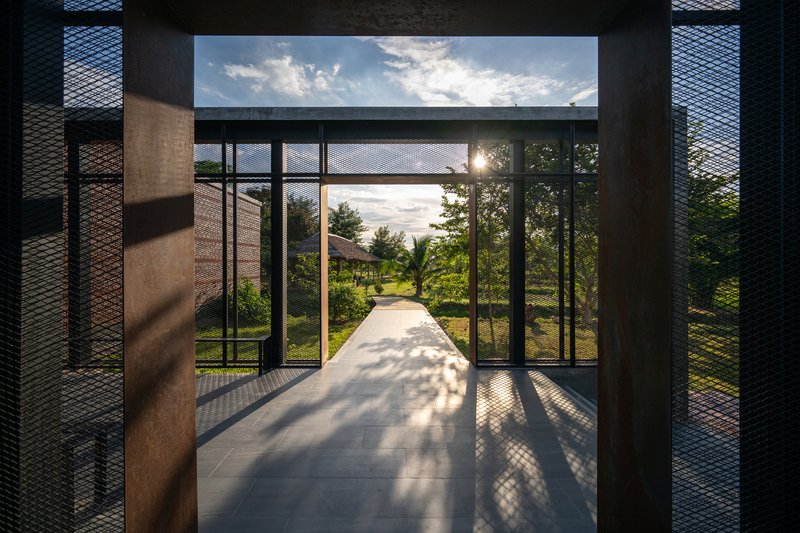
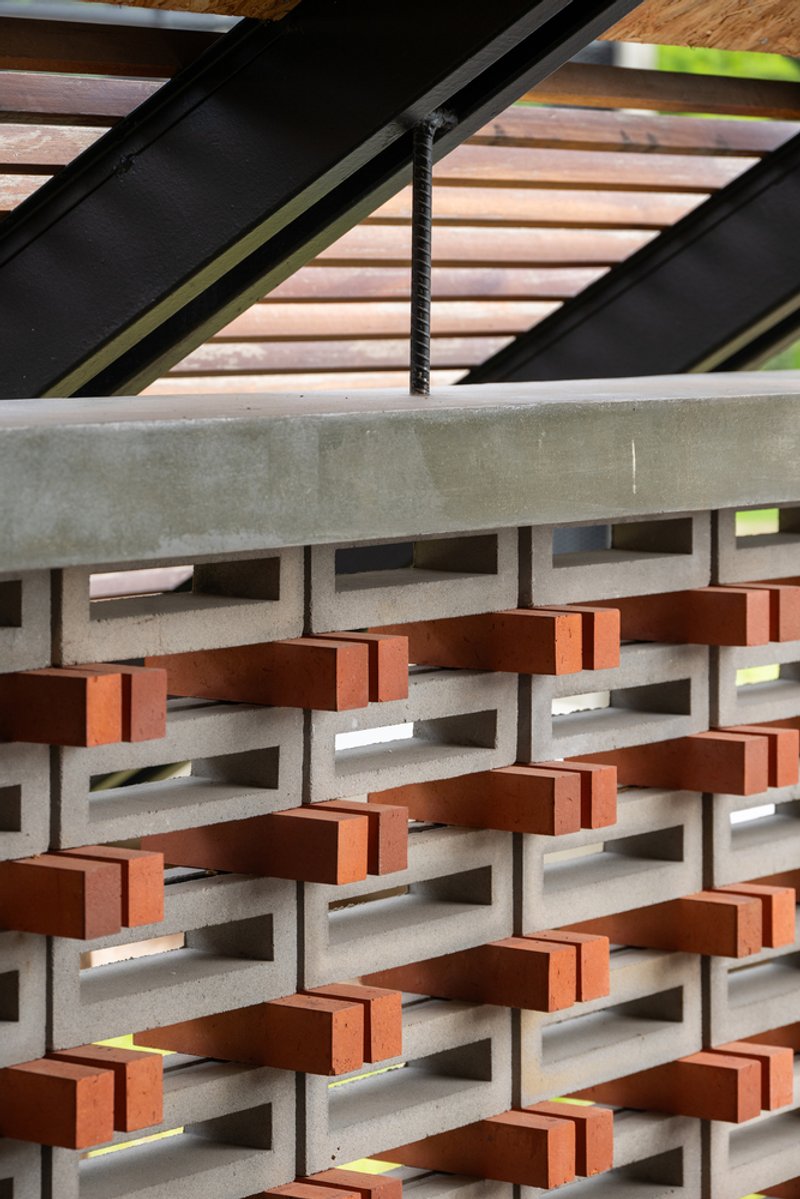
Architecture as an Educational Tool At Cheewit Cheewa, architecture itself becomes a medium for learning. The design communicates sustainability, self-reliance, and cultural resonance, demonstrating how built environments can inspire environmental stewardship and practical life skills in young learners.
All Photographs are works of Rungkit Charoenwat




Popular Articles
Popular articles from the community

Atelier Macri Concept Store Interior Design by CASE-REAL
Atelier Macri store features a "ko" counter, walnut wood details, cork displays, blending retail, gallery, and seamless customer experiences.
Split House: A Compact Urban Home Blending Privacy, Light, and Flexible Living in Japan
Compact Japanese home featuring DOMA space, flexible café potential, passive lighting, privacy zoning, and sustainable urban living design.
Inverted Architecture Installation by Studio Link-Arc: Exploring the Intersection of Architecture and Living Organisms
Inverted Architecture Installation by Studio Link-Arc blends mycelium, sustainability, inverted design, ecological cycles, and urban adaptive architecture in Shenzhen.


Similar Reads
You might also enjoy these articles


The Ken Roberts Memorial Delineation Competition (Krob)
As the most senior architectural drawing competition currently in operation anywhere in the world, it draws hundreds of entries each year, awarding the very best submissions in a series of medium-based categories.


Waterfront Redevelopment and Urban Revitalization in Mumbai: Forging a New Dawn for Darukhana
A transformative waterfront redevelopment project reimagining Darukhana’s shipbreaking heritage into an inclusive urban future.

OUT-OF-MAP: A Call for Postcards on Feminist Narratives of Public Space
Rhizoma Design and Research Lab invites artists, designers, architects, researchers, and students to reflect on how feminist perspectives can reshape public space. Selected works will be exhibited in Barcelona, October 2026. Submissions open until 15 April 2026.


Documentation Work on Buddhist Wooden Temple
Architectural syncretism and cultural hybridity: A comparative study of the Buddhist temples in Chattogram Hill tracks


Explore Architecture Competitions
Discover active competitions in this discipline




The International Standard for Design Portfolios


The Global Benchmark for Architecture Dissertation Awards


The Global Benchmark for Graduation Excellence


Challenge to design public laboratory
Comments (0)
Please login or sign up to add comments
No comments yet. Be the first to comment!