
Cidade BI4ALL Offices: Adaptive Reuse and Innovative Workspaces in Lisbon
Adaptive reuse transforms Lisbon sugar warehouses into flexible, collaborative, human-centered Cidade BI4ALL Offices blending industrial heritage with modern work, leisure, and living.


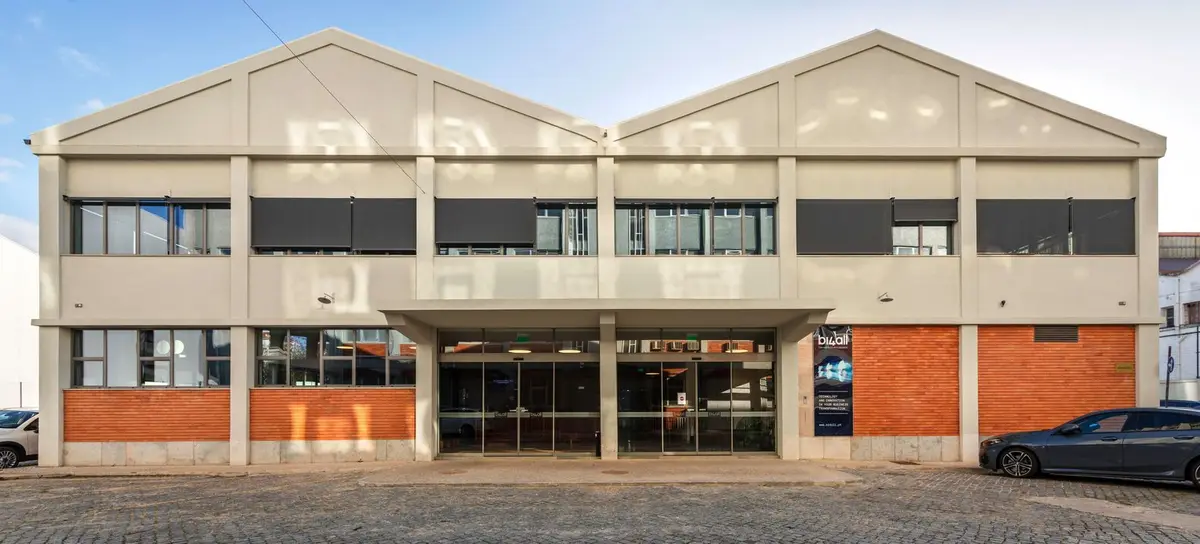
The Cidade BI4ALL Offices, designed by Pedra Líquida, exemplify the transformative potential of adaptive reuse in urban architecture. Located in East Lisbon, this project converted two warehouses of a former sugar factory into a dynamic creative cluster for an IT services company. Spanning 6,131 m² and completed in 2021, the project merges industrial heritage with modern office functionality, redefining the concepts of work, leisure, and living in a post-pandemic context.
Industrial Reconversion with Human-Centered Design
At the heart of Cidade BI4ALL is the vision of flexible work environments that encourage collaboration, creativity, and well-being. The design responds to contemporary workplace needs, balancing open-space offices, meeting rooms, and auditoriums with leisure and residential areas. By maintaining the volumetric scale of the original warehouses, the project preserves the industrial memory while introducing modern materials, furniture, and metallic structural interventions that are self-supporting and minimally invasive.
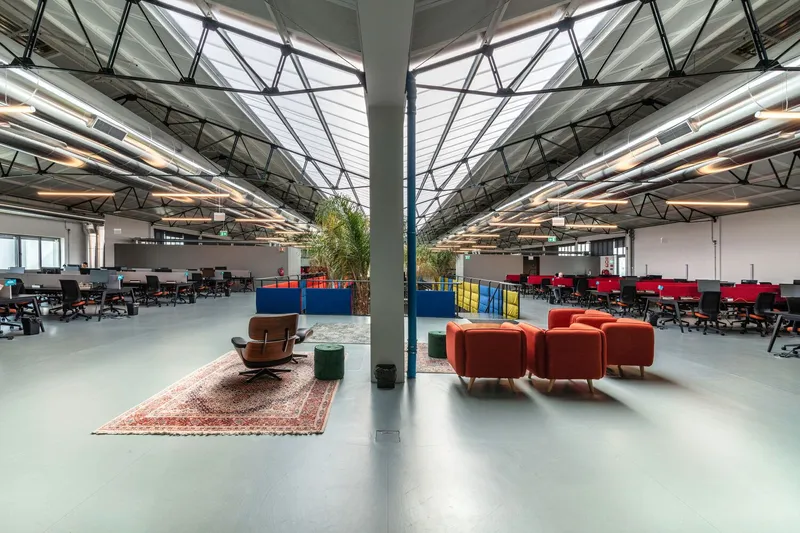
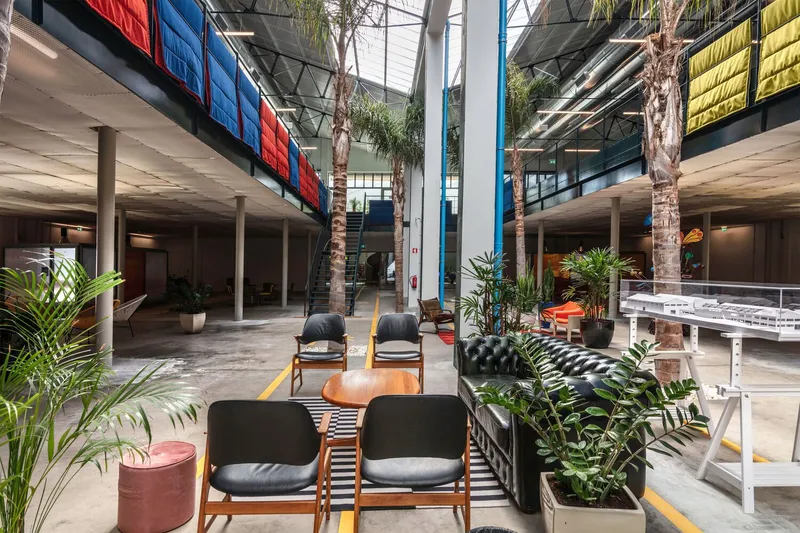
Warehouse A: Collaborative Workspaces
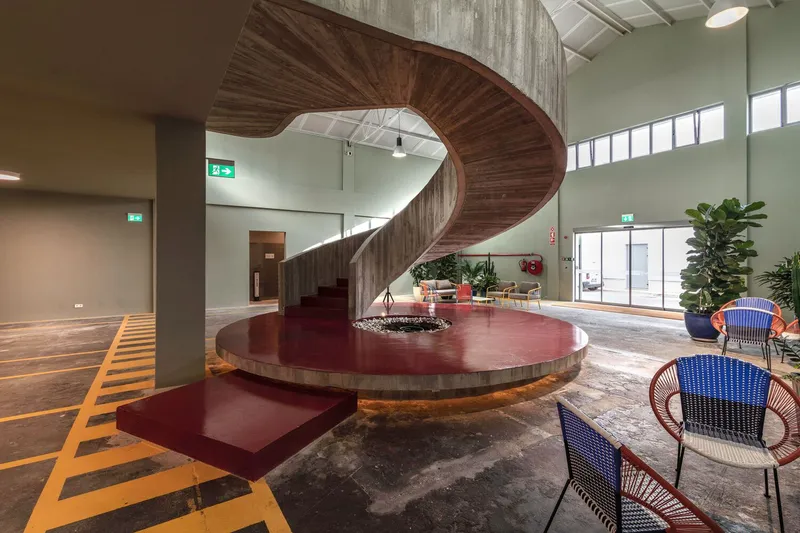
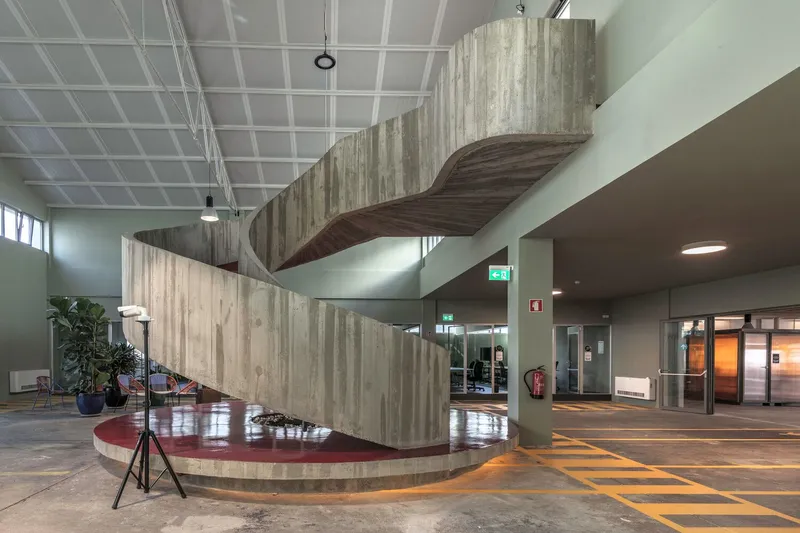
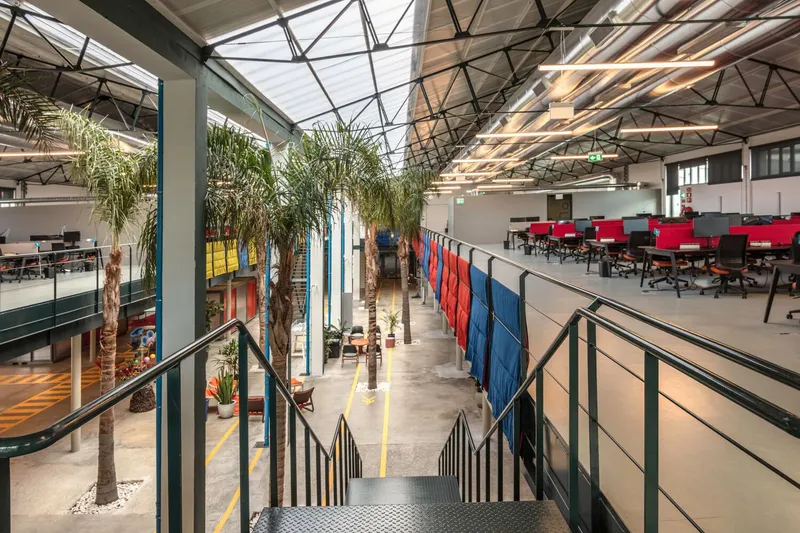
Warehouse A hosts the main work areas, including offices, meeting spaces, and auditoriums. A helical staircase in exposed concrete serves as a central focal point, guiding circulation between floors while emphasizing the expansive central hall. Tall palm trees interact with the original metal pillars, creating a natural dialogue within the industrial frame. The design introduces mezzanines and rectangular office volumes in steel, creating an intimate scale within the vast spaces and encouraging different modes of work and collaboration.
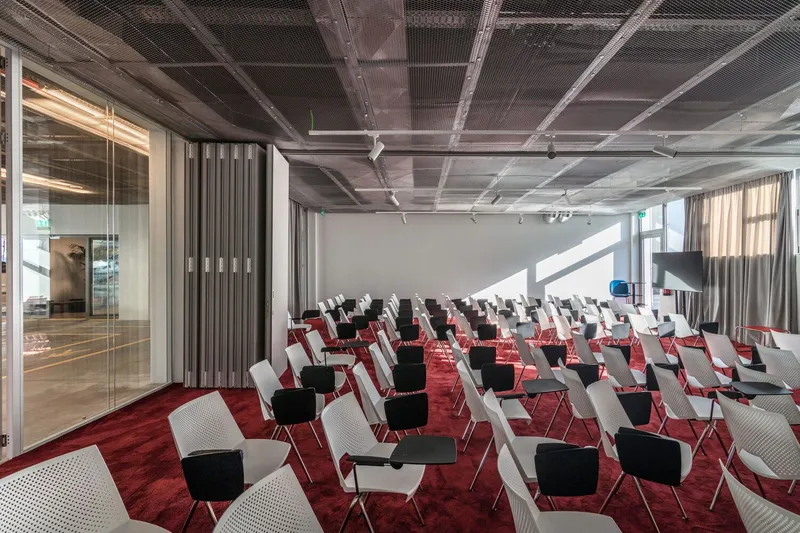
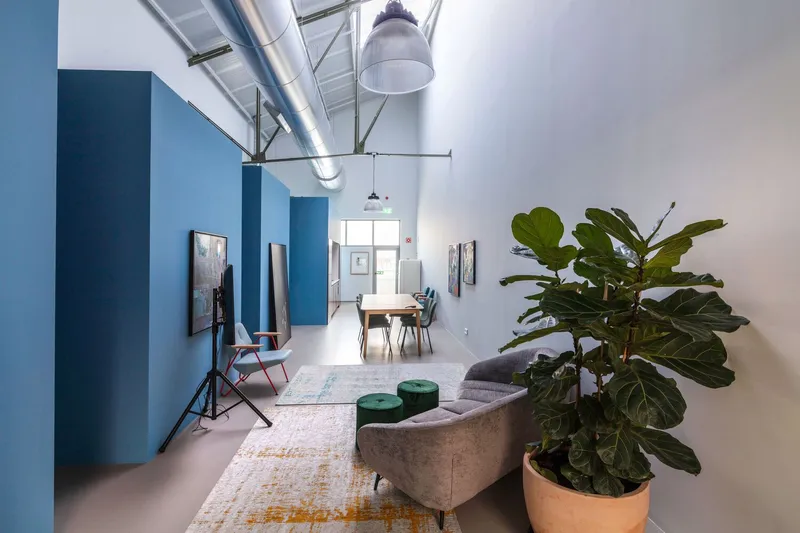
Warehouse B: Leisure, Living, and Gastronomy
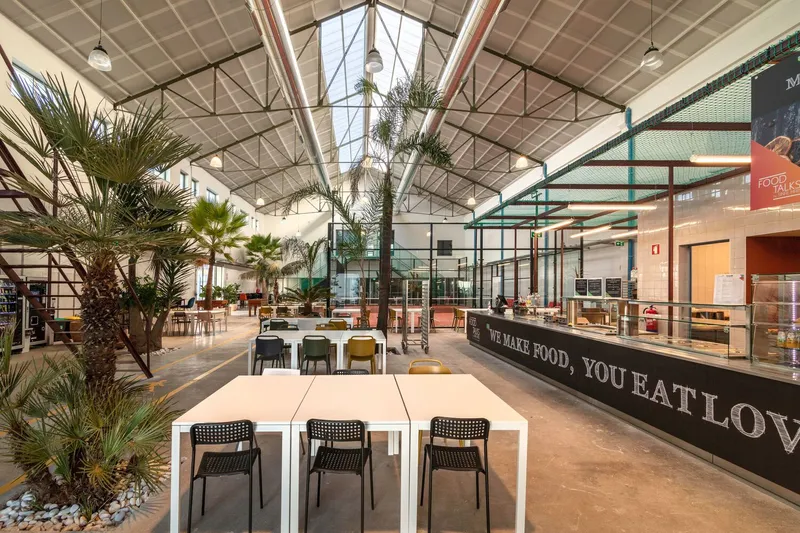
Warehouse B focuses on supportive amenities such as an industrial kitchen, catering facilities, and areas for leisure, play, and temporary housing. Vegetation, including tall palm trees and lower plantings, delineates different zones, subtly dividing dining, living, and recreation spaces. A wide metallic staircase connects to five studio apartments, offering full residential functionality and creating a microcity-like experience within Lisbon. This integration allows users to alternate between work, social interaction, and rest, reinforcing the concept of a creative cluster.
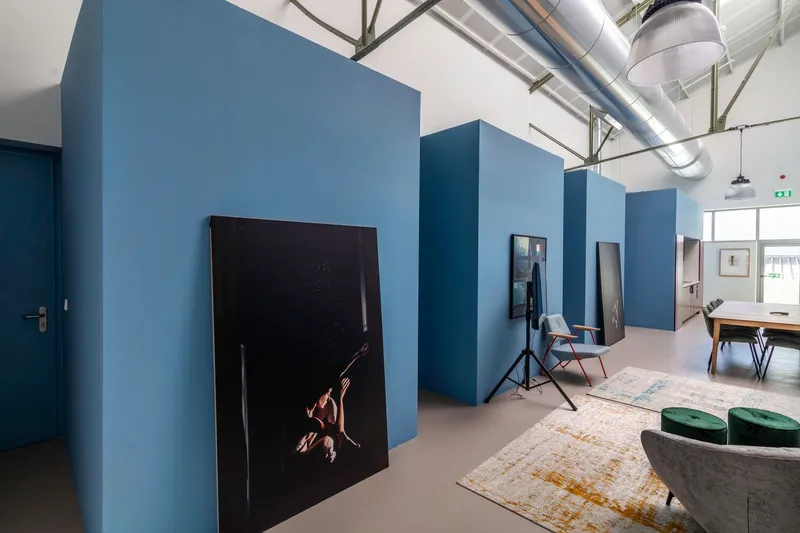
Materiality, Furnishings, and Atmosphere
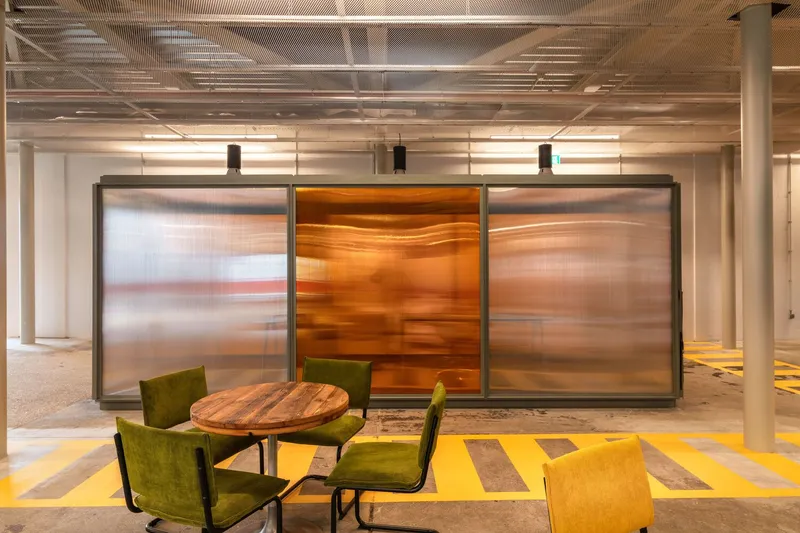
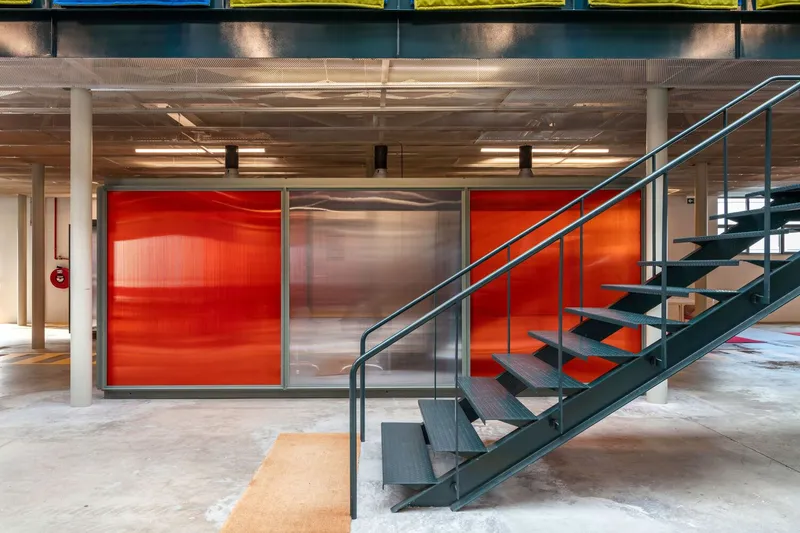
The interiors showcase a mix of industrial pragmatism and lounge comfort, featuring metallic net coverings, plexiglass partitions, textile curtains, and carefully curated designer furniture. The combination of common office elements and unique design pieces generates varied atmospheres throughout the complex. Vivid and contrasting colors in fabrics and acoustic panels enhance the dynamic spatial experience, reflecting the flexibility and creativity inherent in the project.
Sustainable and Flexible Design
Cidade BI4ALL demonstrates how adaptive reuse can extend the life of industrial structures while supporting flexible, post-pandemic work models. The project successfully balances regulatory compliance, including accessibility and fire safety, with spatial openness and design innovation. By retaining emblematic architectural and landscape features, it preserves the heritage of Lisbon’s industrial past while creating a vibrant environment for the present and future workforce.
A Creative Microcity in Lisbon
Ultimately, Cidade BI4ALL represents more than a workspace: it is a microcity, where work, leisure, and living coexist seamlessly. Its design fosters collaboration, co-creation, and social interaction, embodying a holistic approach to contemporary office architecture. By blending industrial history, flexible programming, and human-centric design, Pedra Líquida has created a benchmark for adaptive reuse projects in Portugal and beyond.
All photographs are works of
Alberto Plácido, Pedra Líquida


Popular Articles
Popular articles from the community


David Macias Steps a Doorless Stone and Plaster House Down a Tropical Colombian Hillside
In the humid hills of Colombia, Threshold House replaces the front door with an open void and terraces its 850 m² down the slope instead of fighting it.

Juan García Correa, John González and Claudia Rueda Sink a Circular Amphitheater into a Manizales Engineering Building
On the La Nubia campus in Manizales, Colombia, the S1 Building folds labs and offices into a hillside of ramped lawns that double as a campus route.

LT2A and OPEN Architectes Thread a Brick and Glass High School Through a Wooded Belgian Campus
In Braine-l'Alleud, a 3,000 m² wing for Collège Cardinal Mercier pairs pale brick with a glazed colonnade, deferring to a small chapel and a dense wood.

U.GA Architects Wraps an Oval Rooftop Pool in Curved Board-Formed Concrete on Busan's Jeollidan-gil
In Busan's Jeonpo-dong, a 454 m² mixed-use block stacks a neighborhood facility, guest rooms and an oval rooftop pool inside spiraling concrete walls.

Similar Reads
You might also enjoy these articles

Bamboo Housing Challenge 2026: Design Affordable, Sustainable Homes Using Bamboo
An international design competition by Bamboo U and IBUKU inviting architects and designers to reimagine affordable housing using bamboo — with the winning design built full-scale in Bali.

Computational Design & Education: Beegraphy Design Awards Introduces 7th Category (Featuring Jiyun's Innovative Approach)
Dive into Beegraphy’s 7th Design Awards category, where computational design meets education to create immersive, interactive learning tools, inspired by Jiyun’s work.
From Parametric Lighting to Urban Furniture: Join the 2nd Workshop in Beegraphy’s Computational Design Series
Dive into Cutting-Edge Design Techniques and Practical Applications with Industry Experts

Last Call: Unleash Your Architectural Genius in SHAK's Kindergarten Design Competition
Urgent call for architects to join SHAK's kindergarten design competition before the looming deadline

Explore Architecture Competitions
Discover active competitions in this discipline

Challenge to reimagine the Iron Throne

Photograph architecture without architects

Illustrate the lost glory of Angkor Wat - Render Challenge

Design challenge to reuse E-waste
Comments (0)
Please login or sign up to add comments
No comments yet. Be the first to comment!