
Circle of Life: An Interfaith Cemetery Architecture Bridging Cultures in Shanghai
A spiritual cemetery in Shanghai unites Islam, Christianity, Judaism, and Buddhism through interfaith architecture and symbolism.

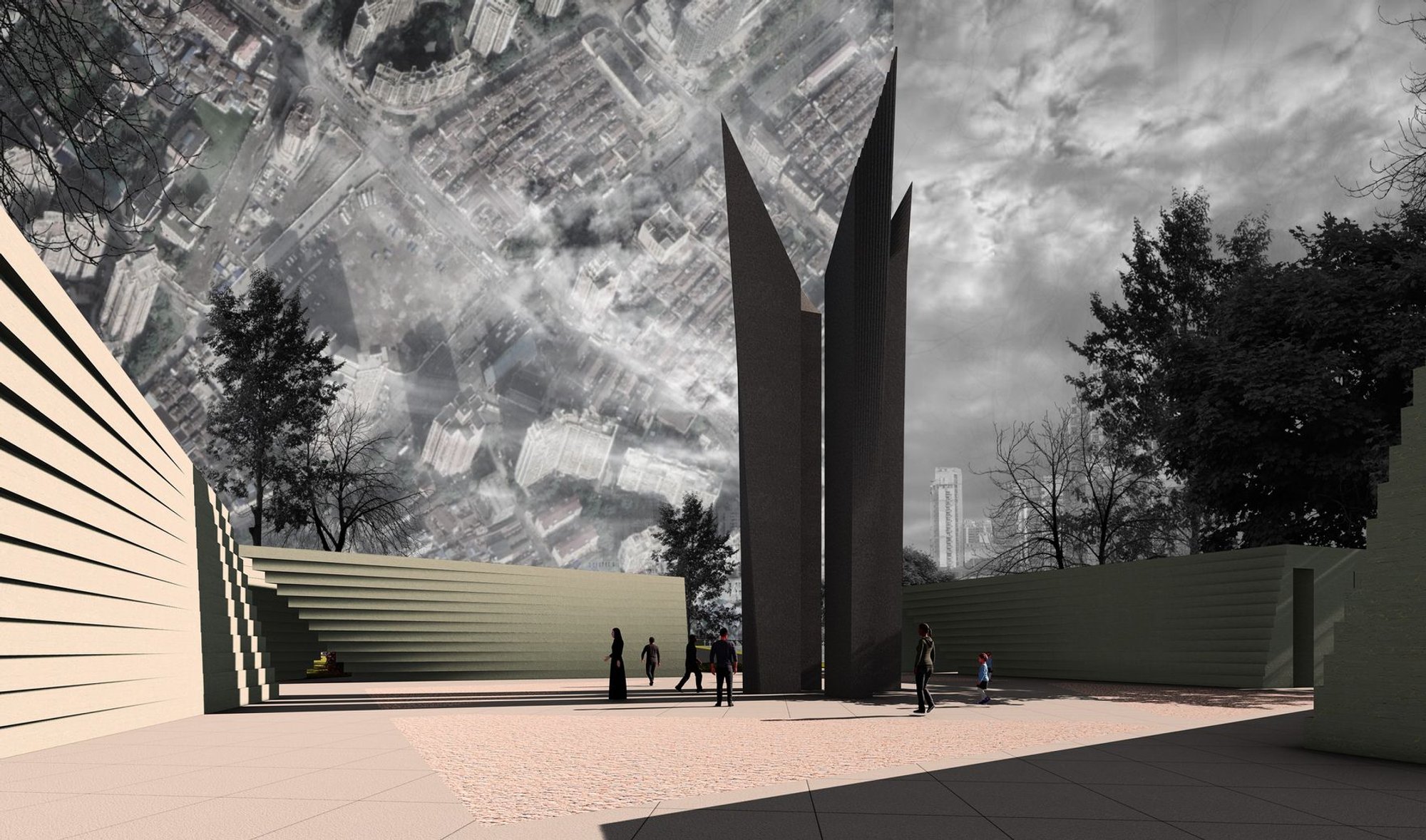
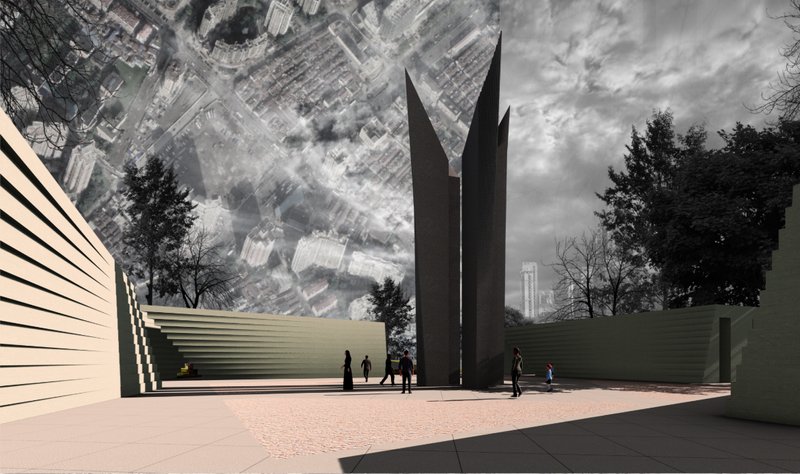
In an era where urbanization is rapidly transforming our built environments, the project Circle of Life presents a poignant architectural response to a universal human experience: death. Designed by Saeid Alitajer, the project envisions a monumental cemetery complex rooted in interfaith cemetery architecture, celebrating the diverse cultural understandings of the afterlife while fostering unity across religions.
Situated in the dense and diverse urban fabric of Shanghai, the complex is not merely a place of mourning, but a contemplative civic space. With minimalist geometric forms and spiritual symbolism, the design integrates the funerary customs of four major world religions—Islam, Christianity, Judaism, and Buddhism—into a unified architectural language.
Four Courtyards, Four Faiths
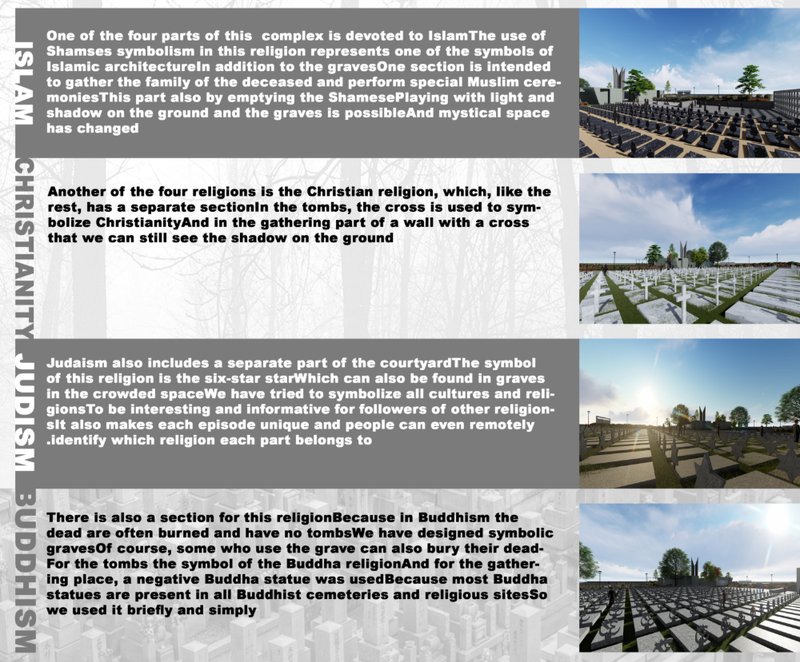
Each religion is represented by a distinct courtyard within the complex, designed to reflect its specific spiritual practices and beliefs:
- Islamic Section: This courtyard uses the symbolism of "Shamses" (sun symbolism), with graves aligned traditionally and spaces for family gatherings and Muslim funeral rituals. Light and shadow play a key role in evoking mystical presence.
- Christian Section: Featuring a wall marked by the cross, this area serves as both tomb space and gathering area. The spatial design allows the shadow of the cross to fall on the graves, merging symbolism with environmental conditions.
- Jewish Section: Marked by the six-pointed Star of David, this space not only includes symbolic graves but also uses iconography to reflect Jewish heritage and values, making it legible even to distant observers.
- Buddhist Section: In respect to Buddhist traditions, where cremation is common, this courtyard includes symbolic graves and a negative Buddha statue to evoke a meditative gathering atmosphere without overt monumentality.
A Unifying Center
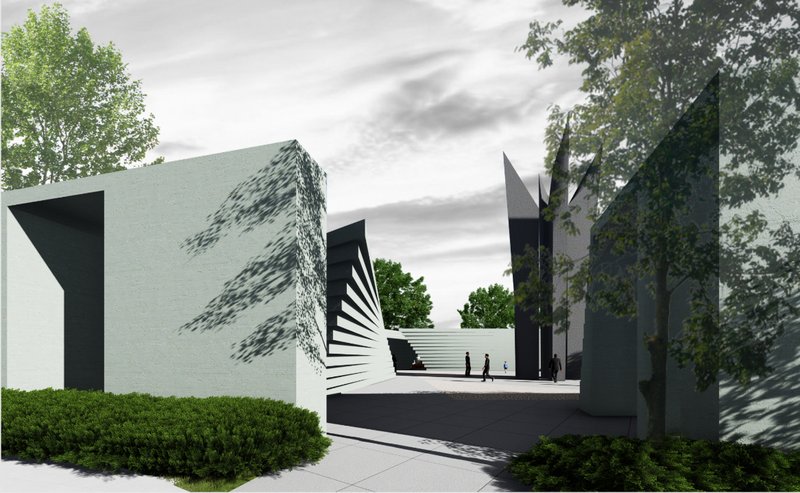
At the heart of the site lies a monumental central tower surrounded by four open structures, forming a symmetrical cross-axis. This central element symbolizes the union of the four religions, suggesting that in death, distinctions dissolve. The shared space encourages interfaith contemplation and civic gathering, bridging cultural gaps through architectural language.
Urban Memory and Architectural Dialogue
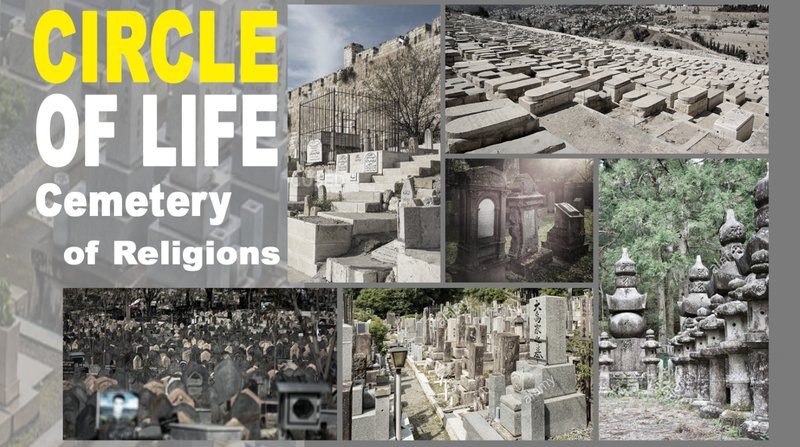
Inspired by Shanghai's blend of tradition and modernity, the formal language of the buildings draws from both classical religious motifs and contemporary urban design. Elements such as ramps, vertical fins, and open courtyards invite visitors into a quiet spatial dialogue.
Notably, the layout blurs the boundaries between cemetery and civic space. Beyond just tombs and symbols, the complex includes areas for reflection, children’s activities, staff spaces, and public interaction—redefining the cemetery as an integrated urban typology.
Circle of Life exemplifies a new frontier in interfaith cemetery architecture—a space that honors cultural specificity while embracing collective humanity. By designing a place where the rituals of death become platforms for unity, the project offers a poetic blueprint for inclusive memorial architecture in the 21st century.
Project by: Saeid Alitajer



Popular Articles
Popular articles from the community

Free Architecture Competitions You Can Enter Right Now
No entry fees, real prizes. Here are the best free architecture competitions open for submissions in 2026.

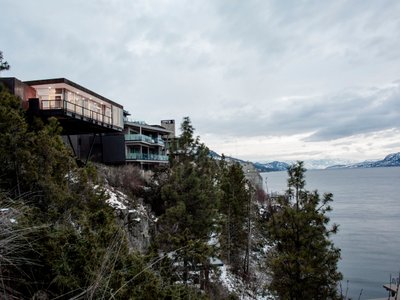
Alton Cliff House: A Harmonious Retreat by f2a Architecture in Lake Country, Canada
Alton Cliff House blends corten steel, prefabrication, and sustainable design, creating a luxurious, energy-efficient retreat perched on Canadian cliffs.
Solar Steam: A Climate-Responsive Architecture That Redefines the Monument
A climate-responsive memorial architecture that transforms heat, decay, and time into a living system reflecting humanity’s ecological impact.
Atelier Macri Concept Store Interior Design by CASE-REAL
Atelier Macri store features a "ko" counter, walnut wood details, cork displays, blending retail, gallery, and seamless customer experiences.

Similar Reads
You might also enjoy these articles


The Ken Roberts Memorial Delineation Competition (Krob)
As the most senior architectural drawing competition currently in operation anywhere in the world, it draws hundreds of entries each year, awarding the very best submissions in a series of medium-based categories.

Waterfront Redevelopment and Urban Revitalization in Mumbai: Forging a New Dawn for Darukhana
A transformative waterfront redevelopment project reimagining Darukhana’s shipbreaking heritage into an inclusive urban future.

OUT-OF-MAP: A Call for Postcards on Feminist Narratives of Public Space
Rhizoma Design and Research Lab invites artists, designers, architects, researchers, and students to reflect on how feminist perspectives can reshape public space. Selected works will be exhibited in Barcelona, October 2026. Submissions open until 15 April 2026.


Documentation Work on Buddhist Wooden Temple
Architectural syncretism and cultural hybridity: A comparative study of the Buddhist temples in Chattogram Hill tracks

Explore Urban Design Competitions
Discover active competitions in this discipline




The Global Benchmark for Architecture Dissertation Awards


Challenge to design locus for the upliftment of human rights


Challenge to design a learning and healing center


Challenge to re-imagine a department store in present times
Comments (0)
Please login or sign up to add comments
No comments yet. Be the first to comment!