

Concrete Shell Pavilion by UA Lab: A Sculptural Community Space in Ahmedabad
A minimalist concrete pavilion offering open, interconnected community spaces with circular columns, natural materials, and calming contrasts within a residential development.


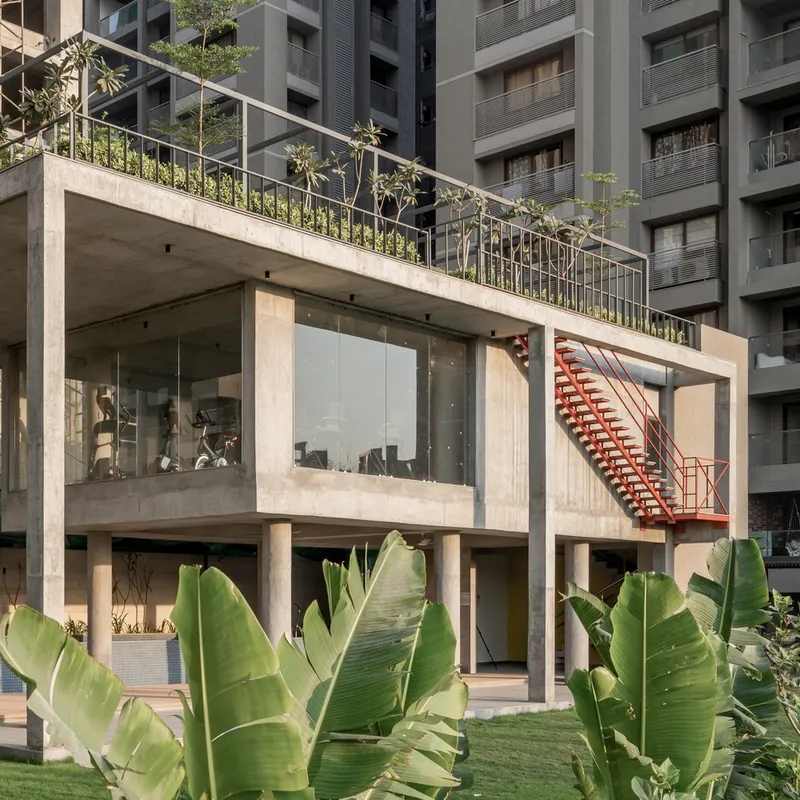
UA Lab (Urban Architectural Collaborative) has created The Concrete Shell Pavilion, a serene and multifunctional community space designed for a vertical residential development in Ahmedabad, India. Completed in 2023, the 31,792 ft² structure explores how architecture, materiality, and spatial dialogue can strengthen social interaction among culturally diverse families.
A Social Heart for Vertical Living
The project is conceived as a shared social hub, encouraging residents to gather, interact, and participate in community life. As cities grow vertically, UA Lab reimagines what communal space can be: calm, inclusive, and rooted in collective belonging.
The architects describe the pavilion as a place where scale, volume, and openness come together to shape a relaxing environment. It is intentionally designed to foster user engagement while offering pockets of quiet, shaded areas for contemplation.
A Pavilion Formed as a Single Concrete Shell
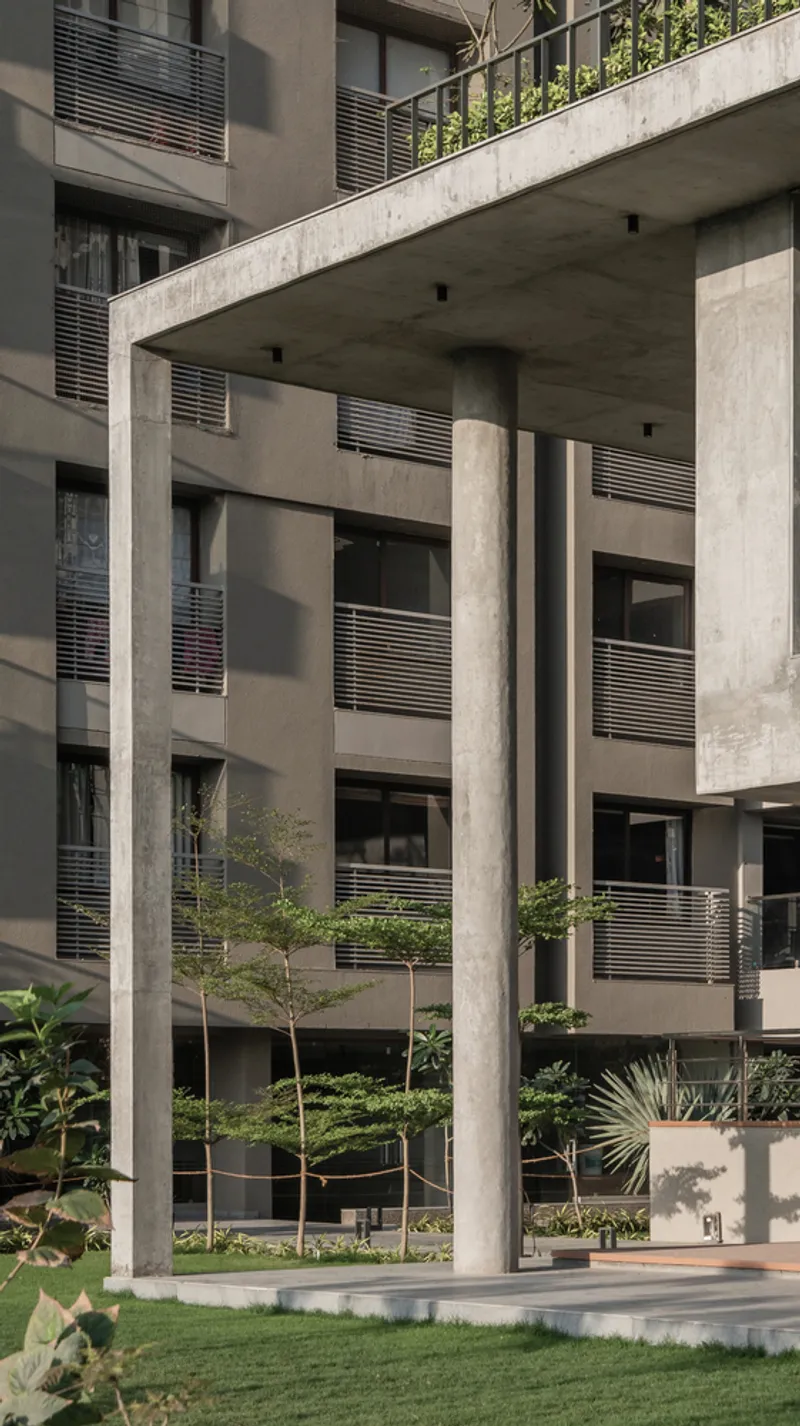
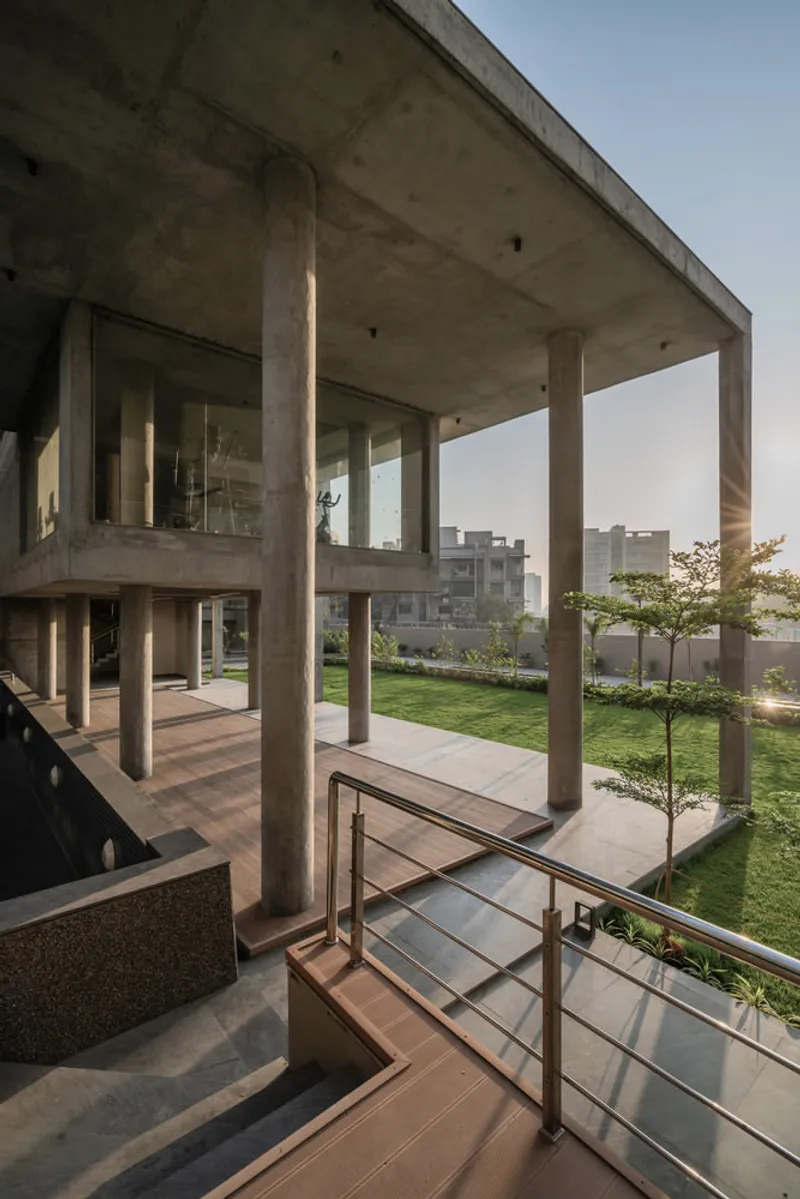
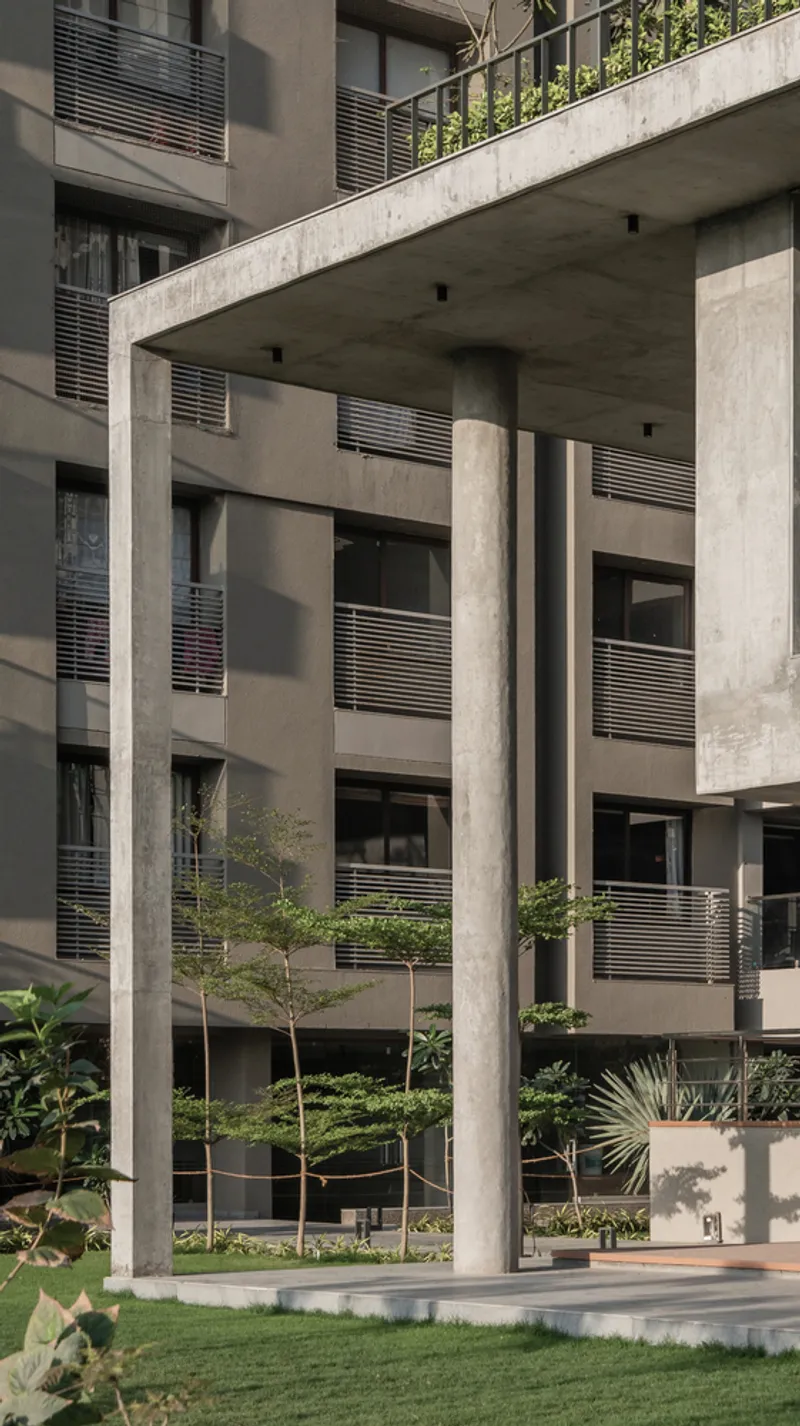
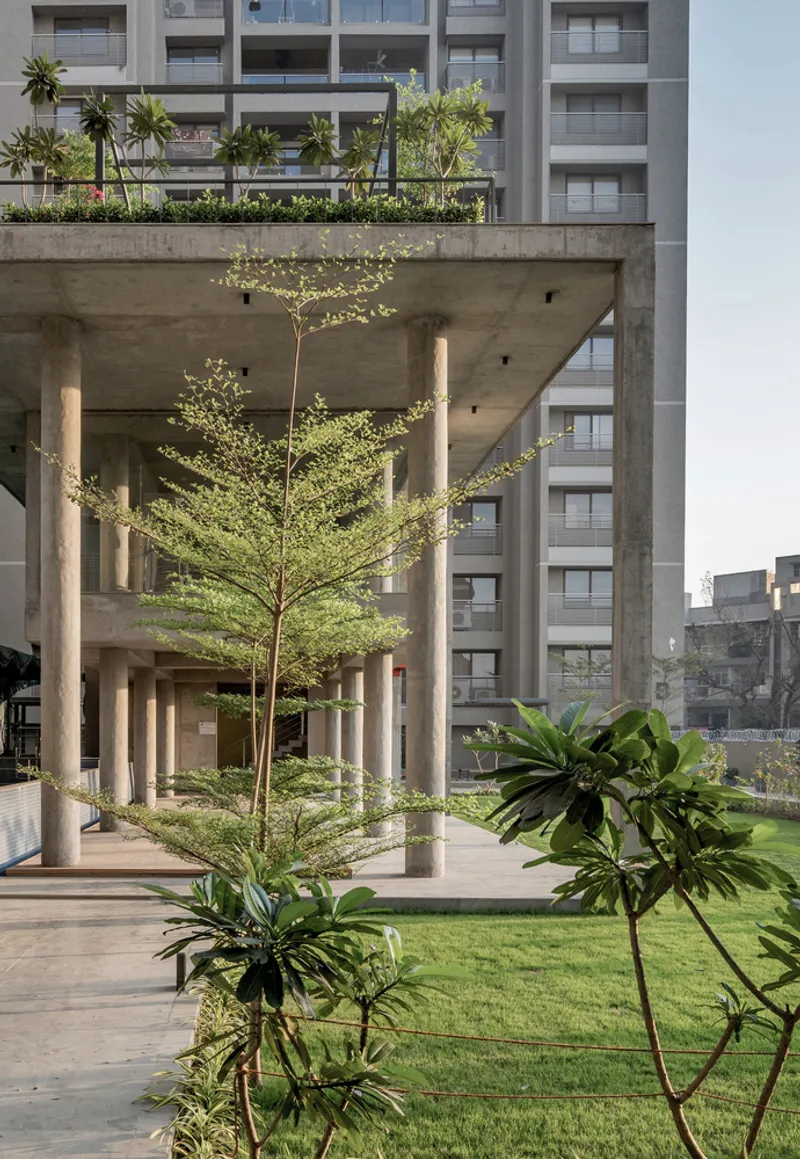
At the center lies a monolithic concrete shell, which defines the pavilion’s signature identity. The structure integrates a series of interconnected volumes, allowing activities to flow seamlessly. A disciplined assembly of vertical circular columns and horizontal flat slabs frames the dynamic spatial experience.
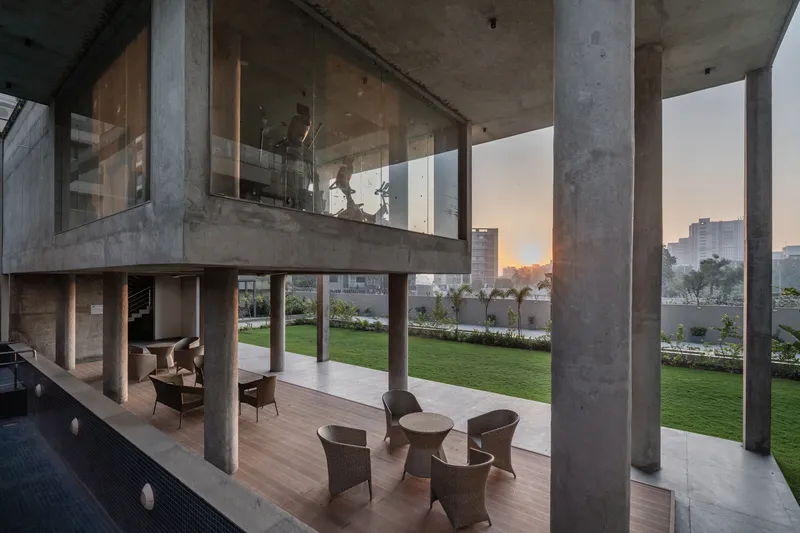
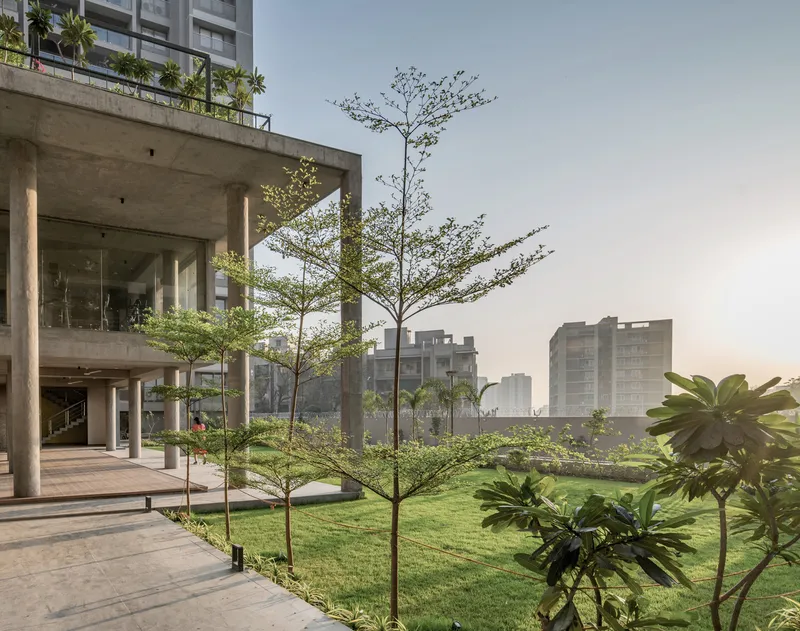
These circular columns are left freestanding, creating permeable boundaries that define space without completely enclosing it. Their rhythm gives the ground floor a sense of transparency and fluidity.
Contrasting Volumes: Lightness and Solidity
The pavilion’s spatial hierarchy is organized through contrasting masses:
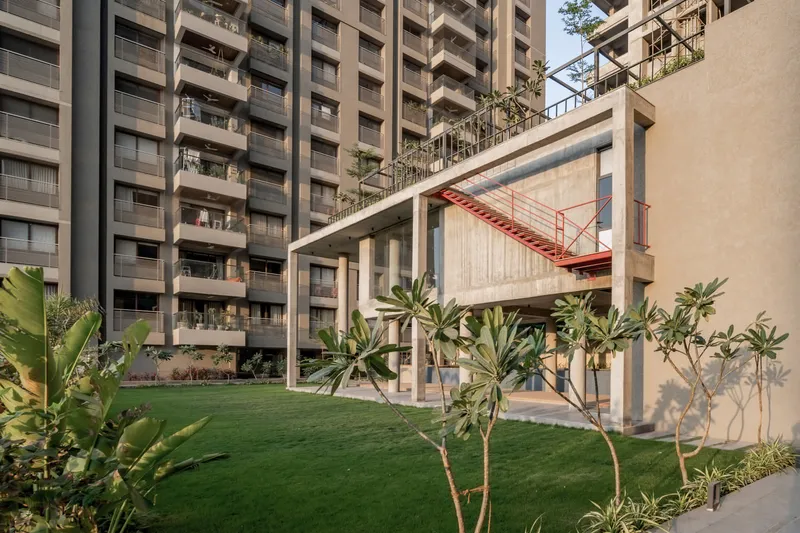
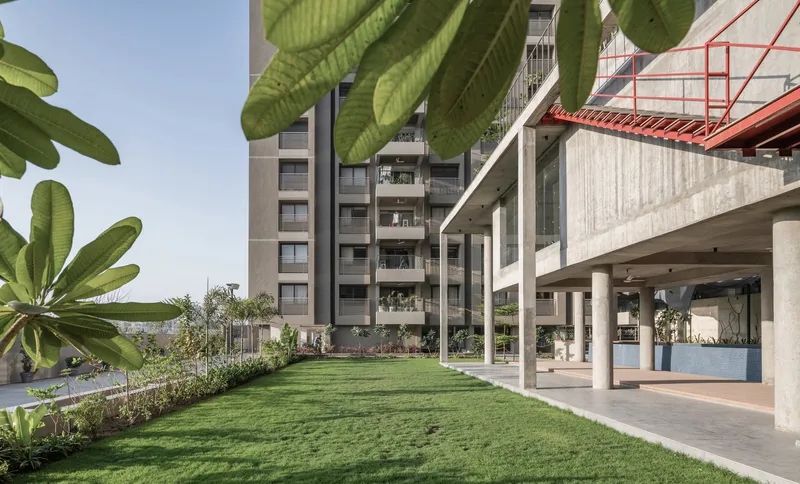
- Ground Floor: An open, column-defined space with an almost gallery-like quality. The freestanding circular columns create a flexible envelope that blurs the boundary between inside and outside.
- First Floor: A more enclosed solid block sits above, spanning two-thirds of the pavilion footprint. The remaining one-third forms a dramatic double-height void, enhancing spatial depth and visual connectivity.
This interplay of mass vs. void and solid vs. transparent contributes to a lively yet calm architectural presence.
Material Expression and Neutral Palette
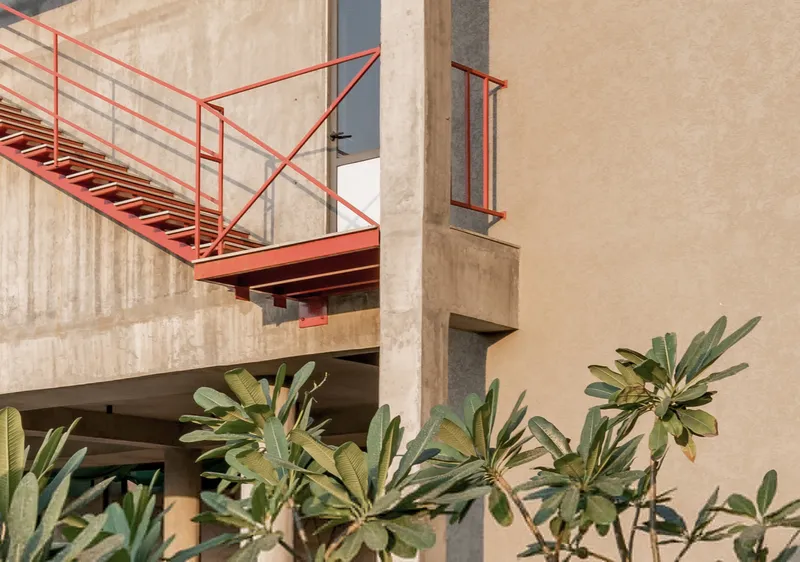
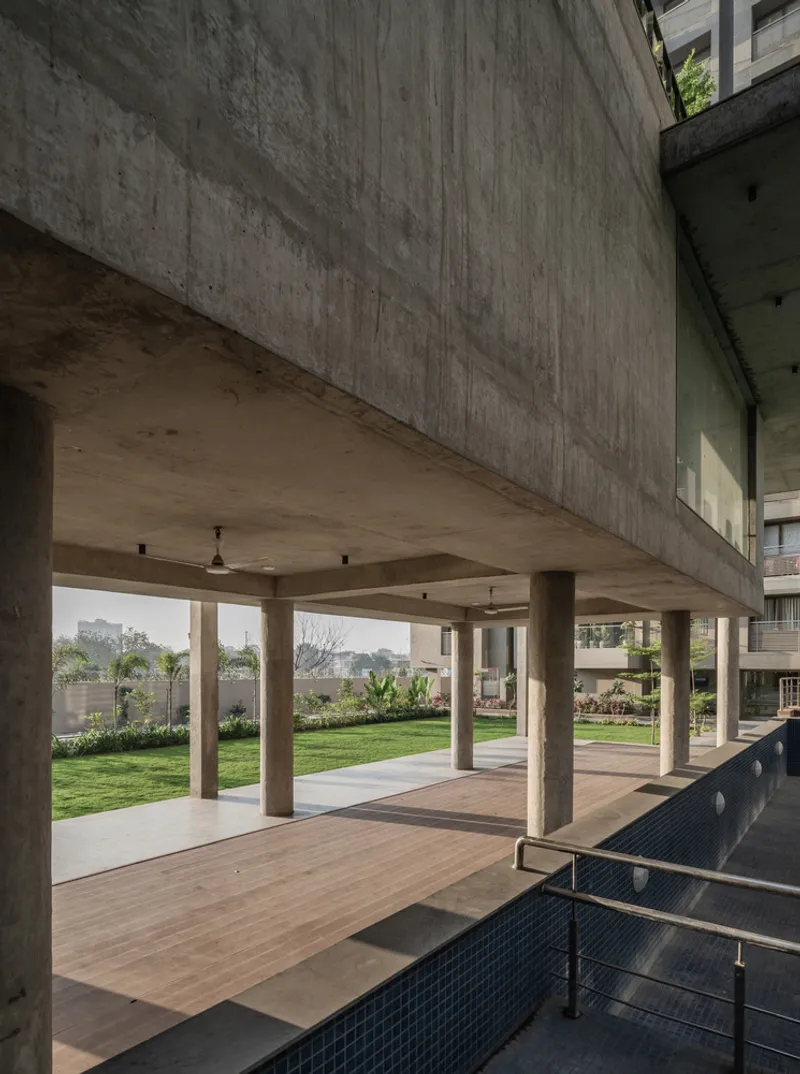
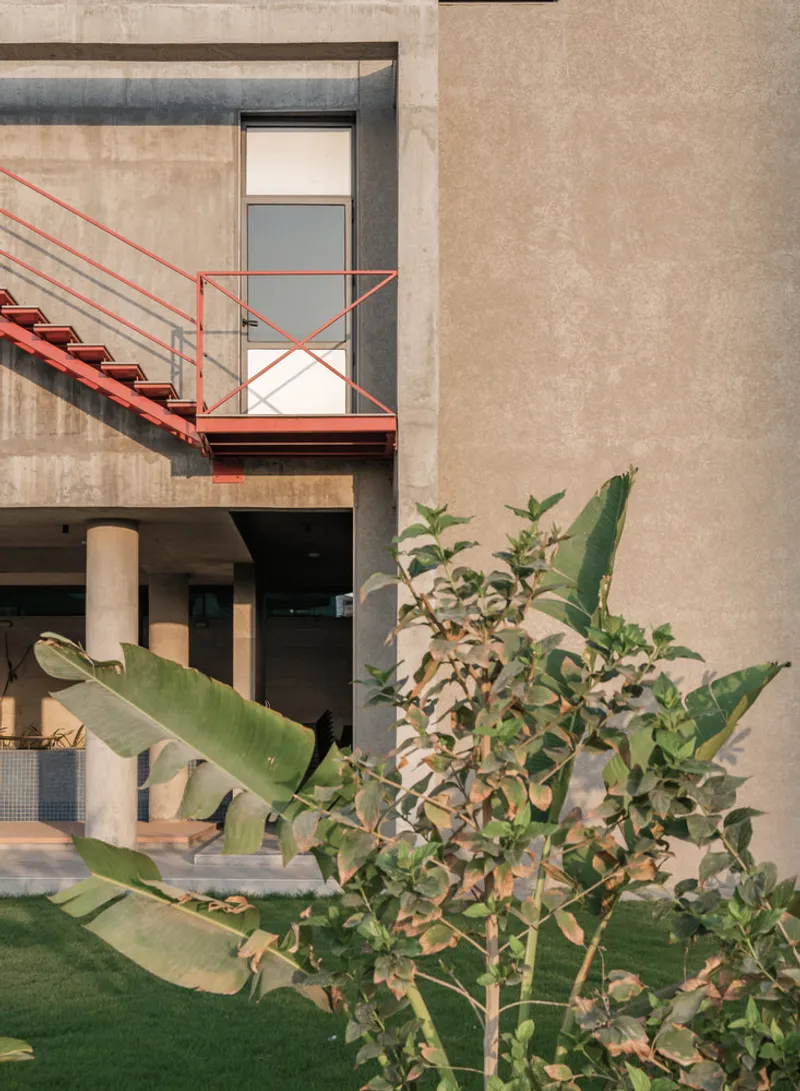
To reinforce simplicity and natural harmony, UA Lab uses exposed concrete and natural flooring materials throughout the pavilion. The architects deliberately avoided added color to ensure the structure merges softly with its environment.
The only prominent colors come from nature: the tree canopy, shrubs, and lawn textures, which visually define the space. Around the pool, a blue mosaic finish adds a refreshing contrast, while the staircase becomes a bold design element with its bright color, standing out against the pavilion’s muted concrete surfaces.
A Space That Merges With Its Landscape
Rather than competing with the surrounding greenery, the pavilion embraces an understated presence. Its minimalistic material palette allows users to feel grounded in the natural landscape while benefiting from shaded interiors and open-air social areas.
The Concrete Shell Pavilion ultimately becomes a connecting thread between architecture, people, and nature, offering a calm retreat and a dynamic gathering space within an urban residential setting.
All photographs are works of Inclined Studio


Popular Articles
Popular articles from the community


Temporary Home for Dogs: A Reversed Zoo Rethinks Animal Shelter Architecture
In Bucharest, a sinuous corridor and freed landscape flip the logic of containment, designing a shelter that works to make itself unnecessary.

Extended Shell: Retrofitting Kolkata's Balconies as Living Urban Thresholds
A modular retrofit system recovers the social and environmental intelligence of Kolkata's historic verandas for contemporary Park Street residents.

The Amber Palace Opera: A Geological Fiction Surfaces on Tallinn's Baltic Waterfront
Pierre Brillard reimagines a Baltic legend as a public landscape, opera house, and waterfront promenade rooted in Tallinn's coastal identity.

Opera on the Sea: Driftwood Logic Shapes a Timber Opera House on Estonia's Coast
Trevor Orgill's opera house translates the entangled drift of floating timber into a civic building where wood, water, and music converge.

Similar Reads
You might also enjoy these articles


Hodi-Mandai Geram
Project Function: Preservation and revitalization of the Intangible heritage and socio-spatial identity of the Hodi by Housing, Cultural Memory Center, Sacred Grove, landscape, local tourism economy


Olio Towers: A Mid-Rise for Performers That Fuses Housing, Rehearsal, and Stage
Located blocks from Houston's Theater District, this modular tower stacks living units around a central performance atrium.

Oasis: Modular Green Housing Carved into Dhaka's Urban Fabric
A shortlisted Plugin Housing entry reclaims unauthorized settlements in Dhaka with stepped concrete volumes, green roofs, and ventilation-driven design.

Black Hole: A Floating Megastructure for the Post-Physical Era
Emiliano Mazzarotto envisions a spherical, self-scaling arena where e-sports, digital hotels, and holographic stadiums replace traditional public space.

Explore Concrete Shell Competitions
Discover active competitions in this discipline

Challenge to design mud housing for contemporary communities

Challenge to reimagine the Iron Throne

Photograph architecture without architects

Illustrate the lost glory of Angkor Wat - Render Challenge
Comments (0)
Please login or sign up to add comments
No comments yet. Be the first to comment!