

Craft Center for Traditional Japanese Arts: A Cultural Oasis in Akita
This article explores the Craft Center for Traditional Japanese Arts, a cultural and architectural marvel in Akita.


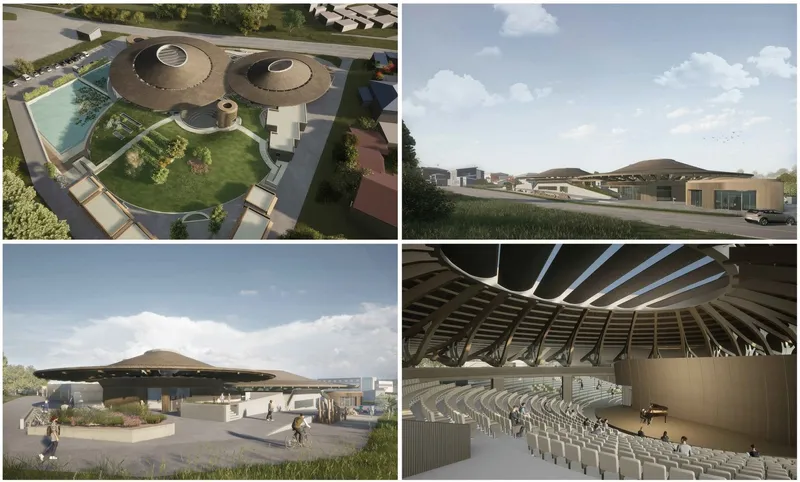
The Craft Center for Traditional Japanese Arts in Akita, designed by Ekaterina Kamenskaia and Nikolai Kaverin, is a tribute to Japanese craftsmanship and artistic heritage. This project, a People's Choice Award entry in the Tedzukuri competition, is envisioned as a "town under mushroom hats" where artisans and artists can thrive in a harmonious environment that blends seamlessly with the surrounding architecture of Akita.
Concept and Design
The cultural center is a small town of craftsmen and artists, featuring buildings that align with the scale of Akita's existing structures. These buildings, predominantly one or two floors high, include several larger cylindrical volumes with distinctive overhanging roofs. These roofs not only provide aesthetic appeal but also practical benefits, such as rainwater collection for watering lawns.
Architectural Features
The center's design includes a series of interconnected structures that serve various functions:
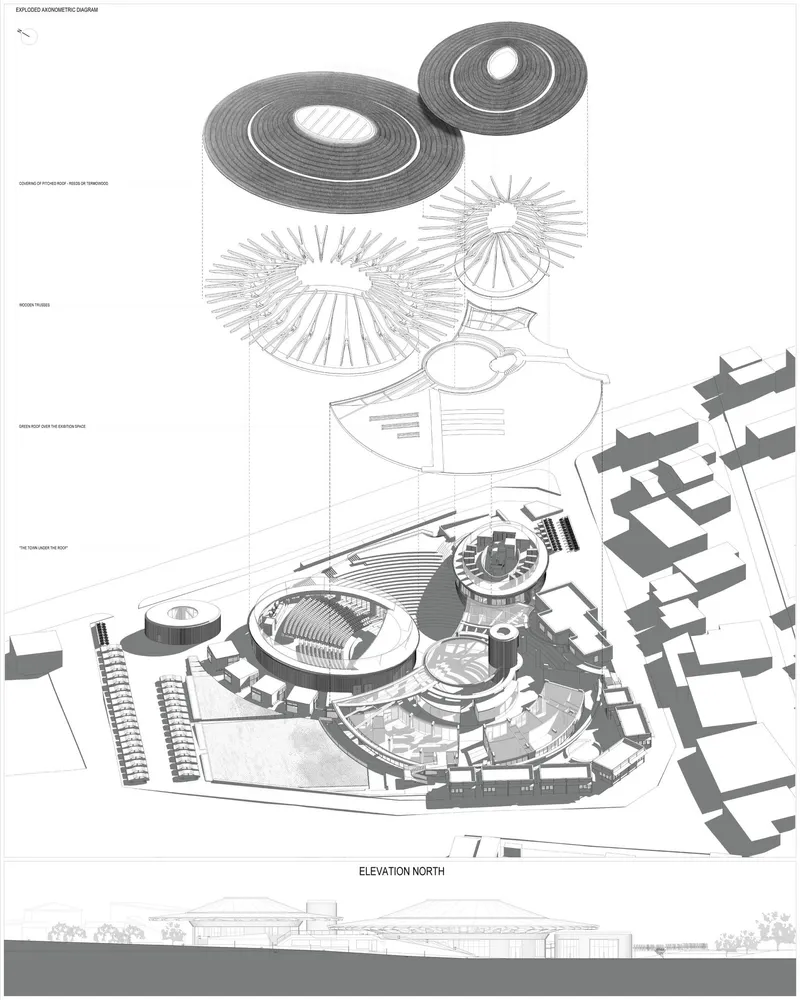
Workshops and Craft Bazar: The core purpose of the center is to house craft workshops, which are strategically placed along the auditorium building and around the complex's center. These workshops create a dense network of paths, encouraging visitors to explore and engage with the artisans.
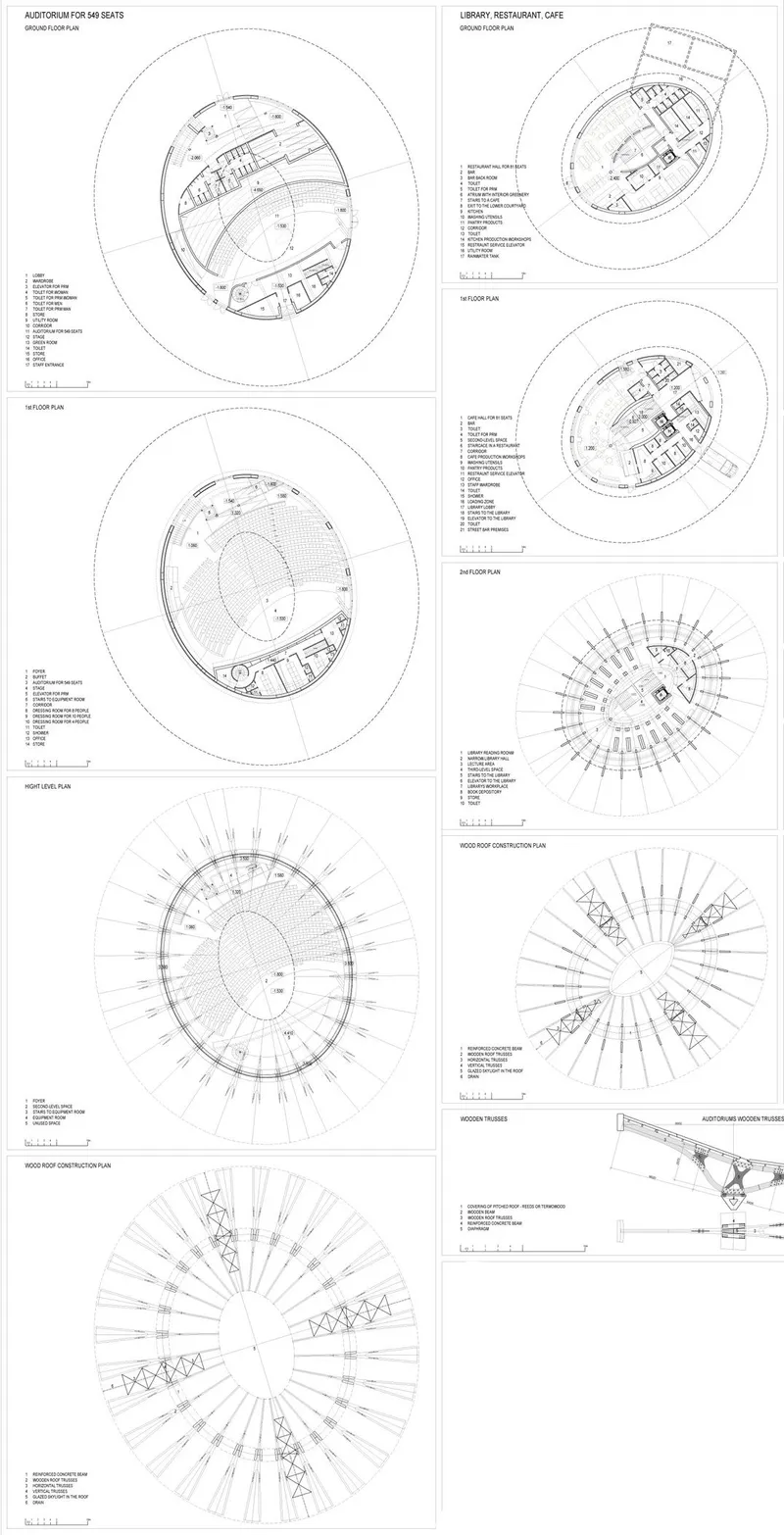
Auditorium and Amphitheater: The auditorium, an elliptical cylinder with a seating capacity of 549, is designed to host public events such as festivals, concerts, and presentations. The steps of the open amphitheater outside seamlessly transition into the auditorium, forming a unified space for larger gatherings.
Library, Restaurant, and Cafe: Adjacent to the auditorium is a three-story building housing a restaurant, cafe, and library. The library's design features open wooden trusses and radial bookshelves, providing a serene environment for reading and study.
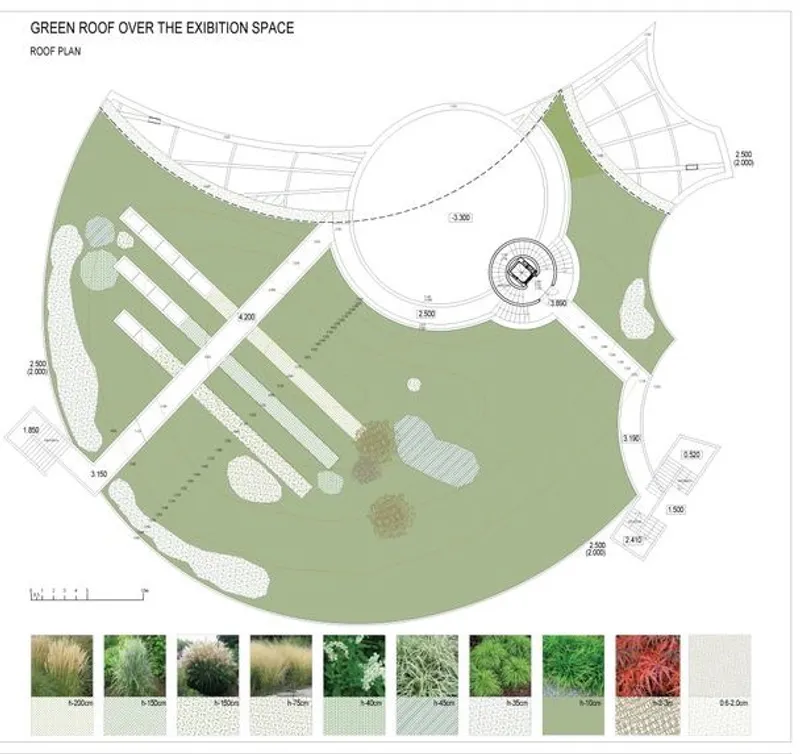
Exhibition Space with Green Roof: The exhibition hall, located under a green roof, is accessible via a staircase-elevator tower and open staircases. This green roof serves as an artificial hill, adding to the aesthetic and ecological value of the center.
Sustainability and Materials
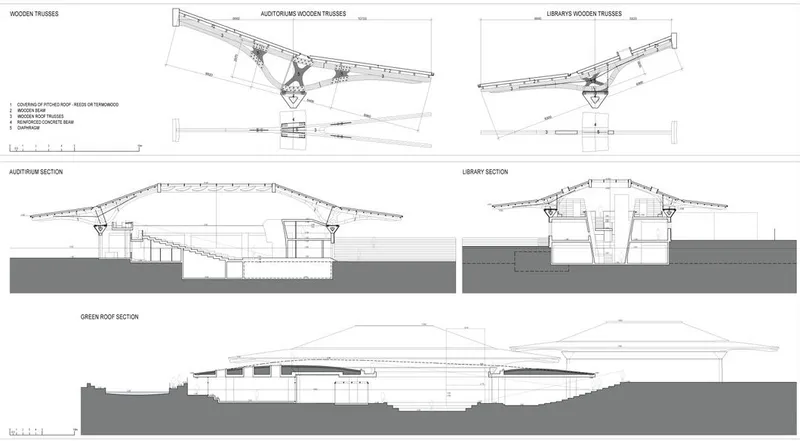
The center emphasizes sustainability through its construction and materials. The workshops and residential buildings are built using wooden structures with CLT panels for internal partitions. Facades and roofs are clad in thermowood, known for its durability and environmental benefits. The conical pitched roofs, covered with reeds, feature open trusses made of glued wood and steel inserts for structural integrity.
Visitor Experience
Visitors to the center can enjoy a range of activities and amenities:
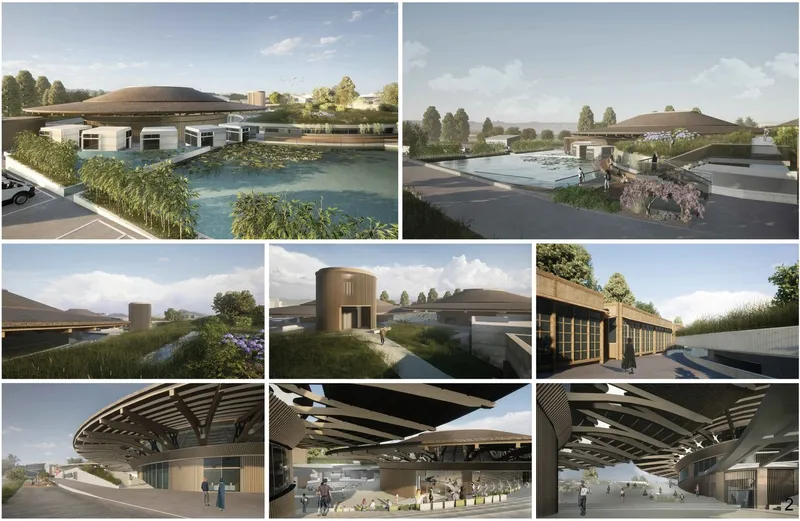
Ornamental Material Garden: This garden showcases the beauty and diversity of raw materials used in traditional Japanese crafts, offering visitors a hands-on experience.
Amphitheater and Events: The central amphitheater and surrounding areas host various public events, creating a vibrant cultural hub.
Souvenir Shop and Playground: A souvenir shop and playground provide additional attractions for families, making the center a welcoming destination for all age groups.
Artist Accommodation: The southern part of the complex includes accommodation facilities for artists, allowing them to reside within the cultural center.
The Craft Center for Traditional Japanese Arts in Akita is a remarkable fusion of traditional and contemporary architecture. It serves as a cultural oasis, fostering the preservation and promotion of Japanese craftsmanship. By incorporating sustainable design principles and providing a variety of spaces for artistic expression and public engagement, the center stands as a testament to the enduring legacy of traditional Japanese arts.


Popular Articles
Popular articles from the community


Opera by the Sea Estonia: Three Shells Dissolving Architecture into Tallinn's Coastline
A winning opera house proposal replaces monumental form with interconnected shells that blur the boundary between building, park and Baltic Sea.

Singing Woman: An Opera House That Performs Before the Curtain Rises
Ovidiu Cristian Pavel's conceptual opera house translates Estonia's choral identity into a sculpted waterfront landmark facing the Baltic Sea.

Manzana Morphosis: Stretching Barcelona's Grid into a Living Landscape for 2050
A radical reworking of the Eixample manzana turns density into a tool for generous public space, vertical ecology, and environmental performance.

Opera on the Sea: Driftwood Logic Shapes a Timber Opera House on Estonia's Coast
Trevor Orgill's opera house translates the entangled drift of floating timber into a civic building where wood, water, and music converge.

Similar Reads
You might also enjoy these articles

Shakur's House: Exposed Brick as an Interior Organiser in a 168 m² Mashhad Residence
Brick moves indoors in this Mashhad residence, where masonry walls, glass partitions and teal planes sequence a compact home without closing it off.

Day and Night Park: A Time-Based Urban Newsstand in Beijing
A temporary urban newsstand in Beijing blending travel, light, and reading through poetic colors, compact form, and community-focused design.

Modernist Patio Renovation in El Masnou, Barcelona by Oliver Segura Arquitectura + Cebrià Arquitectura
Modernist patio renovation blending tradition and innovation with a movable pool, leveled floors, and Catalan materials in El Masnou.
Alto Residencial Coop: Cooperative Housing Development in Santiago de Compostela by Carbajo Barrios Arquitectos
A linear cooperative housing complex blending white volumes and perforated metal façades, enhancing community living, natural light, privacy, and urban integration.

Explore Cultural Architecture Competitions
Discover active competitions in this discipline

Challenge to reimagine the Iron Throne

Photograph architecture without architects

Illustrate the lost glory of Angkor Wat - Render Challenge

Bring back Drive In's
Comments (0)
Please login or sign up to add comments
No comments yet. Be the first to comment!