

Cultural Architecture in Åland Islands: Unveiling the Bomarsund Visitor Cente
Exploring the Bomarsund Visitor Center in Åland Islands: A blend of cultural architecture and history, designed by Daniel Andersson.


A Historical Tapestry: The Bomarsund Fortress
The Åland Islands, a tranquil archipelago situated between Sweden and Finland, are home to the remnants of the Bomarsund Fortress. Constructed during the first half of the 19th century under the reign of Nicholas I of Russia, this fortress symbolized the westernmost stronghold of the Russian Empire. Designed to protect the Gulf of Bothnia and St. Petersburg's approaches from naval invasions, Bomarsund's construction was a monumental endeavor. However, the fortress's destiny was cut short during the Crimean War in 1854, when it was bombarded into ruins by French and British forces. Today, these ruins stand not only as a significant tourist attraction but also as a poignant reminder of Åland's historical role as a buffer zone and its demilitarized status.
Introducing the Bomarsund Visitor Center
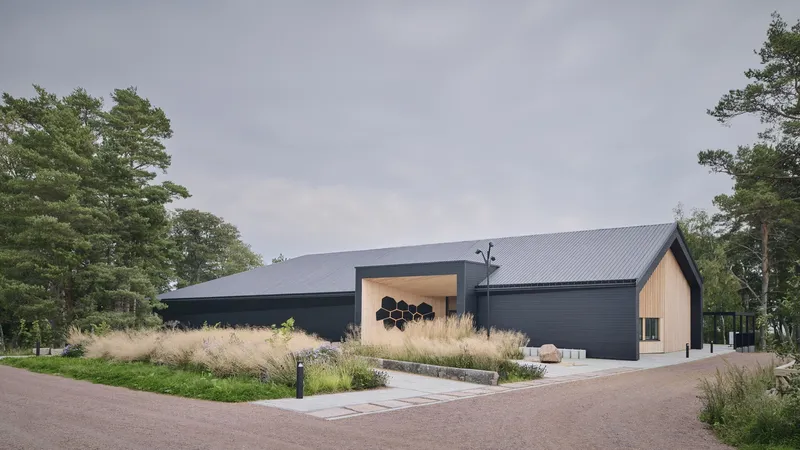
Designed by Daniel Andersson, the Bomarsund Visitor Center serves as a contemporary beacon of cultural architecture in the Åland Islands. This new facility is strategically positioned along the historical causeways leading to the main fortress, embodying a thoughtful narrative integration with its surroundings. The architectural concept marries the historical axis of the fortress site with a new visual perspective, creating a harmonious dialogue between the past and the present.
Architectural Vision and Design
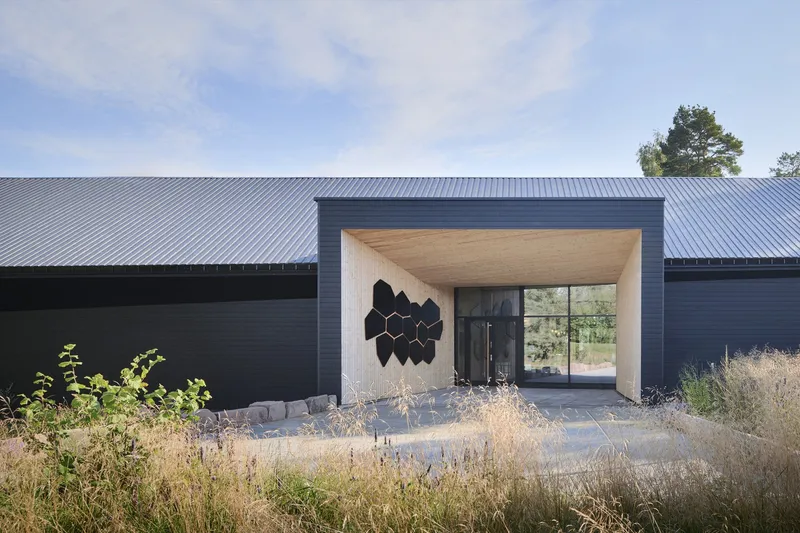
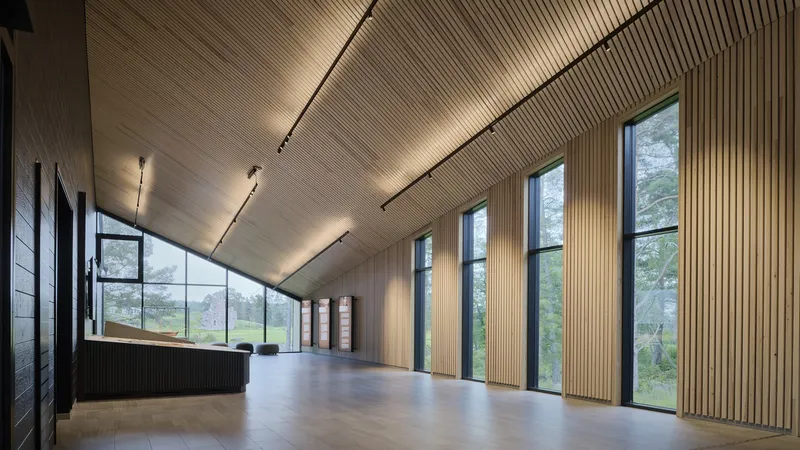
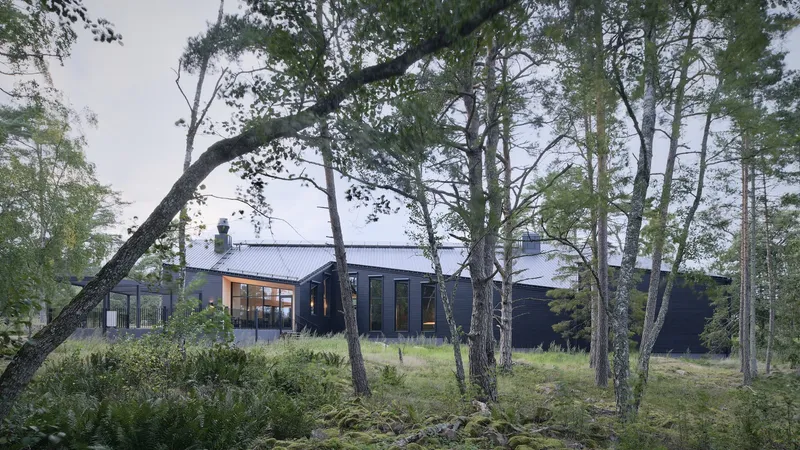
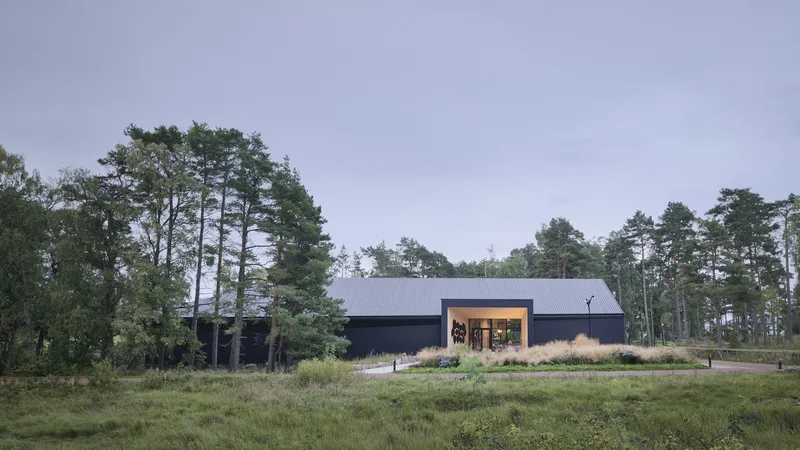
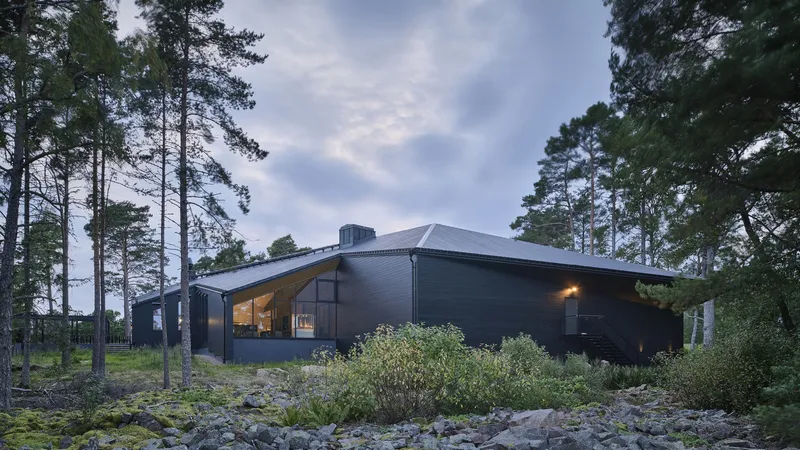
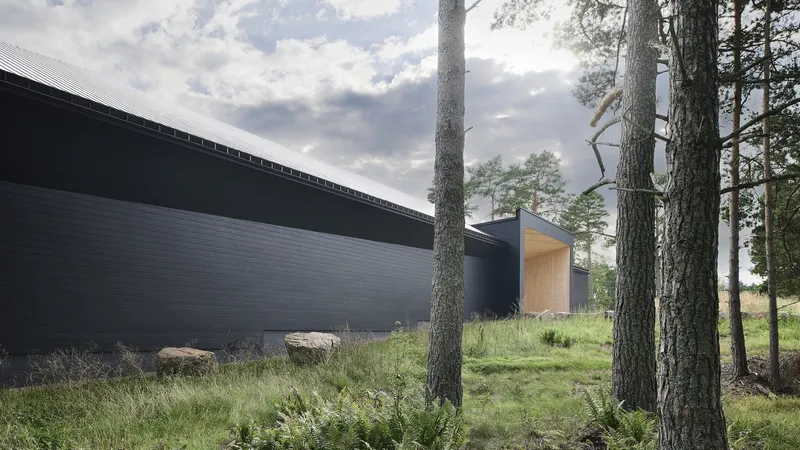
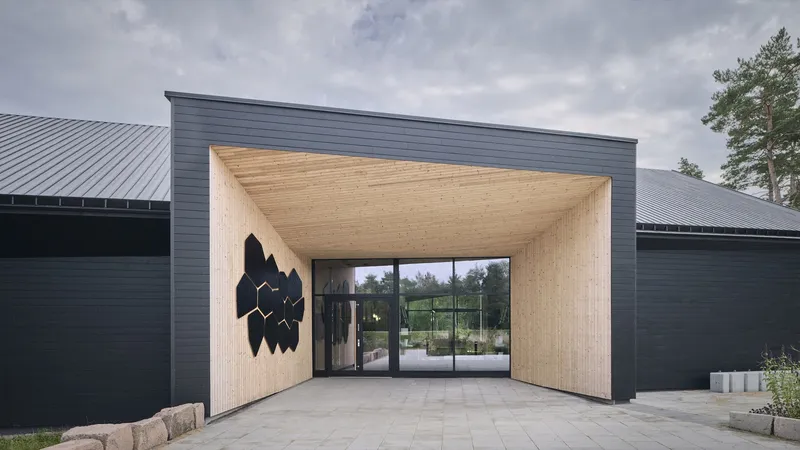
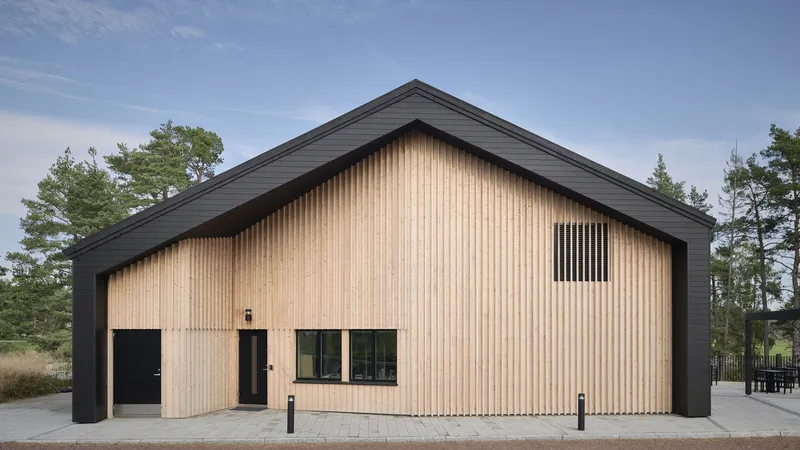
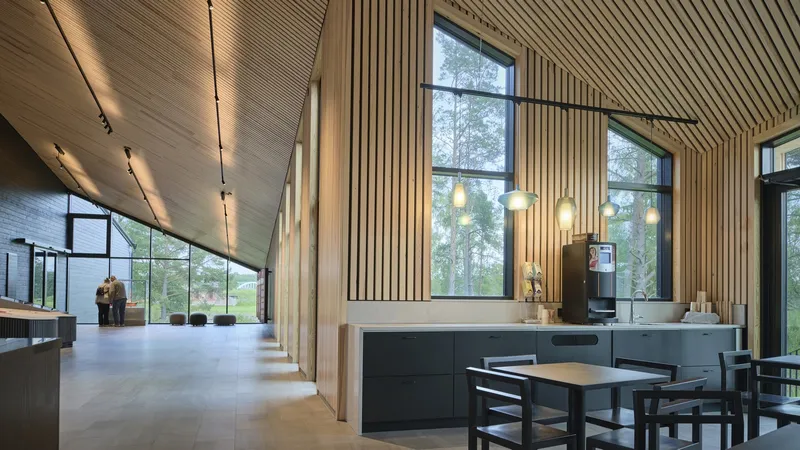
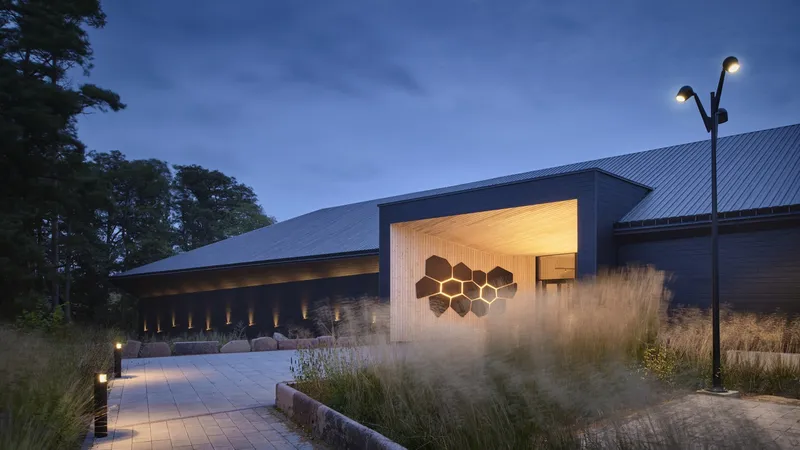
Reflecting on the 19th-century Empire-style architecture prevalent during the fortress's construction, the Visitor Center's design incorporates similar stylistic elements to establish a tangible connection to the historical context. The building begins with a straightforward gable roof structure, transitioning into a hip roof closer to the fortress ruins, symbolizing a respectful nod to the historical site. Its dark wooden exterior, punctuated by minimal openings, contrasts sharply with the warmth of the wooden interiors, inviting visitors into a space rich with history and narrative.
The Entrance: A Portal to History
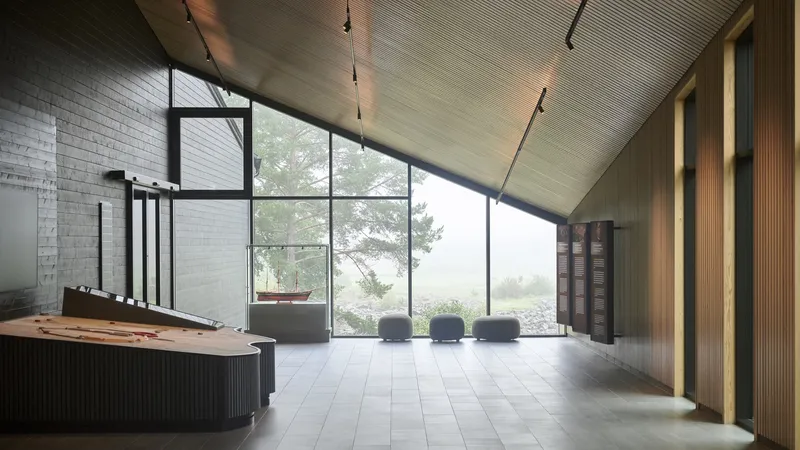
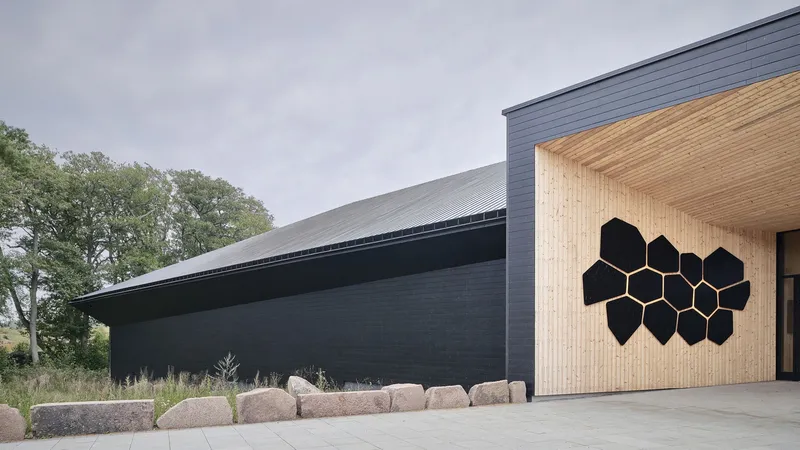
The main entrance, framed by historical stone blocks discovered during archaeological excavations, acts as a grand portal ushering visitors into the heart of the Visitor Center. The spacious main hall, adorned with warm wood tones, houses an information desk and essential amenities, offering breathtaking views of the ruins and shoreline. This visual connection is crucial for understanding the historical significance of Bomarsund.
Exhibition Space: A Journey Through Time
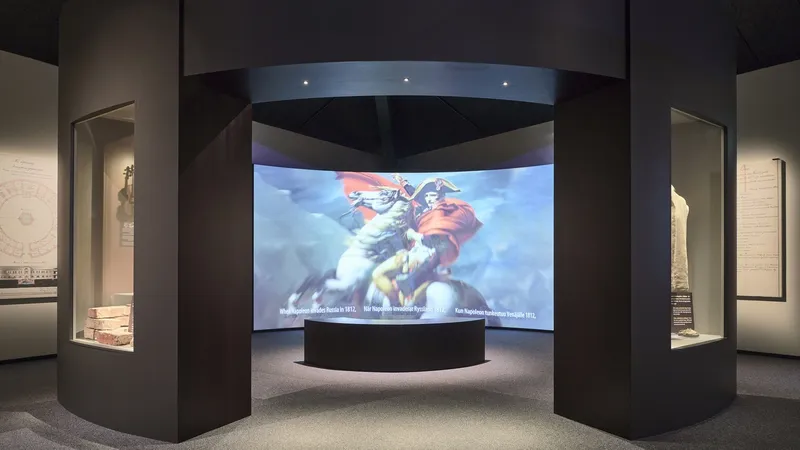
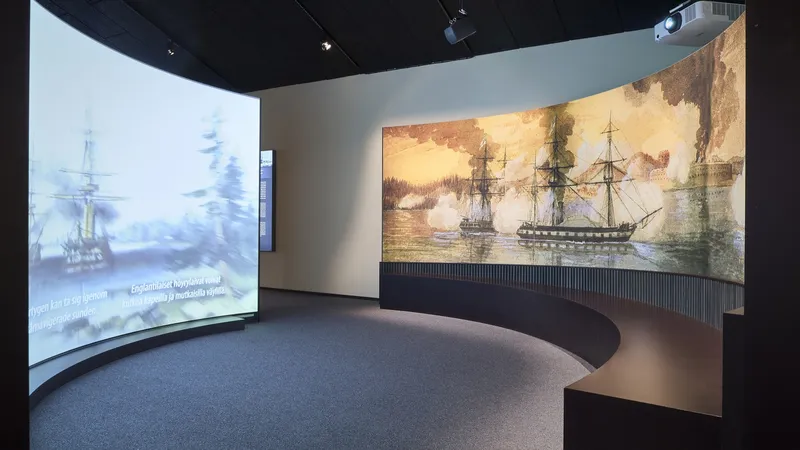
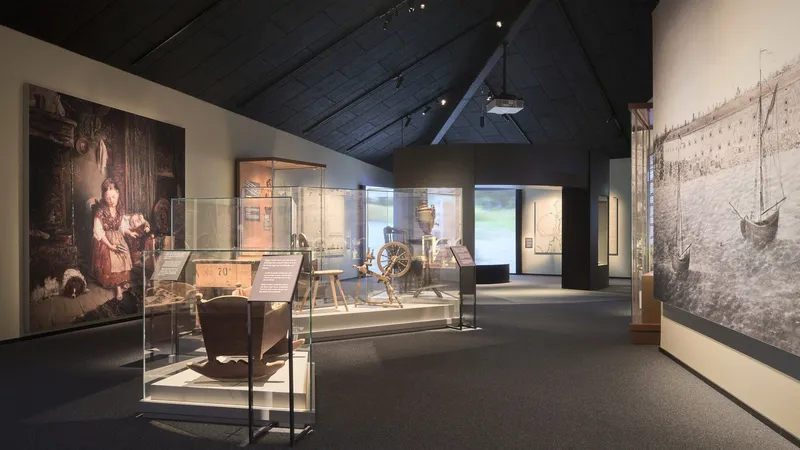
The exhibition area, separated from the public hall by a dark wood-clad wall, is designed as a path through history. Visitors are taken on a chronological journey, culminating in a striking view of the ruins through a large glazed wall. This layout allows for an immersive exploration of the narratives and testimonies that shaped the Åland Islands.
Reflecting on the Material Choice: A Tribute to the Past
The Visitor Center's use of dark, charred wooden cladding pays homage to the wooden structures that once dotted the landscape before the battle of Bomarsund. This architectural choice serves as a reminder of the historical event when the Russians set ablaze all wooden buildings in a defensive act, leaving behind a desolate scene of chimneys and stone foundations.
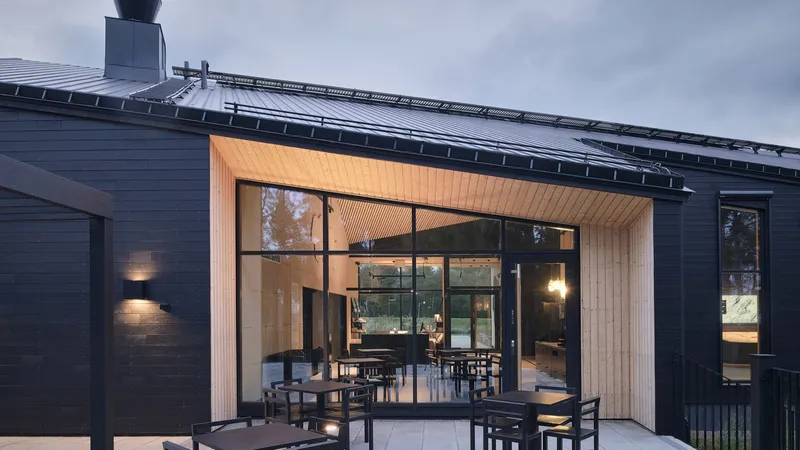
A Cultural Architectural Landmark
The Bomarsund Visitor Center by Daniel Andersson stands as a testament to the rich historical tapestry of the Åland Islands. It not only tells the story of a pivotal moment in the islands' past but also showcases the profound impact of cultural architecture in connecting with history, nature, and society. As a modern addition to the Åland Islands' architectural landscape, the Visitor Center invites locals and tourists alike to delve into the narratives that have sculpted this unique region.
Exploring cultural architecture in the Åland Islands offers insights into the delicate balance between preserving history and embracing contemporary design. The Bomarsund Visitor Center exemplifies this balance, marking a significant chapter in the ongoing narrative of the Åland Islands and its architectural heritage.
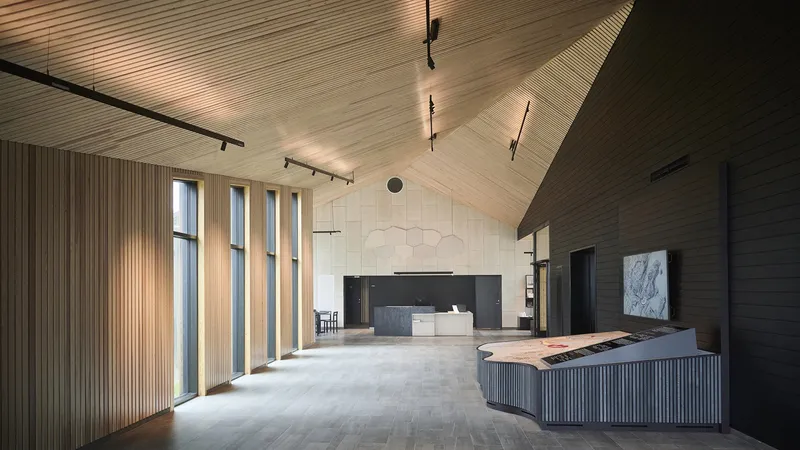
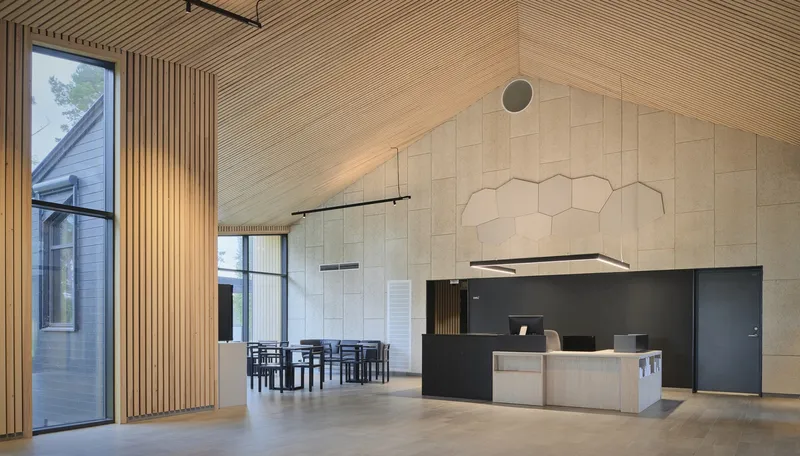
All the photographs are work of Christoffer Relander


Popular Articles
Popular articles from the community


U.GA Architects Wraps an Oval Rooftop Pool in Curved Board-Formed Concrete on Busan's Jeollidan-gil
In Busan's Jeonpo-dong, a 454 m² mixed-use block stacks a neighborhood facility, guest rooms and an oval rooftop pool inside spiraling concrete walls.

longwave studio Reorganizes a 112 m² Tainan Apartment Around the Daily Routines of a Family and Two Cats
In Tainan, Taiwan, birch plywood, rust-red furniture and a freestanding plaster wall link arrival, storage, work and family life in one apartment.

David Ortega Stacks a Two-Story Mexico City Penthouse Around a Steel Stair and a Pergola-Shaded Roof Terrace
In Colonia Roma, a 300 m² penthouse uses oak joinery, a planted steel stair and a slatted roof pergola to make a new-build apartment feel like a house.

Jaramillo Van Sluys Arquitectura and Urbanismo Turn a Demolished Registry Lot in Quito into an Orchard Plaza
In Quito's Centro Histórico, a 2,800 m² plaza exposes the San Agustín convent wall and redraws its lost Augustinian orchard in volcanic stone.

Similar Reads
You might also enjoy these articles


Maya Harvest: A Cacao Resort Village Rooted in Mayan Tradition and Local Craft
Situated within a Tabasco cacao plantation, this shortlisted resort proposal merges vernacular materials with hands-on cultural immersion.
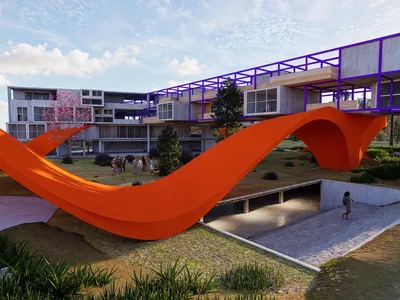
Harmonia: A River-Shaped Community That Grows Over Decades in Boa Vista
Curved pathways and modular grid structures along the Branco River create a phased settlement designed to evolve from 2030 to 2050.
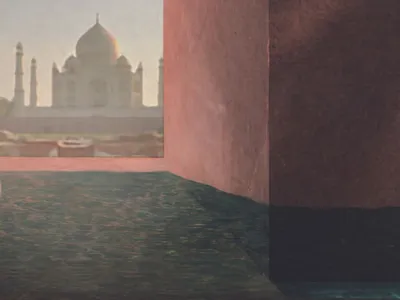
The Architecture of Bathing: A Mughal Hammam Reimagined Across the Yamuna
Charlotte May's honorable mention entry for The Black Taj reinterprets Agra's bathing rituals through red sandstone, water, and framed views of the Taj Mah

Om-1: A Wall-Hung System That Moves Your Workspace Off the Desk
Modular plywood boards, magnetic pegs, and utility elements migrate clutter from the horizontal surface to the vertical plane.

Explore Cultural Architecture Competitions
Discover active competitions in this discipline

Challenge to reimagine the Iron Throne

Photograph architecture without architects

Illustrate the lost glory of Angkor Wat - Render Challenge

Bring back Drive In's
Comments (0)
Please login or sign up to add comments
No comments yet. Be the first to comment!