
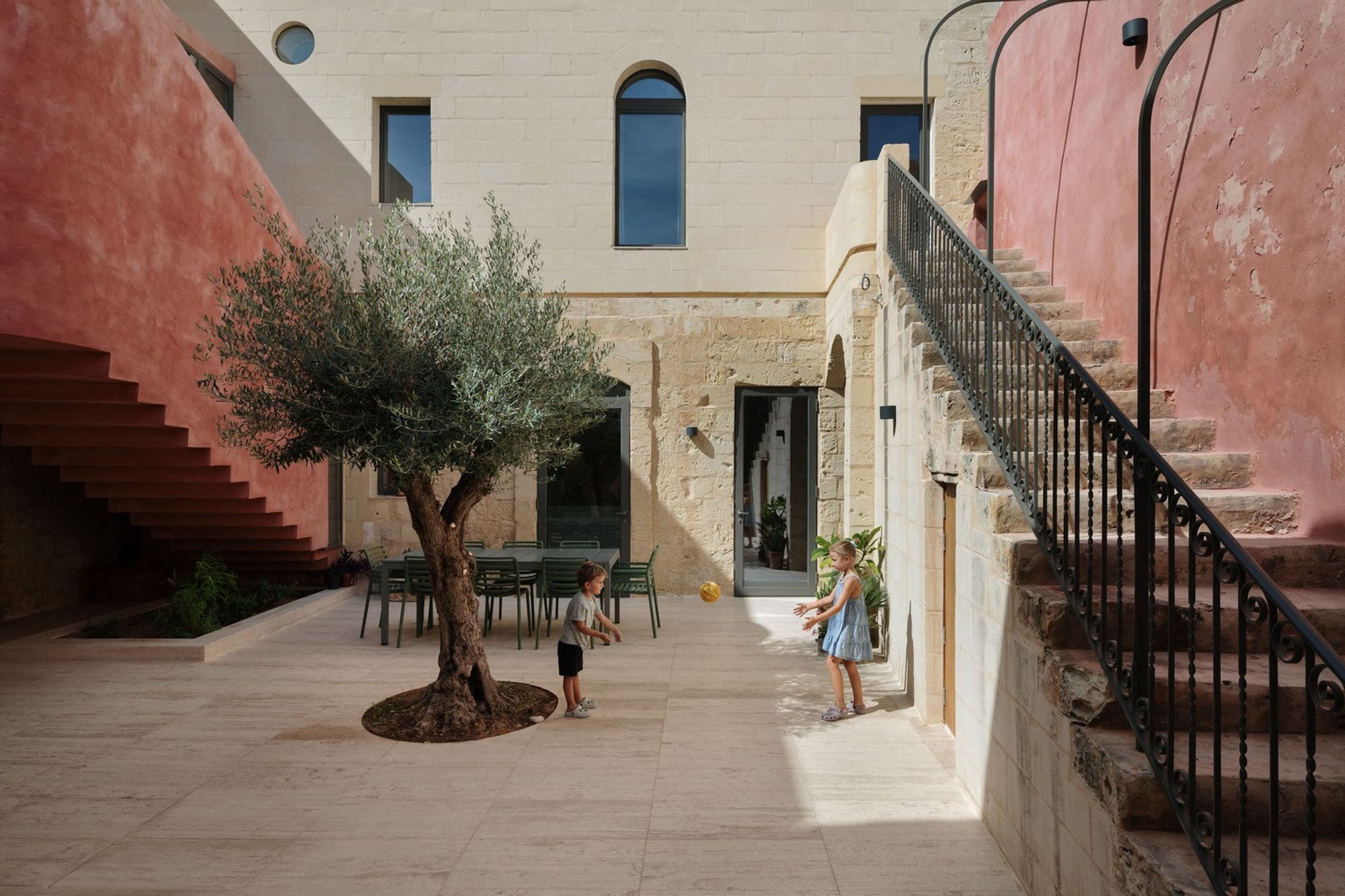
Dar It-Tarag Residence by Periti Studio: Reviving an 18th-Century Maltese Farmhouse with Modern Elegance
Periti Studio transforms an abandoned 18th-century Maltese farmhouse into a modern, sustainable home blending heritage conservation with contemporary architectural design.

A Heritage Reborn in Naxxar
Nestled in the historic heart of Naxxar, Malta, Dar It-Tarag Residence by Periti Studio stands as a masterclass in adaptive reuse and architectural conservation. Once an 18th-century vernacular farmhouse, the property had remained abandoned for more than half a century. Time and neglect had left deep marks, but also traces of immense character — from stone slab ceilings and timber beams to arched passageways and a traditional mill room.
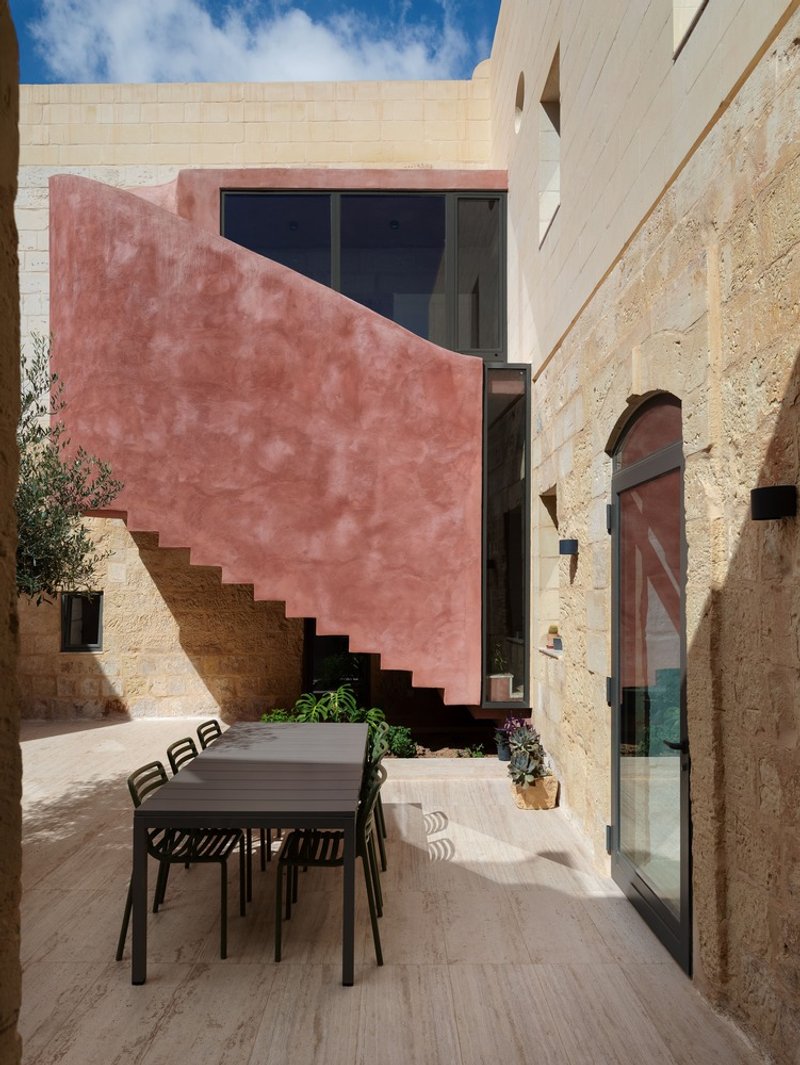
Organized around a central courtyard and divided into three distinct wings, the farmhouse originally served as both a working farm and a family dwelling. Despite its beauty, the fragmented layout and dilapidated state rendered it unsuitable for contemporary living. The challenge facing Periti Studio was formidable: to honour the building’s heritage while transforming it into a functional, welcoming home fit for modern life.
Design Vision: Unity Through Conservation
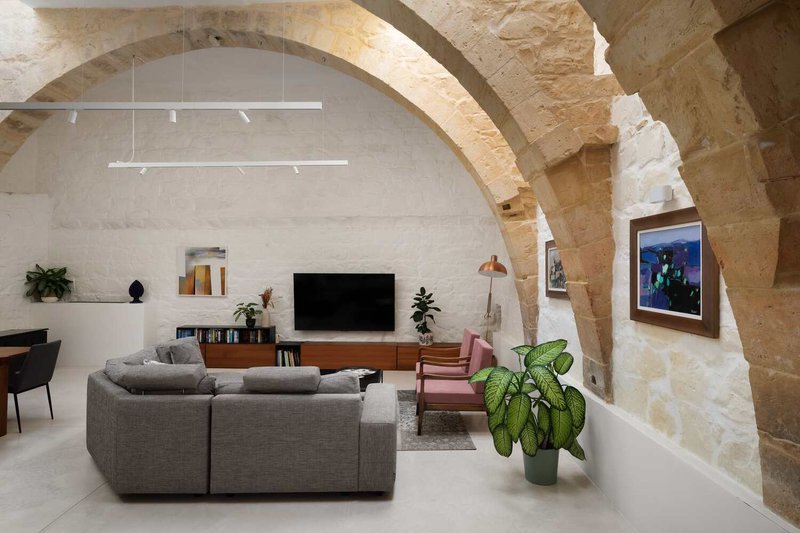
The design philosophy guiding Dar It-Tarag Residence was rooted in conservation best practices — retaining authenticity while creating a cohesive architectural flow. Periti Studio’s vision was to unify the separate wings into one interconnected residence that still celebrated its layered past.
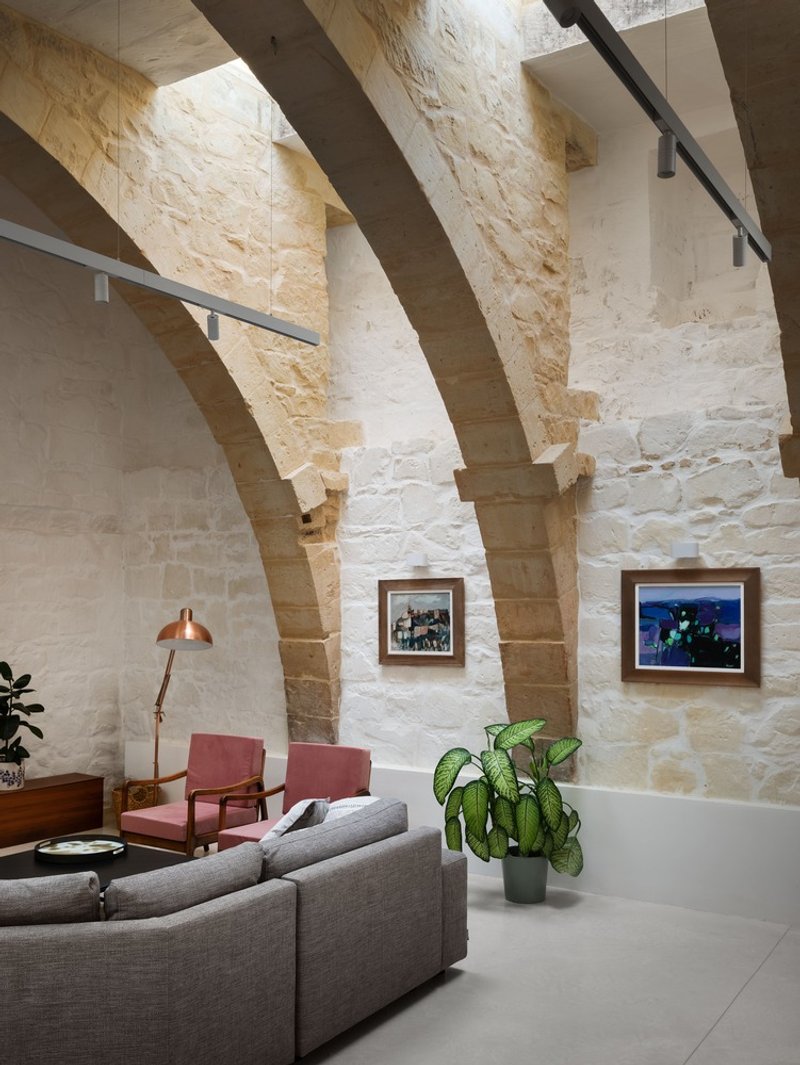
The architects meticulously restored original materials — stone walls, timber beams, and xulliel masonry — while introducing new interventions that were both legible and reversible. Modern mechanical and structural systems were seamlessly integrated, ensuring that technological upgrades did not compromise the home’s traditional character.
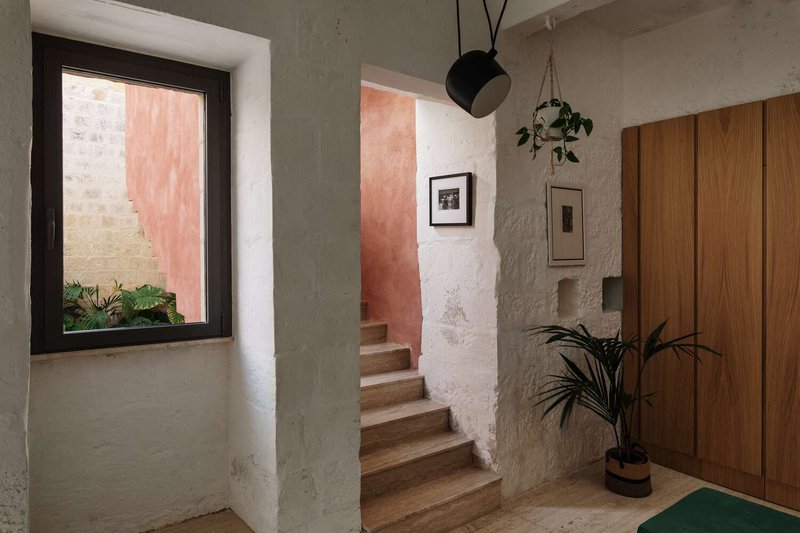
Natural light was reintroduced through strategically placed skylights, enhancing the home’s southward orientation to maximise solar gain during winter months. The resulting interior feels bright, open, and deeply connected to its outdoor spaces.
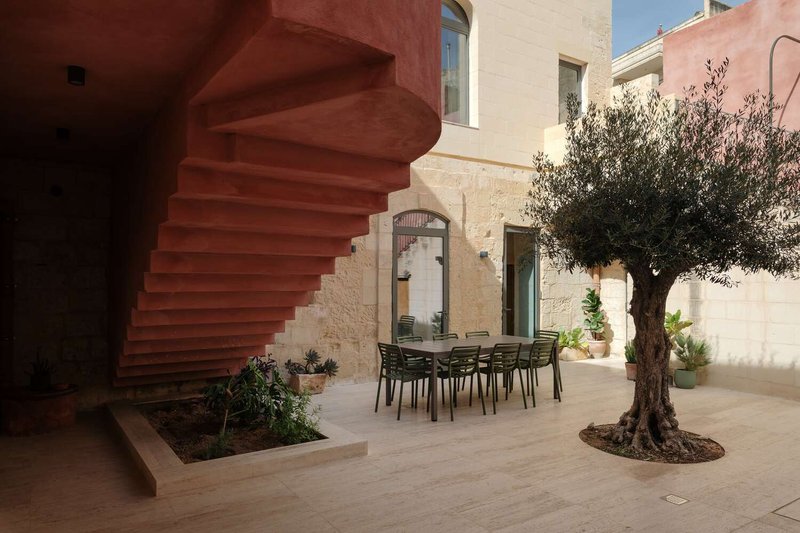
A Sculptural Staircase: The Heart of the Home
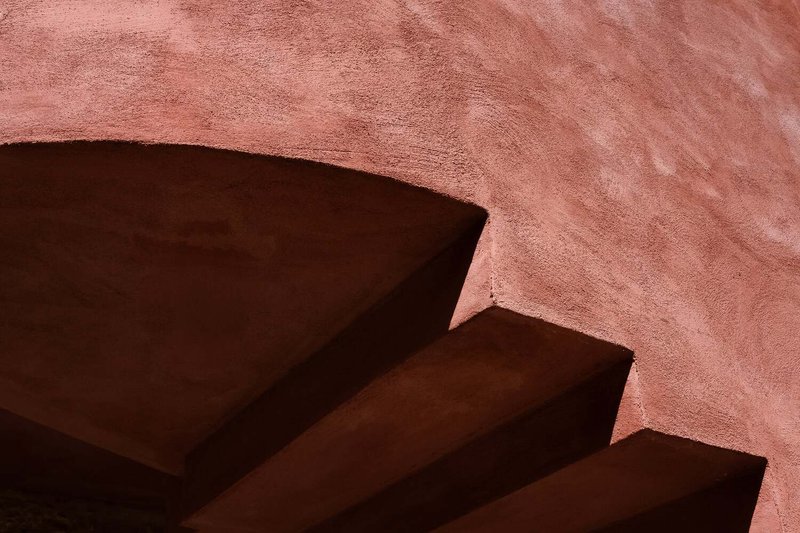
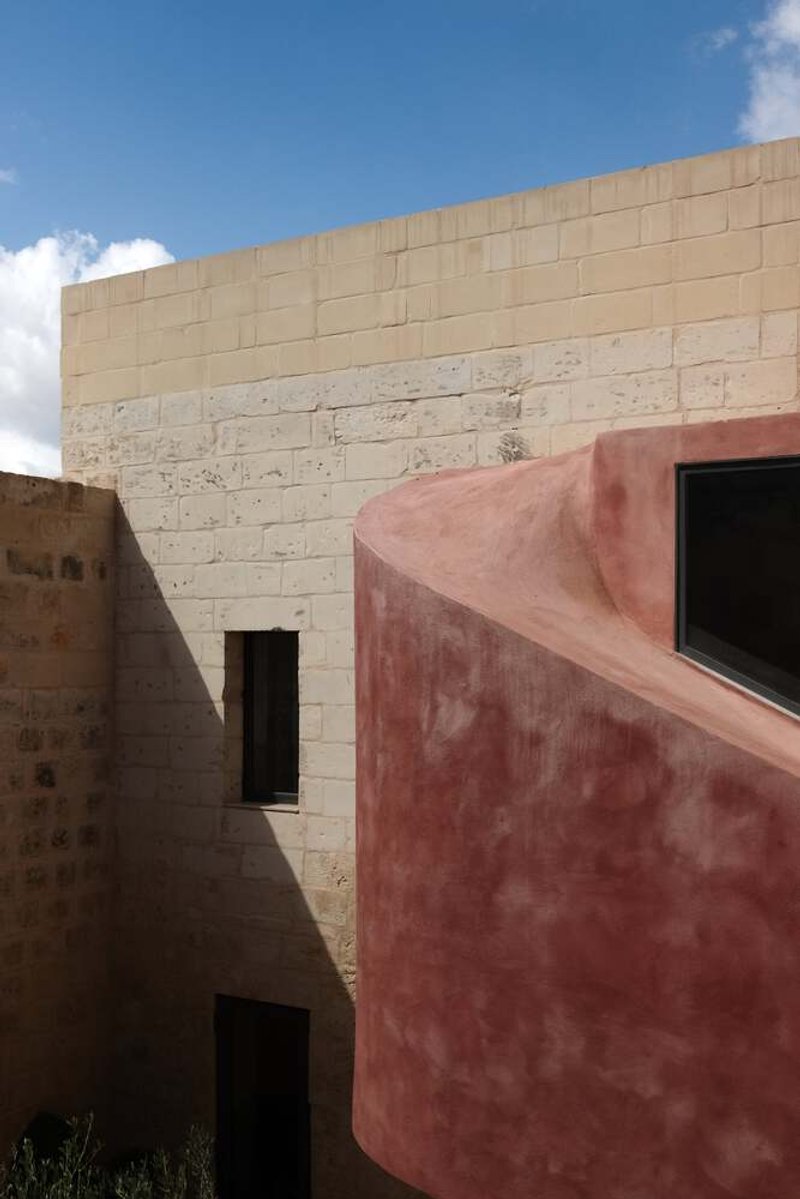
The project’s defining feature is an architectural concrete staircase — both a connector and a statement piece. This sculptural element links the upper wings of the residence while freeing up valuable courtyard space below. Its bold, modern geometry contrasts elegantly with the surrounding limestone walls, creating a visual dialogue between past and present.
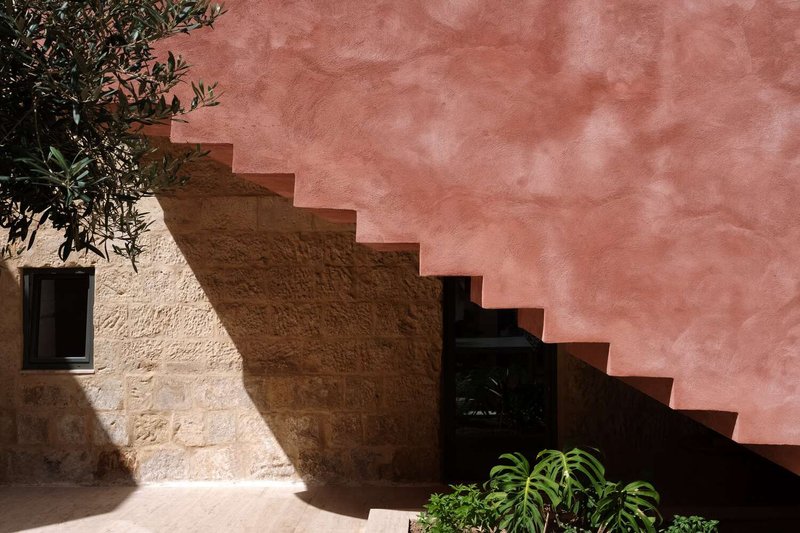
Every junction between old and new was treated with utmost care. Local stone and restored timber coexist harmoniously with plastered concrete, glass, and minimal detailing, illustrating Periti Studio’s mastery of material contrast.
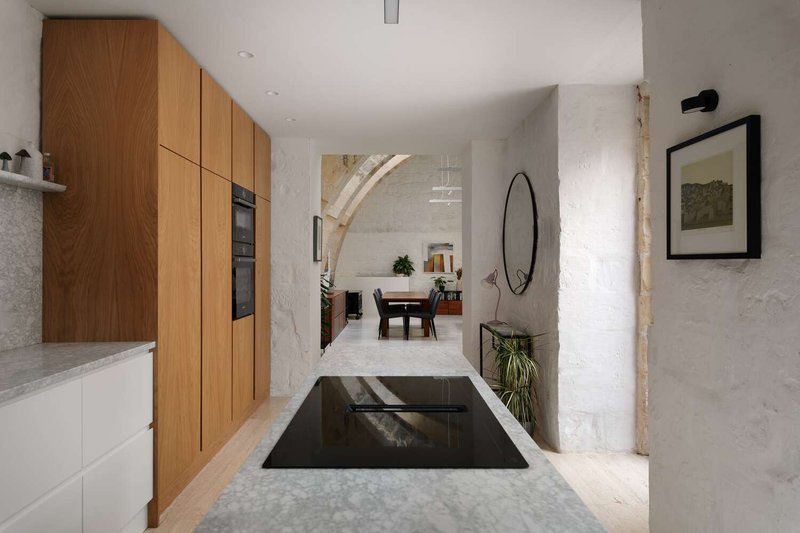
Materiality and Sustainability
At the finishing stage, the architects selected natural materials that evoke warmth and tactility — essential qualities for a family home. Sustainability was approached quietly but effectively:
- Double-glazed apertures improve thermal insulation.
- Insulated ceilings and energy-efficient walls reduce heat loss.
- The use of local materials minimizes environmental impact.
These sustainable choices enhance comfort and longevity without distracting from the home’s heritage charm.
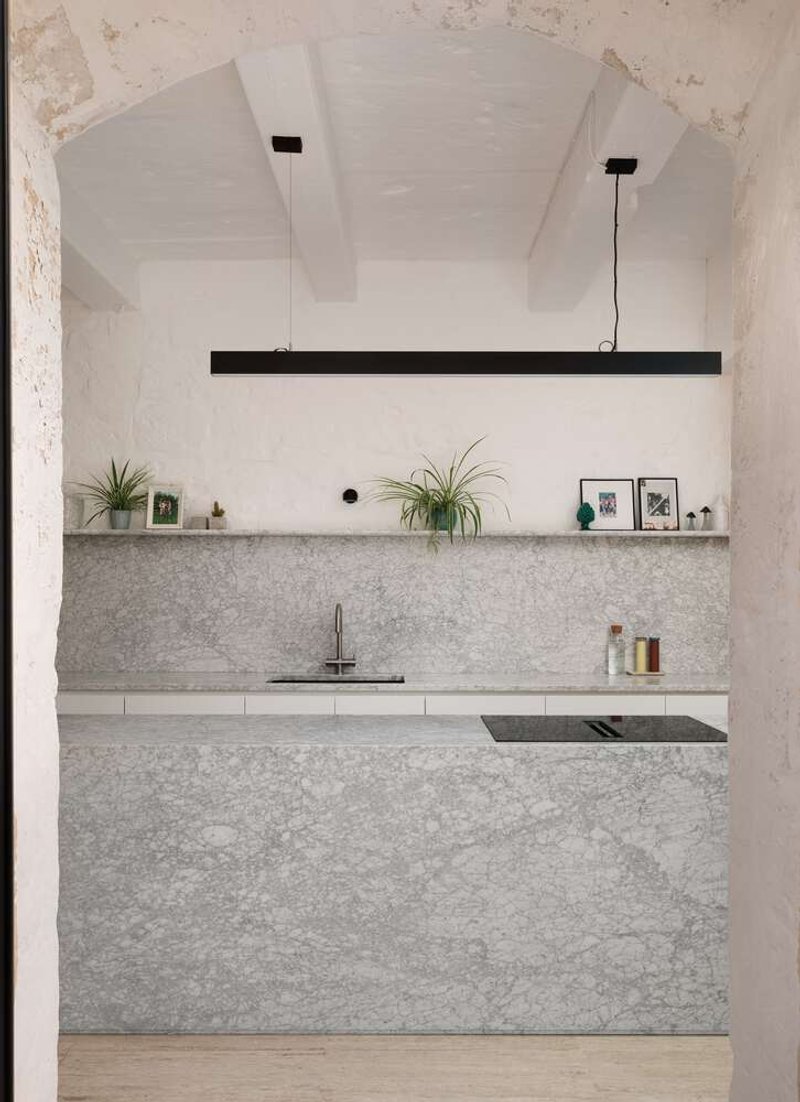
A Courtyard Reimagined
The central courtyard has been transformed from a neglected void into a vibrant living space that anchors the home’s daily rhythm. Acting as both a threshold and gathering area, it integrates outdoor living into everyday family life — a true reflection of Maltese domestic culture.
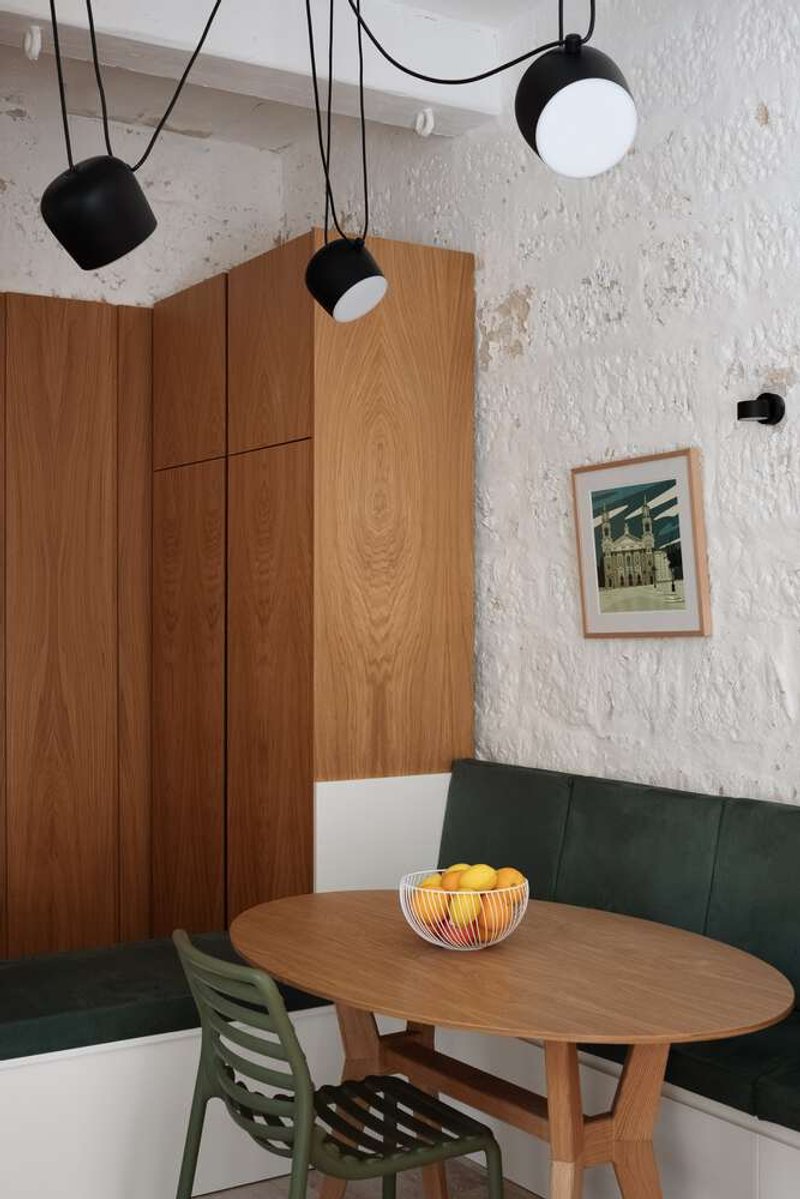
The concrete staircase not only provides vertical circulation but also becomes a recurring visual and experiential element throughout the day. Its sculptural presence reminds the inhabitants of the home’s layered history, even as they move through bright, contemporary spaces.
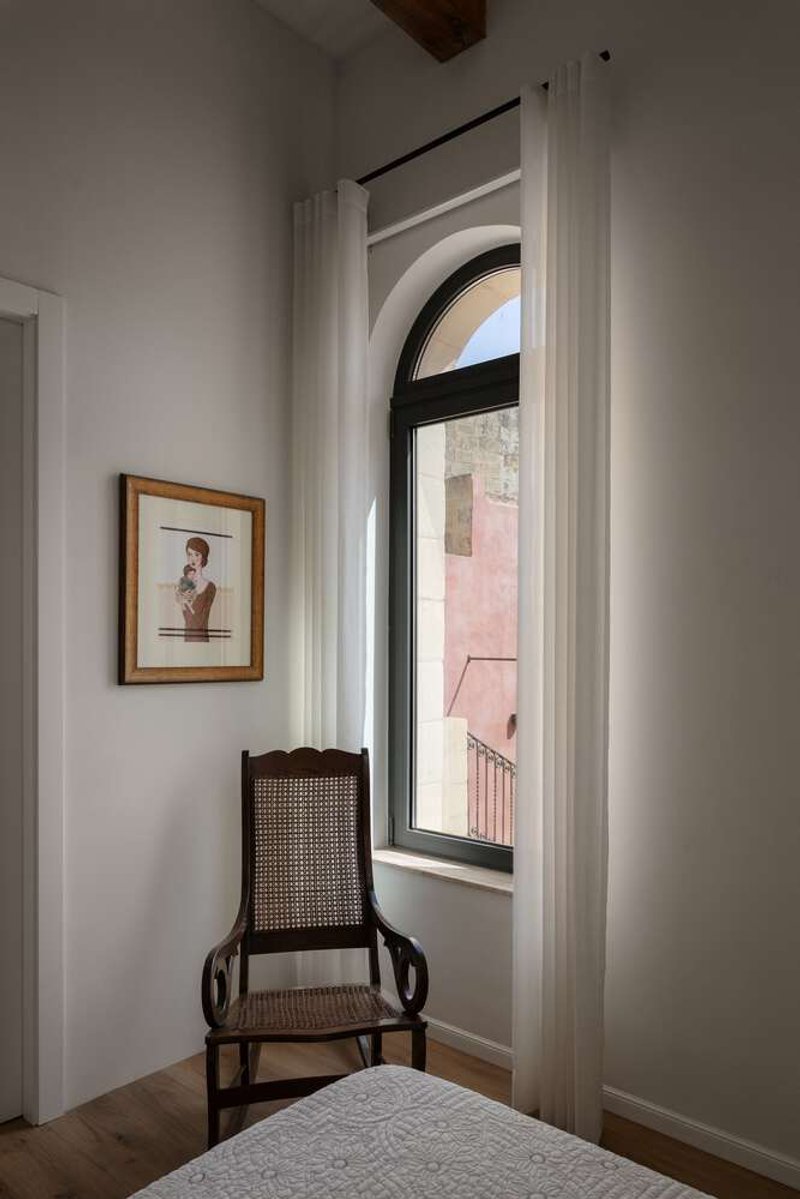
Living Tradition: A New Model for Maltese Conservation
Dar It-Tarag Residence exemplifies how historic Maltese farmhouses can be revitalized without erasing their identity. By pairing rigorous conservation with innovative design, Periti Studio has demonstrated that architectural heritage can evolve gracefully within the realities of modern family life.
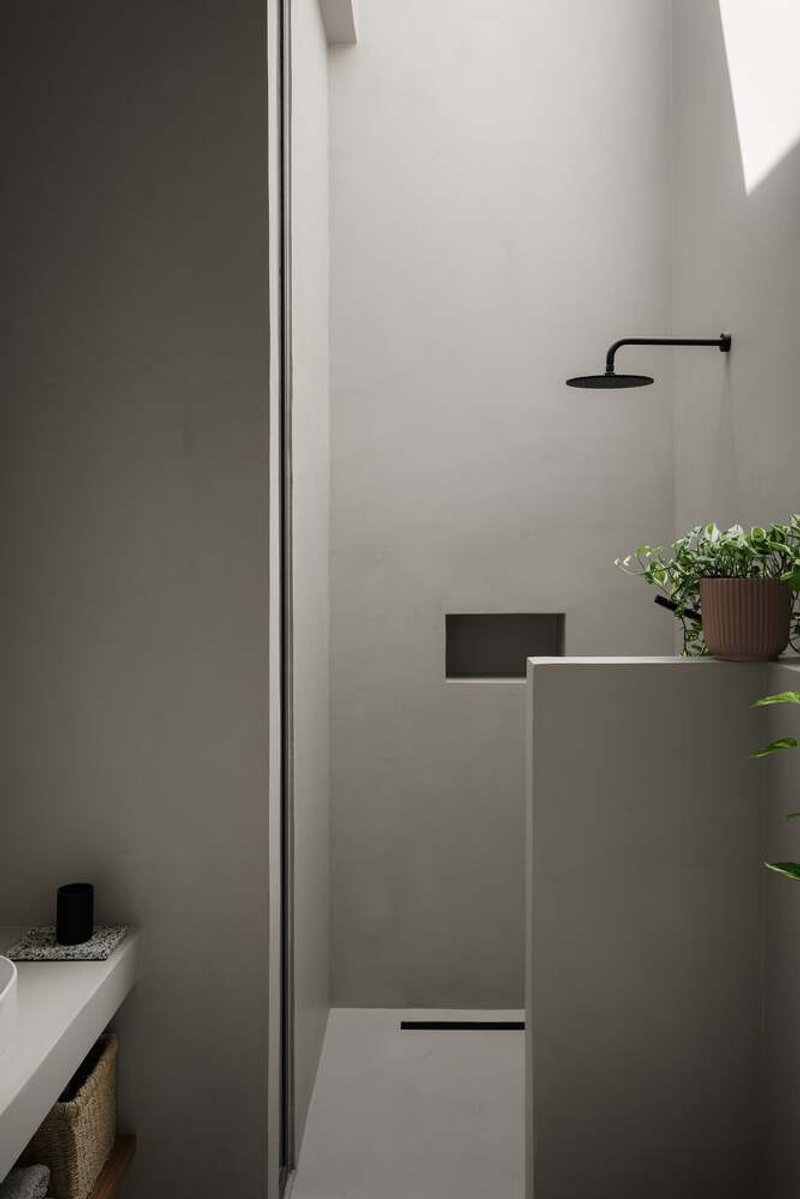
This project is more than a home — it is a case study in sustainable adaptive reuse, illustrating how energy efficiency, craftsmanship, and cultural continuity can coexist. Beyond its physical transformation, the residence contributes to the broader conversation about Malta’s architectural heritage and its place in contemporary society.
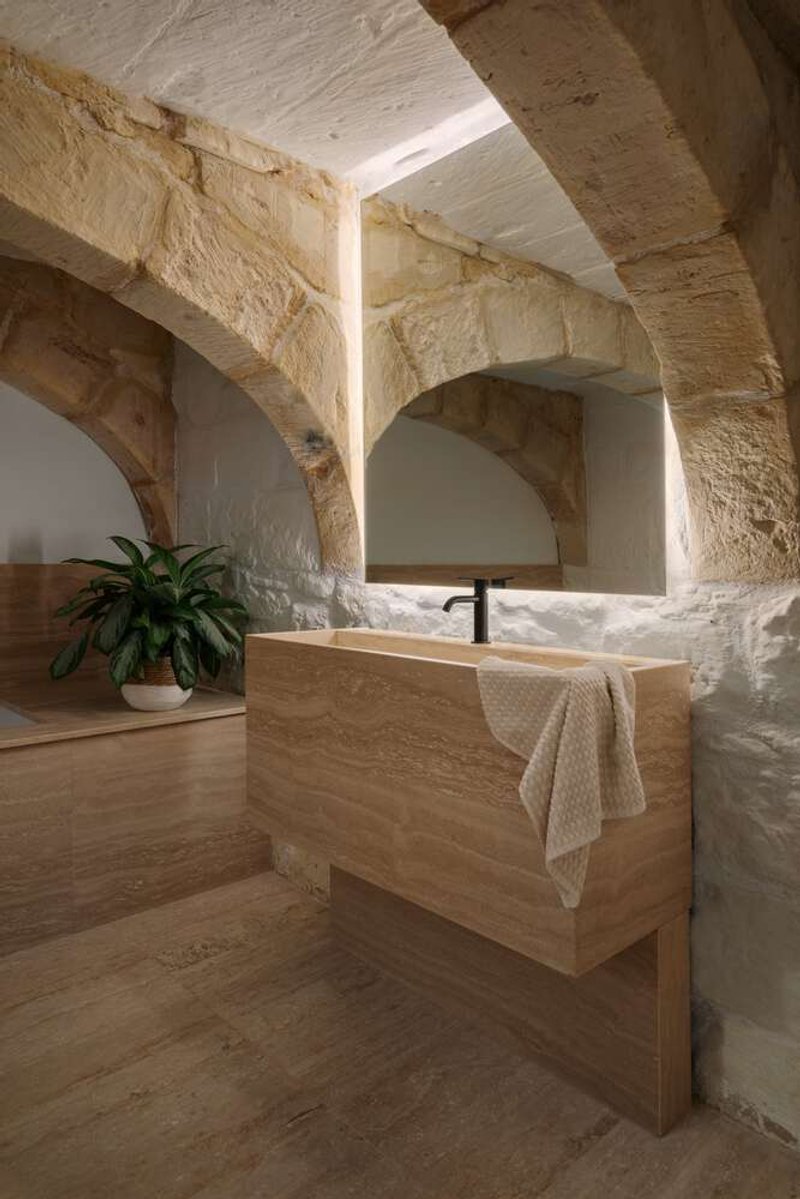
Dar It-Tarag Residence is a testament to balance and sensitivity — between the old and the new, the historic and the contemporary. Periti Studio has successfully revived an abandoned farmhouse, transforming it into a home that flows, breathes, and connects seamlessly to modern living. Through careful detailing, material honesty, and bold architectural gestures, the project sets a new benchmark for heritage restoration in Malta.
Project Details
- Architects: Periti Studio
- Location: In-Naxxar, Malta
- Area: 330 m²
- Year: 2025
- Photography: Ramon Portelli
- Category: Residential Architecture / Conservation / Adaptive Reuse
All photographs are works of Ramon Portelli




Popular Articles
Popular articles from the community


The Ken Roberts Memorial Delineation Competition (Krob)
As the most senior architectural drawing competition currently in operation anywhere in the world, it draws hundreds of entries each year, awarding the very best submissions in a series of medium-based categories.

Gads Hill Early Learning Center by JGMA: Adaptive Reuse Shaping Community-Focused Educational Architecture
Adaptive reuse transforms fragmented structure into vibrant early learning center with playful façade, natural light, and community-focused sustainable design.
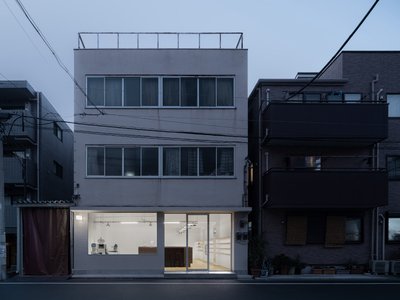
Atelier Macri Concept Store Interior Design by CASE-REAL
Atelier Macri store features a "ko" counter, walnut wood details, cork displays, blending retail, gallery, and seamless customer experiences.
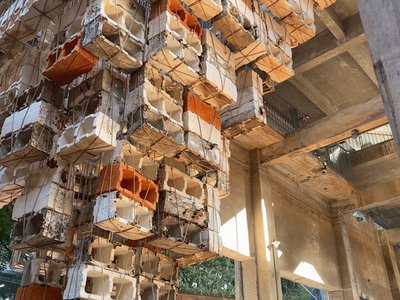
Inverted Architecture Installation by Studio Link-Arc: Exploring the Intersection of Architecture and Living Organisms
Inverted Architecture Installation by Studio Link-Arc blends mycelium, sustainability, inverted design, ecological cycles, and urban adaptive architecture in Shenzhen.


Similar Reads
You might also enjoy these articles
The Ken Roberts Memorial Delineation Competition (Krob)
As the most senior architectural drawing competition currently in operation anywhere in the world, it draws hundreds of entries each year, awarding the very best submissions in a series of medium-based categories.


Waterfront Redevelopment and Urban Revitalization in Mumbai: Forging a New Dawn for Darukhana
A transformative waterfront redevelopment project reimagining Darukhana’s shipbreaking heritage into an inclusive urban future.

OUT-OF-MAP: A Call for Postcards on Feminist Narratives of Public Space
Rhizoma Design and Research Lab invites artists, designers, architects, researchers, and students to reflect on how feminist perspectives can reshape public space. Selected works will be exhibited in Barcelona, October 2026. Submissions open until 15 April 2026.


Documentation Work on Buddhist Wooden Temple
Architectural syncretism and cultural hybridity: A comparative study of the Buddhist temples in Chattogram Hill tracks
Explore Architecture Competitions
Discover active competitions in this discipline




The International Standard for Design Portfolios


The Global Benchmark for Architecture Dissertation Awards


The Global Benchmark for Graduation Excellence

Challenge to design mud housing for contemporary communities
Comments (0)
Please login or sign up to add comments
No comments yet. Be the first to comment!