

Design Studio Maoom Turns a 55-Year-Old Korean House into a Tactile Workshop for Creativity
A residential renovation in South Korea recasts domestic rooms as material libraries, sleeping lofts, and open studios for a design practice.


Most architecture studios occupy rented commercial space: open plans, white walls, fluorescent lighting. Design Studio Maoom chose a different path, converting a 55-year-old house into a working studio that doubles as a living laboratory for materials, textures, and spatial ideas. The result is a place where the act of designing and the environment in which it happens are the same thing.
What makes the project genuinely interesting is the refusal to strip the old house clean. Original roof structures, weathered plaster, and granite blocks coexist with precise timber grids, translucent panels, and careful insertions of color. The building becomes a sample board at architectural scale, a place where every surface is both functional and propositional. It argues that a design studio should not just contain work but perform it.
Old Shell, New Skin


From the street, the renovation reads as a respectful edit rather than a demolition. The existing tiled roof stays. Below it, grey horizontal siding wraps the facade with a glazed corner that hints at the creative activity inside without shouting about it. The old granite block base remains visible at the entrance, lending weight and memory to a building that could easily have been bulldozed for a glass box.
A wall-mounted mail slot set into the rough stone is a small but telling detail. It signals that this is still, in some sense, a home. The threshold between public sidewalk and private studio is gentle, domestic in scale, and deliberately low-key.
The Timber Grid as Organizing System


The most striking interior element is a modular timber grid that serves as sleeping platform, work surface, and material archive depending on the room. Beneath a skylight that peels open the original roof structure, the grid becomes a loft for rest. In the studio proper, the same module becomes a table with compartments sized for fabric swatches, stone chips, and color samples. The sliding translucent panels above the worktable filter light and provide a sense of enclosure without sealing off the roof.
Repetition of this single system across different programs is the project's strongest design move. It gives every room a family resemblance while allowing each to function differently. The grid is neither decorative nor purely structural; it is a piece of furniture scaled up to become architecture.
A Material Library You Inhabit


For a design practice, material samples are currency. Maoom treats them not as things to be filed away in drawers but as elements on constant display, slotted into the timber grid compartments and pinned to walls in evolving compositions. The overhead view of hands arranging samples inside the gridded table reads almost like a game board: deliberate, tactile, and open to rearrangement.
Storage is handled with equal care. Galvanized metal drawers fitted into weathered plaster walls carry handwritten label cards, mixing industrial hardware with a handmade sensibility. This is a filing system that invites touch rather than discouraging it. Everything in the building is meant to be picked up, moved, reconsidered.
Light, Screens, and the Translucent Wall


A floor-to-ceiling translucent panel wall divides zones without closing them off. Light passes through in a soft, even wash that recalls the paper screens of traditional Korean interiors, though the material here is contemporary. Paired with the exposed roof timbers visible above, the screen creates a layered section: old bones on top, new insertions below, and filtered daylight knitting them together.
The corridor adjacent captures this layering in a single frame. Grey walls, recessed strip lighting, and the timber platform at the end compose a sequence that moves from the controlled to the atmospheric. People pass through as silhouettes, which is exactly the point: the architecture holds a mood without demanding attention.
Color Rooms and Threshold Moments


Against the predominantly grey and timber palette, specific rooms break out in color. A pink carpet paired with a pedestal table and flowers reads like a set piece, a room staged for a client meeting or a moment of contemplation. Another space lays a red floor beneath white walls and carved cabinets, framed through a doorway so that you encounter it as a picture before you enter it as a room.
These threshold views are clearly choreographed. Doorways throughout the project act as frames that compress and then release spatial information. The person reaching for storage boxes under exposed timber beams is seen through just such a frame, turning a mundane act of retrieval into a composed scene. It is a house that understands the drama of domestic movement.
The Working Wall


A pale blue wall in the studio becomes a pin-up surface for sketches, fabric swatches, and design sheets in varying states of completion. The afternoon light that falls across these compositions is soft and warm, turning the working wall into something close to an installation. The designer adjusting samples on this surface is not just organizing information; she is composing a spatial argument in real time.
This is where the project's thesis becomes most legible. The studio is not a neutral container for creative work. It is an active participant, a space whose textures, colors, and structures provoke and respond to the design process happening within it.
Plans and Drawings

The floor plan reveals a compact domestic layout reorganized around a central circulation spine. Entrance hall, office, and living spaces sit in a sequence that reads left to right, with rooms branching off a narrow corridor. The plan is tight but not cramped. Every room earns its place through a specific programmatic role, and the doorway alignments visible in the plan confirm the carefully staged threshold views that define the experience of moving through the building.
Why This Project Matters
Adaptive reuse of old houses often falls into two traps: gutting everything and starting over, or preserving so much that the result feels like a museum. Design Studio Maoom avoids both by treating the existing structure as a collaborator. The old roof, the granite base, the weathered plaster are not relics to be protected behind glass. They are textures in an ongoing conversation with the new timber grids, translucent screens, and colored rooms inserted among them.
The project also makes a quiet case for the design studio as a building type worth taking seriously. When architects design their own workplaces, the results reveal what they actually value. Here, the values are tactility, layered light, and the belief that materials should be encountered physically, not scrolled through on a screen. In a profession increasingly mediated by digital tools, that commitment is worth paying attention to.
Design Studio Renovation: Transforming a 55-Year-Old House into a Creative Hub by Design Studio Maoom, South Korea. Photography by Donggyu Kim.
About the Studio
Share Your Own Work on uni.xyz
If projects like this are the kind of work you want to make, uni.xyz is a place to publish your own, find collaborators, and enter design competitions.


Popular Articles
Popular articles from the community

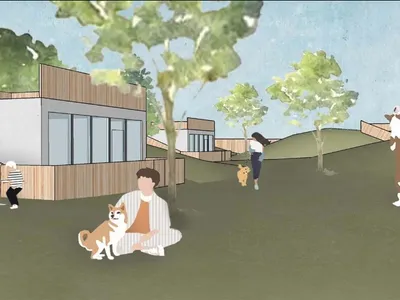
Temporary Home for Dogs: A Reversed Zoo Rethinks Animal Shelter Architecture
In Bucharest, a sinuous corridor and freed landscape flip the logic of containment, designing a shelter that works to make itself unnecessary.

Opera on the Sea: Driftwood Logic Shapes a Timber Opera House on Estonia's Coast
Trevor Orgill's opera house translates the entangled drift of floating timber into a civic building where wood, water, and music converge.
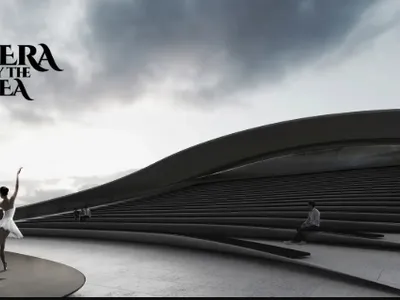
Opera by the Sea Estonia: Three Shells Dissolving Architecture into Tallinn's Coastline
A winning opera house proposal replaces monumental form with interconnected shells that blur the boundary between building, park and Baltic Sea.
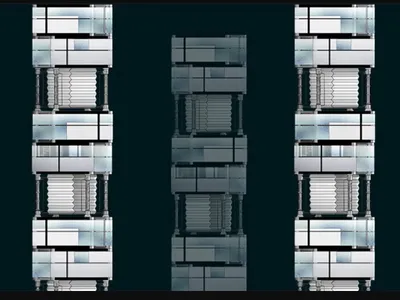
Tsunami Convergenics: Turning Catastrophic Ocean Forces into Underwater Housing Infrastructure
A speculative underwater settlement off the coast of Onagawa, Japan, treats tsunamis and typhoons as energy sources rather than threats.

Similar Reads
You might also enjoy these articles


Hodi-Mandai Geram
Project Function: Preservation and revitalization of the Intangible heritage and socio-spatial identity of the Hodi by Housing, Cultural Memory Center, Sacred Grove, landscape, local tourism economy


Olio Towers: A Mid-Rise for Performers That Fuses Housing, Rehearsal, and Stage
Located blocks from Houston's Theater District, this modular tower stacks living units around a central performance atrium.

Oasis: Modular Green Housing Carved into Dhaka's Urban Fabric
A shortlisted Plugin Housing entry reclaims unauthorized settlements in Dhaka with stepped concrete volumes, green roofs, and ventilation-driven design.

Black Hole: A Floating Megastructure for the Post-Physical Era
Emiliano Mazzarotto envisions a spherical, self-scaling arena where e-sports, digital hotels, and holographic stadiums replace traditional public space.

Explore Creative Hub Competitions
Discover active competitions in this discipline

Challenge to reimagine the Iron Throne

Photograph architecture without architects

Illustrate the lost glory of Angkor Wat - Render Challenge

Design challenge to reuse E-waste
Comments (0)
Please login or sign up to add comments
No comments yet. Be the first to comment!