
Designing for the greater good
It's all about embracing pro-bono services as a choice.


Design is not just a creative outlet. Within itself, design can be a tool for social and environmental change. In today’s world, with fluctuating economies and a global push for development, design has the capacity to not only change the face of a city but also provide a noble service to humanity at large. By increasing the scope and making community development inclusive in design services, we are capable of making a deeper impact in the everyday lives of the general public and in the pages of history.
Designing for the good of the public is a relatively new approach in the field. It follows a conscious attempt to improve the community we live in. Public spaces need artistic interventions from time to time, and there are a number of small organizations and NGOs working tirelessly to improve the quality of life of the communities they serve. They are filled with passionate ideas and concepts, yet lack excess funding and expertise when it comes to implementing those ideas. As designers, it is possible for us to voluntarily partner with such organizations to work together towards realizing their impactful aims.
The 'Pro-Bono' Approach
By following a ‘pro-bono’ approach, not only can we increase the development of towns and villages that are unable to access such services, but we can also enrich our knowledge of vernacular design elements. But what exactly do we mean by pro-bono? The literal definition denotes “professional work undertaken voluntarily, using the specific skills of professionals to provide services to those who are unable to afford them.”[i]
However, the word ‘pro-bono’ follows a negative connotation in that many believe it to denote free work service. The point is neither for designers to work without a fee, nor is all pro-bono work for free. The services can be provided either on zero payment or at a reduced fee. The goal is to promote better living for humanity, through our professional knowledge, expertise, and experience.
For example
The American non-profit, ‘Public Architecture’ (Link 1), lets architects sign up for providing pro-bono services. On their website, more than 1,300 companies have made the pledge. Each year participants now donate more than 400,000 hours combined, representing almost $60 million in services.[ii]
The Amsterdam-based organization, “What Design Can Do”, aims to question the impact of design on our society. It runs many challenges and competitions on similar lines, bringing to the forefront design collaborations which benefit communities, performed on tight budgets yet realized nonetheless. One of their competitions, the Refugee Challenge 2016, recognized projects that helped the personal development of refugees in urban areas [ii]
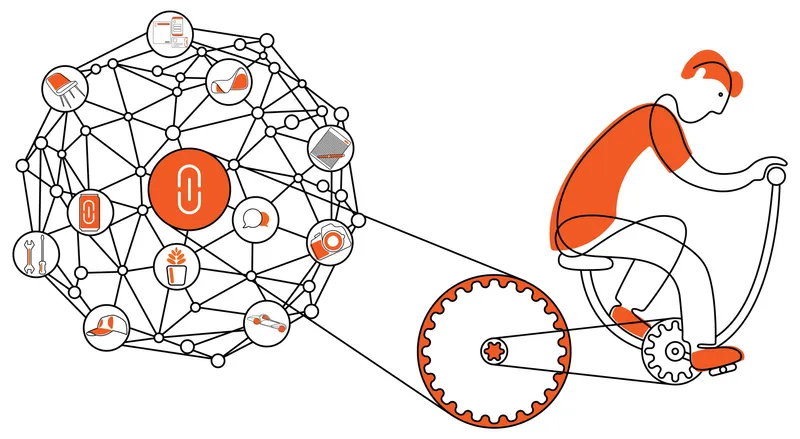
With the intricate connections spun within our communities connecting us to each other, it is difficult to ‘change lives’ by freely donating an art piece or designing a bus stop. The complexities of human relationships, societies, and traditions make it imperative to learn about the community to which a service is to be provided and understand their shortcomings and what is actually needed to improve the quality of their lives. Maybe a gloomy neighborhood needs a pop of color through expertly painted street art that delivers a sensitive message, or a completely urbanized city requires a green expanse to function as a pollution-deterrent and a community park. Such acts of pro-bono services can be performed in conjunction with a non-profit organization. It is also possible for artists, including graphic designers and local craftsmen, to come together independently. They can host issue-sensitive exhibitions displaying their art, or create sculptures that enhance public areas of poorly developed towns, or even help non-profits with their branding and marketing, and indirectly push ahead of the agenda of designing for the greater good.
A beautiful example is an institute designed for visually impaired girls of the Poona School and Home for Blind Girls in Pune, India (Link 3). The project’s designer Neeta Verma, who won a Runner Up award in the category ‘Design for Social Impact’ for the Core 77 Design Awards 2018, puts it in perspective when she said, “The project was a collaborative effort where, as a designer, I partnered closely with the community at the school. This collaboration and community involvement created a sense of ownership, pride, and shared joy of creation.”
Conclusion
Although with all this talk about how important it is for designers to step up for society and the environment, it becomes very easy for our efforts and time to be taken advantage of. Bigger organizations and companies that have various earning gateways can easily engage in pro-bono services due to abundant resources. For smaller design firms and freelancers, it becomes important to be on guard while pursuing such projects. For example, if a legitimate business approaches you for work without a fee but promises ‘good exposure’ in return, run for the hills! There is a great reference for understanding how to proceed when faced with such situations — Jessica Hische’s (a lettering artist and author) extremely helpful infographic titled, “Should I Work for Free?” (Link 4).
As compared to the impact of our work, it is equally important (if not more) that we sustain ourselves mentally and financially while working on pro-bono projects. At the end of the day, it is our choice and empathy, as designers, to serve the community we live in that will drive us to pursue the betterment of it.
Weblinks:
1. https://www.publicarchitecture.org/
2. https://unhcrideas.org/refugeechallenge/Page/Home
4. http://www.shouldiworkforfree.com/
5. Another example: SHoP Architects, helping re-build schools in earthquake-devastated districts in Nepal, in collaboration with US-based charity Kids of Kathmandu. Check it here: http://kidsofkathmandu.org/theschools/
Sources:
[i] Wikipedia
[ii] “Discover How Public Architecture Gives Back”, Architectural Digest, Tim Mckeough, March 31 2015


Popular Articles
Popular articles from the community


Juan García Correa, John González and Claudia Rueda Sink a Circular Amphitheater into a Manizales Engineering Building
On the La Nubia campus in Manizales, Colombia, the S1 Building folds labs and offices into a hillside of ramped lawns that double as a campus route.

David Ortega Stacks a Two-Story Mexico City Penthouse Around a Steel Stair and a Pergola-Shaded Roof Terrace
In Colonia Roma, a 300 m² penthouse uses oak joinery, a planted steel stair and a slatted roof pergola to make a new-build apartment feel like a house.


The Amber Palace Opera: A Geological Fiction Surfaces on Tallinn's Baltic Waterfront
Pierre Brillard reimagines a Baltic legend as a public landscape, opera house, and waterfront promenade rooted in Tallinn's coastal identity.

ETEH Reworks the Shared Spaces of São Domingos School in Brazil Around Timber, Color and Hanging Plants
At São Domingos School in Brazil, 436 m² of hall, refectory and library are recast with timber joinery, a yellow and blue code and trailing greenery.

Similar Reads
You might also enjoy these articles

Vereda Arquitetos Renovates a 40-Square-Meter Apartment Inside Niemeyer's Copan Building
A compact unit in São Paulo's most iconic residential tower gets a material overhaul that pairs exposed concrete with bold blue Formica.

Shakur's House: Exposed Brick as an Interior Organiser in a 168 m² Mashhad Residence
Brick moves indoors in this Mashhad residence, where masonry walls, glass partitions and teal planes sequence a compact home without closing it off.

Day and Night Park: A Time-Based Urban Newsstand in Beijing
A temporary urban newsstand in Beijing blending travel, light, and reading through poetic colors, compact form, and community-focused design.

Modernist Patio Renovation in El Masnou, Barcelona by Oliver Segura Arquitectura + Cebrià Arquitectura
Modernist patio renovation blending tradition and innovation with a movable pool, leveled floors, and Catalan materials in El Masnou.

Comments (0)
Please login or sign up to add comments
No comments yet. Be the first to comment!