
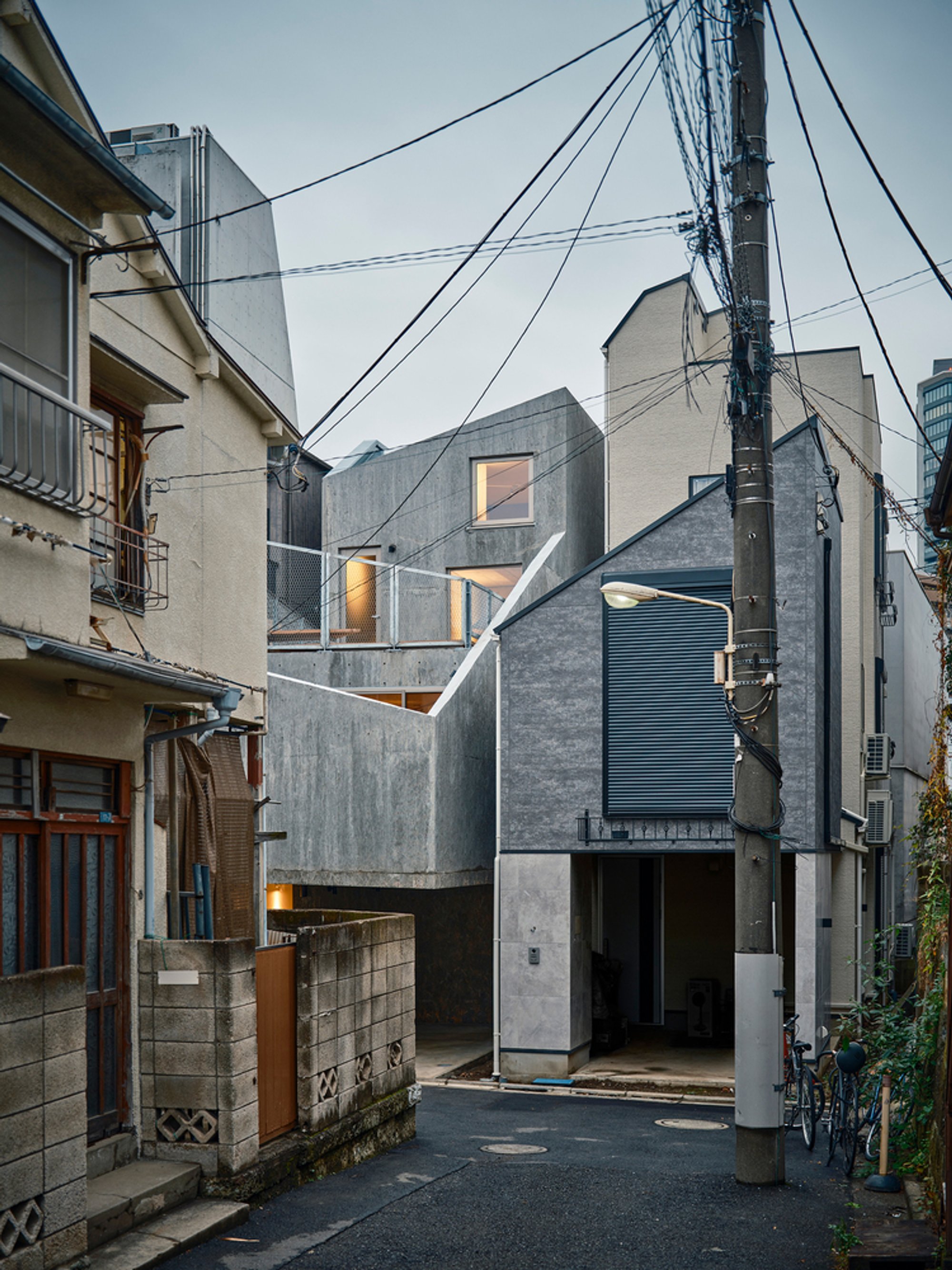
Diagonal House by Daisuke Ibano & Ryosuke Fujii: Innovative Urban Residential Design in Japan
Diagonal House in Japan features staggered floors, diagonal design, integrated kitchen-living-terrace spaces, multifunctional areas, and seamless indoor-outdoor family living.

Nestled within a densely populated urban residential district, the Diagonal House by architects Daisuke Ibano and Ryosuke Fujii exemplifies innovative design tailored for modern family living. Conceived for a couple and their children, this compact 104-square-meter home responds thoughtfully to strict urban planning regulations, including height limits and setback restrictions in a category 1 height control district.
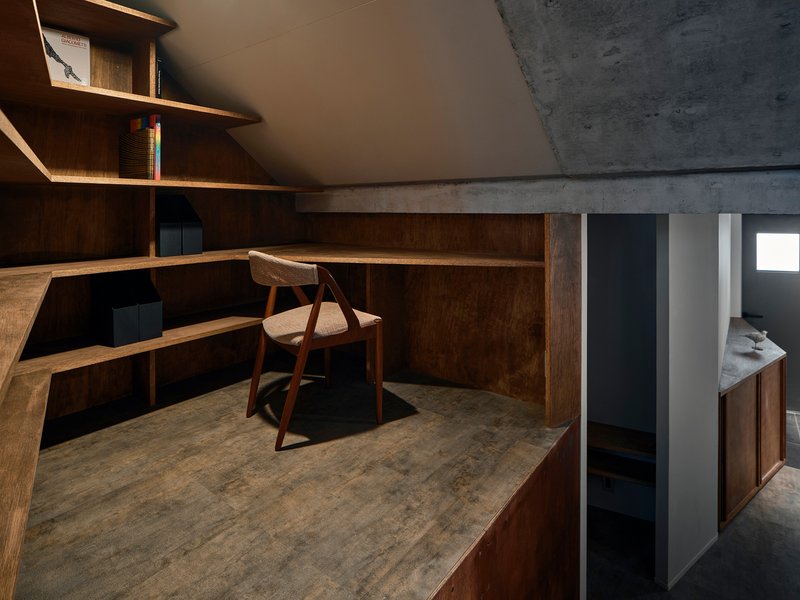
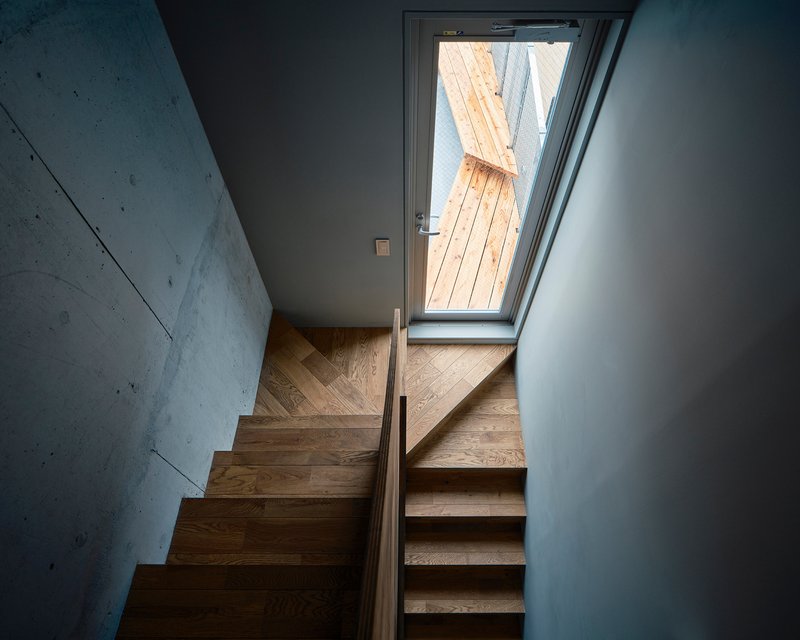
The architects approached the project by carefully analyzing the surrounding townscape to ensure the house would integrate seamlessly with its environment while maintaining privacy and openness. At the heart of the design was the client’s desire for a connected kitchen, living, and terrace space, reflecting a lifestyle centered around family interactions and culinary activities.
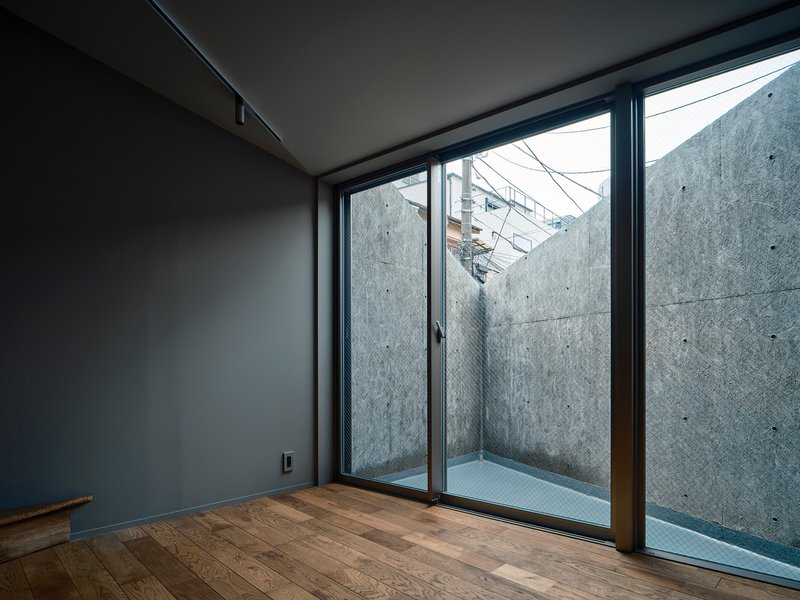
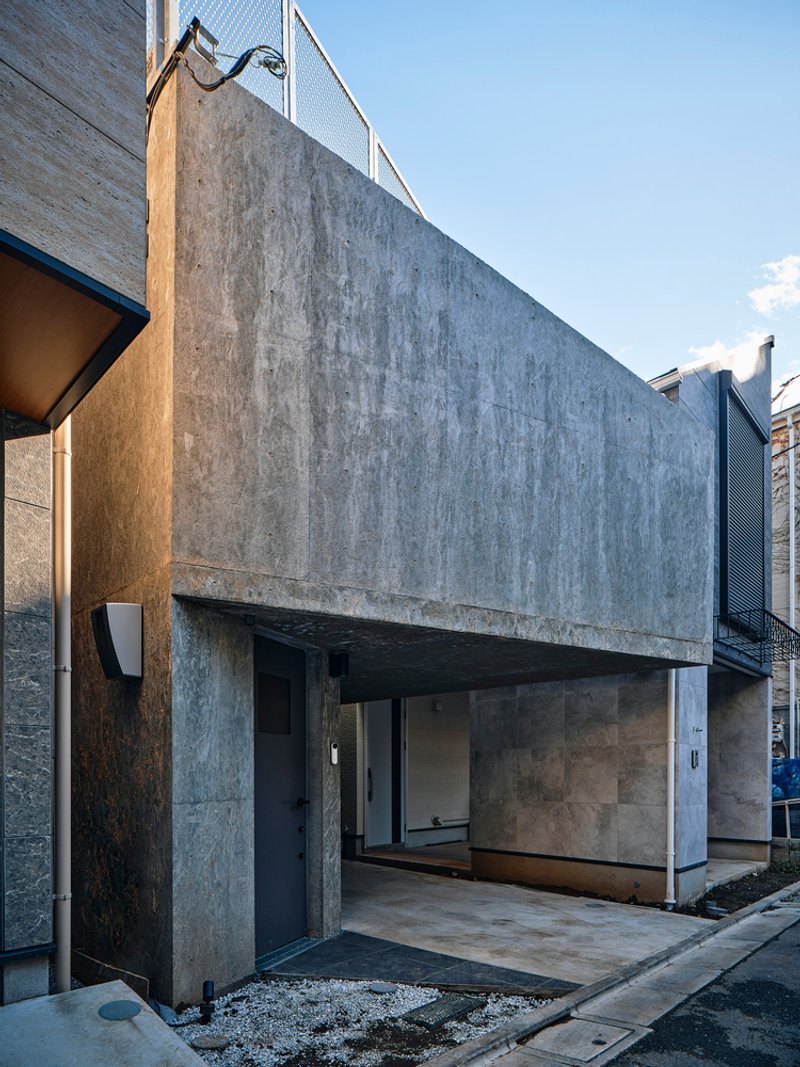
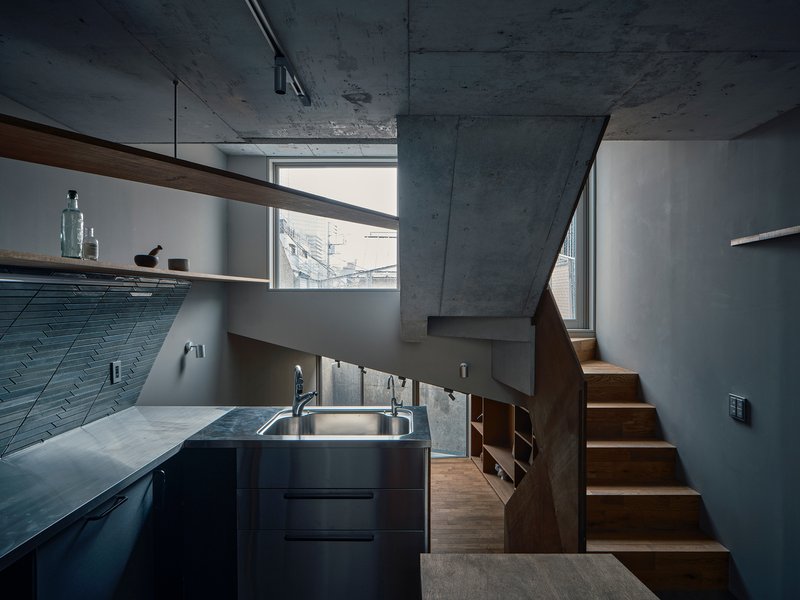
To achieve this, the architects introduced staggered floor levels, creating spatial continuity and smooth vertical circulation throughout the home. The living room’s slab was folded diagonally, with the topmost slab partially lifted, allowing for a generous kitchen opening that visually and physically connects to the terrace. These unique diagonal interventions not only enhance circulation but also provide multifunctional spaces: the terrace’s sloped floor doubles as a sunbathing platform, while the raised area above the kitchen becomes a cozy alcove for sleeping.
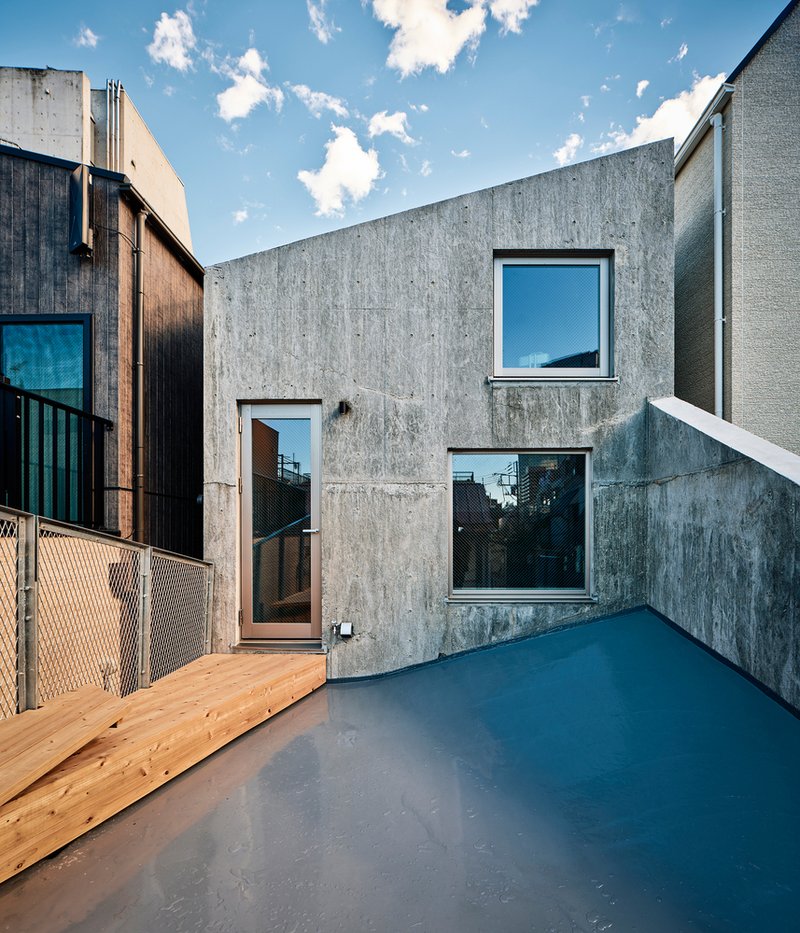
Further reinforcing this concept, the stairwell runs diagonally through the staggered floors, linking platforms and storage spaces at complementary angles. A triangular light garden at the living room’s opening accentuates the diagonal axis, amplifying the perception of space while drawing natural light deep into the interior. The interplay of countless diagonal lines creates dynamic spatial relationships, connecting the interior seamlessly with the terrace and surrounding urban landscape.
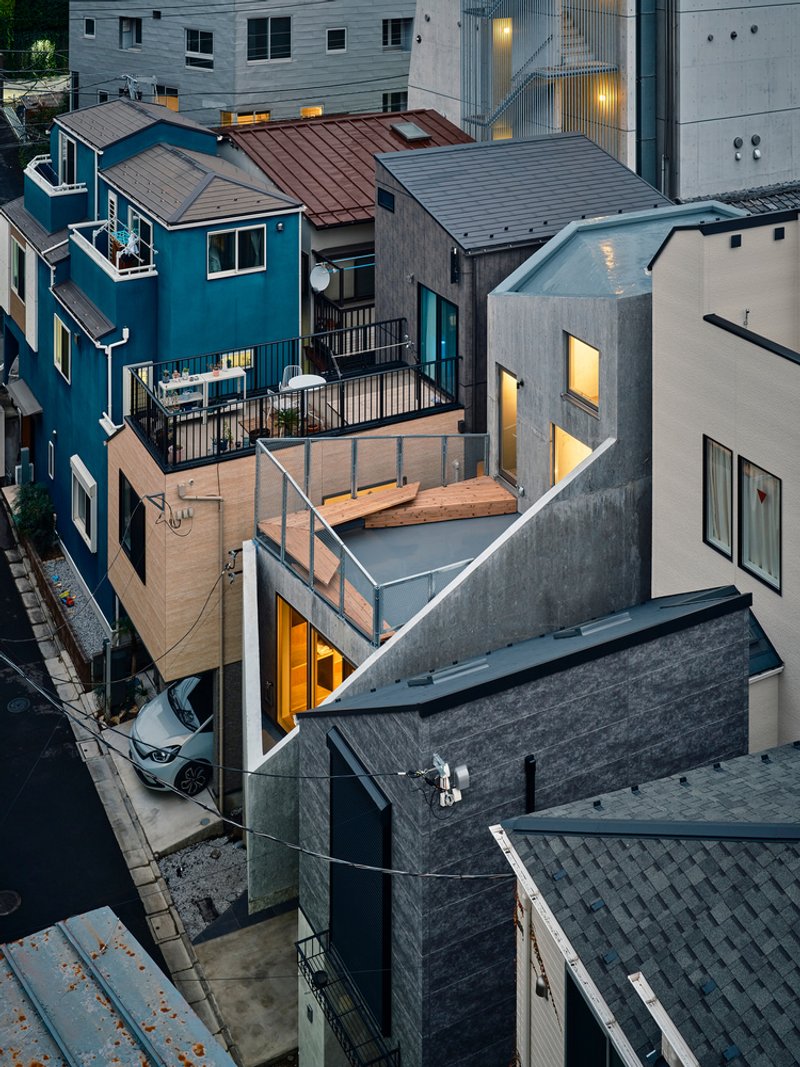
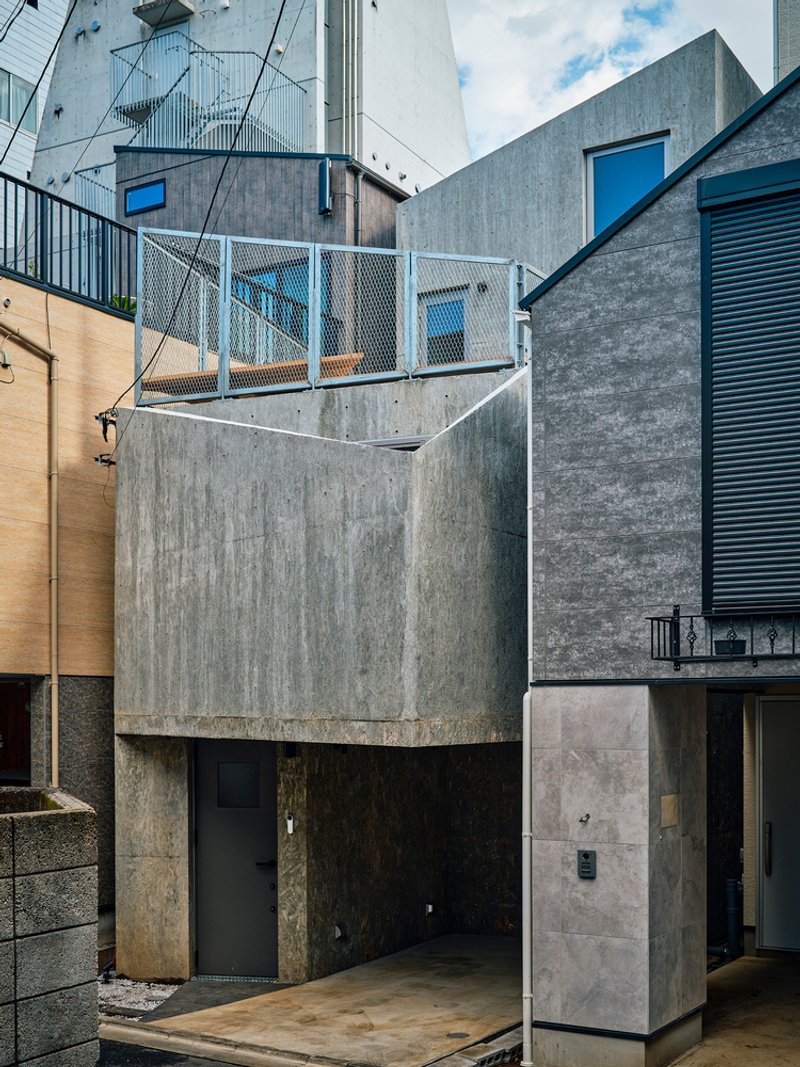
Beyond aesthetics, the Diagonal House exemplifies a microenvironment designed for everyday urban life. Its layout encourages flexibility, supports family-centered activities, and ensures that each corner of the home feels both private and connected. By harmonizing with neighboring structures while introducing innovative spatial strategies, Ibano and Fujii have crafted a home that is as functional as it is visually striking—a testament to thoughtful contemporary residential design in Japan.
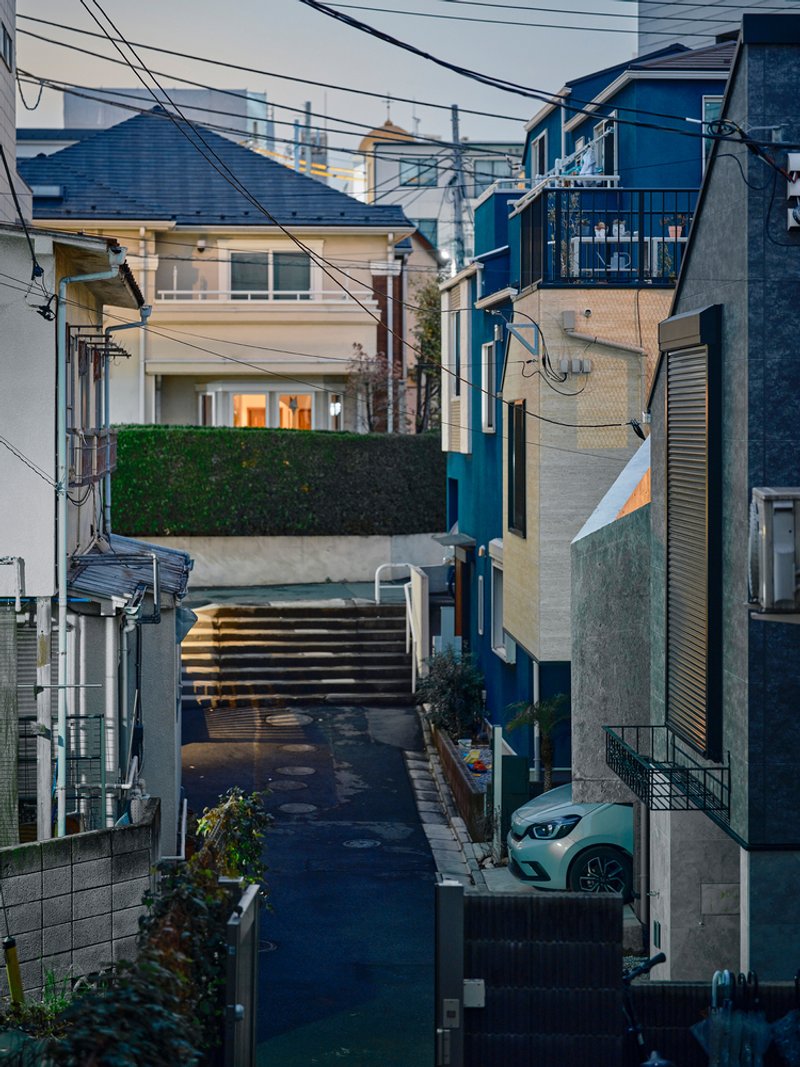
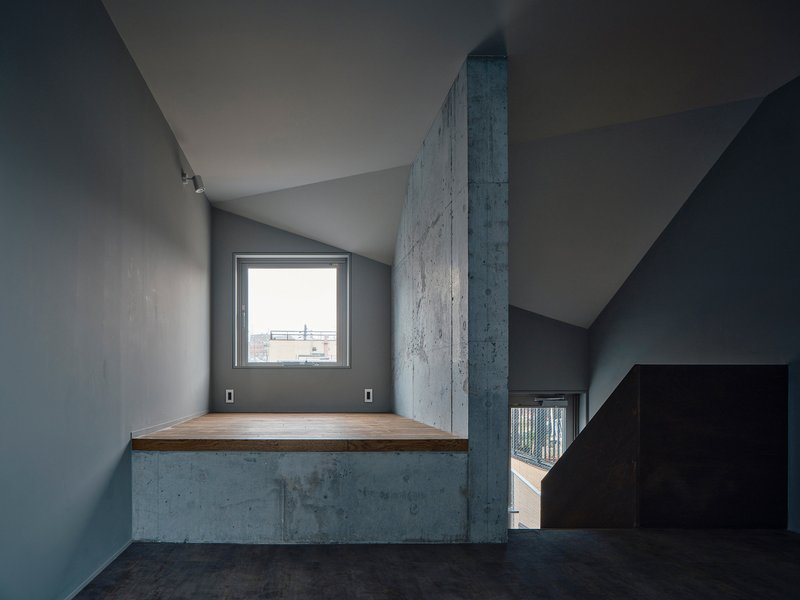
All photographs are works of Takuya Seki




Popular Articles
Popular articles from the community


Solar Steam: A Climate-Responsive Architecture That Redefines the Monument
A climate-responsive memorial architecture that transforms heat, decay, and time into a living system reflecting humanity’s ecological impact.
Gads Hill Early Learning Center by JGMA: Adaptive Reuse Shaping Community-Focused Educational Architecture
Adaptive reuse transforms fragmented structure into vibrant early learning center with playful façade, natural light, and community-focused sustainable design.
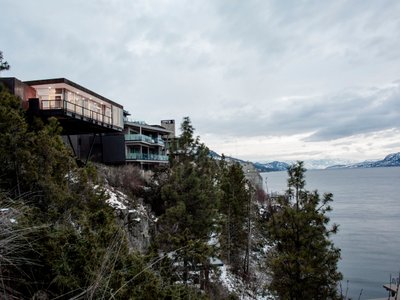
Alton Cliff House: A Harmonious Retreat by f2a Architecture in Lake Country, Canada
Alton Cliff House blends corten steel, prefabrication, and sustainable design, creating a luxurious, energy-efficient retreat perched on Canadian cliffs.
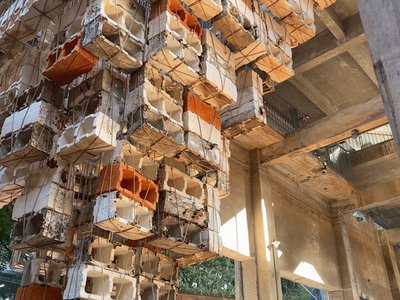
Inverted Architecture Installation by Studio Link-Arc: Exploring the Intersection of Architecture and Living Organisms
Inverted Architecture Installation by Studio Link-Arc blends mycelium, sustainability, inverted design, ecological cycles, and urban adaptive architecture in Shenzhen.


Similar Reads
You might also enjoy these articles


The Ken Roberts Memorial Delineation Competition (Krob)
As the most senior architectural drawing competition currently in operation anywhere in the world, it draws hundreds of entries each year, awarding the very best submissions in a series of medium-based categories.


Waterfront Redevelopment and Urban Revitalization in Mumbai: Forging a New Dawn for Darukhana
A transformative waterfront redevelopment project reimagining Darukhana’s shipbreaking heritage into an inclusive urban future.

OUT-OF-MAP: A Call for Postcards on Feminist Narratives of Public Space
Rhizoma Design and Research Lab invites artists, designers, architects, researchers, and students to reflect on how feminist perspectives can reshape public space. Selected works will be exhibited in Barcelona, October 2026. Submissions open until 15 April 2026.


Documentation Work on Buddhist Wooden Temple
Architectural syncretism and cultural hybridity: A comparative study of the Buddhist temples in Chattogram Hill tracks


Explore Architecture Competitions
Discover active competitions in this discipline




The International Standard for Design Portfolios


The Global Benchmark for Architecture Dissertation Awards


The Global Benchmark for Graduation Excellence


Challenge to reimagine the Iron Throne
Comments (0)
Please login or sign up to add comments
No comments yet. Be the first to comment!