

Diatech Laboratories by Andrea Tabocchini: A Contemporary Workplace for Precision Medicine Innovation
Innovative laboratory in Italy blending adaptive reuse, transparent design, and flexible workspaces to support precision medicine, research, and collaboration.


Located in Iesi, the Diatech Laboratories project byAndrea Tabocchini Architecture redefines the concept of a modern research facility. Designed for Diatech Pharmacogenetics, a leader in pharmacogenetics and cancer precision medicine, the project merges advanced laboratory functionality with an inspiring and identity-driven workspace.

Spanning 1,200 square meters, this laboratory architecture project transforms an existing industrial ground-floor space into a dynamic environment that balances scientific rigor with spatial creativity. The design approach focuses on preserving the building’s original structural elements: such as prefabricated flooring, exposed concrete columns, and a glazed façade, while introducing a refined and contemporary spatial language.


Adaptive Reuse and Spatial Organization
A key aspect of the project is its adaptive reuse strategy, which enhances sustainability while maintaining the industrial character of the original structure. The layout is carefully divided into two primary zones: a functional warehouse area positioned to the north and a flexible research and office space to the south. This zoning ensures operational efficiency while allowing for future adaptability, an essential feature in laboratory design and institutional architecture.
The project exemplifies how industrial architecture can evolve into high-performance research environments without compromising its original identity. This approach aligns with current trends in sustainable architecture and workspace innovation.


Glazed Laboratory Volumes as the Spatial Core
At the heart of the design lies a striking composition of three glazed laboratory volumes. Elevated on a solid podium, these transparent structures become the visual and functional centerpiece of the workspace. By lifting the laboratories both physically and symbolically, the architects transform typically concealed research spaces into a focal point of openness and collaboration.
A reflective aluminum backdrop enhances the visual impact of these volumes, amplifying natural light and creating a refined, luminous atmosphere. This interplay of transparency and reflection contributes to a sense of precision, clarity, and technological sophistication, key qualities in contemporary laboratory architecture.


Flexible Workspaces and Material Innovation
Adjacent to the laboratory core, an L-shaped collaborative area introduces a more informal and dynamic work environment. Furnished with vibrant elements, this space encourages creativity, interaction, and knowledge exchange among researchers and staff. The design successfully integrates formal laboratory functions with flexible workspaces, reflecting evolving workplace trends.
Materiality plays a crucial role in defining spatial transitions. Reflective aluminum panels gradually shift into expanded metal sheets, creating subtle perceptual variations that distinguish different functional zones. This layered material strategy enhances both aesthetics and user experience while maintaining visual coherence throughout the project.


Modular Design and Lighting Precision
The entire project is governed by a modular grid system, reinforcing a sense of order, precision, and efficiency, qualities essential in scientific environments. Architectural elements, furniture placement, and lighting fixtures are all aligned with this grid, ensuring consistency and clarity in spatial organization.
Lighting design follows the same structured approach, contributing to both functionality and ambiance. The result is a well-balanced environment that supports technical activities while fostering comfort and visual harmony.


A Future-Ready Laboratory Environment
Diatech Laboratories stands as an example of innovative workplace design that responds to both present needs and future challenges. The project seamlessly integrates industrial heritage with contemporary architectural strategies, creating a space that is at once technological and poetic, functional and expressive.
By combining adaptive reuse, transparent laboratory design, flexible workspaces, and refined materiality, Andrea Tabocchini has crafted a research environment that reflects the evolving nature of scientific workspaces. The result is a laboratory that not only supports cutting-edge research but also enhances human interaction, creativity, and well-being.

All photographs are works of
Marcello Mariana


Popular Articles
Popular articles from the community


The Amber Palace Opera: A Geological Fiction Surfaces on Tallinn's Baltic Waterfront
Pierre Brillard reimagines a Baltic legend as a public landscape, opera house, and waterfront promenade rooted in Tallinn's coastal identity.


David Ortega Stacks a Two-Story Mexico City Penthouse Around a Steel Stair and a Pergola-Shaded Roof Terrace
In Colonia Roma, a 300 m² penthouse uses oak joinery, a planted steel stair and a slatted roof pergola to make a new-build apartment feel like a house.

graciastudio Turns a Viewless Tijuana Lot Inward Around a Courtyard of Concrete, Timber and Trees
In Tijuana, Jorge Gracia's GA2 House stacks a timber-clad private floor over exposed concrete and replaces a missing view with a planted interior patio.

Singing Woman: An Opera House That Performs Before the Curtain Rises
Ovidiu Cristian Pavel's conceptual opera house translates Estonia's choral identity into a sculpted waterfront landmark facing the Baltic Sea.

Similar Reads
You might also enjoy these articles

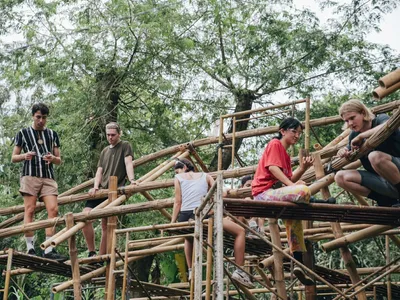
Bamboo Housing Challenge 2026: Design Affordable, Sustainable Homes Using Bamboo
An international design competition by Bamboo U and IBUKU inviting architects and designers to reimagine affordable housing using bamboo — with the winning design built full-scale in Bali.

Computational Design & Education: Beegraphy Design Awards Introduces 7th Category (Featuring Jiyun's Innovative Approach)
Dive into Beegraphy’s 7th Design Awards category, where computational design meets education to create immersive, interactive learning tools, inspired by Jiyun’s work.

From Parametric Lighting to Urban Furniture: Join the 2nd Workshop in Beegraphy’s Computational Design Series
Dive into Cutting-Edge Design Techniques and Practical Applications with Industry Experts

Last Call: Unleash Your Architectural Genius in SHAK's Kindergarten Design Competition
Urgent call for architects to join SHAK's kindergarten design competition before the looming deadline

Explore Architecture Competitions
Discover active competitions in this discipline

Challenge to reimagine the Iron Throne

Photograph architecture without architects

Illustrate the lost glory of Angkor Wat - Render Challenge

Design challenge to reuse E-waste
Comments (0)
Please login or sign up to add comments
No comments yet. Be the first to comment!