
Dongguan Slow-Traffic System: A Modern Integration of Urban Design and Green Architecture
The article explores Dongguan's innovative Slow-Traffic System, integrating sustainable urban design, green spaces, and pedestrian-friendly infrastructure.

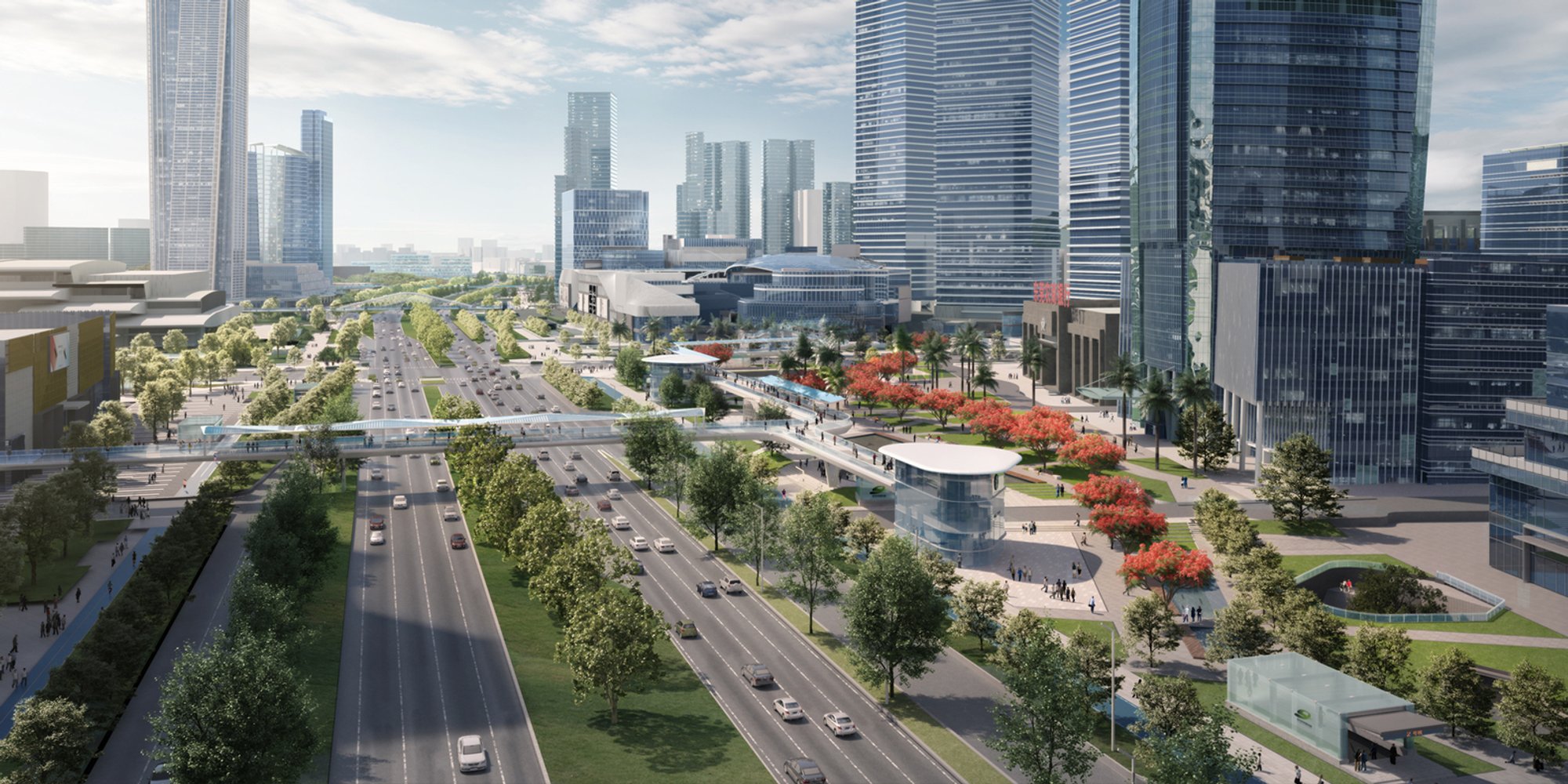
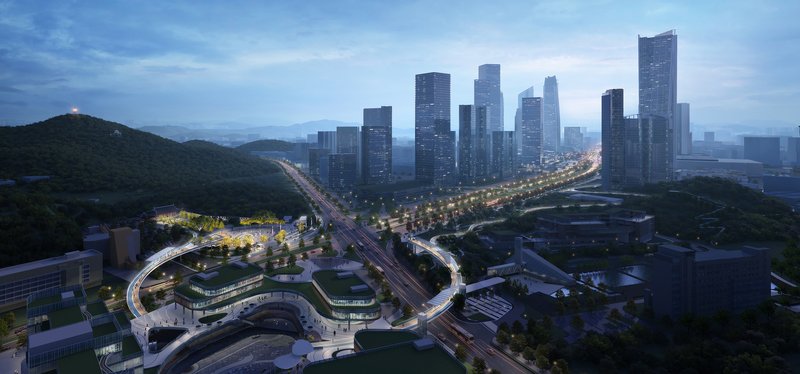
The Dongguan Slow-Traffic System, designed by eLandscript Studio, is a groundbreaking urban development project that reflects the city's commitment to sustainability, connectivity, and user-centric urban design. Situated in Dongguan, China, this ambitious project spans 2.48 million square meters and redefines public spaces with its innovative "Social Loop & Green Necklace" concept.
Project Overview
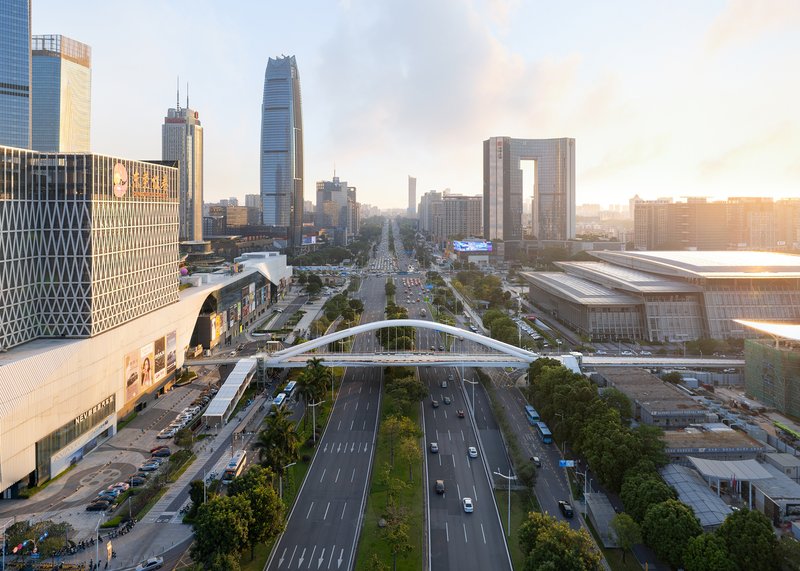
As Dongguan evolves into a manufacturing and economic powerhouse, the influx of talent and the expansion of public infrastructure have driven the need for pedestrian-friendly spaces. The Slow-Traffic System spans 3 kilometers of the central zone and is part of an 8-kilometer green corridor planned for the region.
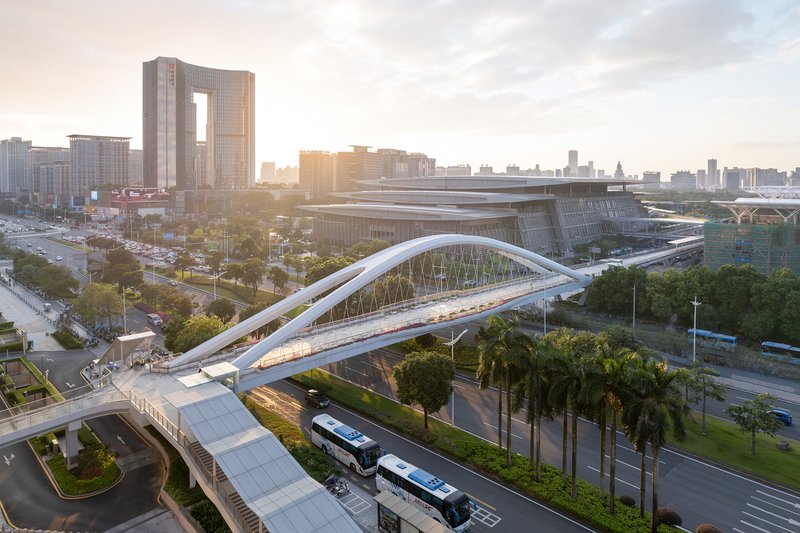
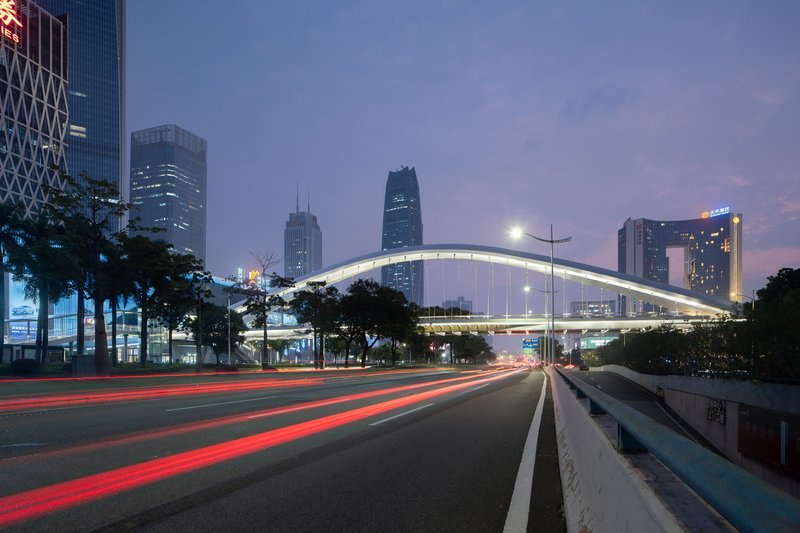
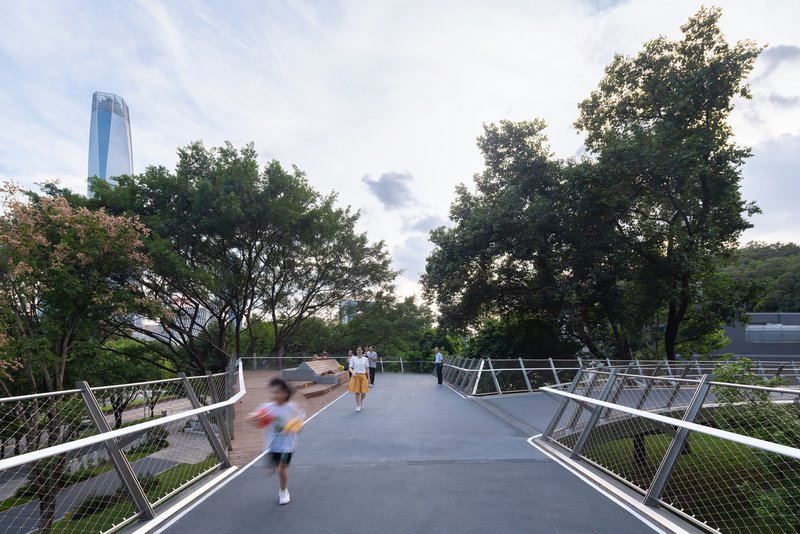
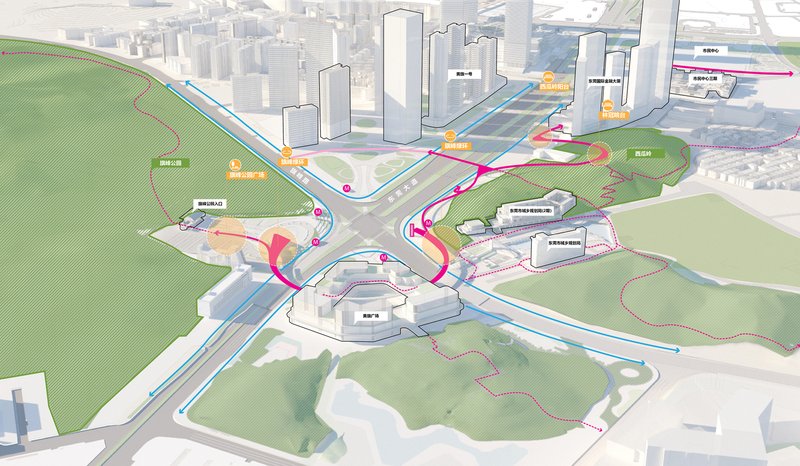
The system integrates pedestrian bridges, green spaces, and urban amenities, creating a seamless connection between key areas like Central Park, Civic Center, and Qifeng Park. It prioritizes accessibility and aesthetic appeal, with features such as vertical lift cores, viewing platforms, and integrated retail spaces.
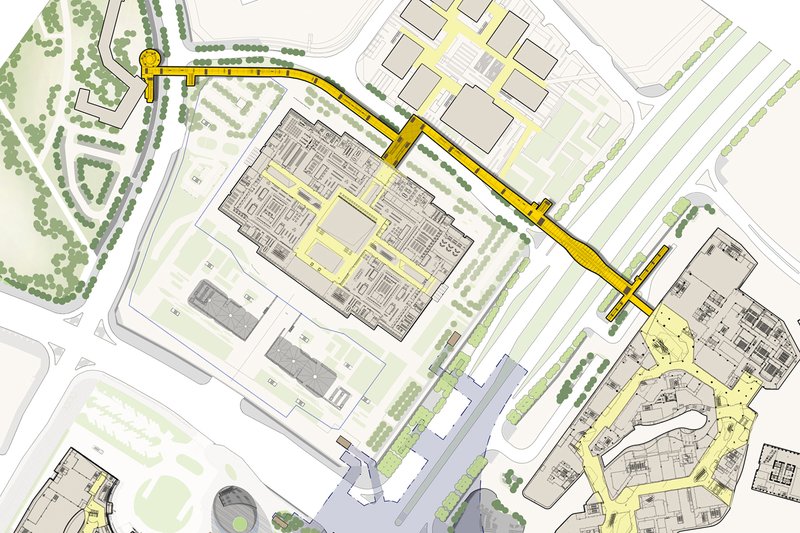
Vision: Social Loop and Green Necklace
The design of the Dongguan Slow-Traffic System is driven by two key visions: the Social Loop and the Green Necklace.
Social Loop: Connecting the Urban Core
The Social Loop is a 1.5-kilometer pedestrian-friendly network that links high-density areas in Dongguan's city center. Highlights include:
- Bridge No. 1 (Park Section):This section blends an elevated bridge with subway entrances, sunken plazas, and green spaces. Once the subway construction is completed, it will serve as a vibrant shared space for citizens.
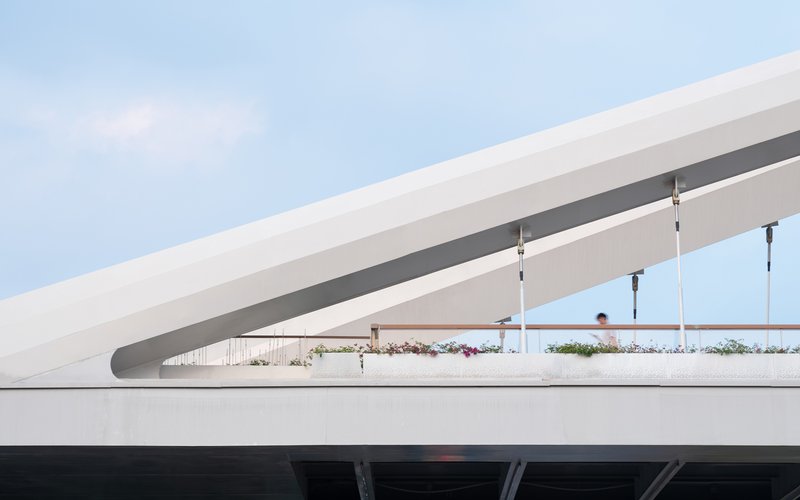
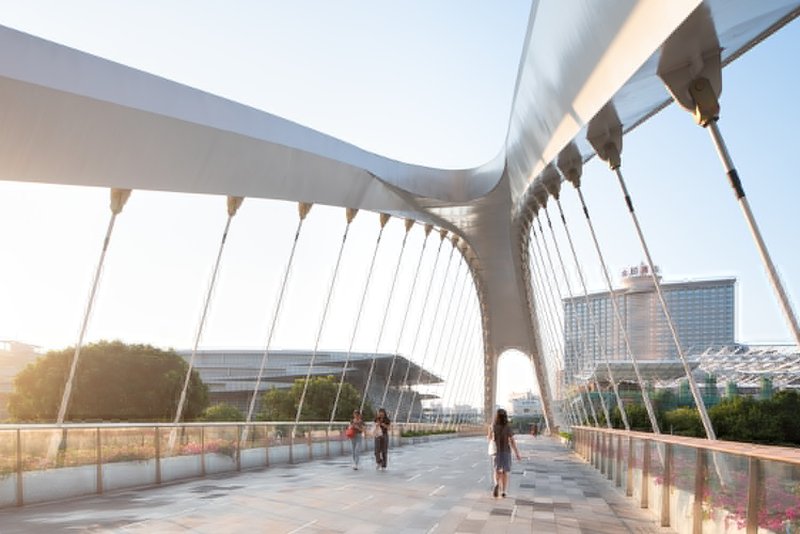
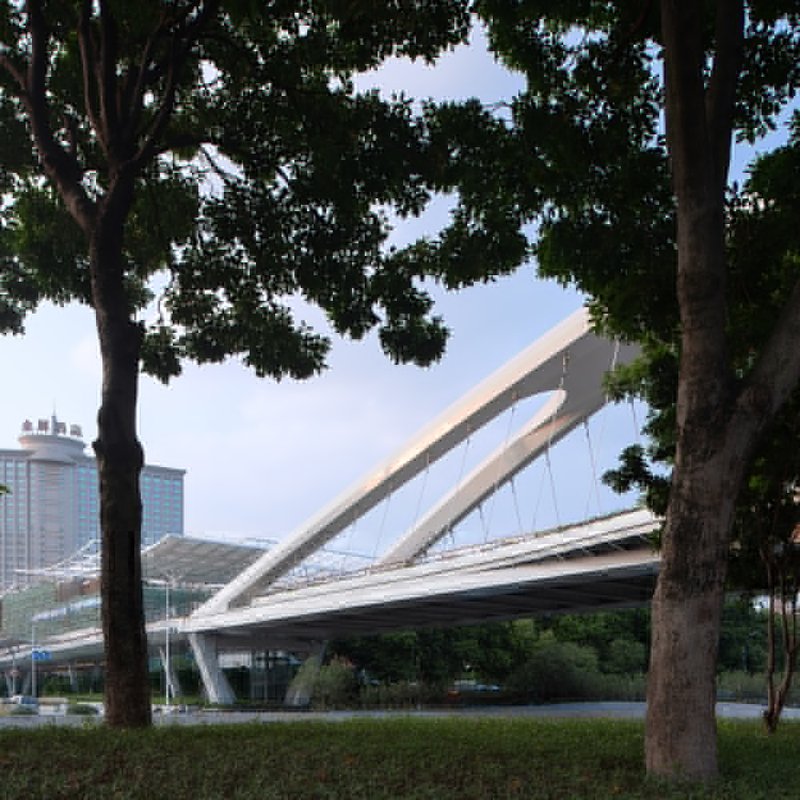
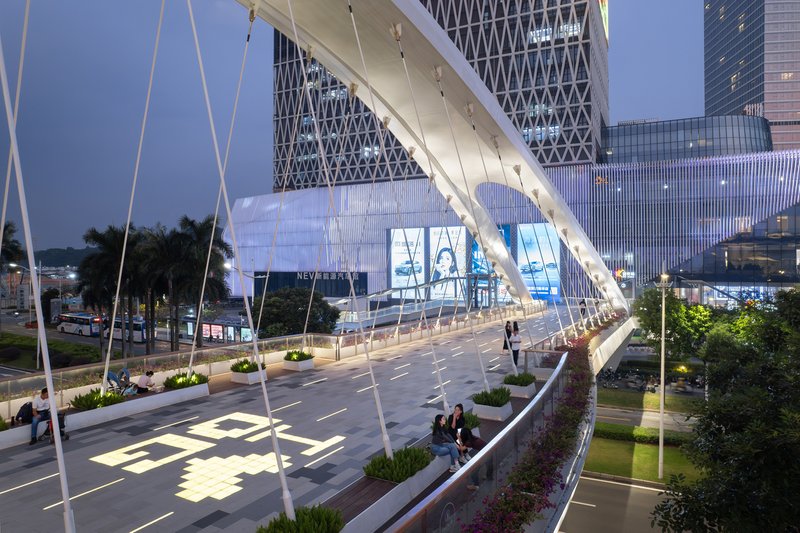
- Bridge No. 2:Featuring a continuous steel beam structure with a 103.5-meter span, this bridge is equipped with flower boxes and viewing platforms, encouraging relaxation and interaction. The design includes a 10-meter arch supported by 54 cables for structural elegance and safety.
The Social Loop effectively bridges disconnected urban parcels, enhancing mobility while adding value to the surrounding real estate.
Green Necklace: Integrating Nature and Urban Living
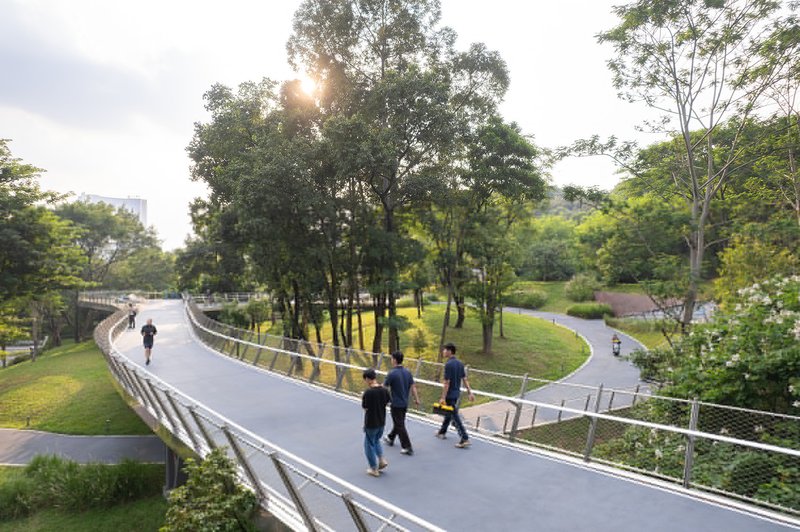
The Green Necklace is a tree-canopy pedestrian route that connects natural and urban landmarks, including:
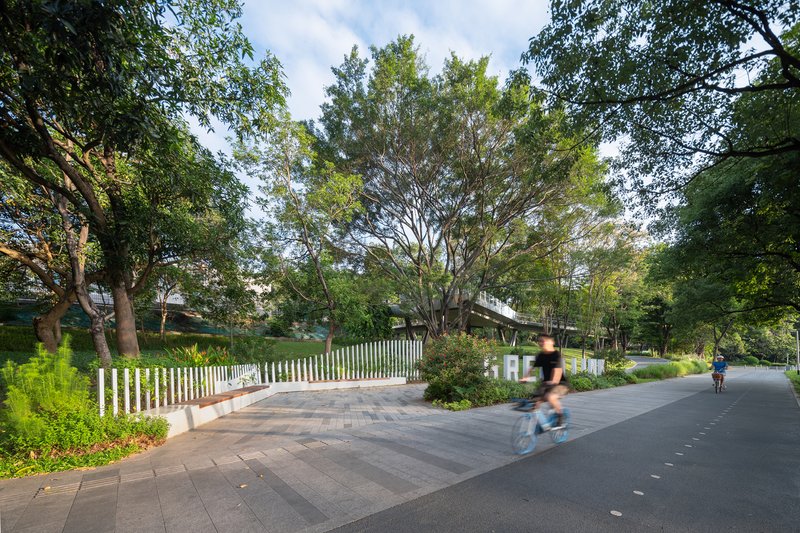
- Xigualing Area and Qifeng Park:This section ties the city core with nature, integrating features like a tree-canopy stage, pergola trellises, and accessible platforms.
- Huangqi Plaza and Hiking Trails:The route seamlessly connects Huangqi Plaza with the Qifeng Mountain hiking trails, providing opportunities for leisure and outdoor activities.
The Green Necklace emphasizes the preservation of existing trees and green corridors, ensuring harmony with the natural environment.
Innovative Features
1. Vertical Accessibility
The project integrates vertical lift cores, making it easier for pedestrians to navigate different levels while maintaining connectivity to retail spaces.
2. Sustainable Construction
By avoiding the removal of existing trees and using eco-friendly materials, the system demonstrates a strong commitment to sustainable urban development.
3. Multi-Use Public Spaces
The inclusion of sunken plazas, viewing platforms, and integrated retail transforms the system into a dynamic hub for community interaction and leisure.
Benefits to Dongguan
The Dongguan Slow-Traffic System has far-reaching implications for the city's development:
- Enhanced Mobility:The pedestrian bridges and interconnected pathways reduce reliance on vehicles, encouraging sustainable transportation.
- Community Building:The vibrant shared spaces foster a sense of community and improve the quality of life for residents.
- Economic Growth:Improved connectivity and appealing urban design increase property values and attract investments in the area.
Future Developments
The construction of key sections, such as the Qifeng Park connection and Bridge No. 1, is planned to align with ongoing subway and urban infrastructure projects. These developments will further enhance the system’s functionality and appeal.
The Dongguan Slow-Traffic System is a pioneering example of how urban planning can balance growth, sustainability, and quality of life. By prioritizing pedestrian-friendly spaces and integrating green corridors, the project serves as a model for cities worldwide striving to create smarter, greener urban environments.
For more insights into the innovative features of the Dongguan Slow-Traffic System, explore its design philosophy and contribution to modern urban living.
All the photographs are work of Tianpei Zeng


Popular Articles
Popular articles from the community


The Ken Roberts Memorial Delineation Competition (Krob)
As the most senior architectural drawing competition currently in operation anywhere in the world, it draws hundreds of entries each year, awarding the very best submissions in a series of medium-based categories.

Alton Cliff House: A Harmonious Retreat by f2a Architecture in Lake Country, Canada
Alton Cliff House blends corten steel, prefabrication, and sustainable design, creating a luxurious, energy-efficient retreat perched on Canadian cliffs.
Split House: A Compact Urban Home Blending Privacy, Light, and Flexible Living in Japan
Compact Japanese home featuring DOMA space, flexible café potential, passive lighting, privacy zoning, and sustainable urban living design.
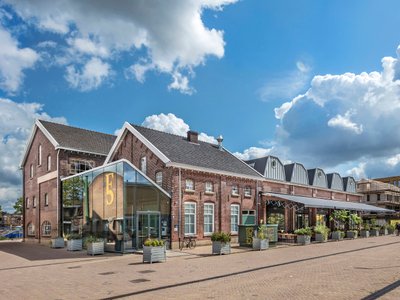
Fifth NRE Jazz Club – De Bever Architecten: Eindhoven’s Revitalized Cultural Hub
Historic gas factory transformed into Fifth NRE Jazz Club blending modern sustainability, jazz culture, dining, and heritage architecture seamlessly.

Similar Reads
You might also enjoy these articles
The Ken Roberts Memorial Delineation Competition (Krob)
As the most senior architectural drawing competition currently in operation anywhere in the world, it draws hundreds of entries each year, awarding the very best submissions in a series of medium-based categories.


Waterfront Redevelopment and Urban Revitalization in Mumbai: Forging a New Dawn for Darukhana
A transformative waterfront redevelopment project reimagining Darukhana’s shipbreaking heritage into an inclusive urban future.
OUT-OF-MAP: A Call for Postcards on Feminist Narratives of Public Space
Rhizoma Design and Research Lab invites artists, designers, architects, researchers, and students to reflect on how feminist perspectives can reshape public space. Selected works will be exhibited in Barcelona, October 2026. Submissions open until 15 April 2026.

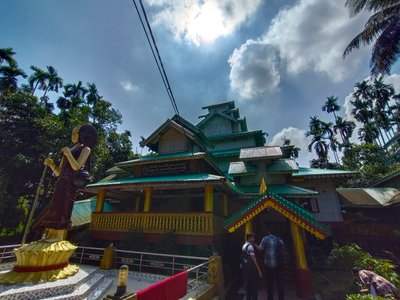
Documentation Work on Buddhist Wooden Temple
Architectural syncretism and cultural hybridity: A comparative study of the Buddhist temples in Chattogram Hill tracks

Explore Architecture Competitions
Discover active competitions in this discipline




The International Standard for Design Portfolios


The Global Benchmark for Architecture Dissertation Awards


The Global Benchmark for Graduation Excellence

Challenge to design locus for the upliftment of human rights
Comments (0)
Please login or sign up to add comments
No comments yet. Be the first to comment!