
Eternal resting spaces: Designers rethink cremation spaces in dense cities.
Result for 'Circle of Life' - Religious Building Design challenge, out now.


In the previous edition of Circle of Life, we discussed the commonplace of resting for all religions. The need for adaptability of burial spaces in the urban settings. Death will always remain an existential question and its concept will be debated and discussed as long as we live. The two can be considered as different sides of the same coin.
Though it's interesting to see how the end of life was treated over centuries. Culture and creed have shaped dying in various forms. Altogether in different places, people reacted to dying in their ways. Some buried their dead while some let them merge with nature. Spaces of burial took in the form of towers, burial grounds, memorials and much more.
The world experiences death in many forms, natural, medical, and some through manmade causes. Irrespective of the cause, the dead reside in architectural typologies that need exploration in today’s world.
By the onset of a pandemic, the definition of death has changed for many. In this and the past year, burial grounds reported congestion due to the enormous death toll and many a time the dead remained unattended.
There was always a scarcity of land to accommodate death, but the pressure was never so heavy before.
The pandemic led to the collapse of the best infrastructures all over the world. With an ever-increasing population, and natural and man-made disasters, in the coming years, our urban populations might be facing a crisis much bigger than this.
How can the fatal consequences of these events be managed in urban places with land scarcity?
How can architecture help to accommodate this unprecedented future crisis?
New York City saw the collapse of its healthcare and cremation industry in less than a month. The crematoriums remained overloaded and Incremental islands of burial opted for an option to bury the dead.
The virus did not just attack the urban infrastructure but also indirectly made it environmentally vulnerable.
Crematoriums produce dangerous pollutants that cause serious health problems. With no other option, New York stated relaxed air quality regulations to allow the crematoriums to burn longer. New York City being a major urban complex comprises diverse communities.
Can we make a common ground for these communities to mourn?
How can we collaborate on the lack of burial land by taking into account the environmental impact of crematoriums?
Cemeteries face the serious challenge of keeping up with their procedures in such a tight setting. The things we humans have paved for ourselves are treacherous. This condition is not only an issue of space but also of its quality.
People who visit cemeteries are grief-stricken. Cemeteries are perceived as dark and spaces of pain, places occupied by death and tragedy. Though spaces, in general, have the power to affect people, they can accelerate the process of acceptance and healing.
So can we through architecture re-define the perception of a cemetery? Can design induce healing and calmness in high-stress/pain conditions of cemeteries?
Brief: The design challenge was to rethink cremation spaces by taking into account land scarcity and needs for the future.
Design alternatives to reduce the environmental impact of cremation pollutants. Design spaces of healing not just for the visitors but also for the staff.
Some of the Best competition projects are as follows:
Winning Project: Coexistence
By: Jose Rodriguez
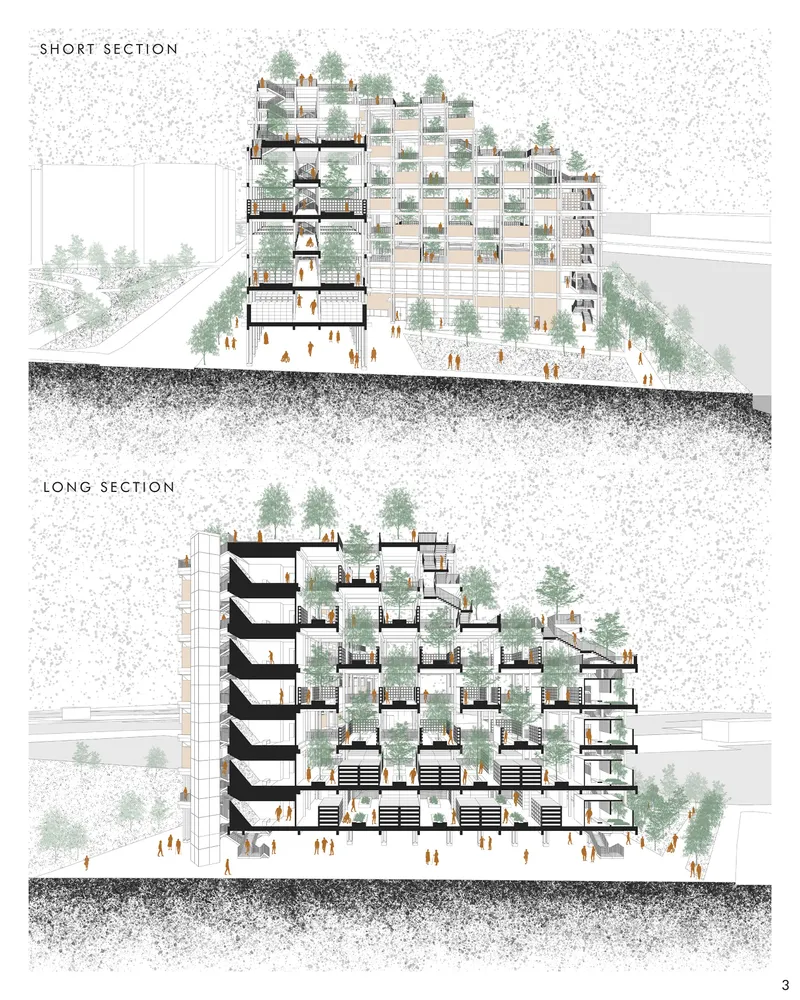
Fig: 1 Section Plan
Description: A lattice of spaces that aims to accommodate people from all walks of life in a nurturing environment. A lattice of spaces that aims to accommodate people from all walks of life in a nurturing environment. Co-existance offers an alternative to the traditional cemetery that not only serves as a resting place for people but also aims to support the emotional trauma that their loved once endure.
-----------------------
People’s Choice: BEYOND EPILOGUE
By: SAHANA M & Shreeja mayya

Fig: 2 Site View
Description: Often treated as the abode of the dead, the crematoriums lurk behind the gloom, cold and numbness of death itself. While they signify the end to some, they ignite the hope of healing and new beginnings for many others. It helps us to look beyond the darkness and tread towards the ray of hope. "Beyond Epilogue" marks the initiations of these new beginnings.
-----------------------
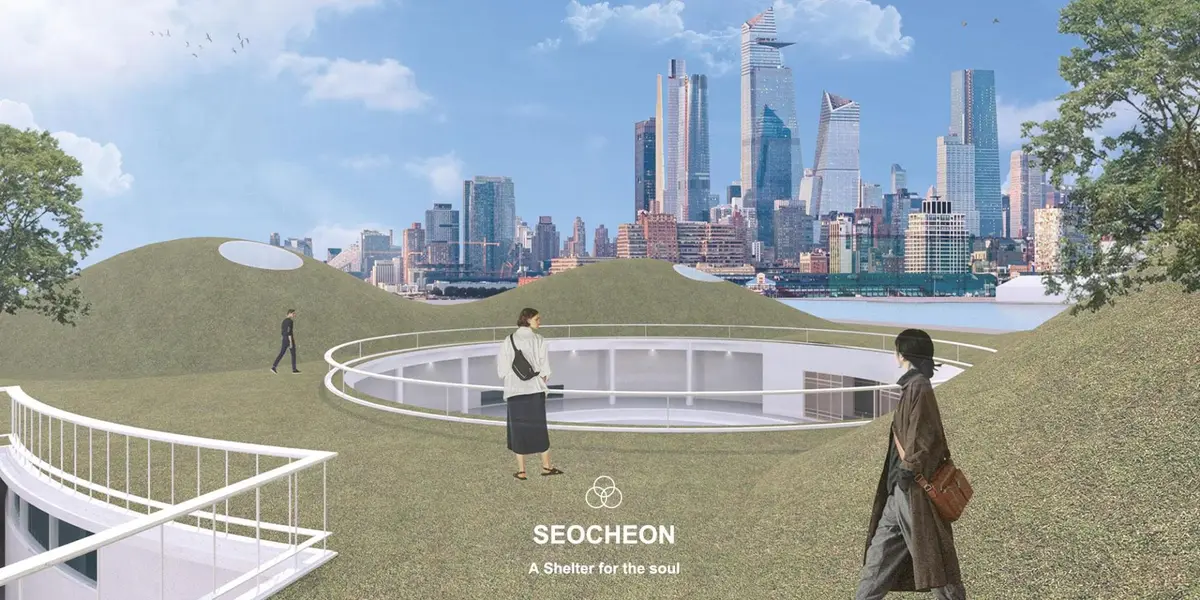
Editor’s Choice: SEOCHEON
By: Jaehyeon Kang
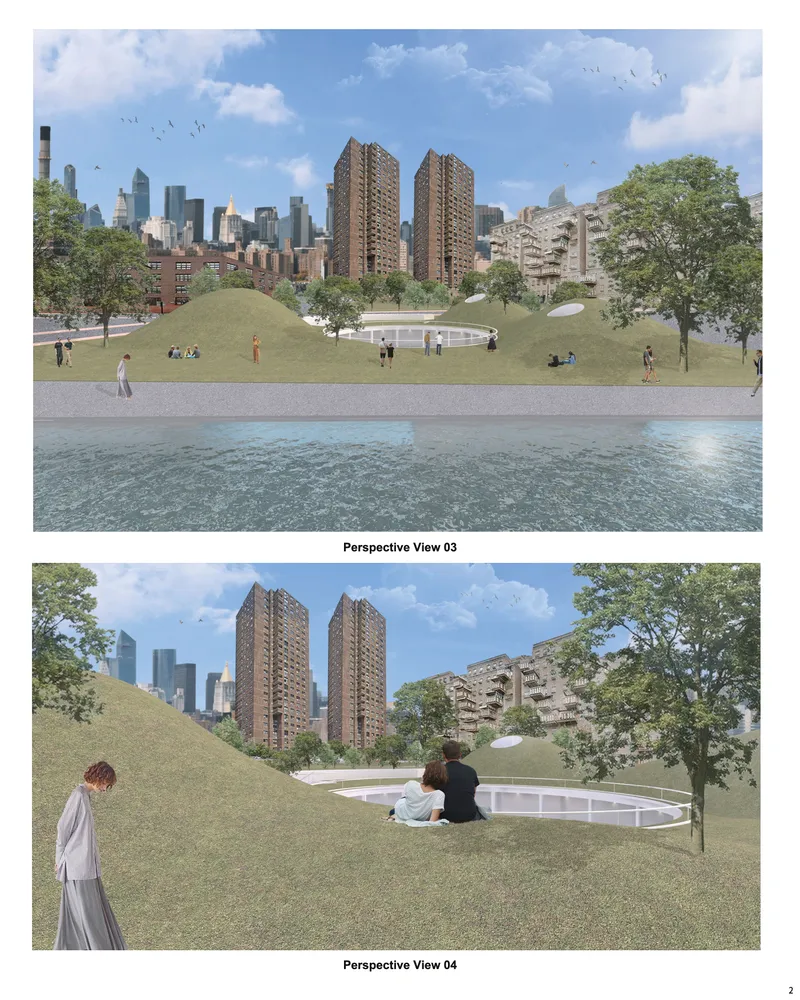
Fig: 3 Perspective View
Description: A Shelter For The Soul. The first goal was to propose a new space to tear down the space between the dead and the living, and while investing accordingly, I got a mottif from the Seocheon flower garden of Korean mythology. It’s a story that even Korean don’t know, so it felt more fun.

Follow us on social media: Facebook | Instagram | LinkedIn | Twitter | Youtube
References (3)


Popular Articles
Popular articles from the community


Extended Shell: Retrofitting Kolkata's Balconies as Living Urban Thresholds
A modular retrofit system recovers the social and environmental intelligence of Kolkata's historic verandas for contemporary Park Street residents.

Cloaked Colonization: A Mobile Underwater Habitat That Moves Like a Fish
Micah Abaya's shortlisted EHC Pacific entry reimagines ocean settlement as a dispersed network of self-sustaining architectural organisms.
SCENTLAND: An Animal Shelter Designed Through the Nose of a Dog
Winner of Strays 2020, this proposal uses scent mapping to generate circulation, form, and program for a sensory-driven shelter.

Opera on the Sea: Driftwood Logic Shapes a Timber Opera House on Estonia's Coast
Trevor Orgill's opera house translates the entangled drift of floating timber into a civic building where wood, water, and music converge.

Similar Reads
You might also enjoy these articles
Linna Diamond: A Translucent Opera House Grown from Tallinn's Linnahall Ruins
A crystalline steel framework suspends an intimate auditorium above Linnahall, turning backstage operations into public spectacle along the Baltic Sea.
Opera on the Sea: Driftwood Logic Shapes a Timber Opera House on Estonia's Coast
Trevor Orgill's opera house translates the entangled drift of floating timber into a civic building where wood, water, and music converge.
Fold Bunk: A Foldable A-Frame Sleeping House for Pilgrimage Settlements
A modular dwelling that compresses into a flat transportable package and unfolds into a timber A-frame pilgrims village unit.

Manzana Morphosis: Stretching Barcelona's Grid into a Living Landscape for 2050
A radical reworking of the Eixample manzana turns density into a tool for generous public space, vertical ecology, and environmental performance.

Comments (0)
Please login or sign up to add comments
No comments yet. Be the first to comment!