

Exploring Temporary Bamboo Architecture at ASA LANNA Pavilion by Yangnar Studio
This article explores the ASA LANNA Pavilion, highlighting its sustainable design and use of bamboo in temporary architecture in Thailand.


In a remarkable display of innovation and sustainability, the ASA LANNA Pavilion, masterfully designed by Yangnar Studio, stands as a prime example of temporary bamboo architecture. Located in Chang Phueak, Thailand, this structure not only showcases aesthetic beauty but also embodies the principles of environmental consciousness and local craftsmanship.


Design Philosophy of ASA LANNA Pavilion
Sustainable Materials and Techniques
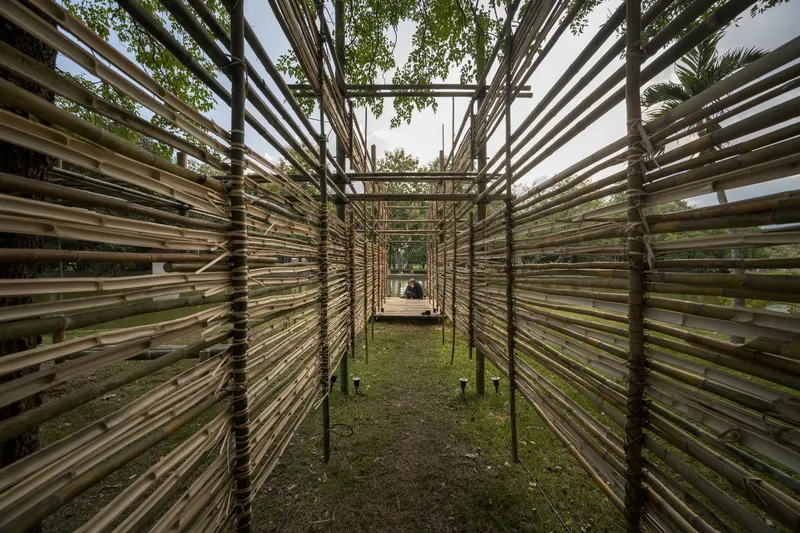
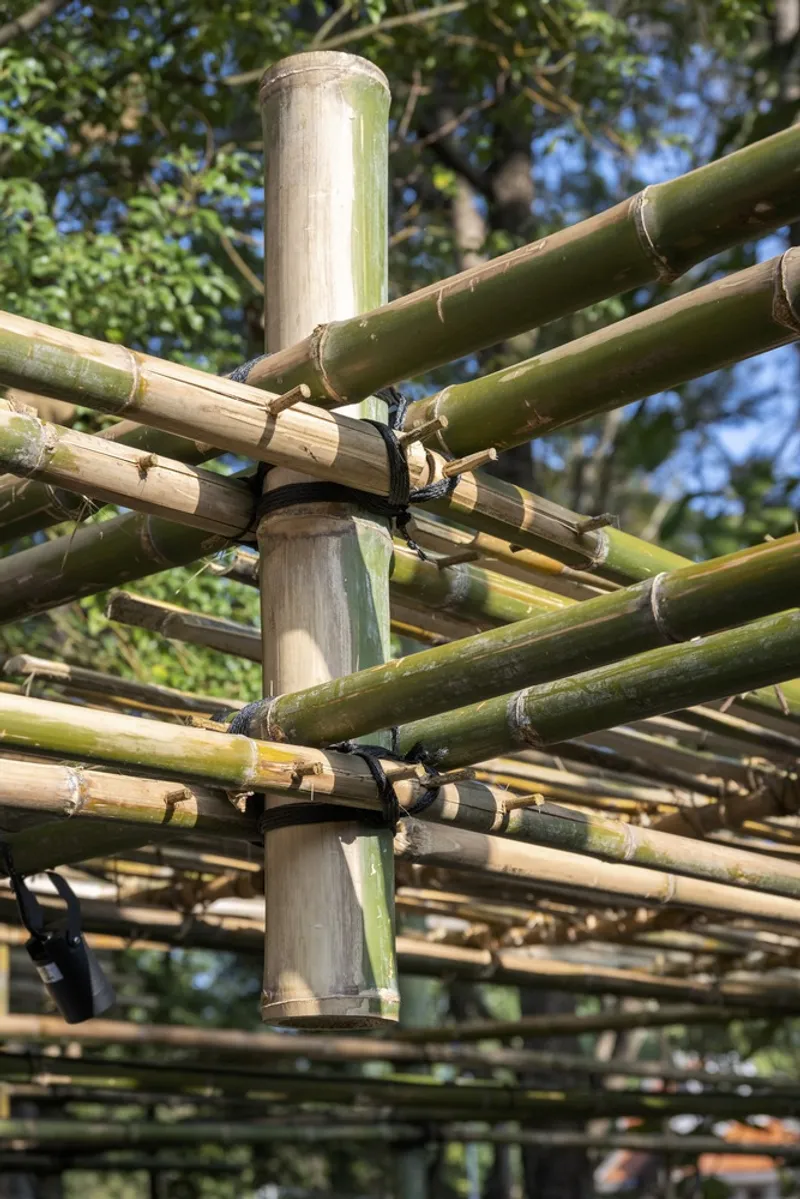
The core material used in the ASA LANNA Pavilion is bamboo, specifically varieties like Thyrsostachys Siamensis, Bambusa Nutans, and Dendrocalamus Sericeus. These are local to northern Thailand and are known for their durability and flexibility. The design utilizes traditional bamboo processing techniques such as tying, binding, drilling, notching, cutting, and carving. These methods highlight the expertise of Lisaw Karen craftsmen and local artisans from Lampang and Chiang Mai, using tools like the traditional Prahs, Mui, and hand saws.

Environmental Considerations and Local Wisdom
A critical aspect of the pavilion's design is its commitment to minimizing environmental impact. This initiative is particularly evident in the selection of materials and the construction processes, which are designed to leave minimal environmental footprints. By employing bamboo, a highly sustainable resource, the pavilion reduces the overall carbon footprint and promotes the reuse of materials.

The Role of Architecture in Cultural and Temporal Contexts
Enhancing Local Communities
Temporary bamboo architecture like that of the ASA LANNA Pavilion serves more than just an aesthetic purpose; it acts as a catalyst for cultural preservation and community enhancement. By integrating local materials and craftsmanship, the pavilion not only supports local economies but also educates visitors about the region's architectural heritage and sustainable practices.


Promoting Temporary Installations
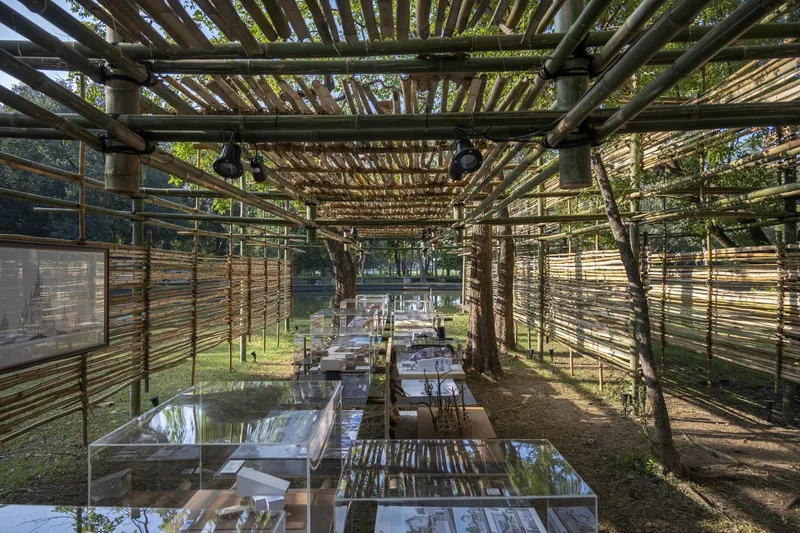
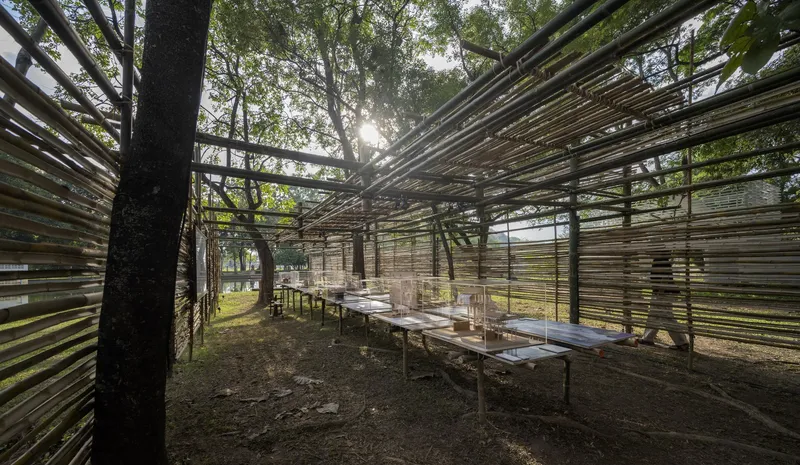
The concept of "ชั่วครั้ง-ชั่วคราว (Temporary-Transient)" as embraced by Yangnar Studio, emphasizes the pavilion's role in hosting exhibitions and cultural gatherings. This approach showcases how temporary structures can be both functional and symbolic, providing venues that reflect and respect their environment.

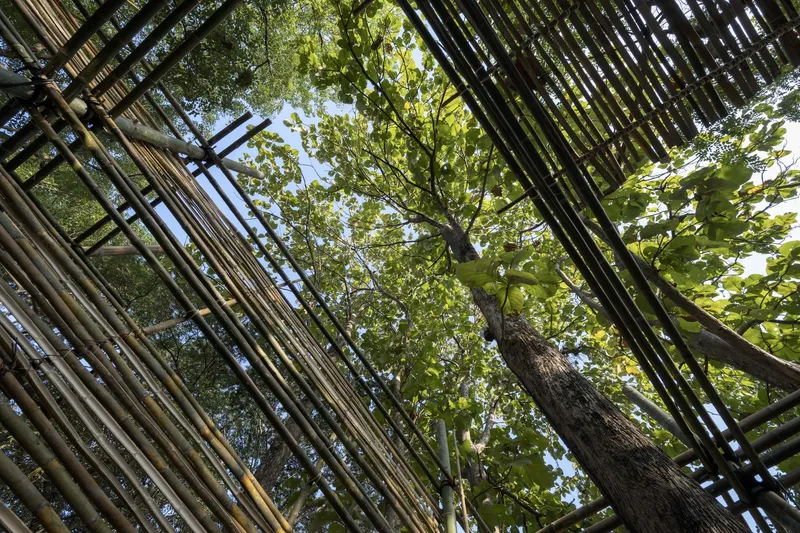

The ASA LANNA Pavilion by Yangnar Studio is a testament to the versatility and sustainability of temporary bamboo architecture. As this architectural style continues to gain popularity globally, projects like ASA LANNA offer valuable insights into the harmonious balance between tradition and modernity, utility, and beauty.
This case study not only promotes the use of environmentally friendly materials in architecture but also illustrates the potential of temporary structures to significantly impact cultural and environmental sustainability.
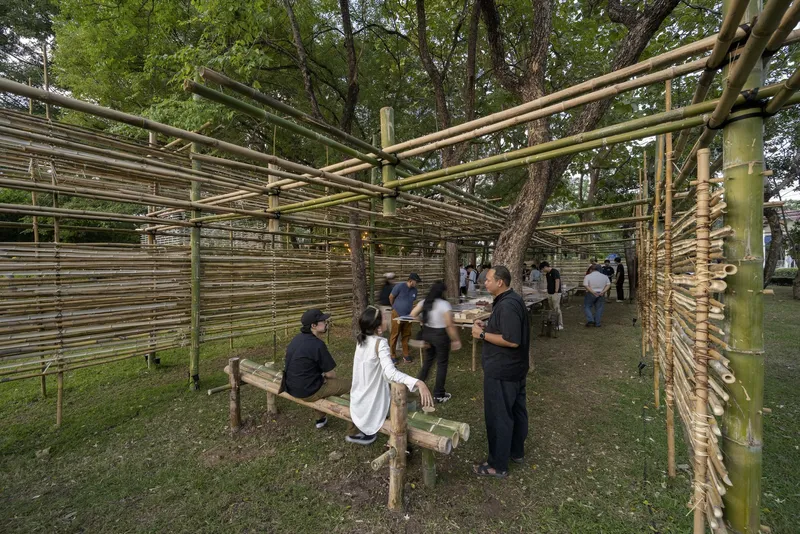
All photographs are work of Rungkit Charoenwat


Popular Articles
Popular articles from the community


LT2A and OPEN Architectes Thread a Brick and Glass High School Through a Wooded Belgian Campus
In Braine-l'Alleud, a 3,000 m² wing for Collège Cardinal Mercier pairs pale brick with a glazed colonnade, deferring to a small chapel and a dense wood.

David Ortega Stacks a Two-Story Mexico City Penthouse Around a Steel Stair and a Pergola-Shaded Roof Terrace
In Colonia Roma, a 300 m² penthouse uses oak joinery, a planted steel stair and a slatted roof pergola to make a new-build apartment feel like a house.

Juan García Correa, John González and Claudia Rueda Sink a Circular Amphitheater into a Manizales Engineering Building
On the La Nubia campus in Manizales, Colombia, the S1 Building folds labs and offices into a hillside of ramped lawns that double as a campus route.

Jaramillo Van Sluys Arquitectura and Urbanismo Turn a Demolished Registry Lot in Quito into an Orchard Plaza
In Quito's Centro Histórico, a 2,800 m² plaza exposes the San Agustín convent wall and redraws its lost Augustinian orchard in volcanic stone.

Similar Reads
You might also enjoy these articles

Gil Mello Arquitetura Tilts a Single Roof Toward the Waterfalls on a Plateau Above Aiuruoca, Brazil
In Aiuruoca, Minas Gerais, a 200 m² house of local labor and reclaimed poles pairs a low valley veranda with a tall mountain one.

U.GA Architects Wraps an Oval Rooftop Pool in Curved Board-Formed Concrete on Busan's Jeollidan-gil
In Busan's Jeonpo-dong, a 454 m² mixed-use block stacks a neighborhood facility, guest rooms and an oval rooftop pool inside spiraling concrete walls.

Felipe Hess Arquitetos Turns a Blind Stone Wall to the Street and Opens a Brazilian House onto a Courtyard and Canal
A canal-front house in Brazil hides behind painted stone and planting, then opens to an olive-tree courtyard, a reed-ceilinged porch and a curving pool.

David Macias Steps a Doorless Stone and Plaster House Down a Tropical Colombian Hillside
In the humid hills of Colombia, Threshold House replaces the front door with an open void and terraces its 850 m² down the slope instead of fighting it.

Explore Bamboo Construction Competitions
Discover active competitions in this discipline

Challenge to design a portable theatre

Challenge to design a portable music platform

Challenge to design an open learning module for the elderly

Challenge to reimagine the Iron Throne
Comments (0)
Please login or sign up to add comments
No comments yet. Be the first to comment!