

Flaxman Library Renovation at the School of the Art Institute of Chicago by Kwong Von Glinow
Flaxman Library’s renovation by Kwong Von Glinow enhances connectivity, natural light, and community spaces, transforming SAIC’s historic library into a modern hub.


The Flaxman Library at the School of the Art Institute of Chicago (SAIC) has undergone a remarkable transformation led by Kwong Von Glinow Architecture. This renovation seamlessly connects two previously isolated floors, redefining the library’s spatial experience and enhancing accessibility, natural light, and community engagement.
A Bold "Open Book" Concept
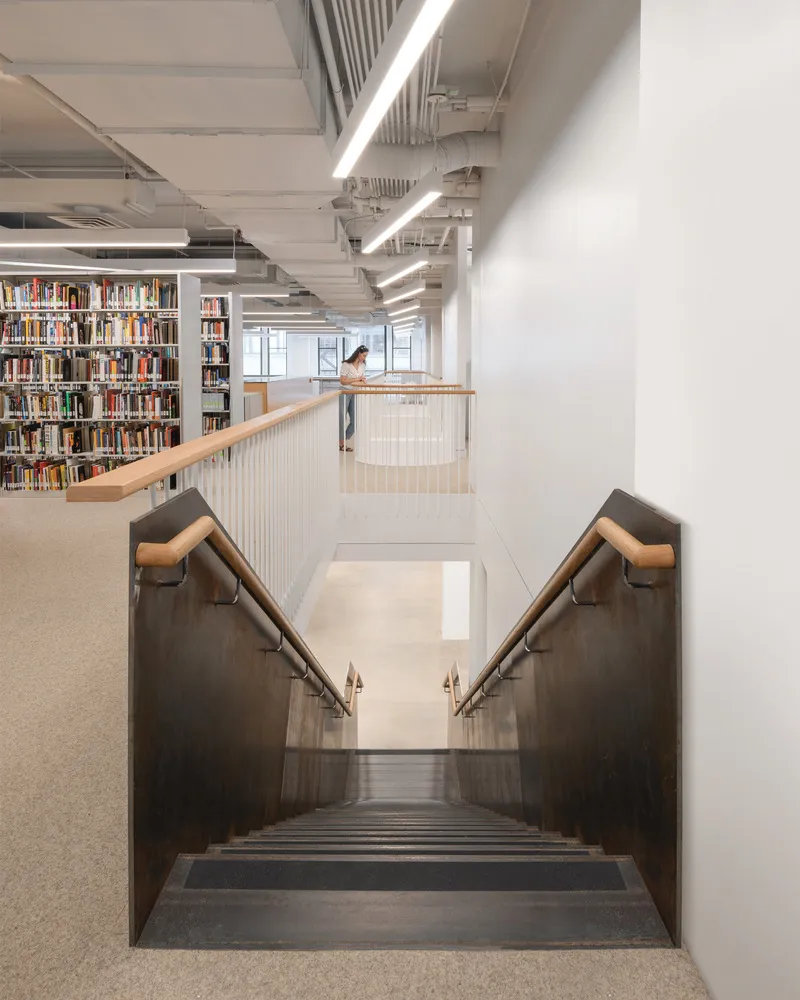
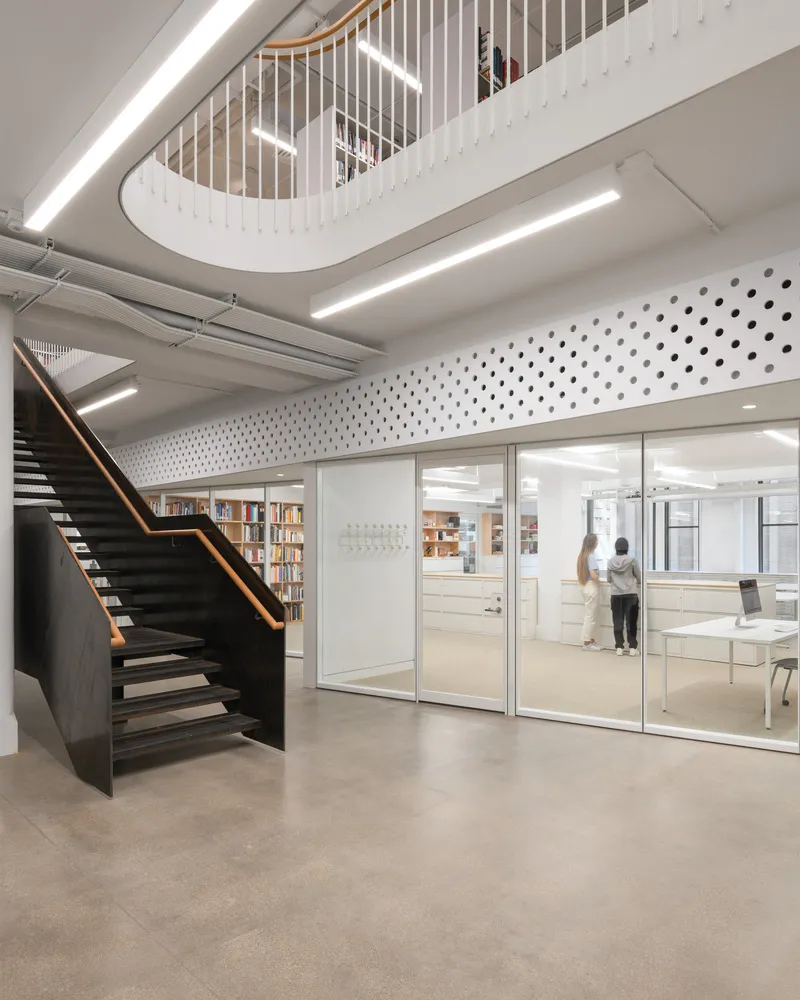
The design team introduced an "open book" approach by uniting the fifth and sixth floors, allowing visitors to engage with the library’s collections while witnessing the crucial work of librarians. The project fosters a visually and physically connected environment, breaking away from the library’s former disjointed structure.
Located within Chicago’s historic Sharp Building, originally designed in 1902 by Holabird & Roche Architects, the renovation highlights the ingenuity of its steel-frame structure. A narrow but expansive five-foot-wide atrium, stretching 100 feet in length, vertically links the two levels. To maintain historical integrity, sections of the original clay tile arch were carefully removed, exposing structural beams and celebrating the building’s architectural legacy.
Maximizing Functionality with Corridor +
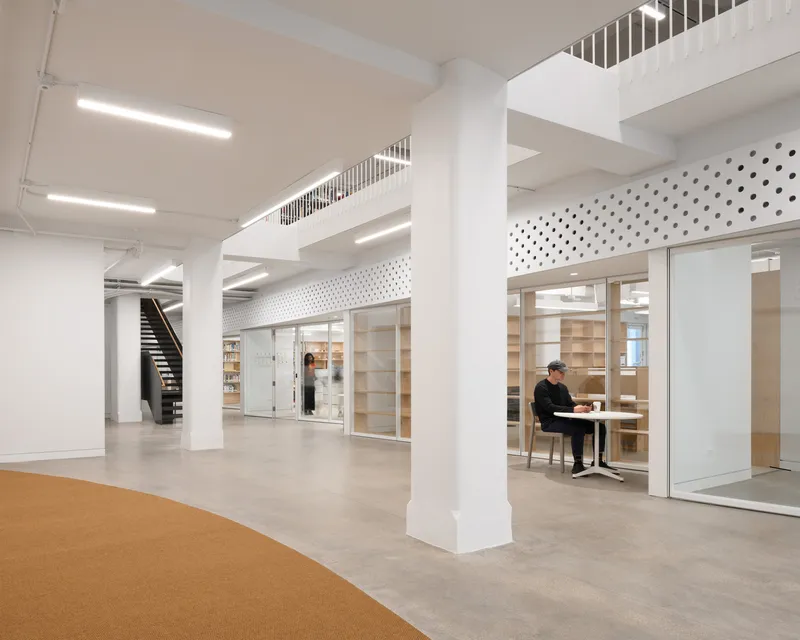
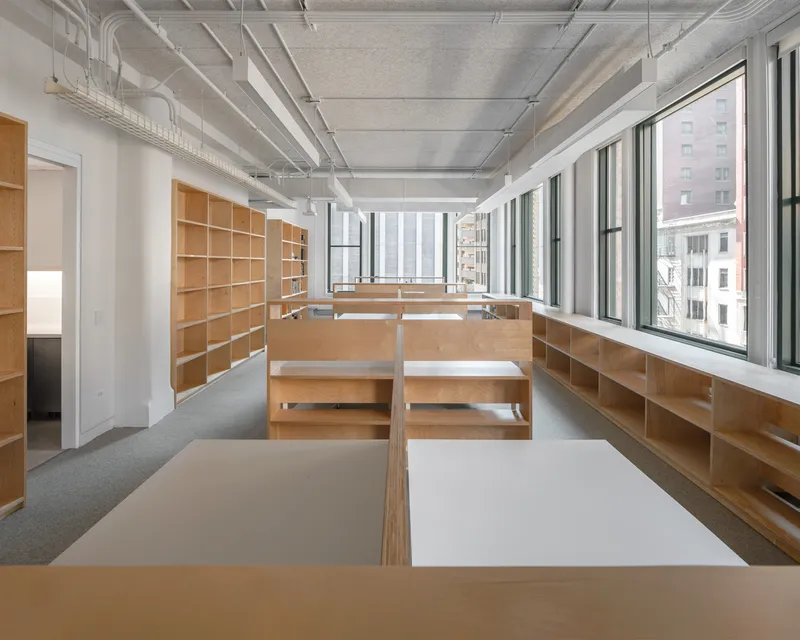
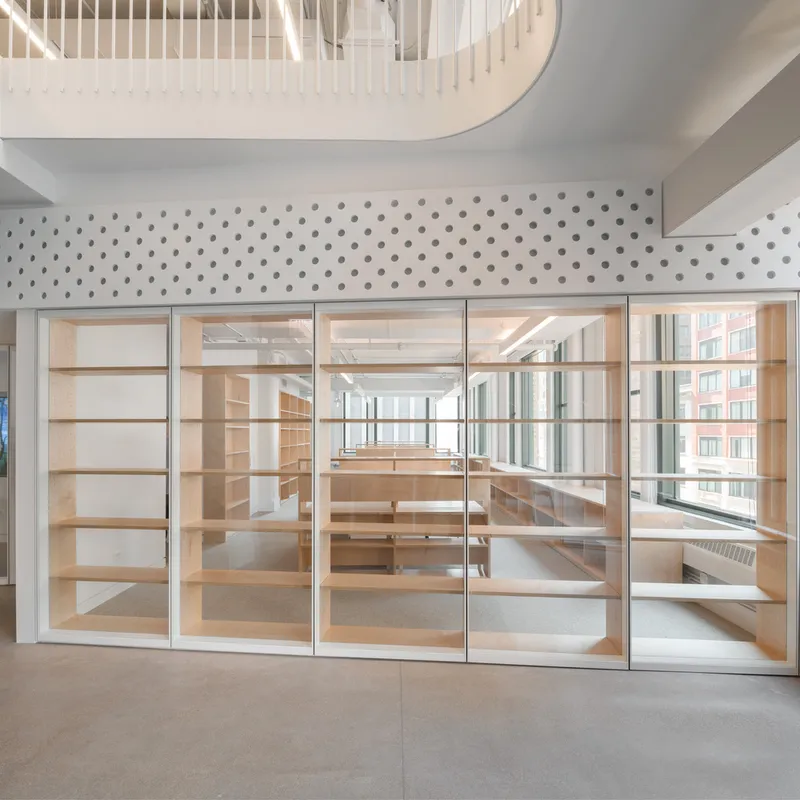
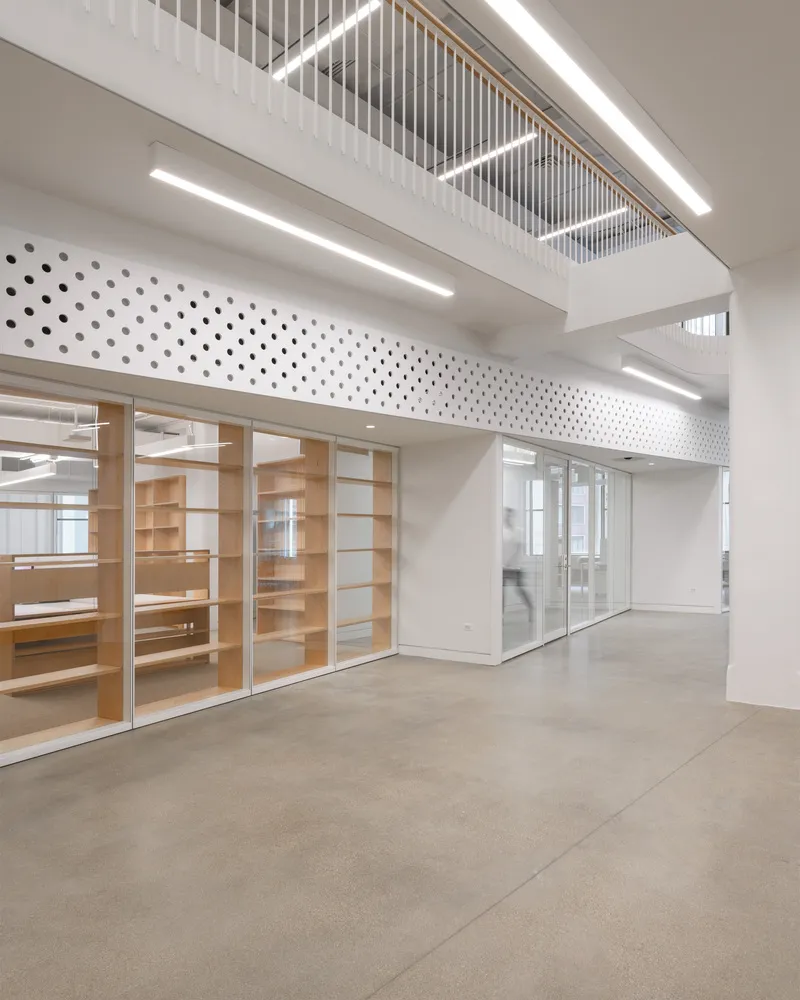
At the heart of the redesign is Corridor +, a dynamic 1,000-square-foot circulation and study area. This gently curving passageway stretches the building’s entire length, integrating semi-private reading nooks, flexible study spaces, and glazed storefronts that offer glimpses into archival storage and librarian workspaces. The strategic use of natural light enhances transparency while making deeper library spaces more inviting.
The design optimizes library storage, accommodating additional bookshelves without compromising study spaces. By reorganizing the layout efficiently, the project enhances both functionality and aesthetic appeal.
A Floating Staircase as a Sculptural Element
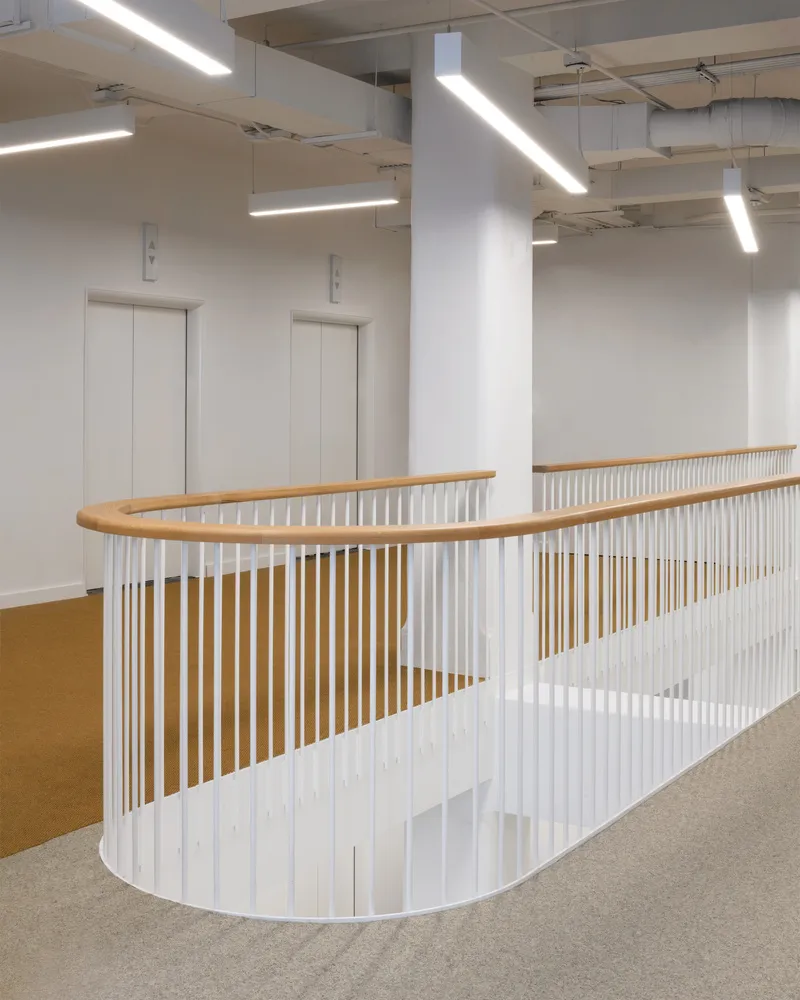
One of the renovation’s most striking features is the floating steel staircase, which physically and symbolically connects the two floors. Constructed from ½-inch steel plate with exposed welds and a natural patina finish, the staircase maintains an industrial yet refined aesthetic. The White Oak handrails contrast beautifully against the dark metal, adding warmth and tactility. Suspended just ½ inch above the ground, the stair appears to hover, reinforcing the project's emphasis on lightness and fluidity.
Enhancing Community, Light, and Accessibility
Beyond aesthetics, the renovation significantly improves the Flaxman Library’s usability by:
- Increasing community-oriented spaces for collaboration and study
- Introducing more natural light through a reimagined floor plan
- Expanding book storage without sacrificing user-friendly design
- Creating a flexible Reading Room for classes and individual research
- Improving navigation through visual and physical continuity
This thoughtful renovation successfully transforms the Flaxman Library into a modern, connected, and accessible learning hub that aligns with SAIC’s mission of fostering creativity, research, and collaboration.
All Photographs are works of Mikael Olsson



Popular Articles
Popular articles from the community


Conexión: Biophilic Design Reimagines High-Rise Living in Hong Kong
Conexión reimagines high-rise living in Hong Kong through biophilic design, green facades, shared spaces, daylight, water and nature within.

Co-Life: Senior Housing Design That Reconnects Older Adults With the City
Co-Life reimagines senior housing design through healing gardens, shared streets, workshops, and a sustainable community across generations.

Co-life: Sustainable Architecture for Age-Friendly Community Living
Co-life reimagines sustainable architecture for seniors through courtyards, rammed earth, shared gardens, and spaces designed for belonging.

Riyadh For All: Intergenerational Urban Design for Active Aging in Rabat
Riyadh For All reimagines urban design in Rabat with intergenerational co-living, adaptive courtyards, and Moroccan cultural exchange today.


Similar Reads
You might also enjoy these articles


Hodi-Mandai Geram
Project Function: Preservation and revitalization of the Intangible heritage and socio-spatial identity of the Hodi by Housing, Cultural Memory Center, Sacred Grove, landscape, local tourism economy


Olio Towers: A Mid-Rise for Performers That Fuses Housing, Rehearsal, and Stage
Located blocks from Houston's Theater District, this modular tower stacks living units around a central performance atrium.

Oasis: Modular Green Housing Carved into Dhaka's Urban Fabric
A shortlisted Plugin Housing entry reclaims unauthorized settlements in Dhaka with stepped concrete volumes, green roofs, and ventilation-driven design.

Black Hole: A Floating Megastructure for the Post-Physical Era
Emiliano Mazzarotto envisions a spherical, self-scaling arena where e-sports, digital hotels, and holographic stadiums replace traditional public space.


Explore Educational Building Competitions
Discover active competitions in this discipline



Challenge to design public laboratory


Challenge to reimagine the Iron Throne


Photograph architecture without architects


Illustrate the lost glory of Angkor Wat - Render Challenge
Comments (0)
Please login or sign up to add comments
No comments yet. Be the first to comment!