

Green House by Shin Aoki and Partners: A Living Dialogue Between Architecture, Nature, and Community
Compact Tokyo dwelling integrating copper, cypress, and light-filled vertical spaces, connecting domestic life with nature and the surrounding greenway.


Located in the lush residential district of Nerima, Tokyo, the Green House by Shin Aoki and Partners redefines the relationship between dwelling and landscape. Completed in 2025 with a compact footprint of just 69 square meters, the project transforms its small urban lot into a living extension of the surrounding greenway—a dynamic space where architecture, ecology, and daily life intertwine.
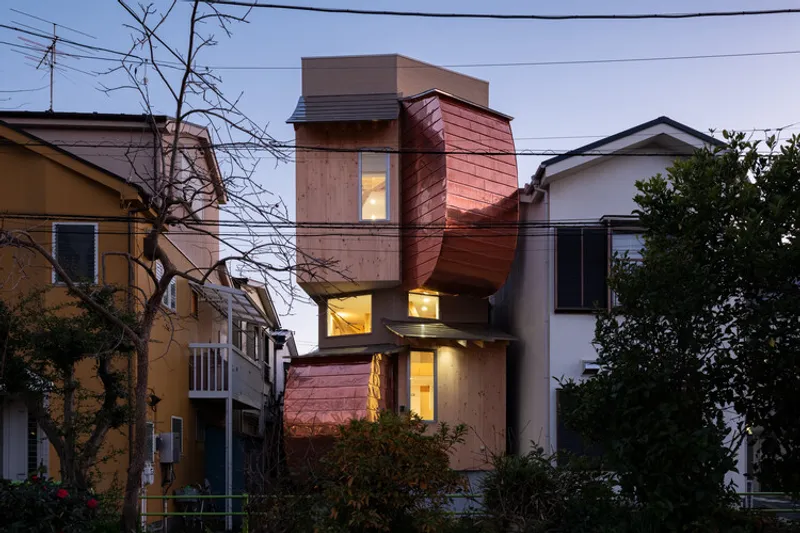
Situated along a pedestrian pathway lined with flowering plants and fruit trees cultivated by local residents, the house becomes part of the neighborhood’s shared ecosystem—a small architecture rooted in empathy, coexistence, and care.
Urban Context: Reconnecting Home and Street
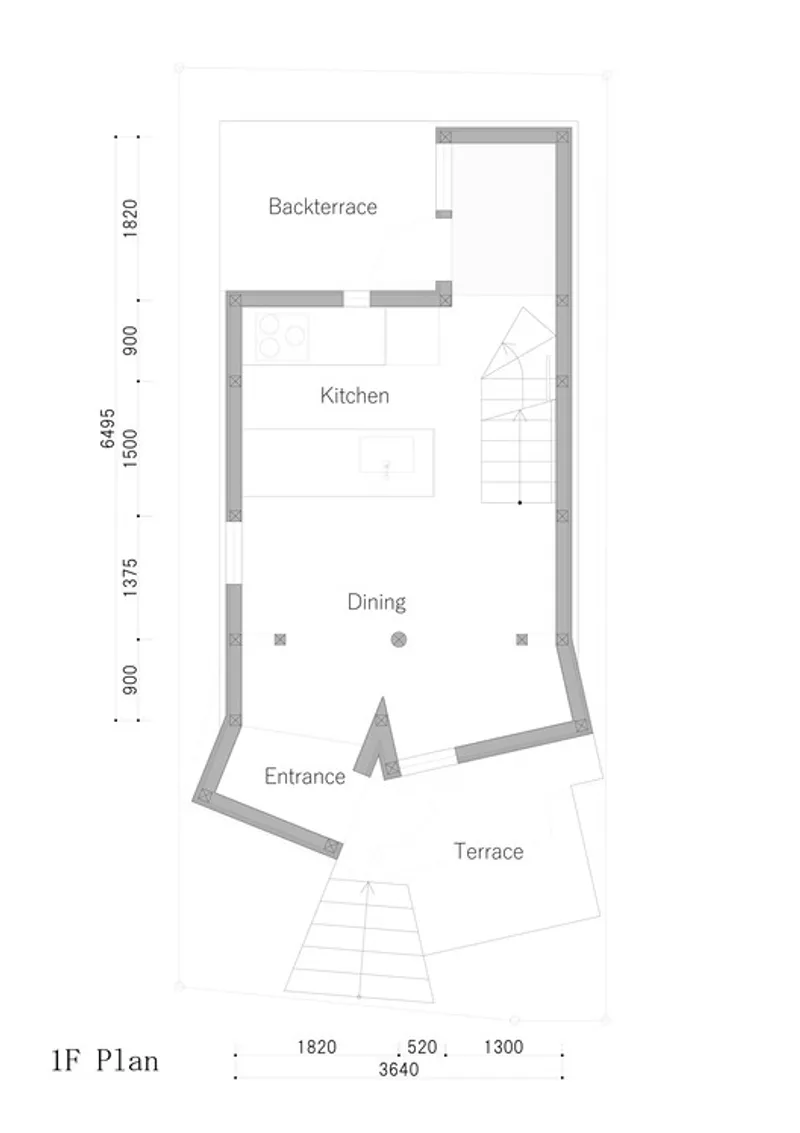
In contrast to the typical Tokyo streetscape of tightly packed row houses, the Green House is set back from the street edge, opening space for a terrace and small garden. This design gesture softens the urban interface and invites both residents and passersby into a shared dialogue.
The terrace serves as an open workshop and social threshold, designed for everyday maintenance, planting, or casual interaction. Adjacent to it, the mini garden enables residents to cultivate plants incrementally—turning daily routines into gestures of care for the environment.
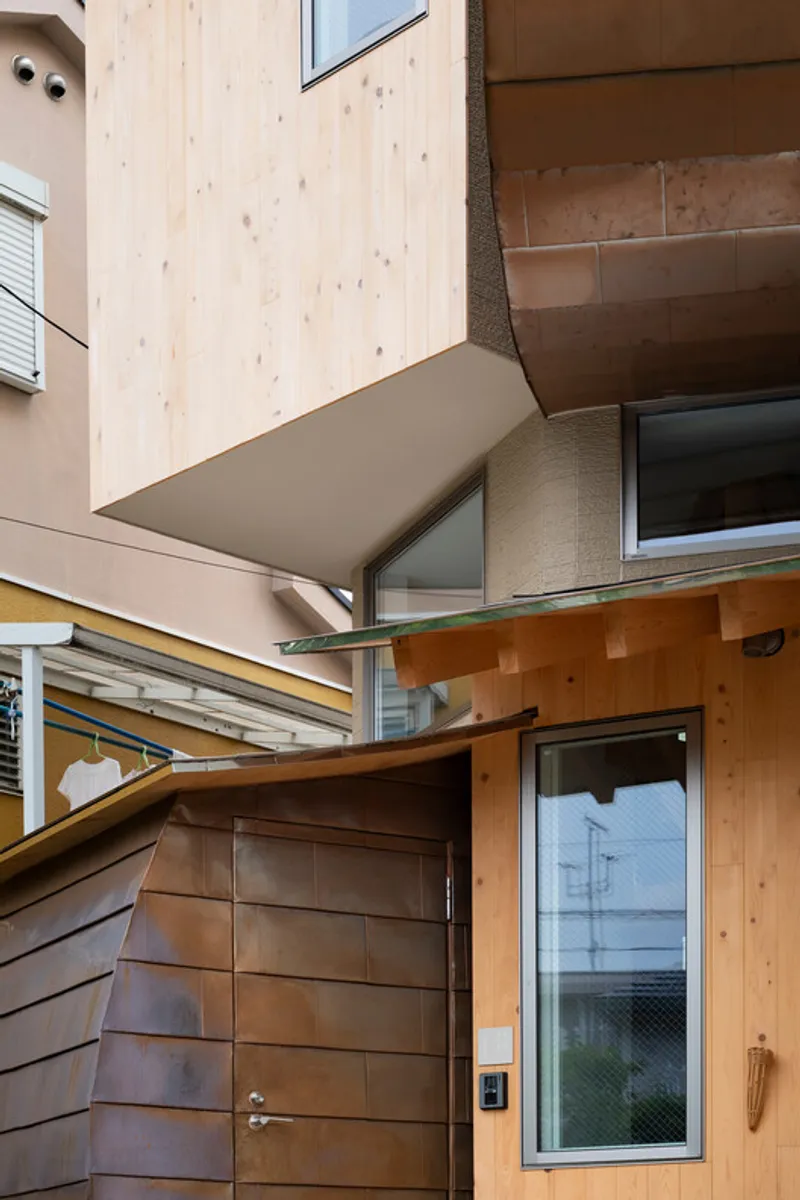
At the entrance, a bamboo flower vase affixed with traditional Japanese nails holds seasonal flowers as an offering to the street—an intimate architectural act that embodies omotenashi, or quiet hospitality.
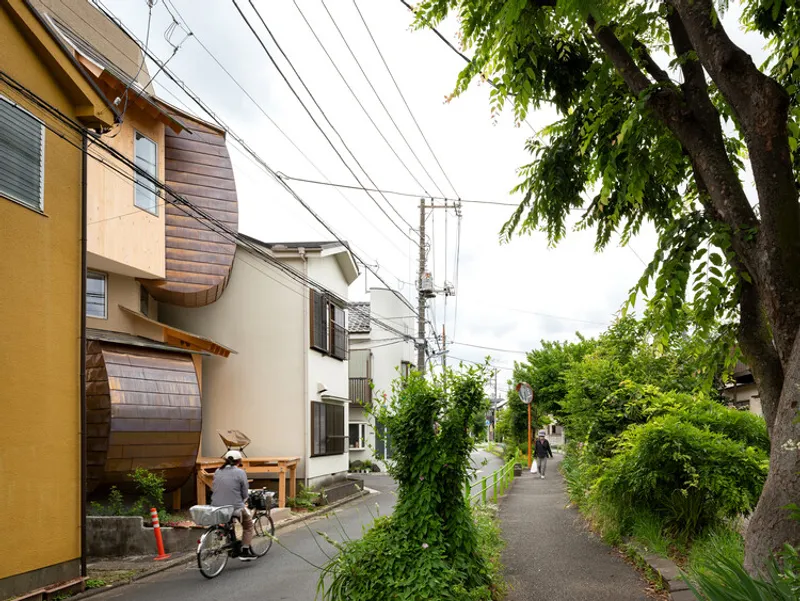
Over time, the architects envision this planted edge expanding beyond its boundaries, merging with the public greenway and contributing to the collective landscape—a continuum between house and path, private and public, architecture and ecology.
Form and Material Expression
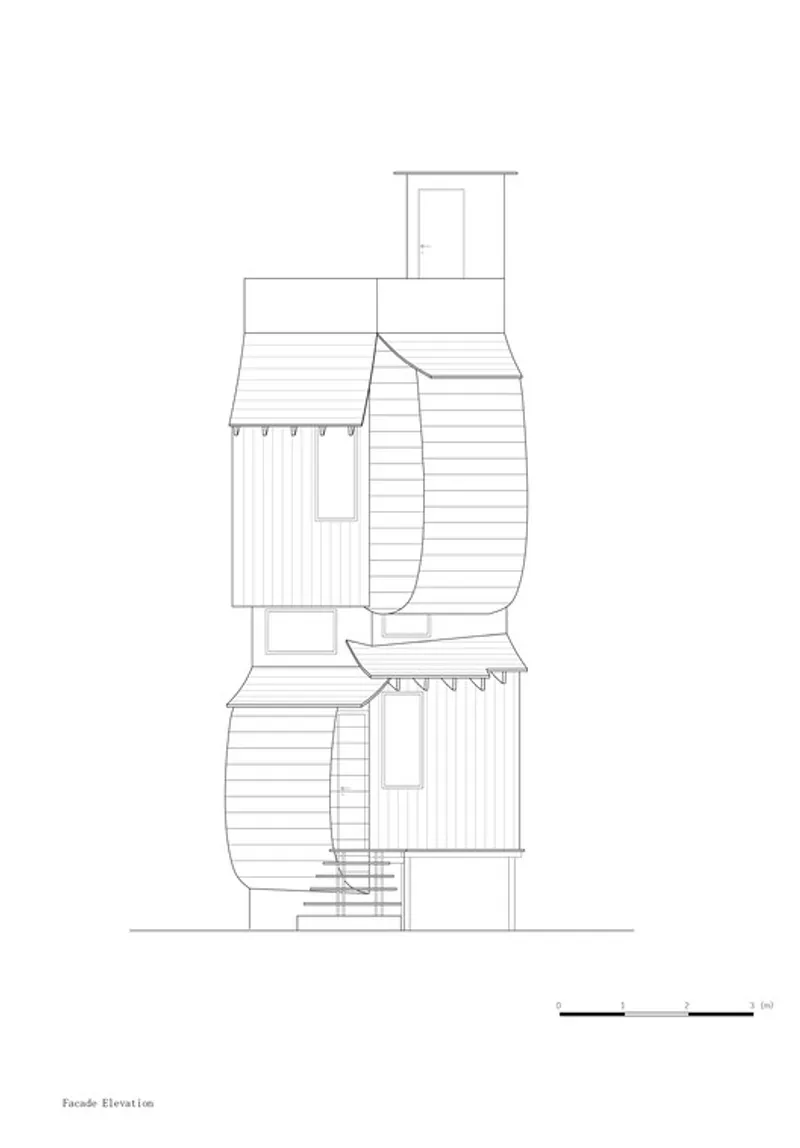
Drawing inspiration from the curvature of surrounding trees and the changing play of light across foliage, the building’s façade integrates both planar and curved surfaces. The composition balances precision and impermanence, with materials chosen for their ability to transform over time.
The façade combines traditional copper panels laid in an ichimonji-buki pattern with vertical Japanese cypress (hinoki) cladding, each aging gracefully through exposure to sun and weather. Together with a curved stainless-steel roof, these elements produce a living surface—not a static façade, but one that breathes, oxidizes, and adapts.
Shin Aoki describes the goal not as achieving a singular aesthetic statement but as creating “an appearance open to the imagination—one that embraces ambiguity and change.”
Vertical Spatial Design: A Three-Dimensional Home
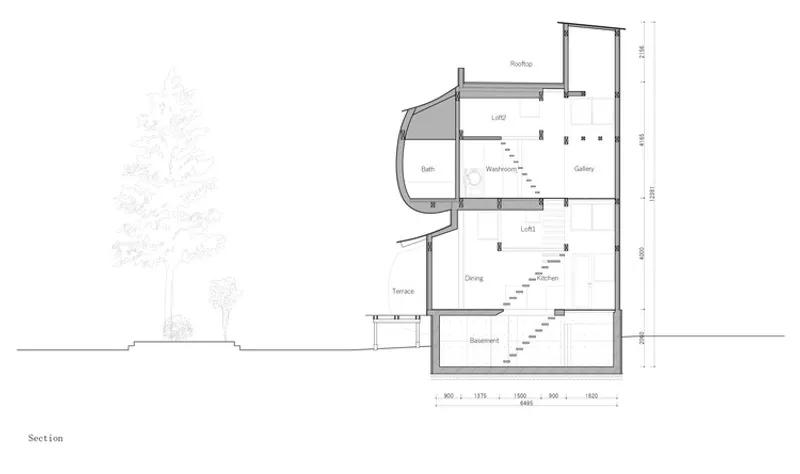
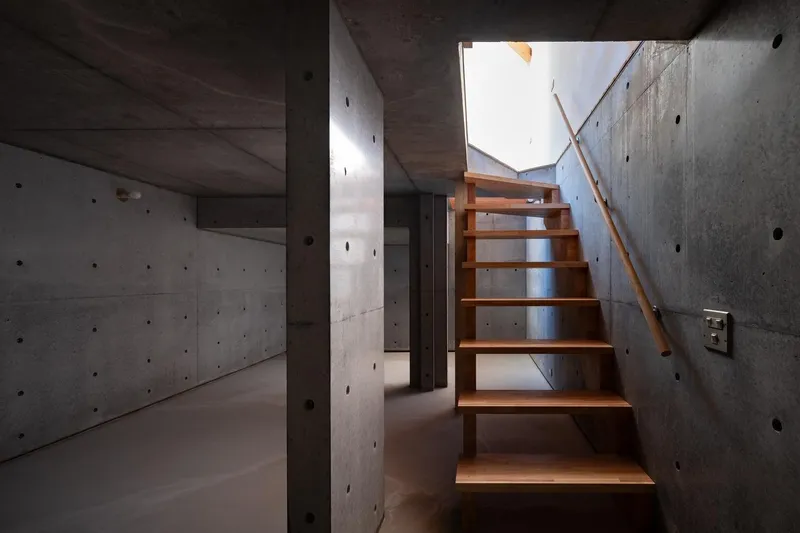
Despite its small footprint (49 square meters), the house achieves remarkable spaciousness through vertical layering and three-dimensional continuity. The design leverages Tokyo’s permissive height restrictions along wide streets to create a multi-level volume, structured as a vertical “one-room house” of overlapping plates and interwoven voids.
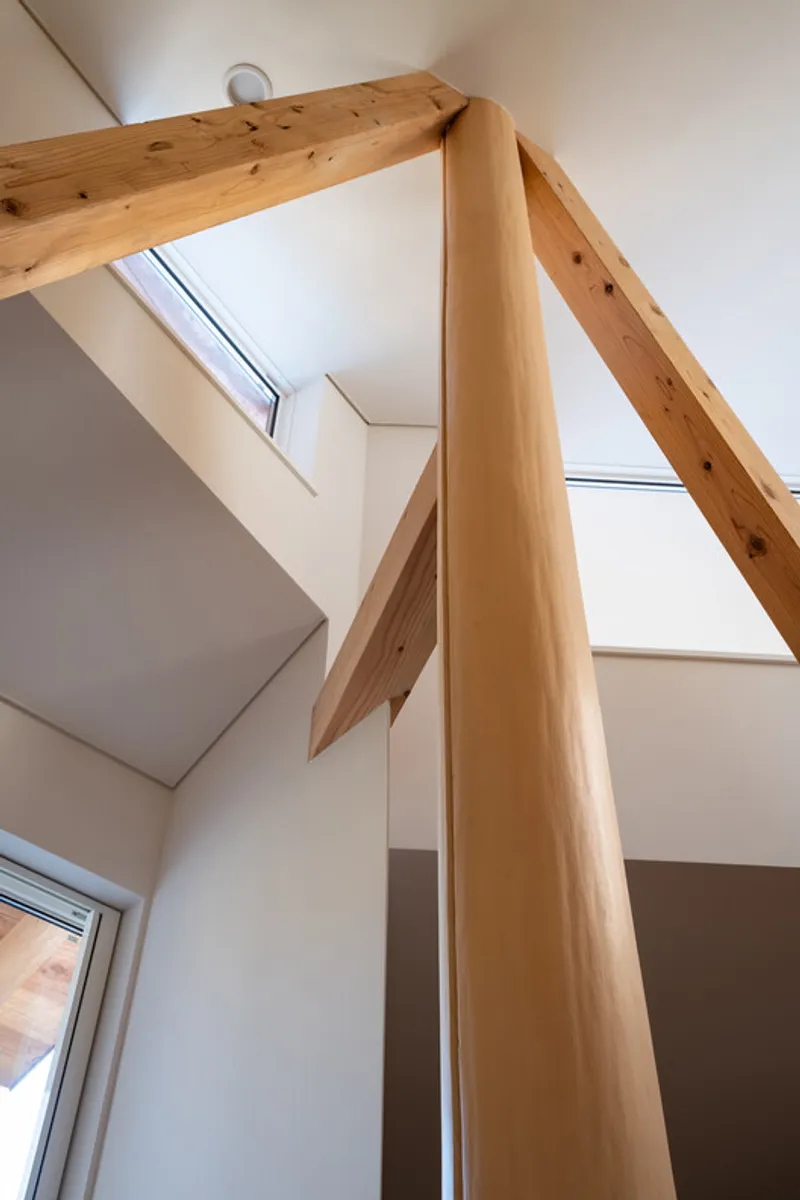
Each floor connects visually and spatially through open risers, light wells, and perforated elements, ensuring a constant sense of flow. This continuity creates a living environment that feels simultaneously contained and expansive—a rare quality in dense urban housing.
Ground Floor: Communal Core
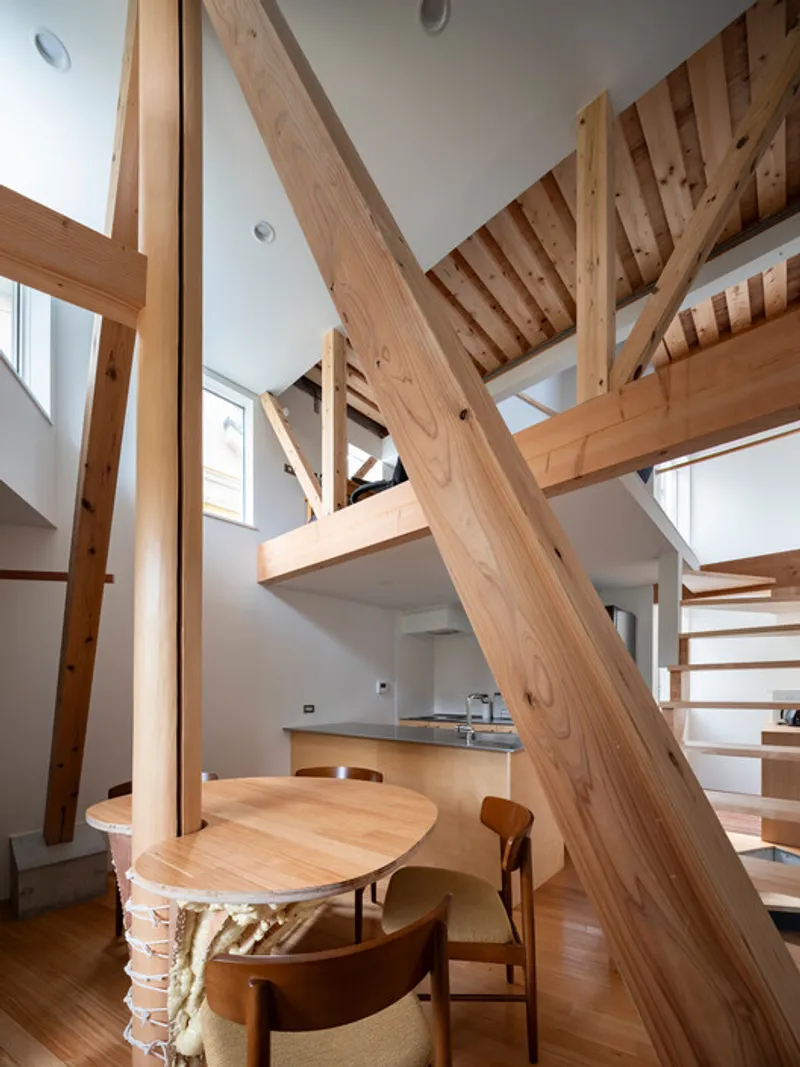
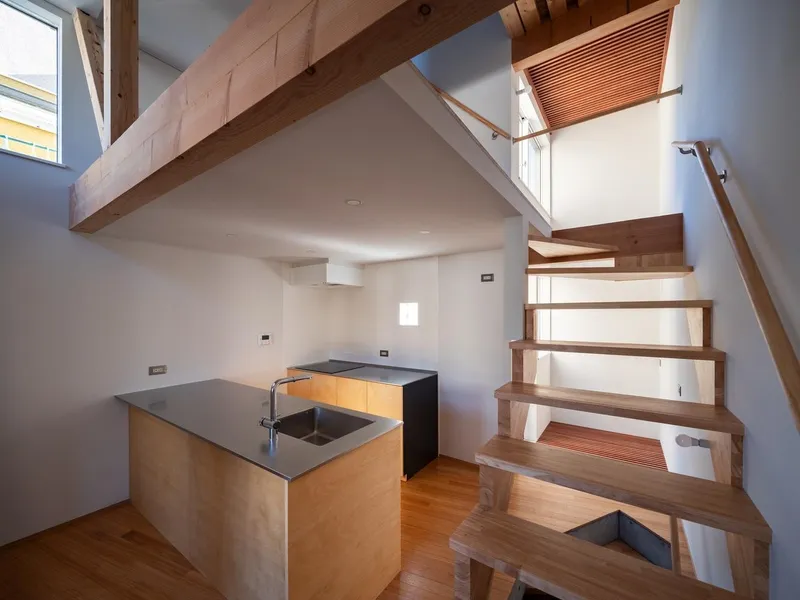
At the heart of the ground floor is a central round timber column, the interior counterpart to the building’s curved façade. Around it, a custom-built dining table functions as the spatial anchor of the home.
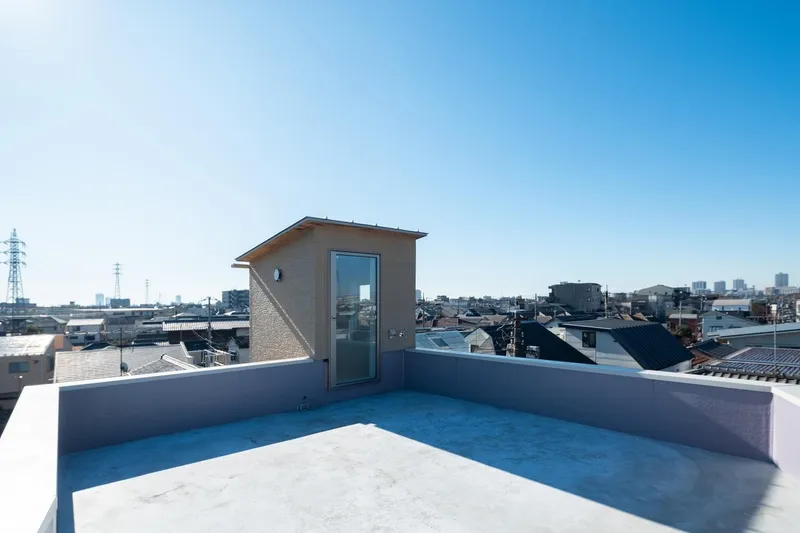
Natural light enters softly from a north-facing clerestory window oriented toward the greenway, illuminating the timber interior with a calm, diffuse glow. The interplay of texture, warmth, and natural illumination fosters a quiet sense of togetherness, turning the compact space into a communal hearth of daily life.
Upper Floors: Flexibility and Future
The second floor consolidates private functions such as the bathroom and bedroom, arranged around a circular circulation path. This centralized flow allows flexibility for future reprogramming as a workspace, gallery, or studio, ensuring the home’s adaptability over time.
Generous daylighting and cross-ventilation allow each space to support multiple uses, shifting fluidly with the residents’ changing needs and the seasons.
Light as Architecture
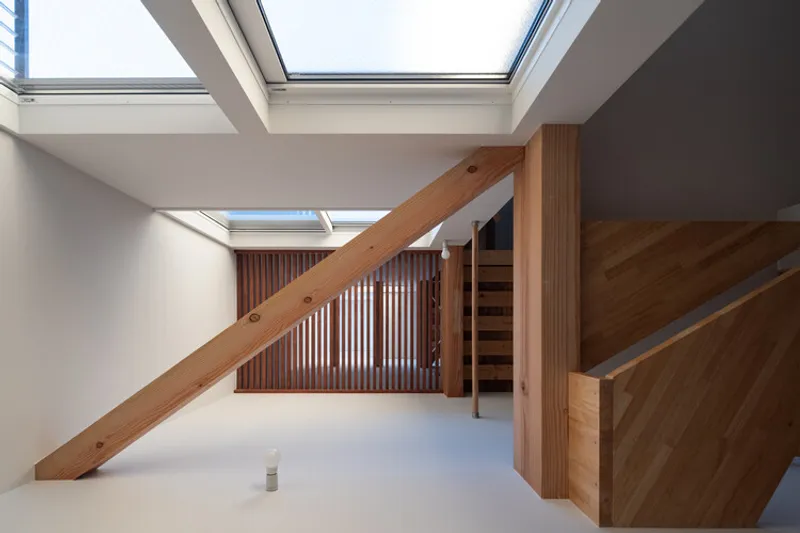
Light animates every corner of the Green House. A tower-like vertical void on the southern side channels natural light down through the home via slatted floor plates, transforming daylight into a cascading phenomenon.
Each aperture is calibrated to admit light from specific angles—morning, afternoon, or dusk—reflecting off white walls and polished wood surfaces to create temporal atmospheres that evolve throughout the day. The resulting spatial effect is both ethereal and grounded, expanding perception beyond physical dimensions.
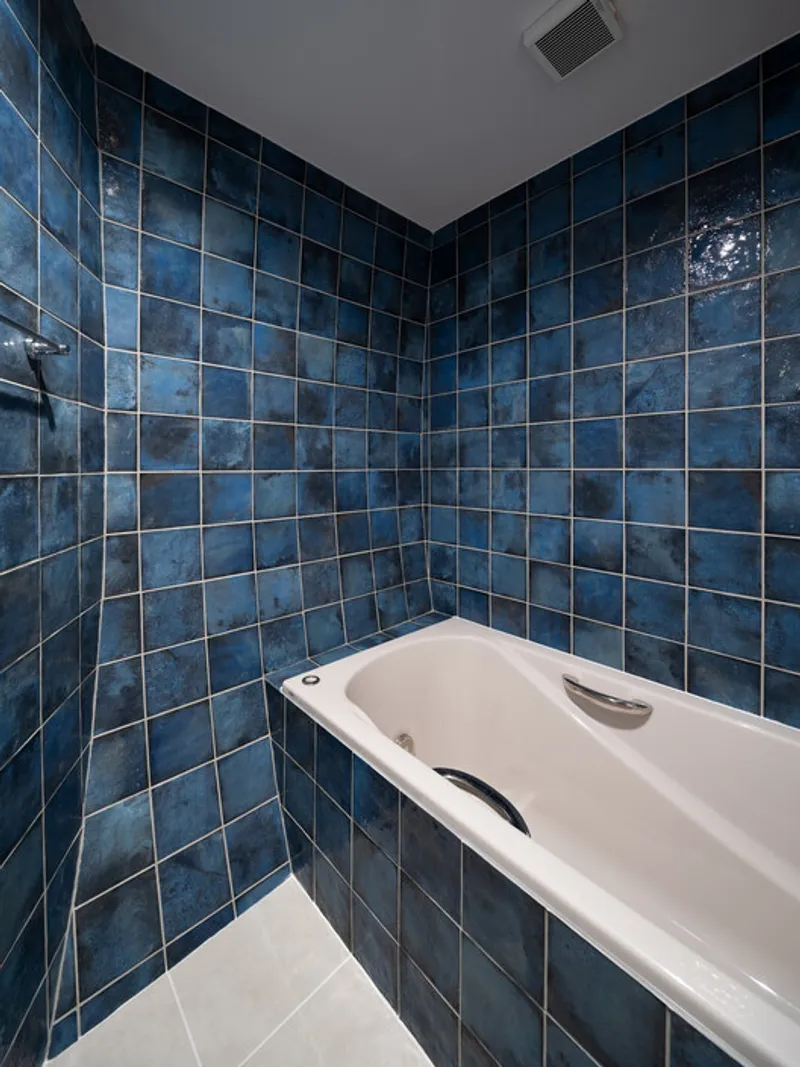
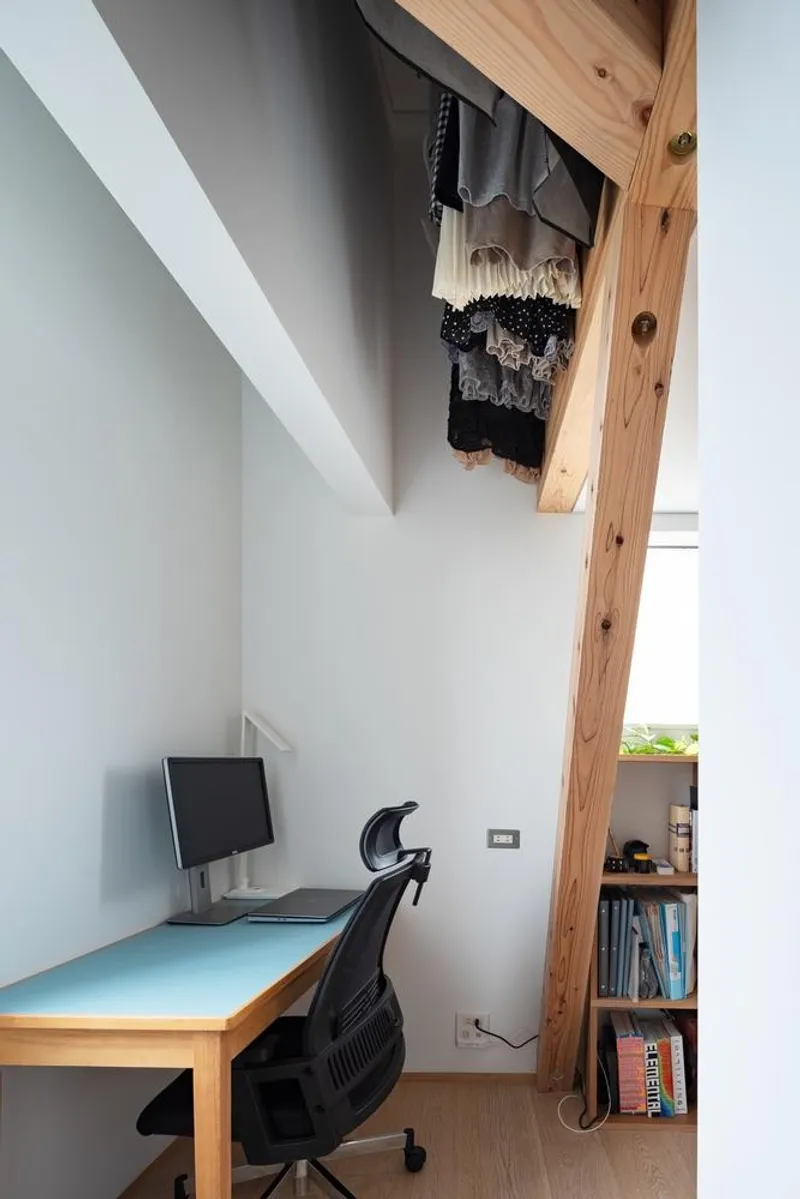
This interplay of light, space, and material defines the home’s atmosphere: tranquil, luminous, and deeply in tune with Tokyo’s natural rhythms.
Architecture as Ecology
The Green House is a quiet manifesto for urban coexistence. It demonstrates how architecture, even at the scale of a single house, can participate in the renewal of urban ecology.
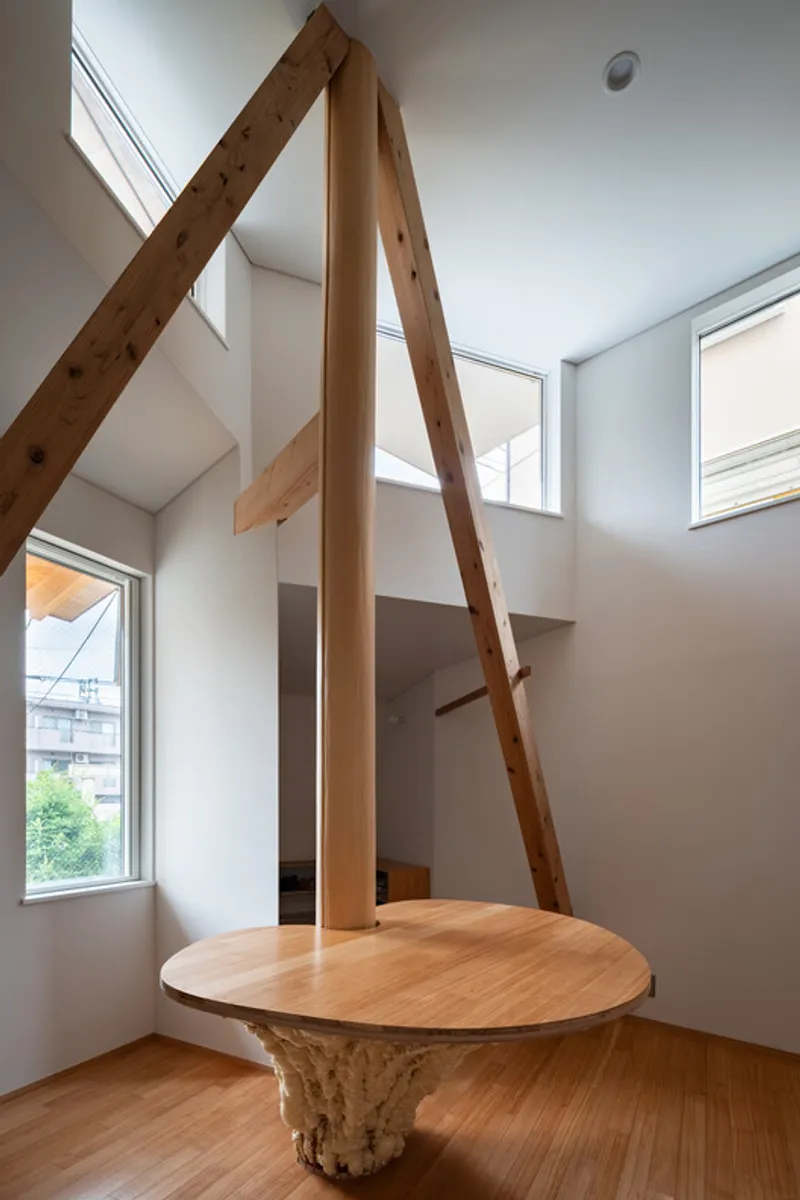
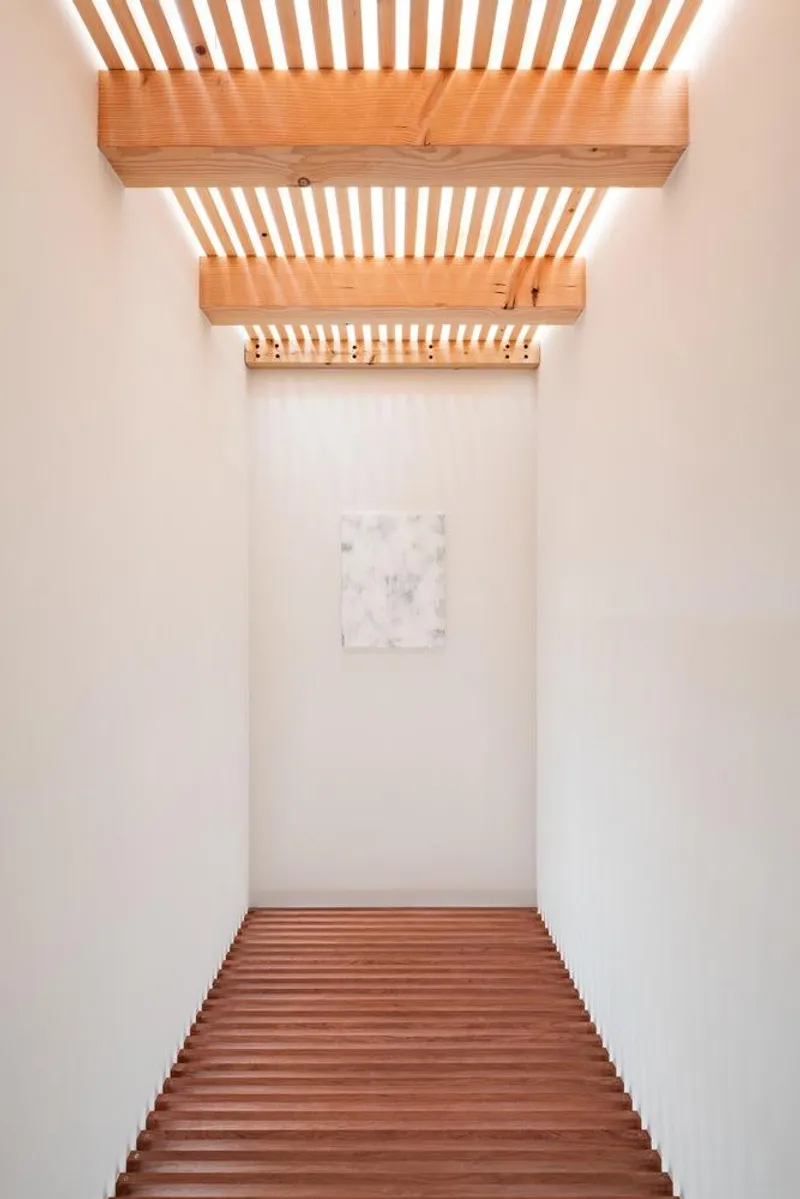
By introducing plant life, layered light, and adaptable spaces to a modest residential street, Shin Aoki and Partners transform domestic architecture into a living organism within the city’s collective ecosystem. The design encourages reciprocity—between neighbors, between people and environment, between permanence and change.
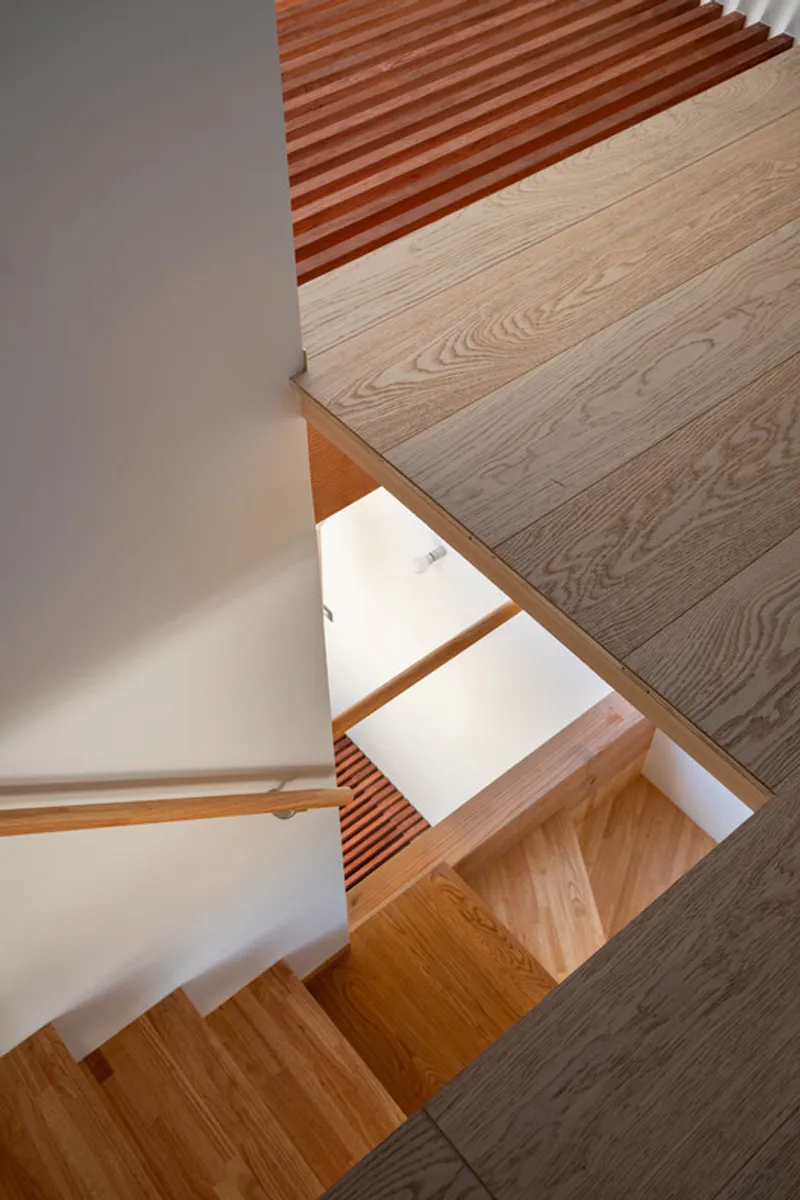
All the Photographs are works of Shota Hiyoshi


Popular Articles
Popular articles from the community

Faces of the Soviet Avant-Garde: Turning Moscow's Street Names into an Open-Air Museum
A network of sculptural installations across a Moscow residential district transforms forgotten architect names into spatial encounters with cultural memor

The Amber Palace Opera: A Geological Fiction Surfaces on Tallinn's Baltic Waterfront
Pierre Brillard reimagines a Baltic legend as a public landscape, opera house, and waterfront promenade rooted in Tallinn's coastal identity.
Extended Shell: Retrofitting Kolkata's Balconies as Living Urban Thresholds
A modular retrofit system recovers the social and environmental intelligence of Kolkata's historic verandas for contemporary Park Street residents.
Tsunami Convergenics: Turning Catastrophic Ocean Forces into Underwater Housing Infrastructure
A speculative underwater settlement off the coast of Onagawa, Japan, treats tsunamis and typhoons as energy sources rather than threats.

Similar Reads
You might also enjoy these articles


Hodi-Mandai Geram
Project Function: Preservation and revitalization of the Intangible heritage and socio-spatial identity of the Hodi by Housing, Cultural Memory Center, Sacred Grove, landscape, local tourism economy


Olio Towers: A Mid-Rise for Performers That Fuses Housing, Rehearsal, and Stage
Located blocks from Houston's Theater District, this modular tower stacks living units around a central performance atrium.

Oasis: Modular Green Housing Carved into Dhaka's Urban Fabric
A shortlisted Plugin Housing entry reclaims unauthorized settlements in Dhaka with stepped concrete volumes, green roofs, and ventilation-driven design.

Black Hole: A Floating Megastructure for the Post-Physical Era
Emiliano Mazzarotto envisions a spherical, self-scaling arena where e-sports, digital hotels, and holographic stadiums replace traditional public space.

Explore Green Houses Competitions
Discover active competitions in this discipline

Challenge to reimagine the Iron Throne

Photograph architecture without architects

Illustrate the lost glory of Angkor Wat - Render Challenge

Design challenge to reuse E-waste
Comments (0)
Please login or sign up to add comments
No comments yet. Be the first to comment!