

GREEN-RETREAT
LIVING IN THE FOREST

With all the latest news about our planet regarding the impact global warming is having all around the world, adding to the recent pandemic, it is important that architecture takes a role in helping create a healthier planet and human mind.
Before the pandemic we were lost in our chaotic routines without time to check in with ourselves. The lockdowns slowed us down. A lot of people started working from home, leading to more awareness about our mental health, and revealing all the things we didn't had the time before with our busy lives.
The Green Retreat project is situated in Fairbanks, Alaska, consisting of a group of cottages to be used during weekends and vacations.
From the start our concept was to create cabins lost in the forest, that are so comfortable that people are alerted to the fact that a construction with a positive impact on the environment can also be very beneficial to our life.
It is acknowledged that mental health is affected by the environment that we surround ourselves. From our house, workplace, family and friends, pollution, noise, etc. Thus, we decided to create the cottages with an external and internal wrapper of wood, allowing them to be part of a natural flow, while trying to help guests feel calm, joy and lowering their levels of anxiety.
Our main concern was to build a cottage that was comfortable enough not only for a weekend, for longer vacations or, adapted to the current situation, to be able to work from this retreat. The objective is to make people understand that all these benefits are so easily obtained. The materials used are local, thus less expensive, and the type of construction quite fast, not affecting the land, as per the typical construction in Alaska.
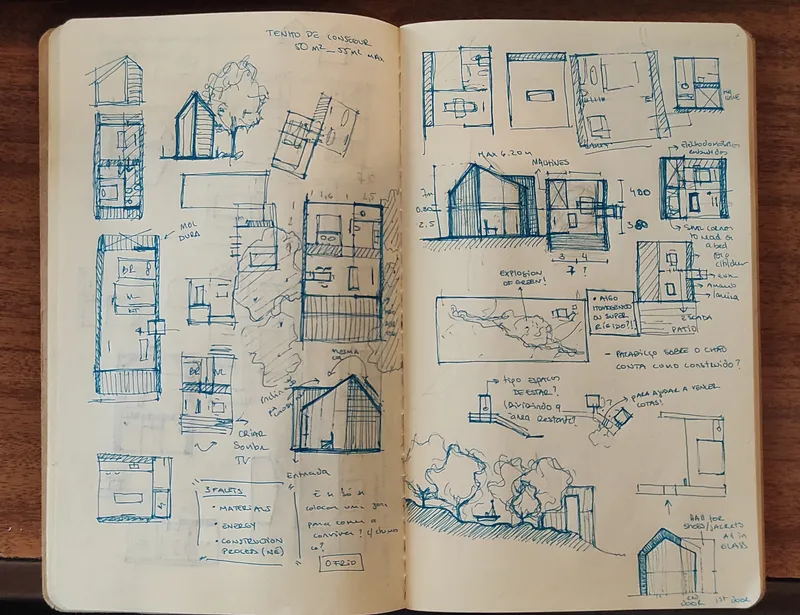
As any evolving project, the initial idea went through many transformations before becoming the final design. The biggest challenge was to create a pleasant space with the area assigned for each cottage, and still have space for the restaurant and groceries shop building.
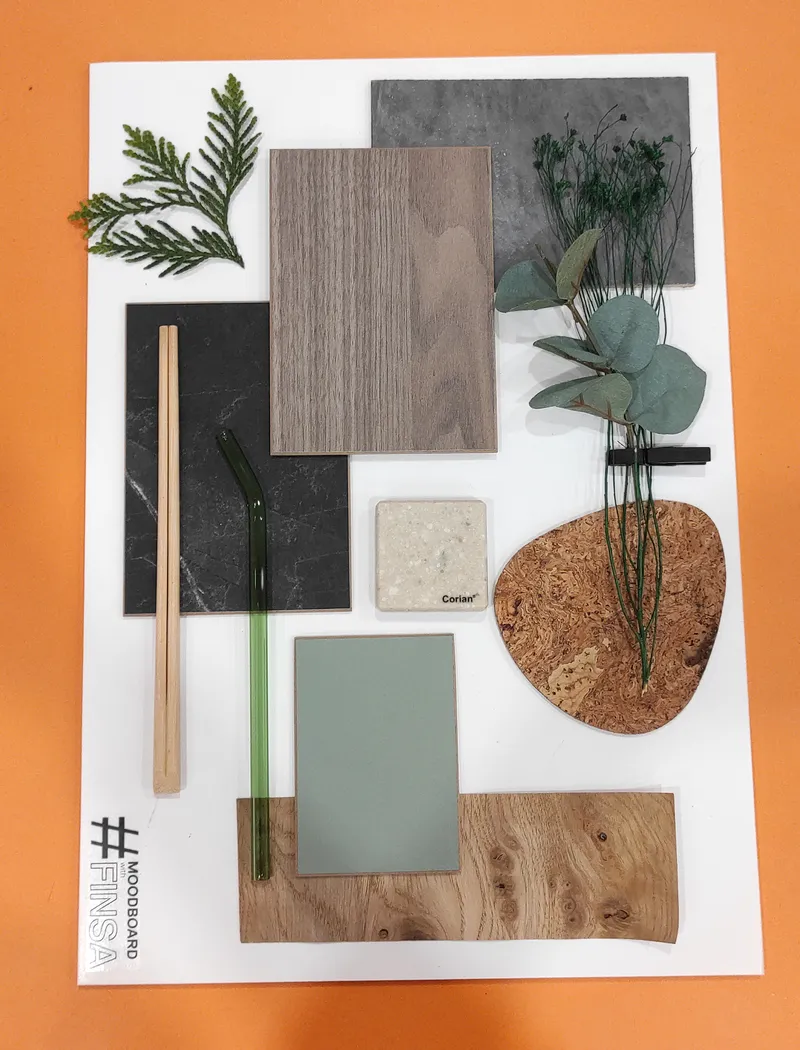
When reaching the final design, and to help us focus on the atmosphere that we wanted to convey, we created a mood board. Keeping our attention in the intention that we wanted to reach.
One of our main concerns was to adapt it to an off-grid and Net-Zero construction. Due to the drastic minimum temperatures reached in Fairbanks, between -7.9° F (-22° C) and 62° F (16.9° C), it was important to ensure proper insulation, according not to Alaska regulations but also to Net-Zero practices (windows R5, below slab R10, walls above grade R40 and roof R80). That resulted in a thick roof and walls to maintain the design.
Adapting the cottage for this sustainable method was the most challenging part of the project, due to all the electric systems being expensive. The electric water heat pump to heat the water, the floor heating system, and the powerwall to retain the energy produced by the sun, was produced in excess.
Taking into account the savings on the construction process and the materials chosen, and seeing that after a while the retreat is self-sustainable with the energy generated by the photovoltaic panels and the heat of the fire place, the investment ended up being economic.
The cottages are placed in the land according to the topography and without changing the terrain. We took advantage of the most elevated areas to avoid a lot of confrontation between houses, so that each guest has privacy.
The other buildings, a restaurant and a grocery shop, follows the same design and structure of the cottage, and were added to avoid that visitors have to go to the city for basic needs. This way they are able to spend as much time as they wish in the retreat.
Being away from all the noise, pollution and stress that come with living in big cities is a way of taking care of our mental health and our planet. We hope to provide that to our guests, as well as sensitize them to the power of nature and healthy construction practices.
For a healthy human mind we need a healthy planet.


Popular Articles
Popular articles from the community

Singing Woman: An Opera House That Performs Before the Curtain Rises
Ovidiu Cristian Pavel's conceptual opera house translates Estonia's choral identity into a sculpted waterfront landmark facing the Baltic Sea.
Tsunami Convergenics: Turning Catastrophic Ocean Forces into Underwater Housing Infrastructure
A speculative underwater settlement off the coast of Onagawa, Japan, treats tsunamis and typhoons as energy sources rather than threats.
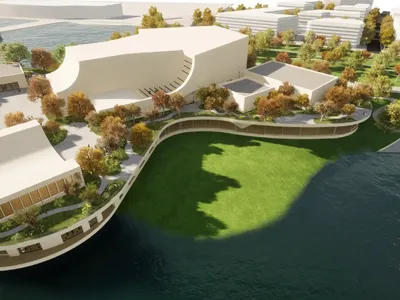
The Amber Palace Opera: A Geological Fiction Surfaces on Tallinn's Baltic Waterfront
Pierre Brillard reimagines a Baltic legend as a public landscape, opera house, and waterfront promenade rooted in Tallinn's coastal identity.
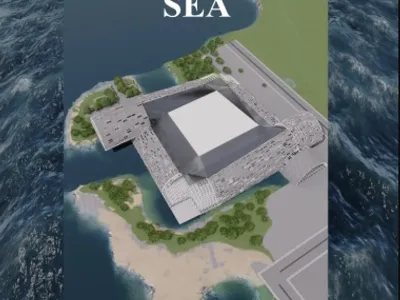
Opera on the Sea: Driftwood Logic Shapes a Timber Opera House on Estonia's Coast
Trevor Orgill's opera house translates the entangled drift of floating timber into a civic building where wood, water, and music converge.

Similar Reads
You might also enjoy these articles

Pixel Gardens: One Repeated Module Stacked Into a Terraced Social Housing Tower for Famagusta
Salem Bader's shortlisted housing tower builds a vertical neighbourhood from one repeated module, offsetting units to carve terraces, light and air.
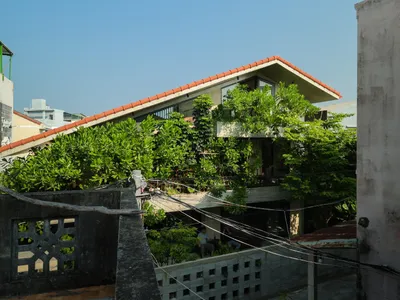
Bao Huynh Watercolor Atelier: A Serene Art Retreat in Hội An
Bao Huynh Watercolor Atelier in Hội An blends multifunctional art spaces, sustainable design, local materials, and family-friendly living in a serene environment.
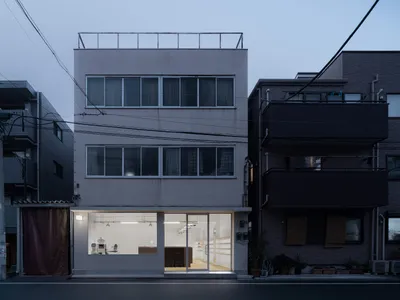
Atelier Macri Concept Store Interior Design by CASE-REAL
Atelier Macri store features a "ko" counter, walnut wood details, cork displays, blending retail, gallery, and seamless customer experiences.
Manuel Vargas Izquierdo Stadium and High-Performance Sports Center: Architectural Excellence in Jalpa de Méndez
The Manuel Vargas Izquierdo Stadium blends sustainable design, inclusive sports facilities, and cultural-inspired architecture, revitalizing Jalpa de Méndez’s public spaces.


Comments (0)
Please login or sign up to add comments
No comments yet. Be the first to comment!