

Greenhouse for the Coexistence of Plants and Humans – salazarsequeromedina
A sustainable greenhouse blending plants and human life, using reclaimed bricks and metal, creating adaptable spaces inspired by vernacular Peruvian architecture.


The Greenhouse for the Coexistence of Plants and Humans, designed by salazarsequeromedina in El Carmen, Peru, redefines the relationship between architecture, nature, and domestic life. Built in 2022 with a modest footprint of 110 m², the project blends sustainability, vernacular inspiration, and adaptive reuse to create a space where plants and humans thrive together.
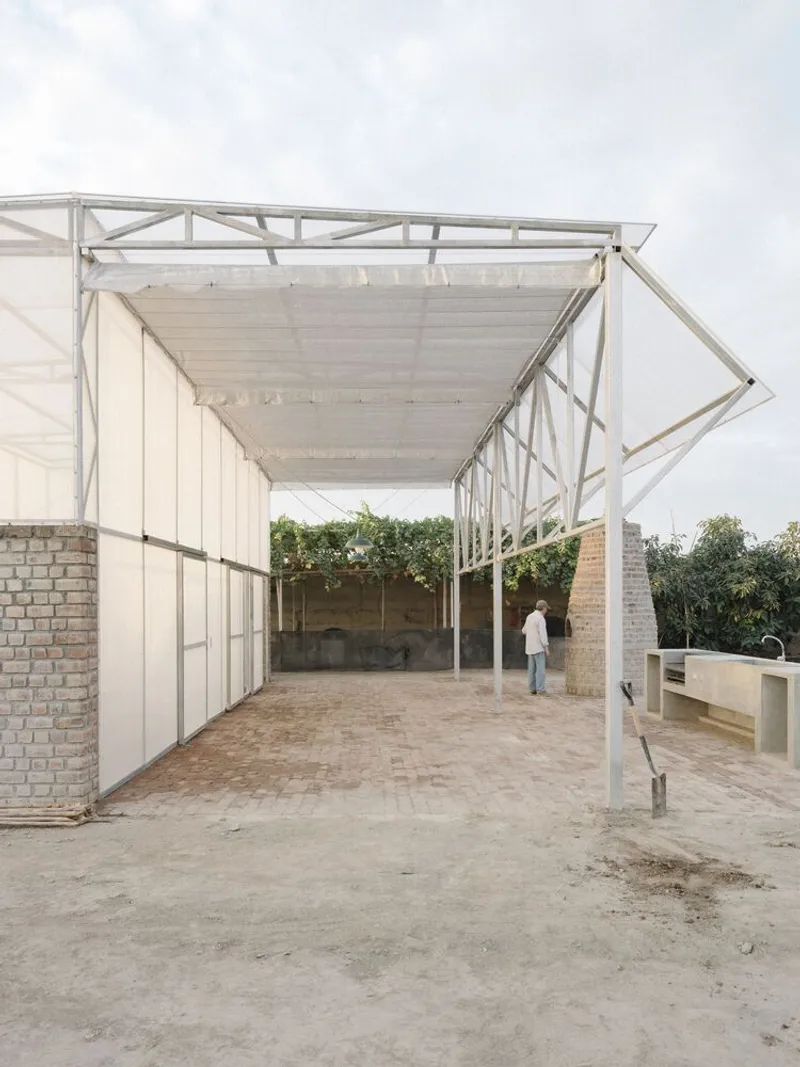
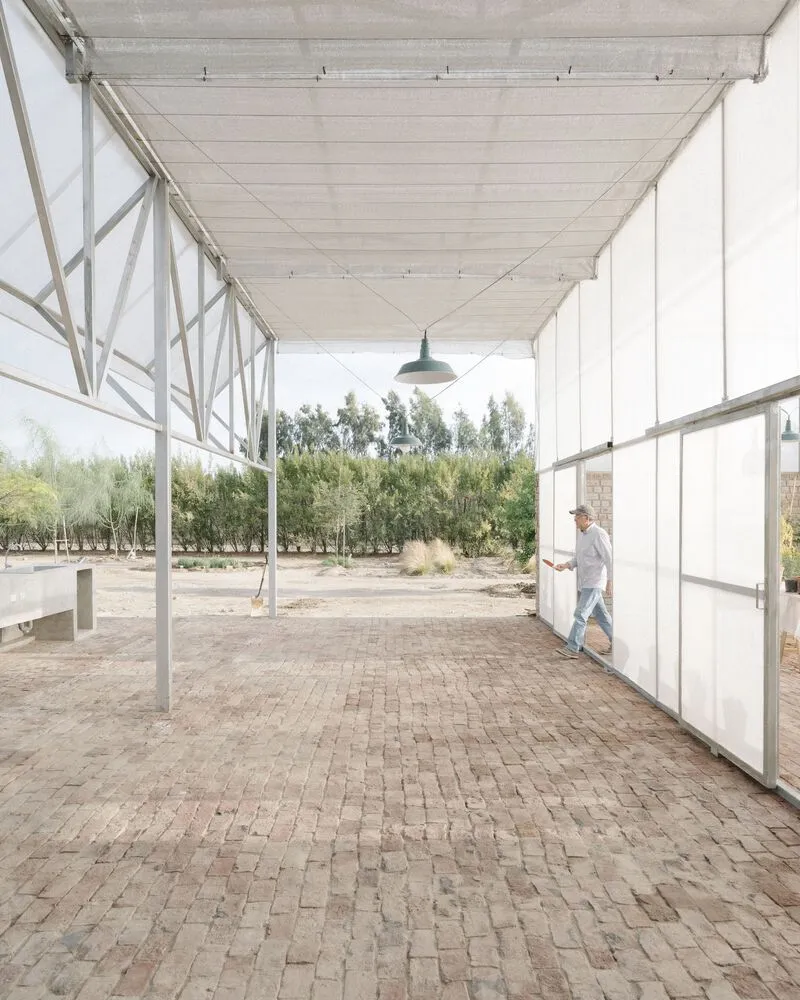
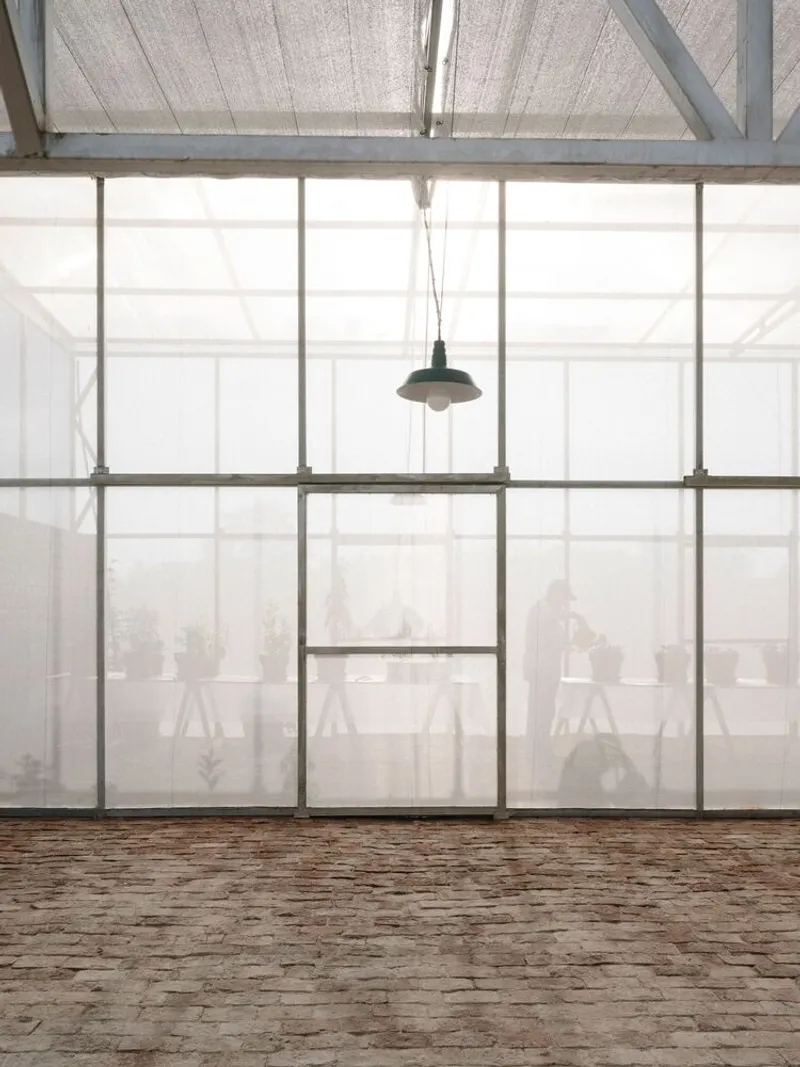
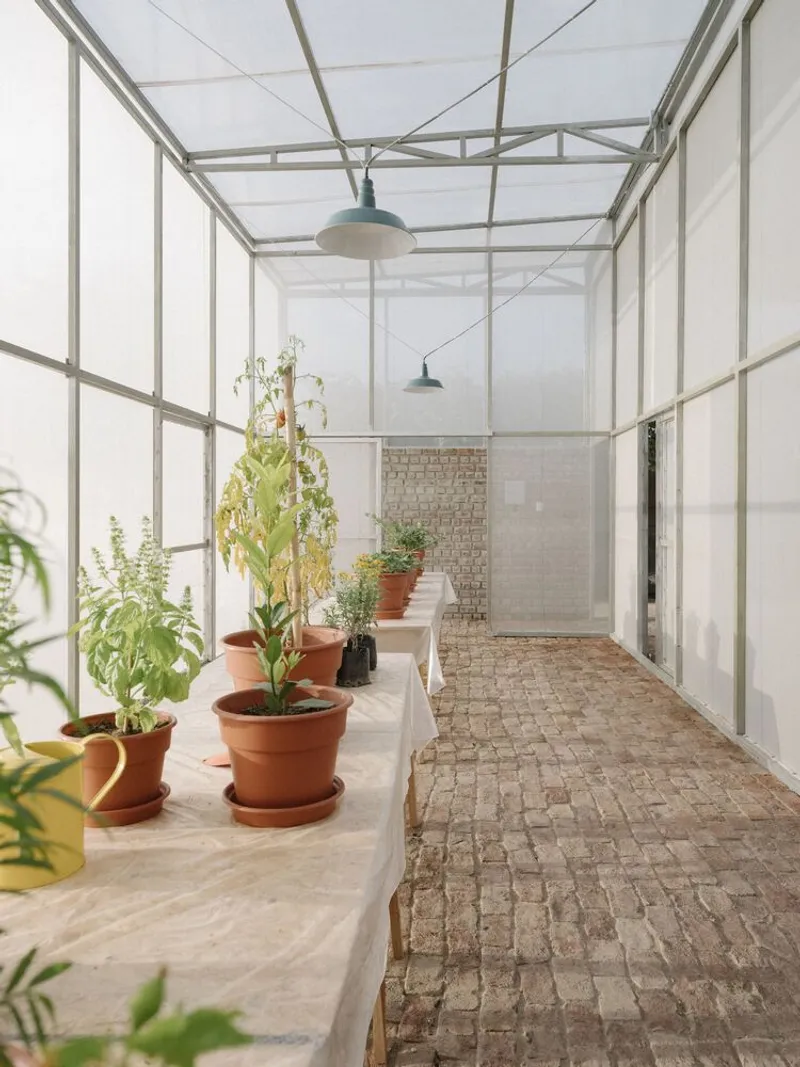
This innovative hybrid structure is conceived as two asymmetrical twins: one half functions as a traditional greenhouse, nurturing plants within a controlled environment, while the other serves as an outdoor living room for people. Their proximity creates a natural symbiosis — the greenhouse conditions the microclimate of the living area, ensuring comfort year-round. It is a place where fruit travels directly to the table, and hands care for the leaves, dissolving the barrier between cultivation and daily life.
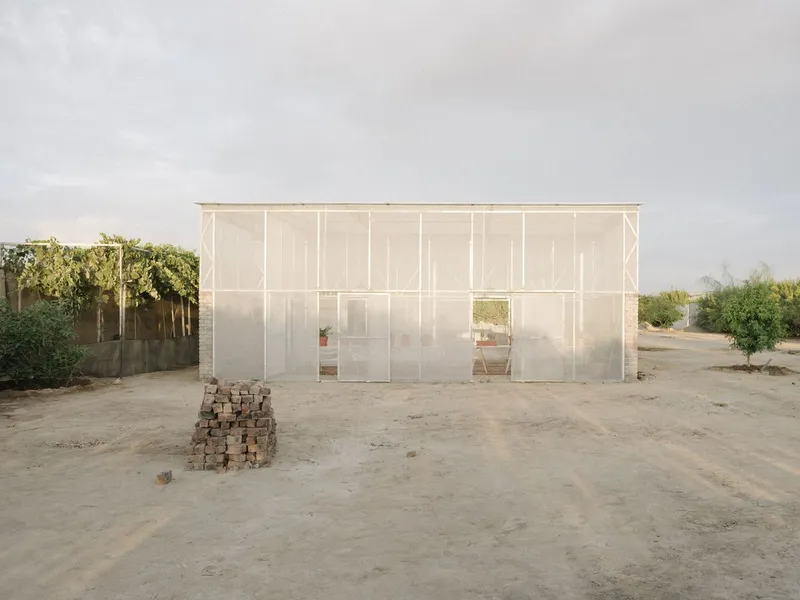
Vernacular Inspiration and Sustainable Design
The project draws heavily from the vernacular architecture of rural Peru, where temporary, adaptable structures respond to climate and community needs. Elements like verandas, awnings, and shaded antepatios are reinterpreted into a modern architectural language. The greenhouse is not only functional but also aesthetic and symbolic, embodying the cultural rhythm of agriculture and domestic rituals.
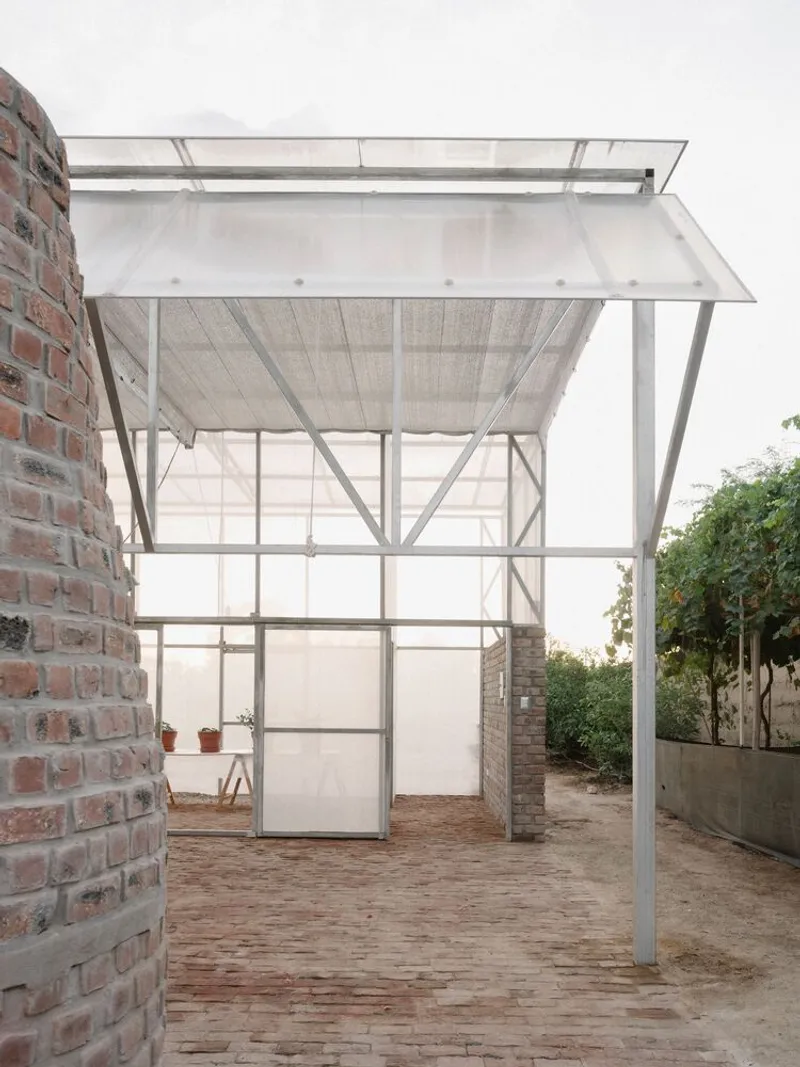
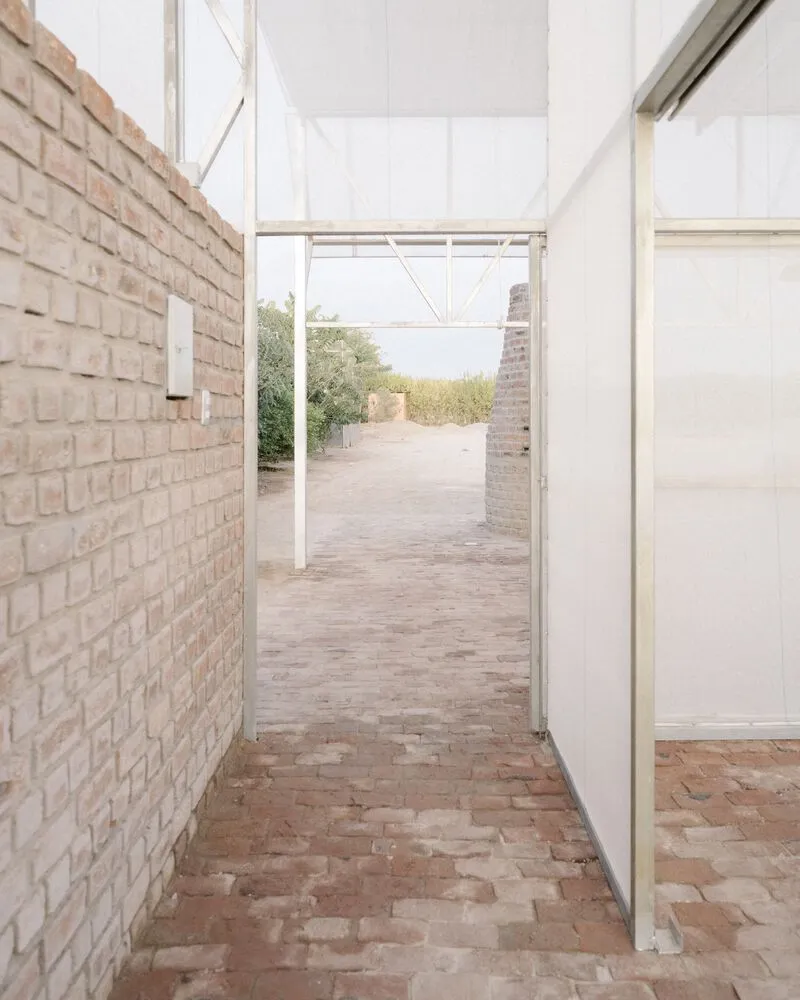
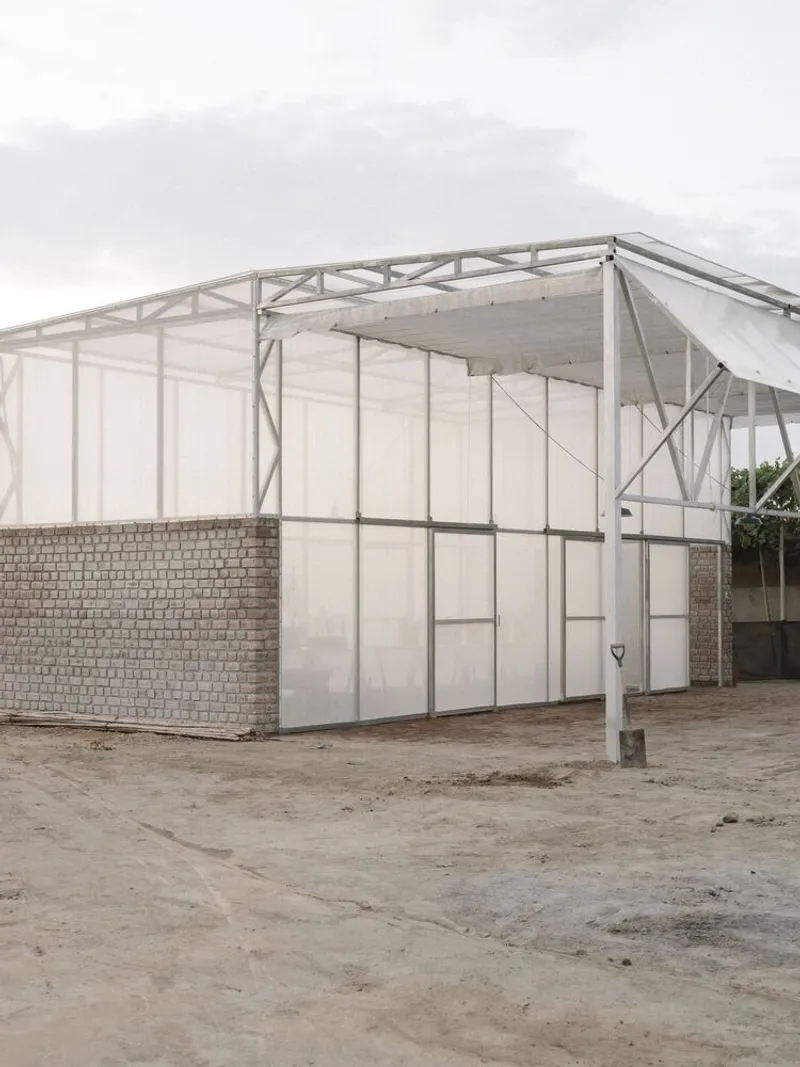
The construction highlights a sustainable material palette. A robust base made from reclaimed “recocho” brick — salvaged from local brickyard waste — rises two meters, providing solidity and permanence. Above this, a lightweight metal framework introduces flexibility and adaptability. The steel elements, sourced from scraps of nearby agricultural infrastructures, make the project affordable, resource-conscious, and environmentally responsible.
Adaptability and Future Transformation
Although designed as a greenhouse and living space, the structure is not fixed to one identity. Its elemental and diaphanous construction allows for future transformations — it could be dismantled, reassembled, or adapted into entirely different programs. This modular approach ensures resilience and a long lifecycle, aligning with contemporary values of circular architecture and sustainable design.
Ultimately, the Greenhouse for the Coexistence of Plants and Humans is more than just a building — it is an ecosystem of coexistence, a shared habitat where architecture, agriculture, and community intersect. By blurring the boundary between plant cultivation and human habitation, it exemplifies a new paradigm of sustainable living in harmony with nature.
All photographs are works of Ivan Salinero


Popular Articles
Popular articles from the community


Manzana Morphosis: Stretching Barcelona's Grid into a Living Landscape for 2050
A radical reworking of the Eixample manzana turns density into a tool for generous public space, vertical ecology, and environmental performance.


FCC Arquitectura Expands a Portuguese Granite House with a Board-Marked Concrete Wing
In Portugal, JV House pairs a cleaned-up whitewashed and granite dwelling with a timber-shuttered concrete extension, courtyards and a garden pool.

ETEH Reworks the Shared Spaces of São Domingos School in Brazil Around Timber, Color and Hanging Plants
At São Domingos School in Brazil, 436 m² of hall, refectory and library are recast with timber joinery, a yellow and blue code and trailing greenery.

Singing Woman: An Opera House That Performs Before the Curtain Rises
Ovidiu Cristian Pavel's conceptual opera house translates Estonia's choral identity into a sculpted waterfront landmark facing the Baltic Sea.

Similar Reads
You might also enjoy these articles


Hodi-Mandai Geram
Project Function: Preservation and revitalization of the Intangible heritage and socio-spatial identity of the Hodi by Housing, Cultural Memory Center, Sacred Grove, landscape, local tourism economy


Olio Towers: A Mid-Rise for Performers That Fuses Housing, Rehearsal, and Stage
Located blocks from Houston's Theater District, this modular tower stacks living units around a central performance atrium.

Oasis: Modular Green Housing Carved into Dhaka's Urban Fabric
A shortlisted Plugin Housing entry reclaims unauthorized settlements in Dhaka with stepped concrete volumes, green roofs, and ventilation-driven design.

Black Hole: A Floating Megastructure for the Post-Physical Era
Emiliano Mazzarotto envisions a spherical, self-scaling arena where e-sports, digital hotels, and holographic stadiums replace traditional public space.

Explore Green Houses Competitions
Discover active competitions in this discipline

Challenge to reimagine the Iron Throne

Photograph architecture without architects

Illustrate the lost glory of Angkor Wat - Render Challenge

Design challenge to reuse E-waste
Comments (0)
Please login or sign up to add comments
No comments yet. Be the first to comment!