

Guest House in Kameido Tenjin by HAGISO inc.: Tokyo Family Home Renovation Focused on Hospitality and Open Living
Renovated Tokyo home designed for entertaining, blending open spaces, natural light, oak interiors, minimalist lighting, and thoughtful guest-focused details.


Located in the historic Kameido Tenjin area of Tokyo, near the renowned Kameido Tenjin Shrine, the Guest House in Kameido Tenjin by HAGISO inc. is a thoughtfully renovated home designed for a family of five with a passion for hospitality and culinary experiences. The shrine’s vicinity, famous for ukiyo-e prints by Katsushika Hokusai and Utagawa Hiroshige, draws tourists each spring for its iconic plum and wisteria blossoms. For the clients, visiting the shrine on the first day of each month is a cherished family ritual, inspiring the home’s unique connection to its surroundings.


Design Concept: A Home as a Guest House
From the outset, the clients envisioned their home not just as a private residence but as an extension of hospitality, a space where every corner could welcome guests. Both avid hotel enthusiasts and food lovers, they sought a design that maximizes comfort, openness, and warmth, turning daily living into a refined, guest-focused experience. The guiding theme of the renovation became: how the home should be designed for guests.


Spatial Layout and Interior Design
The home’s layout was reimagined to balance private family spaces with expansive communal areas. The first floor retains a series of intimate rooms, including minimal bedrooms and a bathroom, while the second floor underwent significant transformation. Most partition walls were removed to create a large, open-plan living area ideal for entertaining.
The private bedroom features oak and cedar finishes, fostering a calm and restful atmosphere. Illumination in this space is subtle and functional, with linear lighting carefully positioned around the bed to provide gentle, ambient light without overpowering the space.
In contrast, the second-floor communal spaces embrace natural sunlight through strategically placed skylights, with mortar-finished walls enhancing the texture and warmth of the interiors. A linear counter connects the dining and kitchen areas, accentuated by a 5-meter custom lighting fixture, inspired by the gesture of prayer, symbolizing the homeowners’ thoughtfulness toward their guests.


Materiality and Detailing
Every detail in the home was carefully considered to enhance functionality and aesthetics. Concealed switches maintain a clean, minimalist look, while existing windows were upgraded with shoji screens, combining insulation with traditional Japanese elegance. Structural elements, including steel columns, were thoughtfully concealed with plasterboard and tiles to ensure durability while integrating seamlessly with the interior design.
This renovation balances traditional Japanese elements with modern functionality, creating a home that is both inviting for visitors and comfortable for family life. By prioritizing openness, light, and thoughtful materials, the project transforms a conventional house into a welcoming, guest-centered environment.


Project Details
- Architects: HAGISO inc.
- Lead Architect: Mitsuyoshi Miyazaki
- Area: 130 m²
- Year: 2024
- Photography: Keishin Horikoshi /SS


All photographs are works of Keishin Horikoshi /SS


Popular Articles
Popular articles from the community

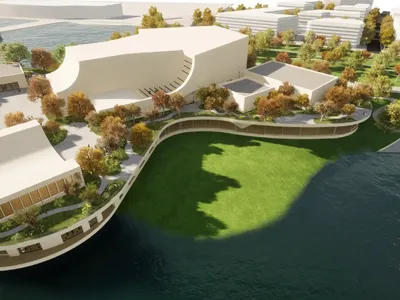
The Amber Palace Opera: A Geological Fiction Surfaces on Tallinn's Baltic Waterfront
Pierre Brillard reimagines a Baltic legend as a public landscape, opera house, and waterfront promenade rooted in Tallinn's coastal identity.
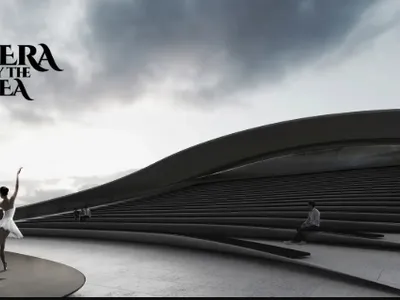
Opera by the Sea Estonia: Three Shells Dissolving Architecture into Tallinn's Coastline
A winning opera house proposal replaces monumental form with interconnected shells that blur the boundary between building, park and Baltic Sea.

Cloaked Colonization: A Mobile Underwater Habitat That Moves Like a Fish
Micah Abaya's shortlisted EHC Pacific entry reimagines ocean settlement as a dispersed network of self-sustaining architectural organisms.
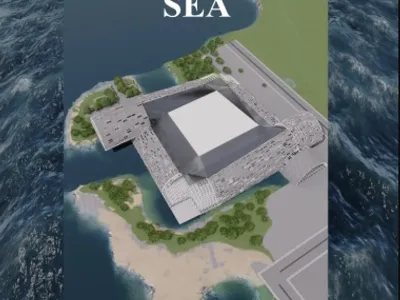
Opera on the Sea: Driftwood Logic Shapes a Timber Opera House on Estonia's Coast
Trevor Orgill's opera house translates the entangled drift of floating timber into a civic building where wood, water, and music converge.

Similar Reads
You might also enjoy these articles


Hodi-Mandai Geram
Project Function: Preservation and revitalization of the Intangible heritage and socio-spatial identity of the Hodi by Housing, Cultural Memory Center, Sacred Grove, landscape, local tourism economy


Olio Towers: A Mid-Rise for Performers That Fuses Housing, Rehearsal, and Stage
Located blocks from Houston's Theater District, this modular tower stacks living units around a central performance atrium.

Oasis: Modular Green Housing Carved into Dhaka's Urban Fabric
A shortlisted Plugin Housing entry reclaims unauthorized settlements in Dhaka with stepped concrete volumes, green roofs, and ventilation-driven design.

Black Hole: A Floating Megastructure for the Post-Physical Era
Emiliano Mazzarotto envisions a spherical, self-scaling arena where e-sports, digital hotels, and holographic stadiums replace traditional public space.

Explore Housing Competitions
Discover active competitions in this discipline

Challenge to reimagine the Iron Throne

Photograph architecture without architects

Illustrate the lost glory of Angkor Wat - Render Challenge

Design challenge to reuse E-waste
Comments (0)
Please login or sign up to add comments
No comments yet. Be the first to comment!