

“Half-Mountain Cloud Station: Sculptural Pavilions Harmonizing Nature and Culture in Huizhou”
Half-Mountain Cloud Station features three sculptural pavilions by Qing Studio and Li Nu, harmonizing Huizhou’s mountain landscape with poetry and culture.


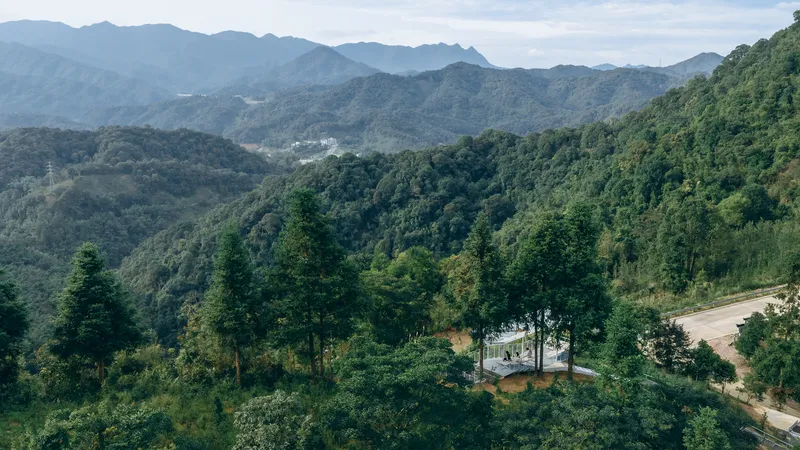
Located in Huizhou, Guangdong, China, the Half-Mountain Cloud Station is a 200 m² architectural and artistic intervention completed in 2025 by Qing Studio in collaboration with artist Li Nu. Photographed by Yumeng Zhu and constructed by Wuhan Dongtong Decoration Design and Engineering Co., Ltd., the project seamlessly integrates architecture, sculpture, and landscape, creating a poetic dialogue between the natural forested slopes of Nankun Mountain and human presence. This contemplative pavilion complex exemplifies site-responsive design, combining sculptural forms, lightweight construction, and mountain architecture to celebrate Huizhou’s cultural heritage while offering immersive spatial experiences.
Perched at the foot of Nankun Mountain in Huizhou, the Half-Mountain Cloud Station emerges as a contemplative node within the Two-Mountain Architectural Art Program. Inspired by Su Dongpo’s Sixteen Joys of Life in Huizhou, particularly the verse “viewing mountains after rain from a tower,” the project captures the delicate balance between urban life and the natural landscape, intertwining memory with the future through architecture.
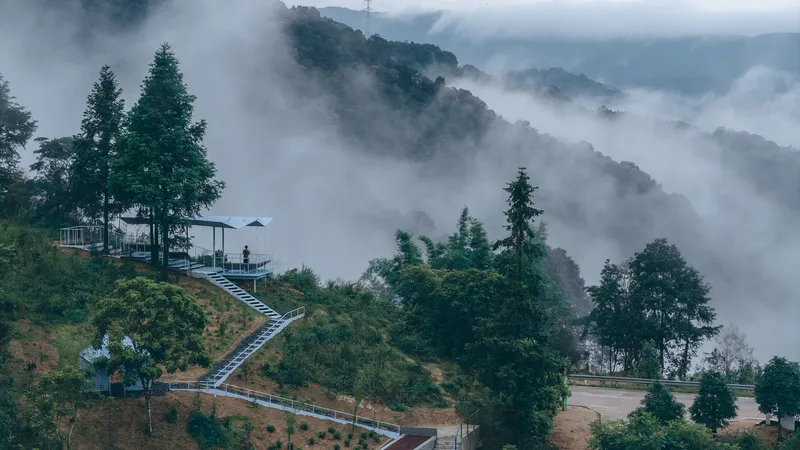
Nestled within a lush mountainous forest, the project comprises three lightweight structures—Mountain Post, Hometown Pavilion, and Cloud Pavilion—each thoughtfully responding to the terrain without dominating it. Instead of occupying the center or imposing verticality, these buildings follow the landscape’s fault lines, crevices, and shifting paths, transforming the natural undulations into a rhythmic journey of space. These three architectural interventions act as gentle “knocks on the door of time,” inviting visitors into a dialogue spanning centuries, cradled by nature.
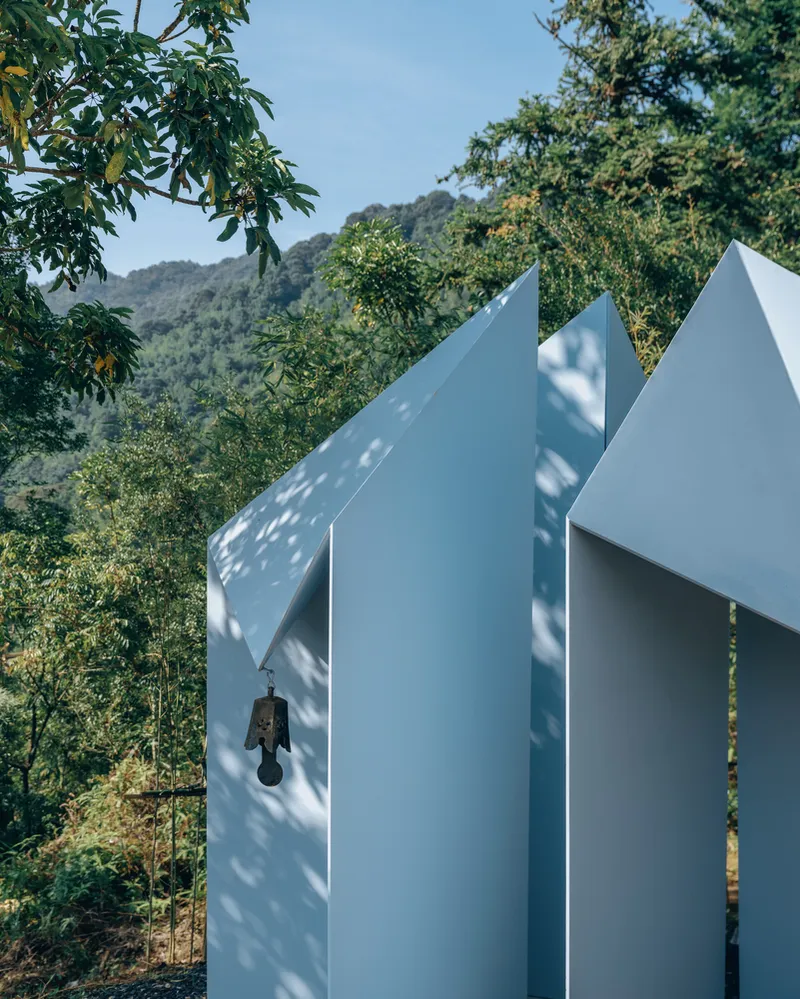
Mountain Post: Guiding the Ascent
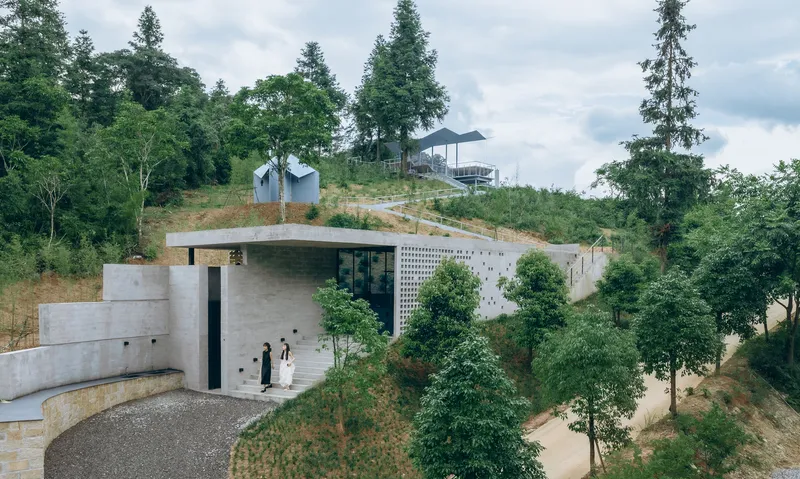
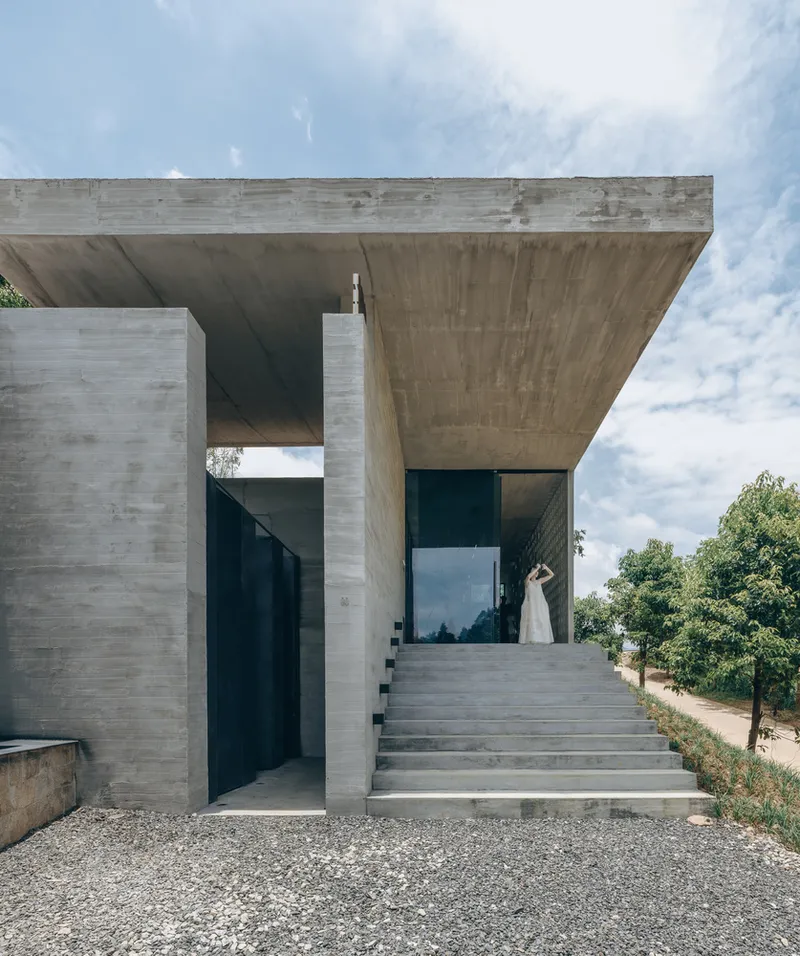
Located at the southeastern edge of the site, where the road meets the mountain slope, Mountain Post addresses a sharp elevation change and exposed terrain. Embedded seamlessly into the hillside, this structure repairs the fractured landscape while marking the start of the mountain path.
Its upper level aligns with the northern slope, cantilevering south to create an interior housing a café and public restroom. Meanwhile, the lower level follows the southern road, stepping upward with the mountain’s contour to merge naturally into the hillside. As visitors intersect the path at Mountain Post, they transition from linear movement into a spatial symphony of wind, rain, and shifting textures, creating a harmonious engagement with the environment.
Hometown Pavilion: Cultural Resonance and Local Identity
At the heart of the site stands the Hometown Pavilion, designed by sculptor Li Nu. Acting as the most culturally significant node, the pavilion evokes the flowing sleeves of Northern Song Dynasty robes, reinterpreting Su Dongpo’s poetic imagery into spatial form. This design celebrates the region’s cultural heritage while welcoming travelers through its sculptural presence.
The pavilion consists of four modules, eight walls, and sixteen steel plates, blending sculpture with architecture. Its permeable spaces encourage introspection, with intimate inner courtyards and circumambulatory outdoor paths. Sunlight reflects off the steel, echoing distant clouds, while raindrops falling onto the pavilion create a musical rhythm, reminiscent of ink-splashed poetry.

Cloud Pavilion: A Dialogue with the Sky
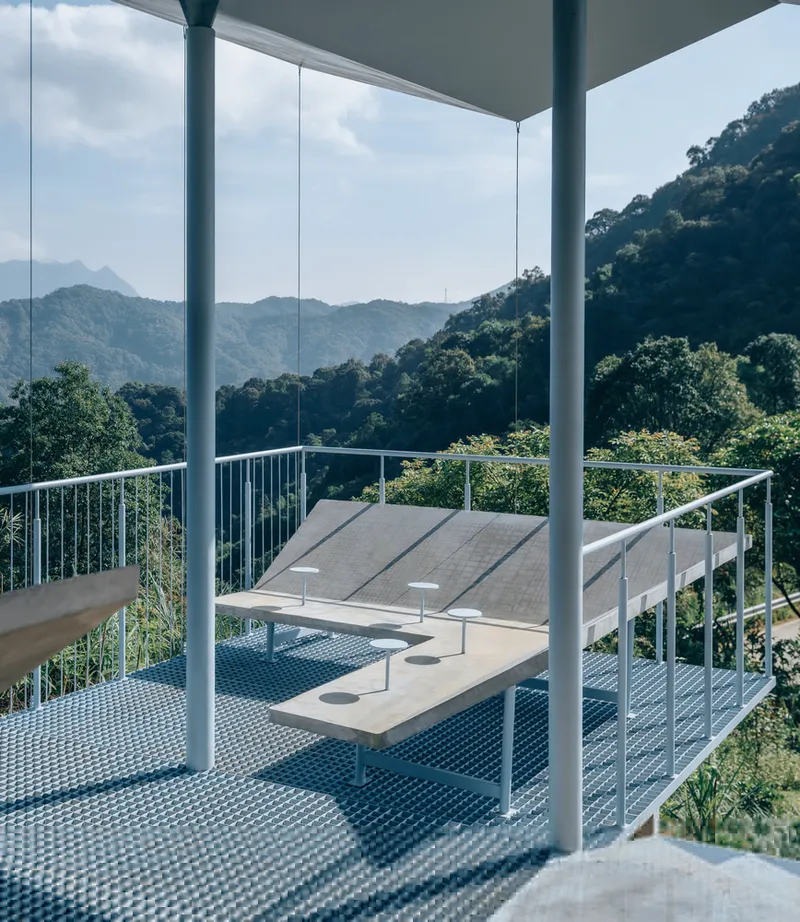
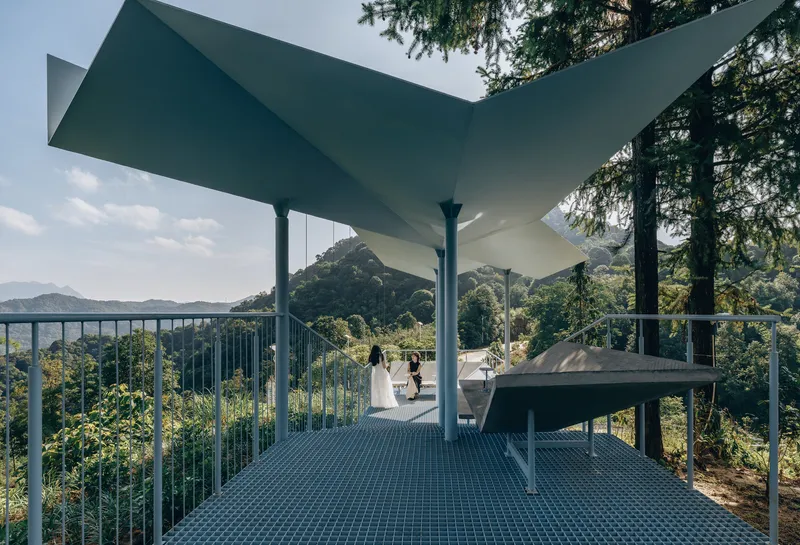
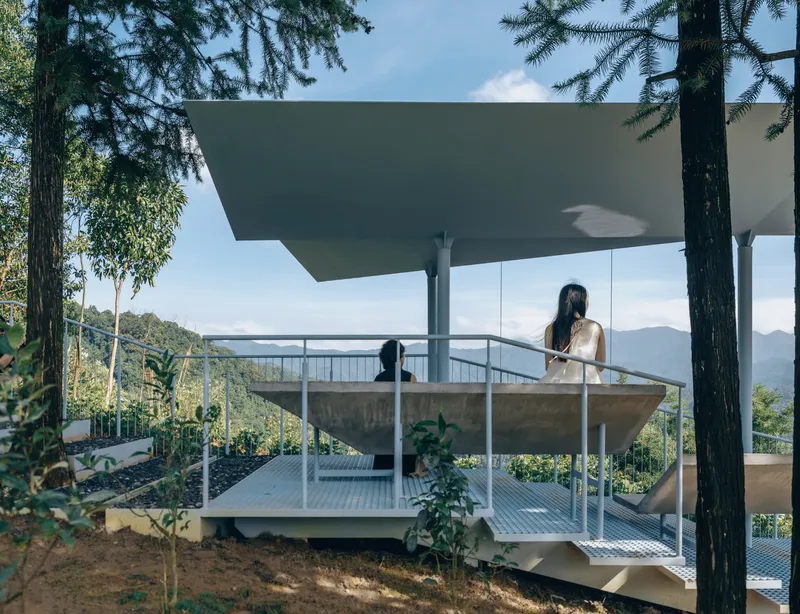
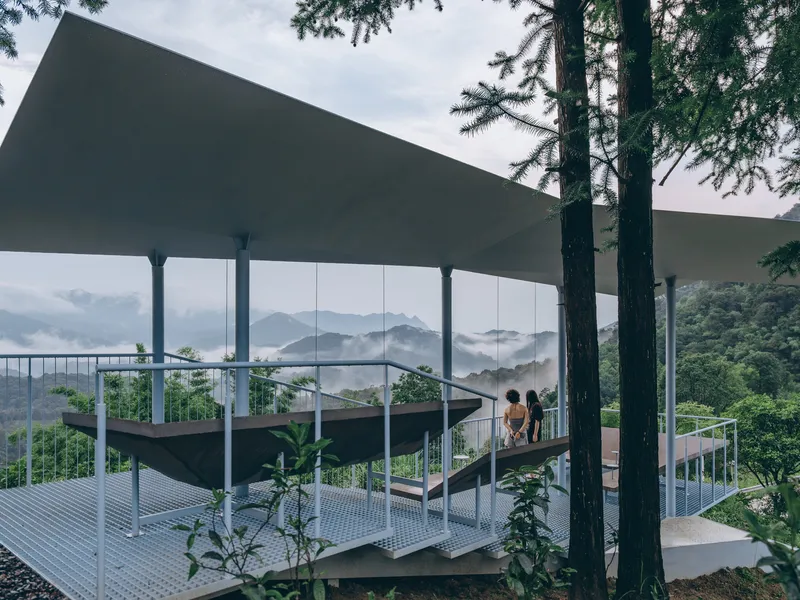
Suspended on an open slope midway up the mountain, Cloud Pavilion concludes the path and opens panoramic views of the landscape. Mirroring the geometric language of Hometown Pavilion, this lightweight steel structure features a roof formed from interlaced V-shaped folded steel plates. During rain, the roof channels water via steel cables, transforming Huizhou’s natural rainfall into visible, poetic patterns.
As visitors ascend and descend the path, the pavilion’s folded roof creates varying silhouettes, blending architecture with atmospheric conditions. From the terrace, clouds drift beneath one’s feet when stirred by the wind. Recessed seating areas invite reflection, offering moments of serenity beneath the sky or amidst the drifting clouds.
All photographs are works of Yumeng Zhu


Popular Articles
Popular articles from the community


Cube Design Draws an Ecological Corridor Between Two Shenzhen Hills with the Nankai Building
Beside Shenzhen's container docks, the Nankai Building pairs stacked balconies with a climbing green screen to connect two hillsides across its height.

David Macias Steps a Doorless Stone and Plaster House Down a Tropical Colombian Hillside
In the humid hills of Colombia, Threshold House replaces the front door with an open void and terraces its 850 m² down the slope instead of fighting it.

U.GA Architects Wraps an Oval Rooftop Pool in Curved Board-Formed Concrete on Busan's Jeollidan-gil
In Busan's Jeonpo-dong, a 454 m² mixed-use block stacks a neighborhood facility, guest rooms and an oval rooftop pool inside spiraling concrete walls.

LT2A and OPEN Architectes Thread a Brick and Glass High School Through a Wooded Belgian Campus
In Braine-l'Alleud, a 3,000 m² wing for Collège Cardinal Mercier pairs pale brick with a glazed colonnade, deferring to a small chapel and a dense wood.

Similar Reads
You might also enjoy these articles


Hodi-Mandai Geram
Project Function: Preservation and revitalization of the Intangible heritage and socio-spatial identity of the Hodi by Housing, Cultural Memory Center, Sacred Grove, landscape, local tourism economy


Olio Towers: A Mid-Rise for Performers That Fuses Housing, Rehearsal, and Stage
Located blocks from Houston's Theater District, this modular tower stacks living units around a central performance atrium.

Oasis: Modular Green Housing Carved into Dhaka's Urban Fabric
A shortlisted Plugin Housing entry reclaims unauthorized settlements in Dhaka with stepped concrete volumes, green roofs, and ventilation-driven design.

Black Hole: A Floating Megastructure for the Post-Physical Era
Emiliano Mazzarotto envisions a spherical, self-scaling arena where e-sports, digital hotels, and holographic stadiums replace traditional public space.

Explore Landscape Design Competitions
Discover active competitions in this discipline

Challenge to reimagine the Iron Throne

Photograph architecture without architects

Illustrate the lost glory of Angkor Wat - Render Challenge

Design challenge to reuse E-waste
Comments (0)
Please login or sign up to add comments
No comments yet. Be the first to comment!