
Half of A House Pavilion: A Sustainable Architecture Project by i/thee + RAWstudio
Half of A House Pavilion combines rammed earth and recycled formwork, promoting sustainable, circular construction through innovative architectural design.

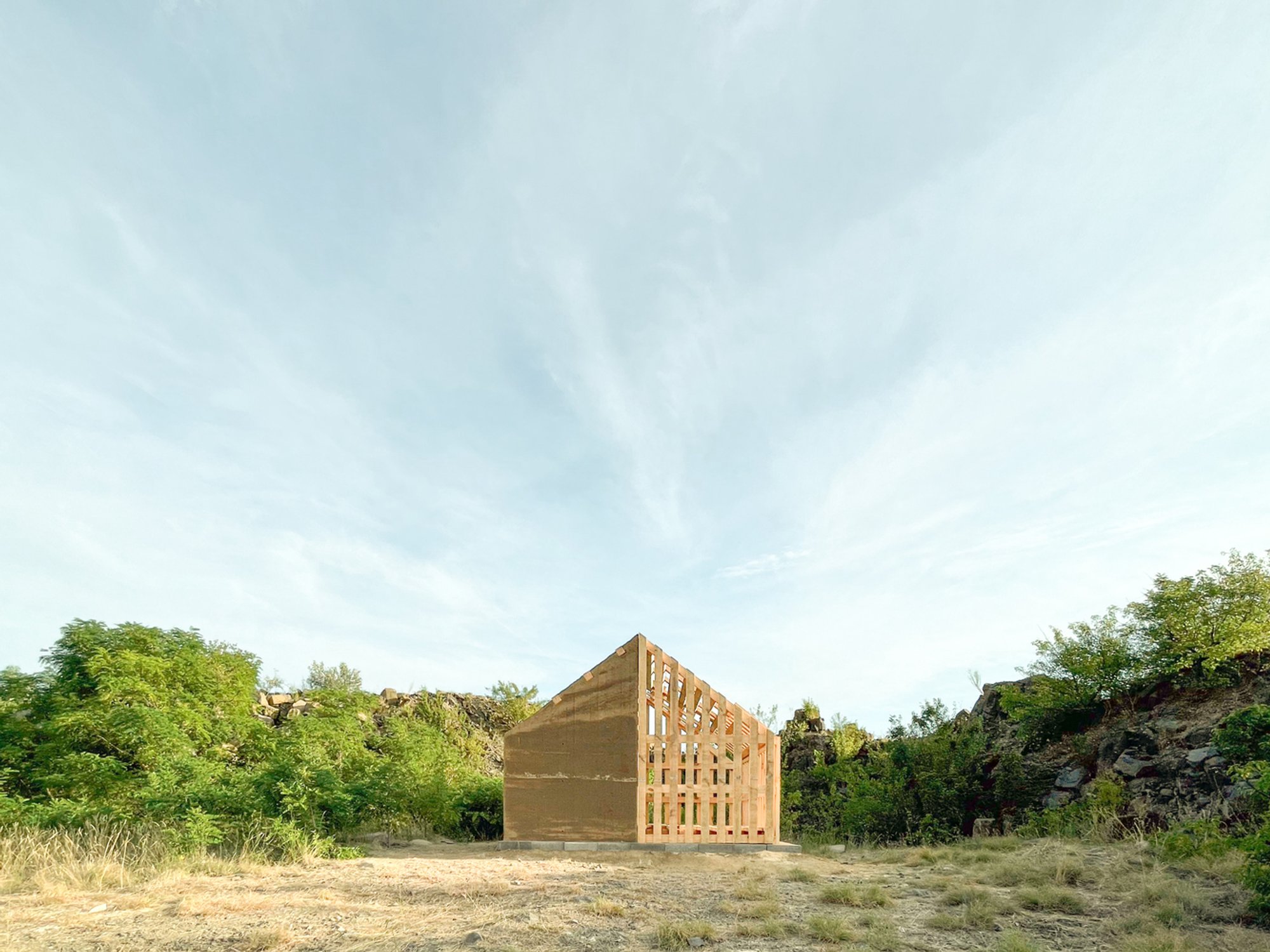
Half of A House Pavilion, a striking architectural installation designed by RAWstudio, i/thee explores innovative construction techniques that challenge traditional building practices. Situated in rural Hungary, the pavilion was created as part of the Hello Wood Builder Summit, an annual event focused on reimagining construction, material reuse, and circular design.
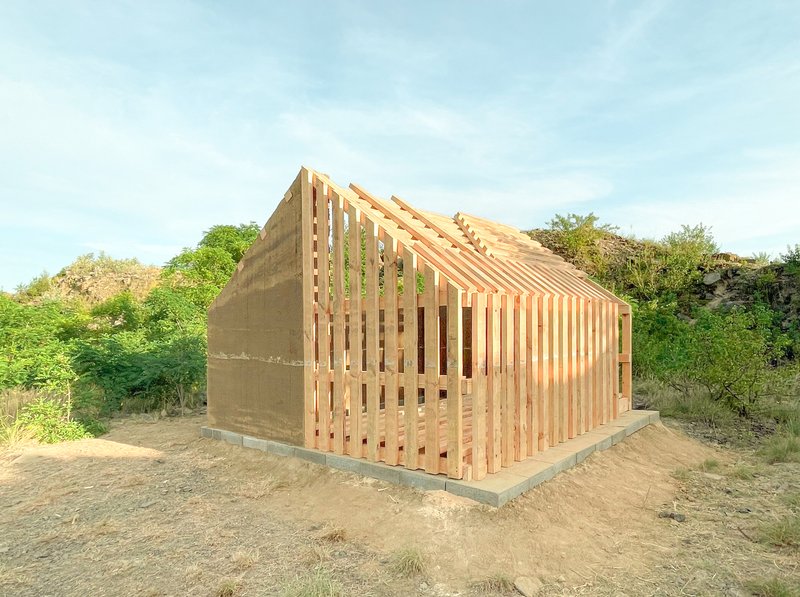
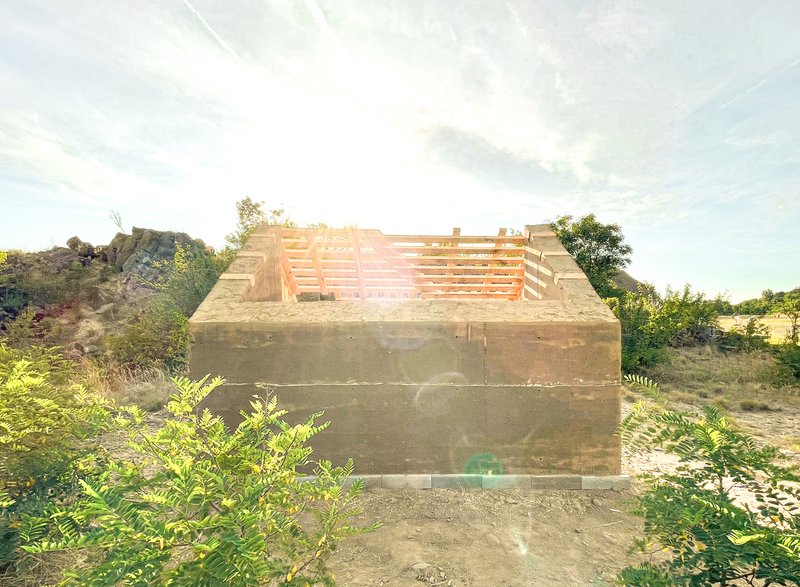
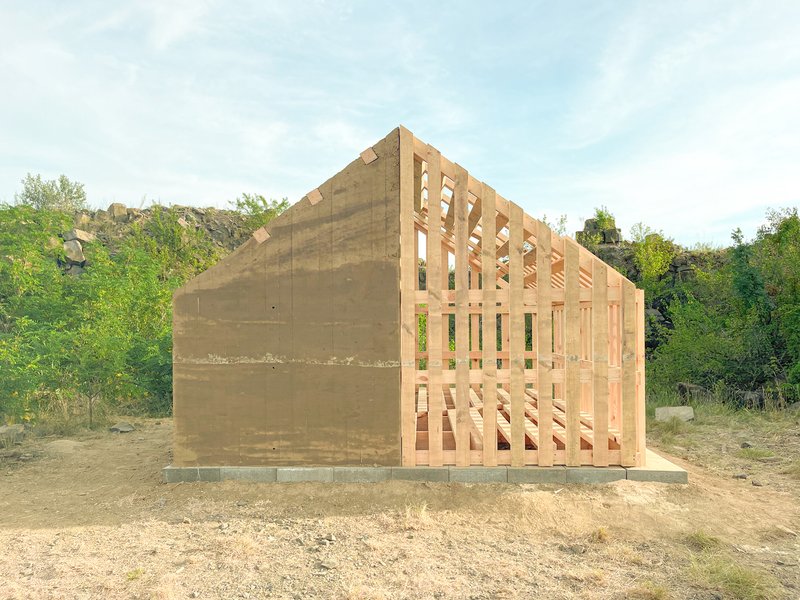
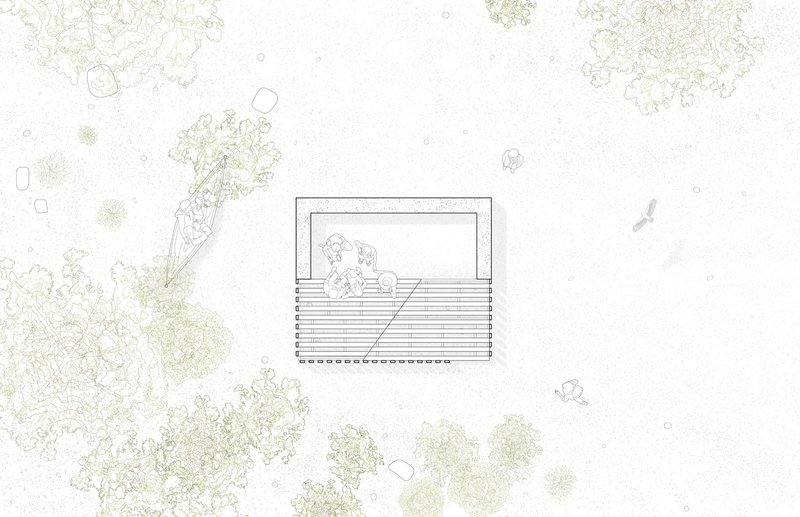
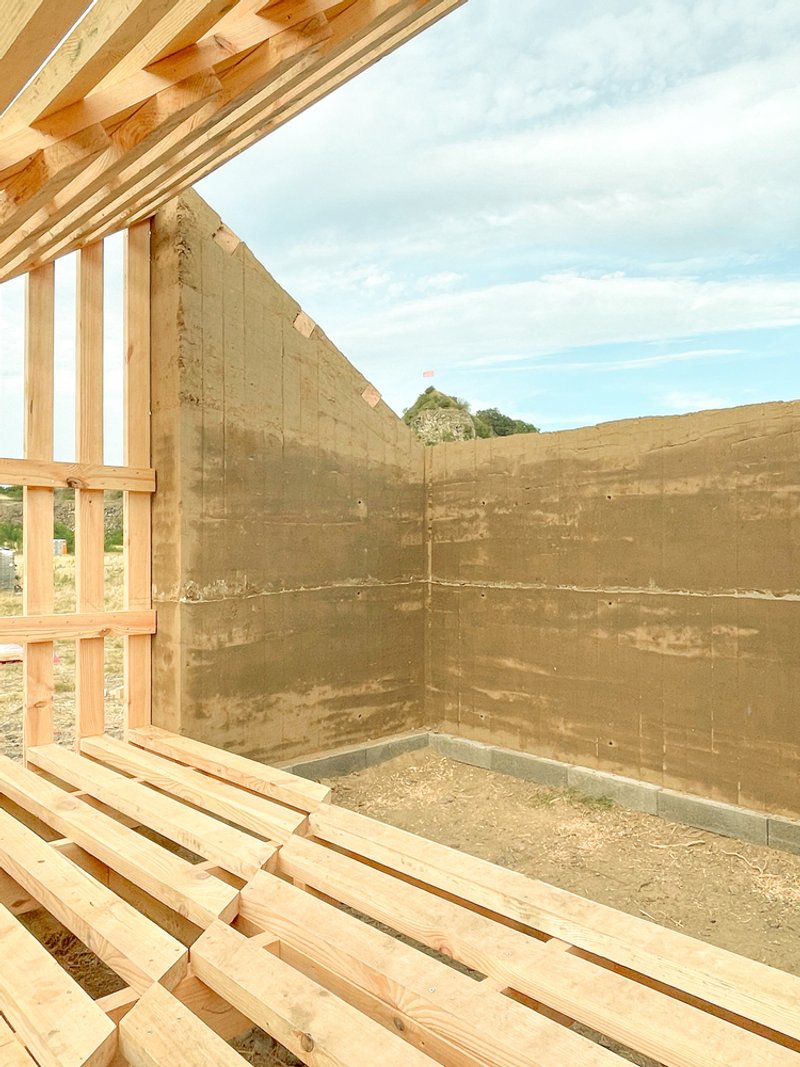
The project presents a thought-provoking approach to sustainable architecture, showcasing a structure split down the middle—each side constructed from entirely different materials, yet harmoniously integrated. On one side, unstabilized rammed earth is used to form the walls, while the other side incorporates reconstructed formwork from the rammed earth casting process. This design seeks to embody a more circular construction system, reducing waste and optimizing materials for reuse.
Sustainable Design and Material Innovation
The pavilion is a prime example of circular architecture, utilizing parametrically designed rammed earth formwork that not only supports the structure but is also recycled into its components. By employing earth-based materials and construction debris, the project highlights the potential for more sustainable building cycles, challenging linear material economies.
Through pragmatic parametrization techniques, the design team optimized the formwork to ensure its reuse, pushing the boundaries of computational design in architecture. This approach is not just about aesthetics but also about creating meaningful, functional structures from sustainable practices.
Construction Process
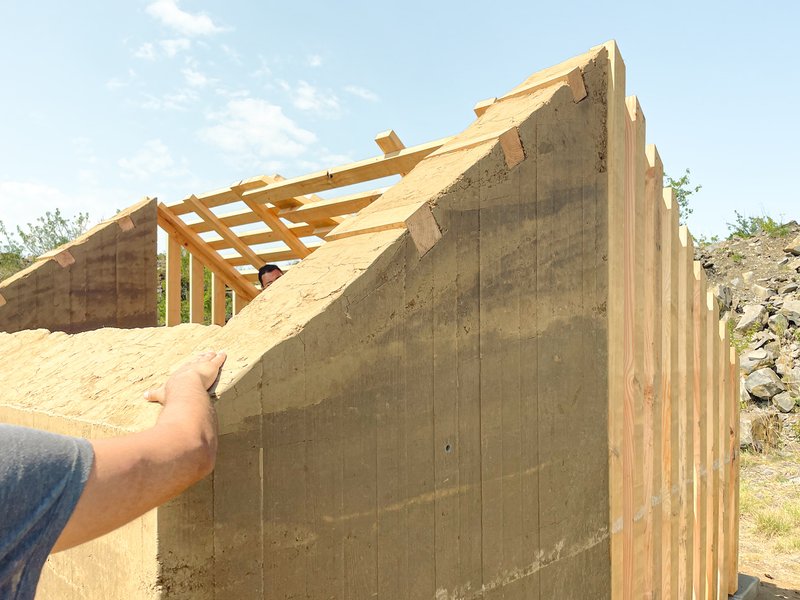
The construction of Half of A House began with the fabrication of eight cross-laminated timber panels that formed the basis of the formwork for an archetypal gable roof house. Local earth was rammed into the formwork by hand, with no stabilizing additives, to create the rammed earth walls. After the ramming process, the formwork was removed, revealing one side of the pavilion's walls.
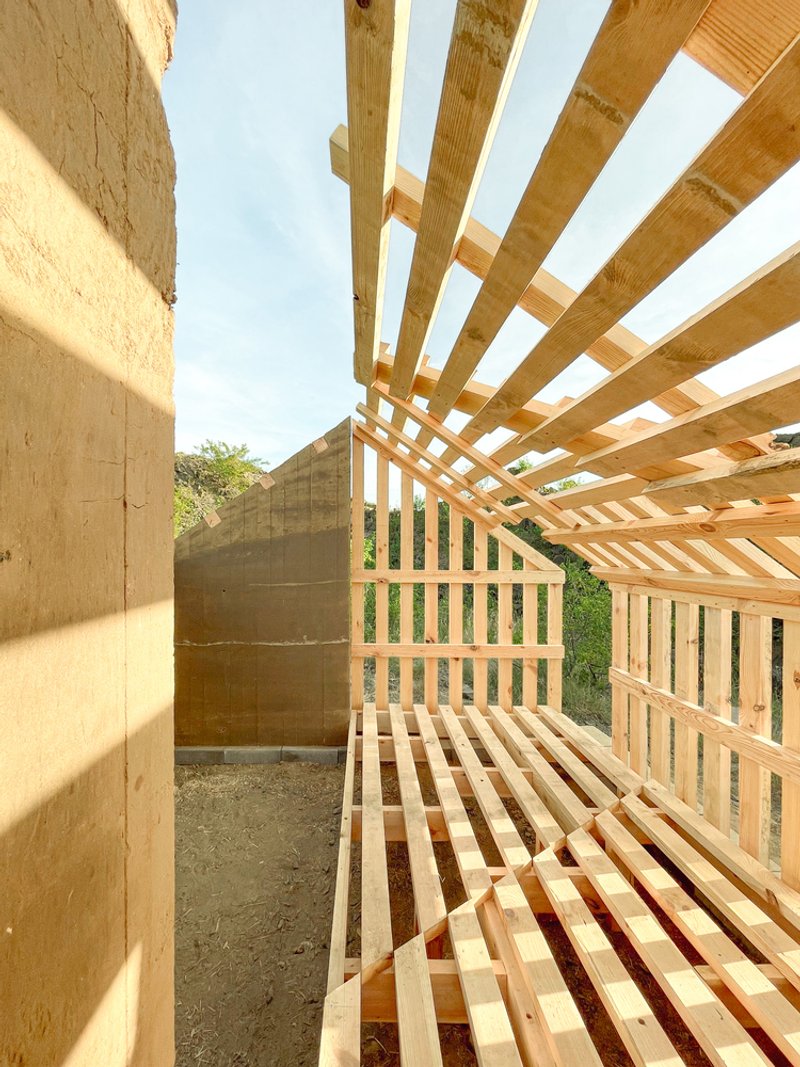
Next, the formwork was partially disassembled and carefully reassembled to form the second half of the structure. This half was constructed using the same formwork, now repurposed to create the roof and walls of the opposite side of the pavilion. The result is a two-faced structure that seamlessly integrates earth materials with wooden formwork, each side bearing the marks of its origin.
Circular Design Philosophy
At the heart of Half of A House is the concept of a closed-loop system in construction. The project not only aims to reuse materials but also to reduce the environmental impact of construction by sourcing materials directly from the site and using them in multiple stages of the building process. The project demonstrates the possibility of sustainable architecture that minimizes waste and maximizes the potential of materials at every stage—from sourcing to construction and eventual reuse.
This pavilion represents a step toward circular construction ecosystems, where every material has a purpose and every action contributes to reducing environmental impact. The project blends conceptual design with sustainable thinking, creating a space that is both innovative and responsible.
Architectural Features
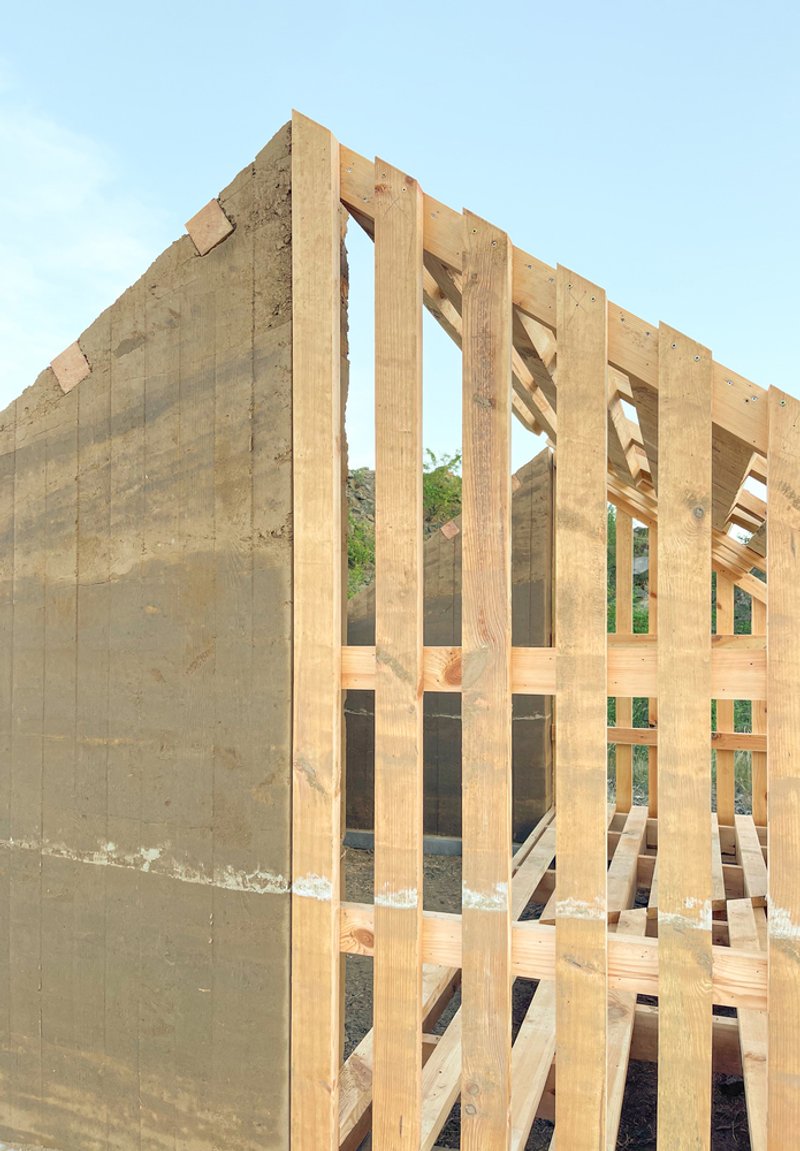
- Earth-based materials: The smooth, cool-to-the-touch surface of the rammed earth walls contrasts beautifully with the intricate wooden formwork, creating a tactile and visually engaging space.
- Reconstructed formwork: The disassembled formwork retains the stains of the earth it once contained, adding a unique texture to the structure and emphasizing the recycled materials used.
- Sustainable building practices: The use of rammed earth and the recycling of construction debris reflects a commitment to eco-friendly architecture and material reuse.
Half of A House Pavilion is more than just a physical structure—it is a statement on the future of sustainable architecture. By embracing innovative material reuse, parametric design, and a circular construction philosophy, this pavilion presents a new paradigm for how buildings can be constructed with minimal environmental impact. The project demonstrates the potential for earth materials and recycled construction elements to coexist in a way that is both sustainable and aesthetically compelling.
All Photographs are works of Neal Lucas Hitch




Popular Articles
Popular articles from the community


The Ken Roberts Memorial Delineation Competition (Krob)
As the most senior architectural drawing competition currently in operation anywhere in the world, it draws hundreds of entries each year, awarding the very best submissions in a series of medium-based categories.

An Miên Lumière Cafe by xưởng xép, Ho Chi Minh City, Vietnam
An industrial-inspired café where layered steel and warm light create a dynamic, immersive environment shaped by reflection, depth, and perception.
Atelier Macri Concept Store Interior Design by CASE-REAL
Atelier Macri store features a "ko" counter, walnut wood details, cork displays, blending retail, gallery, and seamless customer experiences.
On the Brooks House by Monsoon Collective – A Contemporary Kerala Home Rooted in Tradition
Kerala home blending tradition and modernity with water-inspired design, brick architecture, courtyard planning, and sustainable rainwater harvesting strategies.

Similar Reads
You might also enjoy these articles
The Ken Roberts Memorial Delineation Competition (Krob)
As the most senior architectural drawing competition currently in operation anywhere in the world, it draws hundreds of entries each year, awarding the very best submissions in a series of medium-based categories.


Waterfront Redevelopment and Urban Revitalization in Mumbai: Forging a New Dawn for Darukhana
A transformative waterfront redevelopment project reimagining Darukhana’s shipbreaking heritage into an inclusive urban future.

OUT-OF-MAP: A Call for Postcards on Feminist Narratives of Public Space
Rhizoma Design and Research Lab invites artists, designers, architects, researchers, and students to reflect on how feminist perspectives can reshape public space. Selected works will be exhibited in Barcelona, October 2026. Submissions open until 15 April 2026.


Documentation Work on Buddhist Wooden Temple
Architectural syncretism and cultural hybridity: A comparative study of the Buddhist temples in Chattogram Hill tracks
Explore Architecture Competitions
Discover active competitions in this discipline




The International Standard for Design Portfolios


The Global Benchmark for Architecture Dissertation Awards


The Global Benchmark for Graduation Excellence

Challenge to design a portable theatre
Comments (0)
Please login or sign up to add comments
No comments yet. Be the first to comment!