

Navid Nasrollahzadeh Carves Light and Greenery into a 100 Square Meter Tehran Plot
Hanna House rises through a narrow five-by-twenty-meter site on Dolat Street, turning vertical voids into channels of daylight and nature.


A hundred square meters is barely enough for a parking lot, let alone a family home. Yet on Dolat Street, one of Tehran's older and more congested neighborhoods, architect Navid Nasrollahzadeh has delivered Hanna House: a 248 square meter residence that reads less like a constrained urban infill and more like a vertical garden threaded with light. Completed in 2023, the project takes a plot just five meters wide and twenty meters deep, hemmed in on three sides, and turns its slenderness into a spatial virtue.
What makes Hanna House genuinely interesting is not its compactness but the ambition it packs into that compactness. Rather than conceding to the usual Tehran formula of maximized floor area and minimal openings, Nasrollahzadeh invests square meters in voids: light wells, courtyards, terraces, and a central staircase capped with glass. The result is a house that breathes where it should feel suffocated, a project that treats daylight and planting not as luxuries but as structural organizing principles.
Arriving Through Brick and Bamboo


The approach sequence sets the tone immediately. A brick-lined passageway with cobblestone paving leads visitors past flanking beds of bamboo toward the entry courtyard. The narrow proportions of the plot are not hidden; they are staged. Overhead, a timber slatted skylight filters sunlight into the transitional space, giving the ground plane a dappled quality that softens the mineral palette of brick and stone.
From the street, the facade in buff Azarakhsh brick presents a projecting glazed bay window that catches reflections of the mature plane trees lining Dolat Street. It is a modest face for a dense neighborhood, one that respects the existing streetwall rhythm while signaling through its bay and its generous glazing that something more open lies behind.
The Vertical Core: Brick, Glass, and Growing Things


The most striking move in the house is its central light well. Looking straight up through the brick-lined shaft, you see skylights at the top and climbing vines working their way along the exposed masonry. It is a miniature canyon carved out of the building section, and it does the heavy lifting of distributing daylight to rooms that would otherwise be landlocked. The exposed brick extends continuously from ground level to rooftop, giving the void a material coherence that keeps it from feeling like a leftover gap.
Above, a glazed atrium with a steel frame caps the composition, turning the shaft into a stack-effect chimney that pulls warm air upward while letting rain and seasons register inside the house. The brick floor visible through the atrium reads as a continuation of the courtyard below, collapsing the perceived distance between ground and sky. For a house on a hundred square meter plot, these vertical strategies are not optional. They are the entire plan.
Internal Courtyards and the Staircase as Garden


A small internal courtyard introduces a planted bed directly beneath the exposed brick wall, with a steel staircase on timber treads ascending alongside. The detailing here is deliberate: steel and timber against rough masonry, green leaves against warm red tones. The staircase is not tucked into a corner or enclosed in a shaft. It occupies a visible, daylit position, turning vertical circulation into an event rather than an afterthought.
From below, the textured brick facade reveals protruding balconies and deep window reveals. The bare branches of a tree reflected in the upper glazing remind you how close the neighboring structures sit. In a neighborhood this dense, every balcony projection and every offset from the property line represents a conscious sacrifice of buildable area in exchange for air and light. Nasrollahzadeh has made those trades consistently and without apology.
Living with Green: Kitchen, Courtyard, Bedroom


The kitchen and dining area demonstrate how a small house can feel generous without being large. Olive-green cabinetry picks up the color of the planted courtyard visible through full-height glazing, collapsing the boundary between cooking space and garden. The grey dining table sits in a zone that is simultaneously interior room and observation deck for the planting beyond. There is no wasted transition: you move from worktop to greenery in a single glance.
Upstairs, a bedroom uses a timber-slatted wall as a warm counterpoint to the lush foliage framed by its large window. The palette throughout the house stays restrained: brick, timber, steel, and planting. Handcrafted ceramic details appear in places, introducing texture that recalls Tehran's craft traditions without veering into nostalgia. The discipline of the material selection is what holds the house together across its tight dimensions.
The Rooftop as a Private Landscape

At the top of the house, a covered terrace with a timber ceiling and brick walls opens onto a small pool. The rooftop level mixes enclosed, semi-open, and fully exposed zones, creating a sequence of microclimates on a footprint that barely exceeds fifty square meters. Wooden walls and greenery wrap the pool area, turning it into a private retreat that borrows sky without exposing inhabitants to the surrounding rooftop clutter of a dense Tehran block.
The entry courtyard's slatted skylight reappears here as a motif, linking ground and roof through shared material language. It is a smart doubling: the same element that shades your arrival also structures your rooftop experience. In a house with no room for redundancy, every detail has to work twice.
Why This Project Matters
Tehran's residential fabric is overwhelmingly defined by speculative apartment blocks that prioritize sellable area over livability. Hanna House offers a pointed counter-argument. By investing floor area in voids, courts, and terraces, Nasrollahzadeh proves that a family house on a hundred square meter plot can feel expansive, connected to the sky, and saturated with daylight. The lesson is transferable: even in the most constrained urban conditions, the decision to build less and open more yields a richer domestic experience.
Beyond its local context, the project joins a growing body of work in the Middle East and South Asia that treats the courtyard not as a historical citation but as an active environmental device. The light well, the planted voids, and the rooftop landscape are all working elements that regulate climate, frame views, and create private outdoor space where the city offers none. Hanna House is compact architecture with large ambitions, and on a plot this tight, that clarity of purpose is what makes everything hold together.
Hanna House, designed by Navid Nasrollahzadeh, Tehran, Iran. 248 m². Completed 2023. Photography by Ashkan Yadolahi and Leili Amooshahi.
About the Studio
Share Your Own Work on uni.xyz
If projects like this are the kind of work you want to make, uni.xyz is a place to publish your own, find collaborators, and enter design competitions.


Popular Articles
Popular articles from the community

Tsunami Convergenics: Turning Catastrophic Ocean Forces into Underwater Housing Infrastructure
A speculative underwater settlement off the coast of Onagawa, Japan, treats tsunamis and typhoons as energy sources rather than threats.
Opera by the Sea Estonia: Three Shells Dissolving Architecture into Tallinn's Coastline
A winning opera house proposal replaces monumental form with interconnected shells that blur the boundary between building, park and Baltic Sea.
Manzana Morphosis: Stretching Barcelona's Grid into a Living Landscape for 2050
A radical reworking of the Eixample manzana turns density into a tool for generous public space, vertical ecology, and environmental performance.
Singing Woman: An Opera House That Performs Before the Curtain Rises
Ovidiu Cristian Pavel's conceptual opera house translates Estonia's choral identity into a sculpted waterfront landmark facing the Baltic Sea.

Similar Reads
You might also enjoy these articles

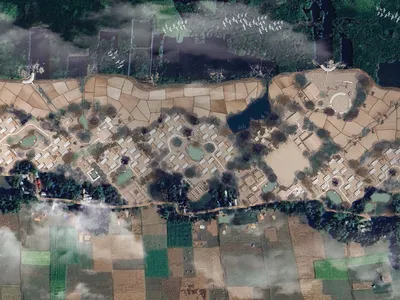
Hodi-Mandai Geram
Project Function: Preservation and revitalization of the Intangible heritage and socio-spatial identity of the Hodi by Housing, Cultural Memory Center, Sacred Grove, landscape, local tourism economy

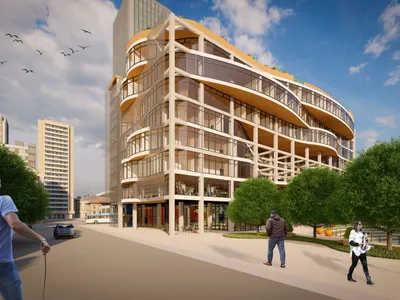
Olio Towers: A Mid-Rise for Performers That Fuses Housing, Rehearsal, and Stage
Located blocks from Houston's Theater District, this modular tower stacks living units around a central performance atrium.
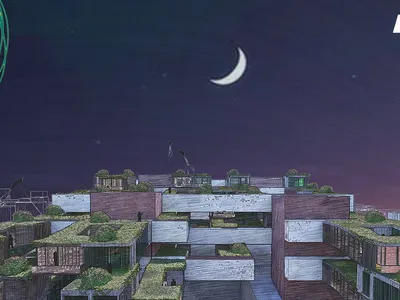
Oasis: Modular Green Housing Carved into Dhaka's Urban Fabric
A shortlisted Plugin Housing entry reclaims unauthorized settlements in Dhaka with stepped concrete volumes, green roofs, and ventilation-driven design.

Black Hole: A Floating Megastructure for the Post-Physical Era
Emiliano Mazzarotto envisions a spherical, self-scaling arena where e-sports, digital hotels, and holographic stadiums replace traditional public space.

Explore Architecture Competitions
Discover active competitions in this discipline

Challenge to reimagine the Iron Throne

Photograph architecture without architects

Illustrate the lost glory of Angkor Wat - Render Challenge

Design challenge to reuse E-waste
Comments (0)
Please login or sign up to add comments
No comments yet. Be the first to comment!