
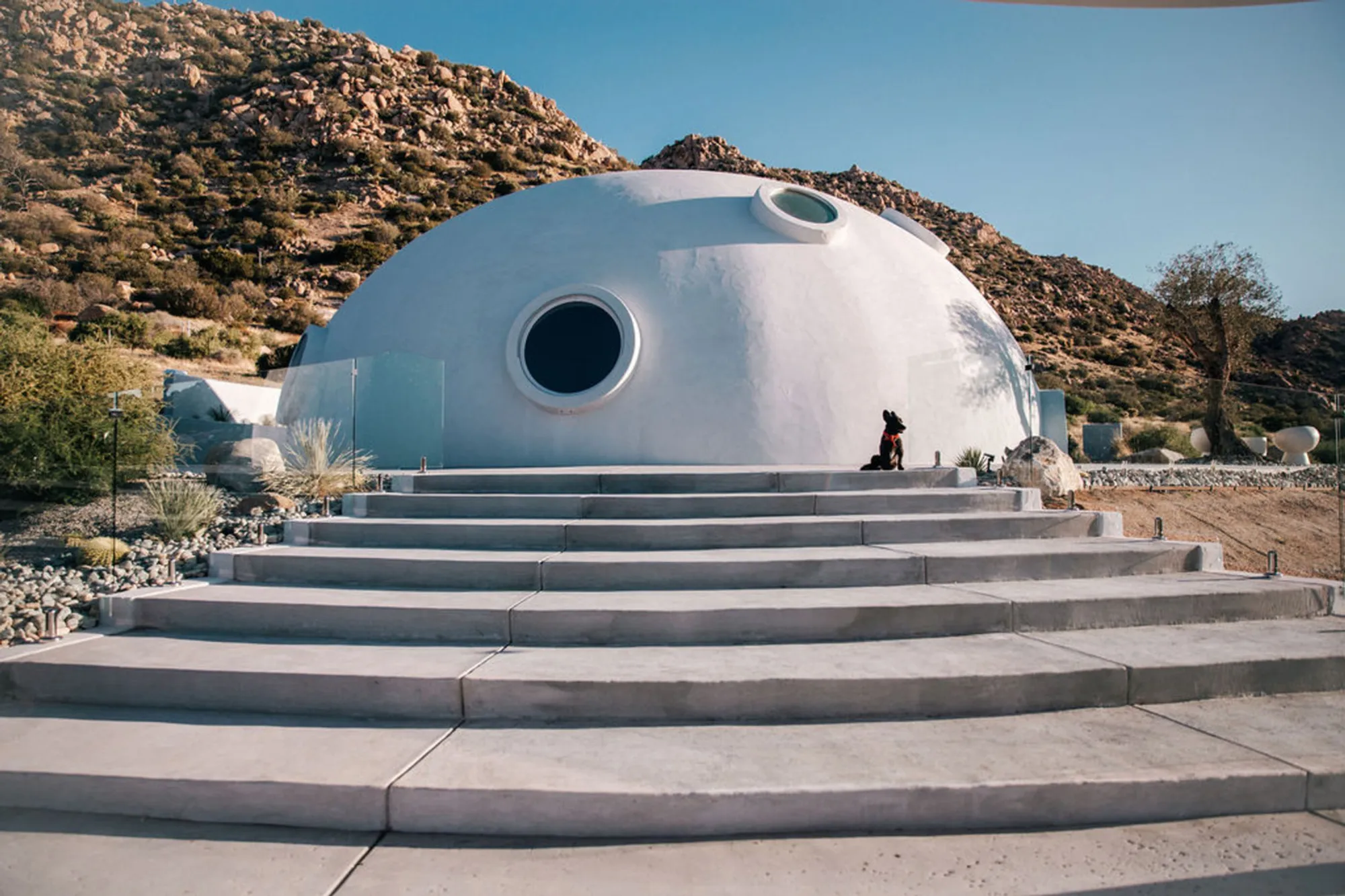
Hata Dome: A Self-Built Dome House Design Merging Brutalism, Sustainability, and Sculptural Beauty in the Desert
An off-grid, self-built dome house in the desert blends sculptural design, climate resilience, and emotional architecture by Anastasiya Dudik.


A Radical Exploration in Dome House Design
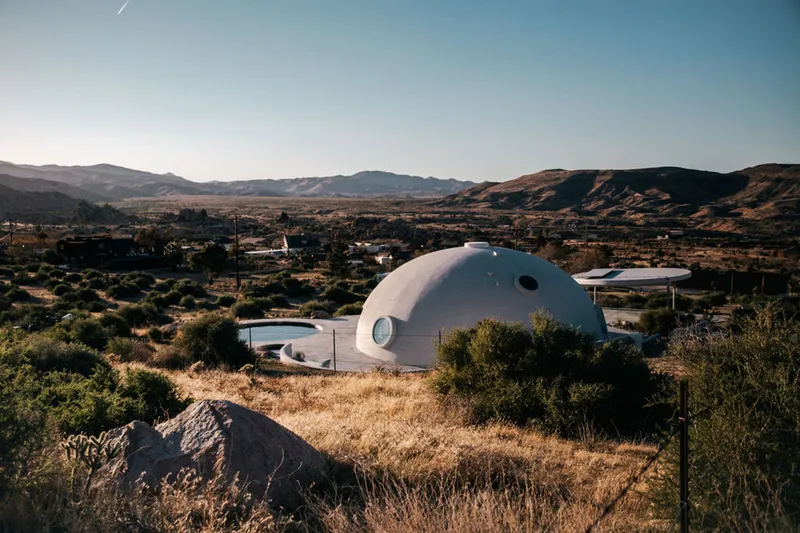
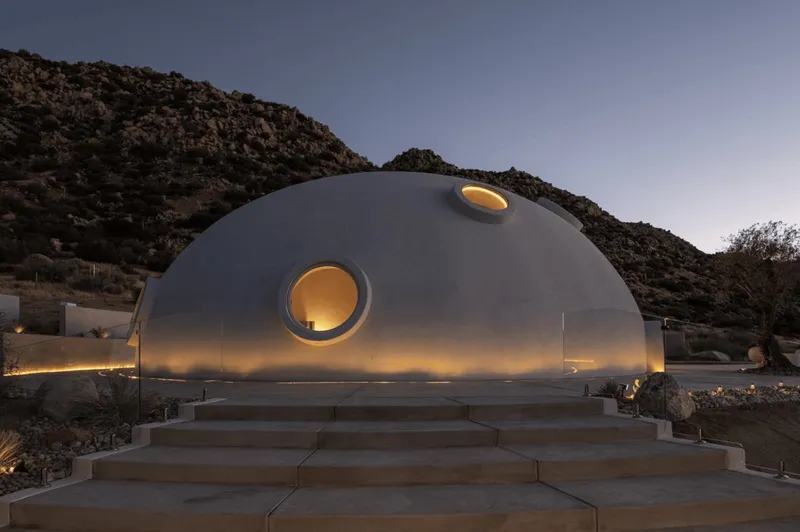
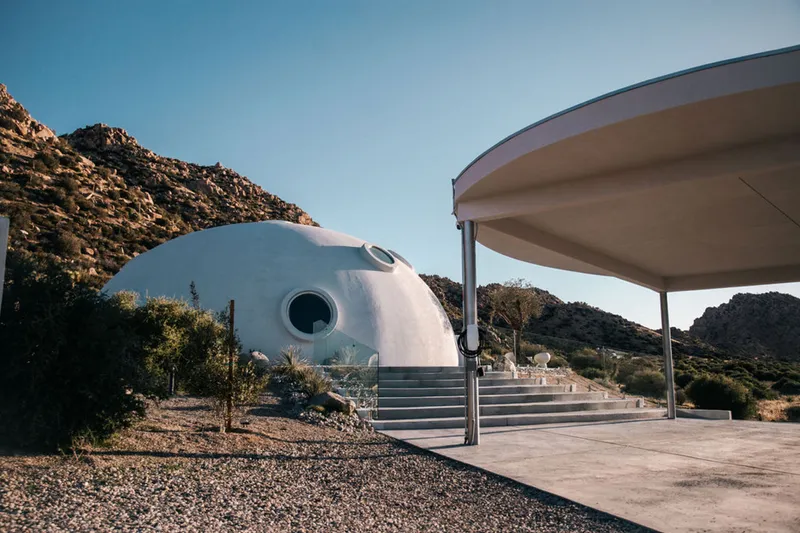
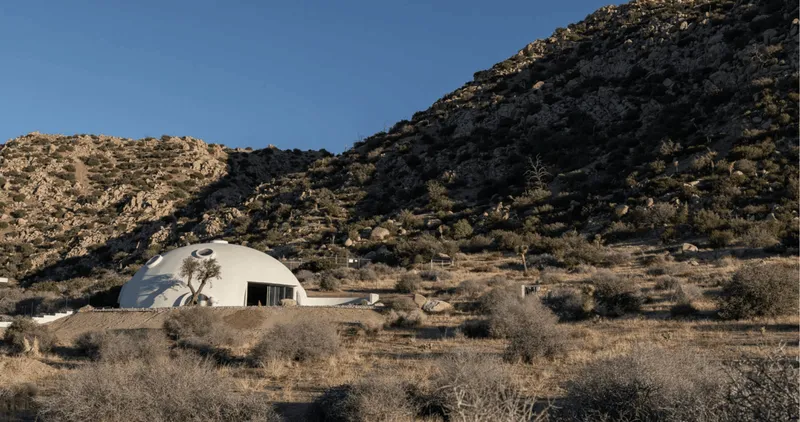
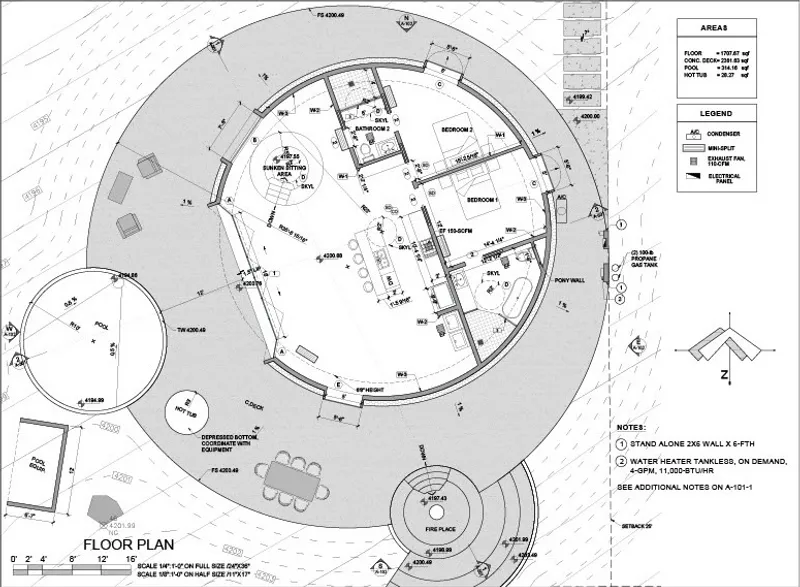
In the heart of California’s high desert near Pioneertown, a revolutionary take on dome house design emerges from the sands—a self-built, sculptural sanctuary known as Hata Dome. Created entirely by self-taught designer-builder Anastasiya Dudik, this 1,707-square-foot concrete dome redefines what it means to build sustainably, artistically, and independently in an off-grid environment.
A Singular Vision: Self-Built Architectural Innovation
Anastasiya Dudik, without formal architectural training or a construction firm, envisioned and realized HATA as a holistic act of creation. From design to structural engineering, every curve, finish, and fixture was guided by her hand. The dome was constructed using an airform system, reinforced with rebar, finished with shotcrete and stucco—yielding a monolithic shell designed to withstand fire, earthquakes, and extreme temperatures.
Future Primitive Meets Climate Resilience
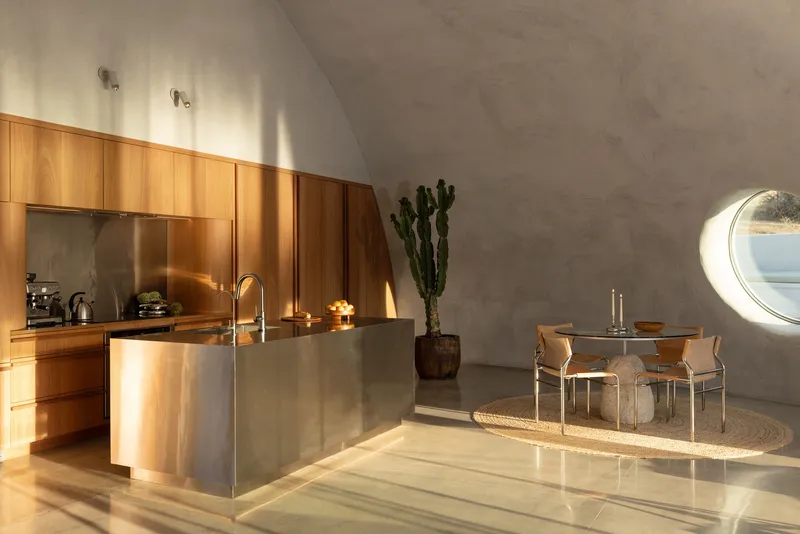
The design is rooted in what Dudik calls “future primitive”—a design philosophy that reimagines ancient building logic for contemporary environmental demands. Drawing from ancestral architectural wisdom, the Hata Dome embraces curved forms, thermal mass, and elemental materials to passively regulate interior climate in the harsh desert environment. These features not only provide energy efficiency but also contribute to the tactile, emotional experience of the space.
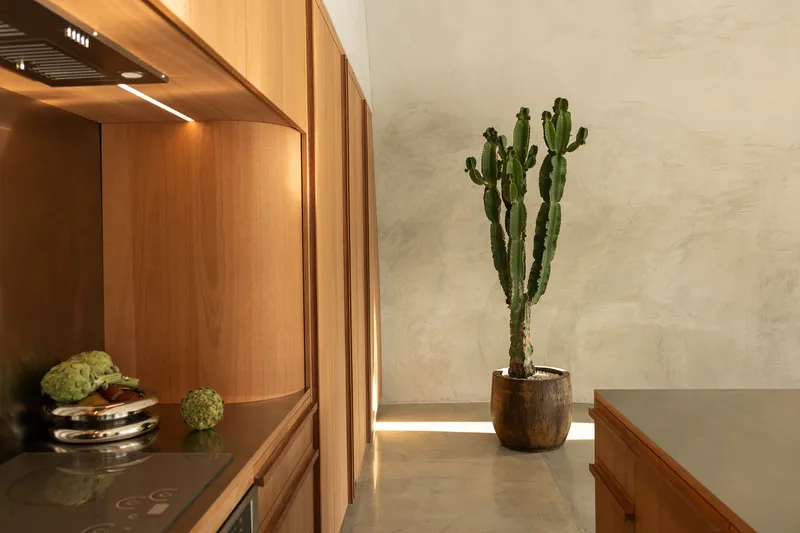
Brutalism Reimagined with Softness and Soul
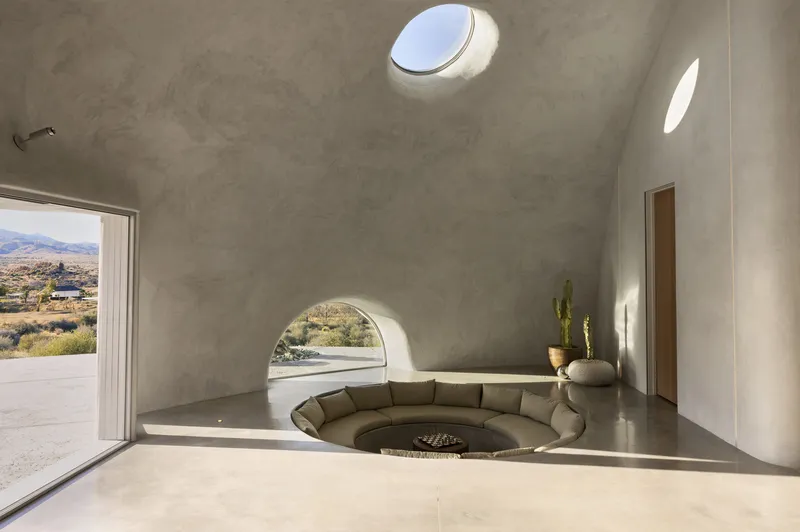
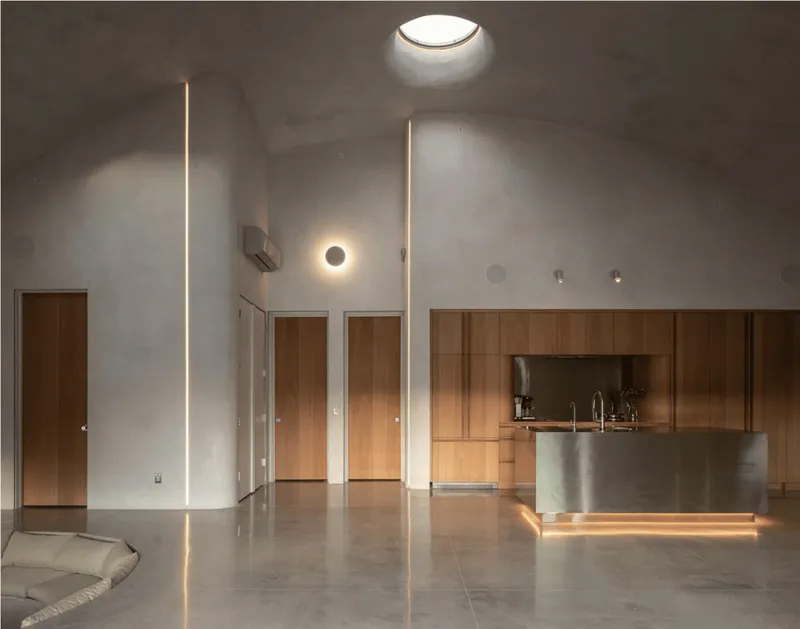
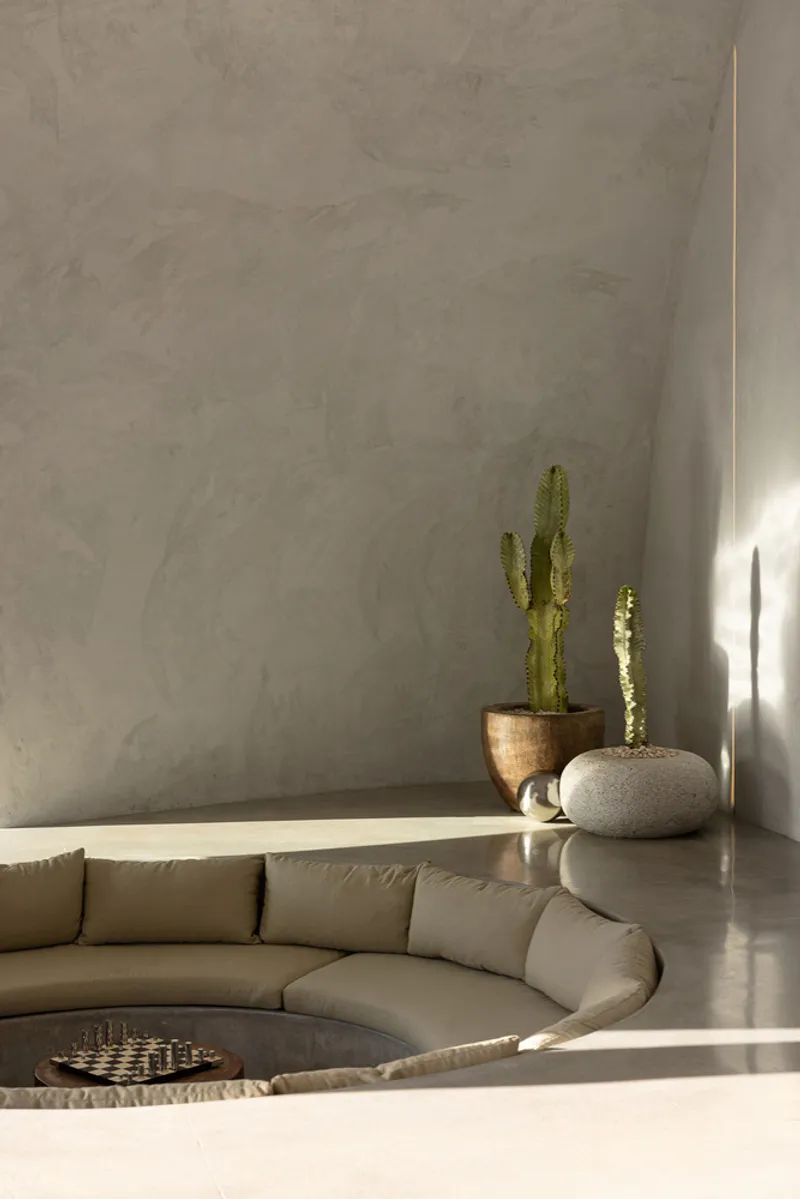
While the concrete shell nods to Brutalism, it rejects its usual severity. Instead of imposing force, the dome invites serenity. Inspired by Soviet-era buildings of Dudik’s Ukrainian childhood, the structure softens monumentality through organic transitions and warm light. The concrete becomes a canvas for emotional expression—intimate, sensory, and deeply human.
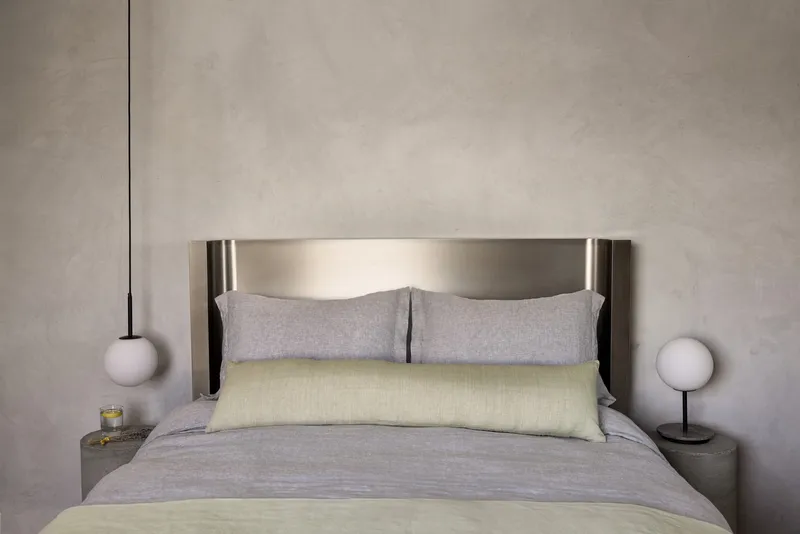
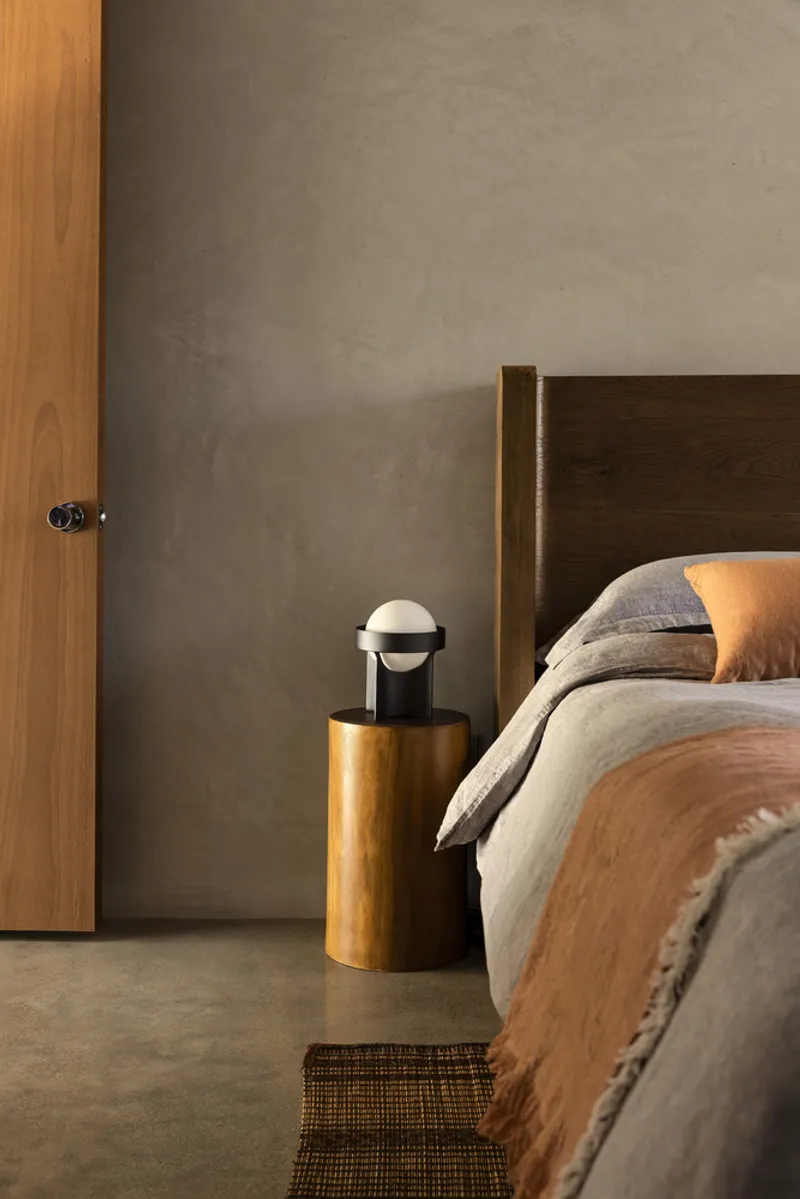
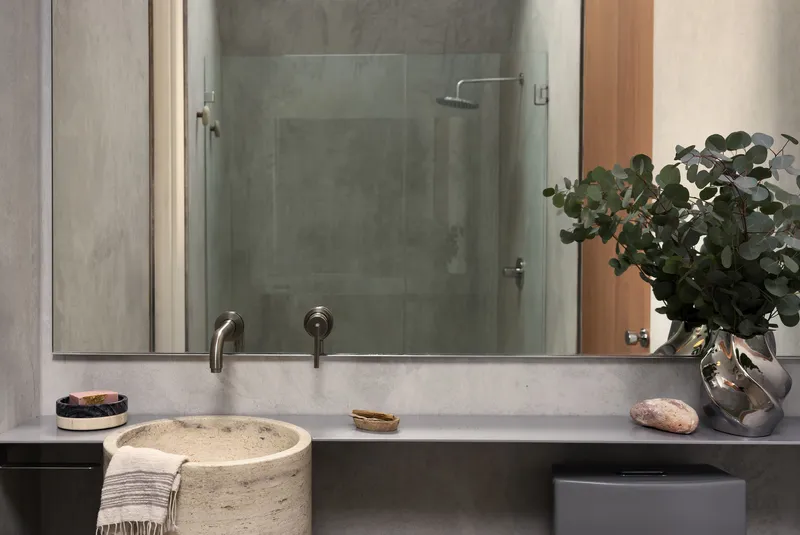
Sculptural Integration with the Desert Landscape
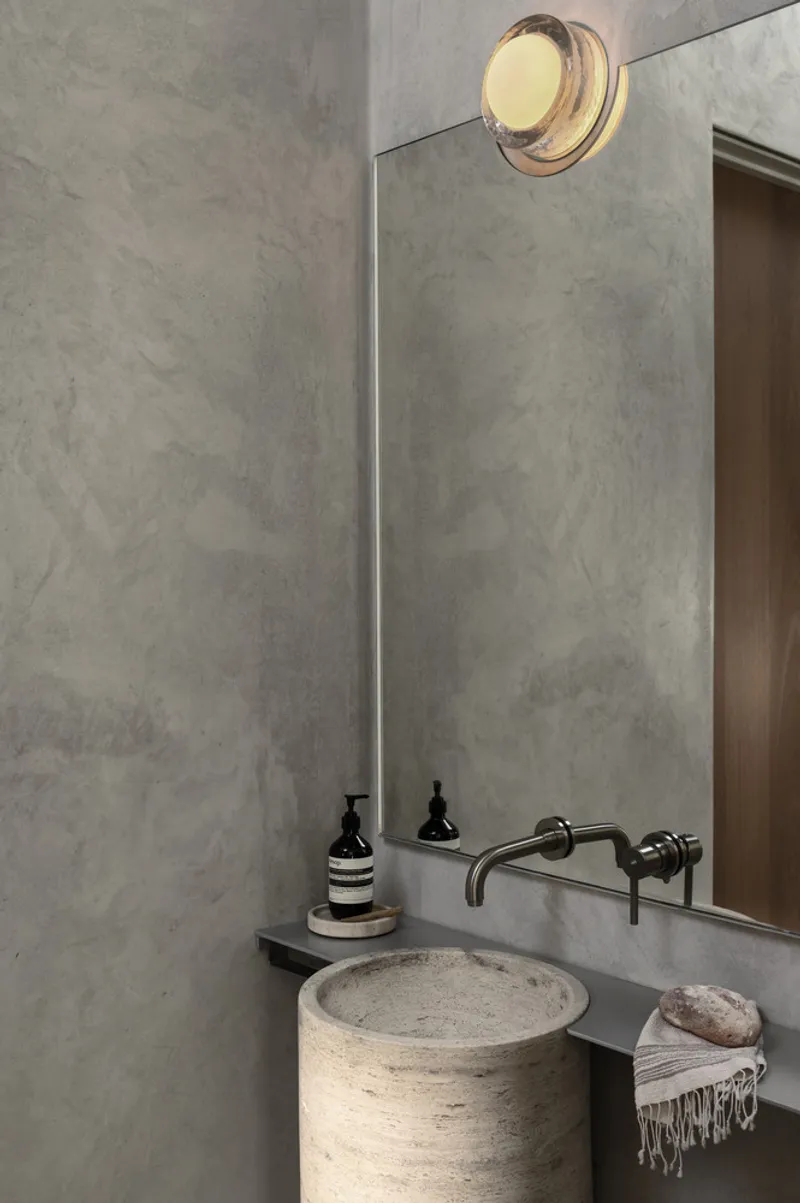
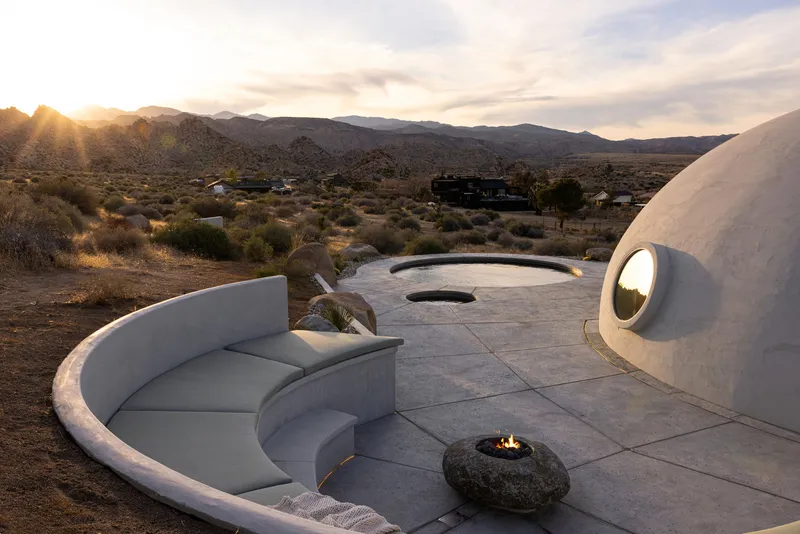
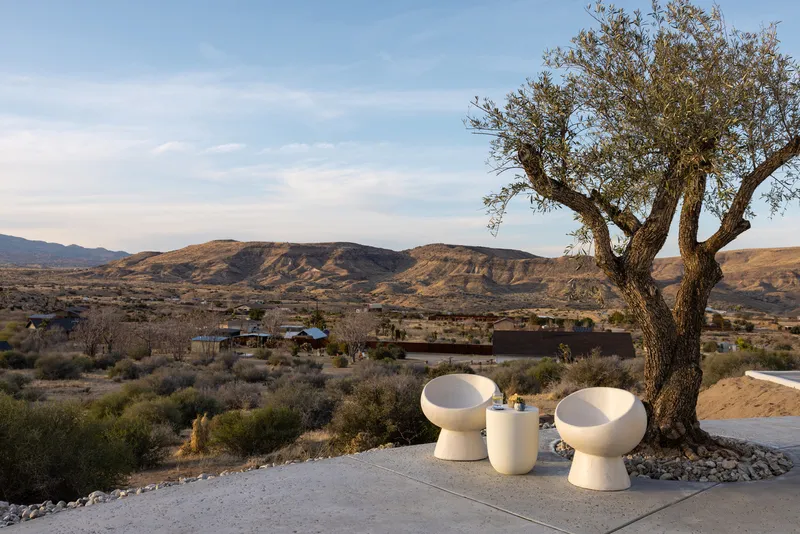
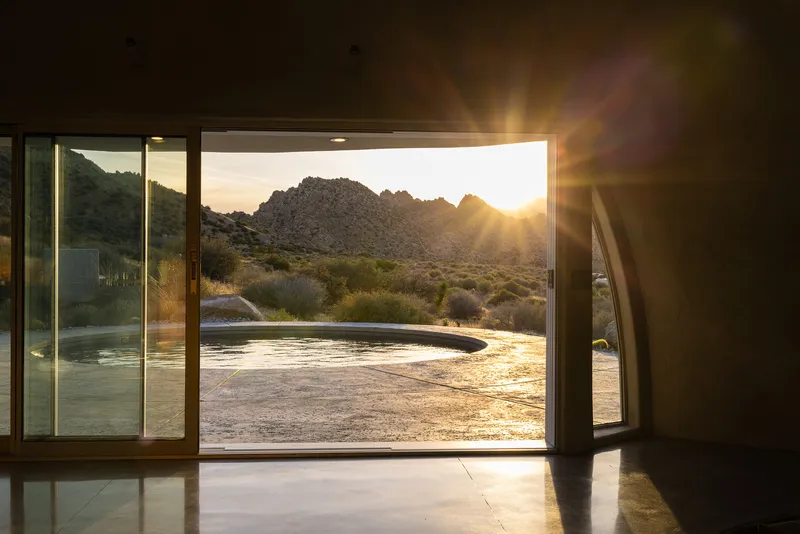
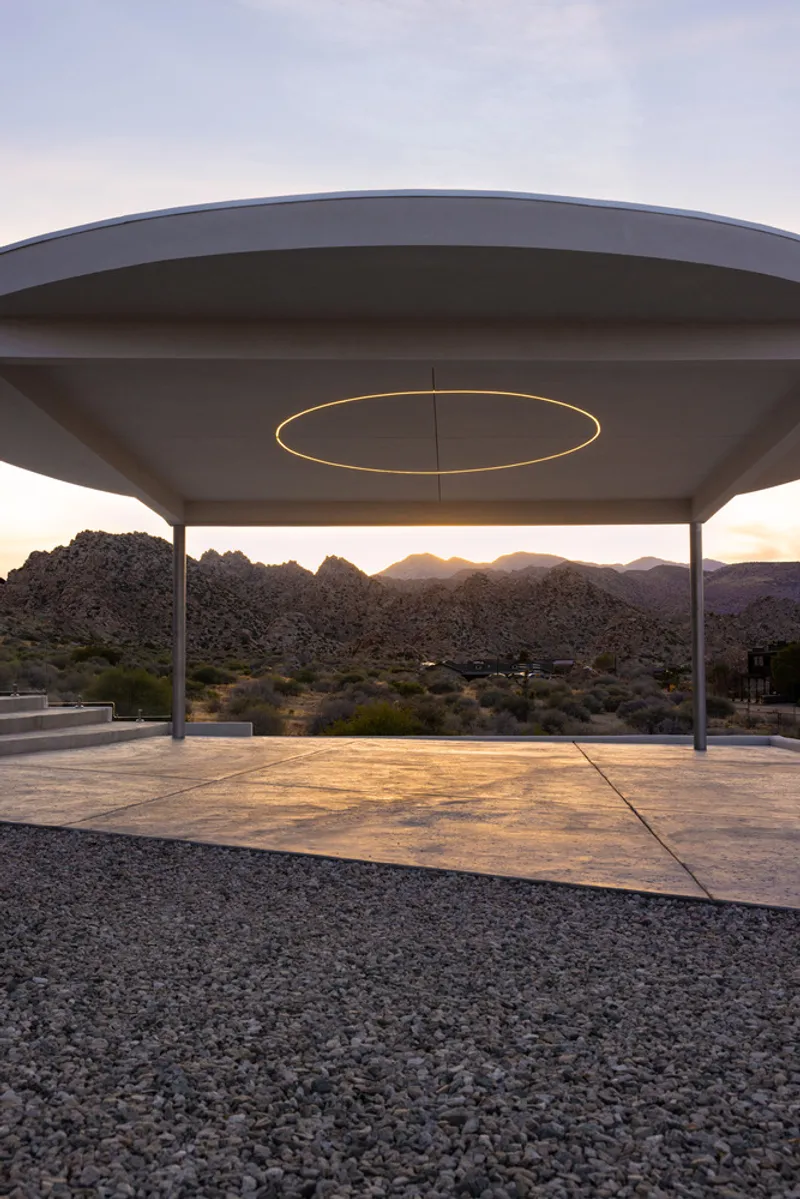
Set against the backdrop of the Sawtooth Mountains, the dome’s silhouette rises like a natural landform, appearing both ancient and futuristic. Inside, architecture, art, and nature merge seamlessly. Curved plaster walls capture drifting sunlight. Custom furnishings emerge directly from the boulders embedded in the floor. Every element, from acoustics to textures, is attuned to evoke meditation, quietude, and restoration.
Off-Grid Living as an Artistic Statement
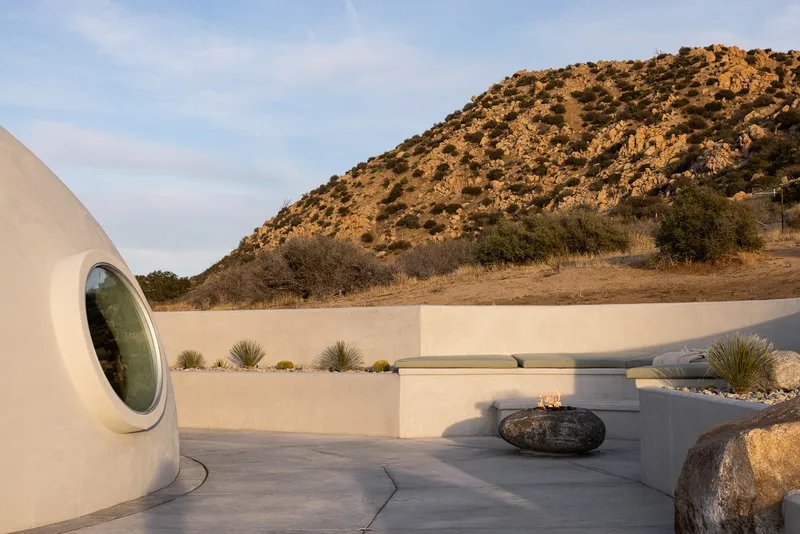
HATA is more than a dome house; it is a manifesto for resilient, off-grid living built with soul. It challenges conventional architecture by proving that one individual, driven by passion and vision, can build something environmentally adaptive and emotionally resonant. The home functions off-grid, presenting a sustainable model of remote desert living that respects both land and lifestyle.
A Blueprint for the Future of Residential Design
Hata Dome pushes the boundaries of what residential architecture can be. It is sculptural and functional, resilient and expressive, ancient in logic and futuristic in execution. It offers not just shelter, but a sensory experience that heals, inspires, and connects.
Through Hata Dome, Anastasiya Dudik proposes a new architectural language—one that celebrates intuitive creation, sustainable construction, and the profound impact of individual authorship. In doing so, she redefines the limits of dome house design for a future where resilience, beauty, and emotion coexist.
All Photographs are works of Natasha Lee, Shannon Moss, Brandon Stanley



Popular Articles
Popular articles from the community


The Musturak Paradise: Senior Living Architecture for a Connected Future in Temara, Morocco
The Musturak Paradise reimagines senior living architecture in Temara via private homes, social spaces, culture, community, and shared care.

Riyadh For All: Intergenerational Urban Design for Active Aging in Rabat
Riyadh For All reimagines urban design in Rabat with intergenerational co-living, adaptive courtyards, and Moroccan cultural exchange today.

Play: Fragments of Their World
Familiar architecture becomes modular playground design, creating safe spaces where displaced children can learn, connect, imagine and play.

Hill & Cross Opera: Sculptural Opera House Architecture Shaped by Tallinn’s Landscape and Identity
Hill & Cross Opera reimagines opera house architecture in Tallinn through its sculptural hill, civic plaza, glass wave and a luminous cross.
Similar Reads
You might also enjoy these articles

FAMM Arquitectura Organizes Ten Villas Around Courtyards and Jungle in Nosara, Costa Rica
El Molino pairs two elongated volumes with deep overhangs and timber louvers to build a compact coastal community five minutes from the beach.
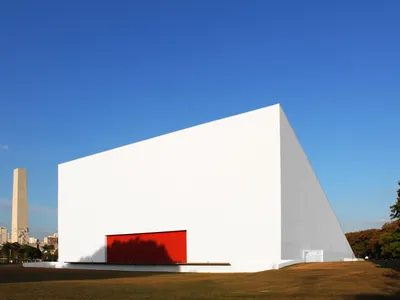
Oscar Niemeyer's Ibirapuera Park Pavilions Define São Paulo's Cultural Identity in Concrete and Curve
A constellation of modernist volumes set within São Paulo's most important urban park, conceived for the city's 400th anniversary in 1954.
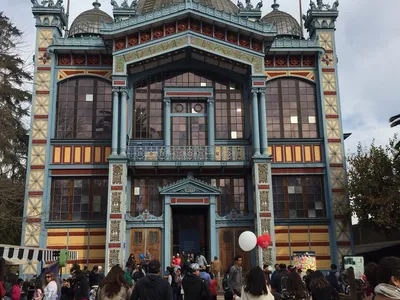
How Henri Picq's 1889 Paris Pavilion Traveled 11,000 Kilometers to Become Santiago's Artequín Museum
A prefabricated iron and glass pavilion built for the Paris Universal Exposition found a second life as a children's art museum in Chile.
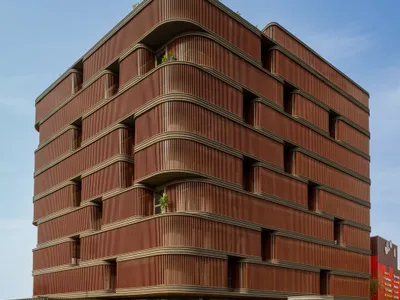
Sanjay Puri Architects Wraps a Jaipur Office Tower in Capsule-Shaped Green Buffers
A nine-level climate-responsive workplace near Jaipur Airport uses stacked planter terraces and aluminium screens to fight 40°C heat.


Explore Architecture Competitions
Discover active competitions in this discipline



Challenge to reimagine the Iron Throne


Photograph architecture without architects


Illustrate the lost glory of Angkor Wat - Render Challenge


Design challenge to reuse E-waste
Comments (0)
Please login or sign up to add comments
No comments yet. Be the first to comment!