
Hazelmead Bridport Co-Housing by Barefoot Architects
Affordable rural co-housing model with low-carbon timber construction, shared gardens, communal governance, and pedestrian-first neighbourhood design fostering long-term community resilience.

On the western edge of Bridport in Dorset, beneath the rolling green ridges of the Area of Outstanding Natural Beauty, Hazelmead Co-Housing emerges as a new approach to contemporary living in the United Kingdom. Designed by Barefoot Architects in partnership with Bridport Co-Housing Community Land Trust (CLT), Hazelmead has become the UK’s largest built co-housing development to date. More importantly, it stands as a demonstration that alternative housing delivery models—when shaped by community decision-making and supported by progressive architecture—can begin to redress the failures of mainstream housing provision in small towns and rural regions.
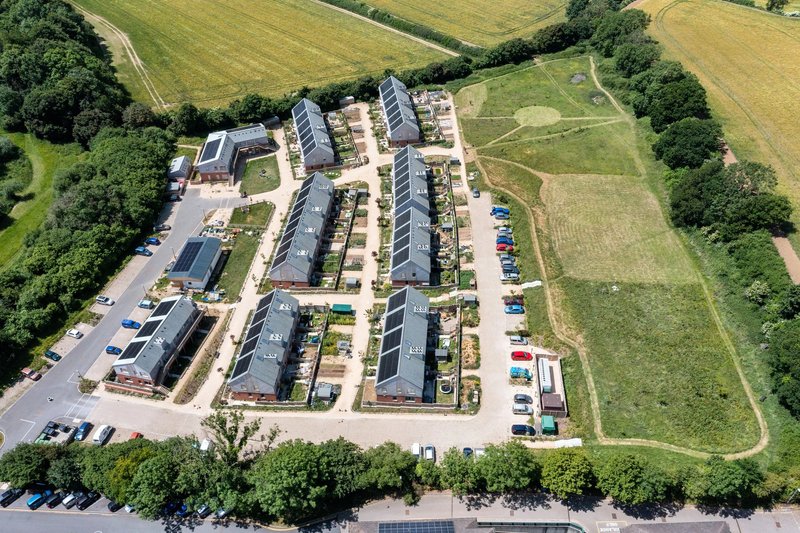
Hazelmead’s story began in 2008 when residents came together to confront a real and familiar crisis: increasing house prices, insufficient rental stock, and an environment where younger generations could no longer remain in the places where they grew up. With average home values exceeding eleven times the local income, a conventional market-led development would only continue the pattern of economic exclusion. The CLT formed with the aim of breaking this cycle, and after more than a decade of organising, campaigning, securing land, negotiating funding, and carefully co-designing long-term governance structures, the project has materialised as a built neighbourhood with 53 homes held in perpetual affordability.
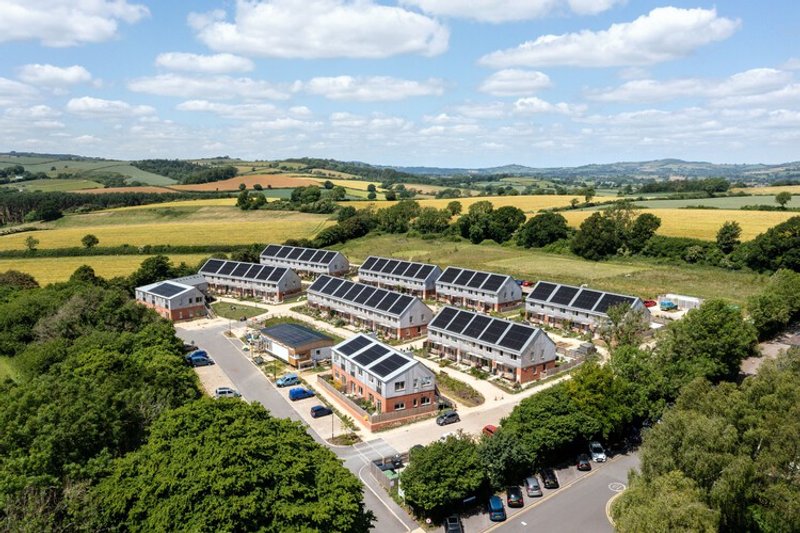
Co-housing, unlike speculative housing, is not simply a physical product but a way of structuring community. Hazelmead is built around collective ownership, democratic management, and intentional social interaction. Every resident is a stakeholder, not a bystander. The development includes 39 terraced houses and 14 one-bedroom flats spread across two low-rise apartment buildings. All units are either socially rented or available through shared ownership, and kept permanently below market value through the CLT model. No house can be privately sold at profit; affordability is designed to last, not vanish after one generation.
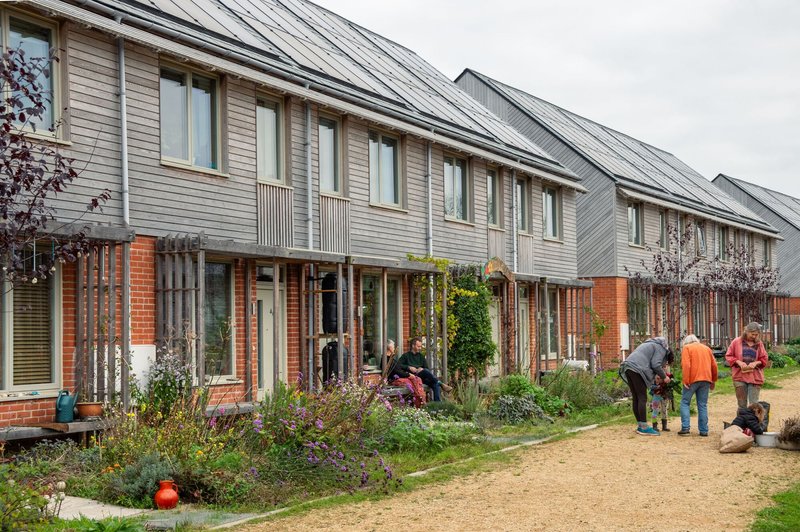
Embedding Community into Urban Form
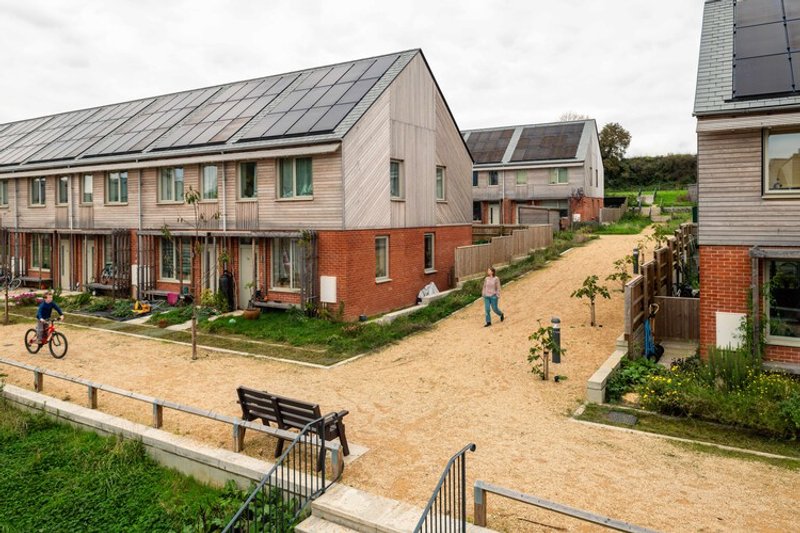
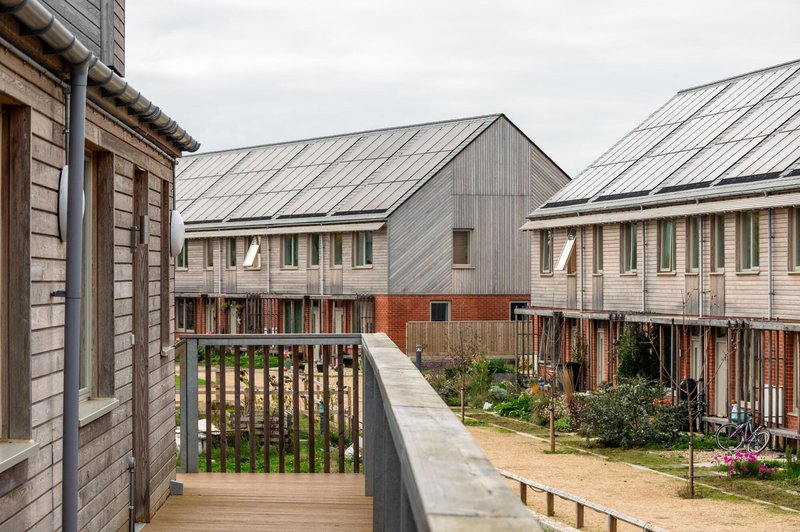
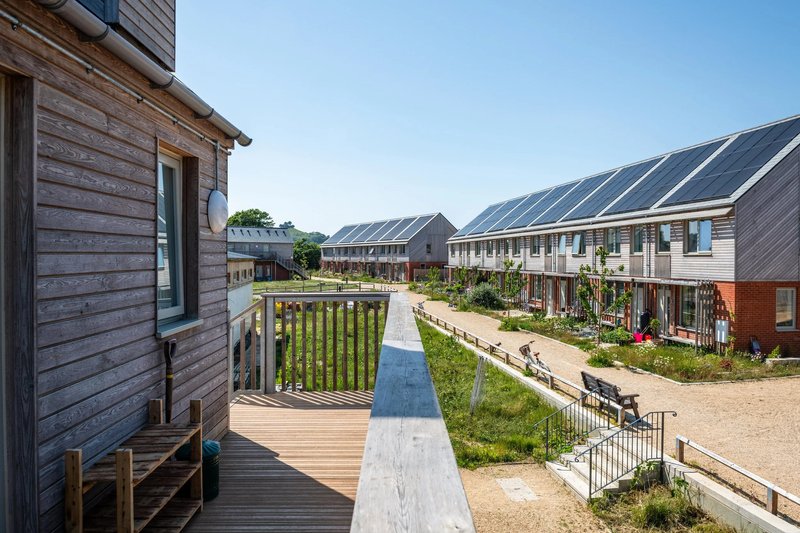
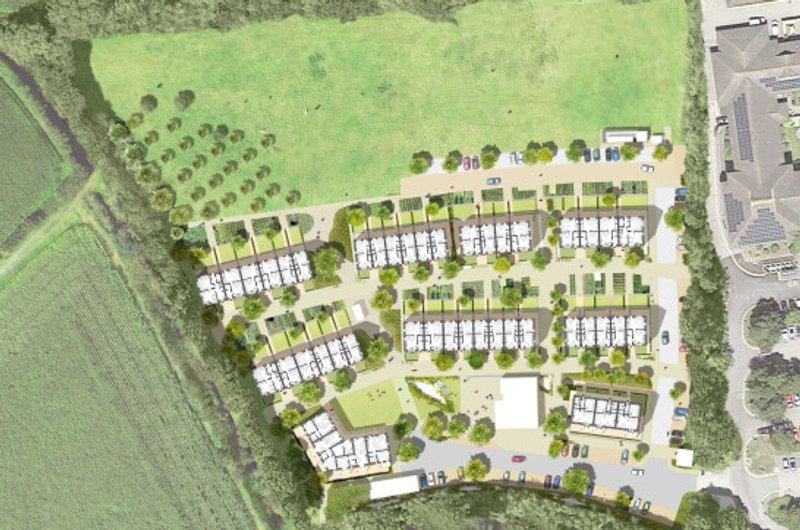
Barefoot Architects approached the project not as an ordinary residential layout, but as an exercise in spatialising community values. The homes are arranged along car-free pedestrian lanes, stitched with shared gardens, vegetable plots, and pockets of soft landscape where children can wander freely without the negotiation of driveways or traffic. Terraces follow the slope of the hillside rather than cutting into it, creating staggered rooflines and outward-facing elevations that open to long views across the rural landscape.
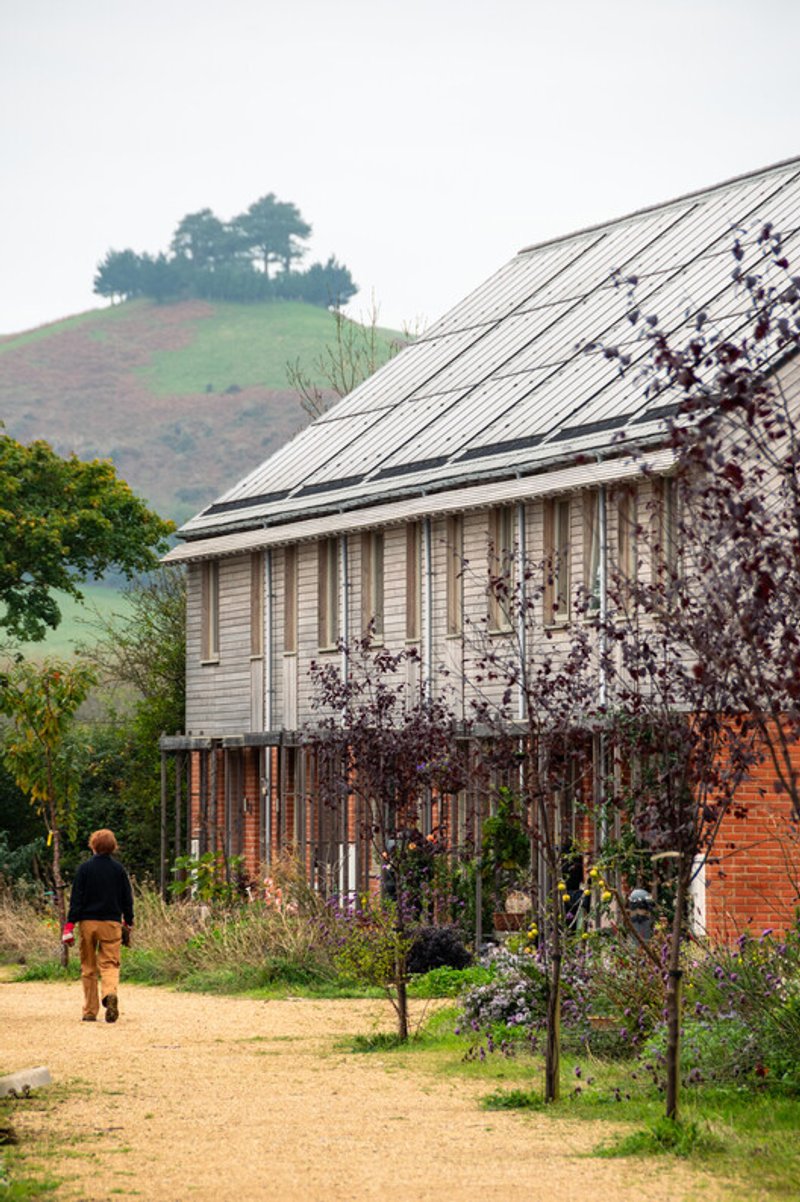
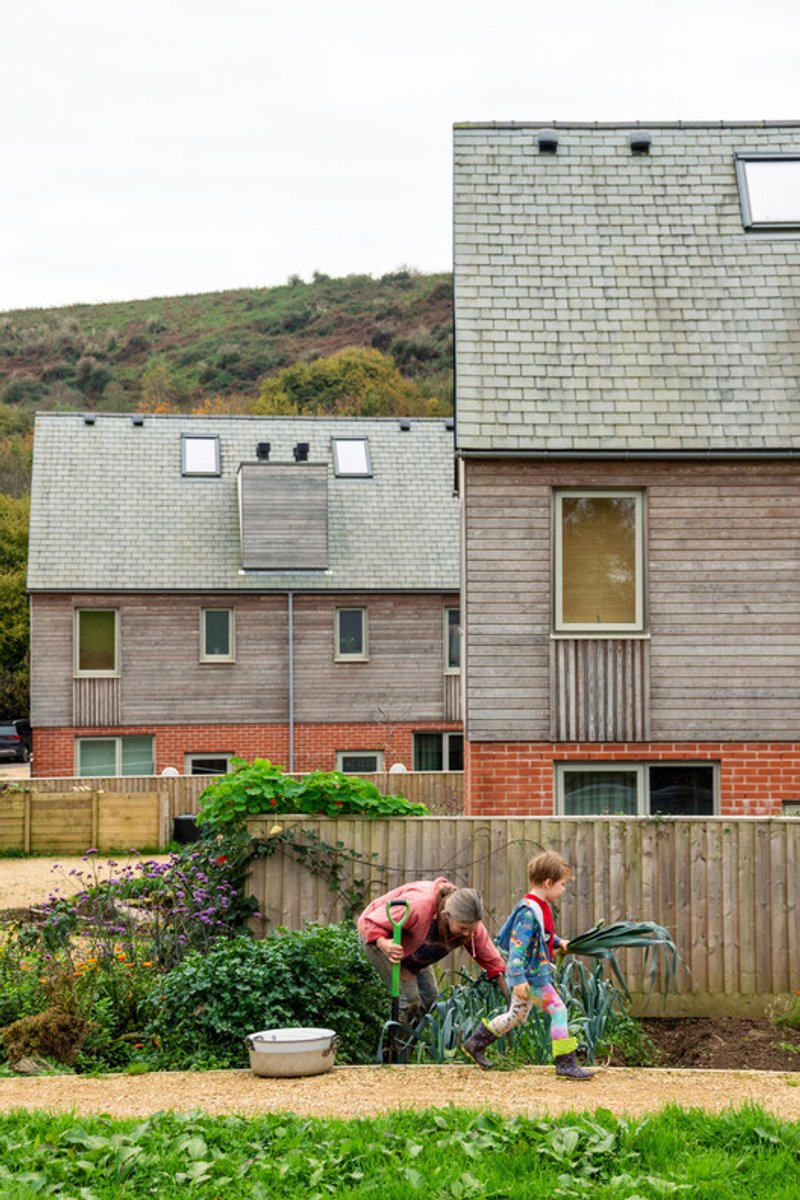
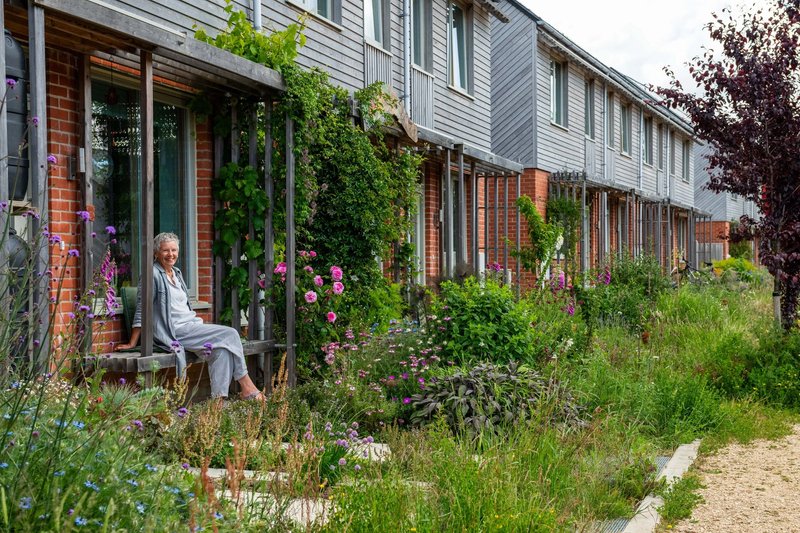
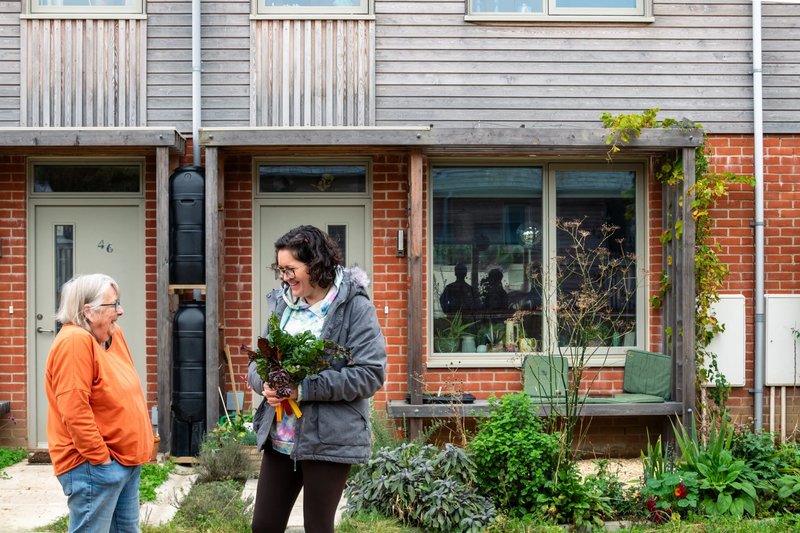
Street life, in Hazelmead, is not merely incidental but structured. Benches built into the front of each home invite interaction. Paths are narrow enough to slow walking pace, to make encounters unavoidable rather than optional. At any moment, someone is tending beans, carrying seedlings, exchanging tools, or pausing to speak with a neighbour passing by. The architecture facilitates the kind of micro-exchange that has eroded in mainstream suburban housing but is fundamental to social resilience.
Shared existence is also supported by planned amenity. The residents are constructing a common house from timber and straw bale—a material choice aligned with ecological ethics and the collective spirit of making. Once complete, this building will host shared meals, community meetings, workshops, fitness classes, childcare exchange, and co-working—functions that reduce isolation, share labour, and decrease reliance on external commercial infrastructure. In co-housing, architecture extends into social program, and Hazelmead demonstrates that everyday space can be an instrument of connection.
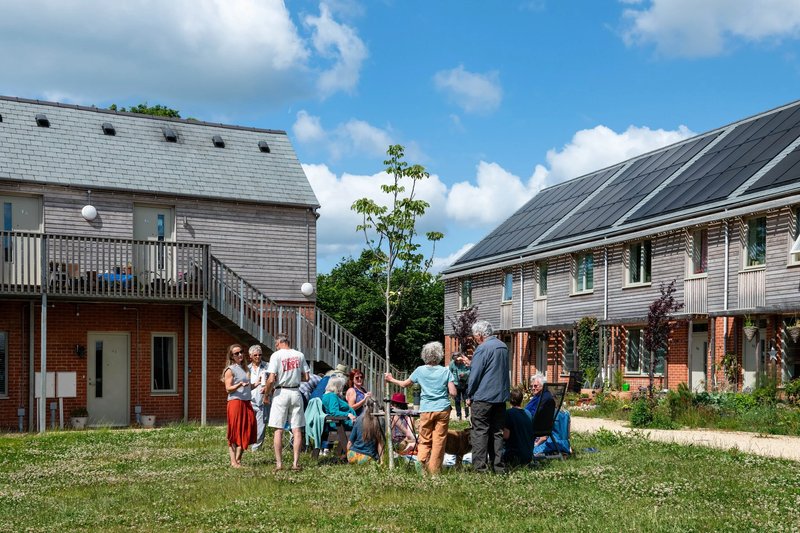
Housing as Well-Being Infrastructure
The development’s social agenda aligns deeply with public health evidence linking stable housing to mental well-being, longevity, and sense of belonging. National studies have repeatedly shown that loneliness, housing insecurity, and transient tenancy produce measurable declines in physical and emotional health. Hazelmead responds by embedding security and interaction into its structure.
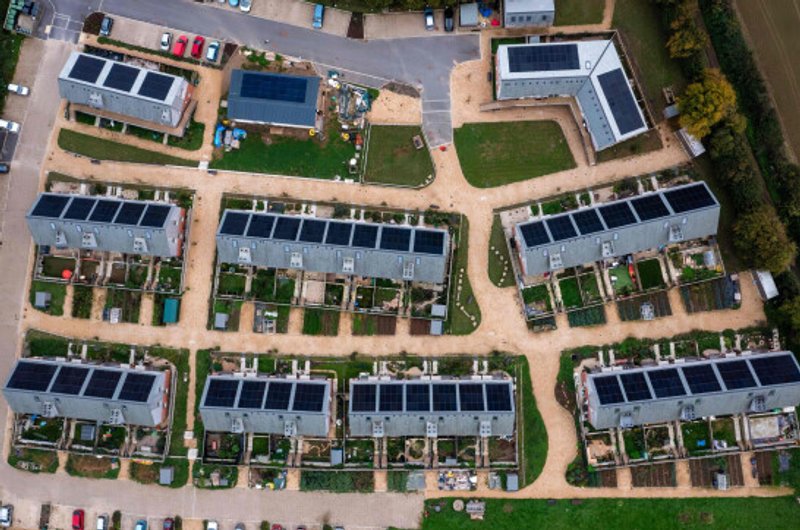
Secure tenure eliminates the anxiety of eviction or unmanageable inflation. Shared ownership encourages attachment and stewardship. Daily routine—gardening, shared tool sheds, collective maintenance—provides purpose, exercise, familiarity, and mutual support. Hazelmead operates as a health-making neighbourhood, not just a residential site.
Architectural Language and Low-Carbon Construction
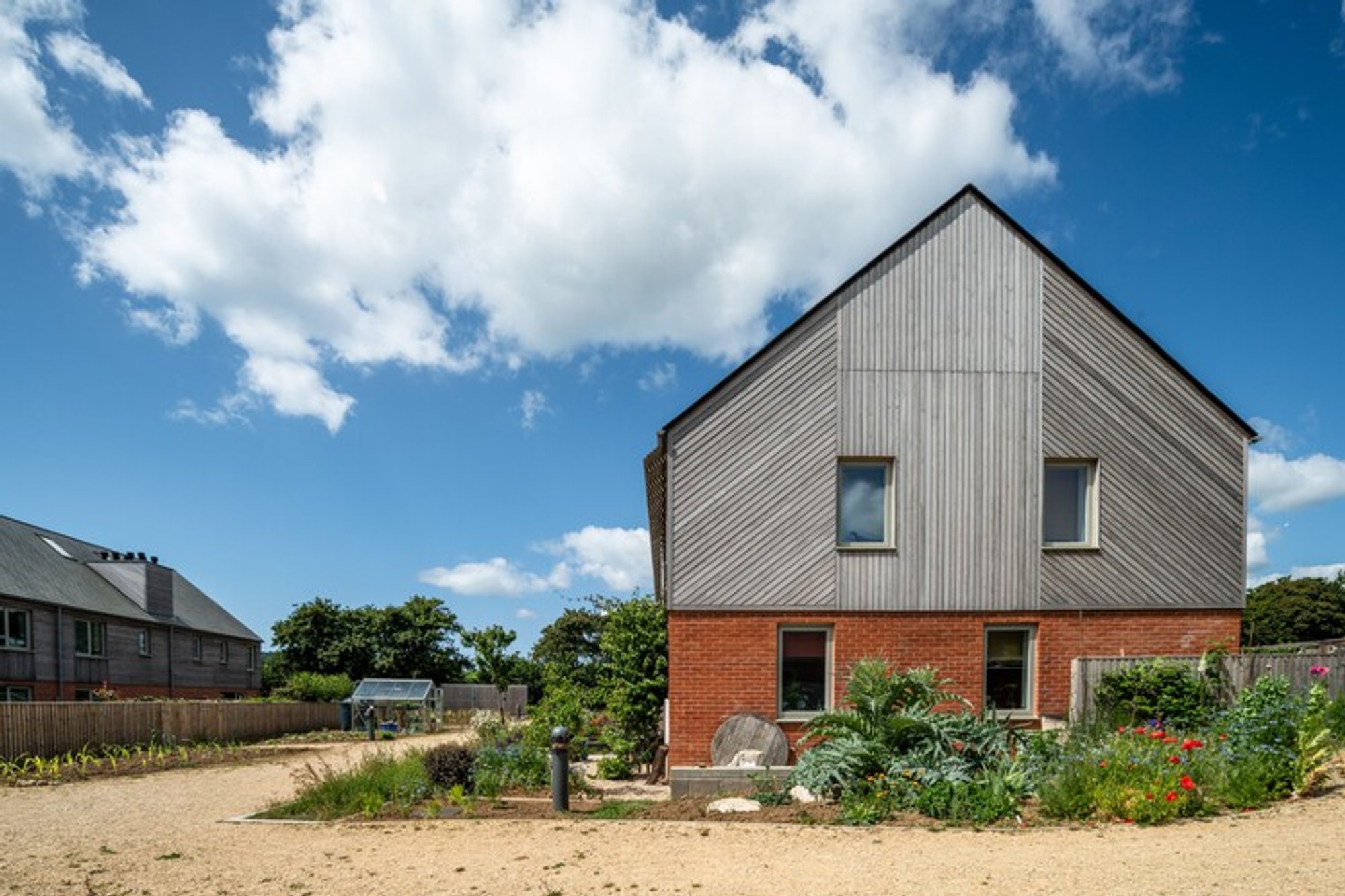
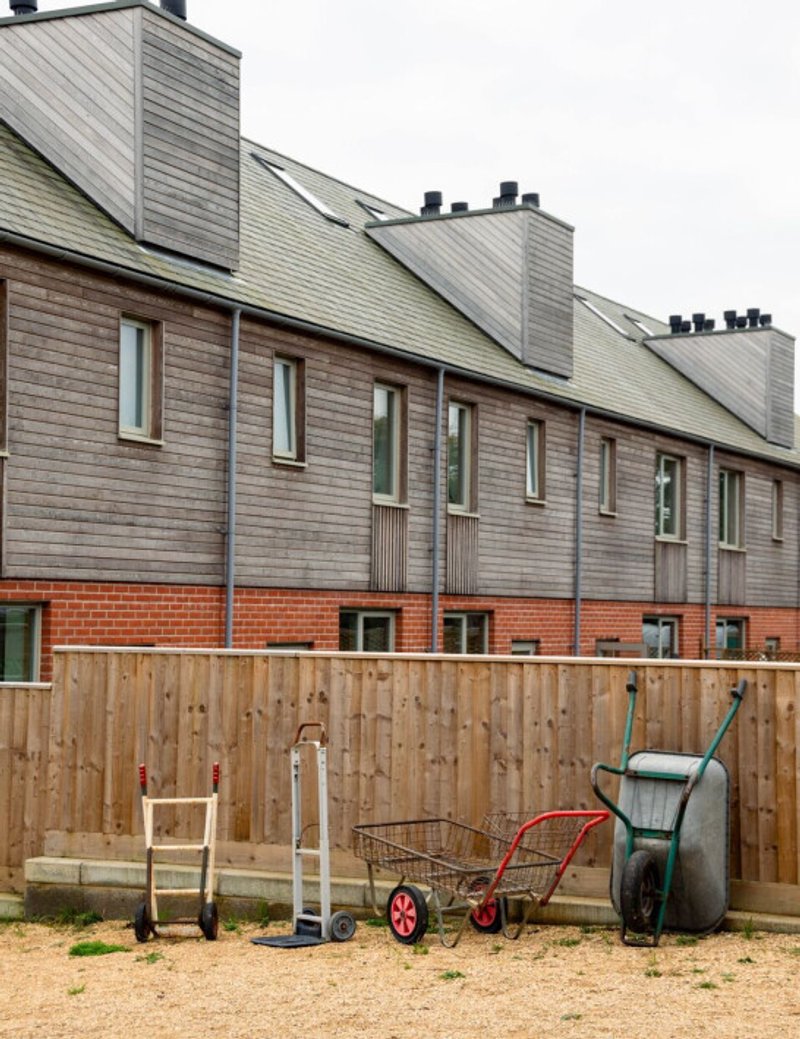
Material selection reinforces Hazelmead’s environmental commitments. Homes are built to the AECB CarbonLite New Build Standard, incorporating timber frames with modern-methods-of-construction insulated panels. This results in reduced embodied carbon and a lean, efficient assembly process. External finishes alternate between larch cladding and brick, giving variation without fragmentation and nesting the settlement into the surrounding ecology through tone, weathering behaviour, and tactility.
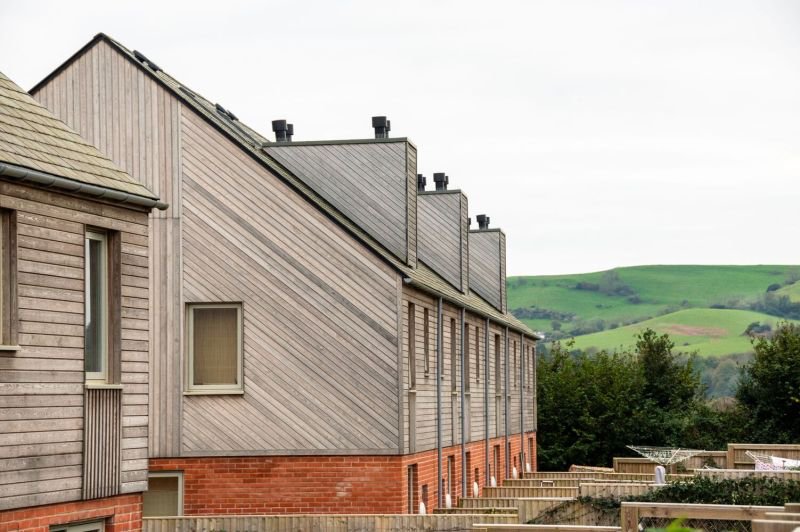
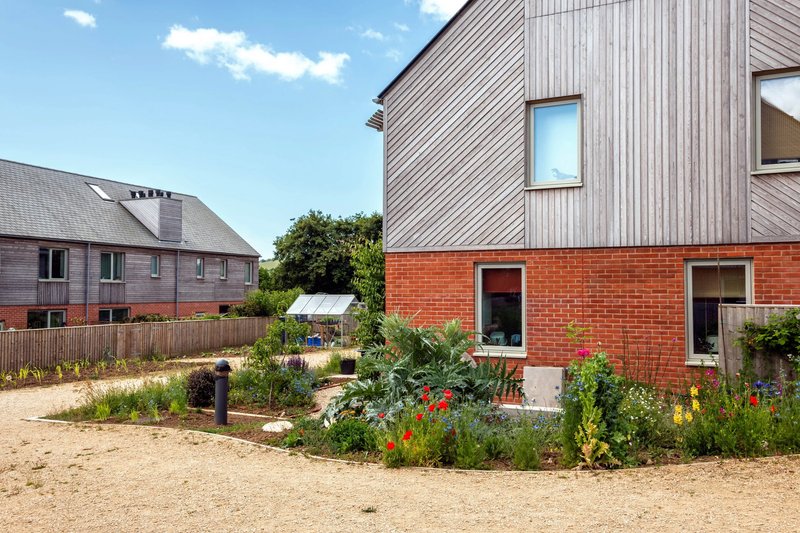
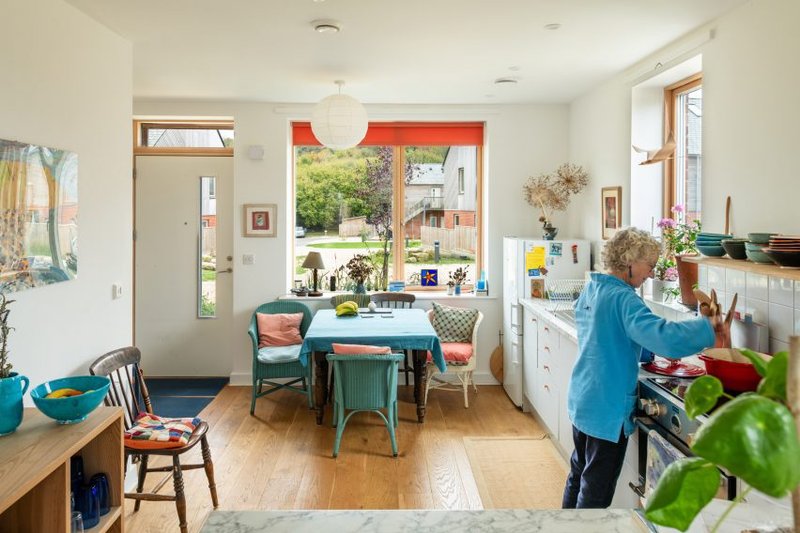
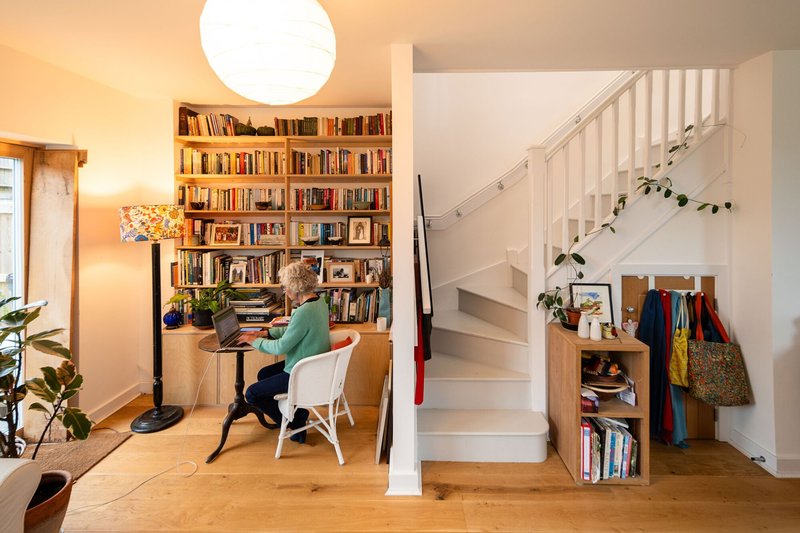
Larch weathers softly into silver-grey, echoing rural farm structures across Dorset. Brickwork anchors the development to the market-town character of Bridport. Together, these materials create an architectural identity that is contemporary yet local, modest yet confident. Large windows, vaulted ceilings, and generous daylighting give rooms spaciousness and emotional quality uncommon in affordable construction, proof that cost efficiency does not require aesthetic compromise.
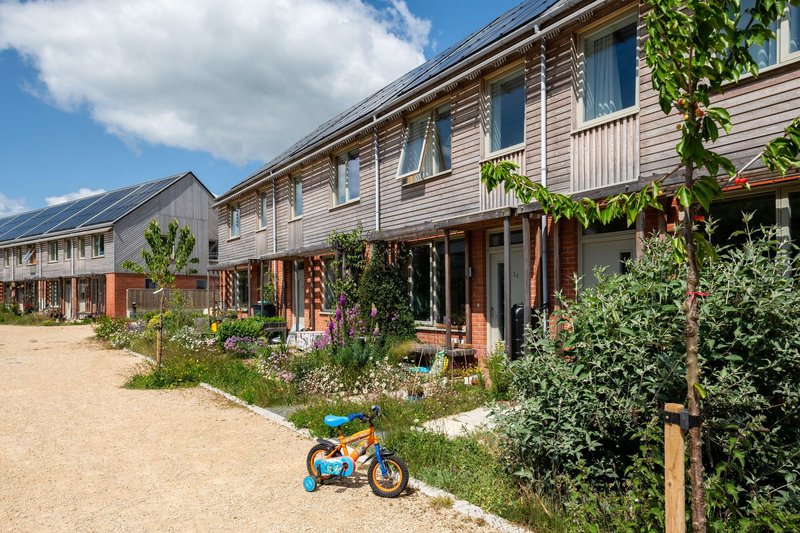
Energy efficiency is not treated as an add-on but an organising principle. Insulation is robust. Ventilation is controlled. Orientation maximises solar gain in winter and shading in summer. Communal behaviour—shared laundry, communal meals—reduces individual resource consumption. House by house, and through collective practice, Hazelmead becomes a climate-conscious living system.
The Landscape as Social Fabric
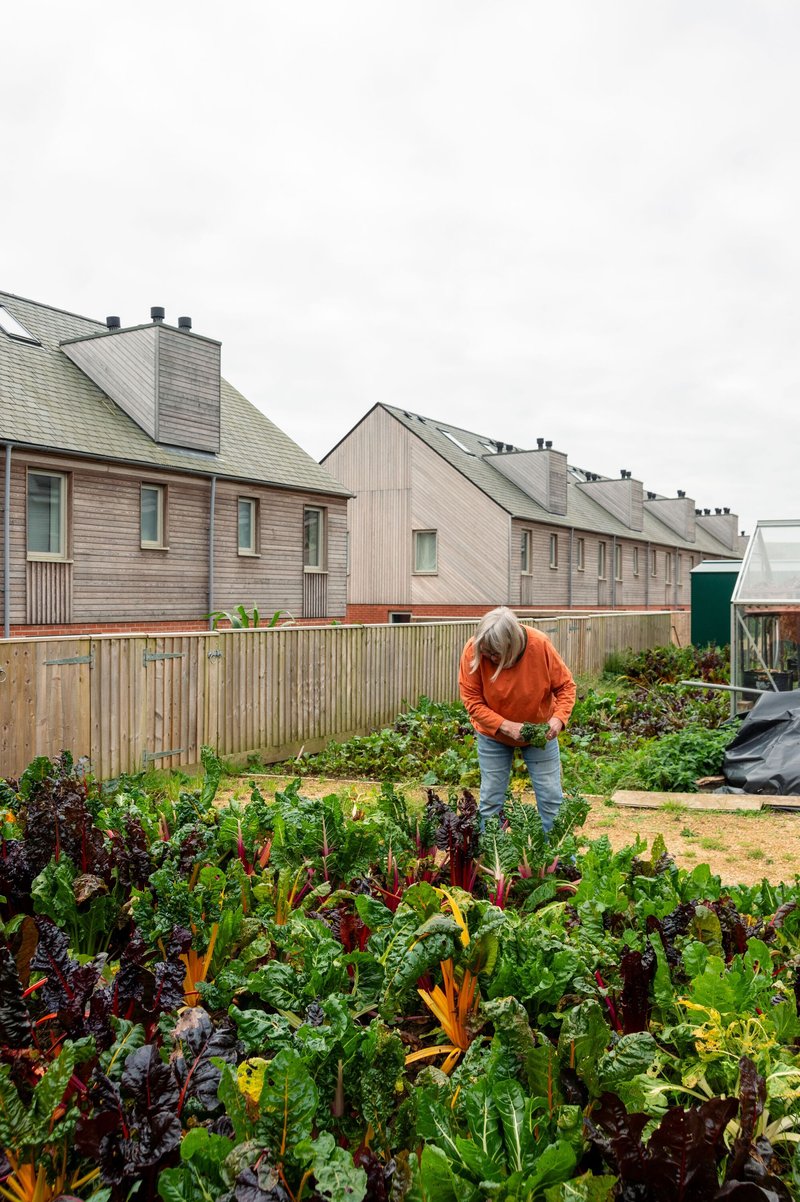
Landscape design plays a foundational role in the experience of Hazelmead. Rather than reserving greenery for private garden boundaries, planting is shared, edible, wild, and open. Vegetable beds are communal. Wildflower pockets bring pollinators. Fruit trees form edible corridors. Outdoor space evolves with seasons, giving residents reason to be present outside, and to work alongside each other.
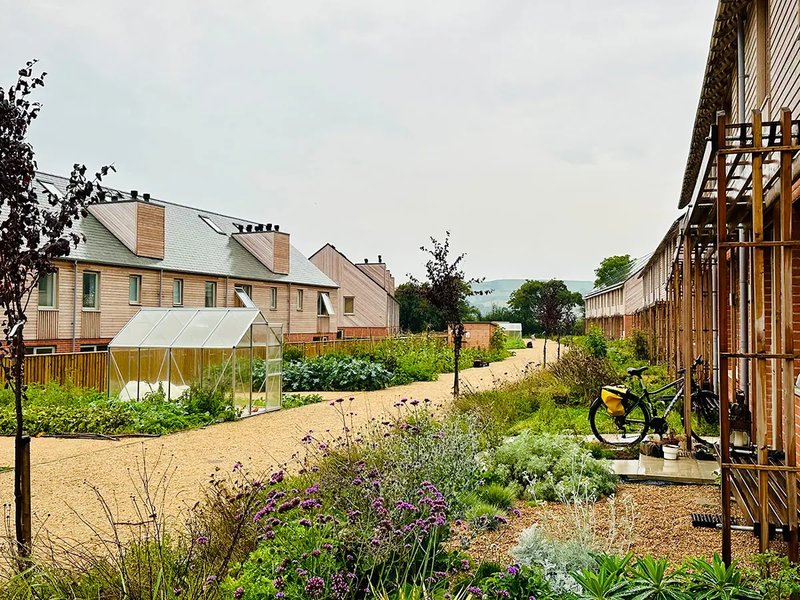
Cars are pushed to the periphery in purpose-built parking courts screened by planting. This decision drastically changes neighbourhood character: sound levels fall, air quality improves, children increase their range of mobility, and shared paths become the dominant public realm. The removal of private drives dissolves the spatial individualism typical of suburban form, replacing it with a pedestrian-scaled, intimate terrain of social overlap.
Governance as Architecture
Hazelmead is as much organisational design as it is spatial design. Residents govern through consensus. Decisions about gardens, budgets, maintenance, and common facilities are made collectively. Shared responsibility produces shared pride, and mistakes become shared learning rather than isolated failure. Architecture here is political, in the best sense—not partisan but collective, allowing daily life to be constructed through collaboration instead of dictated by developer or landlord.
The common house, currently being built through resident labour, becomes the architectural metaphor for community: not delivered complete, but made together. Ownership is emotional, not only legal.
Model for Future Housing
Hazelmead is the largest co-housing development ever built in the UK, but its significance lies in being replicable. A CLT-led delivery model, combined with architect-guided participatory design, offers a blueprint for towns across Britain facing rural exodus, unaffordable housing stock, and community fragmentation. This project demonstrates that affordability, sustainability, and high-quality architecture need not be in conflict. They can coexist when profit is not the primary organising logic.
Hazelmead challenges the assumption that homes are commodities first and shelter second. Instead, it proposes that housing can generate relationship, resilience, and ecological stewardship. It reframes home as a shared resource rather than an individualised asset.
All the Photographs are works of Rebecca Noakes




Popular Articles
Popular articles from the community

Alton Cliff House: A Harmonious Retreat by f2a Architecture in Lake Country, Canada
Alton Cliff House blends corten steel, prefabrication, and sustainable design, creating a luxurious, energy-efficient retreat perched on Canadian cliffs.


Gads Hill Early Learning Center by JGMA: Adaptive Reuse Shaping Community-Focused Educational Architecture
Adaptive reuse transforms fragmented structure into vibrant early learning center with playful façade, natural light, and community-focused sustainable design.
Inverted Architecture Installation by Studio Link-Arc: Exploring the Intersection of Architecture and Living Organisms
Inverted Architecture Installation by Studio Link-Arc blends mycelium, sustainability, inverted design, ecological cycles, and urban adaptive architecture in Shenzhen.


Similar Reads
You might also enjoy these articles


The Ken Roberts Memorial Delineation Competition (Krob)
As the most senior architectural drawing competition currently in operation anywhere in the world, it draws hundreds of entries each year, awarding the very best submissions in a series of medium-based categories.


Waterfront Redevelopment and Urban Revitalization in Mumbai: Forging a New Dawn for Darukhana
A transformative waterfront redevelopment project reimagining Darukhana’s shipbreaking heritage into an inclusive urban future.

OUT-OF-MAP: A Call for Postcards on Feminist Narratives of Public Space
Rhizoma Design and Research Lab invites artists, designers, architects, researchers, and students to reflect on how feminist perspectives can reshape public space. Selected works will be exhibited in Barcelona, October 2026. Submissions open until 15 April 2026.


Documentation Work on Buddhist Wooden Temple
Architectural syncretism and cultural hybridity: A comparative study of the Buddhist temples in Chattogram Hill tracks


Explore Architecture Competitions
Discover active competitions in this discipline




The International Standard for Design Portfolios


The Global Benchmark for Architecture Dissertation Awards


The Global Benchmark for Graduation Excellence


Challenge to reimagine the Iron Throne
Comments (0)
Please login or sign up to add comments
No comments yet. Be the first to comment!