
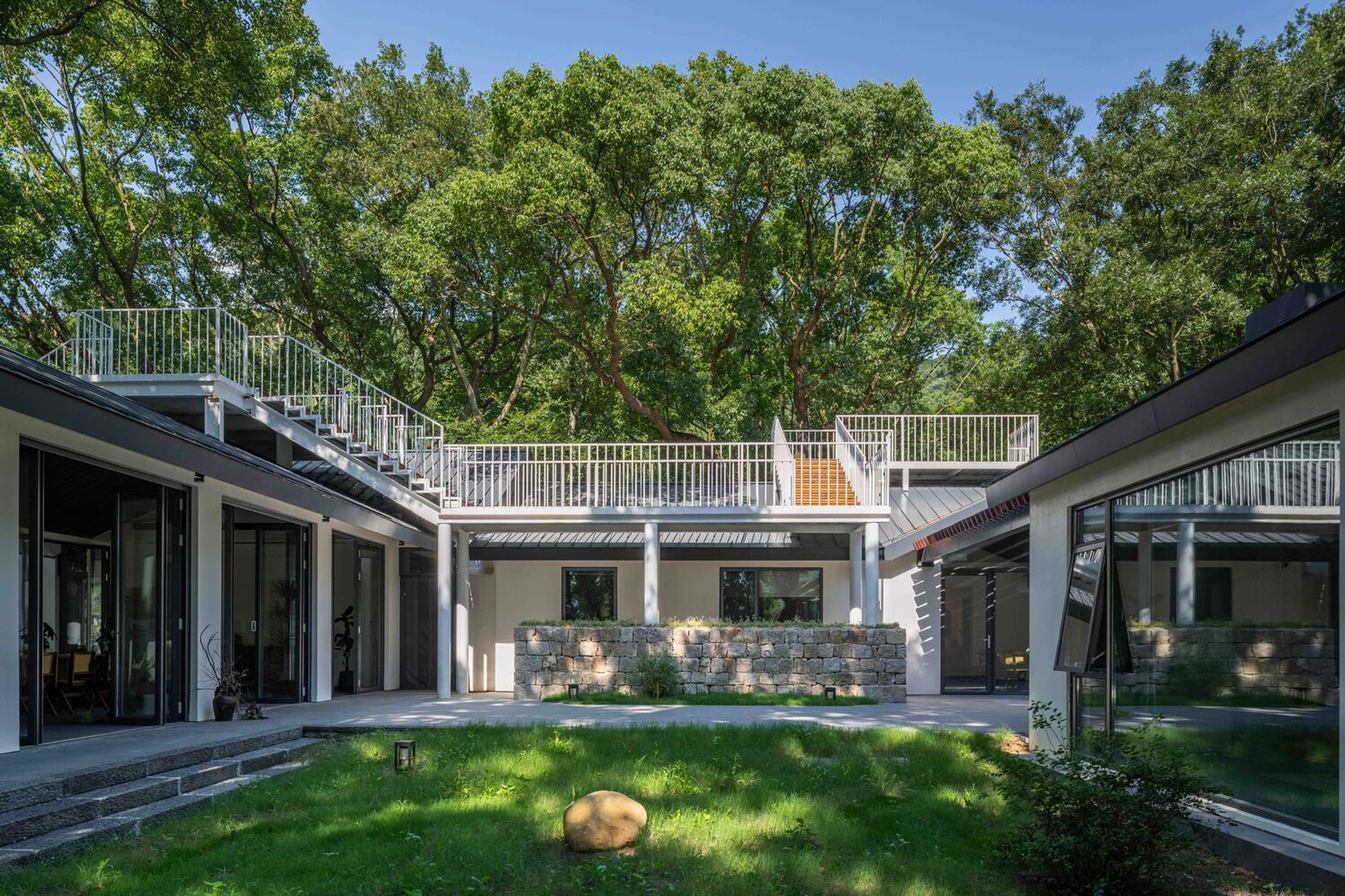
Healing Hills Villa by Zen-In Architects: A Harmonious Retreat Amidst Nature
Healing Hills Villa by Zen-In Architects harmoniously integrates architecture with 48 ancient camphor trees, featuring three courtyards, bridges, terraces, and serene interiors.

Located atop a serene hill in Zhoushan, China, Healing Hills Villa is a masterful example of hospitality architecture, sustainable refurbishment, and nature-integrated design. Conceived by Zen-In Architects in 2024, this 865 m² villa transforms a once-abandoned courtyard into a harmonious retreat that celebrates its lush natural surroundings, including 48 ancient camphor trees that anchor the entire experience.
A Design Rooted in Nature
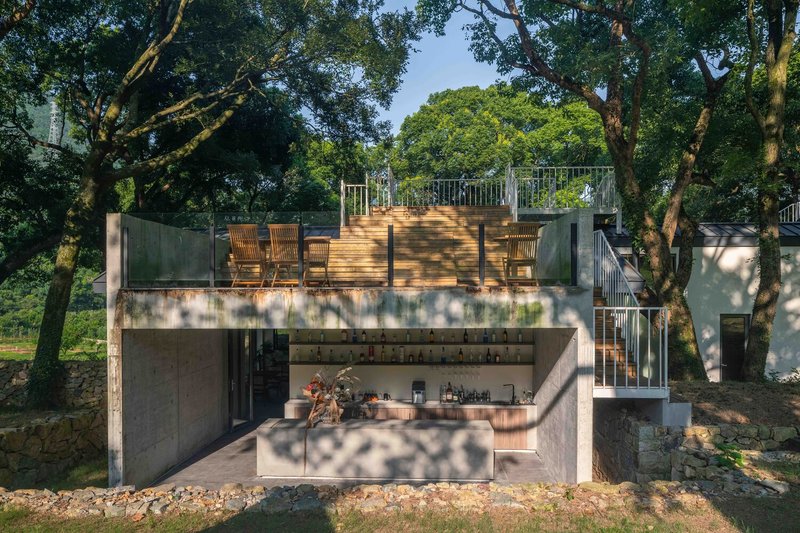
The villa’s design philosophy revolves around the intrinsic relationship between architecture and nature. Zen-In Architects implemented three key strategies to ensure this integration:
- Courtyard Integration – The scattered buildings were reorganized into three interconnected yet independent courtyards, each offering privacy while maintaining a fluid spatial connection.
- Blurring Boundaries – The architecture seamlessly merges with the surrounding trees, allowing greenery to coexist within the courtyards, while extending interior spaces into the forested landscape.
- Function-Driven Design – Each space carries unique functions that respond to its natural context, creating a harmonious bridge between the “artificial” built environment and the “natural” landscape.
Architectural Dialogue with 48 Camphor Trees
Zen-In Architects identified six key relationships between architecture and the trees: Encircled, Encirclement, Retreat, Gaze, Impaction, and Contrast. These relationships guided the spatial layout, drawing inspiration from the organic forms found in traditional Chinese paintings. Four main architectural elements emerged from this approach:
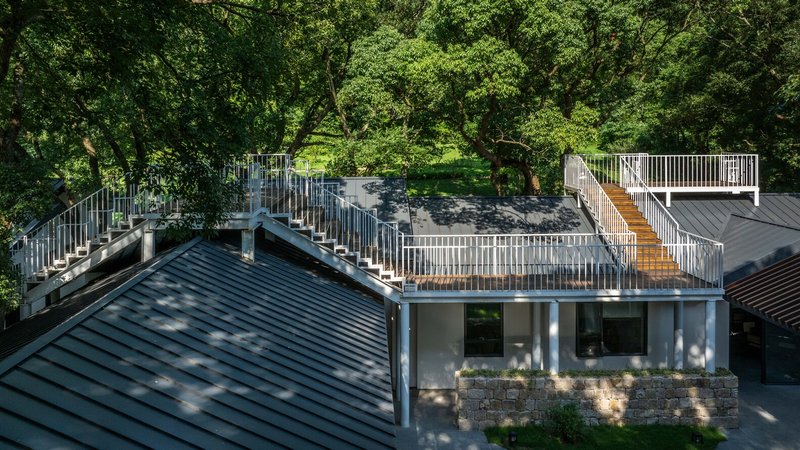
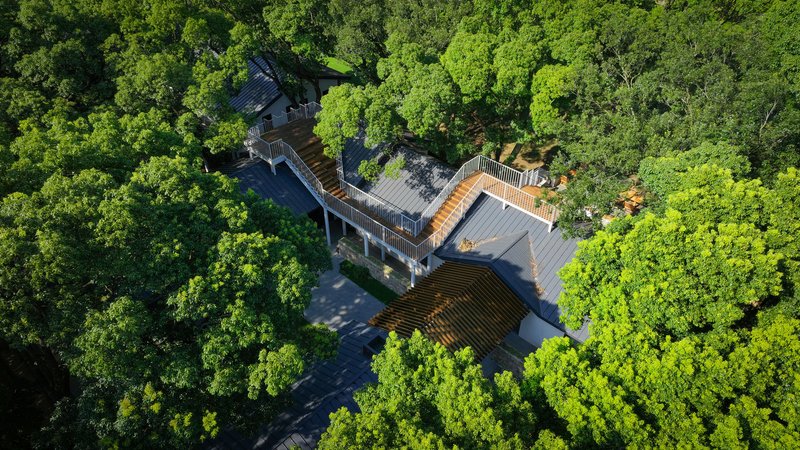
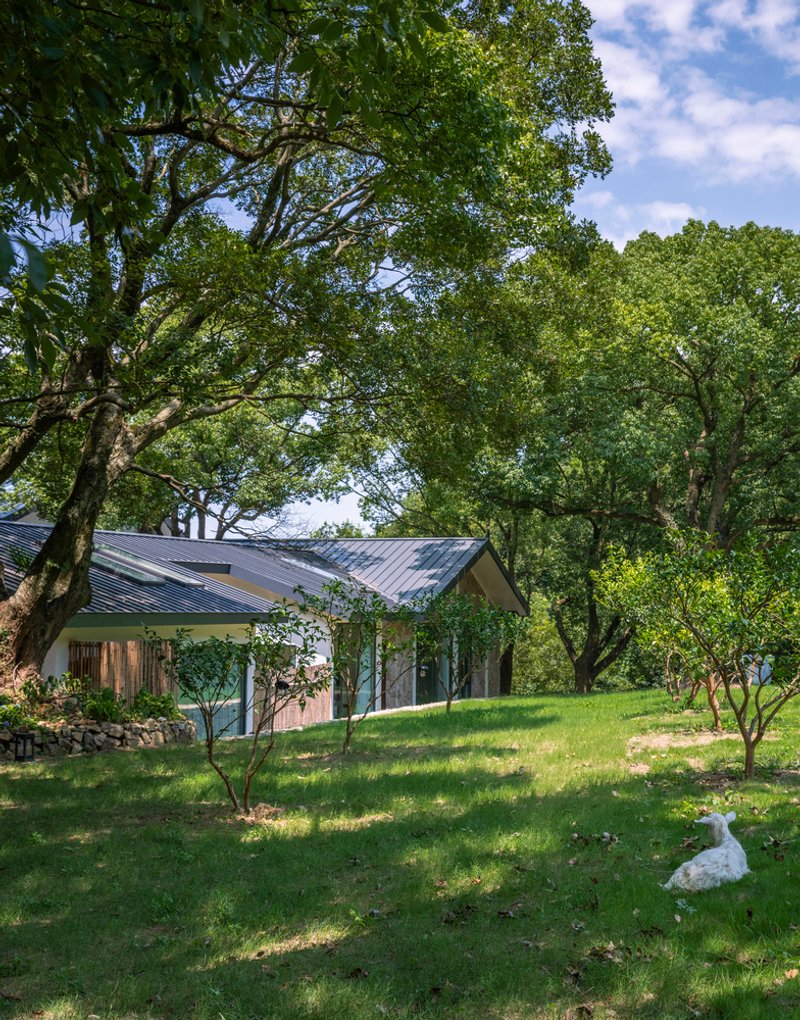
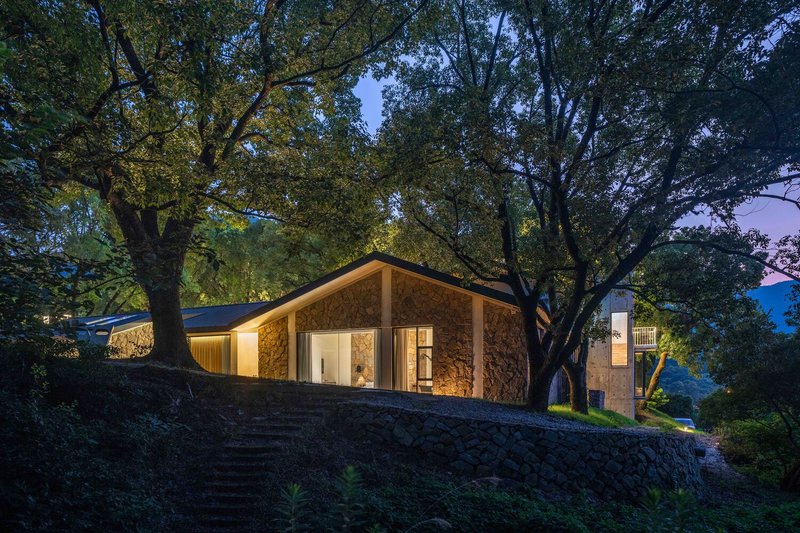
- Rolling Mountain (Undulating Roofs): The villa’s rooflines follow the contours of the existing landscape, creating a fluid three-courtyard arrangement that flows naturally around the trees.
- Stacked Platform (Expansive Terraces): Platforms rise and fall with the terrain, “gazing” at each other through tree canopies, offering dynamic outdoor spaces and varied experiences.
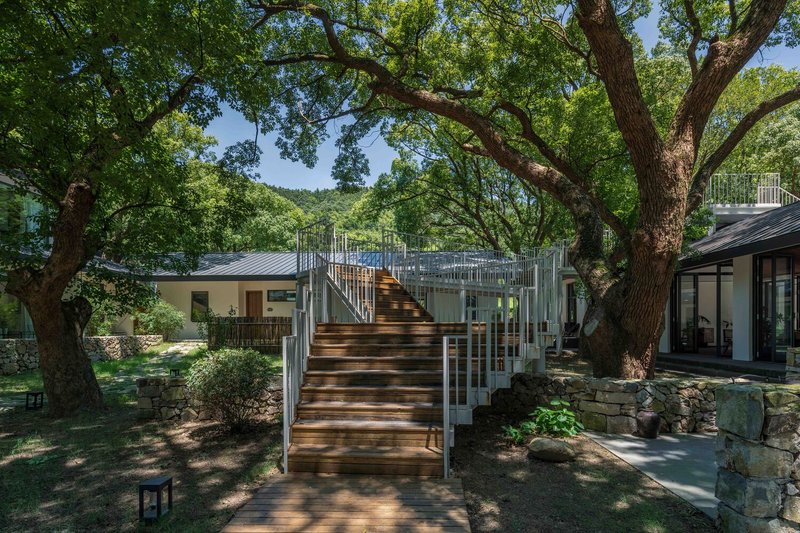
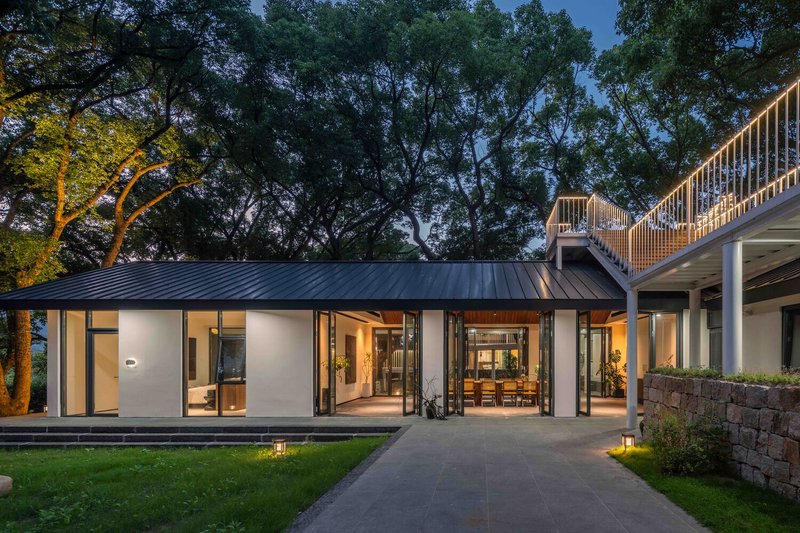
- Floating Clouds (Connecting Bridge): A bridge links the courtyards, serving as a weather-protected walkway, a parent-child activity zone, and a three-dimensional landscape passage.
- Towering Stones (Inserted Blocks): Strategic visual anchors highlight important spatial nodes, providing focal points within the natural landscape.
Courtyards and Spatial Planning
The villa’s three-courtyard layout is functionally and experientially strategic:
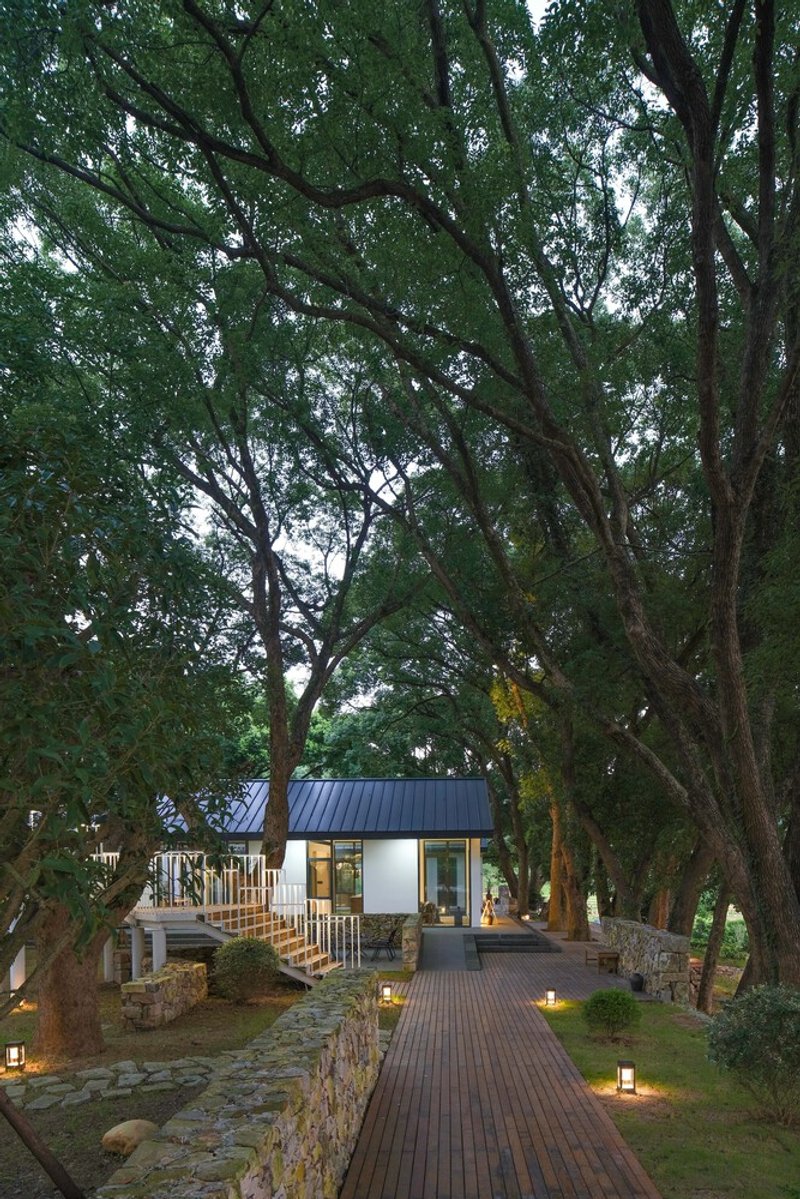
- Front Courtyard: Positioned near the main road, it accommodates public areas such as reception, breakfast lounge, and leisure coffee spaces.
- Middle Courtyard: Features essential support facilities like the main restaurant and kitchen. The walls on the north and south sides are fully opened to enhance visual continuity.
- Back Courtyard: Nestled near the pond, this tranquil space houses guest rooms and leisure areas, where platforms curve around existing trees, bringing natural scenery directly into the living experience.
In a remarkable gesture of ecological sensitivity, a leaning tree near the breakfast restaurant influenced the redesign and reconstruction of the building, preserving the tree’s unique presence.
Interior Design and Guest Experience
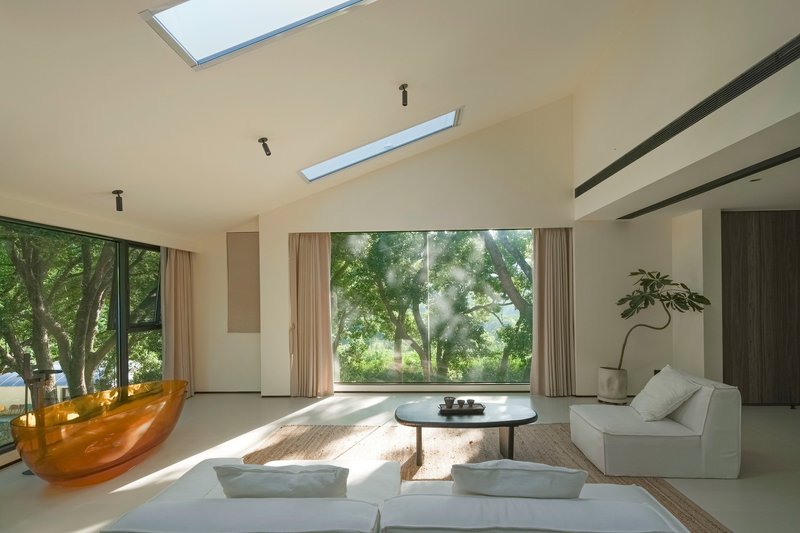
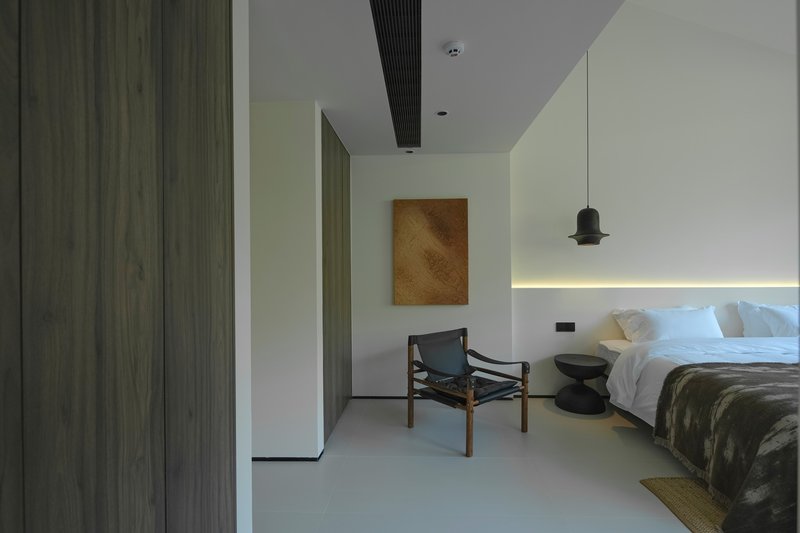
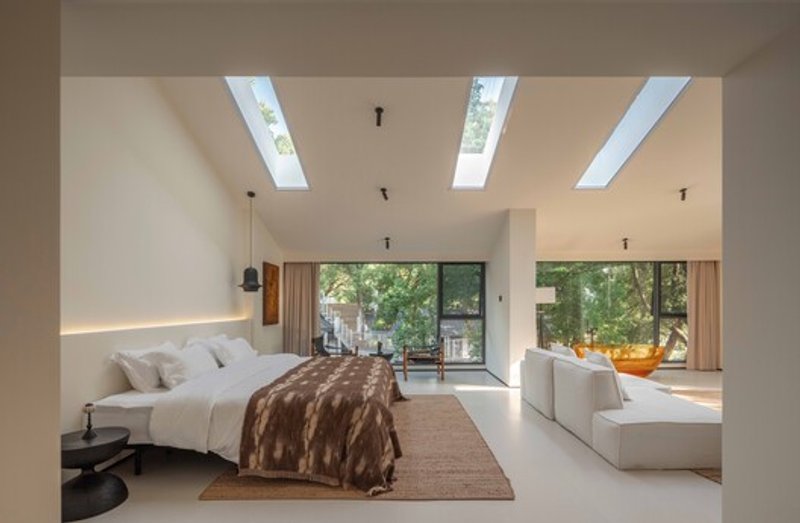
The interiors of Healing Hills Villa are understated, allowing the surrounding nature to define the experience. Eight uniquely arranged rooms provide individual vistas of the forested landscape. Natural light, carefully positioned windows, and minimalist furnishings emphasize serenity and connection with the outdoors.
The central bridge not only connects the courtyards but also fosters an intimate relationship between guests, architecture, and nature. Supporting facilities like the Heartwarming Creation Workshop and Hollow Coffee enhance the villa’s community and leisure offerings, enriching the overall visitor experience.
Healing Hills Villa: A Masterpiece of Nature-Integrated Hospitality
Zen-In Architects’ Healing Hills Villa demonstrates how architecture can coexist harmoniously with nature, blending traditional Chinese spatial principles with modern functionality. Every element—from the undulating roofs to the floating bridges—reinforces the villa’s ethos: a sanctuary where built spaces and natural landscapes coexist in perfect balance.
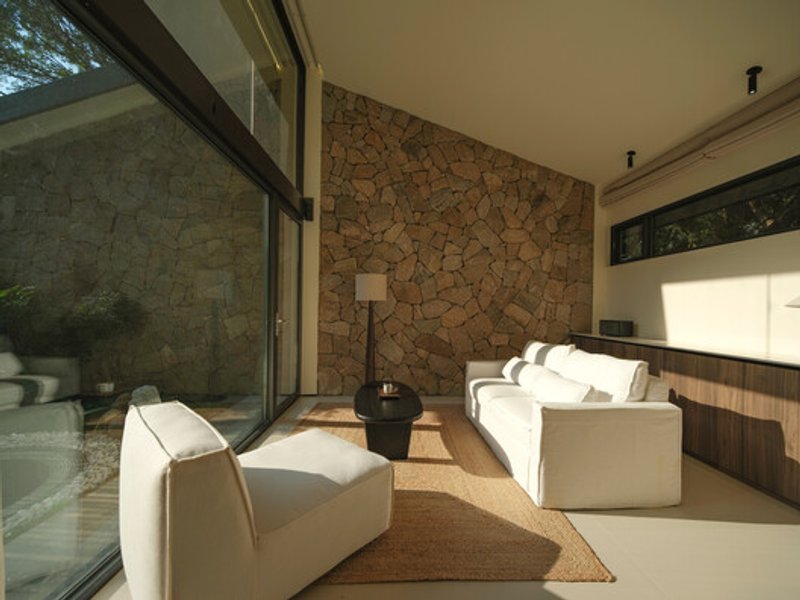
All photographs are works of Weiqi Jin



Popular Articles
Popular articles from the community

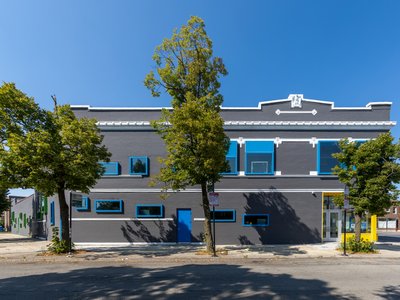
Gads Hill Early Learning Center by JGMA: Adaptive Reuse Shaping Community-Focused Educational Architecture
Adaptive reuse transforms fragmented structure into vibrant early learning center with playful façade, natural light, and community-focused sustainable design.

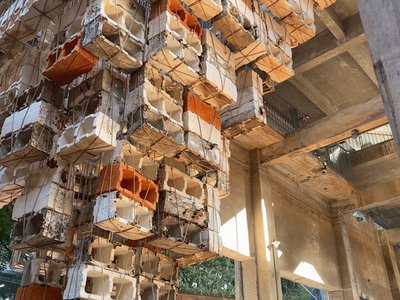
Inverted Architecture Installation by Studio Link-Arc: Exploring the Intersection of Architecture and Living Organisms
Inverted Architecture Installation by Studio Link-Arc blends mycelium, sustainability, inverted design, ecological cycles, and urban adaptive architecture in Shenzhen.
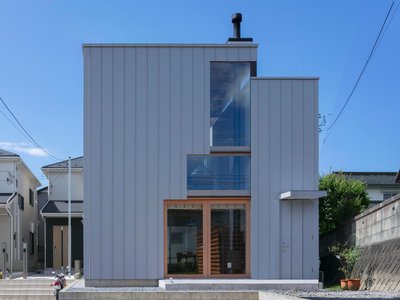
Split House: A Compact Urban Home Blending Privacy, Light, and Flexible Living in Japan
Compact Japanese home featuring DOMA space, flexible café potential, passive lighting, privacy zoning, and sustainable urban living design.


Similar Reads
You might also enjoy these articles


The Ken Roberts Memorial Delineation Competition (Krob)
As the most senior architectural drawing competition currently in operation anywhere in the world, it draws hundreds of entries each year, awarding the very best submissions in a series of medium-based categories.


Waterfront Redevelopment and Urban Revitalization in Mumbai: Forging a New Dawn for Darukhana
A transformative waterfront redevelopment project reimagining Darukhana’s shipbreaking heritage into an inclusive urban future.

OUT-OF-MAP: A Call for Postcards on Feminist Narratives of Public Space
Rhizoma Design and Research Lab invites artists, designers, architects, researchers, and students to reflect on how feminist perspectives can reshape public space. Selected works will be exhibited in Barcelona, October 2026. Submissions open until 15 April 2026.


Documentation Work on Buddhist Wooden Temple
Architectural syncretism and cultural hybridity: A comparative study of the Buddhist temples in Chattogram Hill tracks


Explore Architecture Competitions
Discover active competitions in this discipline




The International Standard for Design Portfolios


The Global Benchmark for Architecture Dissertation Awards


The Global Benchmark for Graduation Excellence


Challenge to reimagine the Iron Throne
Comments (0)
Please login or sign up to add comments
No comments yet. Be the first to comment!