
Herfst House Renovation by Tweestroom Architecten: A Sustainable Transformation in Belgium
Herfst House Renovation by Tweestroom Architecten enhances space, natural light, and sustainability through adaptive reuse, minimalist design, and efficient interventions.


The Herfst House Renovation by Tweestroom Architecten is a striking example of sustainable and efficient architectural intervention. Located in Belgium, this 61 m² home renovation seamlessly blends functionality with creativity, demonstrating how thoughtful design can unlock a building’s untapped potential while minimizing material waste.
A Sustainable and Minimalist Approach
The philosophy behind this modern home renovation is simple: preserve what works, improve where necessary, and optimize space for functionality. Instead of extensive demolitions, the architects focused on reusing materials, enhancing natural light, and maximizing space efficiency. By limiting major interventions to the ground floor, they allowed the homeowners to take charge of the upper floors, freeing up the budget for more architectural creativity.
Unlocking Hidden Potential
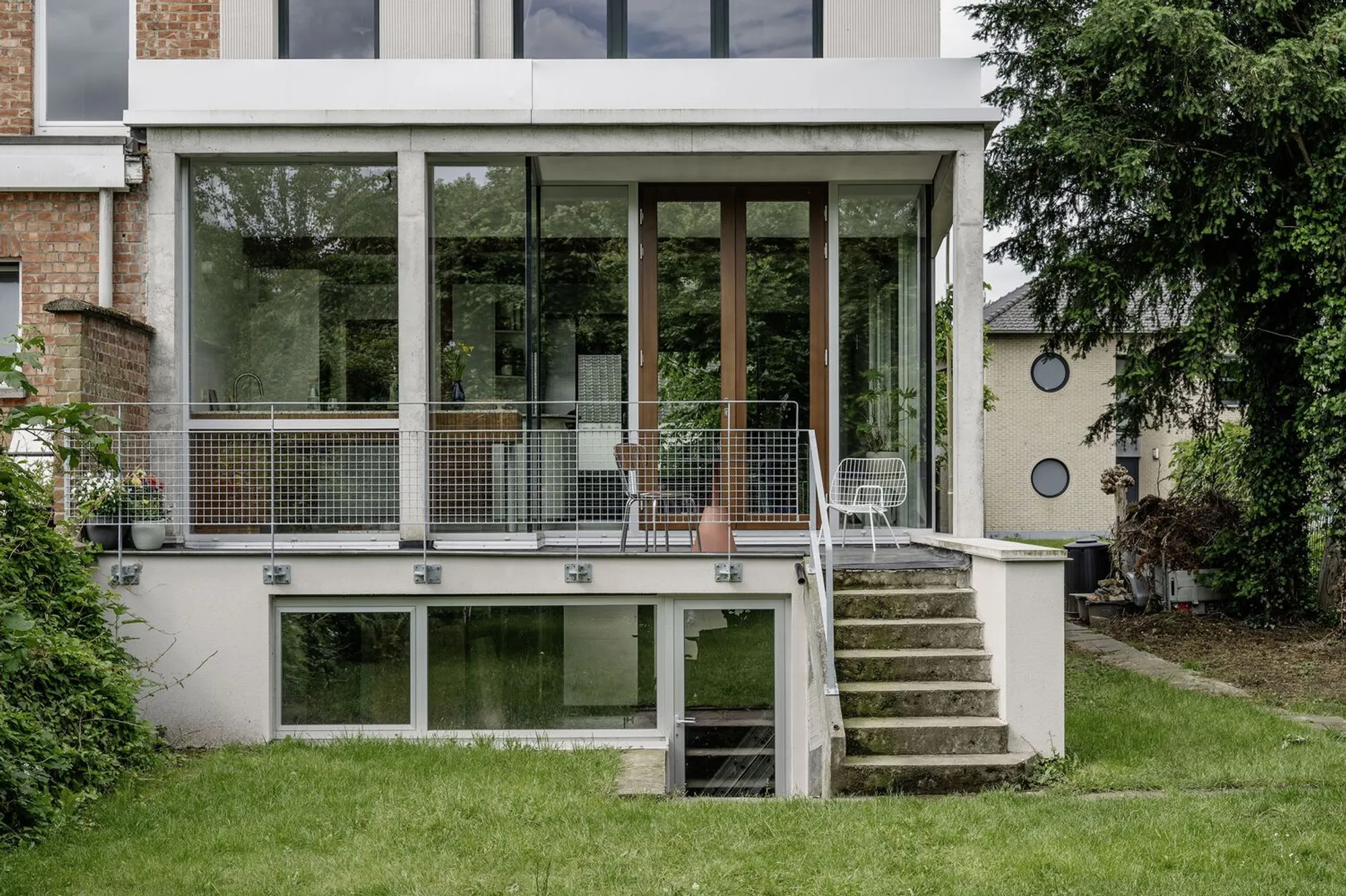
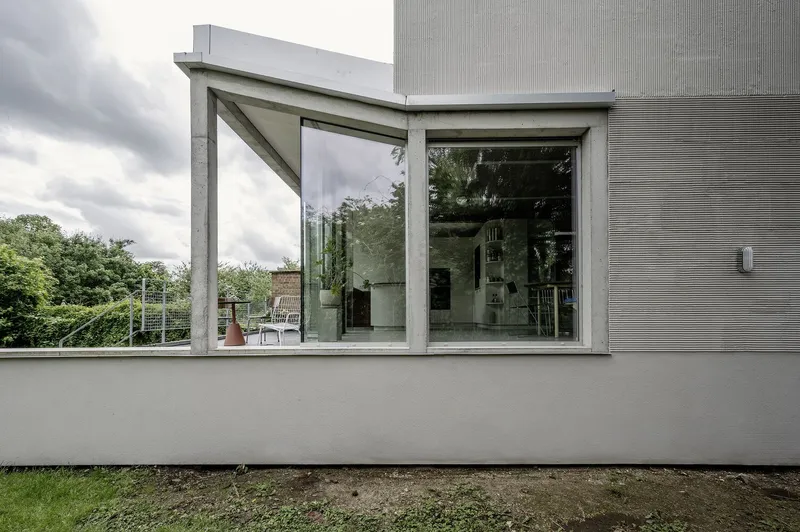
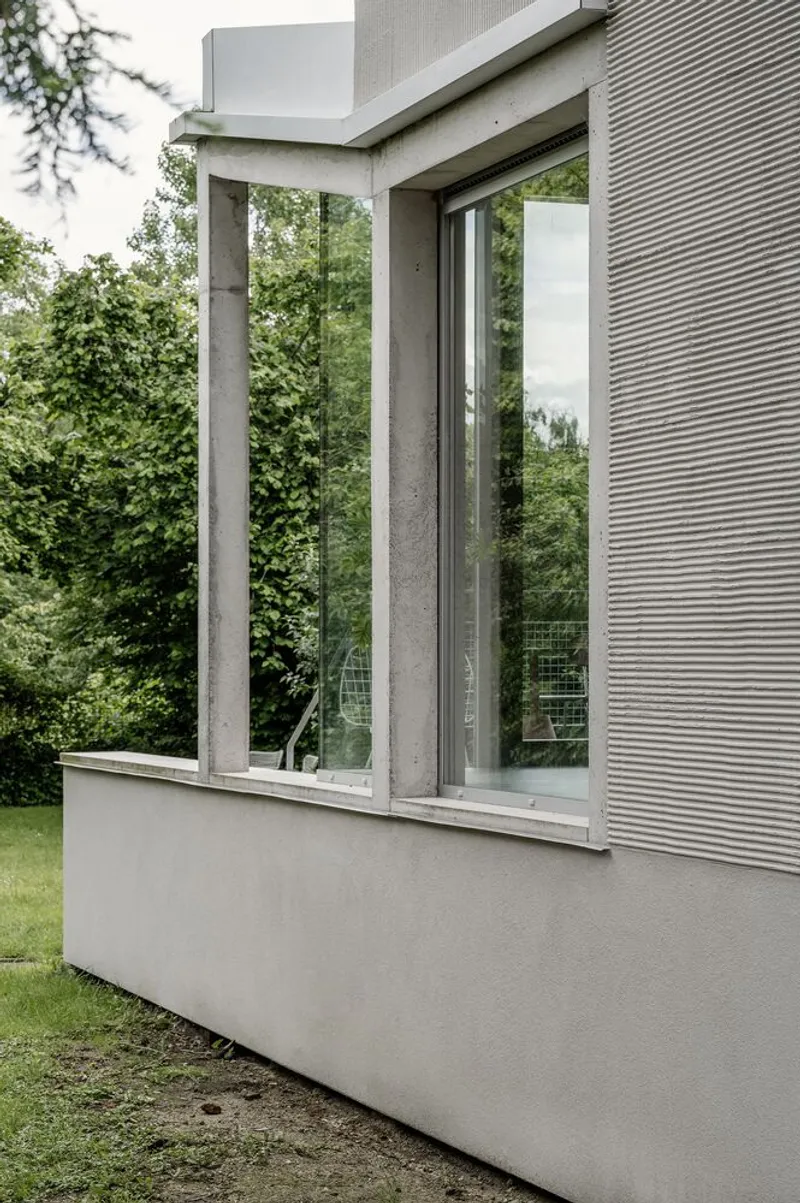
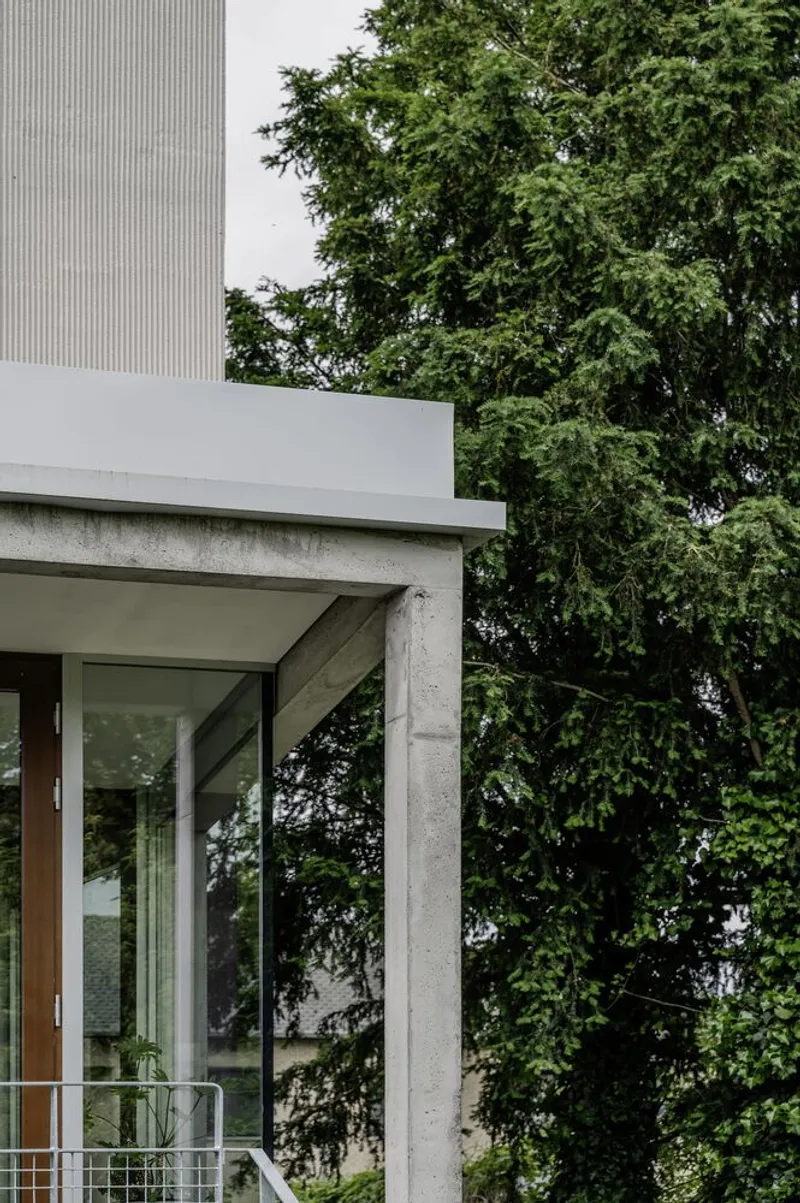
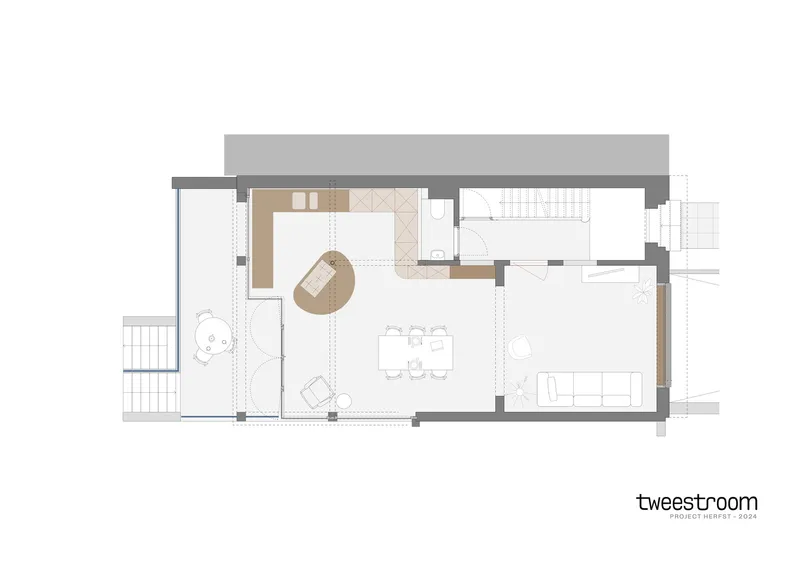
The west-facing facade and the 6.45-meter building width were underutilized elements that became key design focal points. The original terrace, though structurally sound, was too small to be functional. The solution? A new extension featuring a grid of beams and columns, complemented by a glass facade that seamlessly connects the interior with the exterior.
This single yet high-impact intervention:
- Expands the terrace for better usability
- Enhances indoor-outdoor flow, improving natural ventilation and daylight penetration
- Introduces more evening sun into the living spaces
- Maintains a balanced temperature through a sloped roof, maximizing northern light while preventing overheating
Facade Composition: Respecting Architectural Heritage
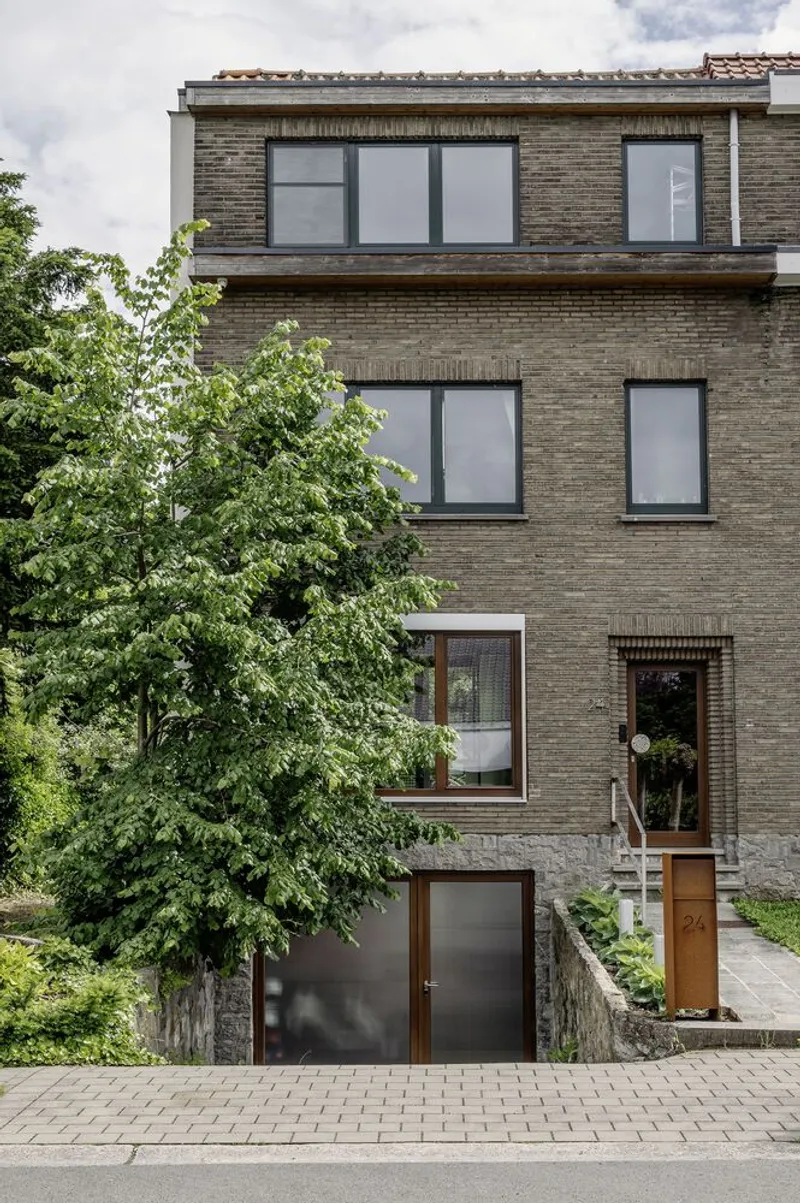
The Herfst House is situated at the end of a row of similar homes, where the original brick detailing around the front door was preserved to maintain the street’s uniformity. Rather than disrupting this cohesion with external insulation, the architects implemented subtle yet effective changes. The ground-floor window was lowered, enhancing the connection with the neighborhood, while the west-facing facade was insulated with an ETICS system, blending seamlessly with the existing brickwork.
Blending Materials: A Play of Opacity and Transparency
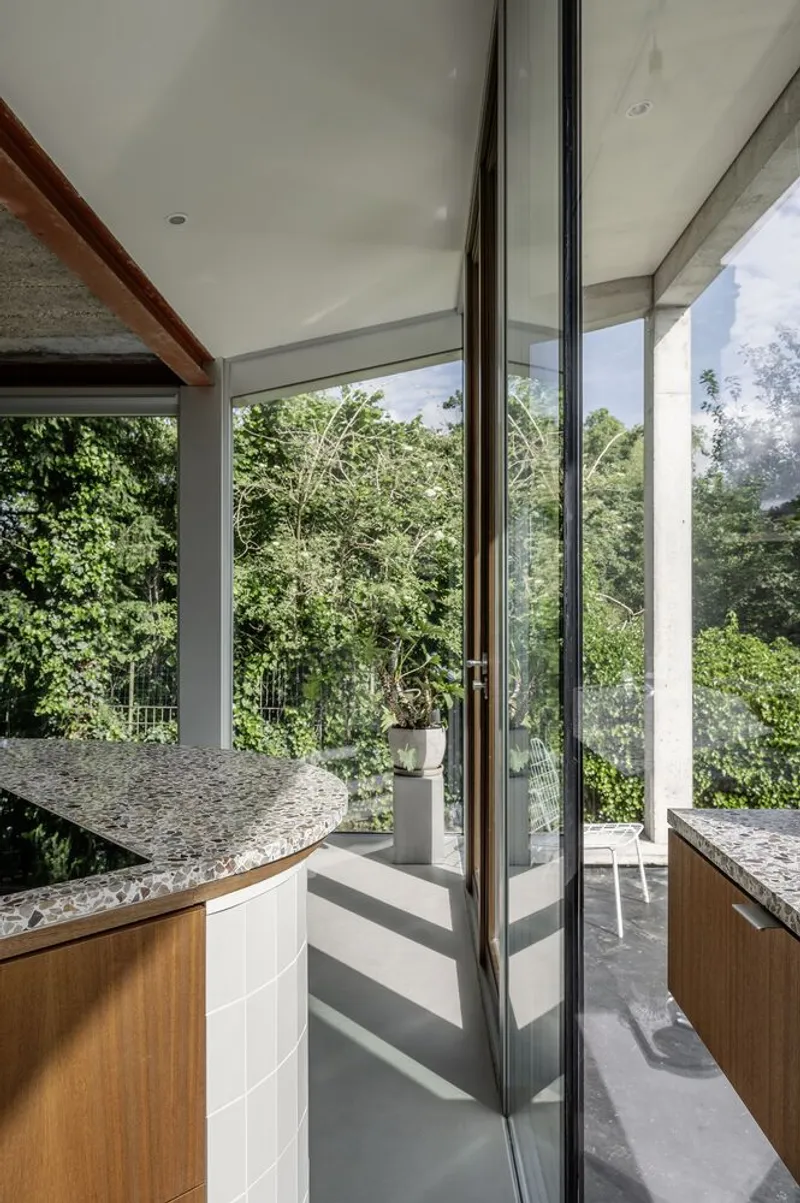
The extension’s structure is a delicate balance of steel, concrete, and glass, complementing the original brick house. Grey anodized aluminum joinery, paired with red-brown wood accents, adds warmth and contrast, ensuring a harmonious fusion of modern and traditional aesthetics.
Minimalist Interior: Exposing Raw Beauty
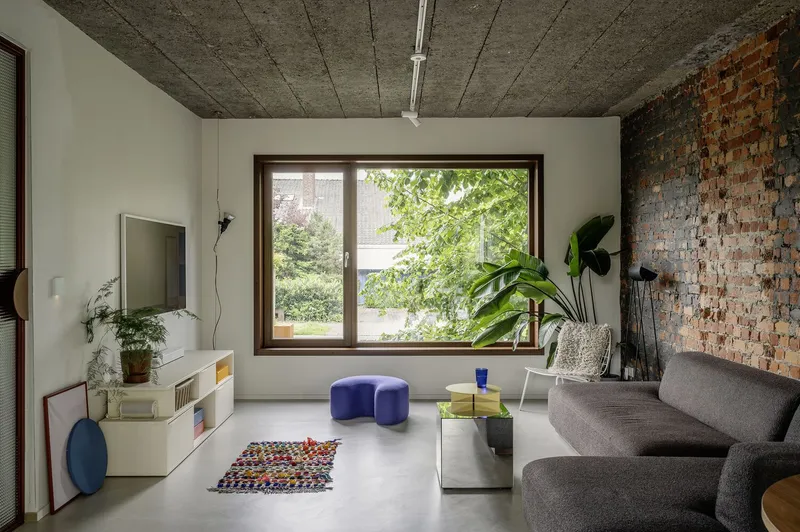
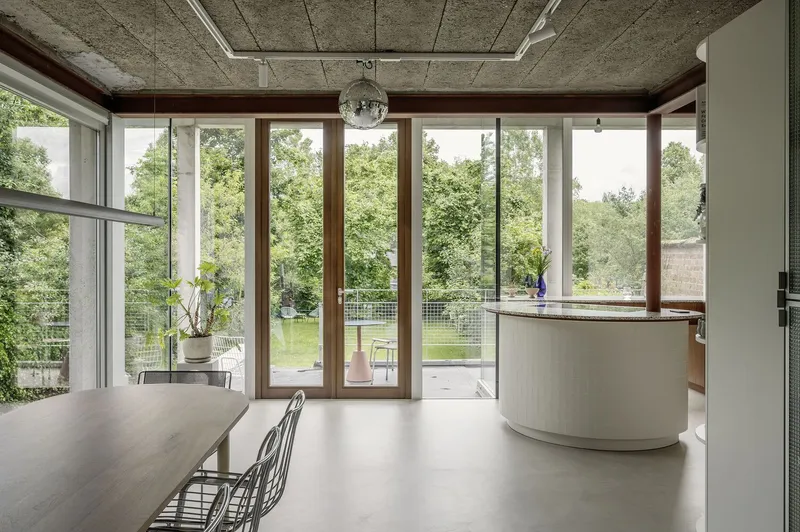
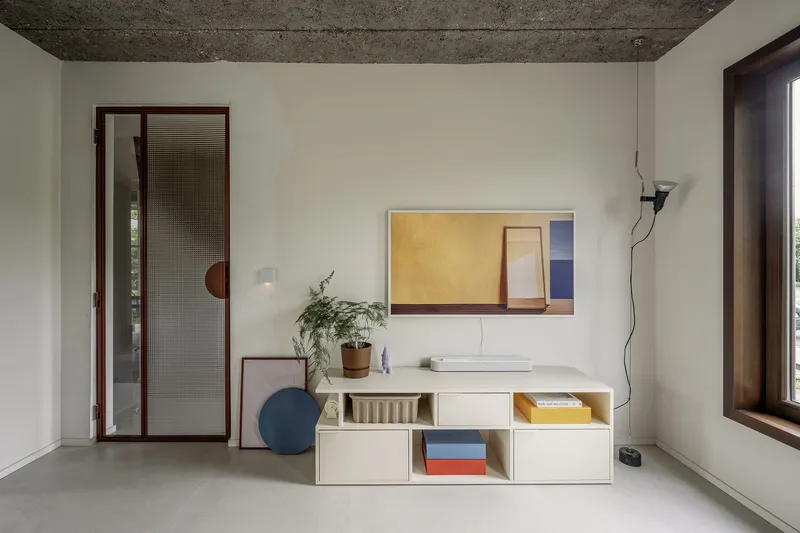
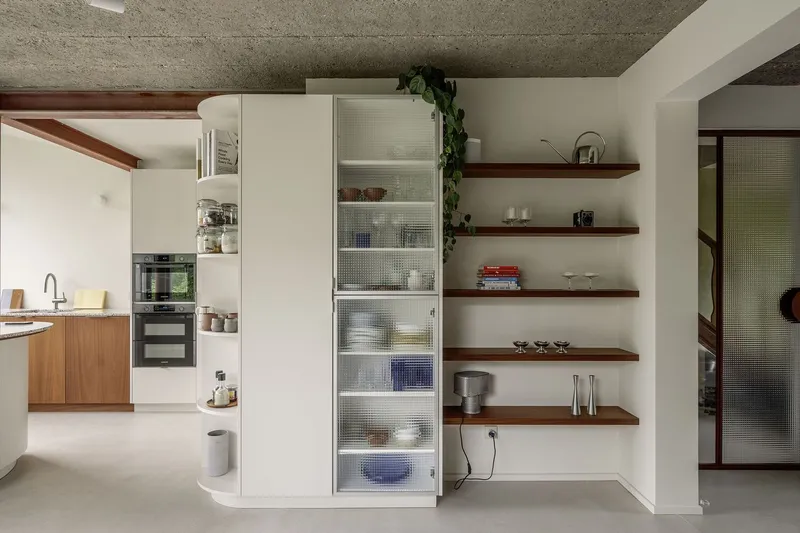
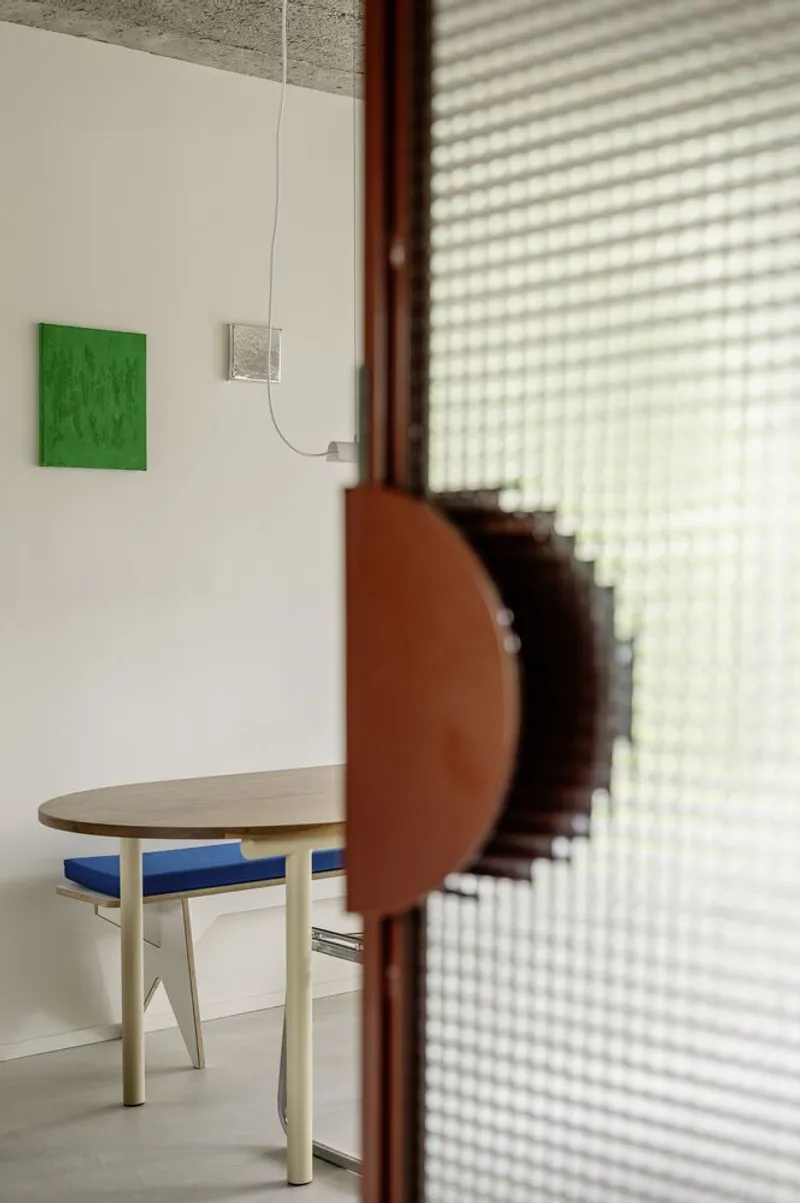
The interior renovation embraced a raw, industrial aesthetic, where existing concrete slabs and bricks were exposed rather than concealed. Selective plastering highlights key areas, while the flooring—raised slightly to accommodate underfloor heating—is finished in light grey Mortex, a sustainable and durable material.
In the kitchen, a consistent color palette ties together key design elements. The terrazzo countertop, reinforced glass cabinet doors, and semi-round door handles ensure a cohesive and well-balanced look. The interior also features a curated mix of new and secondhand furniture, reinforcing the project's commitment to sustainability and reuse.
A Model for Smart, Sustainable Renovations
The Herfst House Renovation by Tweestroom Architecten is a masterclass in adaptive reuse and minimalist architecture. By making targeted, high-value interventions, the design team transformed a small home into a spacious, light-filled, and energy-efficient living space without unnecessary waste or excessive costs
All Photographs are works of Nick Claeskens


Popular Articles
Popular articles from the community


The Earth Pod: 3D Printed Homes for Resilient Refugee Communities
The Earth Pod reimagines refugee housing through 3D printed homes made from clay, combining resilience, self-sufficiency, and rapid shelter.

Lunar Spiral: Space Architecture Shaped by the Mathematics of the Universe
Lunar Spiral reimagines space architecture through Fibonacci geometry, lunar regolith, levitating habitats, and self-sustaining Moon living.

Co-life: Sustainable Architecture for Age-Friendly Community Living
Co-life reimagines sustainable architecture for seniors through courtyards, rammed earth, shared gardens, and spaces designed for belonging.

The Musturak Paradise: Senior Living Architecture for a Connected Future in Temara, Morocco
The Musturak Paradise reimagines senior living architecture in Temara via private homes, social spaces, culture, community, and shared care.


Similar Reads
You might also enjoy these articles


Hodi-Mandai Geram
Project Function: Preservation and revitalization of the Intangible heritage and socio-spatial identity of the Hodi by Housing, Cultural Memory Center, Sacred Grove, landscape, local tourism economy


Olio Towers: A Mid-Rise for Performers That Fuses Housing, Rehearsal, and Stage
Located blocks from Houston's Theater District, this modular tower stacks living units around a central performance atrium.

Oasis: Modular Green Housing Carved into Dhaka's Urban Fabric
A shortlisted Plugin Housing entry reclaims unauthorized settlements in Dhaka with stepped concrete volumes, green roofs, and ventilation-driven design.

Black Hole: A Floating Megastructure for the Post-Physical Era
Emiliano Mazzarotto envisions a spherical, self-scaling arena where e-sports, digital hotels, and holographic stadiums replace traditional public space.


Explore Geurst & Schulze Architecten Competitions
Discover active competitions in this discipline



Challenge to reimagine the Iron Throne


Photograph architecture without architects


Illustrate the lost glory of Angkor Wat - Render Challenge


Design challenge to reuse E-waste
Comments (0)
Please login or sign up to add comments
No comments yet. Be the first to comment!