
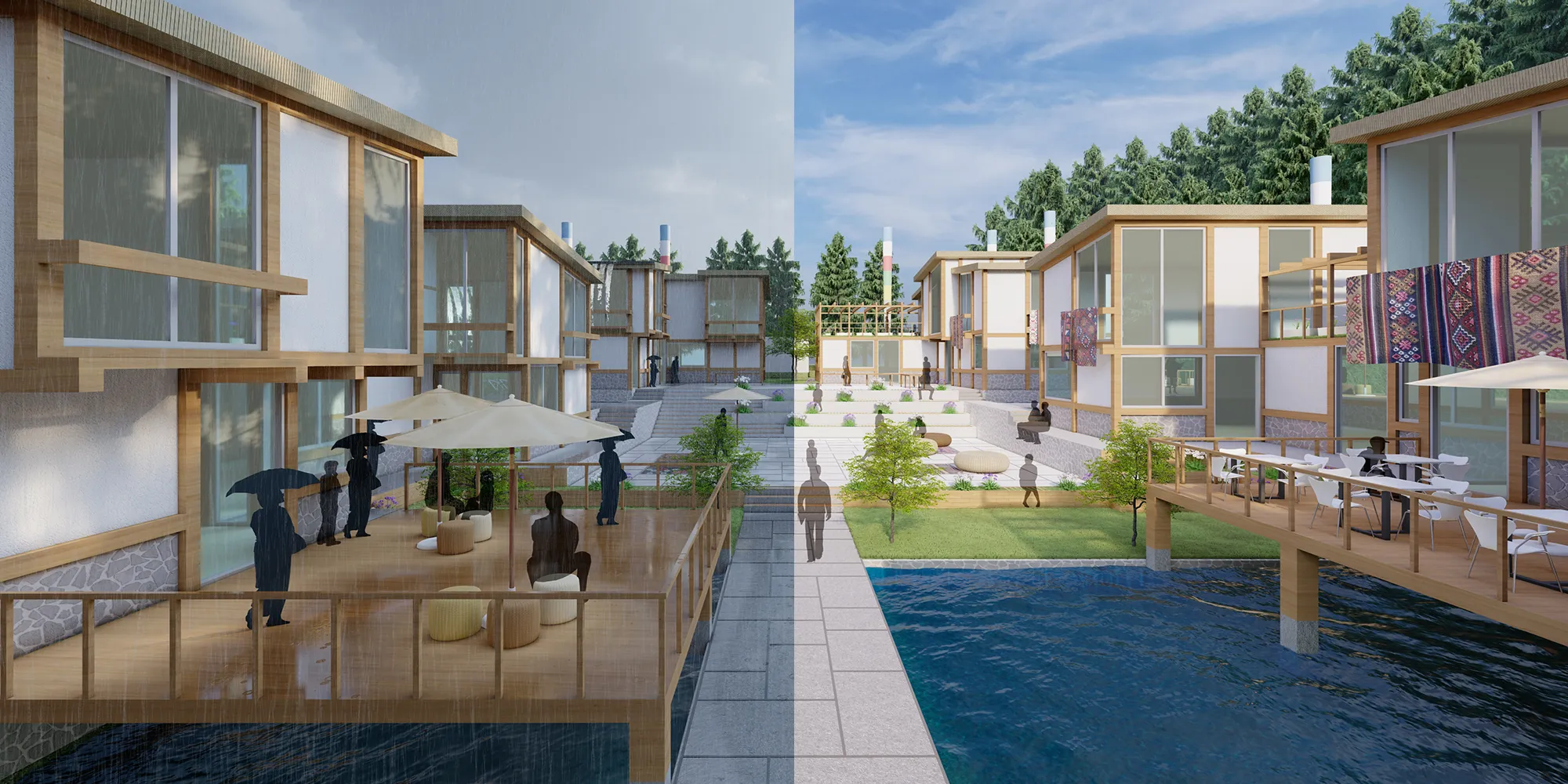
HIDDEN HEAVEN
SLOW TOURISM VILLAGE IN WEAVEN COMMUNITIES
The most emphasized point in the design process was to create a common life that is appropriate for the slow tourism understanding, where the people of Bhutan, who want to spread their culture but are closed to tourism, can interact with tourists. We determined the design purposes of the project with the aim of serving this situation. Here, we aimed to design a slow tourism village where the people of Bhutan and tourists, who come here, can share and experience Bhutan’s weaving culture and other cultural values. Thus, we thought that with this common life which is designed, we could provide that we would spread the cultures that the people of Bhutan consider valuable, and break the prejudice against tourism in this place. Finally, we thought that we should reflect this culture in our design with an innovative approach and we should not lose the traces of the architectural culture of Bhutan that is quite important for the land, rather than bringing an architecture that does not belong to this geography. Therefore, Our aim was to make the local architecture to be felt in our design; thus, tourists can find the traces of the traditional life of Bhutan and experience this life while they are here.
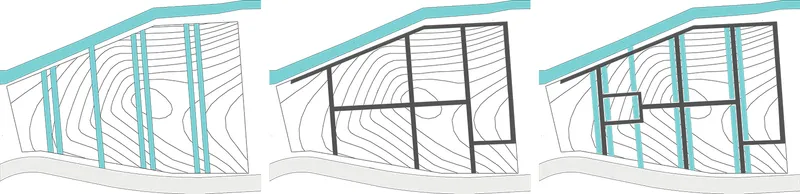
We made decisions about design considering these objectives together with the environmental context. We embarked on our design with a decision where whe can use the slowing effect of water which can support the slow tourism village that we aim for. Thus, We wend our way to the stream in the north of the project field and included the water here in our design with water pools. Thereby, we considered the water pools, which we built vertically, and the route in the design as axes and decided to turn our design into an alternative route which would reflect the culture of Bhutan. We aimed to display the weaving products on the facade on this route rather than making products only in workshops and selling them in selling space. With this way, we aimed to make weaving to be felt more in the design by using the project field as a weaving exhibition. We estimated that tourists would be able to embrace Bhutanese culture more than before, thanks to the slowing effect of this exhibition on them.
Due to the water axes that we placed vertically, we designed the functions in the field in compliance with the settlement.While making the settlement decisions, we placed the accomodation units in the eastern part of the land and also social units in the western part by considering the structuring around the project field. We involved a main water axis in our design, which would seperate social units and accomodation units.
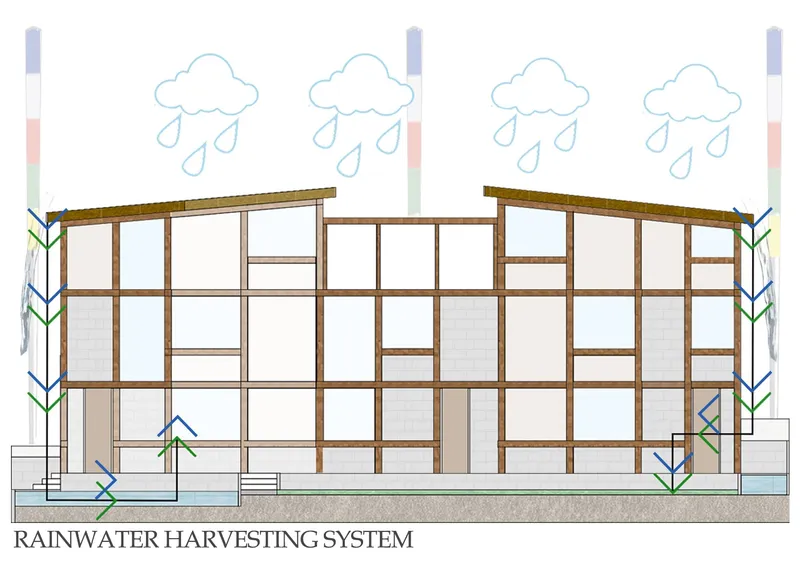
We created a rainwater harvesting system to support the water that we use in the design. We assumed that it would be very important to collect rainwater in this region, which receives heavy rainfall for approximately 4-5 months. During heavy rainfall, we aimed to reuse water in residences and water pools by collecting water with pitched roofs and a rainwater collection system with a gargoyle.
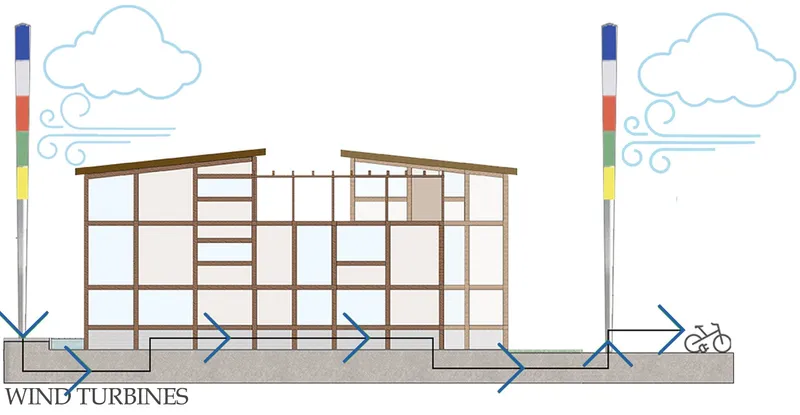
We saw that the land was in an area which is exposed to wind, when we examined the potential of the project field. We decided that wind energy is an opportunity to be evaluated, since we think that it also will be suitable for slow tourism criteria. Hence, we decided to emplace bladeless wind turbines that generate electricity with the vibration of the wind on the periphery of our land, take up less space as they are wingless, and do not harm the birds. We used these turbines to generate electricity for common electric bicycles and residences. Additionally, we used wind turbines as a landmark element reflecting the Bhutanese culture by designing them in the color of the prayer flags which exist in the Bhutan culture and integrating them into the project.
We designed our entrance of the project field at the point where our social units are and so as to give a view. We have included a common field in our design where activities are held in the middle area of the social units so that tourists and Bhutanese people can socialize. We aimed to organize cultural events in this area in order to exhibit and sell the products made. Additionally, we have taken the main water axis towards the middle area where social units are designed Thus, We created terraces on the water which would serve the workshops and common dining room, and would allow the water to be seen more. Beginning with the social units, we continued the route ,which we designed, as dormitories, villas, homestay accomodations, respectively.
Our researches show that the people of Bhutan extremely value green and nature and always want to increase the amount. Moreover, We realized Bhutanese constitution includes that forested areas in the country cannot be less than 60 percent of the Country’s surface area. In an attempt to maintain Bhutan’s philosophy of increasing greenery and to make a design that is suitable for slow tourism, We designed green gardens that calm and support the common life in the middle area of accomodation units that we placed in clusters.
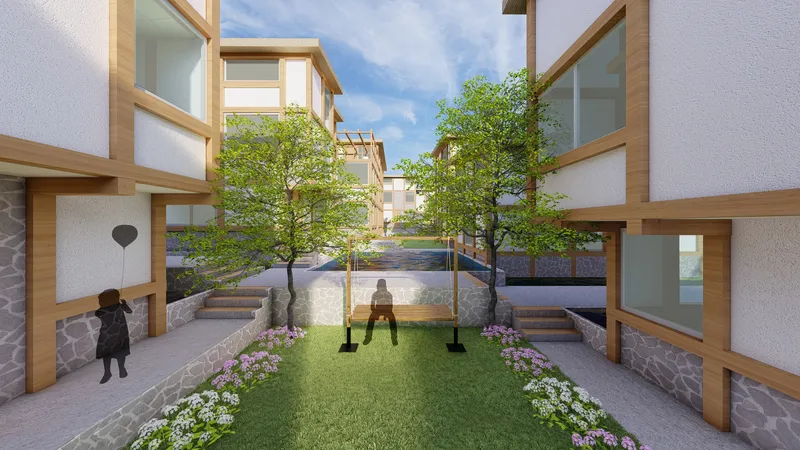
In the design, we aimed to use the potential of stream and forest together with the water pools we created. Hence, We designed wooden walkways at the water’s edge which would give you a glimpse of the forest landscape. Also, we included the river in the design by positioning the wooden terraces on the water in order to support socialization.
We figured that one of the most important elements for our design is functions in order that it would be a design which reflects Bhutanese culture. In our design, we predicted that the workshops would be an opportunity to introduce the cultural values of Bhutan and enable the visitors to experience these. Consequently, Instead of just creating only a weaving workshop, we included into our design wood and mask painting workshops that are important for Bhutan’s culture. Besides, We wanted the food culture of Bhutan to be experienced by the visitors of Bhutan, by reflecting the concept of “slow food”, which is quite important for slow tourism. For this, not only did we design a cooking workshop where traditional food will be taught, but also a dining area where traditional dishes are tasted. In addition, we designed a museum where weavings and other artifacts would be exhibited. We included indoor and outdoor sales areas, where the products that is produced in the workshops would be sold and thus earn income. We built terraces on the water that can be reached from the ground floor in the dining area and weaving workshop, which are important for the design. Ultimately, we designed kitchens and living spaces on the ground floors for the accomodation units.
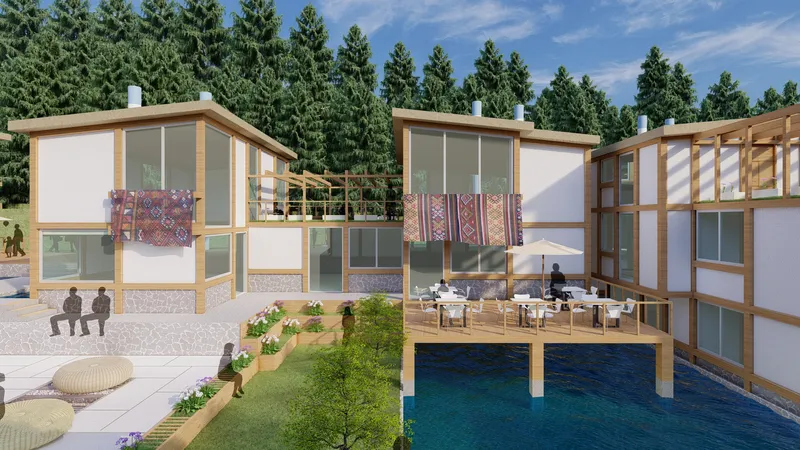
In the design, in order to support our idea of increasing the existing greenery and creating common social areas, we intended to design terraces. So, while designing the first floor, we intended to built green terraces with pergolas on top of our single-floor units by taking advantage of floor differences of the social units. On the second floor of our project, we included the terraces on top of the two fold accomodation units where the other units can be used in common, in the design. We mounted the bedrooms on the first and second floors for the accomodation units.
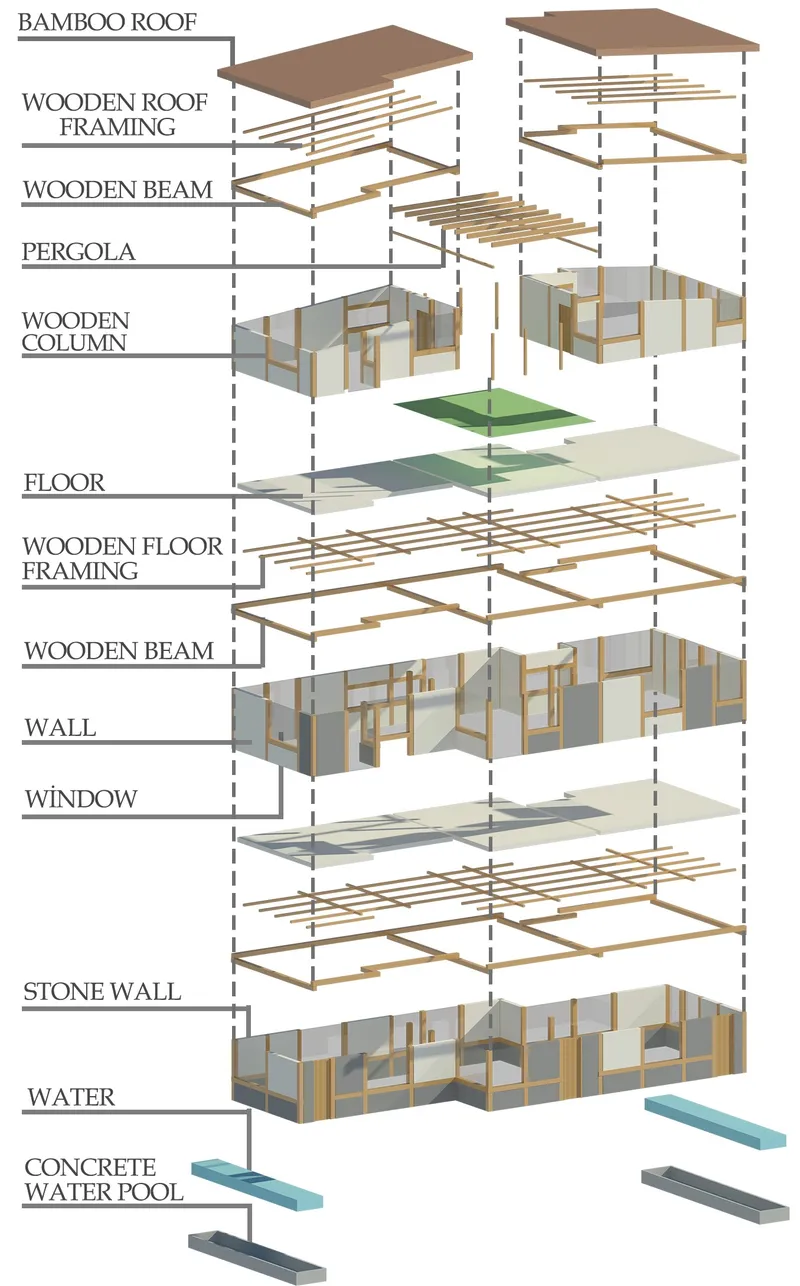
Since we planned to include the reflections o Bhutan’s traditional architecture in our design but with a more modern and innovative approach, we chose maerials that would serve this purpose. We observed that the use of wood in the traditional architecture of Bhutan is common in a manner. In order to keep the traditional architecture alive and to reduce the carbon footprint, we designed the carrier system as wood. We reflected the traditional architecture in the design in a modern way by using plastered wall and the stone which are ,together with food, important for Bhutanese architecture. Finally, we used bamboos on our roof since it creates a waterproof roof system when it is built with the right technique.

Popular Articles
Popular articles from the community


The Musturak Paradise: Senior Living Architecture for a Connected Future in Temara, Morocco
The Musturak Paradise reimagines senior living architecture in Temara via private homes, social spaces, culture, community, and shared care.

Co-Life: Senior Housing Design That Reconnects Older Adults With the City
Co-Life reimagines senior housing design through healing gardens, shared streets, workshops, and a sustainable community across generations.

The Ocean Hive: Sustainable Architecture for a Self-Sufficient Civilization at Sea
The Ocean Hive imagines sustainable architecture at sea, where modular habitats, algae, wave power and ocean waste sustain a growing colony.

Hill & Cross Opera: Sculptural Opera House Architecture Shaped by Tallinn’s Landscape and Identity
Hill & Cross Opera reimagines opera house architecture in Tallinn through its sculptural hill, civic plaza, glass wave and a luminous cross.

Similar Reads
You might also enjoy these articles

Day and Night Park: A Time-Based Urban Newsstand in Beijing
A temporary urban newsstand in Beijing blending travel, light, and reading through poetic colors, compact form, and community-focused design.

Modernist Patio Renovation in El Masnou, Barcelona by Oliver Segura Arquitectura + Cebrià Arquitectura
Modernist patio renovation blending tradition and innovation with a movable pool, leveled floors, and Catalan materials in El Masnou.

Alto Residencial Coop: Cooperative Housing Development in Santiago de Compostela by Carbajo Barrios Arquitectos
A linear cooperative housing complex blending white volumes and perforated metal façades, enhancing community living, natural light, privacy, and urban integration.
Vil Genis School by BPA ARCHITECTURE – Massy, France
Vil Genis School in Massy, France, features sustainable design, south-facing classrooms, community integration, accessible spaces, and modern educational architecture.




Comments (0)
Please login or sign up to add comments
No comments yet. Be the first to comment!