
House Graviola: A Harmonious Blend of Heritage and Contemporary Design in Urbanova, Brazil
House Graviola blends heritage brick architecture with contemporary wooden structures, expanding spaces, integrating gardens, and maximizing light for seamless indoor-outdoor living.


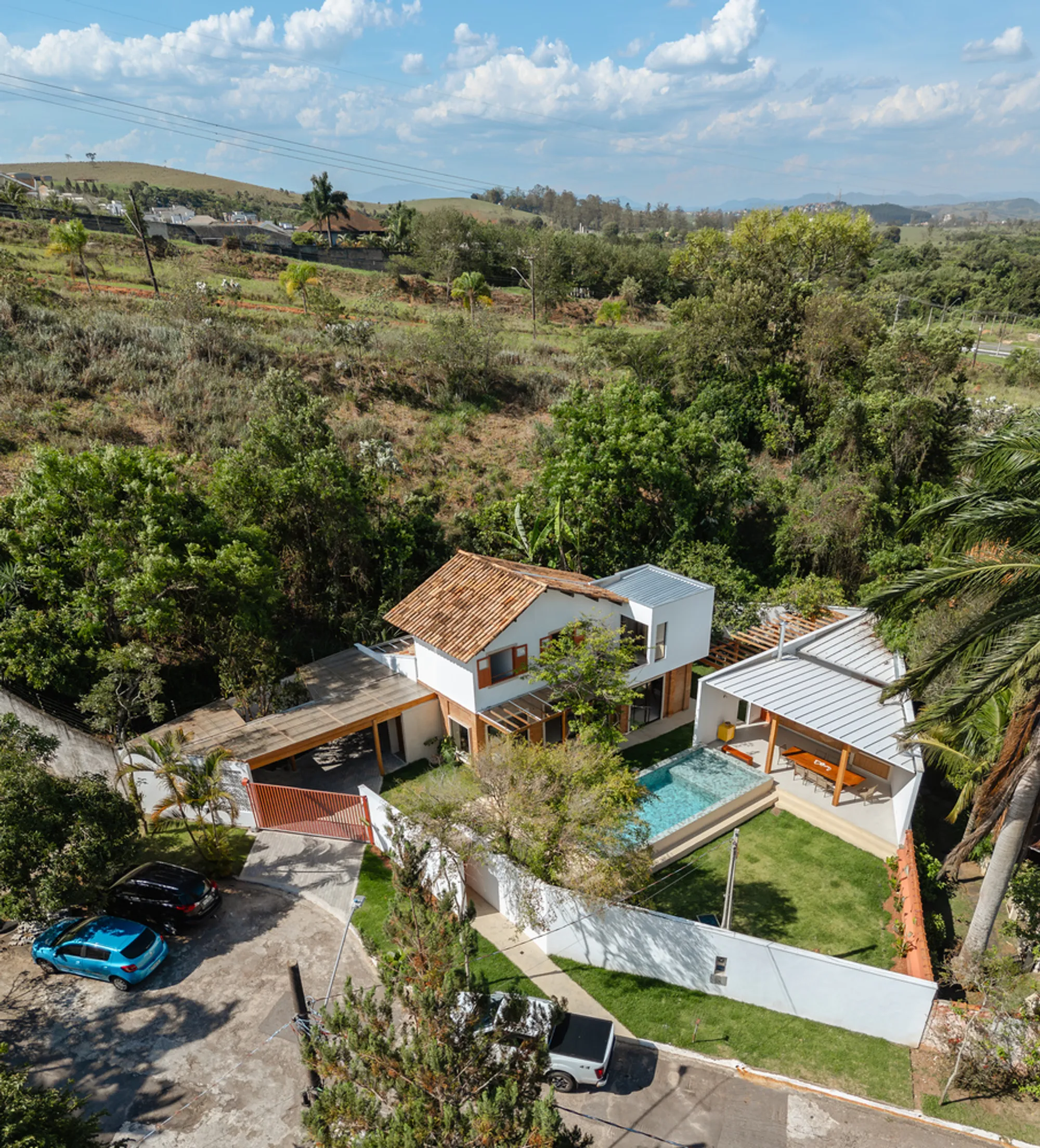
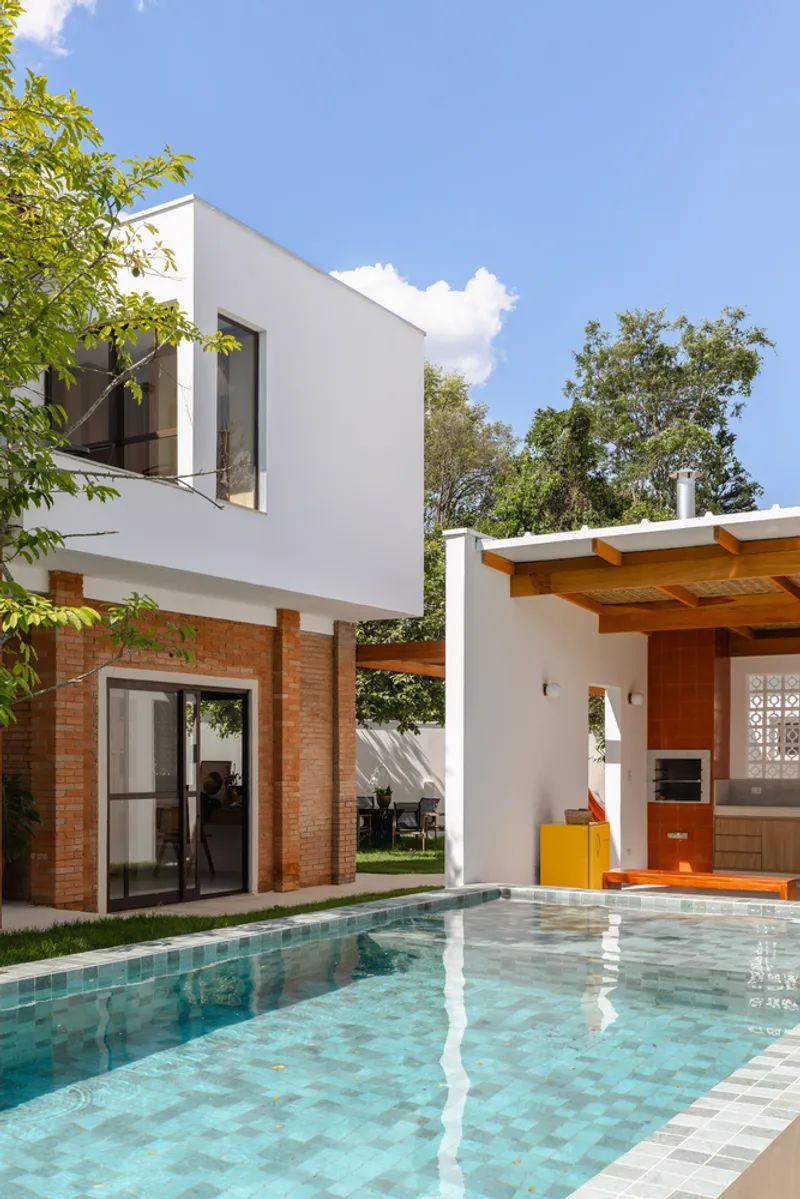
House Graviola is an inspiring renovation project by Sertão Arquitetos, located in the lush surroundings of Urbanova, Brazil. This 272 m² residence was transformed with a focus on integrating indoor and outdoor living, enhancing natural light, and respecting the original architectural character. The renovation elegantly balances heritage preservation with contemporary design solutions, creating a home that responds to both functional needs and aesthetic aspirations.
Preserving the Original Charm
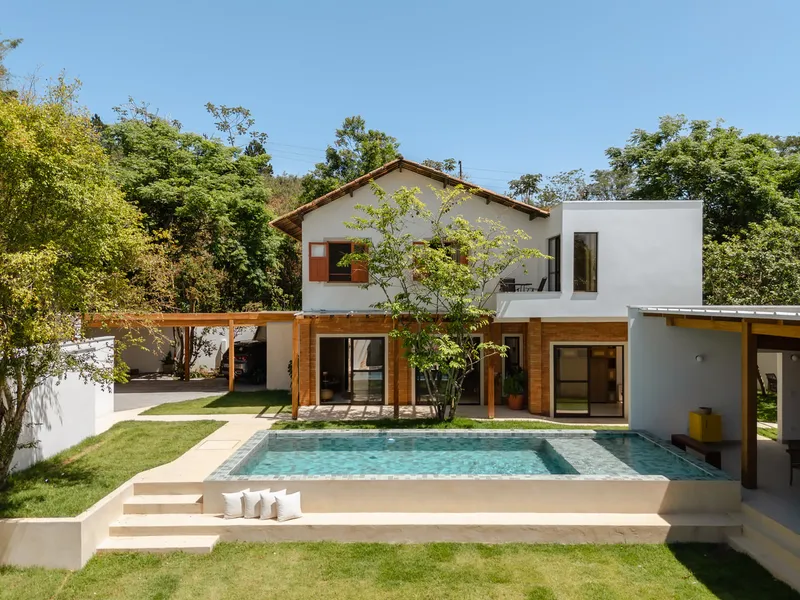
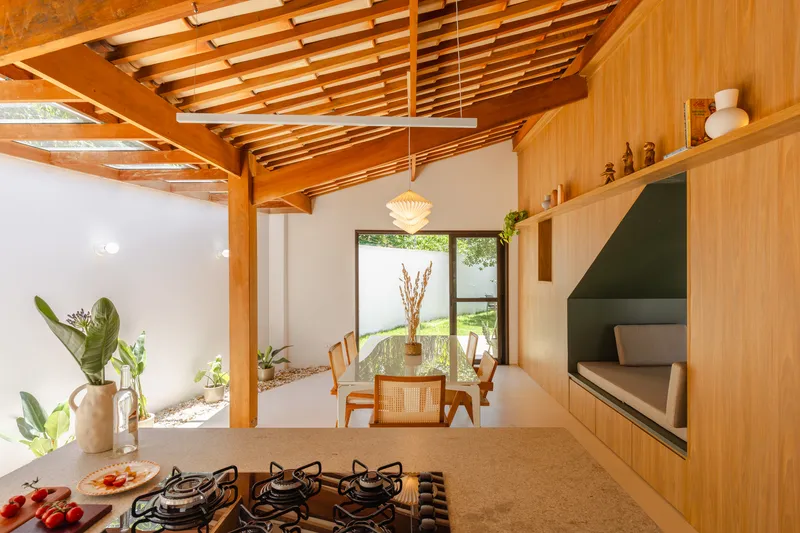
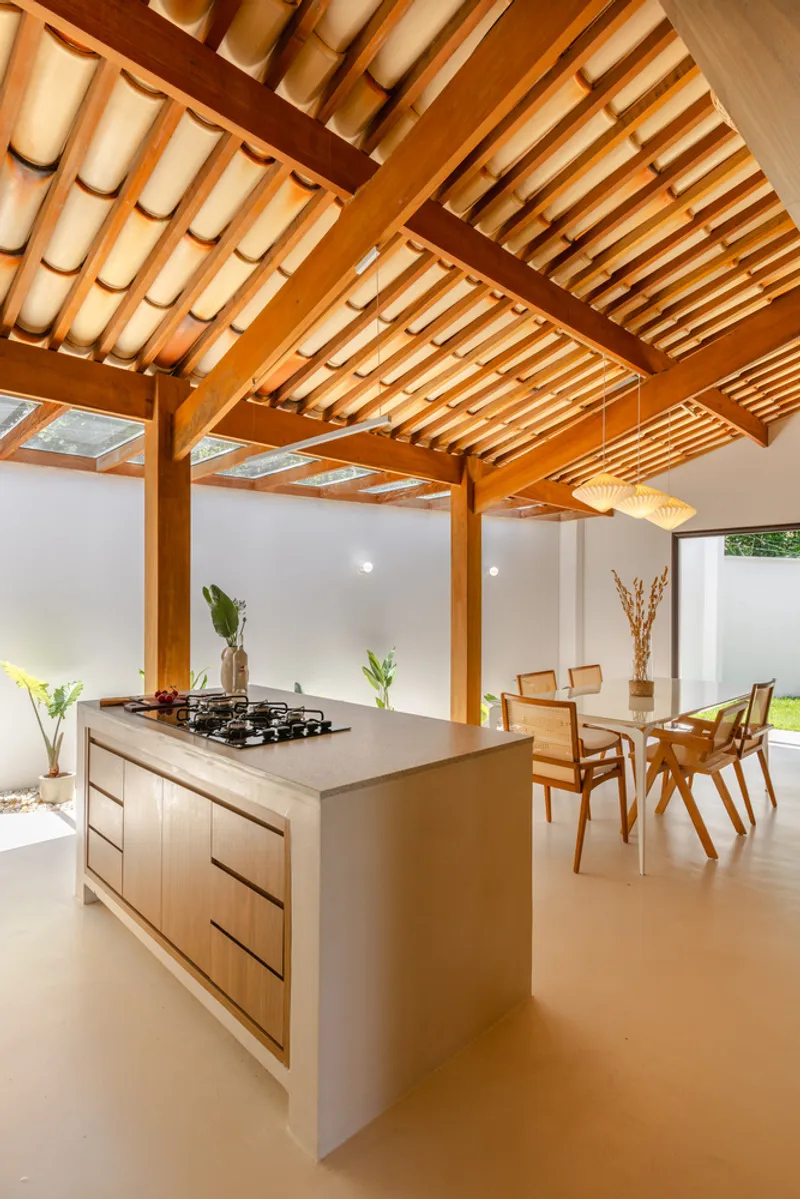
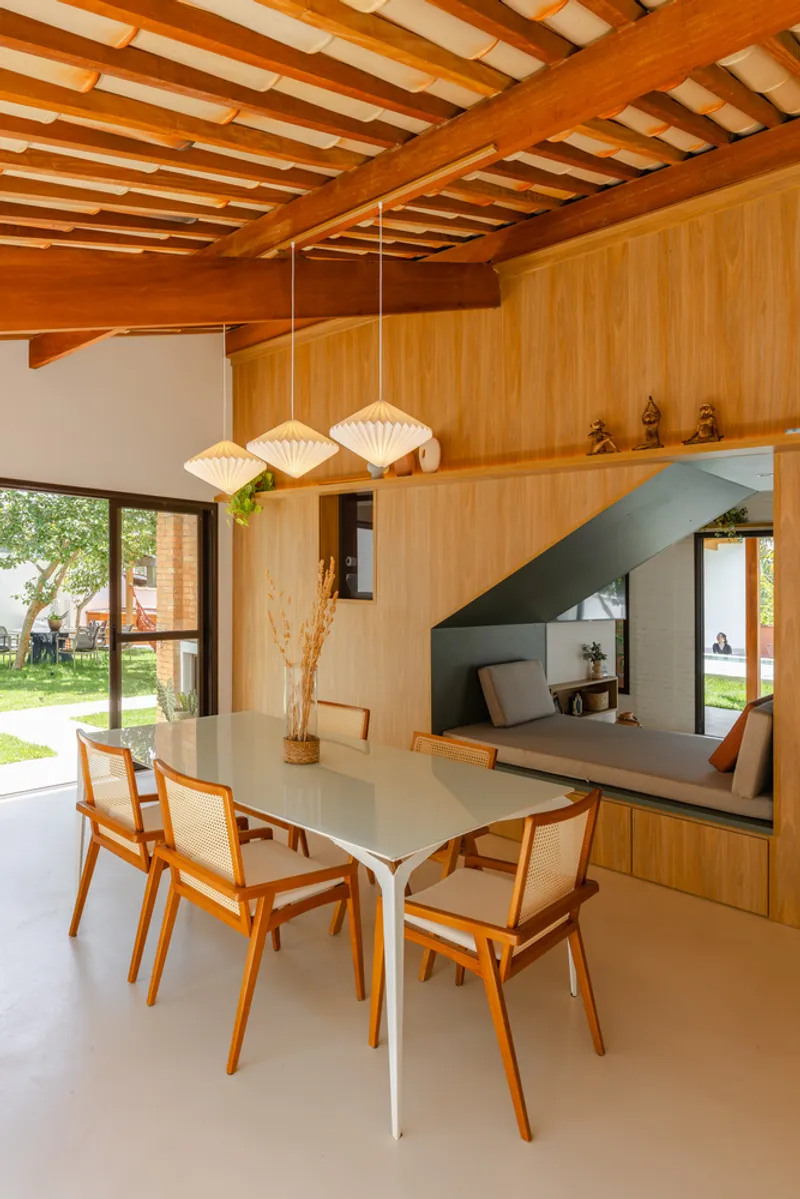
The renovation began with a careful simplification of the existing structure. Extensions added since the house's original construction in 1991 were removed, leaving the main body intact. Key features, such as the exposed brick walls and roof constructed directly from beams and ceramic tiles, were preserved. This roofing technique, reminiscent of the iconic Casa do Rio Vermelho by Jorge Amado and Zélia Gattai, became a central reference for the renovation.
By maintaining these authentic elements, the architects ensured that Casa Graviola retained its historical essence while creating a blank canvas for modern interventions.
Expanding Functionality
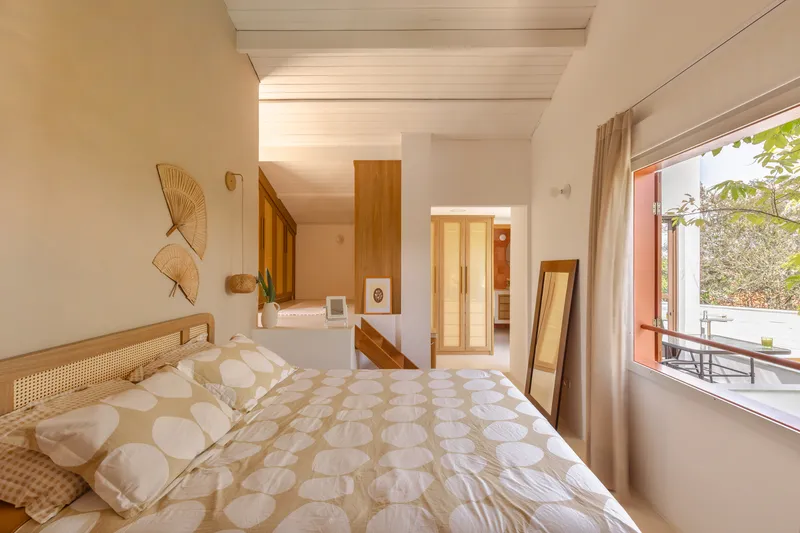
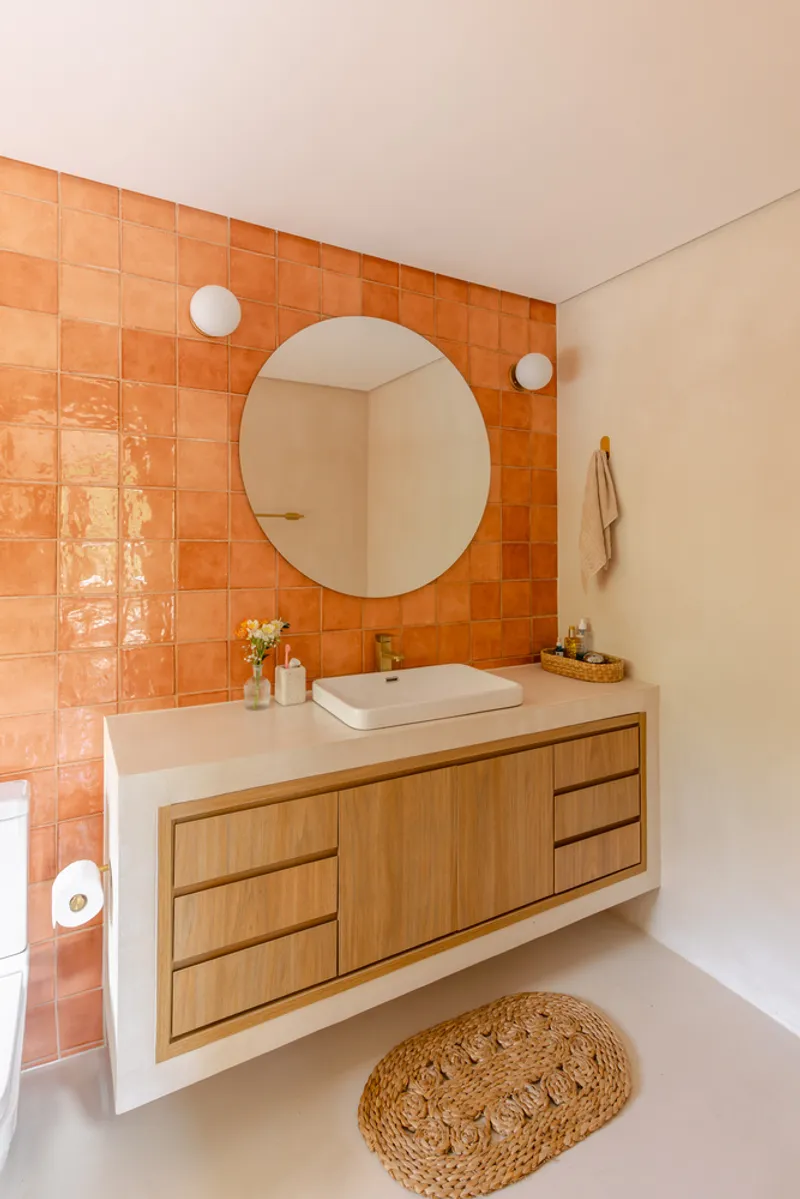
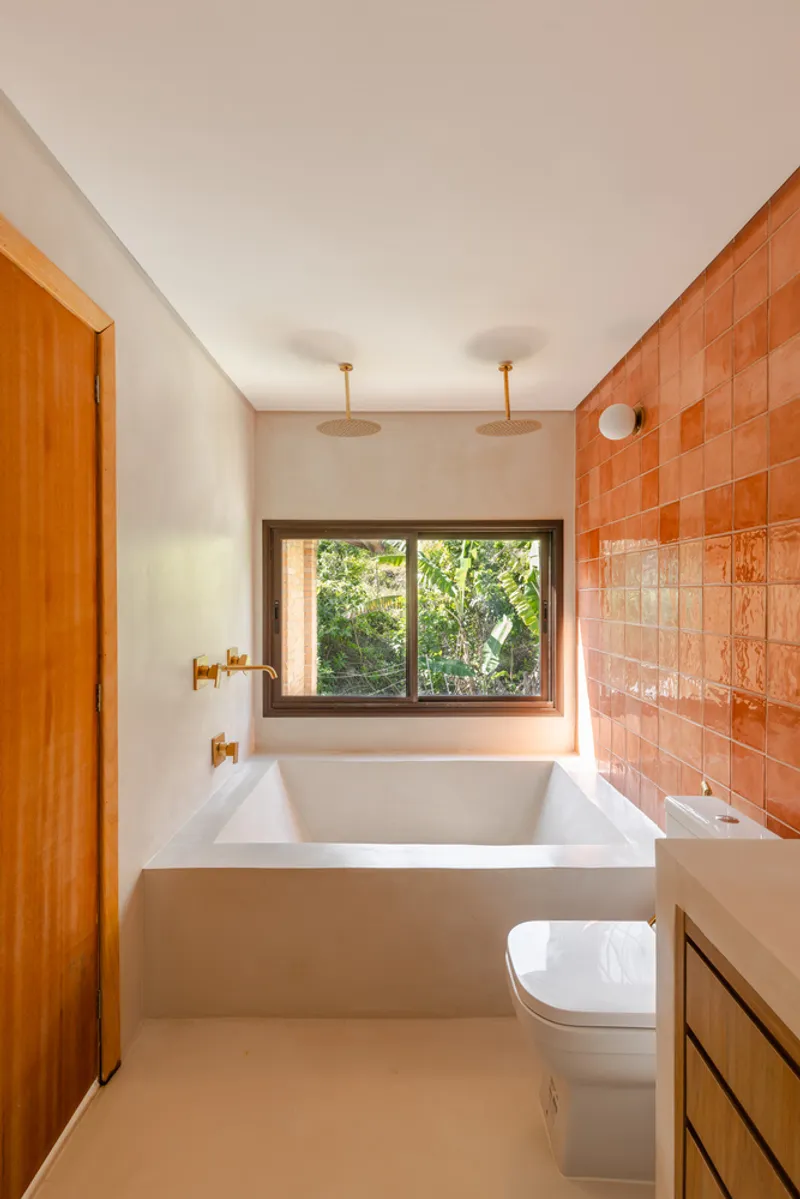
To accommodate the needs of a young couple, the home was thoughtfully expanded in two critical areas. On the upper floor, a closet with an en-suite bathroom was added on the old terrace slab. Structural reinforcements were necessary to support a luxurious bathtub with views of the surrounding forest.
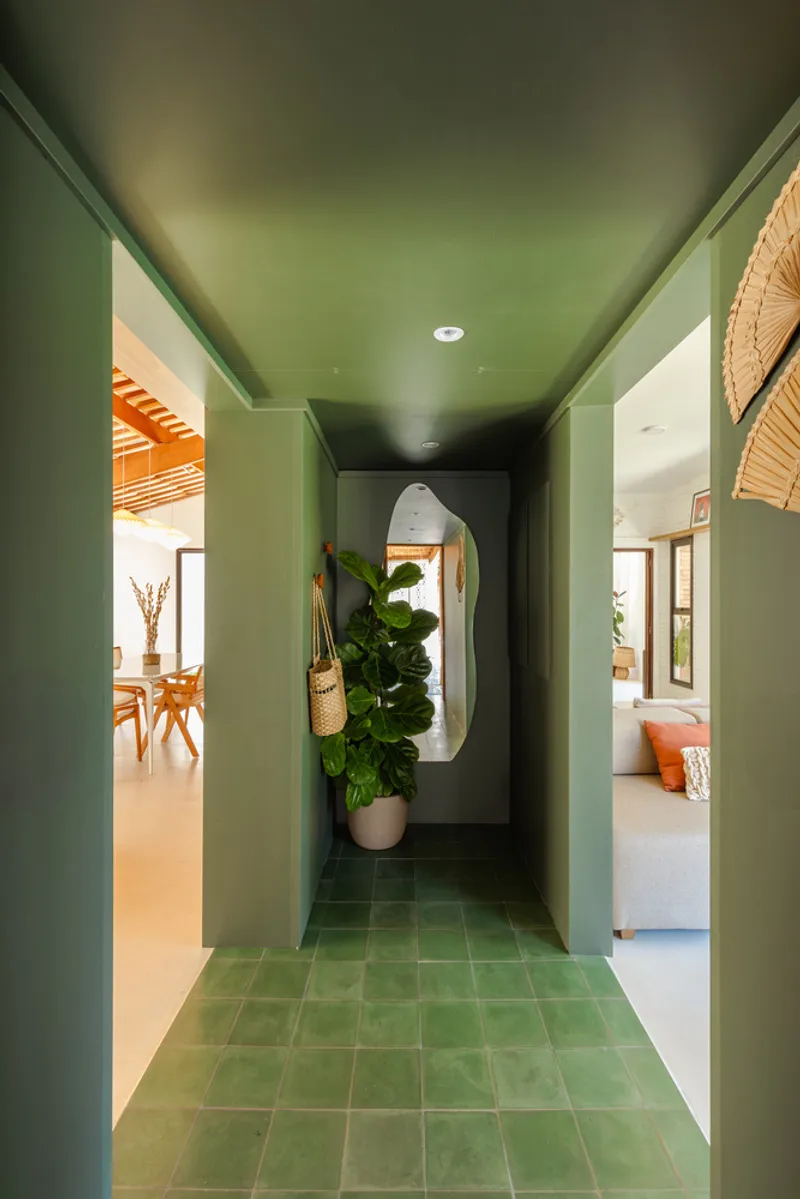
On the ground floor, the kitchen was enlarged, occupying the space between the house and its boundary. This expansion doubled the social area, fostering a fluid connection between the kitchen and living spaces. A new wooden volume was added, housing the entrance hall, china cabinet, wardrobe, and a cozy niche for relaxation. The roof above the kitchen echoed the original house's construction technique, maintaining architectural continuity.
Maximizing Indoor-Outdoor Integration
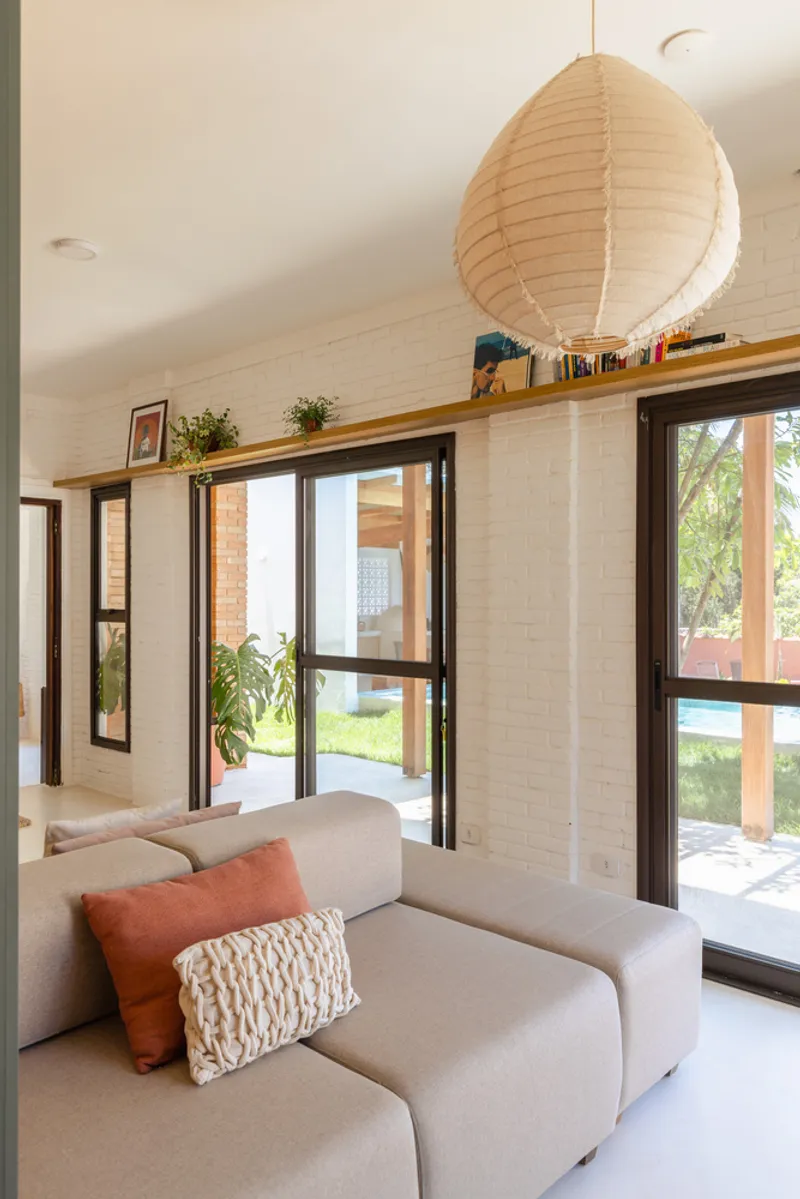
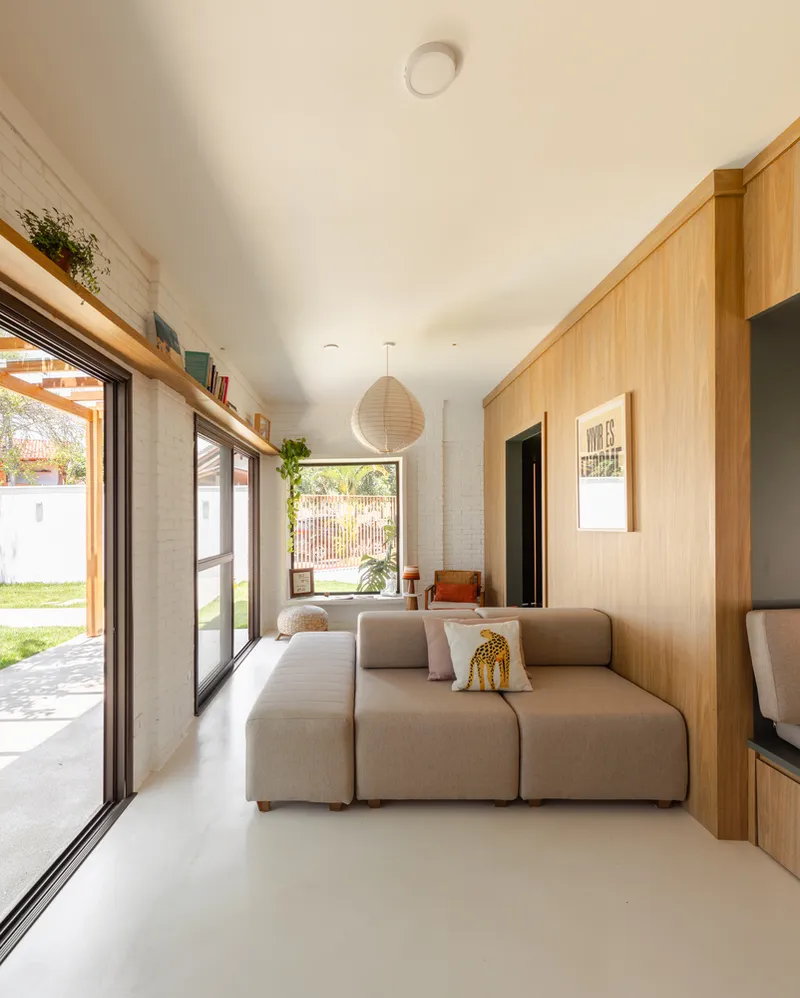
One of the homeowners’ key requests was a stronger connection to the gardens and outdoor areas. The architects transformed small windows into doors and introduced numerous new openings to enhance natural light and ventilation. A skylight above the kitchen runs along its full length, incorporating an internal garden that blurs the line between interior and exterior spaces.
Intermediate spaces, such as balconies, pergolas, and the garage roof, feature wood and glass coverings, providing shelter from the elements while maintaining a sense of openness. This thoughtful approach ensures that light and nature flow freely throughout the home.
Thoughtful New Construction
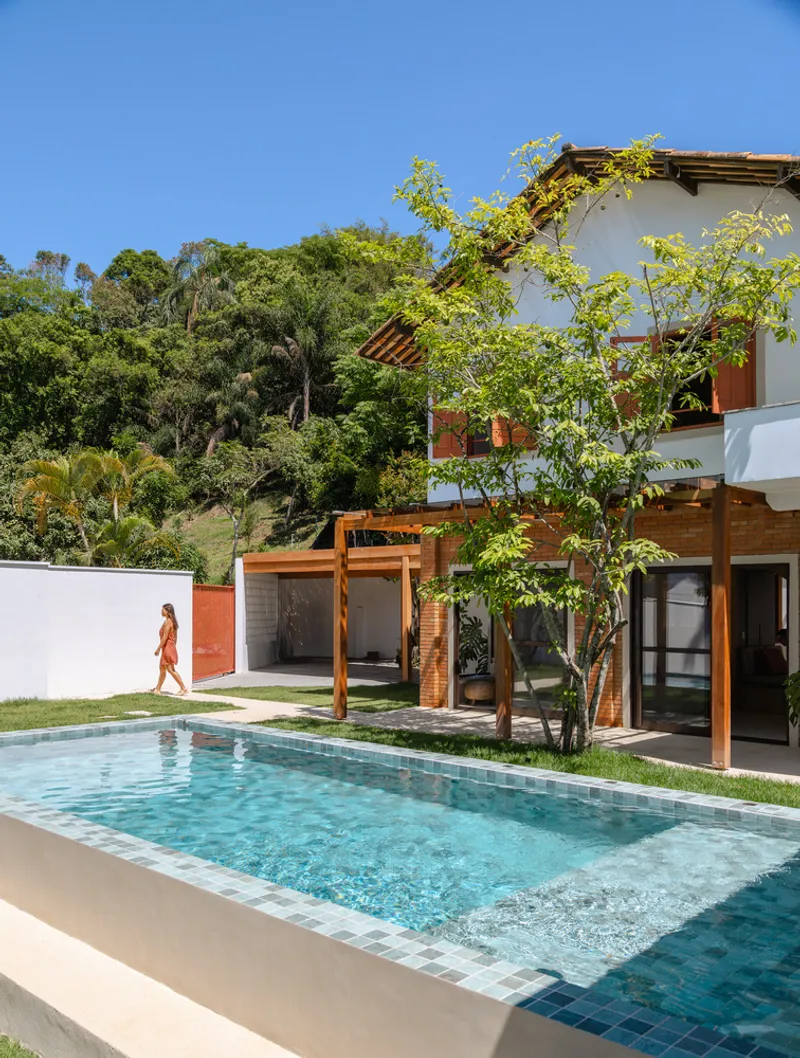
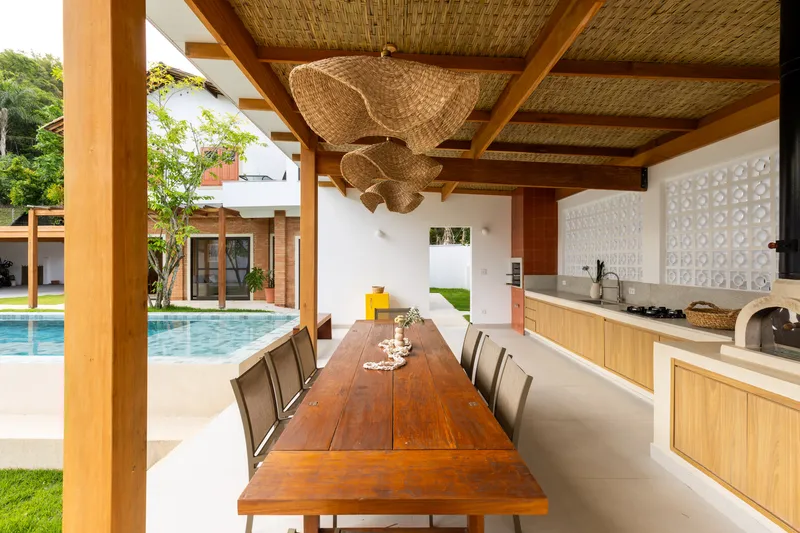
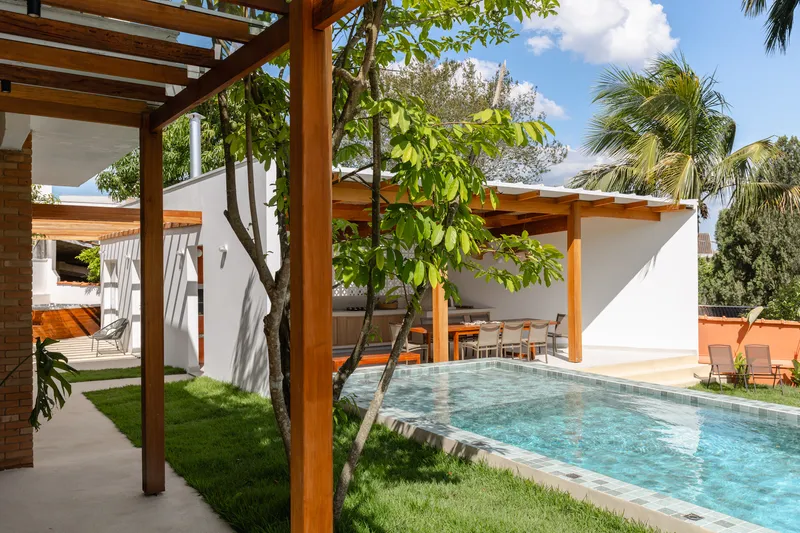
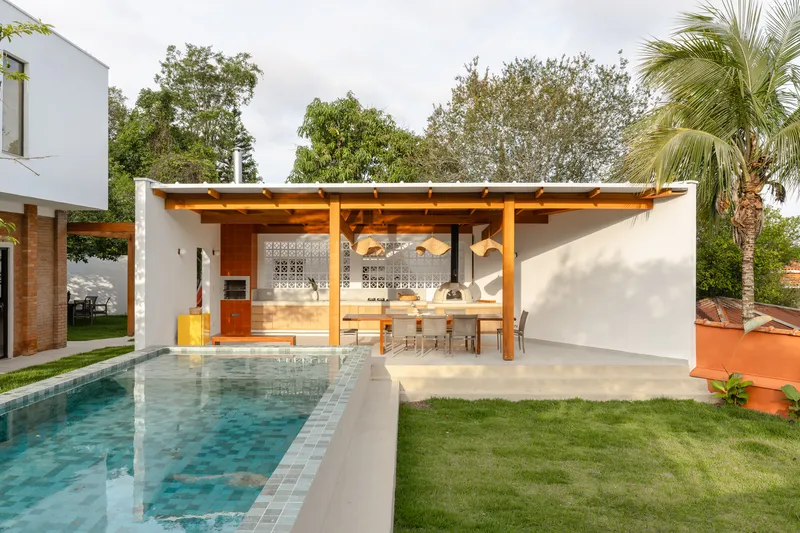
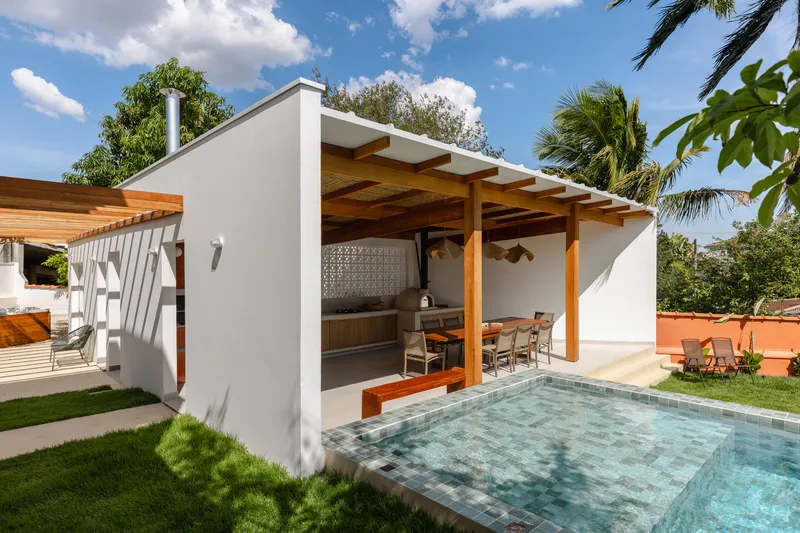
The final phase of the project included new constructions for a barbecue area, bedroom, and bathroom, aligned with the main house on the sloped terrain. By positioning these additions strategically, the architects created two expansive gardens that contrast with the built areas. Large openings face the gardens, enabling a playful dialogue between indoor and outdoor spaces. Fruit trees such as Soursop and Surinam Cherry further enrich the sensory experience of the gardens.
Contemporary Touches and Materiality
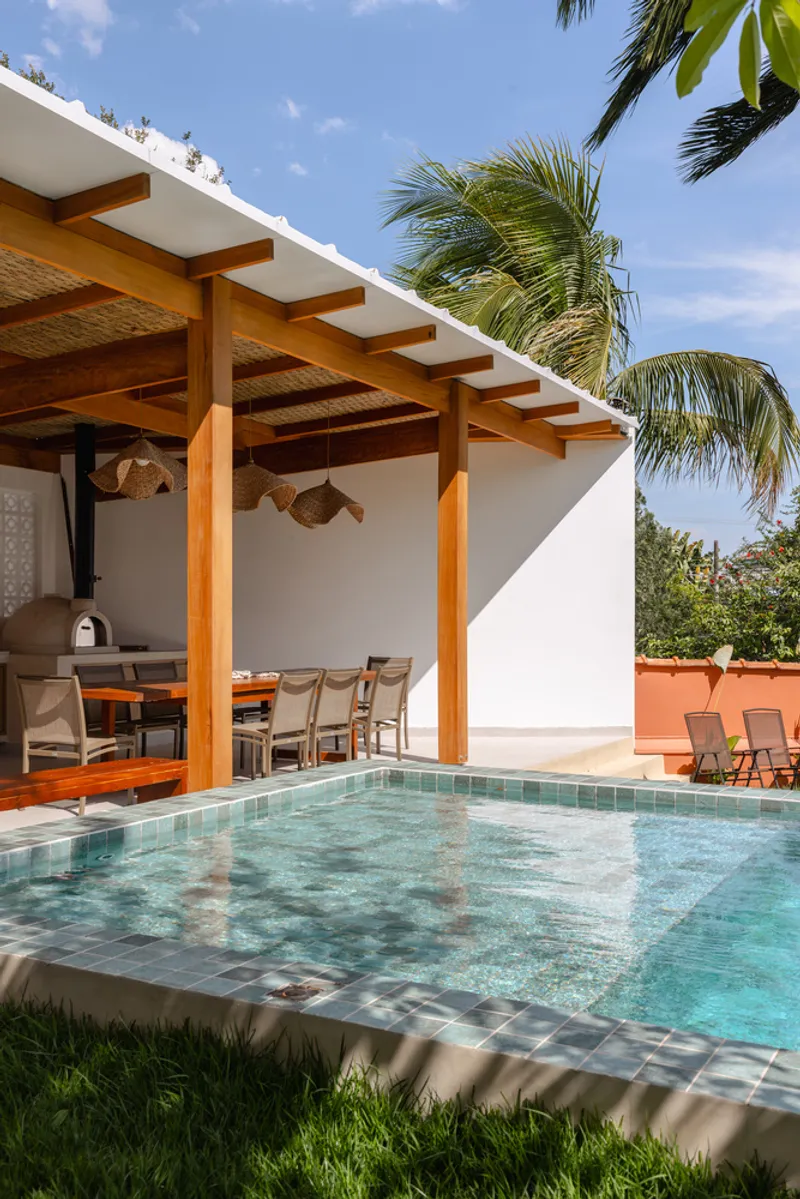
The renovation introduces a contemporary wooden structure with exposed metal sandwich tiles, contrasting with the main house while harmonizing with the garden surroundings. Diverse textures, including cobogós and straw ceilings, add tactile interest and visual warmth. At the center of the main garden, a swimming pool integrates seamlessly with the barbecue area, reinforcing the home’s focus on outdoor living.
A Seamless Fusion of Old and New
House Graviola exemplifies a renovation that respects the original architecture while introducing contemporary functionality and aesthetics. By carefully articulating new spaces and integrating them with the gardens, Sertão Arquitetos created a home that is at once historically grounded and modernly vibrant. This project demonstrates how adaptive reuse and thoughtful design can unlock the full potential of existing structures.



Popular Articles
Popular articles from the community


The Earth Pod: 3D Printed Homes for Resilient Refugee Communities
The Earth Pod reimagines refugee housing through 3D printed homes made from clay, combining resilience, self-sufficiency, and rapid shelter.

Conexión: Biophilic Design Reimagines High-Rise Living in Hong Kong
Conexión reimagines high-rise living in Hong Kong through biophilic design, green facades, shared spaces, daylight, water and nature within.

The Ocean Hive: Sustainable Architecture for a Self-Sufficient Civilization at Sea
The Ocean Hive imagines sustainable architecture at sea, where modular habitats, algae, wave power and ocean waste sustain a growing colony.

Riyadh For All: Intergenerational Urban Design for Active Aging in Rabat
Riyadh For All reimagines urban design in Rabat with intergenerational co-living, adaptive courtyards, and Moroccan cultural exchange today.


Similar Reads
You might also enjoy these articles


Hodi-Mandai Geram
Project Function: Preservation and revitalization of the Intangible heritage and socio-spatial identity of the Hodi by Housing, Cultural Memory Center, Sacred Grove, landscape, local tourism economy


Olio Towers: A Mid-Rise for Performers That Fuses Housing, Rehearsal, and Stage
Located blocks from Houston's Theater District, this modular tower stacks living units around a central performance atrium.

Oasis: Modular Green Housing Carved into Dhaka's Urban Fabric
A shortlisted Plugin Housing entry reclaims unauthorized settlements in Dhaka with stepped concrete volumes, green roofs, and ventilation-driven design.

Black Hole: A Floating Megastructure for the Post-Physical Era
Emiliano Mazzarotto envisions a spherical, self-scaling arena where e-sports, digital hotels, and holographic stadiums replace traditional public space.


Explore Architecture Competitions
Discover active competitions in this discipline



Challenge to reimagine the Iron Throne


Photograph architecture without architects


Illustrate the lost glory of Angkor Wat - Render Challenge


Design challenge to reuse E-waste
Comments (0)
Please login or sign up to add comments
No comments yet. Be the first to comment!